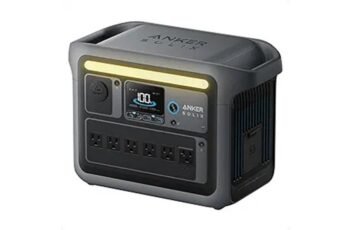
We’re at a crossroads where power meets portability, like a lighthouse guiding every setup through a storm. We want smart power stations that blend compact size with serious output, offering fast USB-C charging, UPS-style reliability, and expandable capacity for future needs. There’s more to contemplate, from solar input and surge protection to modular adapters and safety. Stick with us as we weigh options on seven models that could power your camping, home backup, or desktop rig—and decide which one fits you best.
Key Takeaways
- Evaluate stations with high wattage and fast charging per port to power laptops, cameras, and peripherals in any setup (e.g., 140W+ USB-C, multiple USB-A/C ports).
- Prioritize models offering UPS-like transfer, PASSTHROUGH charging, and near-zero transfer gaps for reliable outages.
- Consider expandability options (LiFePO4 packs, cascaded capacity) to scale from hundreds to thousands of watt-hours.
- Check safety and build quality (UL/CE, fire-resistance, surge protection, warranties) for durable, safe operation.
- Compare overall ecosystem: solar input (MPPT), multiple charging modes, and portability vs. capacity to match camping, home backup, or office use.
Anker 240W 8-in-1 USB-C Charging Station


If you want a compact, all-in-one charging hub that keeps a full desk setup tidy, the Anker 240W 8-in-1 USB-C Charging Station is a standout choice. We get 240W total power with 140W max per USB-C port, so high-demand devices like a 16″ MacBook Pro charge quickly. It features 2 AC outlets, 4 USB-C ports, and 2 USB-A ports, all in a small, 5.43″ W by 3.07″ L footprint with a pop-up outlet. Built for home or office use, it’s wall-powered and surge-protected (300 Joules). Includes a 5 ft cord and warranty coverage, plus a robust connected-equipment guarantee.
Best For: power users who want a compact, all-in-one charging hub for a tidy home or office desk with high-demand devices charging quickly.
Pros:
- 240W total power with 140W max per USB-C port enables fast charging for laptops like the 16″ MacBook Pro.
- 6 ports (4 USB-C, 2 USB-A) plus 2 AC outlets in a compact 5.43″ W x 3.07″ L footprint with a pop-up outlet.
- Surge protection (300 Joules) and a 5 ft detachable cord with a 24-month warranty and lifetime connected-equipment warranty.
Cons:
- Not designed for travel; requires being plugged into a wall outlet.
- 240W total may limit simultaneous high-wattage loads across multiple devices.
- Enclosure is metal and the unit is relatively heavy for a compact hub (1.84 lb).
DABBSSON 2000L Solar Generator: 2048Wh, 2200W AC
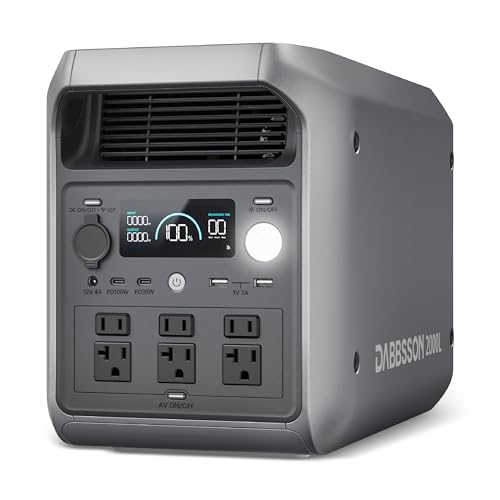
The DABBSSON 2000L Solar Generator stands out for powering up heavy loads with 2048Wh and a 2200W AC output, perfect for those who need reliable backup and off-grid capability. We’re examining its core design, runtime, and charging flexibility: a compact 41 lb unit with a built-in handle, UL94-V0 fire-resistance, and 6 AC outlets plus multiple USB ports. It delivers 1.3X extended runtime, 4000+ charge cycles, and AI-driven BMS with 15 ms UPS switching. Ultra-fast 80% in 1.5 hours, up to 800W solar input, and PASSTHROUGH charging ensure continuous use while recharging. It suits camping, home, and job sites.
Best For: campers, off-grid users, and small to mid-size home backup needs requiring reliable UPS-like performance and high wattage while on the move.
Pros:
- High capacity and robust inverter (2048Wh, 2200W AC, P-Boost up to 3300W) to power demanding devices.
- Fast recharging and flexible inputs (80% in 1.5 hours with 1500W AC, up to 800W solar, PASSTHROUGH charging).
- Durable build with multiple outlets, intelligent BMS, UPS switching, and a 5-year warranty.
Cons:
- Hefty at ~41 lbs, which may affect portability for some users.
- Higher upfront cost compared to smaller capacity units.
- Requires access to reliable solar or grid input for optimal runtime benefits in off-grid scenarios.
TenTrend 14-in-1 USB-C Charging Tower with USB Ports
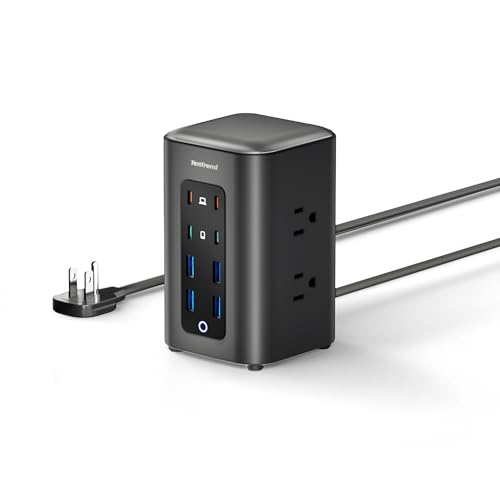
The TenTrend 14-in-1 USB-C Charging Tower is ideal for cluttered desks needing a compact, power-packed solution with fast charging. We present a 230W power strip tower with 14 ports, including 6 AC outlets and 8 USB ports. It features two 65W USB-C, two 20W USB-C, and four 15W USB-A ports, plus a 5-foot flat cord and ultra-slim plug for space-saving use. With 2000 Joules surge protection and a 3.15×3.15×5.12-inch footprint, it reduces desk clutter while supporting multiple devices. Ideal for home, office, or dorms, it delivers reliable, simultaneous charging across devices. Warranty is 1 year.
Best For: Busy desks and dorm rooms that need a compact, high-capacity charging hub to organize multiple devices with fast USB-C and USB-A charging.
Pros:
- 14-in-1 design with 6 AC outlets and 8 USB ports consolidates power needs in a single tower.
- Fast charging capable USB-C ports (65W max) plus additional 20W USB-C and 15W USB-A ports.
- Space-saving, wall-hugging tower footprint with a 5-foot flat extension cord and slim plug for clutter-free setup.
Cons:
- 230W total power may limit high-power devices when many ports are in use simultaneously.
- Only 1-year warranty; limited long-term durability information available.
- Non-universal voltage spec not specified beyond North American Type A outlets (potential issues for international use).
BLUETTI Elite 30 V2 Portable Power Station

Meet the BLUETTI Elite 30 V2 Portable Power Station, a compact 600W setup with up to 1500W peak and a 288Wh LiFePO4 battery that weighs just 9.4 lbs. We guide you with eight charging modes, including adjustable AC wall charge (380W/200W), solar, and car. It goes from 0–80% in 45 minutes and 0–100% in 70 minutes, battery-safe, aided by UltraCell tech and smart cooling for 50% lower power consumption. On the go, it powers lights, laptops, CPAP, small kitchen gear, and even car fridges, with 10 ms UPS. Comes with cables, manual, and PV60L compatibility for remote recharging.
Best For: On-the-go users who need a compact, lightweight, fast-charging portable power station for camping, travel, or emergency backup with reliable UPS and LiFePO4 battery chemistry.
Pros:
- 600W continuous, up to 1500W peak with 288Wh LiFePO4 battery offering solid power in a portable form
- 0–80% in 45 minutes and 0–100% in 70 minutes with battery-safe fast charging and UltraCell tech
- 10 ms UPS for seamless power during outages and multiple charging modes (AC, solar, car)
Cons:
- Relatively higher weight for ultra-portable claims compared to smaller mini-pack options
- 288Wh may not power heavy appliances long-term and 600W continuous limit could constrain high-draw devices
- Limited internal expansion options and reliance on proprietary charging ecosystem for best performance
EF ECOFLOW Delta 2 Smart Extra Battery 1024Wh

Looking to extend your DELTA 2 setup? Our EF ECOFLOW Delta 2 Smart Extra Battery adds 1024Wh of LiFePO4 capacity, turning DELTA 2 into a 2048Wh system. Paired with the main unit, it delivers up to 1800W across 15 outlets, enough to run most home appliances. With 3000+ cycles and a 5-year warranty, it’s built for long life. It charges fast—0–80% in about 80 minutes—from AC, car, solar, or a Smart Generator. Weighing 24.69 pounds and measuring 8L x 11W x 15H inches, it supports home backup, camping, and outdoor use, monitored via LCD or EcoFlow app.
Best For: Homeowners and outdoor enthusiasts seeking a high-capacity, long-lasting LiFePO4 power expansion for the DELTA 2, with versatile charging options and a strong warranty.
Pros:
- High capacity expansion (1024Wh) to reach 2048Wh total with DELTA 2, enabling longer runtimes.
- Long cycle life (3000+ cycles) and 5-year warranty, promising durability and reliability.
- Versatile charging and usage options (AC, car, solar, Smart Generator) with 0–80% in ~80 minutes charge speed.
Cons:
- Heavier unit at 24.69 pounds, which may affect portability.
- 1800W output may not cover the highest-wattage appliances simultaneously.
- Requires pairing with DELTA 2; not a standalone power station.
300W USB Charging Station with 24 Ports
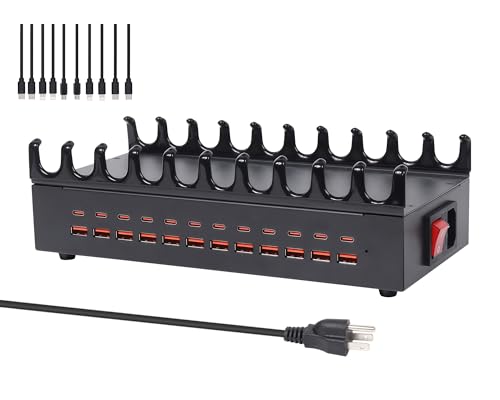
With 24 ports and 300W of power, this USB charging station is built for organized, high-demand setups. We pack 12 USB-C and 12 USB-A outputs, each USB-C up to 5V/3A and USB-A up to 5V/2.4A, plus 5V automatic device detection and 3x faster charging via intelligent power delivery. Safety is front and center with a 6-layer shield guarding against temp, voltage, current, shorts, and overloads. A on/off switch gives instant feedback, and the durable iron chassis stays case-friendly in tight spaces. Includes power cable and manual; compatible with iPhones, Androids, tablets, laptops, and more. Warranty: 2 years.
Best For: Large shared spaces (schools, offices, hotels, restaurants) and organized multi-device charging setups that need 24 ports with fast, intelligent USB-C/USB-A charging.
Pros:
- High capacity with 24 ports (12 USB-C, 12 USB-A) for simultaneous charging
- Intelligent power delivery and 3x faster charging with device detection
- Durable iron chassis with 6-layer safety protections and on/off switch
Cons:
- Higher upfront cost may be overkill for small personal use
- Requires sufficient wall outlet power and cable management in tight spaces
- Heavier and bulkier than compact single-device chargers
6 USB Power Strip with 3 Outlets and 24W Travel Charger

This 6-USB power strip stands out for travelers with its 3 USB-C and 3 USB-A ports delivering a total 24W, plus 3 AC outlets, all in a compact 4.5 x 3.2 x 1.1 inch package. We can power up 9 devices simultaneously (3 AC outlets plus 6 USB ports) with a max 10A, 125V rating. Its lightweight 8.7 ounces and a 5-foot braided cord enhance portability, while the ultra-thin, 45° plug and flat profile help it sit flush against walls. It’s FCC certified with fire-resistant housing and safety protections, backed by a 12-month replacement warranty and responsive support. Note: USB-C won’t charge laptops needing 14–22V.
Best For: Home and travel users who need multiple USB charging ports plus limited space, especially for travelers who want 3 USB-C/USB-A ports and 3 AC outlets in a compact, portable strip (note: USB-C won’t charge laptops needing 14–22V).
Pros:
- Compact 4.5 x 3.2 x 1.1 inch form factor with a 5-foot braided cord for portability
- 6 total USB ports (3 USB-C, 3 USB-A) delivering up to 24W, plus 3 AC outlets
- FCC-certified with fire-resistant housing and built-in protections, backed by a 12-month warranty
Cons:
- USB-C port does not support higher-voltage laptop charging (14–22V)
- No surge protection explicitly listed (despite safety protections)
- Cruise ship compatibility varies by operator and may require verification with line policies
Factors to Consider When Choosing Smart Power Stations
We consider factors like power output and ports, safety protections, charging modes, portability and design, and expandability and battery life to help you pick the right station. We’ll guide you through what to prioritize so you get the right mix of performance, reliability, and everyday practicality. Let’s start by outlining how these elements fit your setup and future needs.
Power Output And Ports
When choosing a smart power station, you’ll want to match power output to the devices you plan to run and charge. Power output totals and per-port limits vary widely, from multi-port stations offering 240W total with up to 140W per USB-C port to compact units delivering 65W per USB-C port and 15W per USB-A port across 8 or more ports. Some systems provide high-wattage distribution across many ports, while others cap total output and rely on intelligent PD to allocate power. A higher overall wattage (600W–2400W) enables charging or powering multiple high-demand devices, but per-port limits determine charging speed. Built-in protection and management features influence how aggressively ports can be used without tripping protections. Dynamic PD priorities high-demand devices first, redistributing remaining wattage.
Safety And Protections
Safety and protections matter more than you might think: what guarantees do you have that a smart power station won’t overheat, surge, or fail when you need it most? We look for multi‑layer protections—over-temperature, overvoltage, overcurrent, short‑circuit, and overload safeguards—to cut fire and equipment risk. Certification matters too: UL or CE marks and a fire‑resistant enclosure rating (e.g., UL94‑V0) show compliance and flame resistance. Check surge protection ratings in joules and whether protection stays active during outages or only with mains. Prefer units with automatic shutdown or safety cutoffs on heat or fault, plus an on/off switch for immediate control. Ensure smart protection for connected devices via intelligent current management and UPS‑like switching to prevent data loss or damage.
Charging Modes
Charging modes matter because how you power the unit shapes setup flexibility and downtime. We compare inputs like AC wall charging, solar with MPPT support, car/truck power, and passthrough charging that lets you use the unit while it recharges. Some models cap input wattage—380W/200W adjustable AC on the BLUETTI Elite 30 V2 or a 1500W peak input enabling fast charging to 80% in about 1.5 hours—so you match charging speed to needs. Solar/grid integration enables UPS-like operation with near-zero transfer gaps (about 10 ms) to keep devices powered during outages. Adding expansion packs, like LiFePO4 batteries, boosts capacity and runtime. Charge speed figures—0–80% in 45–80 minutes, 0–100% in 70–90 minutes—aid quick comparisons.
Portability And Design
We prioritize portability and design by weighing size, weight, and built-in carrying features first. When selecting a station, we assess overall footprint—compact towers or boxes under 14 inches in any dimension and under 20 pounds tend to travel well and fit tight spaces. Integrated handles or ergonomic grips matter, especially for units in the 10–40 pound range, making transport smoother. We also value foldable or flat extension cords, slim plugs, and space-saving footprints like tower or flat-strip designs that ease desk or shelf placement. A 5–7 inch wide, low-profile form reduces desk bulk, while rugged all-metal enclosures boost durability for mobile use. Detachable cords or shoulder straps enhance carryability, supporting easy transitions between locations.
Expandability And Battery Life
Expansion capability and battery life are key when we’re choosing a smart power station, especially after weighing portability and design. We look at how expansion works, like adding a 1024Wh battery to push a system from 1024Wh to 2048Wh, and how cascades let us reach 4096Wh or more with multiple modules. Battery life, measured in cycles, matters for longevity—LiFePO4 chemistries often hit 3000+ cycles, with runtimes lasting over a decade. We value UPS-like reliability, where quick transitions (around 15 ms) keep devices powered during outages. Recharging flexibility matters too: AC, solar, car, or smart generator options extend usable time in off-grid setups. Together, expandability and durable cycle life define how scalable and dependable a station will be for future needs.
Warranty And Support
Warranty and support shape how confidently you use a smart power station long-term. When we compare models, we look for clear warranty terms—from 1 to 5 years, with options for extended or lifetime coverage on connected equipment. We want straightforward repair, replacement, or return policies, such as 30-day returns or 24-month warranties, and easy claim processing. Some units include separate extended protections or UPS-like reliability benefits beyond the standard warranty. We check that coverage spans both hardware defects and performance issues across multiple ports. We also confirm support availability—24/7 versus business hours—and whether online monitoring tools or apps are included for ongoing warranty service or device troubleshooting. In short, solid warranty and accessible support reduce risk and downtime.
Frequently Asked Questions
How Long Can a Power Station Run a Fridge Continuously?
A fridge can run on a power station continuously for roughly 8–12 hours depending on efficiency, starting temperature, and compressor cycles. We’re here to help you estimate runtime with your specific model and setup.
Can These Units Operate Off-Grid Without Sunlight?
We can run them off-grid without sunlight, though heat and time gently remind us to conserve. We power through cloudy days with stored energy, keeping you connected while we balance efficiency, battery health, and practical expectations together.
Do They Support Fast Charging for Laptops?
Yes, they support fast charging for laptops, but performance depends on the model and port type. We’ll pick high-widelity PD or USB-C charging units and advise checking wattage, compatibility, and temperature limits for your laptop.
Are Battery Cells Safe for Indoor Use?
Yes, battery cells are generally safe indoors when used properly. We’re mindful of ventilation, heat, and manufacturer guidance, and we handle, store, and charge them carefully to avoid accidents or hazards.
How Many Devices Can Charge Simultaneously?
We can charge multiple devices simultaneously, up to the power station’s rated USB and AC ports, while monitoring heat and battery status to prevent overload. We’ll prioritize critical devices and stagger fast-charging when needed.
Conclusion
We’ve shown you seven power stations you can count on when the lights dim or the crowd roars. But which one will end up powering your moments—quietly, reliably, and just when you need it most? Imagine the last drop of charge fading to black, then a surge of life revived by a hidden battery with room to grow. Stay tuned—your next upgrade could be the key to everything you do next.