Jackery HomePower Pro Max: Quick Overview
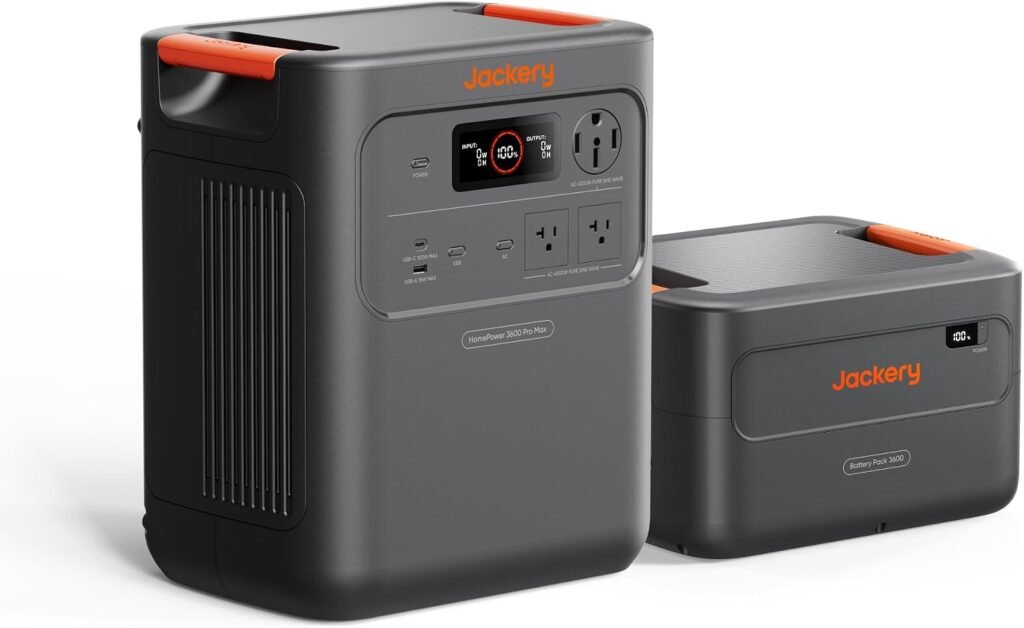
Can a large home battery deliver dependable backup without the noise, fumes, and maintenance of a fuel generator? The Jackery HomePower Pro Max is designed to answer yes, but it is a fixed-installation energy system rather than a casual camping power station. The reviewed configuration combines the Jackery HomePower Pro Max and Battery, with 7168Wh total capacity, 2000W 120V output, and 4000W 240V output. Its strongest claims are serious home-backup features: 4kW–8kW automatic backup capability, UPS switching below 10ms, expandable storage, LFP battery cells, quiet operation, and eight recharge methods.
This looks most suitable for homeowners who want quiet backup for selected 120V and 240V circuits through a professionally installed manual transfer switch. It may be excessive for occasional outdoor use, apartment living, or anyone who simply needs a small battery for phones and lights.

Specifications and Installation Basics
The core specification is best understood as a home energy hub intended to connect with fixed circuits, not merely a battery that sits beside a refrigerator. Here is the supplied specification summary:
| Specification | Listed detail |
|---|---|
| Starting battery configuration | 7168Wh |
| 120V output | 2000W |
| 240V output | 4000W |
| Starting system capacity | 3.6kWh as described |
| Expansion | Up to 43kWh |
| Battery rating | 6,000 cycles |
| Operating noise | Under 30dB |
| UPS transfer | Under 10ms |
The listing uses both “7168Wh” for the named battery configuration and “starting at 3.6kWh” for the platform. Those descriptions are not interchangeable. We would ask Jackery to clarify precisely which modules are included in the advertised package, how usable capacity is calculated, and whether the 7168Wh figure represents nominal combined battery energy.
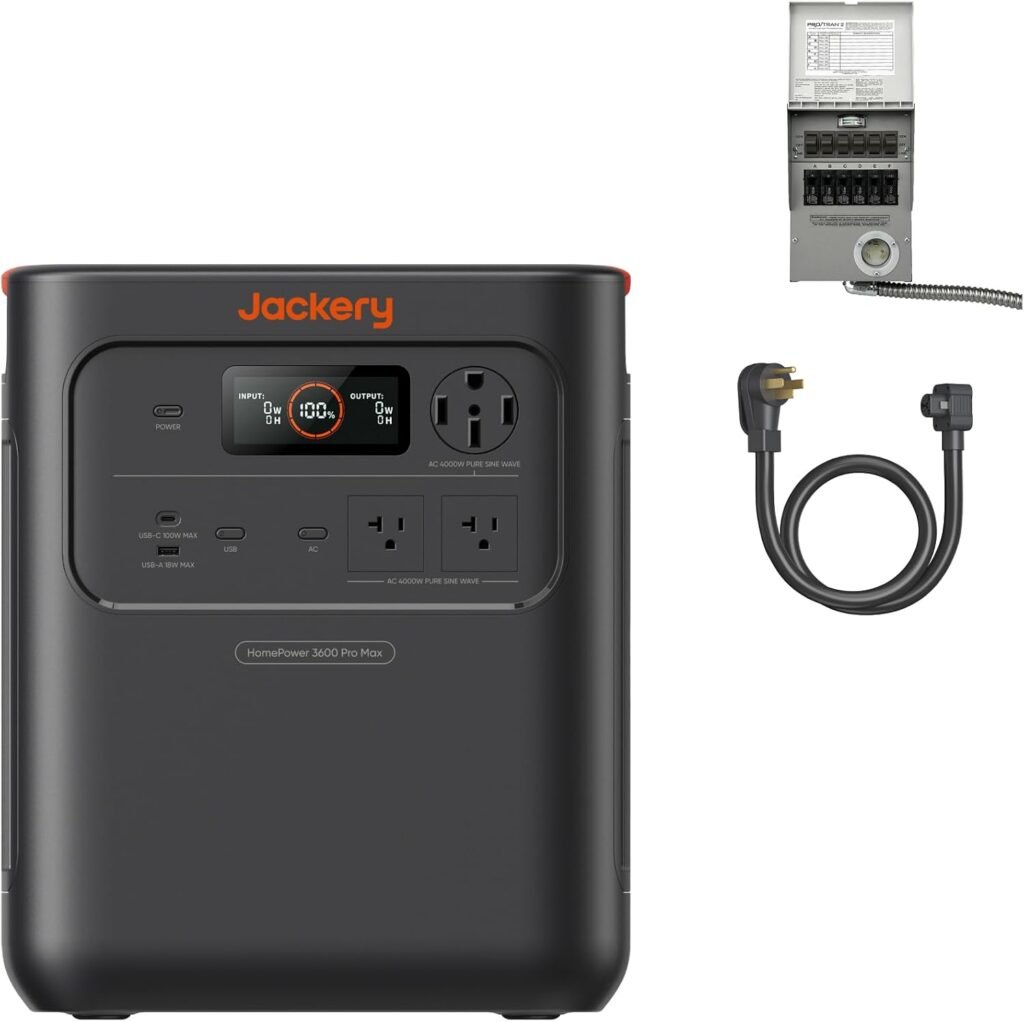
A manual transfer switch separates selected household circuits from the utility supply and routes them to the backup system when the installed arrangement calls for it. The Jackery HomePower Pro Max should therefore be installed by a qualified electrician who can confirm panel compatibility, grounding, neutral arrangements, overcurrent protection, permits, and local code requirements.
Before ordering, we would identify essential circuits, calculate running and starting wattage, confirm the panel design with an electrician, and plan a dry installation area with adequate clearance. Never connect the unit directly to household wiring or attempt a DIY panel connection.
That distinction matters with the Jackery HomePower Pro Max: despite the portable-power-station category used by online retailers, its stated purpose is permanent home integration.
Power Output: 120V and 240V Performance
The major attraction here is single-unit 120V/240V capability. A properly designed installation could support selected appliances such as a well pump, sump pump, furnace controls or blower, refrigerator, networking equipment, lights, and certain workshop loads. That does not mean every appliance can run together, however.
Continuous output and startup demand are different. Motors and compressors can draw substantially more power when starting than they use while running, so we would check the nameplate, manufacturer documentation, or an electrician’s load calculation before assuming a pump or compressor will start reliably. The Jackery HomePower Pro Max may have enough energy for a load but still lack suitable instantaneous power for a difficult motor.
The 2000W 120V limit can also restrict an individual appliance even though the system’s 240V rating is higher. We would size the installation as follows:
- List only the circuits needed during an outage.
- Record the running watts for each appliance.
- Add the largest startup demands that may overlap.
- Decide which loads must operate simultaneously.
- Leave a safety margin instead of designing right at the limit.
A refrigerator cycling, a furnace blower, lights, a router, and a sump pump have very different demand patterns. The Jackery HomePower Pro Max is better viewed as critical-load backup than unrestricted whole-house power unless the electrician confirms that the home’s design and load calculation support broader operation.
Battery Capacity, Expansion, and Long-Term Durability
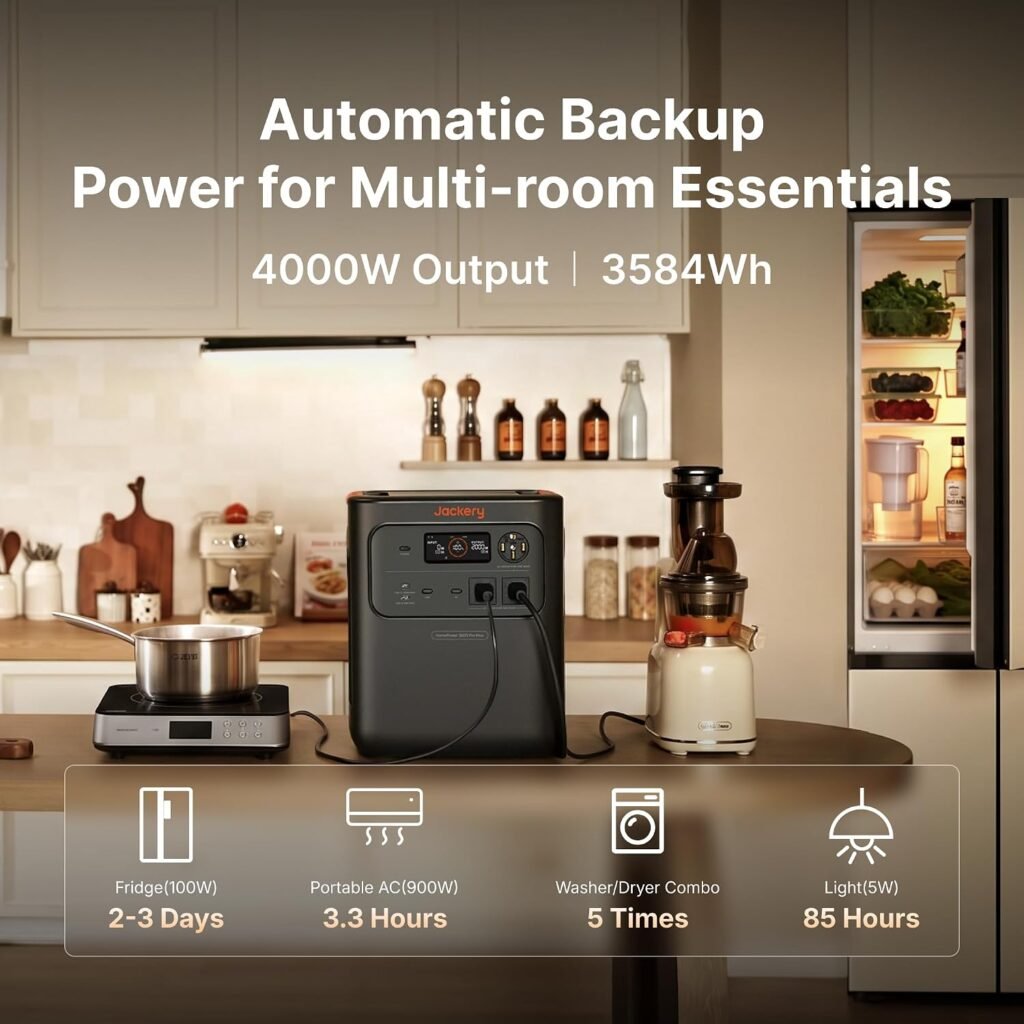
A 7168Wh battery does not translate directly into 7168Wh delivered to appliances. Inverter losses, reserve capacity, appliance efficiency, battery temperature, and the number of connected loads all affect usable energy. For a rough estimate, divide watt-hours by appliance watts, then reduce the result for conversion losses and operating conditions; treat the outcome as an estimate, not a guarantee.
The stated expansion path runs from a 3.6kWh starting platform to as much as 43kWh. Extra storage matters most during overnight outages, prolonged utility failures, and periods when larger loads operate repeatedly. For a short interruption, expansion may add cost without improving the practical experience very much.
The Jackery HomePower Pro Max uses what the listing describes as EV-grade LFP cells and claims a 6,000-cycle rating. That is a manufacturer-stated or laboratory-style figure, not a promise that every battery will achieve the same result in every home. The claimed 16-plus-year lifespan should likewise be treated as an expectation under suitable conditions, not a guaranteed ownership period.
Battery aging depends on temperature, charge habits, installation quality, usage depth, and maintenance. Before expanding the Jackery HomePower Pro Max, we would confirm compatible battery models, replacement availability, warranty coverage, software requirements, and service arrangements. A large permanent system deserves a clearer support plan than a small portable battery.

UPS Switching and Home Backup Operation
The advertised UPS transfer time of less than 10ms means the change from utility power to battery support should happen faster than many people notice. That can help computers, routers, security equipment, and other sensitive electronics avoid a visible interruption, although it is not an absolute guarantee that every device will remain unaffected.
Motors, compressors, medical equipment, and devices with strict power-quality requirements can behave differently. We would test important equipment rather than relying solely on the UPS label. A UPS rating describes transfer behavior; it does not automatically certify compatibility with every appliance.
With the planned manual-transfer-switch approach, the home normally remains connected to utility power. During an outage, the installed backup arrangement changes the selected circuits to battery supply according to its design. The advertised 4kW–8kW auto-backup range should not be read as a universal output promise: real capacity depends on the configuration, connected loads, and electrical installation.
For commissioning, we would ask the electrician to simulate utility loss, verify each essential circuit, observe the transfer, reconnect networking equipment, and repeat the test under realistic simultaneous load. Neutral, grounding, overcurrent protection, and local-code compliance should be checked by a trained professional before the system is considered ready.
In practical terms, the Jackery HomePower Pro Max offers a more polished backup concept than manually plugging appliances into a battery, provided the installation matches the household’s actual needs.
Recharge Options and Off-Grid Flexibility
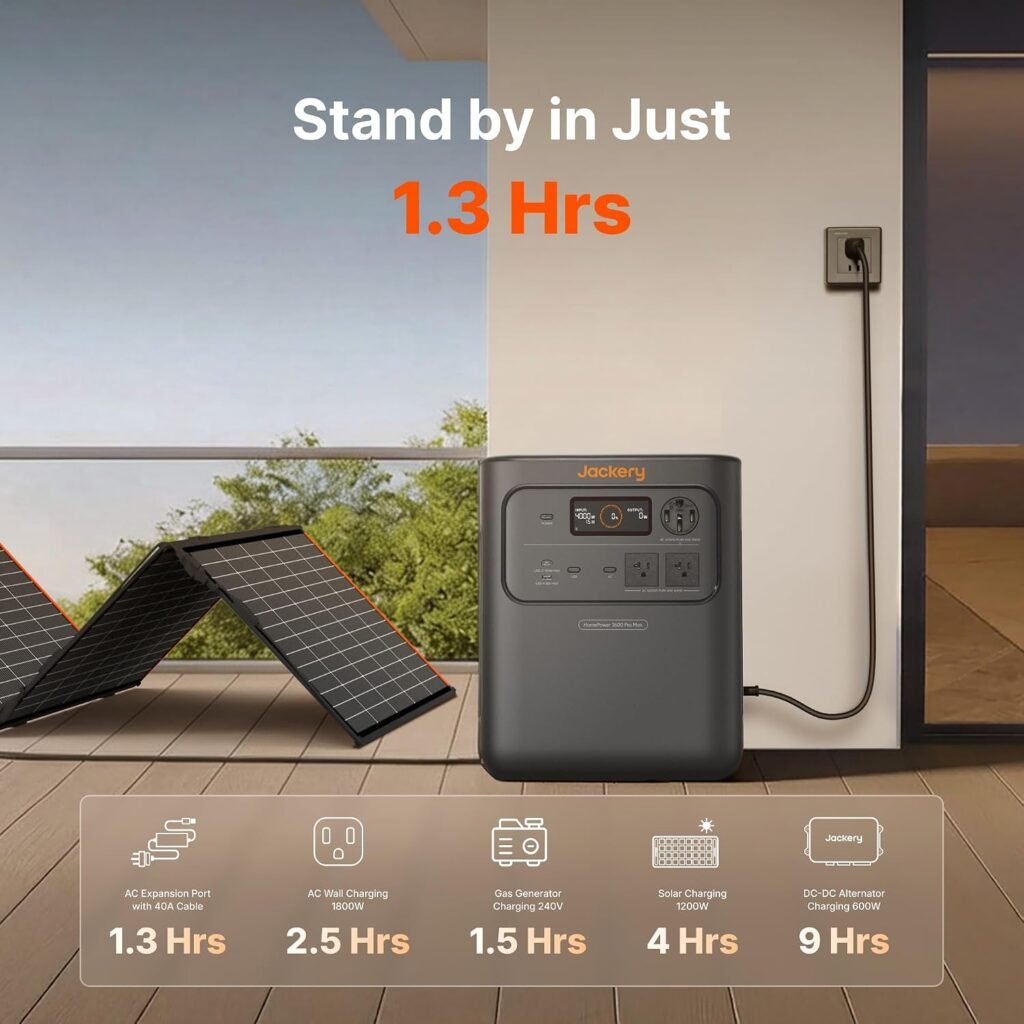
The listing claims eight recharge methods and specifically mentions gas-generator compatibility. It does not provide a complete verified list in the supplied material, so we would not assume every possible charging accessory is included. Solar, grid charging, and generator support each serve a different purpose.
Solar input can extend an outage when weather cooperates. Grid charging is convenient before a forecast event, while a compatible gas generator may provide a fallback during several days of poor sunlight. None of these options makes the system automatically energy-independent; autonomy still depends on weather, household demand, and the recharge sources available.
For a battery of this size, we would compare available input power with total capacity and the expected outage duration. A modest charging source may take a long time to refill a depleted battery, while a faster input may require specific electrical equipment. Before purchase, we would confirm solar-input limits, connector types, generator compatibility, charging times, and whether charging can occur while household loads are operating.
Our outage plan would be straightforward:
- Keep the battery at an appropriate charge level before severe weather.
- Store generator fuel safely and follow local rules.
- Prioritize refrigeration, communications, and medical equipment.
- Turn off nonessential loads when recharge conditions are poor.
- Reserve energy for the loads that cannot tolerate a long interruption.
The Jackery HomePower Pro Max is more flexible when several charging routes are available, but its real autonomy must be planned rather than assumed.
Safety, Noise, and Permanent Installation
Under-30dB operation is one of the more appealing claims for a permanent indoor installation. A quiet battery can be less disruptive in a utility room, basement, or nearby living space than a fuel generator, and it avoids the neighborhood disturbance associated with generator engine noise. Quiet operation does not mean the system produces no heat or requires no ventilation.
The product description cites EV-grade LFP cells, 5VA fireproof housing, and a dedicated EPO emergency shutoff. These are product claims, not substitutes for checking independent certification, electrical documentation, fire-safety records, or local inspection requirements. We would also learn the EPO button’s location and reset procedure before an emergency occurs, since an emergency shutdown is useful only when household members understand how it works.
Installation should be in a dry area with manufacturer-specified clearance, protection from extreme temperatures, and unobstructed ventilation openings. Access must remain clear for inspection, shutdown, and service. We would review the warranty, installation manual, safety documentation, and electrical certifications before committing to a permanent system.
The Jackery HomePower Pro Max still needs smoke protection, electrical safeguards, professional installation, and periodic testing. Its low-noise design improves livability, but it does not remove the responsibilities that come with installing a high-capacity battery in a home.
What Customers Are Saying
The supplied listing does not include an overall star rating, review count, verified-purchase comments, ownership anecdotes, or failure-rate information. As a result, we cannot honestly claim that buyers agree on installation quality, charging speed, UPS behavior, or long-term reliability. Claims about 6,000 cycles, 16-plus years, 5VA housing, and under-30dB operation remain manufacturer-stated specifications until customer reviews independently confirm how the system behaves in homes.
When live reviews are available, we would group them by installation experience, transfer behavior, measured noise, 240V appliance compatibility, recharge speed, app or control usability, packaging, and support response. A detailed review written after an outage is more useful than a short first-impression post, especially when it identifies the loads connected and explains how the transfer switch was installed.
We would give extra weight to verified-purchase detail, repeated patterns across several reviewers, photographs of installations, and comments that describe realistic load testing. Context matters: someone using only 120V outlets is not testing the same thing as an owner running a professionally connected 240V pump.
For the Jackery HomePower Pro Max, the available supplied information is insufficient to assign a review-based value score or claim a customer consensus. The Jackery HomePower Pro Max deserves a second look when current buyer feedback is visible, but shoppers should not mistake product-description claims for customer evidence.
How the Jackery HomePower Pro Max Compares
The Jackery HomePower Pro Max can be compared by design priorities with the EcoFlow DELTA Pro Ultra and BLUETTI EP500Pro, but the supplied information does not provide verified current competitor prices, ratings, or specifications. We would check each live listing and installation manual before making a direct performance comparison.
The useful comparison points are capacity, genuine 240V support, expansion, UPS behavior, installation method, noise, warranty, and complete system cost. Jackery’s stated advantages are single-unit 120V/240V output, a sub-10ms UPS claim, quiet operation, and expansion potential. Those benefits may matter more to a homeowner integrating fixed circuits than to somebody carrying a battery to a campsite.
We would compare the whole project rather than battery prices alone. The quote should include transfer-switch hardware, electrician labor, wiring, permits, solar equipment, expansion batteries, and required accessories. An alternative with a different app ecosystem or installation arrangement may suit one household better, even if its headline battery specification appears similar.
Our decision path would be:
- Choose the Jackery HomePower Pro Max for permanent, quiet backup when 120V and 240V circuits are central requirements.
- Consider EcoFlow DELTA Pro Ultra or BLUETTI EP500Pro if their current control systems, warranty terms, availability, or installation requirements better fit the home.
- Choose a smaller station for portable use, camping, apartment living, or low-load emergency charging.
The right alternative depends on the complete installed system, not a single headline number.
Who Should Buy the Jackery HomePower Pro Max?
The best fit is a homeowner who wants fixed-circuit backup for essential 120V and 240V loads and values quiet operation more than the simplicity of a small portable station. A properly designed installation could support a refrigerator, sump pump, networking equipment, heating controls, medical devices, or selected well-pump loads, provided an electrician confirms the continuous and peak demand.
Expansion to 43kWh makes the Jackery HomePower Pro Max more relevant to long outages and higher daily consumption than a basic 500Wh or 1,000Wh power station. That extra scale is useful only when the household has the installation space, charging plan, budget, and electrical design to use it responsibly.
We would consider it a poor fit for occasional camping, an apartment without panel access, buyers who need a lightweight battery, or shoppers seeking the lowest possible upfront cost. Much of the automatic-backup value depends on home integration; without a suitable transfer-switch installation, the system may function more like an oversized standalone station.
Before proceeding, we would confirm compatible circuits, calculate peak and continuous watts, verify permission for electrical work, inspect the available charging options, and obtain the complete installed cost. The Jackery HomePower Pro Max makes sense when those checks support a real household need rather than simply reflecting an attraction to a large capacity figure.
Pros and Cons
Pros
- Single-unit 120V/240V output with a stated 4000W 240V capability.
- Expandable storage described as reaching up to 43kWh.
- Sub-10ms UPS transfer claim for sensitive electronics.
- Quiet operating claim of under 30dB.
- LFP battery chemistry, stated 6,000-cycle rating, and multiple recharge methods.
Cons
- The product description uses both 7168Wh and 3.6kWh starting-capacity terminology without fully explaining the configuration.
- Professional installation, transfer-switch equipment, permits, and electrical labor add complexity and cost.
- No customer review count, star rating, or verified review patterns were supplied.
- Actual runtime and whole-home suitability depend on appliance startup demand, load calculation, installation, and recharge conditions.
Final Verdict
Key Takeaways
- The reviewed configuration is intended for permanent home backup, with stated 7168Wh capacity, 120V/240V output, and manual-transfer-switch integration.
- Its most compelling features are quiet operation, sub-10ms UPS switching, expandable storage, LFP chemistry, and multiple recharge options.
- Professional electrical installation and a proper peak-load calculation are essential before connecting fixed household circuits.
- It is strongest for homeowners needing quiet critical-load backup, not for lightweight camping or low-load portable use.
Frequently Asked Questions
What is the best portable power station for the money?
There is no single best choice because value depends on capacity, output, recharge speed, portability, warranty, and installation needs. For home backup, compare the complete installed cost rather than the battery price alone; for camping or occasional emergency charging, a smaller station may offer better value.
How long will a power station run a fridge?
Runtime depends on the refrigerator’s average wattage, compressor startup demand, inverter losses, temperature, and how often the compressor cycles. Estimate watt-hours divided by average watts, then reduce the result for conversion losses; do not use the refrigerator’s peak startup figure as its continuous consumption.
What is the best portable power station for an RV?
The best RV option depends on appliance loads, battery capacity, solar input, weight, available storage, and whether the RV needs higher-voltage output. We would list the RV’s running and startup loads first, then compare usable capacity and recharge capability rather than choosing solely by brand.
Is it worth getting a portable power station?
It can be worthwhile for outage essentials, communications, refrigeration, remote work, or camping when quiet operation matters. The purchase makes less sense if the battery will rarely be used, if the required home installation costs are high, or if a smaller unit already covers the intended loads.
Disclosure: As an Amazon Associate, I earn from qualifying purchases.