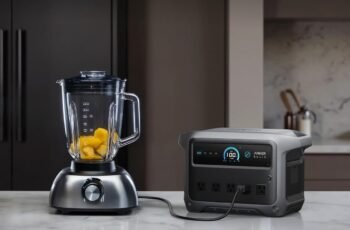
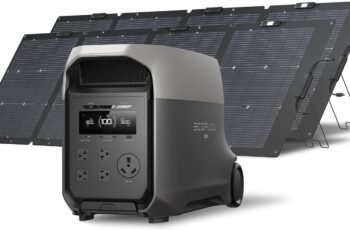
Like a quiet heartbeat under the stars, the right RV power station keeps everything humming without fuss. We’re comparing 2025’s most reliable, compact LiFePO4 options that balance portability, long cycle life, and real RV usability. We’ll touch on noise-free operation, fast AC and solar charging, smart MPPT, and RV-friendly ports and adapters. From weekend boondocking to extended trips, the picks ahead show where power, safety, and support meet—so what truly earns a spot onboard?
Key Takeaways
- Choose LiFePO4 models with 2000–4000Wh capacity and expansion options for multi-day RV trips and high-wattage appliances.
- Prioritize fast hybrid charging (AC + solar) with high MPPT input; 0–80% in ~45–60 minutes is ideal for on-the-go recharges.
- Ensure ample ports: multiple 120V AC outlets, 100W USB-C PD, 12V car, DC5521; RV-friendly ports like TT-30 are a plus.
- Verify inverter output and surge ratings; 1500–2000W continuous (3000–4500W surge) supports microwaves, kettles, and simultaneous devices.
- Check durability and support: 3000–4000+ cycles, robust BMS, 5-year warranties, quiet operation, and manageable weight or wheels for mobility.
AFERIY 3840Wh Portable Power Station (3600W LiFePO4)


Need serious, sustained power on the road? We like the AFERIY 3840Wh Portable Power Station for RVs that run big loads. Its 3600W LiFePO4 battery (3840Wh) supports five 120V AC outlets and a wide I/O set: 2 USB-A, 4 USB-C, 2 DC5521, a car socket, and XT60. It charges fast—0–100% in 2.5 hours via AC or with five 400W solar panels (up to 23% efficiency). The pack’s expandable to 11.5kWh, protected by a 6-layer BMS, and rated for 3500+ cycles. It’s heavy (104.7 lb), but robust, with a 5+2-year warranty. Note: solar panels sold separately; mixed display/support feedback.
Best For: RV owners and home backup users who need high-wattage, expandable off-grid power with fast AC/solar charging and broad outlet compatibility.
Pros:
- 3600W output with 3840Wh capacity, expandable to 11.5kWh; five 120V AC outlets plus wide I/O (USB-A/C, DC, car, XT60)
- Fast recharge: 0–100% in ~2.5 hours via AC or with five 400W solar panels (up to 23% efficiency); adjustable charge speed
- Long-life LiFePO4 (3500+ cycles), 6-layer BMS protection, and a strong 5+2-year warranty
Cons:
- Very heavy at ~104.7 lb; bulky for frequent moving
- Solar panels and expansion batteries sold separately; adds to total cost
- Mixed user feedback on display readability/availability and customer support responsiveness
OUPES Mega 1 Portable Power Station (1024Wh, 2000W AC, 140W USB-C)

For RVers who want fast charging without hauling a heavy brick, the OUPES Mega 1 stands out with a 1024Wh LiFePO4 battery, 2000W AC output (4500W peak), and up to 2200W hybrid input that can hit 0–80% in about 50 minutes. We appreciate its 27.8-pound build, 58 dB operation, and 5-year warranty. Four 120V AC outlets, dual 100W USB-C, four 18W USB-A, DC5521 ports, and a car socket cover essentials—from laptops to fridges and CPAPs. Charge via AC, solar (800W MPPT), car, or hybrid; choose 700W slow charge for longevity. Expand to 5kWh with the B2 battery and track everything in the app.
Best For: RVers, campers, and home backup users who want a lightweight yet powerful LiFePO4 station with ultra-fast hybrid charging, strong 2000W AC output, and optional capacity expansion.
Pros:
- 1024Wh LiFePO4 with 2000W AC (4500W peak) runs fridges, CPAPs, and small appliances; four 120V outlets plus dual 100W USB-C.
- Up to 2200W hybrid input with 1400W fast charge hits 0–80% in ~50 minutes; 800W MPPT solar; app control and 20ms UPS.
- Compact 27.8 lb build, ~58 dB operation, 5-year warranty; expandable to 5kWh with B2 battery.
Cons:
- Base 1024Wh capacity may be limited for multi-day off-grid use without the extra battery.
- Fast charging can increase wear; users seeking maximum longevity may need to stick to 700W slow charge.
- Solar panels and B2 expansion battery are sold separately, adding to total system cost.
Jackery Explorer 1000 V2 Portable Power Station

Looking to run real appliances without lugging a brick? The Jackery Explorer 1000 V2 packs a 1,070Wh LiFePO4 battery, 1,500W AC output (3,000W surge), and just 23.8 lbs with a foldable handle. We can power an RV fridge, small AC, or electric pot via three pure sine AC outlets, plus two USB‑C (100W PD), one USB‑A, and a 12V car port.
Charging’s flexible: default full in 1.7 hours to protect the pack, or app‑enabled 1‑hour emergency top‑off with ChargeShield 2.0 and quiet 30 dB mode. Expect 4,000 cycles (70%+), 10‑year lifespan. Note: solar panels aren’t included and must be Jackery‑compatible.
Best For: Campers, RVers, and emergency-prep users who need a portable, fast-charging power station that can reliably run real household appliances.
Pros:
- 1,500W AC output (3,000W surge) with three pure sine AC outlets plus 100W USB‑C, USB‑A, and 12V car port for versatile device support
- Fast charging: 0–100% in 1.7 hours by default or 1-hour emergency top-off via app; quiet 30 dB mode and ChargeShield 2.0 safety
- Long-life LFP battery rated for 4,000 cycles to 70%+ and 10-year lifespan in a 23.8 lb portable design
Cons:
- Solar panels not included and solar charging is limited to Jackery-compatible panels only
- App requires account management and extra steps to access some charging modes
- Higher price for capacity; display and size may feel modest/small to some users
ALLWEI Portable Power Station 300W (280Wh Solar Generator)

Traveling light but still want real AC power? We like the ALLWEI 300W (280Wh) for compact RV setups and weekenders. At ~6.5 lb and 9 x 4.7 x 7.8 inches, it slips in a cabinet yet powers essentials: two 110V pure sine AC outlets, USB-C PD 60W, two USB-A, three DC ports, and a car socket—up to nine devices at once.
Expect 300W running, 600W surge; stay under 300W continuous. Runtime ballpark: 280Wh × 0.85 ÷ device watts. Recharge via wall (5.5–6.5h), car (4.5–5.5h), or 100W solar (3–4h) with MPPT. Quiet fan, SOS light, BMS protections, clear LCD. Great value for light-to-moderate RV power.
Best For: RV campers, weekend travelers, and emergency backup users who need a compact, lightweight power station to run small essentials under 300W with multiple charging options.
Pros:
- Versatile outputs: 2 AC (pure sine), 60W USB-C PD, 2 USB-A, 3 DC, and car socket—power up to 9 devices simultaneously
- Fast, flexible recharging via wall (5.5–6.5h), car (4.5–5.5h), or 100W solar (3–4h) with built-in MPPT
- Portable and quiet: ~6.5 lb, compact footprint, smart cooling fan, SOS light, and robust BMS protections
Cons:
- 300W continuous (600W surge) limit excludes high-draw appliances like kettles, hair dryers, or microwaves
- 280Wh capacity means limited runtime for larger devices; efficiency reduces usable watt-hours to ~85%
- Solar panel not included; fan noise can be noticeable under heavier loads
Portable Solar Generator and 300W Power Station with 60W Foldable Solar Panel

Need a compact, RV-friendly setup that charges off-grid without fuss? We like this 300W portable solar generator (ZeroKor R200) with a 280Wh lithium pack and included 60W foldable monocrystalline panel (~20.5% efficiency). It delivers clean 110V pure sine wave power via two 300W AC outlets, plus DC (9–12.6V/10A), three USB-A (5V/3A; QC 9V/2A), and USB-C up to 15V/2A. At 5.08 lb and 8.5 x 6.7 x 4.1 inches, it’s easy to stash.
We can recharge by wall (about 7–8 hours), carport, or MPPT solar. Built-in BMS safeguards. Keep the junction box dry and avoid loads over 300W.
Best For: RVers, campers, and off‑grid users who want a lightweight 300W power station with an included 60W foldable solar panel for charging small devices and essentials.
Pros:
- Portable and compact (5.08 lb; 8.5 x 6.7 x 4.1 in) with included 60W monocrystalline panel (~20.5% efficiency) and MPPT charging
- Clean 110V pure sine wave output with versatile ports: 2x AC (300W max), DC (9–12.6V/10A), 3x USB-A (incl. QC), and USB-C up to 15V/2A
- Built-in BMS protections (short circuit, over/under-voltage, over-current, overload, overheating) and multiple recharge options (wall ~7–8 hrs, car, solar)
Cons:
- Not suitable for high-draw appliances >300W (e.g., coffee makers, hair dryers, pumps)
- Solar performance dependent on sun; junction box is not waterproof and must be kept dry
- 280Wh capacity limits runtime for larger devices; some users report occasional panel issues (though support offers replacements/refunds)
EF ECOFLOW DELTA 2 Portable Power Station

For RVers who want fast top-ups and dependable off-grid power, the EF EcoFlow DELTA 2 stands out with 0–80% AC charging in 50 minutes, a robust 1024Wh LiFePO4 battery (3000+ cycles), and 1800W of clean inverter output that runs 90% of common appliances. We like its 15 outlets, 120V output, and 100W USB-C for laptops. At 27 pounds, it’s portable yet substantial. Add extra batteries to reach 3kWh, or feed it up to 500W of solar for quiet, green charging. The BMS safeguards cells, and fan management is sensible. In the box: unit, AC cable, manual, and a 5-year customer service commitment.
Best For: RVers, campers, and homeowners who need fast recharges, dependable off-grid backup, and expandable capacity in a portable LiFePO4 power station.
Pros:
- Rapid AC charging: 0–80% in 50 minutes; full in ~80 minutes
- 1800W pure sine inverter runs 90% of common appliances; 15 outlets including 100W USB-C
- Long-life LiFePO4 battery (1024Wh, 3000+ cycles) with expandable capacity up to ~3kWh and 500W solar input
Cons:
- 27 lb weight is portable but hefty for frequent carry
- Solar input capped at 500W; requires optimal conditions and compatible panels
- Price can be high, and some users note cable length and occasional fan noise considerations
BLUETTI AC200L Portable Power Station (2048Wh, Expandable)

Serious RVers who want shore-power performance without the noise will zero in on the BLUETTI AC200L. We get 2048 Wh of LiFePO4 storage, expandable to 8192 Wh, and a 2400 W inverter (3600 W surge) that handles RV essentials. Thirteen outlets include a 30 A RV port, 100 W USB-C, and 48 V/8 A DC. It recharges fast: up to 2400 W AC (0–80% in ~45 minutes) or 1200 W solar in about 1.7–2.2 hours.
At ~61 pounds, it’s hefty but quiet and app-enabled (Wi‑Fi/Bluetooth). Notes: 12 V is 10 A, some connectors are proprietary, and 48 V DC may need the D40. Five-year warranty.
Best For: RV owners, campers, and home backup users who need near–shore-power performance, fast recharging, and expandable capacity without generator noise.
Pros:
- 2400 W inverter (3600 W surge) with 30 A RV output handles most RV/home essentials
- Fast recharge: up to 2400 W AC (0–80% in ~45 minutes) or 1200 W solar in ~1.7–2.2 hours
- Expandable from 2048 Wh to 8192 Wh; quiet LiFePO4 battery with app control (Wi‑Fi/Bluetooth) and 5‑year warranty
Cons:
- Heavy at ~61.4 lb; added footprint when using expansion batteries
- Some proprietary connectors; 48 V DC port may require D40 regulator for certain setups
- 12 V car port limited to 10 A output
Enphase IQ PowerPack 1500 Portable Power Station
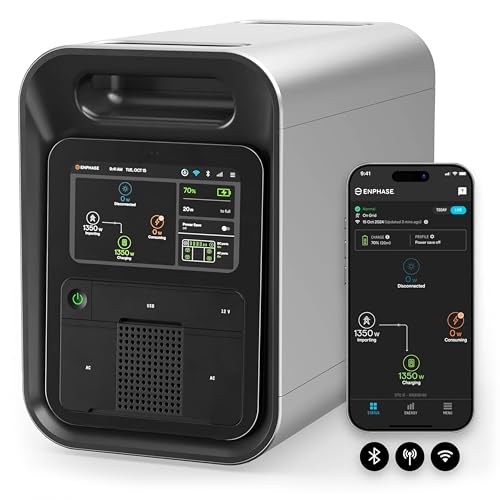
Looking for a pro-grade RV power hub that recharges fast and runs quietly? The Enphase IQ PowerPack 1500 packs 1500 Wh of LiFePO4 storage and delivers 1500 W continuous (3000 W surge) through four 120 V AC outlets, plus USB-A, dual 60 W USB-C, and a 12 V car port. We love the <75-minute AC recharge, ~4-hour solar top-up with two IQ panels, and sub-10 ms switchover for backup. The 7” touchscreen, 4G/Wi‑Fi/Bluetooth, and Enphase App make monitoring effortless. Rugged, UL certified, and all-weather ready, it runs fridges, tools, and laptops. At 45.9 pounds, it’s portable, reliable, and backed by a 5-year/2,500-cycle warranty.
Best For: RVers, campers, and homeowners who need a fast‑recharging, quiet, all‑weather portable power station with pro-grade monitoring and reliable backup performance.
Pros:
- 1500 Wh LiFePO4 with 1500 W continuous/3000 W surge across 11 ports, including 4 AC, dual 60 W USB‑C, and 12 V car port
- Rapid AC recharge in under 75 minutes; ~4-hour solar recharge with two IQ panels; sub‑10 ms backup switchover
- Rugged, UL certified design with 7″ touchscreen, 4G/Wi‑Fi/Bluetooth, and Enphase App control; 5‑year/2,500‑cycle warranty
Cons:
- At ~45.9 lb, it’s heavy for frequent carrying
- 1500 W output may be insufficient for high‑draw appliances like large AC units or space heaters
- Vehicle DC recharge (~14 hours) is relatively slow compared to AC and solar options
Jackery HomePower 3000 Portable Power Station (3072Wh, 3600W)

Need a powerhouse that’s actually RV-friendly? Jackery’s HomePower 3000 gives us 3072Wh of LiFePO4 capacity and a 3600W inverter (7200W surge), plus a dedicated TT-30 RV port. We can run a fridge, lights, router, and fans for hours—often a fridge for 1–2 days—and rely on the UL-certified UPS for ≤20ms switchover to keep cameras or medical fridges online.
Charging’s fast: 1.7 hours via hybrid AC/DC, 2.2 hours on AC, or solar to 80% in about 9 hours with two 200W panels. The app displays live watts and ETA. At 59.5 pounds, it’s compact, durable, 4,000-cycle tough, and tax-credit eligible. Panels cost extra.
Best For: RV owners and home users needing a high-capacity, fast-charging backup power station with true RV support and UPS protection for critical devices.
Pros:
- 3600W inverter (7200W surge) with 3072Wh LiFePO4 battery and dedicated TT-30 RV port
- Fast recharge: 1.7 hours hybrid AC/DC or 2.2 hours AC; app shows live watts and ETA
- UL-certified UPS with ≤20ms switchover; durable LiFePO4 (≈4,000 cycles) and eligible for 30% tax credit
Cons:
- SolarSaga 200W panels and expansion accessories add significant cost
- Hefty at 59.5 lbs, limiting portability for some users
- Solar recharge to 80% can take ~9 hours with two 200W panels, and performance varies in low sun
EF ECOFLOW DELTA 2 Max Solar Generator with 400W Panel

Crave rapid recharges and high-wattage output for an RV setup that runs like home? The EF ECOFLOW DELTA 2 Max pairs a 2048Wh LiFePO4 battery with 2400W output (X-Boost to 3400W) and 15 outlets, so we can run fridges, cooktops, and tools. Dual charging pushes 0–80% in 43 minutes (solar+AC up to 2400W), or 1.1 hours via AC alone. The included 400W IP68 panel hits up to 23% efficiency, topping up in about 5.1 hours—halve that with a second 400W panel. We like the app controls, low-battery alerts, and solar-priority settings. LFP longevity (3000 cycles) and a 5-year service plan seal it.
Best For: RV owners, home backup users, and outdoor enthusiasts who need fast recharging, high wattage output, and long-lasting LFP battery reliability with app-based control.
Pros:
- Fast dual charging: 0–80% in 43 minutes with combined solar+AC (up to 2400W); 1.1 hours via AC alone
- High power and versatility: 2400W output (X-Boost 3400W) with 15 outlets, runs most household appliances
- Long lifespan and support: LiFePO4 chemistry rated for 3000 cycles to 80% capacity and 5-year service
Cons:
- Heavy for frequent carry: power station ~50.6 lb and 400W panel ~35.3 lb
- Full solar top-up with one 400W panel takes about 5.1 hours; faster charging may require buying a second panel
- Premium pricing and potential stock availability concerns noted by some users
Factors to Consider When Choosing Portable Power Stations for RV
Before we pick a unit, let’s match power output to our RV appliances and size battery capacity to our real daily needs. We’ll check charging inputs and solar compatibility to keep recharging flexible on the road. Then we’ll confirm the port selection covers everything we use—AC outlets, USB-C, 12V, and any extras.
Power Output Rating
How much power does your RV setup really draw? We should match a station’s power output rating to our actual loads. Continuous wattage tells us what the inverter can sustain; for most RVs, we recommend at least 1000–1500W to run essentials like the fridge, lights, fans, CPAP, and TV. If we plan to use higher‑demand appliances or run multiple devices at once, step up to 1800–2400W continuous for headroom.
Surge (peak) wattage matters for startup spikes. Motors and compressors can momentarily double their draw, so we want a surge rating comfortably above our highest load—typically 2000–3000W—to cover AC compressors, microwaves, or blenders kicking on.
Compare both continuous and surge ratings across candidates to ensure reliable operation without tripping protections or brownouts.
Battery Capacity Needs
We’ve matched inverter output to our loads; now we need the fuel tank to back it up. Battery capacity, measured in watt-hours (Wh), dictates how long we can run lights, a fridge, or a CPAP between charges. As a rule, 1000–1500Wh supports typical RV essentials for a day; 2000–4000Wh suits longer trips or higher-wattage appliances.
Let’s size to our usage. Estimate daily running watt-hours, then target 1.5–2× that figure to maintain a reserve—especially with mixed 12V and AC loads. Real-world runtime hinges on inverter efficiency and draw profile. Use: expected hours = (Wh × system efficiency) / load (W). For example, 1200Wh × 0.85 / 150W ≈ 6.8 hours.
Prefer systems with expansion batteries to grow capacity later without replacing the core unit.
Charging Input Options
When it’s time to recharge, input flexibility makes or breaks our downtime. The best RV-ready stations accept AC wall, 12V car, solar, or a hybrid solar+AC feed, so we can top up wherever we park. Look for fast AC input: many units hit 0–80% in 43–50 minutes and reach full in about 1–2 hours on larger packs—perfect between camp moves.
We also value dual charging paths. Some models combine AC with solar to push total input near 2400W, trimming hours off turnaround. Check connector standards—MC4, XT60, and proprietary ports—and whether a compatible MPPT is integrated or required. Finally, smart charging helps. Systems that prioritize sources (often solar first) and offer app controls let us cap amperage, schedule charging, and avoid tripping campground circuits.
Solar Compatibility
Fast AC inputs are great between hookups, but solar compatibility keeps us powered off-grid day after day. We look for true solar input with an MPPT controller, since it squeezes more energy from panels in shifting light. Higher MPPT solar input ratings—think 800–1200 W—let us recharge quickly when we’ve got the panel capacity to match.
Remember, charging speed is capped by both the station’s solar input limit and our panels’ total wattage. If we exceed the unit’s solar rating, we won’t gain speed. We also check connector types and recommended panel ranges; some models only hit their claimed times with specific 60–400 W panels or proprietary leads.
Finally, LiFePO4 batteries shine for solar cycles, tolerating frequent daily charge/discharge with longer cycle life.
Port Selection Variety
Curiously, the right port mix can make or break an RV setup. We need a station that covers AC, USB-C, USB-A, 12V car/DC, and ideally an RV-specific outlet. A broader spread means we can power the fridge, run fans, charge laptops, and top off wearables without juggling adapters.
Count the AC outlets and check continuous wattage. More sockets with 1800–2400W continuous output let us run multiple appliances simultaneously, while a healthy surge rating handles startup spikes.
Look for RV-friendly ports like a 30A TT-30. Plugging straight into the rig simplifies wiring and reduces conversion losses.
Multiple USB-C PD ports (plus USB-A) keep high-demand devices and accessories charging at once. With balanced AC, DC, and USB, one station can serve the whole cabin efficiently.
Weight and Portability
After we sort the right ports and output, we have to ask how much muscle it takes to move the station around. Weight drives usability in an RV. Sub-15‑pound models are easy to grab, but they typically trade off capacity and continuous output. If we need thousands of watt‑hours and 1000+ watts sustained, expect a 40‑plus‑pound unit that’s tougher to lift and maneuver.
Portability features matter. Wheels and sturdy carry handles make campsite shuffles far easier, especially when we’re hopping between hookups. We also watch physical size: keeping any axis under about 16 inches helps the station slide into tight cabinets or under seating.
Finally, we evaluate weight-to-capacity. We aim for strong watt‑hours per pound, balanced against how often we’ll carry the unit during trips.
Warranty and Support
Why trust a power station if the company won’t stand behind it? We should insist on a warranty of at least 2–5 years with clear terms on battery lifespan and failure, plus accessible support for troubleshooting. Prioritize brands that back LiFePO4 chemistry and BMS safety protections, and that guarantee retained capacity after cycles—ideally 70%+ after 4,000 cycles.
Let’s also weigh service depth: robust service plans, on-site repair options, and responsive multi-channel support (phone, chat, email). Check whether the warranty is transferable to a new owner and whether it excludes expansion batteries or solar panels.
Before we buy, review post-sale metrics: average response times, availability of replacement parts, and documented resolution success. Consistent, transparent support reduces downtime and protects our investment on the road.
Conclusion
So after all this talk of “roughing it,” we’re clearly packing lithium brains, silent inverters, and enough ports to power a spaceship. Funny how freedom looks a lot like MPPT, LiFePO4, and a fat warranty. Still, that’s the point: we get quiet nights, fast top-ups, and worry-free miles. If we choose right—capacity, cycle life, expandability, and RV-ready outputs—we won’t just survive the road. We’ll hum along smugly, off-grid, while pretending it’s rugged minimalism.