EBL Portable Power Station 500w(Peak 1000W), Camping Solar 519.48Wh Outdoor: Quick Overview
Can a compact battery provide dependable backup and camping power without the cost, fumes, or engine noise of a gas generator? The EBL portable power station is designed to do exactly that, pairing a 519.48Wh battery with a 500W continuous inverter and a broad selection of charging ports. At the listed price of $179.98, reduced from $249.99, it sits in the entry-level-to-midrange category for portable power stations.
That price makes the unit worth considering for phones, laptops, lights, cameras, and other modest loads. It also offers pure sine wave AC power, which is generally a better match for sensitive electronics than a rougher inverter waveform. However, the 500W rating is a firm operating boundary: you should not connect an appliance rated above 500W, even though the unit advertises a 1,000W peak figure.
The buying decision comes down to priorities. You get many output choices and three recharge methods, but the solar panel is sold separately, charging is measured in hours rather than minutes, and high-draw heating, refrigeration, and motor loads can quickly expose the inverter’s limits.

EBL Portable Power Station Specifications and Everyday Design
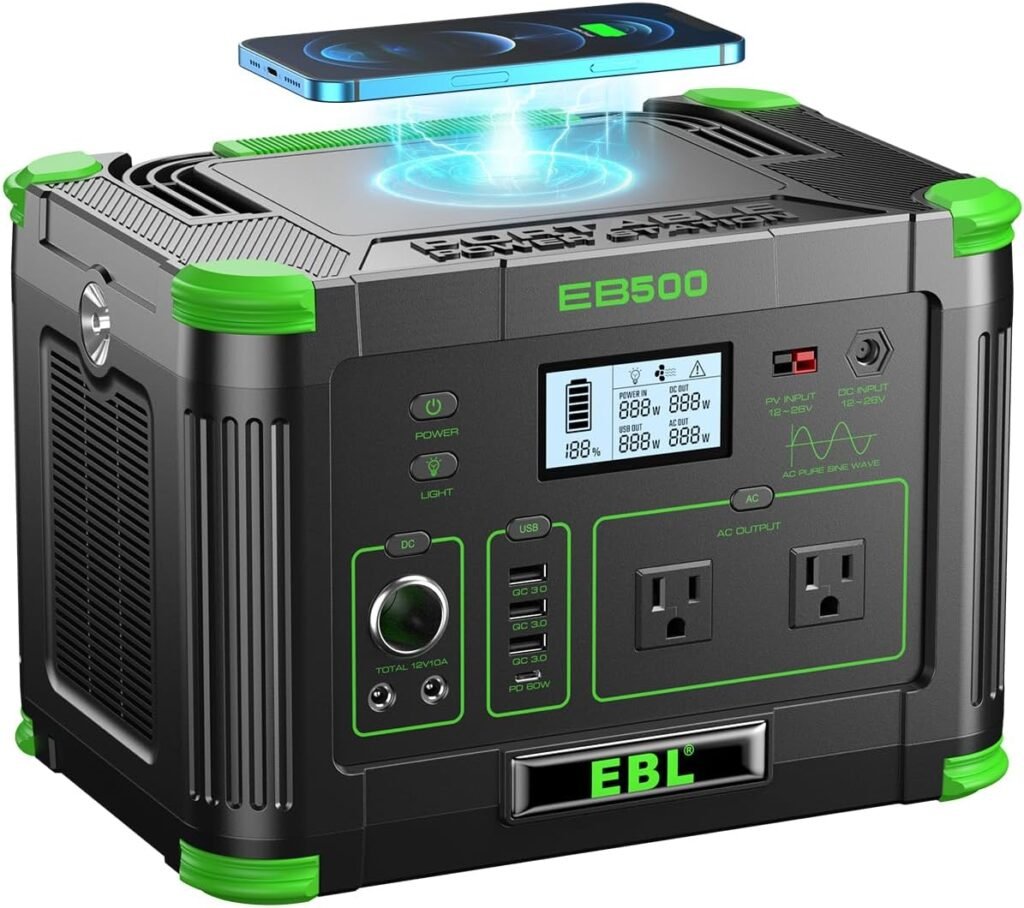
The EBL portable power station combines a useful amount of stored energy with a size that is more practical for vehicles and home storage than for long-distance carrying. Its headline specifications are:
| Specification | Details |
|---|---|
| Battery capacity | 519.48Wh |
| Battery claim | 140,400mAh |
| Weight | 14.1 pounds |
| AC output | 500W rated, 1,000W peak |
| Inverter | 120V pure sine wave |
| Included outputs | Two AC outlets, three USB-A ports, one USB-C port, two DC ports, one 12V car port, and a wireless charging pad |
Wh capacity is the more useful number when comparing battery stations. In simple terms, 519.48Wh represents the stored energy available before conversion losses. Your actual result will vary with the device’s wattage, inverter efficiency, battery age, ambient temperature, and whether the station is powering AC equipment or using a more efficient USB or DC connection. Treat the figure as a capacity category, not a promise of an exact runtime.
At 14.1 pounds, this is manageable for car camping, tailgating, emergency storage, or moving between rooms. It is less appealing for backpacking, where every pound matters and a much smaller battery is normally preferred. Before ordering, write down each intended appliance’s rated wattage and compare the total with the 500W continuous limit, paying particular attention to heating elements, pumps, refrigerators, and motor-driven tools.
Key Features of the EBL Portable Power Station: Output Ports and Device Compatibility
The output selection is one of this model’s strongest practical features. Two 120V AC outlets use a pure sine wave inverter, a waveform generally preferable for laptops, monitors, medical equipment, and small appliances that may behave poorly with lower-quality AC power. The inverter still has a 500W continuous ceiling, so cleaner power does not mean unlimited power.
For smaller electronics, you receive three USB-A Quick Charge 3.0 ports rated up to 18W each, plus a 60W USB-C Power Delivery port. There are also two DC ports, one 12V car-style port, and a wireless charging pad. That combination can cover a phone, tablet, laptop, camera batteries, LED lights, and low-wattage camping accessories at the same time, provided the combined demand remains within the station’s limits.
“Fast charging” depends on the device, cable, charging protocol, and power available. The 60W USB-C connection is the more relevant choice for a compatible laptop, while the 18W USB-A outputs are better suited to phones and smaller accessories. Wireless charging is convenient, but it may be slower or less efficient than a wired connection.
- List every device you expect to run simultaneously.
- Check each input rating or AC wattage printed on its label.
- Add the loads, including any likely startup demand from motors or compressors.
- Leave sensible headroom below 500W rather than planning around the 1,000W peak number.
Battery Backup Performance for Home Emergencies and Camping
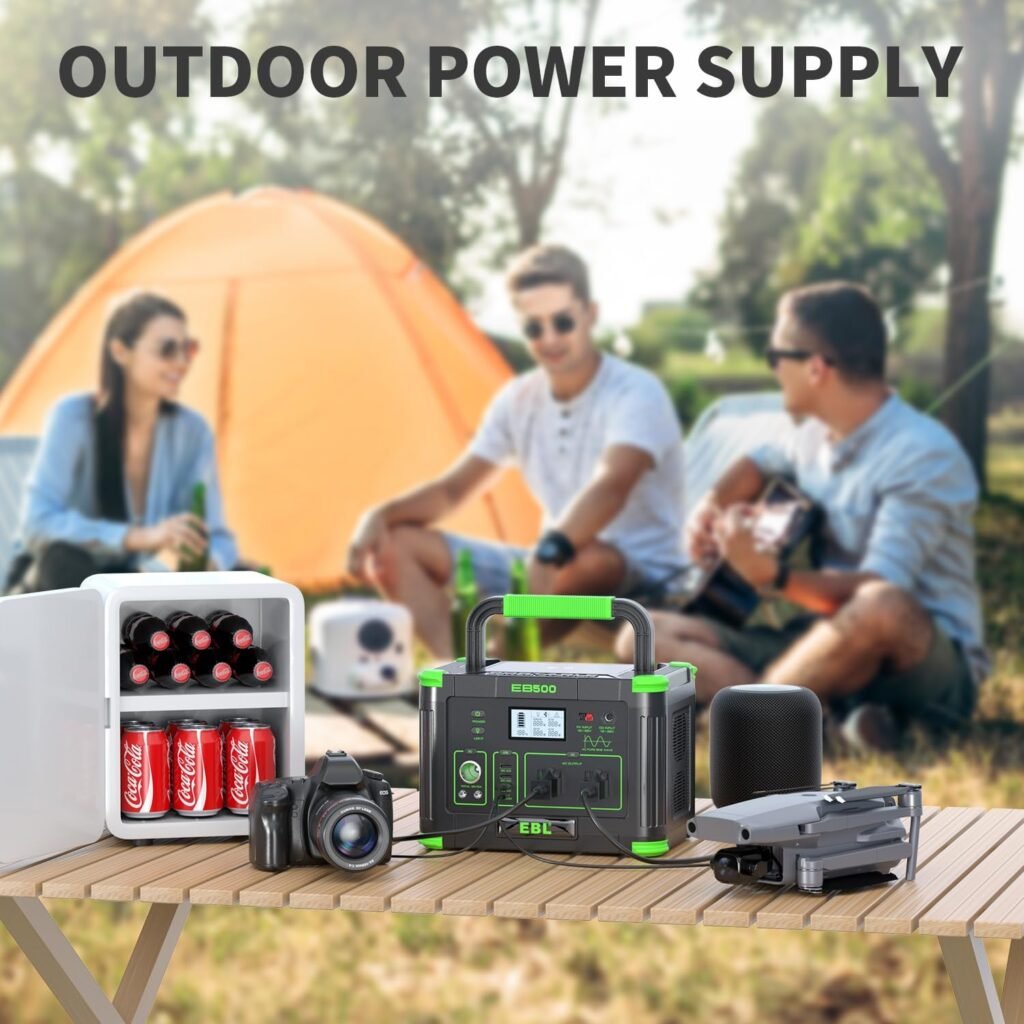
This battery is best viewed as an essential-electronics backup, not a whole-home power system. It can extend access to phones, tablets, laptops, lights, camera batteries, drones, and other equipment below the inverter’s rated output. That makes it useful during short outages, remote work, road trips, and campsites where quiet power matters.
CPAP machines and mini-fridges require more careful testing. A CPAP’s consumption can change when a humidifier or heated tubing is enabled, while a refrigerator compressor may draw a higher surge when it starts. Average wattage alone may therefore give an overly optimistic runtime estimate. The same caution applies to appliances with heating elements and equipment that cycles on and off.
Prepare for an outage before one occurs. Charge the station fully, test every critical device, record the approximate runtime under your normal settings, and store the required cables beside the unit. Turn off unused output modes, especially AC, because the manufacturer says the inverter may continue consuming battery power even when no appliance is connected.
That preparation separates realistic backup expectations from marketing language. The EBL portable power station can keep essential electronics operating for a limited period, but it cannot replace a high-output generator for electric cooking, heating, large tools, or extended refrigerator use.

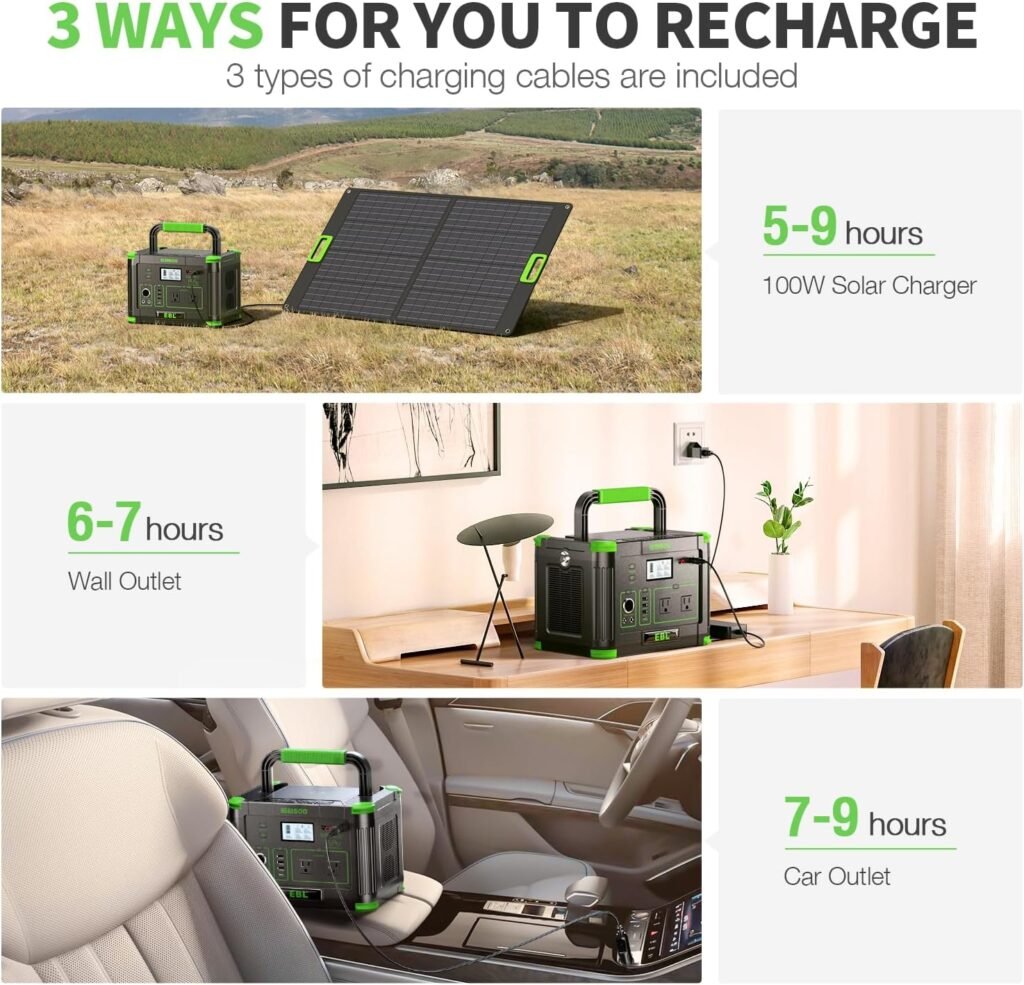
Three Ways to Recharge the EBL Portable Power Station
You can recharge the unit from a wall outlet in approximately 6–7 hours, from a vehicle’s 12V outlet in approximately 7–8 hours, or from a compatible solar panel in approximately 6–9 hours. Solar operation requires a panel rated at 100W or higher, and that panel is sold separately, so the complete off-grid setup costs more than the battery station alone.
The solar estimate is a useful guide rather than a guarantee. Panel wattage, sunlight intensity, shade, angle, temperature, and the station’s charge-controller limits all affect the result. A panel that produces its advertised rating only under ideal conditions may take substantially longer in weak or interrupted sunlight.
- Use the supplied wall adapter or a confirmed compatible replacement.
- Keep the charging input at or below 23V.
- Inspect the plug and connectors for damage before connecting them.
- Place the station in a dry, ventilated location away from extreme heat or cold.
- Charge before a trip or forecasted outage instead of relying on same-day solar recovery.
Wall charging is the predictable option for preparation, while car charging is convenient during travel. Solar is most useful when you already own suitable equipment or plan to remain off-grid long enough for weather and positioning to work in your favor.
Safety Systems, Battery Care, and Operating Limits
The listed Battery Management System includes temperature control, overvoltage protection, overcurrent protection, and short-circuit protection. Those safeguards can reduce risk during normal operation, and the pure sine wave inverter is intended to provide cleaner AC power to sensitive devices. They do not make damaged cables, unsuitable adapters, or overloaded appliances safe.
Two limits deserve special attention. Do not connect a device rated above 500W, and do not use a charging adapter with an input voltage exceeding 23V. The 1,000W peak rating describes temporary surge capability; it should not be treated as permission to run a larger appliance continuously.
For storage, the manufacturer instructs you to use and recharge the station at least once every three months. Keep it dry and in a moderate-temperature location, and avoid leaving it exposed to conditions that could damage the casing or battery.
Stop using the unit if you notice swelling, unusual heat, damage, an unusual odor, smoke, or repeated error behavior. Don’t open the battery enclosure yourself. Disconnect it from power and contact the manufacturer for guidance instead.
What Customers Are Saying About the EBL Portable Power Station
The supplied product brief does not include the displayed star rating or review count, so those figures should be checked on the product page at publication rather than repeated here as if verified. That limitation matters: a review summary is more useful when readers can see both the score and the number of experiences behind it.
When evaluating customer feedback, look for recurring comments about portability, the number of charging choices, usefulness during camping or outages, charging speed, display readability, fan or operating noise, and real-world runtime. Comments about charging a phone or laptop should be weighed separately from reports involving a CPAP machine, mini-fridge, compressor, or other demanding load. Those use cases place very different demands on a battery of this size.
The most useful negative-review checks include reports of capacity falling short of expectations, solar-panel compatibility problems, adapter failures, shutdowns under load, or battery drain when AC remains enabled. A one-line complaint is a signal to investigate, not proof of a product-wide defect.
Prioritize verified-purchase comments that name the device used, measured or approximate runtime, charging conditions, and purchase date. Customer experiences can change with accessories, usage patterns, firmware, and stock revisions, so you should judge patterns across multiple detailed reviews rather than allowing one anecdote to decide the purchase.
How the EBL Portable Power Station Compares With Alternatives
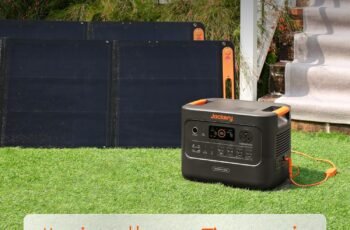
The Jackery Explorer occupies a similar 500W-class position and is commonly considered by shoppers seeking a portable battery for camping or emergency electronics. The meaningful comparison is not the brand name alone: examine battery capacity, weight, output selection, charging ecosystem, warranty, and the price shown when you order. The EBL’s $179.98 sale price, compared with its stated $249.99 original price, gives it a strong value benchmark if those specifications match your needs.
The BLUETTI EB3A is a smaller, feature-focused alternative. You should compare its capacity, AC output, USB-C charging, display functions, expansion possibilities, and sale pricing with the EBL rather than assuming that a lower or higher price automatically means better value. Current competitor pricing and specifications can change, so verify the live listing before making a final comparison.
| Comparison point | What to check | Why it matters |
|---|---|---|
| Continuous wattage | Output available without overload | Determines which appliances can run |
| Battery capacity | Wh rating | Indicates how much energy is stored |
| Recharge | Wall, vehicle, and solar times | Shows how quickly you can recover power |
| Port mix | AC, USB-C, USB-A, DC, and wireless outputs | Reduces the need for extra adapters |
| Ownership support | Warranty, accessories, and replacement service | Can justify paying more for a competitor |
Car campers and emergency users usually benefit from a balance of capacity and portability. Frequent off-grid users should give greater weight to solar-input details, service support, warranty terms, and the availability of compatible accessories.
Who Should Buy This Portable Power Station?
The strongest audience includes car campers, tailgaters, remote workers, travelers, renters, and households seeking quiet short-term backup for communication devices, lights, laptops, and other modest loads. Multiple output types make it easier to support mixed equipment without carrying a separate charger for every device.
The form factor suits trips where your equipment travels by car rather than on your back. It is less attractive for extended backpacking, large power tools, electric cooking, heating, or any job that regularly approaches the inverter ceiling. Long refrigerator runtimes and rapid solar replenishment also call for a larger or more specialized system.
If you already own compatible solar equipment, or intend to add a 100W-or-higher panel, the recharge flexibility becomes more useful. Include the panel in your total budget, however, because it is not included with the station.
Use this decision test before ordering: write down the three devices that matter most, check their wattage and expected runtime, then confirm that the capacity, ports, and recharge method fit those demands. If the result depends on running a high-draw appliance continuously, look elsewhere.
Price, Included Value, and Long-Term Ownership
At the listed $179.98 sale price, the EBL portable power station offers a substantial amount of hardware for occasional emergency and camping use. The stated original price is $249.99, but prices can change, so check the current figure and discount before ordering rather than assuming the promotion will remain available.
Your purchase value comes from the 519.48Wh lithium battery, 500W pure sine wave inverter, temporary 1,000W peak capability, two AC outlets, several USB and DC outputs, wireless charging, and three recharge pathways. The solar route adds flexibility but also an extra purchase because the compatible panel is sold separately.
Other ownership costs include replacement charging accessories, transport considerations, and the time or electricity required for regular recharging. Occasional users may gain the most from the low sale price, while frequent off-grid users should place more weight on warranty coverage, cycle-life information, solar-input details, and service availability.
After delivery, save the receipt and record the purchase date. Test every port during the return period, confirm that the included accessories match the listing, and keep the packaging until you are satisfied that the station charges and powers your intended devices normally.
Setup Checklist Before the First Trip or Outage
A short setup session can reveal compatibility problems before you need the battery. Work through this sequence with the station fully accessible:
- Inspect the casing, display, outlets, ports, and charging connector for visible damage.
- Charge the station from a wall outlet and confirm that the display responds normally.
- Test a phone or other small device through USB-C and USB-A, then check the wireless pad with a compatible phone.
- Connect your intended AC equipment separately and verify that it operates normally.
- Test the highest-demand appliance on its own, noting startup behavior and approximate battery drain.
- Label or pack the cables required for phones, laptops, CPAP equipment, lights, and vehicle charging.
- Practice turning AC, USB, DC, and wireless functions on and off, then disable AC immediately after use.
- Write a load plan showing each device’s wattage, priority, and expected operating schedule.
Keep that load plan with the station during a camping weekend or outage. It prevents guesswork when you need to decide whether to charge a laptop, run a light, or preserve energy for communication equipment.
Pros and Cons
Pros
- Competitive $179.98 listed sale price compared with the stated $249.99 original price
- 519.48Wh capacity in a manageable 14.1-pound car-camping and home-backup format
- Pure sine wave 120V AC inverter with two outlets
- Broad output selection including 60W USB-C PD, USB-A QC 3.0, DC, 12V car, and wireless charging
- Three recharge methods: wall, vehicle, and compatible solar panel
Cons
- 500W continuous output excludes many heaters, cooking appliances, large tools, and other high-demand equipment
- Compatible solar panel is sold separately, increasing the complete setup cost
- Wall, car, and solar recharge estimates still require approximately 6–9 hours under stated conditions
- Runtime can vary substantially with compressors, humidifiers, startup surges, temperature, and conversion losses
- The product brief does not provide a customer star rating or review count for independent assessment here
Final Verdict
Key Takeaways
- The $179.98 listed sale price makes this a value-oriented option for camping and short emergency backup, provided the discount is still available.
- Its 500W continuous inverter is suitable for modest electronics but not high-draw heating, cooking, large tools, or whole-home backup.
- The varied AC, USB, DC, car, and wireless outputs are useful for mixed devices, while the 60W USB-C port is the most relevant connection for compatible laptops.
- Wall, car, and solar charging provide flexibility, but solar charging requires a separately purchased compatible panel and several hours of suitable conditions.
- Test your most demanding device before relying on the station, and switch off AC output when it is not needed to avoid unnecessary battery drain.
Frequently Asked Questions
Which power station is better, Jackery or Anker?
Neither is automatically better for every shopper. Compare the exact model’s continuous wattage, Wh capacity, weight, charging speed, port selection, warranty, and current price against your devices and expected runtime.
Which Anker SOLIX power station is the best?
The best Anker SOLIX model depends on whether you prioritize portability, higher output, longer runtime, or expandable storage. Match the model’s continuous wattage and battery capacity to your largest appliance instead of choosing solely by brand or battery headline.
Which is better, Anker or Bluetti power station?
Anker and Bluetti offer different model ranges, so the better choice depends on the specific units being compared. Check solar input, recharge time, USB-C output, inverter rating, capacity, warranty, and service support before deciding.
What is the best portable battery power station for camping?
For car camping, the best station balances battery capacity, weight, quiet operation, output ports, and recharge options. The EBL model reviewed here suits modest electronics and low-wattage accessories, but a larger station is preferable for extended refrigeration, heating, or power-tool use.