Imagine we’re camping off the grid and a single charge keeps our essentials alive from sunrise to movie night. We’ve tested several mobile power stations, from compact 88Wh units to expandable setups that could back up a small home. We’ll discuss how they balance capacity, portability, and recharge options, and we’ll share practical tips for choosing the right one for your daily routine. Let’s explore what matters most so you can keep devices powered wherever you go.
Key Takeaways
- Choose a compact, lightweight unit (88–111Wh) for true on-the-go use without sacrificing essential outlets.
- For longer trips, pick a high-capacity model (2000Wh+) with multiple outputs and fast recharge.
- Ensure the power station supports your devices (AC, USB-C PD, USB-A, 12V) and startup surges.
- Favor models with versatile charging options (AC, car, solar) and quick recharging speeds.
- Consider durability, safety features, and expansion options for future-proof, reliable power.
MARBERO 111Wh Solar Generator with 30W Panel


If you’re after a compact, all-in-one mobile setup, the MARBERO 111Wh Solar Generator with a 30W Panel stands out thanks to its complete package: a 111Wh battery paired with a foldable 30W panel and essential outputs (two AC ports, multiple USB ports, and a DC option) all in a lightweight, portable bundle. We’ve got a 111Wh lithium battery (30,000mAh) powering two 110V/60Hz AC ports, a 120W peak, a 120W DC port, four USB-A ports, and a fast-charging USB-C. The foldable panel weighs 1.8 lbs, connects via smart charging, and includes safety protections for outdoor use. This kit suits camping, road trips, and outages.
Best For: campers, road-trippers, and anyone needing a compact, all-in-one off-grid power solution for outages and outdoor activities.
Pros:
- Ultra-portable setup with a lightweight power station (2.3 lbs) and foldable 30W panel.
- 111Wh capacity supports multiple outputs (2 AC ports, DC, USB-C, and USB-A) for versatile device charging.
- Smart charging and safety protections with foldable panel, making it ideal for outdoor use.
Cons:
- Limited 30W solar input may result in slower recharge times in cloudy conditions or for higher-power devices.
- 111Wh capacity isn’t sufficient for high-draw appliances for extended periods.
- Only 80W continuous AC output (120W peak) may restrict usage of higher-wattage equipment.
GRECELL 300W Portable Power Station with AC Outlets

The GRECELL 300W Portable Power Station is ideal for campers and remote workers who need reliable, mid-range power in a compact package. We value its 230Wh LiFePO4 battery, 300W continuous (600W surge), and two AC outlets that power laptops, cameras, and small projectors. We can fast-charge up to seven devices with USB-C PD 60W, USB-A, and Type-C inputs, plus DC options. Charging options include AC in 2.5–4.5 hours or 1.5-hour fast charge via 100W Type-C and DC inputs. Built-in BMS, dual cooling fans, and a 3-level LED flashlight keep safety and visibility strong for outdoor use. Warranty is two years.
Best For: campers, remote workers, and small-device users who need reliable mid-range power in a compact package.
Pros:
- 230Wh LiFePO4 battery with 300W continuous (600W surge) and dual AC outlets
- Fast charging options: 1.5-hour top-up using 100W Type-C and DC inputs; supports multiple devices simultaneously
- Built-in safety features (BMS, overload/overcharge protection, short-circuit protection) and dual cooling fans
Cons:
- Not suitable for high-watt appliances like coffee pots or kettles
- Real-world charging gauge behavior may vary and charger recommendations can differ
- Only 230Wh capacity limits longer-duration power for power-intensive needs
HOWEASY Portable Power Station: 88Wh Solar Generator

For hikers and weekend campers who need compact power on the go, the HOWEASY 88Wh Solar Generator stands out with its ultra-light 2.3-pound weight and a full eight-output setup. We’ll power laptops, phones, cameras, lights, and mini fans with 120W rated and 150W peak via two AC sockets, plus USB-C, USB-A, QC 3.0, and 12V DC ports. Its LED display shows status and remaining power. We value portability with a hidden handle, three recharging modes, and a 1500+ cycle life. It’s TSA-friendly under 100Wh, ships with AC adapter and car charger, and offers 24-month warranty and 24/7 support.
Best For: Hikers, weekend campers, and outdoor enthusiasts who need a compact, lightweight power solution with multiple output options and reliable charging modes.
Pros:
- Ultra-lightweight at 2.3 lb with a compact footprint and hidden carry handle for easy portability
- Eight-output versatility includes two AC sockets, USB-C, USB-A, QC 3.0 USB, and 12V DC, plus LED status display
- Three charging options (AC adapter, car charger, and solar input) with a claimed 1500+ cycle life and TSA-friendly <100Wh rating
Cons:
- Some laptops may require specific input voltages (potential compatibility issues noted)
- Solar panel not included, limiting off-grid recharging options without extra equipment
- Charge speeds can vary by device and mode, with occasional pacing concerns reported by users
Anker SOLIX C2000 Gen 2 Portable Power Station
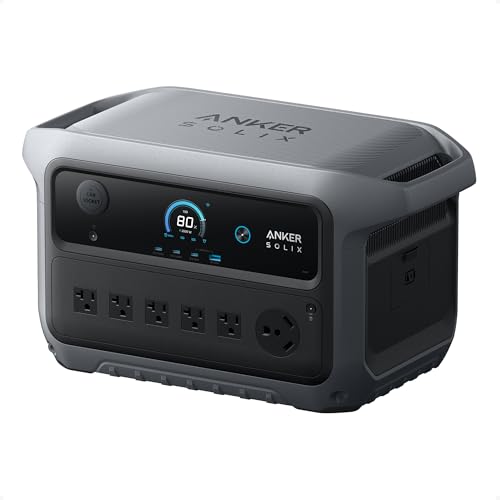
Anker SOLIX C2000 Gen 2 is our pick for serious home backup and on-the-go power with its 2,400W rated and 4,000W peak output. We power expectations with a 2,048 Wh LiFePO4 battery, expandable to 4 kWh, and a portable 18.9 kg frame. It handles home outages, camping, and road trips, boasting ultra-efficient standby at 9 W and up to 32 hours for a dual-door fridge (up to 64 hours with expansion). Full recharge in 58 minutes across six modes, plus 800 W UltraFast Alternator Charging for car use. Includes cables, guides, and a 5-year warranty for dependable, versatile energy.
Best For: Those seeking a high-capacity, fast-recharging portable power solution for serious home backup, camping, and road trips.
Pros:
- High power output: 2,400W rated with a 4,000W peak, suitable for multiple appliances including most A/Cs.
- Fast recharge: full charge in 58 minutes across six modes; 800 W UltraFast Alternator Charging for car use.
- Large expandable capacity: 2,048 Wh LiFePO4 battery expandable to 4 kWh, with a portable 18.9 kg frame.
Cons:
- Relatively heavy for a portable unit (18.9 kg / 41.7 lb).
- Higher upfront cost may be a consideration given its premium features.
- Requires access to solar/alternator setup for optimal multi-mode charging (not all users have this).
DaranEner 56000mAh Portable Power Station with AC Outlets

With 56,000mAh and 179.2Wh, the DaranEner NeoZ shines for on-the-go power when you need multiple devices charged fast. We’re looking at a portable LiFePO4 unit with 300W inverter (600W surge) and 12 safety features, weighing about 5.7–6.2 lbs. It offers 7 ports: 4 outputs (DC5521, USB-C 60W, two AC outlets) and 3 inputs (DC5521, two USB-A 18W). Fast charging hits 100% in 1.5 hours from a home outlet, or about 2 hours via car or MPPT solar. It targets laptops to cameras, includes a 2-year warranty, and supports simultaneous charging and use.
Best For: This portable LiFePO4 power station is best for outdoor enthusiasts, emergency preparedness, and on-the-go users who need reliable fast charging for laptops, cameras, and other small appliances.
Pros:
- Fast charging: 100% in 1.5 hours from a home outlet and about 2 hours via car or MPPT solar.
- Lightweight and portable for its capacity (about 5.7–6.2 lbs) with a durable build and multiple charging options.
- 12 safety features and LiFePO4 chemistry deliver long cycle life (usable > 3,500 cycles) and improved thermal stability.
Cons:
- Rated output 300W (600W surge) may limit use with higher-wattage devices.
- Real-world performance on high-load devices can vary according to user reviews.
- 179.2Wh capacity may require careful power budgeting for larger deployments or extended outages.
Factors to Consider When Choosing Mobile Power Stations
As we choose a mobile power station, we start by matching battery capacity and output power to our everyday needs. We’ll weigh charging options, weight, and portability to fit our on-the-go routines, while also checking durability and safety features. Let’s consider these factors—capacity, power, charging flexibility, and practicality—to guide a confident pick.
Battery Capacity Considerations
How much capacity do you actually need? We consider battery capacity in Wh or Ah, because higher Wh means longer runtimes for our devices—230Wh versus 88Wh makes a real difference. LiFePO4 versus lithium-ion chemistries change cycle life and safety, with LiFePO4 often offering longer life and better heat tolerance. A larger capacity lets us run higher-wattage devices for longer, but it adds weight and size, which hits portability. Real-world runtime depends on load wattage; a 150W draw will deplete an 88Wh pack far faster than a 50W load, cutting expected hours. Some models offer expandable or modular capacity, letting future growth without replacing the core unit. Choosing capacity means balancing needs, weight, and future flexibility.
Output Power Needs
Do you know your devices’ running and startup demands? We do, and that matters when selecting a mobile power station. Match the continuous wattage to your total running load so you don’t overload—300W covers laptops and lights, but not high-watt appliances like coffee makers. Don’t overlook peak surge capacity (often 600W–4,000W); startup spikes from mini-fridges or power tools can overwhelm a low-surge unit. Guarantee sustained output aligns with your usage duration, because a unit with high peak yet low continuous power may falter on long runs. Count outlets and types (AC, USB-C, USB-A, DC) to power multiple devices without tipping the limit. Finally, factor battery chemistry and cycle life; tougher packs handle repeated high-drain draws better than cheaper ones.
Charging Options Variety
Charging options matter because you’ll rely on a mobile power station in a variety of settings. We look for multiple recharging methods—AC, solar, car 12V, and USB-C—so you can top up wherever you are. We note recharge times and capabilities, from fast 1.5-hour charging to longer 2.5–4.5 hours, to match your usage pattern. We check whether the unit supports simultaneous recharging and device charging to maximize uptime. Optional solar panel inclusion or compatibility matters, since some systems need an external panel or offer limited wattage. We verify maximum input/output power during charging to ensure it can handle high-wattage devices when plugged in. In short, flexible, predictable power at the speed you need.
Weight And Portability
Weight and portability shape how practical a mobile power station is for your trips. We weigh options by weight, size, and how you’ll haul them between campsites or cars. Lighter units like the MARBERO M82MAX, at about 2.3 lbs, are easy for short trips and camping, while heavier models—think the Anker SOLIX C2000 Gen 2 at 41.7 lb—sacrifice frequent movement. Compact dimensions matter too: small form factors (MARBERO at 6.5 x 3.2 x 4.6 inches) fit tight spaces, but larger boxes (Anker SOLIX at 18.1 x 9.8 x 10.1 inches) need more room. Foldable panels and integrated designs cut bulk, helping transport between campsites. Higher-capacity units offer longer runtimes but reduce portability; lighter options trade run time for weight. Built-in handles and balanced weight ease one-person carrying.
Durability And Safety
Durability and safety can make or break a mobile power station experience. We look for LiFePO4 or lithium-ion chemistries based on longevity, thermal stability, and how they handle heat and misuse, with LiFePO4 often delivering longer cycles and steadier performance. A robust battery management system provides overload, overcharge, and short‑circuit protection to prevent unsafe charging and discharging events. We also consider peak and continuous power ratings—2,400W steady, 4,000W peak—because sudden startup surges test a unit’s resilience. Ten-plus safety features, including overcurrent and temperature monitoring with automatic shutoff, matter for outdoor or emergency use. Physical protections—rugged enclosures, solid build quality, proper ventilation—mitigate damage from drops, heat, or dust exposure, ensuring safer, more reliable operation.
Lifespan And Cycles
Lifespan is defined by how many complete charge–discharge cycles a mobile power station can endure before its usable capacity noticeably drops, and LiFePO4 chemistry often edges out lithium-ion here with 1,500 to 3,500+ cycles. We look for higher cycle life as a signal of long-term durability, especially for frequent charging and discharging. Some models advertise “cycle life >1500 times” or “usable >3,500 cycles,” but real remaining capacity hinges on depth of discharge and operating conditions. Deep discharges shorten effective cycles, so manufacturers typically specify a DoD (often 80% or 90%) to optimize lifespan. Warranty length also serves as a practical proxy for expected life, with longer warranties aligning with higher cycle-life expectations. In short, consider cycle specs, DoD guidance, and warranty when evaluating duration.
Panel Compatibility
Panel compatibility comes down to how the charger’s MPPT or PWM input matches your solar panel’s voltage and current. We look for a solar panel that delivers within the device’s optimal charging window (commonly around 12–24V for portable units) to maximize speed and efficiency. Some power stations specify a maximum solar input wattage (e.g., 30W or higher); ensure your panel total wattage aligns with this limit, as extra panels won’t boost charging. Foldable or portable panels should state open-circuit voltage (Voc) and short-circuit current (Isc) to fit the power station’s input specs safely. For reliability, choose panels with blocking diodes and LiFePO4/Li-ion compatibility notes, and verify whether direct solar charging via Type-C or dedicated DC input is supported.
Expansion Potential Upscale
When we talk about expansion potential, we’re looking at how a mobile power station can grow with add-ons rather than be replaced. We evaluate expandable compatibility and modular battery options that let you raise stored energy beyond the base pack. Look for systems offering up to 4 kWh total with add-ons and clear limits on simultaneous charging and discharging when expanded. Consider the maximum expandable capacity—from base watt-hours to total watt-hours—and ensure safe charging rates and compatible inverter performance stay intact. Verify warranty and service terms for expansion components so the setup remains within supported safety features and BMS protection. Favor models with documented expansion paths, straightforward installation, and proven reliability to keep your power needs scalable without sacrificing reliability or safety.
Frequently Asked Questions
How Long Can Each Unit Power a Fridge on Battery Only?
A fridge runs on battery for about 6–24 hours, depending on size, efficiency, and ambient temps. We’ll help you pick a unit, estimate consumption, and plan a safe, practical outage-orchestration with you.
Do These Stations Support Pass-Through Charging While in Use?
We do, but only sometimes—depends on the model. Some stations support pass-through while in use, others block it for safety. Check specs, firmware, and user reviews before assuming. We’ll verify each unit before recommending.
Can I Recharge via Solar at Night in Cloudy Climates?
Yes, you can recharge via solar at night in cloudy climates, but efficiency drops and charging may be very slow. We’d recommend a high-capacity unit, extra panels, and a backup option for cloudy periods to stay powered.
How Noisy Are the Built-In Cooling Fans During Operation?
We keep the noise around 40–50 dB at idle and under 60 dB at peak, so you’ll barely notice it. Most users say it’s quieter than a typical conversation, letting you enjoy power without distraction.
Are Replacement Batteries Widely Available for These Models?
Yes, replacement batteries are widely available for most models, and we can usually source OEM or compatible packs easily. If you share your specific model, we’ll confirm exact battery options and estimated lead times for you.
Conclusion
We’ve shown you a range of mobile power stations that fit different needs, from ultra-portable 88–111Wh options to high-capacity links like the Anker and GRECELL. No matter your pick, you’ll gain dependable power on the move and peace of mind when the grid fades. Think of it as your trusty sidekick, always ready to back you up—like a bright battery lighthouse guiding you through the day’s travels. Your power-ready future starts now.