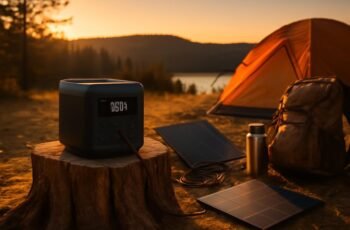
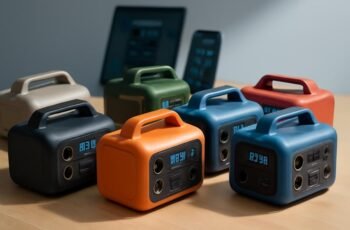
We’re looking at the 10 best camping power stations that can keep our devices running off-grid, from compact 88Wh units to larger 1,000Wh packs. These picks blend solid safety, solid build quality, and practical outlets for laptops, lights, and more. They’re not all the same, though, and the differences matter in real trips. Stay with us as we compare performance, recharging speeds, and how each model fits your next excursion.
Key Takeaways
- Focus on high-capacity LiFePO4 models for reliable multi-device use, long cycle life, and safer chemistry in outdoor environments.
- Prioritize fast recharging (AC, car, solar) and MPPT-enabled solar input to minimize downtime between adventures.
- Look for multiple outlets (AC, USB-C/PD, DC) and robust, portable form factors for camping versatility.
- Consider weight, handle design, and rugged build to ensure one-person portability and durable outdoor operation.
- Check warranties (e.g., 5–10 years) and real-world runtime data to match power needs with trip duration and equipment.
Anker SOLIX C1000 Gen 2 Portable Power Station


The Anker SOLIX C1000 Gen 2 stands out for campers who need serious power fast: it delivers 2000W continuous output and a 1024Wh LiFePO4 battery, with HyperFlash charging that tops up in just 49 minutes. We value its 10 ms UPS backup for essential devices and its 10 ports that power up to 10 devices simultaneously. It’s 14% smaller and 11% lighter than similar models, with a rugged, portable design and a 5-year InfiniPower warranty. Real-world use shows quiet operation, reliable performance, and clear metrics on the display—plus versatile charging options, including solar and car inputs.
Best For: campers and off-grid users who need high-power, fast-recharging portable power with reliable backup for essential devices.
Pros:
- 2000W continuous output with 1024Wh LiFePO4 battery for strong, sustained power
- UltraFast HyperFlash charging (1,600W) delivers a full recharge in about 49 minutes
- 10 ms UPS backup and multiple ports (AC, USB-C/A, car) support powering multiple devices simultaneously
Cons:
- Real-world use notes mention occasional app limitations and missing solar connection wires in some bundles
- DC/AC input limits when charging while discharging may affect peak performance in certain setups
- Higher price point and potential accessory gaps compared to lower-cost models
GRECELL Portable Power Station 300W (230Wh)

If you need a portable 300W station that charges fast and runs essential gear, the GRECELL 300W (230Wh) fits the bill. We’re talking 230Wh LiFePO4 capacity, 300W continuous with 600W surge, and outlets for laptops, phones, lights, fans, and small appliances. It charges in as little as 1.5 hours via Type-C or DC inputs, plus AC, solar, and car options, handling up to seven devices at once. Dual silent cooling fans and a robust BMS guard against overloads. This unit is compact, lightweight, and safe for outdoors, camping, RVs, or home backup. Included: power station, DC adapter, car cable, guide.
Best For: campers, remote workers, and home backup users who need a compact 300W portable power station with fast charging and reliable LiFePO4 safety.
Pros:
- Fast charging: 1.5 hours via Type-C or DC inputs plus multiple charging options (AC, solar, car)
- Solid battery and safety: LiFePO4 chemistry with robust BMS and dual cooling fans
- Versatile ports: 2 AC outlets, multiple USB-C/USB-A/DC options for various devices
Cons:
- Not suitable for high-watt appliances (e.g., coffee makers, kettles)
- 230Wh capacity may require careful management for longer outages
- Real-world charging gauge behavior may vary and charger recommendations can differ
Jackery Explorer 1000 v2 Portable Power Station

Wondering which power station fits long trips? The Jackery Explorer 1000 v2 brings serious capacity with a 1,500W AC output and a 3,000W surge, powered by a 1,070Wh LiFePO4 battery. At 23.8 lbs with a foldable handle, it stays portable for camping, road trips, and emergencies. It offers two USB-C ports, one USB-A, a DC car port, and three pure sine wave AC ports, plus PD 100W fast charging. One-hour fast charging via emergency mode, Shield 2.0 safety, and a Smart App for mode switching keep it efficient. LFP cells endure 4,000 cycles, lasting over a decade. Solar charging is compatible with Jackery panels.
Best For: campers and road-trippers who need sizable off-grid power with fast charging and durable, long-life batteries.
Pros:
- High capacity with 1,500W continuous output and 3,000W surge, suitable for appliances like AC units and fridges
- LiFePO4 battery with 4,000+ life cycles and long lifespan, plus durable, portable design at 23.8 lbs
- Quick 1-hour fast charging option and PD 100W USB-C charging, plus a Smart App for mode control
Cons:
- Solar charging requires Jackery-brand panels (panel not included), which can add cost
- Screen size and some UI aspects noted as less ideal by some users
- Price variance and occasional charging behavior reports may affect value perception
Anker SOLIX C300 Portable Power Station 288Wh

The Anker SOLIX C300 stands out for its LiFePO4 battery and solid 288Wh capacity, delivering 300W continuous power with quiet operation for campers who value reliability and longevity. We value its 8 outlets—AC, car, USB-C, and USB-A—plus 140W two-way USB-C charging, and a light 9.02-pound frame with a compact footprint. With LiFePO4 durability, 3,000+ cycles and a 10-year life, it stays ready. It charges to 80% in ~50 minutes from wall, supports solar, car, or wall input, and operates quietly at 25dB. While not for heavy kitchen loads, it powers laptops and basics efficiently.
Best For: campers and outdoor enthusiasts who want a reliable, long-lasting LiFePO4 power source with multiple outlets and quiet operation.
Pros:
- LiFePO4 battery delivers long cycle life (3,000+ cycles) and a 10-year design life with robust safety features
- 300W continuous power, 600W surge, 8 outlets (AC, car, USB-C, USB-A) and 140W/ two-way USB-C charging
- Lightweight (9.02 lb) with compact footprint, quiet operation (25 dB), and versatile recharge options (wall, solar, car)
Cons:
- Not suitable for high-wattage kitchen appliances or very power-hungry devices
- Solar performance varies with sunlight; 60–100W panels recommended but real-world input may be lower in overcast conditions
- Some users report missing carry strap by default and limited app connectivity/history features
Jackery Explorer 300 Portable Power Station (293Wh)

The Jackery Explorer 300 stands out for delivering 293Wh of reliable backup power in a compact 7.1-pound package, with two Pure Sine Wave AC outlets and a practical 300W max output that’s perfect for lightweight camping and emergency essentials. We appreciate its quiet operation, no fumes, and maintenance-free design, plus 7.1 pounds of portability. It includes two AC outlets plus a PD 60W USB-C, USB-A, DC car port, and fast charge 3.0. Recharge flexibility matters: 2 hours to 80% on wall, plus solar and car options. It handles up to six devices and supports pass-through charging for continuous critical loads.
Best For: For campers, outdoors enthusiasts, and emergency-prep families seeking compact, quiet, reliable portable power with multiple charging options and pass-through capability.
Pros:
- Lightweight and portable at ~7.1 pounds with solid build for easy transport
- Quiet operation with clean Pure Sine Wave power and multiple ports (2 AC, PD USB-C, USB-A, car)
- Fast 2-hour wall recharge to 80% plus flexible charging options (solar, car) and pass-through charging
Cons:
- Not suitable for high-wattage appliances (e.g., induction cooktops, blenders)
- Solar charging requires optional SolarSaga panel and MPPT controller (not included)
- Output limited to 300W max, which may constrain heavier devices or simultaneous power-hungry loads
HOWEASY Portable Power Station 88Wh Solar Generator

Whether you need portable power for camping or emergencies, the HOWEASY 88Wh Solar Generator stands out with its compact 2.3‑lb frame and eight-output versatility. Weighing just 2.3 pounds with a 6.6 x 3 x 4 inch footprint, it powers laptops, phones, cameras, lights, fans, and more via 2 AC sockets, USB-C, QC 3.0 USBs, USB-A, and 12V DC outputs. It’s built for outdoors and home use, with an LED display, three recharging modes, and a durable build. While solar panel isn’t included, the 150W peak, 120W rated output, and >1500 cycle life offer reliable, flexible power and a 24‑month warranty.
Best For: Outdoors enthusiasts and emergency prepers seeking a compact, versatile 88Wh power source to run small devices and charge personal electronics on camping trips or during outages.
Pros:
- Ultra-portable at 2.3 lb with a compact 6.6 x 3 x 4 inch form factor
- Eight outputs including 2 AC sockets, USB-C, QC 3.0 USBs, USB-A, and 12V DC for versatile charging
- Multiple recharging options (AC, car, solar-ready) with a 150W peak output and >1500 cycle life
Cons:
- Solar panel not included, requiring separate purchase
- Some laptops may require 20V input compatibility considerations
- 88Wh capacity limits prolonged high-wattage use and may feel insufficient for larger devices
BLUETTI Elite 30 V2 Portable Power Station

Meet the BLUETTI Elite 30 V2, a compact 600W portable powerhouse with a 288Wh LiFePO4 battery that weighs just 9.4 lbs. We value its 600W continuous output and 1500W power lifting mode for peak loads, plus 8 charging modes, including adjustable AC wall charge. We appreciate 0–80% in 45 minutes and 0–100% in 70 minutes, with battery-safe charging. UltraCell tech and smart cooling deliver cooler, more efficient operation. At 9.8 x 7 x 6.6 inches and standby modes as low as 4.5–8W, it suits camping, trips, and emergencies, powering lights, laptops, and small appliances reliably.
Best For: On-the-go users who need a compact, efficient portable power source for camping, road trips, and small home emergency needs.
Pros:
- Lightweight (9.4 lbs) and compact (9.8 x 7 x 6.6 inches) with a solid 288Wh LiFePO4 battery.
- 600W continuous output with 1500W power lifting mode for peak loads and 8 versatile charging modes.
- Fast charging: 0–80% in 45 minutes and 0–100% in 70 minutes with battery-safe charging and smart cooling.
Cons:
- Limited to 600W sustained output, which may restrict larger appliances.
- 288Wh capacity might require more frequent recharges for high-energy devices over extended use.
- Fewer built-in ports than some rivals; may necessitate additional adapters for certain devices.
DaranEner 56000mAh Portable Power Station with AC Outlets

DaranEner’s 56000mAh Power Station shines for casual campers who need portable, fast-charging power with multiple outputs. We appreciate its 179.2Wh LiFePO4 battery, 300W inverter (600W surge), and seven ports that cover USB-C 60W, USB-A 18W, DC5521 inputs and two AC outlets. We’ll power laptops, phones, lights, and a mini-fridge within its 3,500+ cycle longevity and 12 safety features. With 1.5-hour home charging, 2-hour car or MPPT solar charging, it stays ready on the go. For emergencies or outdoor trips, its compact 5.7–6.2 lb frame and steady wattage readout make real sense. Supports 2-year warranty and responsive customer service.
Best For: Casual campers and outdoor enthusiasts who need a compact, fast-charging power station with multiple outputs for laptops, phones, lights, and small appliances.
Pros:
- Fast home charging to 100% in about 1.5 hours and multiple charging options (car, MPPT solar)
- LiFePO4 battery with 3,500+ cycles and 12 safety features for reliability and longevity
- Seven ports including USB-C 60W, USB-A 18W, DC inputs, and two AC outlets for versatile device support
Cons:
- Peak inverter rating of 300W may limit high-wattage devices (surge up to 600W)
- Real-world battery endurance can vary with heavy loads or prolonged high-utilization
- Weight around 5.7–6.2 lbs and compact form factor may still be bulky for ultra-light backpacks
Portable Solar Generator 300W with 60W Foldable Panel

This portable solar generator packs a 300W output with a 280Wh battery and a 60W foldable panel, making it a practical pick for quick camping power. We appreciate its 110V pure sine wave outlets, plus two 110V/300W max AC ports, a DC port, three USB ports, and a quick-charge USB. At 5.08 pounds, it’s compact for backpacking or camp setups. The included 60W panel uses MPPT charging, and recharging via wall, DC, or car is convenient. Built-in protections guard against faults, while a cooling fan maintains temp. Remember to avoid >300W loads and keep the panel dry.
Best For: campers, hikers, and small-setup off-grid users needing a lightweight, portable power source with pure sine wave AC and foldable solar charging.
Pros:
- Lightweight and compact (5.08 pounds) with a 60W foldable solar panel for easy portability.
- 110V pure sine wave outlets and multiple USB/DC ports support a range of devices safely.
- MPPT charging with versatile recharge options (wall, DC, car) for on-the-go use.
Cons:
- Rated output of 300W max; avoid loads over 300W to prevent damage.
- Junction box and panel not waterproof; requires dry conditions or protection.
- Some users report variability in solar performance and panel reliability; expect variable recharging times in shade or low sun.
MARBERO Portable Power Station 88Wh with AC Outlet

For campers craving portability, the MARBERO M82 delivers a compact 88Wh capacity with a true 120W peak, enough to run small essentials without weighing you down. We value its lightweight 2.29 lb frame, eight ports (AC, DC, USB, USB-C PD), and a handy car charger outlet. With 0–80% charge in about 2 hours, plus compatibility with 30W/60W MARBERO panels, it covers quick swaps between power needs and solar topping off. It handles phones, tablets, laptops, small appliances, and even a car fridge. The built-in flashlight and safety-driven BMS add reliability for camping, emergencies, and off-grid adventures.
Best For: campers and outdoor enthusiasts who need a compact, portable power source for charging devices, running small appliances, and keeping essentials powered on hikes, camping trips, or off-grid getaways.
Pros:
- Extremely light and compact for easy transport (about 2.29 lb / 1.04 kg).
- Versatile 8-port outputs (AC, DC, USB, USB-C PD) plus a car charger, suitable for multiple devices.
- Fast wall charging (0–80% in ~2 hours) and compatibility with MARBERO 30W/60W solar panels.
Cons:
- 88Wh capacity may limit longer-off-grid usage for higher-watt appliances.
- Some users report slower full charges and occasional reliability concerns over time.
- Noise when DC current is in use and limited high-wadge ongoing output (peak 120W) may restrict power for larger devices.
Factors to Consider When Choosing Camping Power Stations
We start by weighing Battery Type and Life, since better cells mean longer, steadier power on adventures. Next, we consider Output Power and Ports, along with Recharging Speeds, to ensure we can run what we need when we need it. Finally, we weigh Portability and Weight and Solar Compatibility to match our trips and charging habits.
Battery Type And Life
When choosing a camping power station, you’ll want to key in on battery chemistry and life, because these determine how long you stay powered between charges. We favor LiFePO4 (LFP) for its longer cycle life and stability, typically rated at 3,000–4,000+ cycles with minimal capacity loss. LFP packs also offer about a 10-year design lifespan and retain more capacity after thousands of cycles than many lithium-ion chemistries. Life is usually expressed in cycles, not calendar years, focusing on how many full discharge/charge cycles you can endure. A higher cycle count means slower capacity fade, preserving usable energy (Wh) for longer off-grid use. Some units report an 80% remaining capacity after 4,000 cycles, signaling solid long-term reliability for camping.
OutputPower And Ports
Choosing a camping power station means matching its outputs to the gear you plan to run. We look for continuous output wattage that fits your devices, with common options around 300W, 600W, or 1,500W, plus peak surges up to 600W–3,000W for startup loads. The number and types of ports matter: multiple AC outlets, USB-C PD, USB-A, and DC car ports let us power laptops, phones, and small appliances at once. Ensure the total combined output across all ports doesn’t exceed the unit’s continuous rating, especially when several devices run together. Consider pass-through charging, so devices can draw power while the station recharges. Finally, verify AC and DC outputs match your gear, like pure sine wave AC and 12V car ports, to prevent damage or inefficiency.
Recharging Speeds
Recharging speed is one of the biggest time-savers when you’re planning off-grid trips. We measure it by how fast a unit hits 80–100% capacity, with wall charging often showing 50–70 minutes for large units and 1.5–2 hours for smaller ones. Some models offer multiple inputs—AC wall, solar, car—and MPPT controllers to squeeze more solar efficiency. Higher input wattage, like 600–1600W, dramatically cuts recharge time, though it may need compatible infrastructure. Solar recharge speed hinges on panel power (60–100W typical) and sunlight; under ideal exposure, 2–4 hours is common for mid-range packs. Pass-through charging lets you use power while charging, affecting perceived speed and ongoing availability. You’ll want a balance of input options and real-world solar performance for seamless trips.
Portability And Weight
Portability hinges on weight and size, with compact units under 10 pounds fitting easily in a backpack or car cargo area. When we pick a power station, we consider how handle design or a foldable vs. integrated grip affects one-person carrying comfort on camping trips. Lower weight often means fewer outlets or smaller capacity, so we balance lightness with the power we actually need. LiFePO4 packs can boost weight-to-capacity ratios and extend cycle life, influencing long-term portability in our packs. Some models push ultra-light builds, around 2–9 pounds, with modest capacities under 300Wh, ideal for quick trips. Our goal is a unit that stays portable without sacrificing essential performance, ensuring we’re not stranded without power during outdoor adventures.
Solar Compatibility
Getting solar power on board hinges on clear specs: look for panel wattage ranges (like 60–100W) and whether the unit uses MPPT or a similar controller for efficient charging. We want to confirm compatibility with the solar setup we plan to use, since some stations demand specific panels or families and others can underperform or risk damage with non‑compatible gear. Check stated solar input specs, including voltage (for example 18–60V), maximum input power (such as 100W or 600W), and whether pass-through charging works while solar recharging. Built‑in MPPT or smart charging features typically speed up recharging under changing light. Remember, solar panel inclusion isn’t universal, and many units list panels as optional accessories, influencing total cost and portability.
Safety Features
Safety features are non-negotiable when selecting a camping power station. We look for a built-in BMS with protections against short-circuit, over-charge, over-discharge, over-current, and overheating to safeguard both the unit and our devices. Automatic safety shutoffs matter, so temperatures rising or voltages exceeding safe thresholds trigger protection without us having to intervene. UPS or surge protection features, like a 10 ms UPS, help us power essential loads during outages or transitions. We also want multiple cooling mechanisms—fans and smart cooling—to maintain safe temperatures during high-wattage use. Finally, certified safety data and long-cycle durability matter, so LiFePO4 chemistry with thousands of cycles gives reliable protection and longer life for extended adventures.
Durability And Build
Durability and build quality aren’t afterthoughts—they define how long a camping power station will actually handle the outdoors. We look for LiFePO4 chemistry for longer cycle life and realistic lifespans, with many units boasting 3,000–4,000+ cycles. A rugged enclosure, impact resistance, and smart BMS protections guard against short circuits, overcharges, and overheating. Lower operating noise—about 25–50 dB—and cooler thermal profiles matter in quiet campsites, reducing stress on components. Weight under 10 lbs with around 288Wh keeps portability without sacrificing durability. Compact dimensions should still accommodate sturdy casings and reinforced corners. Effective heat management, whether via smart temp control or active fans, protects battery health during extended outdoor use, ensuring reliable performance whenever we need it.
Price And Warranty
Price and warranty help you gauge value as you compare camping power stations. We notice price varies widely: compact 88–300Wh units are much cheaper than mid-to-high capacity 1,000–1,070Wh systems, so your needs drive the cost. Warranty lengths range from about 2 to 5 years, impacting long-term value and potential repair costs. Higher capacity and robust safety features—like LiFePO4 chemistry and solid BMS protections—come with proportionally higher prices. Some models offer longer cycle lifespans (3,000+ cycles), which can justify a premium over cheaper options. Packaged bundles, including panels or solar kits, influence total cost and perceived value versus base unit pricing. We weigh capacity, durability, and support to choose a station that fits both budget and reliability goals.
Frequently Asked Questions
How Long Does Each Power Station Run on a Full Charge?
A full charge runs a power station for about 4 to 200 hours depending on load. We’ll detail specific runtimes for your devices and usage, then tailor recommendations so you know exactly what you’ll get.
Can I Recharge via Solar Panels Simultaneously?
Yes, we can recharge via solar panels simultaneously. Our setups can accept solar input while running devices, letting us top up and stay powered without pausing usage, as long as we choose compatible inverters, controllers, and panel wattage.
Are These Units Safe for Rainy Weather Use?
Yes, they’re safe in light rain if you keep devices dry and use IP-rated housings; never submerge or expose outlets. We recommend sheltered setups, weatherproof storage, and portable power stations with proper surge protection and moisture seals.
Do All Include Built-In Surge Protection for Laptops?
Yes, many include built-in surge protection for laptops, but not all. We consistently verify each model’s specs to confirm surge protection and output stability before recommending, and we advise double-checking your device’s wattage compatibility with the unit.
What Is the Warranty Duration for These Models?
We’re not sure about every model’s exact warranty yet, but we’ll check each one and get back to you quickly. We’ll keep you posted, and you’ll know the duration as soon as we confirm it. Stay with us.
Conclusion
We’ve trekked these power stations together, and the spark isn’t just about charging devices—it’s about freedom illuminated by reliability. Whether you crave marathon camping, emergency resilience, or sun-fueled adventures, these compact beasts stand ready, weathering grit and grind. Pick the one that matches your cadence, pack it with confidence, and let every sunrise power a story. With the right station, you’re not camping to survive—you’re camping to live, fully charged, boldly.