Disclosure: As an Amazon Associate, I earn from qualifying purchases.
Have we ever found ourselves halfway through a camping trip, a road journey, or a power outage at home and thought, “We really wish we had reliable power right now”?

What Is the EF ECOFLOW DELTA 2 Portable Power Station?
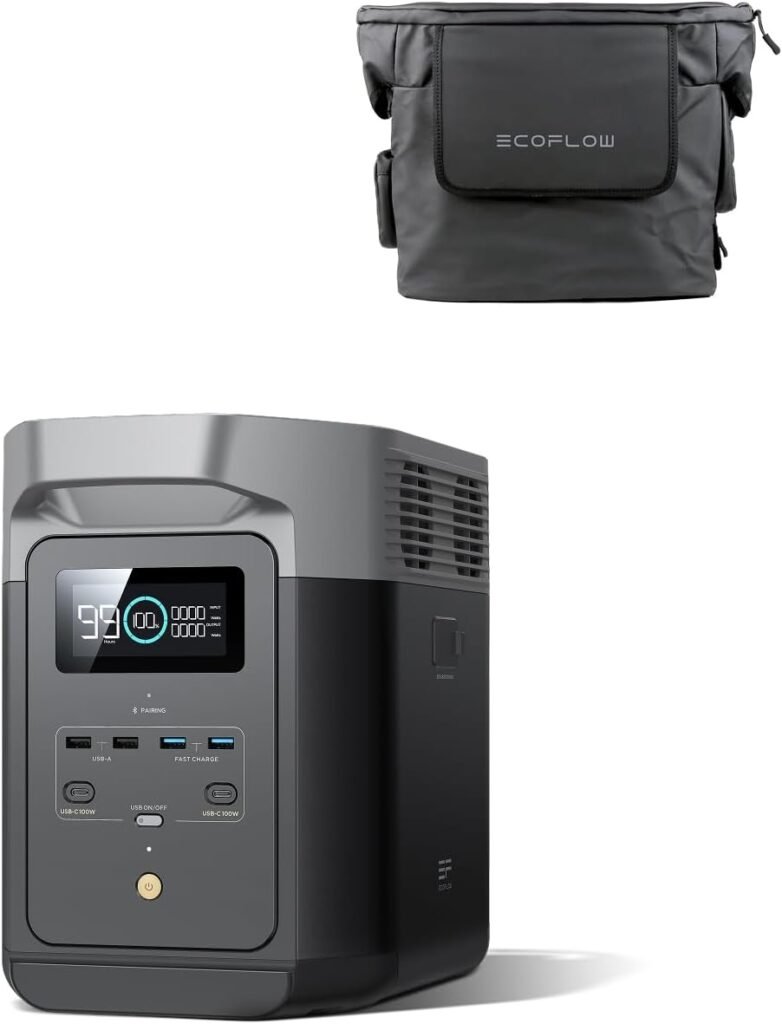
The EF ECOFLOW Portable Power Station DELTA 2 with Waterproof Handbag is a compact, high-capacity power station designed for home backup, camping, RVs, and off‑grid use. It combines fast charging, a long-lasting LiFePO4 battery, impressive output power, and solar charging support in one portable package.
We see it as a flexible alternative to traditional gas generators, but without the noise, fumes, and maintenance hassles.
Key Specifications at a Glance
To help us get oriented quickly, we can look over the core specs of the DELTA 2. This breakdown makes it easier for us to compare it with other options we might be considering.
| Feature | Specification |
|---|---|
| Battery Capacity | 1024Wh (expandable up to ~3040Wh with extra batteries) |
| Battery Chemistry | LFP (LiFePO4), rated for 3000+ cycles |
| AC Output Power | 1800W (continuous), surge higher (suitable for most household devices) |
| AC Outlets | Multiple AC sockets (regional variants), total of 15 output ports overall |
| USB-C Output | Up to 100W (fast charging for laptops and devices) |
| USB-A Outputs | Multiple ports for phones, small gadgets |
| DC / Car Output | 12V car socket and additional DC outputs |
| Charging (AC) | 0–80% in ~50 minutes; 0–100% in ~80 minutes |
| Solar Input | Up to 500W of solar (solar panels optional) |
| Expansion | Compatible with extra batteries (up to 3kWh total) |
| Weight | Portable but substantial (power-dense unit) |
| Included Bag | Waterproof, wear-resistant, lightweight protective handbag |
| Use Cases | Home backup, camping, RVs, off-grid cabins, work sites, emergency power |
This snapshot already hints that we are not dealing with a small “just charge a phone” gadget. DELTA 2 aims to be a serious portable power hub.
Design and Build Quality
Form Factor and Portability
The DELTA 2 balances portability with capacity. It is not pocket-sized, but it is compact enough for us to carry from the car to a campsite or around the house when needed. Sturdy handles on each side make it easier to move, even though the battery inside gives it a solid, weighty feel.
We find that the design makes sense for people who want real power on the go without dealing with a bulky, noisy generator.
Materials and Durability
The housing feels robust, with a hard plastic shell designed to withstand regular movement, transport, and light bumps. While we would not throw it down a hill, it feels ready for everyday life: loading into an RV, shifting around in the trunk, or setting it up outdoors.
For us, the combination of the main unit and the included protective bag boosts our confidence when taking it beyond the living room.

The Waterproof Handbag: Protection on the Move
Why the Bag Matters
The package includes a waterproof, wear-resistant handbag specifically made for the DELTA 2. Since power stations are a real investment, protecting them from the elements and scuffs becomes important, especially when we are outdoors or constantly on the move.
We find that using the bag helps keep dust, moisture, and light rain at bay, extending the life of the unit and keeping it looking new.
Material and Practical Use
The bag is made from lightweight, waterproof, and wear-resistant material. It is not just a thin rain cover. Zippers and seams are crafted to reduce water ingress, and the shape is molded to the DELTA 2’s dimensions.
We can leave the unit inside the bag when carrying it and, depending on the design of access panels, can often keep it protected even while using some ports during light weather conditions.
Battery Technology: LFP (LiFePO4) for Long Life
What LFP Means for Us
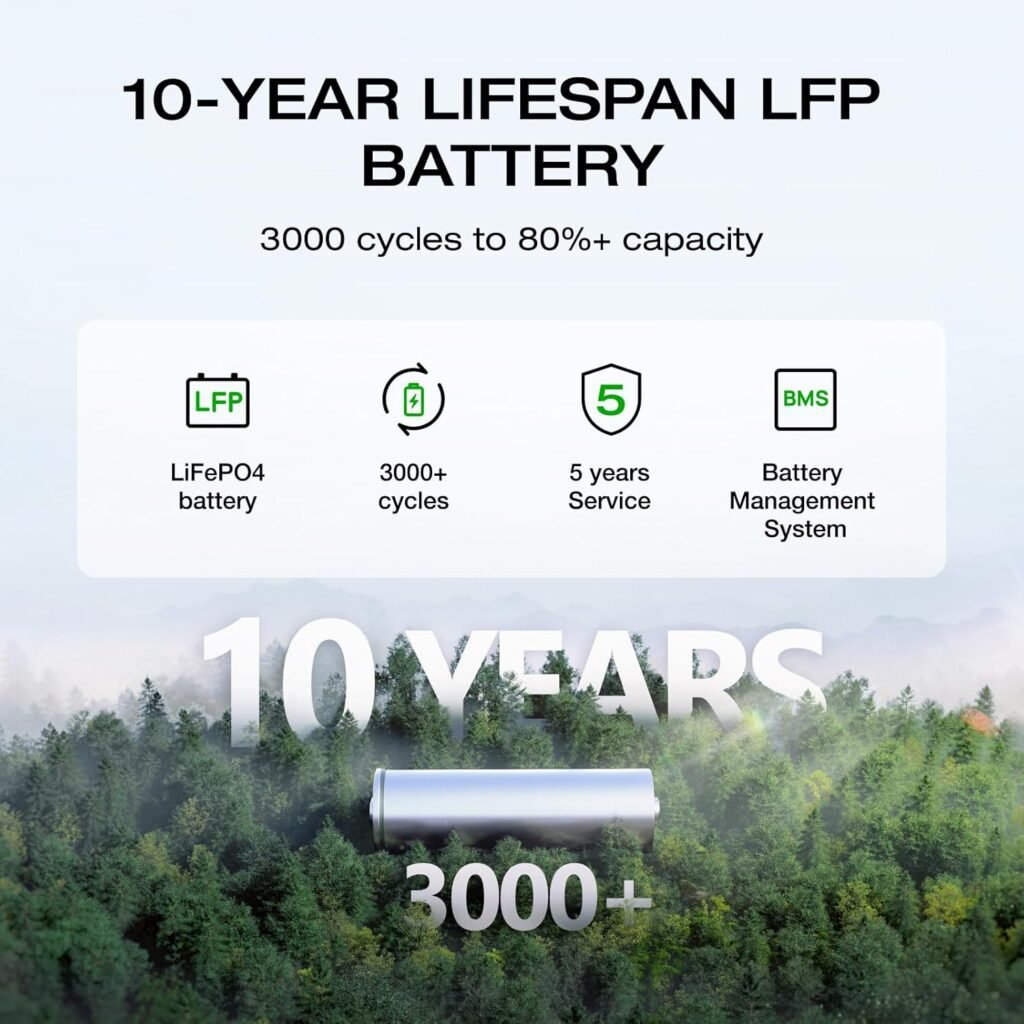
The DELTA 2 uses LFP (LiFePO4) battery chemistry, which is increasingly popular in modern power stations and EVs due to its stability and longevity. Compared to typical lithium-ion batteries, LFP handles more cycles and tends to be safer in demanding conditions.
We get over 3000 charge cycles before the battery drops to a significant reduction in capacity. That means we can charge and discharge daily for years before seeing a substantial decline.
Longevity and Safety
Longevity is only half the story; safety matters just as much. LFP batteries are more thermally stable and less prone to overheating. Combined with the sophisticated BMS (Battery Management System), we get multiple layers of protection:
- Overcharge and over-discharge protection
- Temperature monitoring and control
- Short-circuit protection
- Voltage and current regulation
We can run this as part of our daily routine or for emergency backup with added peace of mind.
Capacity and Expandability
Base Capacity: 1024Wh
At 1024Wh, the base DELTA 2 already carries enough capacity to run many essential devices:
- Phones, tablets, laptops
- Router and modem
- Lights and fans
- TVs, small kitchen appliances, and medical devices (within power limits)
We can think of it as a mid-sized power reservoir, more than enough for day trips, short outages, and weekend getaways.
Expandable up to 3kWh
Where DELTA 2 stands out is its expandable capacity. By adding compatible expansion batteries, we can extend from 1kWh up to around 3kWh. This modular approach means:
- We do not have to buy a massive system on day one.
- We can scale up later if our needs grow, for example, getting into longer RV trips or preparing for winter storm outages.
We like that this growth path gives us room to adapt instead of locking us into one fixed size.
Power Output: Running Real-World Appliances
1800W AC Output
DELTA 2 delivers up to 1800W of AC output, which competes with many portable gas generators. This level of power handles about 90% of common household appliances, such as:
- Laptops, PCs, game consoles
- Full-sized refrigerators (within rated watts)
- Microwaves (smaller to mid-range)
- Coffee makers, kettles, rice cookers
- Power tools like drills and saws (depending on ratings)
We need to pay attention to the wattage of each device we plug in, but for many everyday appliances, DELTA 2 works smoothly.
Multiple Ports and 15 Outlets
With up to 15 outlets, the station becomes a central hub rather than a one-device charger. While details vary by region, we typically get:
- Several AC outlets for household devices
- USB-C (100W), powerful enough to charge modern laptops directly
- USB-A ports for phones, cameras, speakers
- 12V car output for coolers and automotive gear
- Additional DC ports for other devices
We can charge and power multiple things at once, which becomes incredibly helpful in emergencies, group camps, or family road adventures.
Charging Speed: From Empty to 80% in About 50 Minutes
AC Charging Performance
One major strength is fast AC charging. The unit can charge from 0–80% in around 50 minutes, and 0–100% in about 80 minutes when plugged into a regular wall outlet.
We find this speed crucial for several reasons:
- Before a storm, we can top it off quickly.
- On road trips, a short stop at a powered site can restore most of our battery.
- Daily use becomes practical; we do not need to leave it plugged in all day.
Instead of planning around slow recharge times, we can simply plug it in and relax, knowing it is ready again in well under two hours.
Intelligent Charging Management
The integrated BMS and charging algorithms manage the charging process to balance speed with battery health. Fast charging, if poorly implemented, can damage cells over time, but here it is tuned for the LFP chemistry.
We still benefit from rapid charging without sacrificing the long lifespan advertised for the battery.
Solar Charging and Off‑Grid Use
Clean, Green Charging up to 500W
DELTA 2 supports up to 500W of solar input, turning it into a real solar generator when paired with compatible solar panels (sold separately). That means when we are camping, RVing, or living partially off-grid, we can:
- Replenish the battery using sunlight
- Reduce dependence on the grid
- Lower long-term energy costs and environmental impact
On bright days with appropriately sized panels, we can potentially run low to moderate loads indefinitely, as long as our daily use roughly matches what the panels generate.
Realistic Solar Scenarios
Actual solar performance varies by sun intensity, panel placement, and conditions. As rough examples:
- With 400–500W of panels in full sun, we may recharge from near empty to full over several hours.
- With 200W or less, we may extend runtime significantly rather than fully recharge each day.
We like that we can start small with one panel and add more over time if our off-grid ambitions grow.
Everyday Use Cases
Home Backup Power
For home backup, DELTA 2 fits nicely as a flexible emergency power unit. During outages, we can keep essentials going:
- Internet router and modem to stay connected
- Several LED lights in key rooms
- Phone and laptop charging
- A refrigerator or freezer for food safety (check actual appliance wattage)
- Medical devices that fall within the power rating
Instead of sitting in the dark or relying entirely on candles and power banks, we can maintain a degree of normal life.
Camping and Outdoor Adventures
For camping and outdoor activities, DELTA 2 keeps us powered without the smells and noise of a gas generator:
- Electric coolers, induction cookers (within watt limits), and coffee makers
- Projectors or small TVs for movie nights under the stars
- Cameras, drones, GPS devices, and headlamps
- Charging e-bikes or scooters in some scenarios
We can turn a basic campsite into a comfortable off-grid base while still respecting the quiet and clean air of the outdoors.
RVs and Road Trips
In RVs, vans, and road-tripping setups, DELTA 2 serves as a central power bank:
- Running small appliances when parked
- Charging devices while driving or at campgrounds
- Supplementing or replacing built-in RV power systems
We also benefit from the flexible charging options: plugging into shore power, vehicle outlets (with suitable adapters), and solar panels mounted on the roof or set up beside the vehicle.
Interface, Controls, and Ease of Use
User-Friendly Layout
The DELTA 2 is designed with a straightforward interface. Ports are clearly labeled, and we usually see:
- A display showing input/output wattage, remaining runtime estimate, and battery level
- Simple power buttons or switches for AC and DC sections
- Status icons that tell us what is active and if there are any warnings
We do not need to be electricians to use it. Within a few minutes, we can understand what is running, how long we can keep going, and whether we are charging or discharging.
Setup and Day‑to‑Day Operation
Setup is essentially plug-and-play:
- Charge the DELTA 2 via wall outlet (or solar/car input).
- Plug in our devices to the AC, USB, or DC ports.
- Turn on the relevant output section.
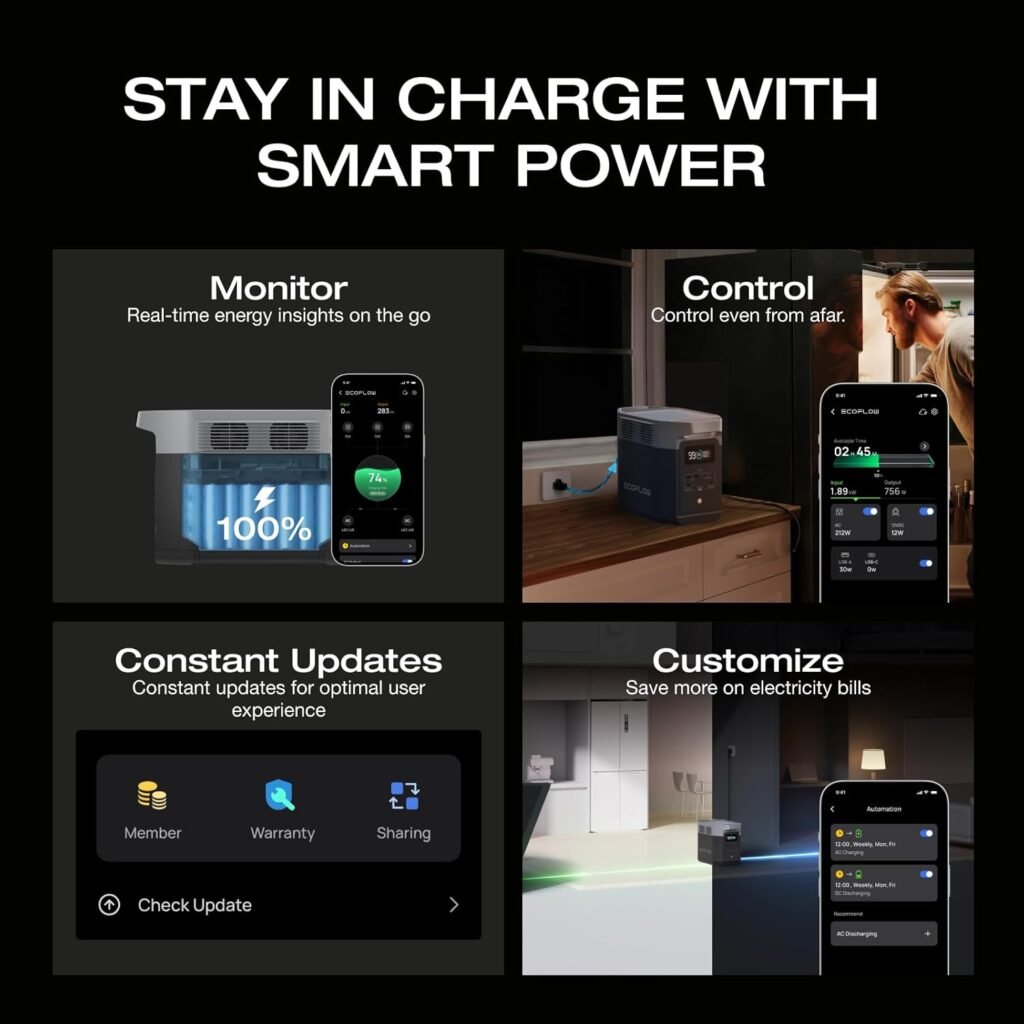
From there, we simply monitor the display. For more advanced users, optional mobile app connectivity (where supported) can add remote monitoring and control, though actual feature lists may depend on firmware and app versions.
We appreciate that the learning curve is gentle, even for those of us who are new to portable power stations.
Noise Level and User Comfort
Quiet Operation vs. Traditional Generators
Compared to gas generators, DELTA 2 is dramatically quieter. There is no combustion engine, just internal fans that spin up under higher loads or in warmer conditions.
While we can hear the fans in a quiet room when the unit is pushing substantial power or charging rapidly, the noise is closer to a computer tower or air purifier than a roaring engine.
We find this especially pleasing at night, during quiet camping moments, or when used indoors during a blackout.
Indoor and Outdoor Convenience
Because there are no fumes, we can use DELTA 2 indoors safely (with reasonable ventilation and common sense). That is a huge advantage over gas generators, which should never be used inside due to carbon monoxide risks.
We can set it up in a living room, bedroom, RV interior, or tent vestibule and enjoy power without worrying about exhaust or fuel spills.
Safety Features and Protections
Built‑In BMS and Auto-Regulation
The DELTA 2’s BMS does ongoing monitoring and control:
- Regulating charge and discharge currents
- Protecting against overvoltage and undervoltage
- Managing temperature to prevent overheating
- Shutting down or limiting output if anything goes out of safe range
We do not have to manually tinker with settings to stay safe; the unit automatically takes action as needed.
Overload and Short-Circuit Protection
If we plug in too many devices or something draws more power than the system can safely handle, DELTA 2 reacts by shutting off or limiting the affected ports. This prevents damage to both the station and our electronics.
We can still check the display to understand what happened and reduce our load accordingly before reactivating outputs.
Pros and Cons
What We Really Like
We find several strong points that stand out with the EF ECOFLOW DELTA 2:
- Fast Charging: Being able to charge from 0–80% in about 50 minutes makes it incredibly convenient.
- Long-Life LFP Battery: 3000+ cycles add tremendous value over the years.
- Strong Output (1800W): Running most household devices and many power tools feels very realistic.
- Expandable Capacity: Growing from 1kWh to roughly 3kWh via extra batteries gives long-term flexibility.
- Solar Ready (up to 500W): Great fit for off-grid use and eco-conscious users.
- Waterproof Handbag Included: Extra protection without needing to buy an accessory separately.
- Relatively Quiet and Fume-Free: Comfortable indoors and at quiet campsites.
Potential Limitations
No product is perfect, and we should consider some trade-offs:
- Weight: With this capacity, the unit is not ultralight; carrying it long distances is not ideal.
- Solar Panels Sold Separately: To fully use the solar generator aspect, we need to purchase compatible panels.
- Output Limits: While 1800W is generous, very high-demand appliances or tools may still exceed it.
- Price Point: Advanced LFP systems with fast charging and expandability come at a premium compared to basic power banks.
For many users, these trade-offs are reasonable given the feature set, but it helps to align expectations with our priorities.
Example Usage Scenarios
Short Power Outage at Home
Picture an evening where a thunderstorm knocks out power. With DELTA 2:
- We keep our Wi‑Fi modem and router running.
- We power a couple of lamps and charge everyone’s phones.
- We plug in the fridge intermittently to keep food safe.
With careful management, that 1024Wh capacity covers several hours of essential use, and if we have extra batteries, we can stretch that coverage even further.
Weekend Camping Trip
On a two‑night camping trip:
- We charge headlamps, cameras, and phones daily.
- We run a small electric cooler or a low-wattage fan in the tent.
- We occasionally power a small induction cooker or coffee maker in the mornings.
The DELTA 2 handles this comfortably, especially if we top it up with a solar panel during the day or charge from our vehicle.
RV Road Journey
In an RV context:
- We use DELTA 2 to power laptops, cooking appliances, and a TV when not on shore power.
- We recharge it from campground hookups or solar panels on the roof.
- It serves as a backup if the built‑in RV system has problems.
In this setup, DELTA 2 becomes our reliable, flexible backup brain for all things electric.
Comparison Within Its Category
How It Stacks Up Against Smaller Power Stations
Compared to budget or small-capacity power stations:
- DELTA 2 offers much larger capacity (1024Wh vs. a few hundred Wh).
- It outputs far more power (1800W vs. 200–500W for many entry-level units).
- The LFP chemistry and 3000+ cycles significantly boost lifespan.
If we only need to charge phones and a laptop occasionally, a small station might suffice. But if we want to run appliances, support family needs, or prepare for emergencies, DELTA 2’s capability stands out.
Compared to Traditional Gas Generators
When we consider traditional gas generators:
Strengths of DELTA 2 vs. Gas Generators:
- No fumes, safe indoors
- Much quieter
- Minimal maintenance (no oil changes, spark plugs, fuel stabilizers)
- Instant start, no pull cord
- PV compatibility for solar charging
Limitations Compared to Gas Generators:
- Limited runtime unless we have solar or wall power to recharge
- Higher upfront price per watt-hour compared to some fuel-based solutions
- Output ceiling at 1800W vs. larger generators that can exceed this easily
For many modern households and campers, the benefits of clean, quiet operation and flexibility often outweigh the drawbacks, especially when outages are intermittent rather than multi-day events.
Tips for Getting the Most Out of DELTA 2
Manage Loads Wisely
To maximize runtime:
- Prioritize essential devices (fridge, lights, communications).
- Avoid running high-draw devices simultaneously, like a microwave and a space heater.
- Use energy-efficient LEDs and appliances where possible.
We find that being mindful of what we plug in can dramatically extend how long the battery lasts during an outage.
Use Solar When Possible
If we invest in solar panels:
- Position them toward the sun and adjust occasionally throughout the day.
- Keep panel surfaces clean from dust, snow, or leaves.
- Combine solar with periods of low device usage to build up charge.
This way, we are not just using DELTA 2 as a large battery but as part of a sustainable, regenerative system.
Protect the Unit with the Bag
Using the waterproof, wear-resistant handbag:
- Store the unit in the bag when transporting it.
- Keep it covered in light rain, dusty environments, or at the beach.
- Avoid leaving the station exposed to direct blazing sun for extended periods.
This habit helps preserve the external casing and guards against environmental wear.
Who Is This Product Best For?
Ideal Users
We see DELTA 2 as a strong match for:
- Homeowners wanting reliable, quiet backup for short to moderate power outages.
- Campers and outdoor enthusiasts who bring electronics or small appliances.
- RV and van life travelers needing a flexible, portable power core.
- Remote workers who want peace of mind for work-from-home setups.
- DIYers and hobbyists using power tools away from standard outlets.
In all these cases, the combination of high output, fast charging, and LFP longevity feels very well aligned.
Less Ideal Situations
It may not be our best first choice if:
- We only need to charge a phone and a small LED lantern occasionally.
- We require extremely high continuous power for large workshops or entire households.
- We want a tiny, ultralight hiking power source (a small power bank makes more sense there).
In those scenarios, either smaller or larger systems may be better suited.
Summary: Our Overall Impression
The EF ECOFLOW Portable Power Station DELTA 2 with Waterproof Handbag, 1024Wh LiFePO4 Battery, 1800W AC/100W USB-C Output, Solar Generator (Solar Panel Optional) for Home Backup, Camping & RVs stands out as a versatile, well-rounded power solution.
We especially appreciate:
- The LFP battery with 3000+ cycles for long-term reliability
- The fast charging (0–80% in 50 minutes) that fits real-world schedules
- The 1800W output and 15 outlets, making it usable for 90% of household devices
- The expandable capacity from 1–3kWh as our needs grow
- The solar compatibility up to 500W, unlocking off-grid possibilities
- The waterproof handbag, adding protection for everyday adventures
For those of us who value dependable power at home, on the road, and off the beaten path, DELTA 2 offers a compelling blend of performance, safety, and usability. It feels ready to anchor our backup and outdoor power plans for many years to come.