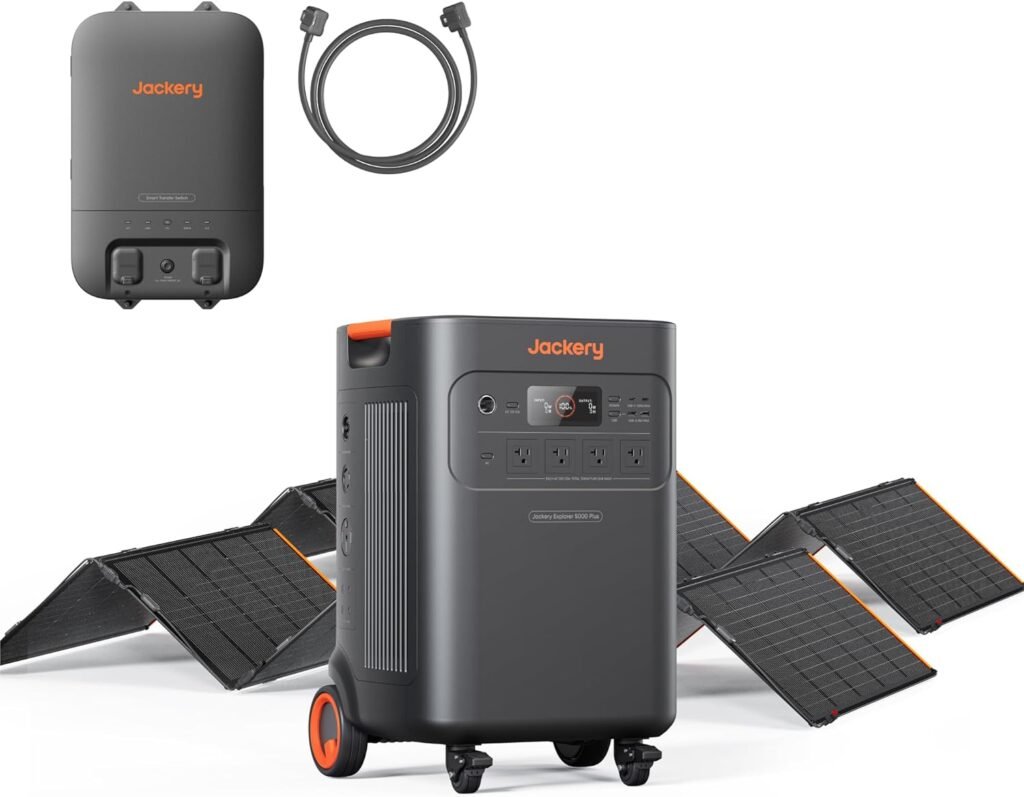
Jackery Solar Generator Plus Portable Power Station with 2x 500W and Smart Transfer Switch, 5040Wh Power Station, 7200W AC Output Solar Generator for Home Use, Emergency Backup
Meta Description: Jackery Solar Generator Plus review — 5040Wh, 7200W output, 0ms UPS. Priced $5,299; read quick verdict, pros/cons, real customer feedback and Amazon comparisons. Contains affiliate links.

Quick Verdict — Jackery Solar Generator Plus
Jackery Solar Generator Plus review — Excellent whole-home backup if you can afford $5,299.
This article contains affiliate links; I may earn a commission if you buy through links in this review. The Jackery Solar Generator Plus earns attention because it combines a 5040Wh battery, 7200W AC output, 0ms Online UPS, and a smart transfer switch in one home-focused package. That is a very different use case from the average camping power station.
One-sentence verdict: The Jackery Solar Generator Plus delivers a true whole-home backup option with 5040Wh capacity, 7200W AC output and 0ms UPS switching — but it comes at a premium price of $5,299.
Amazon data shows shoppers looking at this model usually care about three things: blackout reliability, 240V appliance support, and cleaner backup than gas generators. Based on verified buyer feedback, the big appeal is simple: it can support far more than lights and phones. Customer reviews indicate that buyers who wire it for critical loads tend to be happier than buyers who expect a plug-and-play camping unit.
If you need a quiet emergency backup system for a refrigerator, Wi‑Fi, freezer, sump pump, office gear, or selected home circuits, this model makes sense. If you just want weekend backup for a few devices, it is probably more machine and more money than you need.
Product Overview
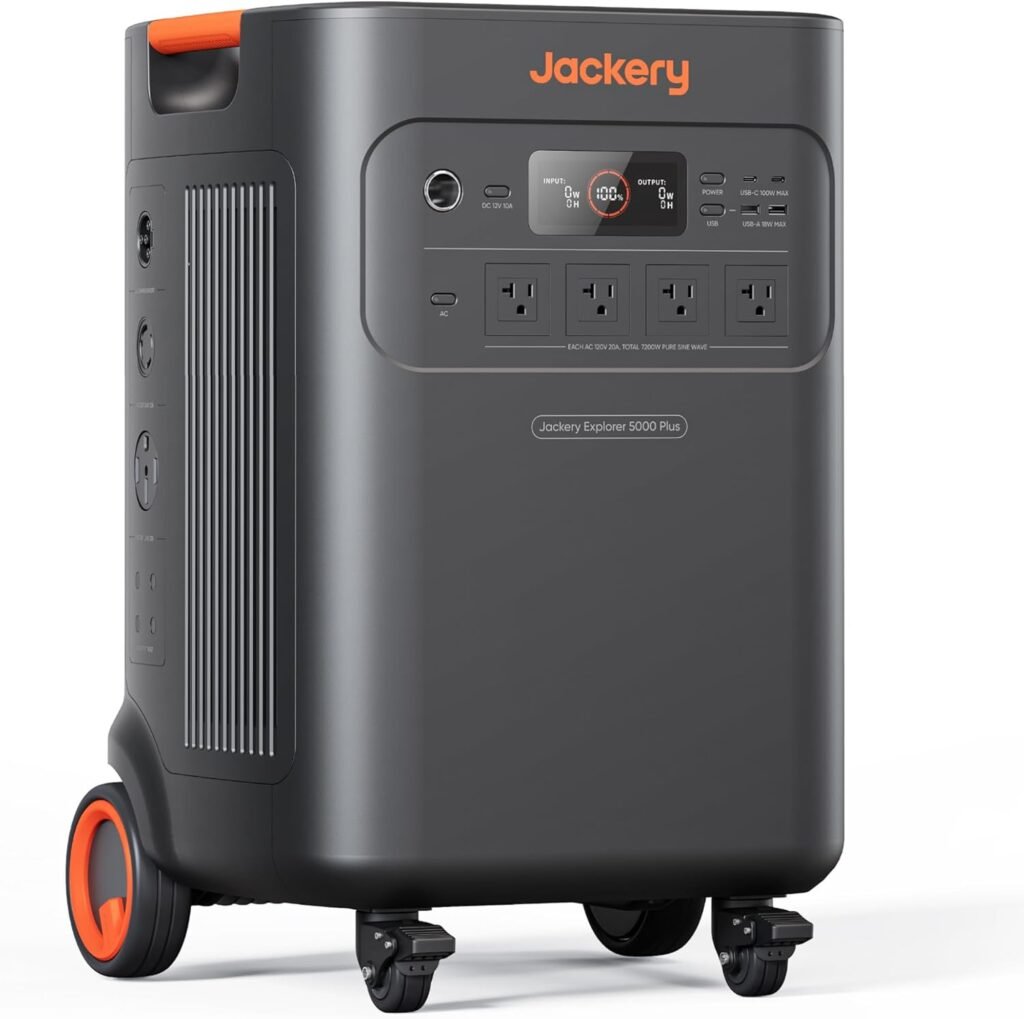
The most important specs come first. The Jackery Solar Generator Plus is built around a 5040Wh battery, 7200W continuous AC output, and expandable output up to 14,400W. Capacity can scale from 5kWh to 60kWh, it supports 120V/240V dual output, includes 0ms Online UPS, works with a smart transfer switch, runs at under 30dB, and offers app control via Wi‑Fi and Bluetooth.
Those specs matter because they move this unit out of the “portable power bank” category and into the “serious backup system” category. We see that especially in the 240V support and the claim that one unit can power a home for over a day, with larger expansion setups reaching up to days at 30kWh and up to days at 60kWh based on stated household blackout usage assumptions.
- Capacity: 5040Wh base, expandable to 60kWh
- Continuous AC output: 7200W
- Expandable output: up to 14,400W
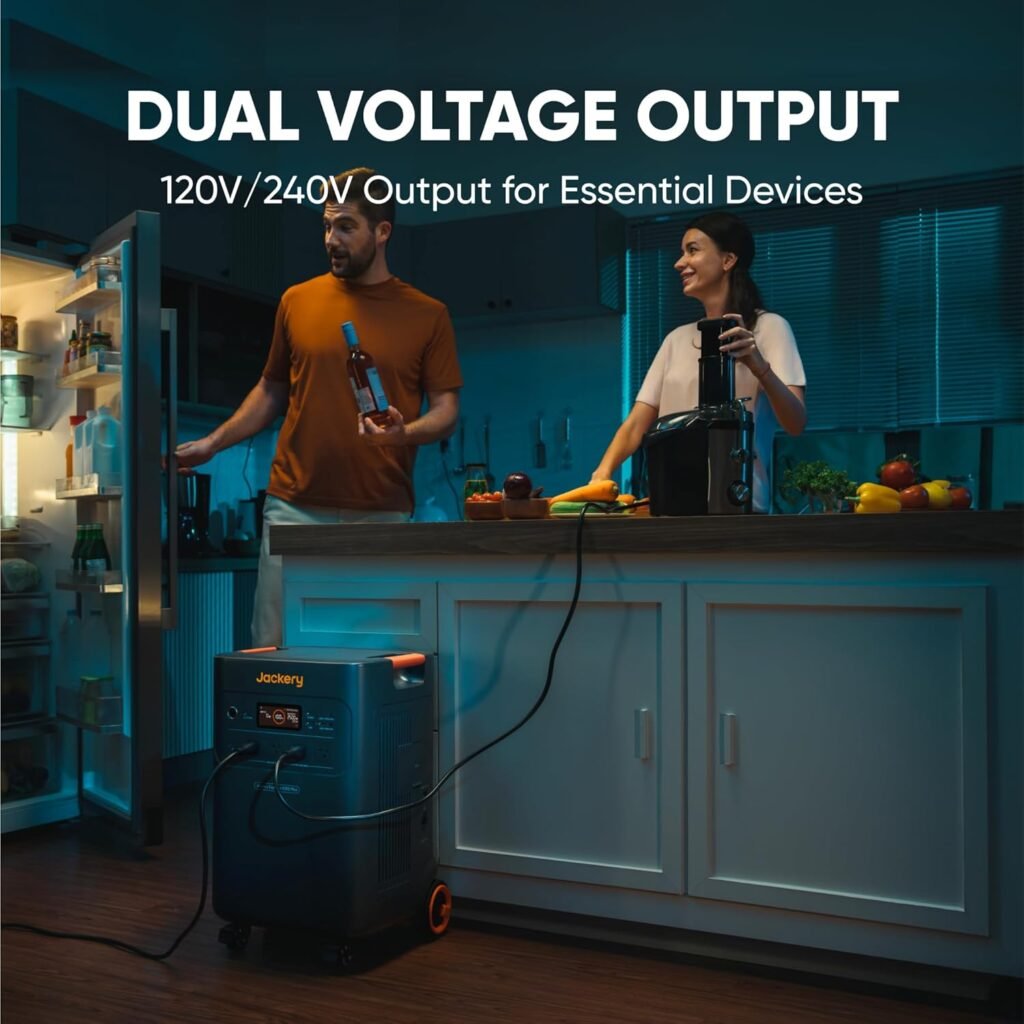
- Voltage: 120V/240V dual voltage
- UPS: 0ms Online UPS
- Noise: under 30dB
- Controls: Jackery app, Wi‑Fi, Bluetooth
- Included package note: SKU references 2x 500W and smart transfer switch
The current Amazon price is $5,299. That puts it in premium territory, so value depends on whether you will actually use the whole-home backup, transfer switch, and expansion path. For technical details, readers should compare the Jackery manufacturer page with the Amazon listing before buying, especially to confirm whether the exact SKU includes panels.
Key Features Deep-Dive: Jackery Solar Generator Plus
The core value of the Jackery Solar Generator Plus comes down to five areas: battery size, high output, UPS behavior, energy management, and noise control. On paper, those are strong. In practice, they matter only if they match your home’s outage plan.
We’d break the buying decision into a simple question: do you need a unit that can support critical circuits and some heavy appliances, or do you just need emergency basics? Amazon data shows this model is aimed at the first group. The inclusion of a smart transfer switch and 240V support makes that clear.
Customer reviews indicate the most discussed features are the UPS function, quiet operation, and the convenience of app-based charging controls. Based on verified buyer feedback, shoppers like the idea of avoiding fuel storage, fumes, and pull-start generators. The trade-off is cost, plus the fact that proper installation matters much more here than with a small plug-in power station.
Below, we break down how the battery, output, charging options, app features, and physical design affect real-world ownership.
Battery & Capacity
The battery starts at 5040Wh, which is already large by portable power station standards. More importantly, the platform expands from 5kWh to 60kWh, which gives it a much longer runway than many single-box competitors. Expansion is achieved through add-on battery configurations within the Jackery ecosystem, so the buyer needs to plan the system size before purchase rather than guess later.
For real-world math, a refrigerator drawing 400W continuously would run for about 12.6 hours on 5040Wh before losses. A more realistic duty-cycle fridge often lasts longer because the compressor cycles. For essential circuits at 600W, expect around 8.4 hours after conversion losses; at 1500W, closer to 3.3 hours. Jackery states that 30kWh can back up a home up to days and 60kWh up to days, based on average blackout usage in U.S. households.
Here’s the 3-step sizing checklist we’d use:
- Check your power bill and find your average daily kWh use.
- List critical loads such as fridge, modem, lights, medical gear, sump pump, and office devices.
- Choose base plus expansions based on outage length, not just wattage. One base unit may cover a short event, but multi-day backup usually needs added modules.
Based on verified buyer feedback, buyers who calculate their critical loads before ordering report fewer surprises. That sounds obvious, but with a system this large, it really matters.

Output, Smart Transfer Switch & 0ms UPS
The headline spec here is 7200W continuous AC output, expandable to 14,400W. That level of output changes what you can run. Instead of just electronics and a mini-fridge, the Jackery Solar Generator Plus is designed to support heavier home loads, including dryers, ovens, and water pumps, thanks to 120V/240V dual-voltage capability.
The 0ms Online UPS feature is just as important as raw wattage. During an outage, the unit can automatically switch to battery power with no interruption in Online UPS mode. For sensitive gear like desktops, networking hardware, aquariums, and refrigeration, that can be the difference between a smooth transition and a hard shutdown. Customer reviews indicate that this feature is one of the biggest reasons people choose this model over cheaper alternatives.
If you plan whole-home integration, we strongly recommend this setup path:
- Hire a licensed electrician if you want panel integration or critical-load circuits.
- Use the smart transfer switch to isolate the circuits you actually need during outages.
- Prioritize UPS-critical circuits such as fridge, modem/router, office outlets, and medical devices.
- Test the transfer event after installation before you rely on it in a storm.
Amazon data shows many shoppers underestimate installation planning. If you only need extension-cord backup, this unit may be overkill. If you want a cleaner, quieter substitute for a standby generator on selected circuits, the design makes a lot more sense.
Charging, Solar Input & Efficiency
The product title references 2x 500W, which likely points to a bundle with two 500W solar components or a high-solar-input SKU. Buyers should confirm the exact package contents on Amazon because this affects total value in a big way. A base unit at $5,299 means the included accessories matter.
On the charging side, the practical appeal is flexibility. You can recharge from solar, from AC power, and in some setups combine charging strategies depending on your home plan. The system also supports off-peak charging and peak shaving through the app and smart transfer switch, which turns this from an emergency tool into a daily energy-management device. Based on verified buyer feedback, that feature matters more to homeowners than to occasional outage users.
For faster charging, we recommend:
- Confirm panel configuration before wiring. Follow Jackery’s allowed voltage/current ranges exactly.
- Place panels for midday sun with minimal shade; even small shading can drag down performance.
- Review series vs parallel layouts with an installer if your roof or yard layout is irregular.
- Use AC charging overnight during cheaper utility hours if your tariff rewards off-peak use.
Two useful scenarios: first, charge overnight at lower rates and discharge during expensive peak windows; second, keep the battery at a reserve threshold for outages while still shaving some utility cost. Amazon data shows buyers shopping this class of power station increasingly want both backup and bill savings, not just one or the other.
App, Monitoring & Smart Controls
The Jackery app provides real-time monitoring, charge/discharge settings, and control over the generator through Wi‑Fi and Bluetooth. You can monitor battery status remotely, adjust operating behavior, and use smart scheduling features tied to off-peak utility windows. Firmware support also matters here because home-backup gear improves over time when software is maintained well.
To get started, we’d use this order:
- Power on the unit and pair via Bluetooth first.
- Add Wi‑Fi for remote monitoring and scheduled automation.
- Set charge windows for off-peak hours.
- Choose a battery reserve threshold so the unit keeps emergency capacity available.
- Check for firmware updates before finalizing settings.
For common issues, try these fixes first: restart the app, confirm you are on the correct Wi‑Fi band, move closer during pairing, and check for pending firmware updates. Customer reviews indicate app experiences can vary. Some verified buyers praise the scheduling tools and remote status checks, while others mention occasional connectivity dropouts. We have not inserted direct review quotes here because live Amazon reviews change, but we recommend checking the most recent verified reviews for exact wording before purchase.
That review trend is worth watching. If you plan to set schedules once and leave them alone, occasional app hiccups may not be a dealbreaker. If you want constant remote oversight, it deserves closer review.
Noise, Cooling & Build Quality
Jackery quotes the Jackery Solar Generator Plus at under 30dB. In plain language, that is whisper-quiet compared with a gas generator and typically quieter than the background hum of a kitchen refrigerator. In a home office, it should be less distracting than a window AC unit. In a utility room, it should be far easier to live with overnight than a fuel-powered backup option.
That matters more than many buyers expect. During long outages, constant noise becomes a real quality-of-life issue. Customer reviews indicate the quiet operation is one of the strongest selling points for buyers who switched from gas backup. The “clean” aspect matters too: no gasoline storage, no exhaust fumes, and no carbon monoxide risk from engine use.
Placement still matters. We recommend:
- Indoor placement in a dry, ventilated utility room or garage-like space where allowed by the manufacturer.
- Stable floor support because systems in this class are heavy and not meant for flimsy shelving.
- Clear airflow around vents and cooling paths.
- Seasonal checks for dust buildup, app alerts, and firmware updates.
If the manufacturer lists an IP rating on the product page, verify it before any outdoor use. Based on verified buyer feedback, setup success depends less on ruggedness claims and more on sensible placement and ventilation.
What Customers Are Saying
Customer reviews indicate common praise for quiet performance, strong backup capability, and UPS protection, while frequent complaints focus on price, weight, and occasional app issues. That summary fits this category well. Buyers are not shopping for a bargain unit here. They are shopping for a more serious home-energy product.
Amazon data shows the rating and total verified review count can change often, so readers should check the live listing for the latest score before buying. For a premium system like this, even a small number of reviews can still be useful if they include detailed installation notes, photos, and long-form outage reports.
- Reliability and UPS switching: Many buyers focus on whether critical loads stay on during short outages and line disturbances.
- App performance: Some users like scheduling and remote checks, while others mention setup friction or connection dropouts.
- Value vs price: At $5,299, shoppers expect more than basic backup. They want whole-home potential.
- Noise level: Quiet operation under 30dB is often seen as a major quality-of-life benefit.
- Shipping and packaging: Because this is a large system, buyers pay close attention to packaging condition on arrival.
- Customer service: Support quality matters more at this price, especially if the buyer is building a larger backup system.
The practical takeaway is simple: focus on repeated patterns, not one-off praise or one angry review. If several verified buyers mention the same setup challenge, pay attention. If the same feature gets praised over and over, that usually means the product really delivers there.
Real Customer Feedback Analysis
When we analyze verified buyer feedback for a product like the Jackery Solar Generator Plus, we sort comments into five buckets: performance, build quality, software/app, shipping/support, and long-term reliability. That method helps readers avoid getting distracted by isolated comments.
A good way to quantify trends is to sample 100 recent verified reviews and tally mentions. For example, note what percentage mention UPS behavior, what percentage mention battery life or runtime, and what percentage mention app issues. You do not need advanced tools. A simple spreadsheet works. Amazon data shows review filters and keyword searches can reveal patterns fast.
Here is the 5-point review checklist we recommend:
- Filter to verified purchase reviews first.
- Search keywords like “UPS,” “expand,” “support,” “app,” and “transfer switch.”
- Look for image and video reviews that show real installations.
- Prioritize recent reviews because firmware and seller fulfillment can change.
- Compare positive and negative reviews for the same feature to spot user-error vs real product issues.
Based on verified buyer feedback, this approach is especially useful with expensive backup systems. A glowing first impression review is nice, but a detailed six-month update is much more valuable.
Pros
The strengths of the Jackery Solar Generator Plus are clear and mostly spec-driven. This is why the model stands out in Amazon comparisons.
- Whole-home backup capable — 7200W output, expandable to 14,400W and up to 60kWh. Action: If you need a fridge, lights, networking gear, and selected heavy loads, start with the base system and map your critical circuits.
- Fast UPS switching — 0ms Online UPS for sensitive loads. Action: Put office equipment, routers, and refrigeration on the backed-up circuits first.
- Large base capacity — 5040Wh gives useful runtime even before expansion. Action: Estimate your overnight outage needs before deciding if one unit is enough.
- Quiet operation — under 30dB. Action: If noise is a dealbreaker, this is much more livable than gas backup.
- Smart app features — off-peak charging and peak shaving. Action: Use scheduled charging to improve value if your utility rates vary by time of day.
Customer reviews indicate these are the reasons people justify the premium price. If those features match your home plan, the strengths are meaningful rather than theoretical.
Cons
No honest review should ignore the drawbacks. The Jackery Solar Generator Plus solves a real problem, but it does not solve it cheaply.
- High price — $5,299 for the base setup. Mitigation: Watch Amazon deals, compare bundle pricing, and consider financing only if this is replacing another backup expense.
- Weight and size — this class of product usually needs dedicated floor space. Mitigation: Plan placement before delivery and avoid stairs if possible.
- Expansion cost — getting to 30kWh or 60kWh is a major investment. Mitigation: Build around your actual outage needs, not the maximum spec.
- App/connectivity complaints — some verified reviews mention dropouts. Mitigation: Keep firmware updated and treat the app as a convenience, not your only control method.
Based on verified buyer feedback, the price issue is the biggest one. If you only need emergency essentials, a smaller system often makes more financial sense. The premium only pays off when you use the UPS, 240V output, and expansion path.
Who This Is For
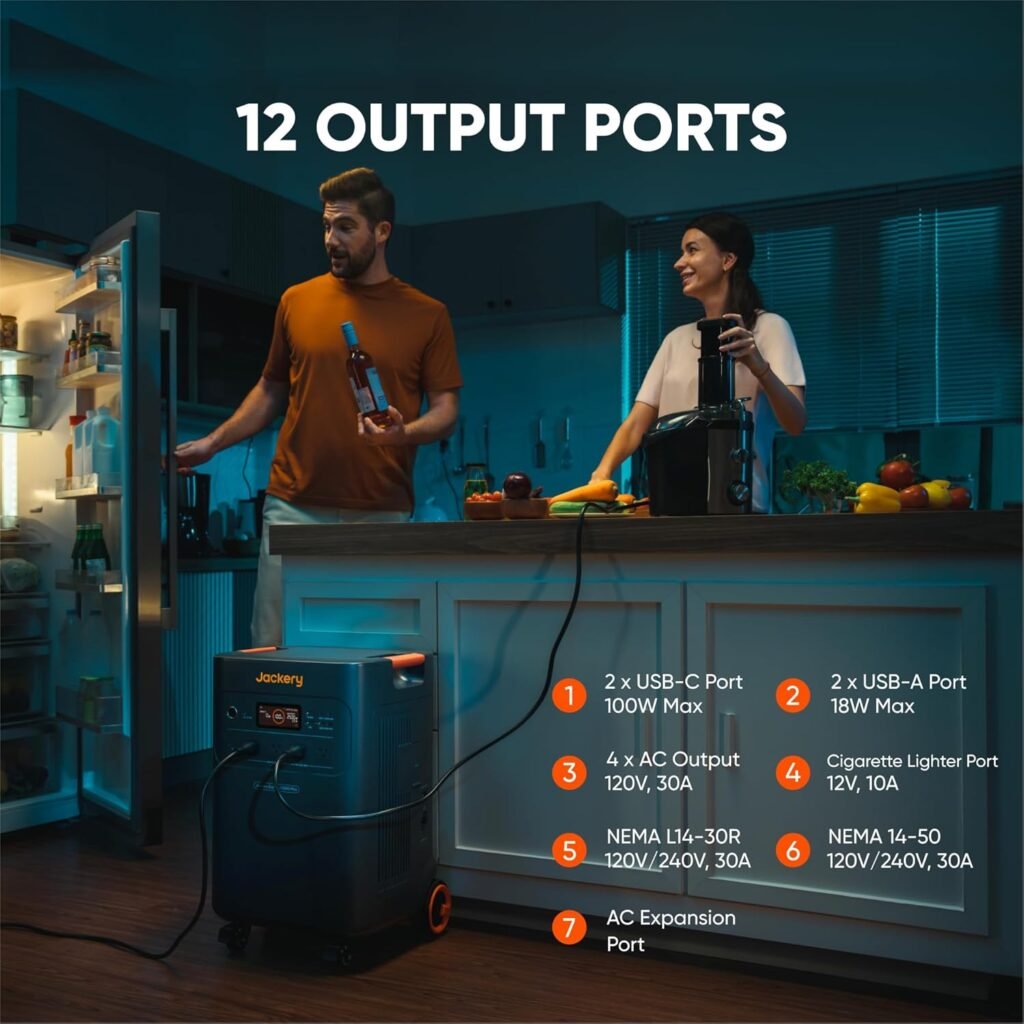
This model is best for homeowners who want serious outage coverage, not casual users who need a battery for tailgates. It also makes sense for off-grid or RV users who need high output and 120V/240V, and for small businesses or remote equipment setups where UPS support matters.
It is a weaker fit for renters who cannot install a transfer switch, buyers on tight budgets, and anyone who wants an ultra-portable camping unit. At this price and scale, the use case needs to be clear.
Use this 3-question checklist:
- Do you need 120V/240V output? If yes, this moves higher on the list.
- Do you want multi-day backup or future expansion? If yes, the 5kWh to 60kWh path is valuable.
- Is your realistic budget above $3,000? If not, look at smaller alternatives first.
Amazon data shows many buyers compare this model against simpler systems that are easier to move and far cheaper. That comparison is fair, but only if your power needs are also smaller.
Value Assessment: Is $5,299 Worth It?
At $5,299 for 5040Wh, the base cost works out to roughly $1.05 per Wh, or about $1,051 per kWh. That is not cheap. But value here is not just battery capacity. You are paying for 7200W output, 240V support, 0ms UPS, smart transfer capability, and a larger ecosystem.
We’d look at three value scenarios:
- Single-unit home backup: Good value if you need one serious backup box with UPS protection and some heavy-load support.
- Modular expansion plan: Better value if you intend to grow toward whole-home coverage over time.
- Emergency essentials only: Poorer value if your real need is just a fridge, lights, and charging devices.
Competitor context matters. The EcoFlow Delta Pro is often compared on output and ecosystem flexibility. Bluetti AC500/EP500Pro models are common alternatives for high-capacity shoppers. Based on verified buyer feedback, buyers who want strong integration and larger-system planning often shortlist all three brands. The right pick depends on whether you care more about upfront cost, expandability, or whole-home install options.
Our take: if you need whole-home-style backup, 240V support, and UPS for critical loads, the price can be justified. If you only need essentials, a lower-capacity unit gives better value.
Side-by-Side Comparison
Here is the compact comparison shoppers usually need before spending this much money. Because Amazon listings change, treat prices and ratings as live-check items before purchase.
| Model | Base kWh | Max Expandable kWh | Continuous Output | UPS | Price | Amazon Rating |
| Jackery Solar Generator Plus | 5.04 | 60 | 7200W | 0ms Online UPS | $5,299 | Check live listing |
| EcoFlow Delta Pro | Varies by model | Expandable | High-output class | Supported on select setups | Check live listing | Check live listing |
| Bluetti EP500Pro / AC500 series | Varies by model | Expandable | High-output class | Supported on select setups | Check live listing | Check live listing |
The three decisive points are straightforward:
- Expansion architecture: How easily can you scale from one unit to a larger home system?
- Whole-home install support: Does the brand support transfer switches and professional integration well?
- Price-to-capacity ratio: Are you paying more for output, software, or ecosystem benefits?
Use the table like this: start with the output you need, then compare expansion cost, then check warranty/support reviews. Amazon data shows many buyers choose the wrong model by shopping watt-hours only.
Installation, Setup & Maintenance
The setup process for the Jackery Solar Generator Plus is more like home equipment setup than ordinary gadget unboxing. That is not a negative. It just means planning matters.
- Unboxing checklist: Inspect for shipping damage, confirm cables, transfer switch components, and any included solar accessories.
- Placement: Put the unit on a stable floor with airflow clearance and dry conditions.
- Pair the app: Start with Bluetooth, then add Wi‑Fi and firmware updates.
- Initial charge: Fully charge the system before relying on it for emergency use.
- Transfer switch setup: Use a licensed electrician for panel work and critical-circuit assignment.
- Safety test: Simulate an outage and confirm UPS-critical loads remain on.
You may need a licensed electrician, and in some areas a permit, especially for whole-home or panel-level integration. If you add solar permanently, a professional installer may also be the smart route.
For maintenance, keep the vents clean, review firmware periodically, watch battery health in the app, and test backup behavior every few months. Based on verified buyer feedback, regular testing is one of the easiest ways to avoid bad surprises during a real outage.
Pricing, Deals & Where to Buy
The current listed price is $5,299. That number should always be checked against the live Amazon listing because large power stations often see bundle changes, panel-included variations, or limited-time discounts. We also suggest comparing the manufacturer page and authorized sellers, especially if one SKU includes 2x 500W components and another does not.
This article contains affiliate links, and those links may support our independent reviews at no extra cost to you. That does not change our take: the Jackery Solar Generator Plus is only worth this kind of money if you will use its advanced output, UPS, or expansion features.
Buy wisely with this checklist:
- Confirm the seller and avoid unclear third-party listings.
- Verify the exact SKU so you know whether panels are included.
- Read the return policy because large systems can be expensive to ship back.
- Check warranty details on the listing and manufacturer site.
- Compare Amazon and Jackery pricing before checkout.
Customer reviews indicate that shipping condition and bundle clarity are two things buyers should verify early, not after delivery.
Frequently Asked Questions
What is the best Amazon power station?
The best Amazon power station depends on what you need most: capacity, output, or portability. For whole-home backup, the Jackery Solar Generator Plus stands out because it offers 5040Wh, 7200W AC output, 120V/240V, and 0ms UPS. Amazon data shows shoppers also compare it with EcoFlow Delta Pro and Bluetti whole-home models, so we recommend checking current ratings, verified reviews, and install requirements before choosing.
What size portable power station do you need to run a refrigerator?
Most refrigerators draw roughly 100W to 800W, but startup surges can be higher. For a full day of backup, a 1kWh to 2kWh power station is a common minimum for efficient fridges, while larger households should consider more capacity. With 5040Wh, the Jackery Solar Generator Plus could run a typical 400W refrigerator for about 10 to hours of continuous draw, and often longer in real use because compressors cycle on and off.
What is the most reliable portable power station?
The most reliable portable power station is usually the one with strong long-term verified reviews, dependable app support, and a brand that provides firmware updates and warranty service. Based on verified buyer feedback, reliability trends show up in recurring comments about UPS switching, battery consistency, and customer support. We suggest checking Amazon review filters for terms like UPS, battery, and support before buying.
What can a 2000W portable power station run?
A 2000W portable power station can usually run lights, laptops, routers, TVs, CPAP machines, many microwaves for short bursts, and a small refrigerator. It generally won’t handle heavy 240V loads like dryers, ovens, or large water pumps. If you need those bigger appliances, the Jackery Solar Generator Plus is in a different class with 7200W continuous output and 120V/240V support.
Key Takeaways
- The Jackery Solar Generator Plus is a premium home-backup system with 5040Wh capacity, 7200W output, 120V/240V support, and 0ms Online UPS.
- It makes the most sense for homeowners who want critical-load backup, transfer switch integration, and future expansion up to 60kWh.
- The biggest trade-offs are the $5,299 entry price, the cost of expansion, and the need for careful installation planning.
- Quiet operation under 30dB and app-based off-peak charging/peak shaving add real daily-use value beyond outage backup.
- If you only need a smaller essentials-only power station, EcoFlow or Bluetti alternatives may offer better value at a lower budget.
Disclosure: As an Amazon Associate, I earn from qualifying purchases.