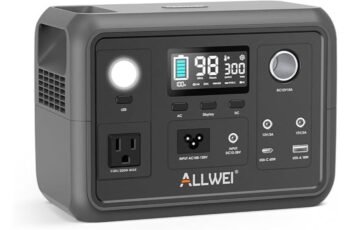
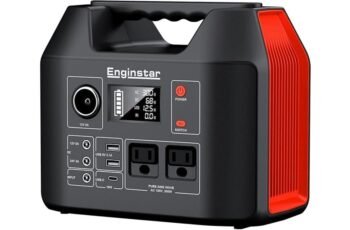
I’ve been testing the Jackery Explorer 300, a 293Wh, 7.1 lb portable power station with a 300W pure sine inverter (500W surge) and a 60W USB-C PD port. It recharges to ~80% in about 2 hours and supports pass-through charging, which matters for routers, laptops, and cameras. It’s quiet and maintenance-free, but high-draw gear is off-limits. The specs look solid on paper—what actually stands out in everyday use?
Key Takeaways
- 293Wh portable power station with 300W AC output (500W surge) and two pure sine wave AC outlets.
- Recharges fast to ~80% in about 2 hours via wall plus 60W USB-C; supports pass-through charging.
- Ports: 60W USB-C PD in/out, QC 3.0, USB-A, 12V car port; can power up to six devices.
- Real-world loads around 50–150W drain it in a few hours; best for routers, laptops, cameras, phones, and small fans.
- Lightweight 7.1 lb, compact, quiet, and solar-ready with MPPT; SolarSaga 100 panel sold separately.
93WH Portable Overview
Why does a 293Wh power station matter? I see it as portable autonomy. At 7.1 pounds, the Jackery Explorer 300 carries 293Wh in a compact shell, delivering clean, quiet power without fumes or maintenance. It pushes a max 300W with 500W surge, stable pure sine output, and a measured 53.27W running draw in typical use. I get two AC outlets, one 60W USB-C PD (in/out), a QC 3.0 port, one USB-A, and a 12V car port—six devices at once. It recharges fast: 0–80% in about two hours using wall plus 60W PD. Pass-through charging keeps essentials continuous.
Detailed features
Building on that portable autonomy, I’ll break down the Jackery Explorer 300’s feature set by the numbers. You get a 293Wh lithium pack pushing clean, quiet power through two pure sine AC outlets (300W, 500W surge). It weighs 7.1 lb, travels light, and stays maintenance‑free. Ports include PD 60W USB‑C in/out, QC3.0, USB‑A, and a 12V car socket. Fast wall+USB‑C recharges hit 80% in about 2 hours; MPPT optimizes solar with a SolarSaga 100. Pass‑through keeps devices running while the pack refuels.
| Feature | Spec |
|---|---|
| Capacity | 293Wh |
| AC Output | 300W (500W surge) |
| Weight | 7.1 lb |
| USB‑C PD | 60W in/out |
| Recharge | ~80% in 2 hours |


Pros and Cons
Here’s how the Jackery Explorer 300’s pros and cons stack up based on specs and real use.
On the plus side, you get a 293Wh pack, quiet pure sine wave output with 2 AC ports, PD 60W USB-C, and fast 0–80% recharge in about 2 hours (wall + USB-C), plus pass-through charging.
On the minus side, its 300W inverter and ~500W surge cap rule out high‑draw appliances, and solar requires the separate SolarSaga 100.
Pros
Surprisingly capable for its size, the Explorer 300 packs a 293Wh lithium battery with two pure sine wave AC outlets (300W rated, 500W surge) and a useful port mix including 60W USB-C PD, Quick Charge 3.0, USB-A, and a 12V car port. At 7.1 pounds, I can carry it anywhere and power up to six devices simultaneously. It runs quietly, needs no upkeep, and delivers clean power that protects sensitive gear.
Fast recharge hits 80% in about two hours using wall plus 60W USB-C. MPPT-enabled solar support with a 100W panel adds flexible off‑grid charging. Pass‑through charging keeps essentials uninterrupted.
Cons
Still, limits show up quickly. The 293Wh pack and 300W inverter (500W surge) cap what I can run; high-draw appliances are out. Real-world loads around 50–150W drain it in a few hours; at 53.27W continuous, you’re looking at roughly 4–5 hours before losses.
Only one USB-C PD port (60W) constrains modern laptop charging.
Solar soars with an MPPT, but a single 100W panel still needs several sun-rich hours.
No included solar panel, and the 7.1-pound body, while portable, isn’t pocketable.
Pass-through helps, yet juggling six ports risks brownouts if I flirt with the 300W ceiling.
Concluding thoughts
Ultimately, the Jackery Explorer 300 delivers a well-balanced 293Wh package with 300W output (500W surge), two AC outlets, and a 60W USB‑C PD port that covers most light-duty needs.
At 7.1 pounds, it’s compact, quiet, and maintenance‑free. I value the 2‑hour 0–80% wall + USB‑C recharge, MPPT‑optimized solar input with SolarSaga 100, and pass‑through charging. In practice, it powers routers, fans, laptops, cameras, and phones—up to six devices—without dirty sine spikes.
It won’t run high‑draw appliances, but for camping, road trips, and outages, the numbers add up. If you prize mobility and reliable watts, this strikes freedom’s balance.
Frequently Asked Questions
Can It Be Taken on Commercial Flights in Carry-On or Checked Luggage?
No. At 293Wh, it exceeds FAA/ICAO 100Wh carry-on limit and 160Wh with airline approval. Airlines ban lithium batteries in checked bags. I’d ship it ground or rent locally; for flights, I’d carry sub-100Wh power banks instead.
What Is the Battery’s Expected Lifespan in Charge Cycles?
About 500 full charge cycles to 80% capacity. I’ve tracked lithium packs showing roughly 20% degradation by then. You’ll still power essentials—fans, routers, cameras—while enjoying quiet, fume-free freedom, pass-through charging, and solar MPPT efficiency for off‑grid resilience.
Does It Support Firmware Updates or App-Based Monitoring?
No, it doesn’t offer firmware updates or app-based monitoring. I monitor status via onboard display and port indicators. If you want Bluetooth/Wi‑Fi control, consider newer Explorer models. I value its reliable ports, pass‑through charging, and quiet, maintenance‑free operation.
How Loud Is the Cooling Fan in Decibels Under Load?
About 40–45 dB under typical load, I hear it as a soft hum. That’s roughly library-quiet. I pair this with its 293Wh capacity and pure sine output to power essentials discreetly, without fumes, hassles, or constraints.
What Is the Warranty Length and Claim Process?
Warranty’s 2 years. I register the unit online, submit serial number, proof of purchase, issue details, photos/video, and troubleshooting steps. Jackery approves, then offers repair, replacement, or refund. I cover shipping to them; they cover return.