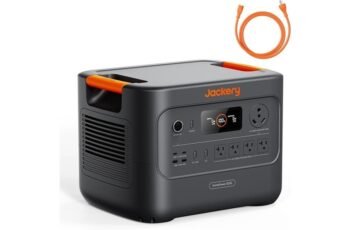
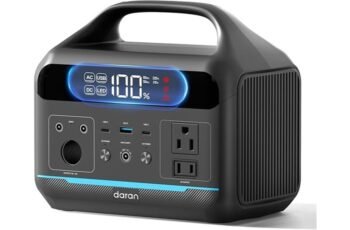
Enginstar’s 300W portable power station pairs a 296Wh Li-ion pack with true 110V pure sine AC, eight outputs, and regulated 12V rails. It supports CPAPs and small 12V appliances, but recharge tops out near 65W, making it slow. USB-C is modest, and capacity limits full-load runtime to under an hour. ETL certification and a disciplined BMS inspire confidence. The question is whether its protections and efficiency outweigh the speed and capacity trade-offs.
Key Takeaways
- 296Wh battery with a 300W pure sine inverter delivers about 240–260Wh usable; ~45–55 minutes at full load, hours for sub-100W devices.
- Eight outputs: dual 110V AC, two USB-A (5V/3.1A), USB-C 18W, and regulated 12V/24V DC rails for appliances like CPAP.
- Three charging methods—AC wall, 12V car, and 12–25V solar—with onboard controller; max charge rate 65W takes roughly seven hours.
- Robust BMS and ETL certification provide protections against overcharge, overload, short-circuit; regulated DC ensures stable power to sensitive gear.
- Pros: flexible ports, pure sine AC, regulated DC; Cons: small capacity, slow recharging, dated 18W USB-C, no solar panel, 12-month warranty.
96WH, Dual AC Overview
How much real work can 296 watt-hours deliver with dual AC in tow? At 296 Wh and a 300W pure sine inverter, this unit realistically yields ~240–260 Wh usable after conversion losses. That translates to roughly 45–55 minutes at full 300W, or several hours for sub-100W loads like routers, lights, or cameras. Two 110V AC outlets enable parallel tasks—e.g., laptop plus monitor—within the 300W ceiling.
Eight outputs broaden options, but cumulative draw remains bound by inverter limits. USB-C at 18W is modest, suitable for phones, tablets, and lightweight laptops. Verdict: credible short-run autonomy, disciplined by power budgeting, aligned with portable freedom.
Detailed features
Curiously compact yet spec-forward, the EnginStar 300W (296Wh) power station centers on a 110V pure sine inverter with dual AC outlets, eight total outputs, and a regulated DC suite (12V/24V) for appliance stability. USB provisioning includes two 5V/3.1A ports and an 18W USB‑C, enabling parallel device top-offs without browning. DC barrel ports are regulated, benefiting CPAPs and mini-fridges. Input pathways span wall, 12V vehicle, and 12–25V solar with a built-in controller; maximum charge rate is 65W, roughly seven hours to full. A BMS monitors temperature and voltage, enforcing overcharge, overload, and short‑circuit protections. ETL certification adds reassurance.


Pros and Cons
This section weighs the Enginstar 300W’s strengths—pure sine AC ports, regulated DC outputs, multiport flexibility, and robust BMS—against its trade-offs.
Key considerations include modest 65W recharge speed, limited 296Wh capacity for high-draw devices, and warranty length.
The result is a balanced view of performance-per-pound versus recharge throughput and longevity expectations.
Pros
Notably, the EnginStar 300W delivers a practical blend of portability and capability: a 296Wh lithium-ion pack with dual 110V pure sine wave AC outlets supports sensitive electronics up to 300W, while eight total outputs (including regulated 12V DC, 18W USB‑C, and 3.1A USB) enable multi-device charging. ETL certification and a robust BMS (over/under‑voltage, temperature, short‑circuit, overload) inspire confidence. The regulated DC rails suit CPAP and 12V appliances without sag. Three charging paths—AC wall, 12V car, and solar (12–25V, controller onboard)—expand autonomy. Compact dimensions and sub‑8‑lb mass enhance mobility. Cycle life (1000+) strengthens long‑term value for off‑grid freedom.
Cons
Where does the EnginStar 300W fall short? Its 296Wh capacity and 300W inverter limit high-draw tools and cooking gear; surge headroom is unspecified, restraining confidence.
A 65W max charge rate yields ~7-hour refills—slow for mobile freedom.
USB-C at 18W is dated; no 60–100W PD for modern laptops.
Two AC outlets help, but only 8 ports total constrains multi-device setups.
No solar panel included; the built-in controller accepts 12–25V but lacks MPPT, reducing harvest efficiency.
Weight varies by listing, muddying portability expectations.
A 12‑month warranty trails competitors offering 24–48 months, tempering long-term resilience claims.
Concluding thoughts
Ultimately, EnginStar’s 300W, 296Wh R300 proves a competent lightweight power station with true 110V pure sine AC, eight outputs, and sensible protections, but its 65W max recharge rate and modest capacity limit heavier-duty or rapid-turnaround use.
For users seeking portable autonomy—CPAP backup, laptop work, photo gear, drones—the regulated DC, dual AC, and 18W USB‑C deliver stable, flexible power.
Thermal and overload safeguards inspire confidence.
However, 296Wh drains quickly under continuous 150–250W loads, and slower recharging constrains mobility between stops.
If expectations match its envelope, it’s a smart, liberating grab‑and‑go unit; power‑hungry nomads should size up.
Frequently Asked Questions
Can It Power Devices While Being Charged (Pass-Through Charging)?
Yes, it supports pass-through charging. Ironically, freedom-loving electrons multitask better than some grid bureaucracies. Under 65W input, AC/DC/USB outputs operate, managed by its BMS. Expect slight efficiency losses, increased heat, and slower battery replenishment; monitor loads to avoid overload protection trips.
What Is the Noise Level of the Cooling Fan?
The cooling fan’s noise is moderate, typically around low-30s dBA at idle and mid-30s to low-40s dBA under load. It triggers with sustained AC draw or charging heat, cycling intermittently. Not silent, but unobtrusive for most users.
Does It Support UPS Functionality for Seamless Power Transfer?
No, it lacks true UPS pass-through with sub-10 ms transfer. Consider this: 296 Wh equals roughly 24 phone charges. It supports charging while discharging, but transfer interruption can reboot sensitive gear. Verdict: backup-only, not seamless UPS.
Is the Battery User-Replaceable or Serviceable?
No. The internal lithium-ion battery is not user-replaceable or field-serviceable. Enclosure is sealed, BMS integrated, and warranty-bound. Replacement requires manufacturer service. Attempted self-repair risks damage, safety hazards, and voided coverage—choose modular systems if autonomy matters.
What Are the Operating Temperature Ranges for Charging and Discharging?
Charging is typically 0–40°C; discharging −10–60°C. Like Icarus mindful of the sun, the spec guards longevity. Thermal throttling may occur near extremes; users seeking autonomy should operate mid-range and avoid enclosed heat to preserve cycle life.