Disclosure: As an Amazon Associate, I earn from qualifying purchases.
Have we ever wished we could bring reliable wall-outlet power with us anywhere—without the noise, fumes, and hassle of a gas generator?

What Is the EF ECOFLOW Solar Generator DELTA 3 with 2x220W Bifacial Solar Panels?
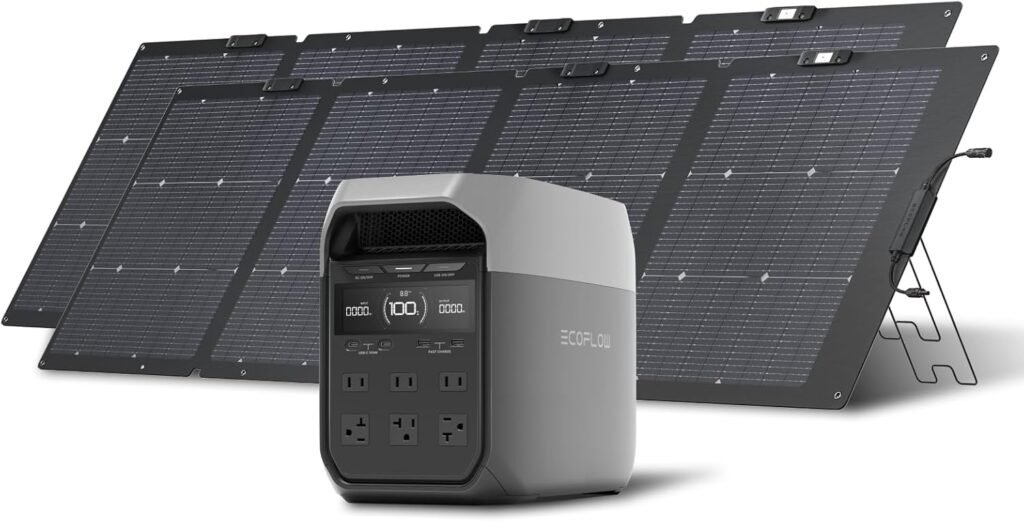
This product is a portable power ecosystem that combines the EF ECOFLOW DELTA 3 power station with two 220W bifacial solar panels. Together, they create a compact, fast-charging solar generator setup that works at home, on the road, or off-grid. We can charge it incredibly quickly from the wall, from the sun, or from both at the same time.
In practical terms, it gives us a 1024Wh LFP battery with 1800W of AC output, smart charging, expandable capacity, and efficient solar generation in one friendly, grab-and-go package.
Key Specifications at a Glance
Sometimes it helps to see the essentials laid out clearly. Below is a quick-reference table that summarizes the main features and what they mean for us in real-world use.
| Feature | Specification / Benefit |
|---|---|
| Battery Capacity | 1024Wh LFP (LiFePO4) |
| Battery Chemistry | LFP with ~4000 cycles to 80% capacity (10-year lifespan for daily use) |
| AC Output | 1800W continuous (supports many home and camping appliances) |
| X-Boost Capability | Supports resistive appliances over 2600W continuously |
| Number of Supported Devices | Up to 13 devices at once |
| USB-C Output | 100W fast charging (ideal for laptops, tablets, and phones) |
| Max AC Charging Input | Up to 1500W (very fast wall charging) |
| Max Solar Charging Input | Up to 500W |
| Wall + Solar Charging Time | Full charge in about 56 minutes (80% in ~30 minutes) |
| Solar-Only Charging Time | ~5.8 hours with one 220W panel, ~2.9 hours with two panels (ideal conditions) |
| Expandable Capacity | Up to 5kWh with compatible EcoFlow extra batteries |
| Solar Panel Type | 220W bifacial portable solar panels (dual-sided for more energy capture) |
| Solar Panel Efficiency | Up to 25% conversion efficiency |
| Extra Energy from Bifacial Design | Up to ~28% more energy by using both sides of the panel |
| Protection Rating (Battery Pack) | IP65: splash-proof, dust-proof, oil-proof |
| Warranty / Support | Up to 5-year customer service support |
| Package Contents | DELTA 3, 2 × 220W bifacial solar panels, AC cable, MC4 to XT60i cable, bag, manual |
This overview gives us a starting point. From here, we can look at how all these numbers actually feel when we are using the system day-to-day.
Design and Build Quality
The DELTA 3 is designed to feel like a serious piece of equipment without being intimidating. It looks like a compact, rugged power box with handles, vents, and a clear display. The whole unit feels like something we can confidently toss into the trunk for a road trip or set up quickly during a power outage.
The solar panels fold up into a portable format, and the included protective bag helps keep them safe between uses. We can tell the design team prioritized durability and portability so we do not feel nervous about taking this gear into the outdoors.
Portability and Weight
While we do not have an exact weight listed here, 1024Wh power stations typically sit in a sweet spot for portable use. They are not ultralight, but they are manageable for most adults to carry with the built-in handles. The two 220W bifacial panels, when folded, are slim enough to slide behind a seat, in an RV storage bay, or against a wall in a small apartment.
We end up with a setup that is portable enough for car camping and RV trips, but solid and capable enough for serious home backup use. It is not a “throw it in a backpack” type of device, but it is a system we can realistically move around without special equipment.
Build and Protection (IP65)
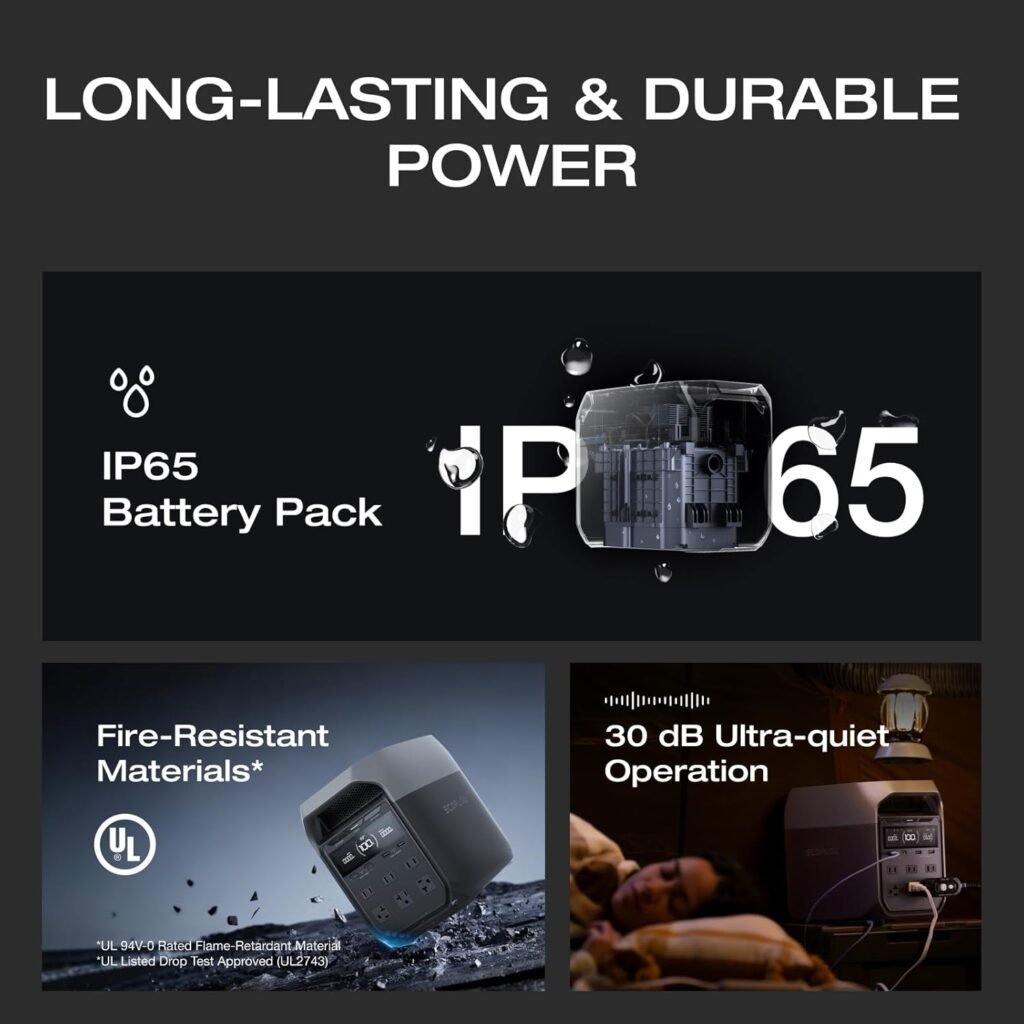
The IP65-rated battery pack brings reassurance in less-than-perfect environments. IP65 means it is protected from dust and from water jets—so splashes, dust clouds, and a bit of rain around the camp setup are not going to send us into panic mode.
The triple protection mention—splash-proof, dust-proof, and oil-proof—means this is made for real-world conditions, not just a spotless living room. That is especially important when we are thinking of garages, workshops, construction sites, or outdoor campsites where everything gets a bit gritty.

Battery Technology: Long-Lasting LFP Core
The heart of the DELTA 3 is its LFP (LiFePO4) battery. LFP chemistry is the gold standard right now for long life, safety, and thermal stability in portable power stations.
LFP vs Traditional Lithium-Ion
With LFP, we typically get:
- A much longer cycle life
- Better safety margins (less prone to overheating)
- More stable performance over time
EcoFlow states that this battery will retain about 80% capacity after 4000 full cycles. If we used it daily—fully charging and discharging—that’s around ten years of service before it drops to 80% of original capacity. For occasional use, we are realistically looking at well over a decade of strong performance.
We are not just buying a power box for a year or two; we are setting ourselves up with a long-term energy companion.
Capacity and Real-World Runtime
The 1024Wh capacity gives us a solid middle ground. It is not a tiny battery bank just for phones, and it is not a massive, immovable home battery. It is right in the portable sweet spot.
To get a sense of runtime, we can think about a few example devices:
- A 60W laptop: Around 12–14 hours of use (accounting for some inverter loss)
- A 10W phone charger: Dozens of full charges
- A 500W small heater or hot plate (for short bursts): About 1.5–2 hours of continuous use
- A 60–100W portable fridge: Roughly 8–12 hours, depending on how often the compressor cycles
With efficient devices—LED lights, laptops, phones, a small fan, and a compact fridge—we can comfortably power a campsite or RV overnight or bridge a household through a short blackout.
Fast Charging Performance
The standout feature of the DELTA 3 is its charging speed. Many portable power stations offer good capacity, but very few can go from nearly empty to full in under an hour.
Wall Charging: Full in 56 Minutes
Using a high-wattage AC wall outlet, the DELTA 3 can take in up to 1500W. In practice, this means:
- 0–80% charge in about 30 minutes
- 0–100% charge in about 56 minutes
If we have ever waited 5–8 hours for older power stations to recharge, this is game-changing. This speed is especially useful when:
- A storm is on the way and we only have a short window to prepare
- We are stopping at a coffee shop or a campground with shore power and want to top up quickly
- We live in a place with frequent outages and need fast turnaround between events
The ability to refill a 1024Wh pack in under an hour means we can be much more flexible and opportunistic about charging.
Solar Charging: Efficient and Flexible
With up to 500W of solar input, the DELTA 3 can drink in a substantial amount of power from the sun. Using the included two 220W bifacial panels, we can get:
- Full charge in around 2.9 hours with both panels in good sunlight
- Full charge in around 5.8 hours with a single 220W panel
These are ideal-condition estimates, but they show how realistic it is to rely on solar as a primary power source when we have decent weather. During a sunny day, we can power appliances directly while also refilling the battery for nighttime use.
We are no longer just “trickling” solar into a battery; we are actually refilling a meaningful amount of energy each day.
Solar Panels: 220W Bifacial Panels and Their Advantages
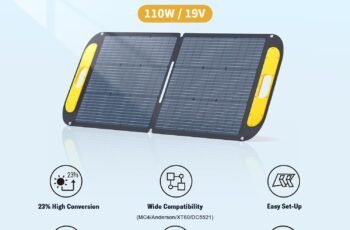
The included 220W bifacial panels are an essential part of this kit. Instead of standard single-sided panels, we get panels that can capture light from both the front and the back.
High Conversion Efficiency (Up to 25%)
The panels offer up to 25% conversion efficiency, which is quite high for consumer-grade portable solar. This means a larger portion of the sun’s energy becomes usable electricity for us.
In practice, we benefit from:
- Better performance in limited space
- More power output under good sunlight
- Shorter charging times
If we have camp spots or backyards where we cannot spread out massive arrays, more efficient panels help us squeeze the most from each square foot.
Dual-Sided (Bifacial) Design: Up to 28% More Energy
The bifacial design means the panels can generate power from light hitting both sides. The front side gathers direct sunlight, while the back side collects reflected light from the ground or nearby surfaces.
We can increase back-side yield by placing the panels over:
- Light-colored surfaces like concrete, sand, or snow
- Reflective surfaces such as light tarps or metal
- Areas where there is good ambient light scattering
EcoFlow mentions up to about 28% more energy capture compared to single-sided use. That extra bump adds up quickly over hours of charging, especially when we are off-grid and every watt-hour counts.
Output Power and Device Compatibility
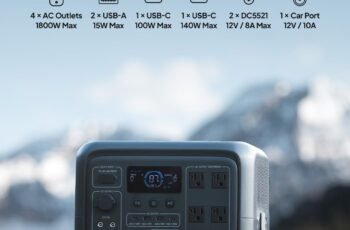
The DELTA 3 is not just about capacity; it is also about what we can run. With 1800W of AC power and intelligent X-Boost technology, it can support a wide range of electronic devices and appliances.
1800W AC Output with X-Boost
The standard 1800W continuous output is enough to power:
- Most laptops, phones, and tablets (of course)
- TV and entertainment setups
- Desktop PCs and gaming systems
- Small to medium microwaves
- Coffee makers
- Power tools like drills or small saws (depending on draw)
- Compact AC units or space heaters (within limits)
With X-Boost, it can handle resistive appliances over 2600W continuously under certain conditions. That does not mean we should run every huge device, but it gives the system more headroom for high-startup or high-draw devices.
We get more flexibility and fewer frustrating overload shutdowns when, for example, a kettle or hair dryer pulls a bit more than typical.
Powering 13 Devices at Once
The DELTA 3 can power up to 13 devices simultaneously. This is especially valuable during emergencies or group trips when we have multiple phones, lights, laptops, and appliances running at the same time.
We can imagine a setup like this:
- Several phones charging via USB
- A laptop on USB-C
- A portable fridge on AC
- A fan or small heater on AC
- LED lights on DC
- A router or modem for keeping the internet alive during an outage
Instead of deciding which device gets the outlet, we can simply plug everything in and let the system manage the load (within its overall power ceiling).
100W USB-C for Modern Devices
The 100W USB-C output is a small but important detail. Many modern laptops, tablets, and some gaming handhelds can charge quickly via USB-C when enough power is available.
With a 100W USB-C port, we can:
- Fast-charge many high-end laptops
- Charge devices without needing bulky AC adapters
- Free up AC outlets for other appliances
This streamlines our setup and reduces clutter, especially in tight spaces like RVs and vans.
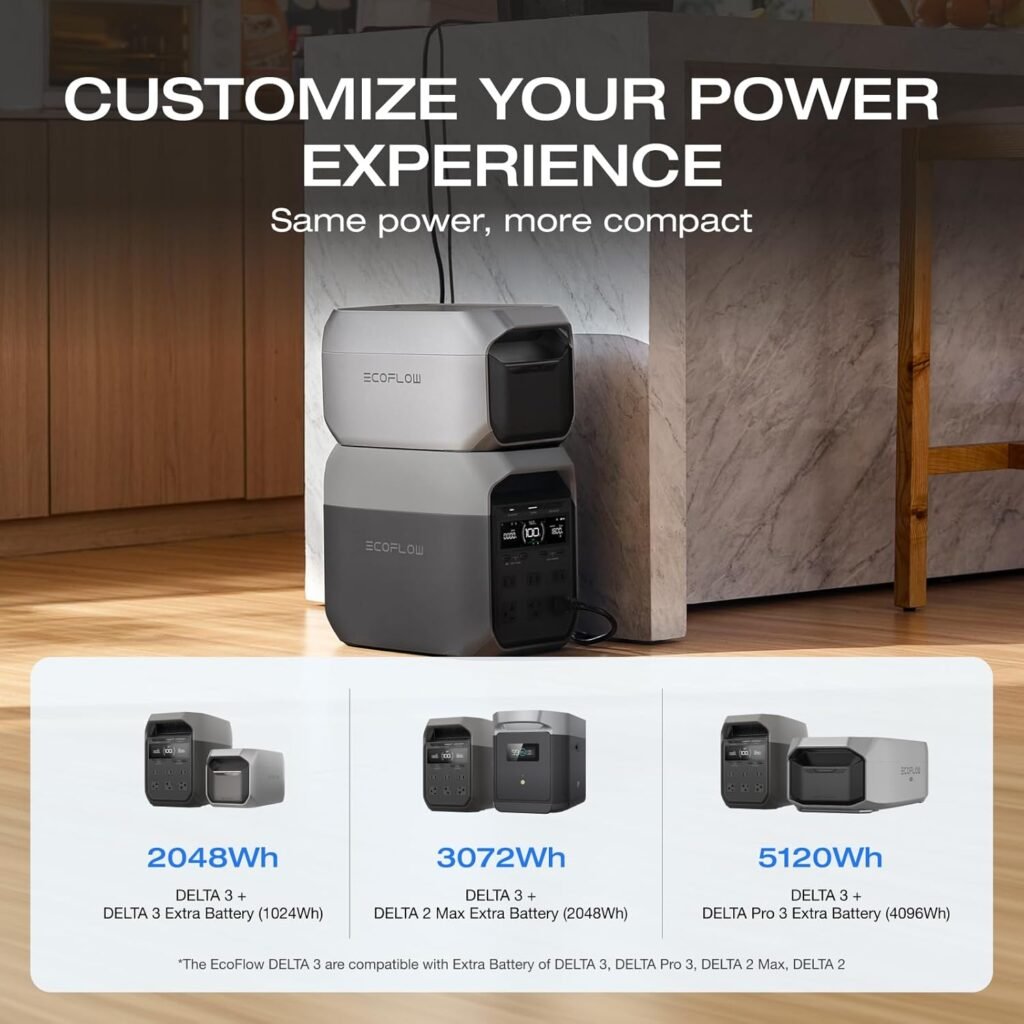
Expandable Capacity Up to 5kWh
One of the strengths of EcoFlow’s ecosystem is its modular approach. The DELTA 3 can be paired with compatible extra batteries to dramatically increase capacity.
How Expansion Works
We can integrate the DELTA 3 with other EcoFlow battery modules such as:
- DELTA 3 Extra Battery
- DELTA Pro 3 battery packs (as part of a larger ecosystem)
- DELTA 2 Max battery packs (where compatible)
With these add-ons, our system can reach up to 5kWh of total energy storage. That moves us from “portable backup” into “serious home or RV power solution” territory.
If we know we just need portable power for day trips, we can keep it lean with only the main unit. If our needs grow—say we start doing longer off-grid stays or want deeper home backup—we can add capacity over time instead of replacing the entire system.
Smaller, Lighter Extra Battery
EcoFlow notes that the DELTA 3 Extra Battery is about one-third smaller and lighter than the DELTA 2 Extra Battery. That matters for portability and storage. Add-on battery packs often become unwieldy, but a more compact, lighter pack is something we are more likely to actually move and use.
We are essentially getting growth potential without turning the system into an unmanageable beast.
Home Backup Use Cases
Many of us are looking at products like this because we want peace of mind when the grid goes down. The DELTA 3 with solar panels works as a simple, portable backup system for critical loads.
Keeping Essentials Running During Outages
During a grid outage, we can keep these running, depending on total draw and runtime needs:
- Wi-Fi router and modem
- Phones, tablets, and laptops
- LED lights
- A small refrigerator or a portable refrigerator
- CPAP machines or other low-to-moderate draw medical devices (with guidance from a professional where needed)
For short-term outages, a 1024Wh battery with efficient usage can get us through hours or a full day. With the 2x220W solar panels and sunshine, we may even be able to sustain essentials longer by refueling during the day.
We are not replacing a whole-house generator here, but we are replacing the need to sit in silence with dead devices and spoiled food.
Quiet, Fume-Free Operation
Unlike gas generators, this system:
- Produces no fumes (safe to run indoors with proper ventilation for ourselves, not for the unit)
- Makes only a modest fan noise when under load or charging
- Requires no fuel storage, oil changes, or pull-starts
This is a huge benefit if we live in an apartment, condo, or neighborhood where a gas generator is simply not practical or allowed. We get backup capability without disturbing neighbors or putting ourselves in danger with carbon monoxide.
Camping, RV, and Outdoor Adventures
For many of us, this kit is equally about freedom on the road or in the wild. The DELTA 3 plus 2x220W panels is a powerful off-grid camping or RV solution.
Running an Off-Grid Campsite
With 1024Wh of storage, 500W solar input capacity, and 440W of panel power (2 × 220W), we can set up a solid off-grid base:
- Power a portable fridge to keep food and drinks cold
- Charge cameras, drones, laptops, and phones
- Run lights, fans, and maybe a small induction cooktop intermittently
- Power a small projector or entertainment setup for movie nights outside
We stay connected and comfortable while still enjoying being away from the grid.
RV and Vanlife Integration
In an RV or van, the DELTA 3 can either complement or partially replace traditional 12V battery systems. It is especially convenient if we prefer a plug-and-play solution rather than wiring our own battery bank and inverter.
We can:
- Charge the DELTA 3 while driving (with the right cables and settings, depending on our 12V system)
- Deploy the panels at camp to keep the battery topped up
- Use AC outlets directly inside the vehicle for laptops, kitchen appliances, and more
It reduces the complexity of separate batteries, inverters, and charge controllers by integrating everything into one coherent unit.
Everyday Use and Energy Independence
Even outside of emergencies and trips, this system can serve us during routine daily life.
Reducing Grid Dependence
If we have decent sun exposure, we can charge the DELTA 3 from solar regularly and use that power for:
- Charging personal electronics
- Running some household electronics during the day
- Powering a home office setup
This will not take us completely off-grid by itself, but it helps us reduce reliance on grid energy and gives us more control over when and how we use power.
Backup for Remote Work
If we work from home and absolutely need our internet and devices running, this setup acts like a personal UPS and energy reserve:
- Power our modem, router, and laptop for long stretches
- Keep external monitors and accessories running
- Recharge quickly between meetings if the grid comes back briefly
We are basically giving ourselves uptime insurance when our livelihood depends on connectivity.
Setup, Use, and User Experience
The DELTA 3 system is designed to be approachable even if we are not electrical experts.
Simple Setup Process
Our basic steps would be:
- Unbox the DELTA 3 and the two bifacial panels.
- Plug the panels into the included MC4 to XT60i cable.
- Connect the cable to the DELTA 3’s solar input.
- Angle the panels toward the sun using their stands or a convenient support.
- Plug in our devices or appliances to the DELTA 3’s various outlets.
Because the charging circuitry and protection are all built in, we do not have to worry about external charge controllers, fuses, or inverters. It is close to plug-and-play.
Real-Time Monitoring and Control
While not detailed in the provided text, EcoFlow units typically provide:
- A digital display showing remaining capacity, input and output wattage, and estimated runtime
- Possible app integration (EcoFlow app) for remote monitoring and control
That kind of feedback makes it easy for us to fine-tune our usage. We can see which devices are drawing the most power and decide how to prioritize.
We are not guessing; we are making informed decisions based on real-time data.
Pros and Cons Summary
To keep our thoughts organized, we can look at some clear strengths and potential limitations.
Major Advantages
- Very fast charging: Full in about 56 minutes from AC, 80% in about 30 minutes.
- Solid mid-range capacity: 1024Wh is a strong balance between portability and backup power.
- High power output: 1800W AC with X-Boost for >2600W resistive loads.
- Long-life LFP battery: Around 4000 cycles to 80% capacity, up to 10-year lifespan for daily use.
- Solar-ready: Up to 500W solar input, with two efficient 220W bifacial panels included.
- High-efficiency panels: Up to 25% efficiency, plus up to ~28% more energy from bifacial design.
- Expandable system: Up to 5kWh capacity with additional EcoFlow battery packs.
- Robust and protected: IP65-rated battery pack for splash, dust, and oil resistance.
- Powers many devices: Supports up to 13 devices at once, including fast 100W USB-C.
Possible Drawbacks
- Not ultra-ultralight: While portable, it is still a sizable power station; we will not be backpacking with it.
- Dependent on conditions for solar performance: Real-world solar charging times vary with weather and placement.
- Not a whole-house replacement: For entire-home backup of high-load appliances, we would need more capacity or a larger system.
These points do not undermine the product’s value, but they help us keep expectations realistic.
Who Is This System Best For?
Different people have different needs, and this product fits several use profiles particularly well.
Ideal Users
We see this being especially well-suited for:
- Homeowners and renters who want reliable, quiet backup for essentials during power outages.
- Campers and overlanders who need a strong, solar-powered base for several days off-grid.
- RV and vanlife travelers who want a turnkey power solution instead of building complex electrical systems.
- Remote workers who need their devices and internet to stay up when the power grid is shaky.
- Preparedness-minded households who value long-lasting batteries and expandable capacity.
If we identify with any of these, the DELTA 3 with 2x220W bifacial panels offers a compelling mix of performance, convenience, and longevity.
Situations Where It Might Be Overkill
We might not need this system if:
- We only need to charge phones and a tablet occasionally; a smaller power bank would be enough.
- We never leave urban areas and have an extremely stable grid with no concern about outages.
- We need whole-house backup, including large AC units, electric stoves, and heavy-duty shop tools—then we might need a much larger EcoFlow setup or a dedicated home system.
By understanding our real usage patterns, we can see whether this is the right tier of solution.
Longevity, Warranty, and Support
A power system is only as valuable as its reliability over time. Here the DELTA 3 stands out with its LFP battery and extended support.
10-Year Battery Life at Daily Use
With about 4000 cycles before the battery drops to 80% health, we get confidence that this is more like a decade-long investment than a two- or three-year gadget. That long lifespan is one of LFP’s strongest selling points and a major reason we might choose this over competing chemistries.
We are not facing an early replacement cycle if we actually use the product heavily.
Extended Customer Service and Support
The box includes an “exclusive 5-year customer service” support statement, which signals a strong backing from EcoFlow. Long-term support is important for something that becomes part of our emergency and lifestyle infrastructure.
If we intend to rely on this during important moments—storms, travel, work—it is reassuring to know we are not on our own.
What We Get in the Box
Having clarity on what arrives is always useful, especially for planning accessories and setups.
In the package, we receive:
- EF ECOFLOW DELTA 3 portable power station
- Two 220W bifacial portable solar panels
- AC charging cable
- MC4 to XT60i charging cable (for connecting panels to the power station)
- Protective bag (useful for storing panels and accessories)
- User manual
- Extended customer service coverage (up to 5 years)
Note that the DELTA 3 power station and each 220W panel may arrive in separate packages. This is normal for larger systems.
We likely will not need to buy much else to get started, unless we want extra cables, mounts, or stands for specialized setups.
How This System Fits Into an Energy Strategy
For many households and travelers, the right question is not just “Is this good?” but “How does this fit into our overall approach to energy?”
As a First Step Toward Energy Independence
For someone new to solar and backup power, this is a highly approachable starter system. It teaches us about usage, runtime, and solar harvesting in a very hands-on way, without making us wire anything into our home’s main electrical panel.
We can later expand with additional batteries or larger systems, using the skills and data we gained from this kit to make smarter decisions.
As a Flexible, Standalone Solution
If we already have some solar infrastructure or a small off-grid cabin, this can function as a portable power “appliance” we move between locations. One week it backs up our home office, the next week it lives in the van for a trip.
We are not locked into a single-use case; the portability means we can adapt it to our changing lifestyles.
Final Thoughts: Is the EF ECOFLOW DELTA 3 with 2×220W Bifacial Panels Worth It?
Taking everything into account, the EF ECOFLOW Solar Generator DELTA 3 with its 2x220W bifacial solar panels delivers a powerful blend of speed, capacity, efficiency, and longevity. We are getting:
- Rapid wall charging in under an hour
- Strong 1024Wh LFP storage with a decade-scale lifespan
- High-output 1800W AC power with X-Boost for demanding appliances
- Up to 5kWh expandable capacity for serious backup needs
- Efficient 440W of portable solar with up to 25% efficiency and bifacial gains
- Rugged IP65 protection and support for up to 13 devices at once
For those of us who want a trustworthy system for home backup, camping, RVing, and everyday energy independence, this kit offers a well-balanced, future-ready solution. It is not the smallest or cheapest power option on the market, but it stands out by actually being something we can rely on day after day, year after year.
If we value fast charging, long battery life, flexible expansion, and real solar capability in a single package, the DELTA 3 with 2x220W bifacial solar panels is a strong candidate to become the core of our portable power strategy.