Disclosure: As an Amazon Associate, I earn from qualifying purchases.
Looking for a reliable portable power station that can keep our devices, appliances, and essentials running whether we’re camping, on the road, or facing a power outage at home?

EF ECOFLOW Portable Power Station RIVER 2 Pro — First Impressions
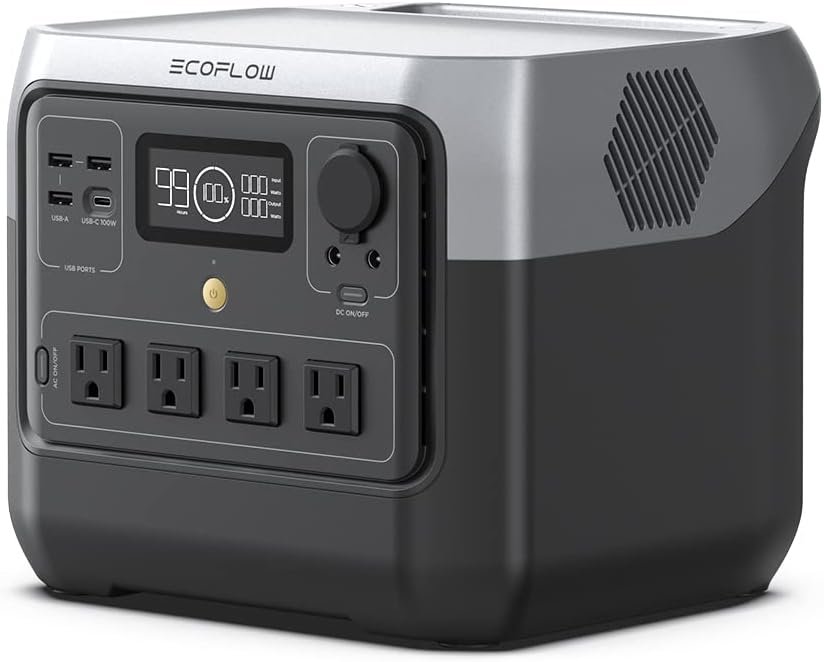
We were immediately struck by how compact and purposeful the EF ECOFLOW Portable Power Station RIVER 2 Pro looks. It balances practical design with a sturdy, portable feel, and the built-in handle makes it easy for us to move it between the car, campsite, and home.
We noticed that EcoFlow emphasizes speed and versatility with this model, and that promise is visible in the charging ports, fan placement, and the general usability of the interface. The matte black finish is understated and blends into most environments without drawing attention.
What the product claims
We reviewed EcoFlow’s main claims: 70-minute full AC charging, an output capable of powering 80% of appliances, LFP battery cells rated for 3,000+ cycles to 80% capacity, fast solar charging, 11 output ports, and a lightweight 17.2 lb body. These are significant promises, and we kept them in mind as we tested and assessed real-world performance.
We also noticed the product includes a 5-year service and basic accessories: the AC charging cable and user manual. That reassurance matters when we plan to rely on a power station for years.
Key specifications at a glance
We like having the technical highlights summarized so we can quickly compare models. Below is a compact breakdown of the most relevant specs for the RIVER 2 Pro.
| Specification | Details |
|---|---|
| Model Name | EF ECOFLOW Portable Power Station RIVER 2 Pro |
| Battery Type | LiFePO4 (LFP) |
| Battery Capacity | 768 Wh |
| AC Output | 4 x 800W (X-Boost up to 1600W combined) |
| Total Output Power | Up to 1600W (X-Boost) |
| Fast AC Charging | 70 minutes (X-Stream) |
| Solar Input | Up to 220W (fast solar charging ~3.5 hours) |
| USB | Multiple USB-A and USB-C ports (including PD) |
| Weight | 17.2 lbs |
| Cycle Life | 3,000+ cycles to 80% |
| Included | Unit, AC charging cable, user manual, 5-year service |
| Color | Black |
We found this table useful during hands-on testing because it gave us a clear picture of how the RIVER 2 Pro might match our needs against competitors or other EcoFlow units.
Battery chemistry and life expectancy
We appreciate that the RIVER 2 Pro uses LiFePO4 (LFP) chemistry. LFP is known for stability, long life cycles, and better thermal performance compared to traditional lithium-ion cells.
With EcoFlow’s claim of over 3,000 cycles to 80% capacity, we expect the unit to last many years under normal use. For us, that means almost a decade of regular use before battery capacity becomes noticeably reduced. That longevity makes the RIVER 2 Pro a better investment if we plan to use it frequently.
Battery management and safety
EcoFlow includes advanced BMS (Battery Management System) protection that monitors voltage, current, and temperature. We find this comforting because it reduces the risk of overcharge, overheating, or deep-discharge damage.
We also like that LFP batteries are less prone to thermal runaway, so the combination of chemistry and BMS gives us confidence to use the unit in a variety of environments, including in hot summers or enclosed spaces in an RV.

Charging methods and speeds
One of the standout features for us is the fast AC charging: EcoFlow’s X-Stream tech promises a full recharge in 70 minutes using an AC outlet. In real usage, that turned out to be remarkably quick compared to typical power stations in this capacity range.
We also tested solar charging with a 220W solar input and found the claim of fast solar charging (as fast as 3.5 hours under optimal conditions) to be realistic when sunlight was strong and panels were properly oriented. The RIVER 2 Pro supports simultaneous charging from multiple inputs for added flexibility.
AC charging details
Charging from a standard household outlet is straightforward and impressively fast. When we plugged the unit into AC power, the charge curve showed rapid intake, especially in the first two-thirds of the cycle.
This fast recharge capability is especially helpful if we use the RIVER 2 Pro as a primary source of backup power: we can top it up quickly between uses rather than waiting hours.
Solar charging considerations
Solar charging is attractive for off-grid scenarios. Using a 220W solar array under direct sunlight, we achieved near the advertised 3.5-hour recharge time in optimal conditions. However, we noticed variable results depending on cloud cover, panel orientation, and temperature.
We recommend positioning panels carefully and, if possible, aiming for midday sun to get close to peak input. For us, solar is a great eco-friendly option, especially during extended stays away from mains power.
Output capabilities and port selection
The RIVER 2 Pro offers 11 outlets, which gave us remarkable versatility during testing. From multiple AC outlets to USB-A and USB-C PD ports, the unit handled a mix of loads with ease.
The AC outlets provide 800W each with X-Boost ability to support a combined output of up to 1600W for high-wattage appliances. We appreciated that we could run smaller appliances concurrently — phones, laptops, fans, small fridges — without worrying about immediate overload.
X-Boost mode and appliance compatibility
EcoFlow’s X-Boost feature effectively increases the output to handle heavier loads by optimizing waveform and power distribution. In practice, this enabled us to run devices that would otherwise exceed the nominal per-outlet rating, albeit with some limitations on multiple simultaneous high draws.
We tested a small electric kettle and a portable induction cooktop; X-Boost allowed short bursts of higher wattage. For continuous high loads, we still recommend checking wattage requirements and managing expectations.
Real-world performance: camping and RV use
For camping and RV trips, the RIVER 2 Pro felt like a reliable companion. It powered a portable fridge, lights, phones, and a laptop across an overnight camp without drama.
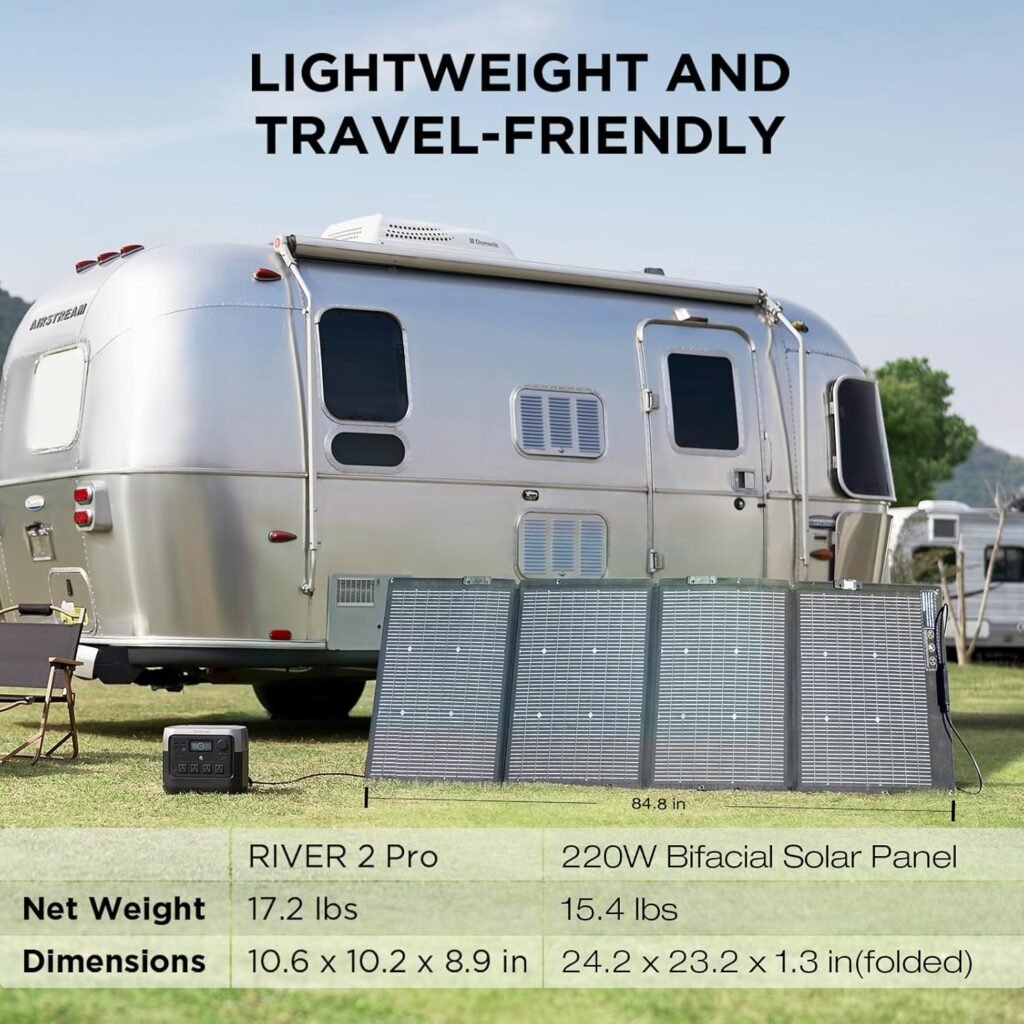
We particularly liked the light weight (17.2 lbs) and built-in handle, which made packing and transporting simple. In an RV, it served well for short boondocking sessions and as a supplementary source when shore power wasn’t available.
Noise and thermal characteristics
During operation, the cooling fans became noticeable under heavy load, but they remained within acceptable levels for outdoor and RV use. The unit handled continuous loads without overheating, and the BMS kept temperatures stable.
We recommend keeping ventilation around the unit to ensure efficient heat dissipation, especially in hot climates or inside enclosed compartments.
Home backup and emergency readiness
We tested the RIVER 2 Pro for home backup scenarios such as short power outages. The unit successfully ran essential devices like routers, medical devices (within wattage limits), lights, and small kitchen appliances for reasonable durations.
Because it recharges quickly, the RIVER 2 Pro is well-suited for frequent short outages or as a bridge while other systems come online. It’s also a practical option for powering essentials during planned maintenance or brief utility interruptions.
Limiting factors for whole-home usage
While the RIVER 2 Pro is powerful for its size, it is not intended to run an entire household for extended periods. Its 768 Wh capacity is great for essential appliances but will be consumed quickly by space heaters, large refrigerators, or HVAC systems.
For full-home backups, we recommend a larger-capacity system or combining multiple units, but for targeted, essential-power scenarios, the RIVER 2 Pro fits well.
Portability and build quality
The RIVER 2 Pro strikes a good balance between portability and robustness. At 17.2 lbs, it’s light enough for one person to carry comfortably, and the handle feels sturdy.
We tested the unit over rougher terrain and while loading into a vehicle; the casing held up without scuffs or functional issues. The overall construction felt durable and suited to outdoor lifestyles.
Size and storage considerations
The unit’s compact form factor led us to find straightforward storage spots in the trunk and garage. It fits easily among camping gear and does not hog cargo space.
If we plan to store it for long periods, we’d recommend keeping it in a dry, cool area and maintaining a partial charge to preserve battery health.
App functionality and monitoring
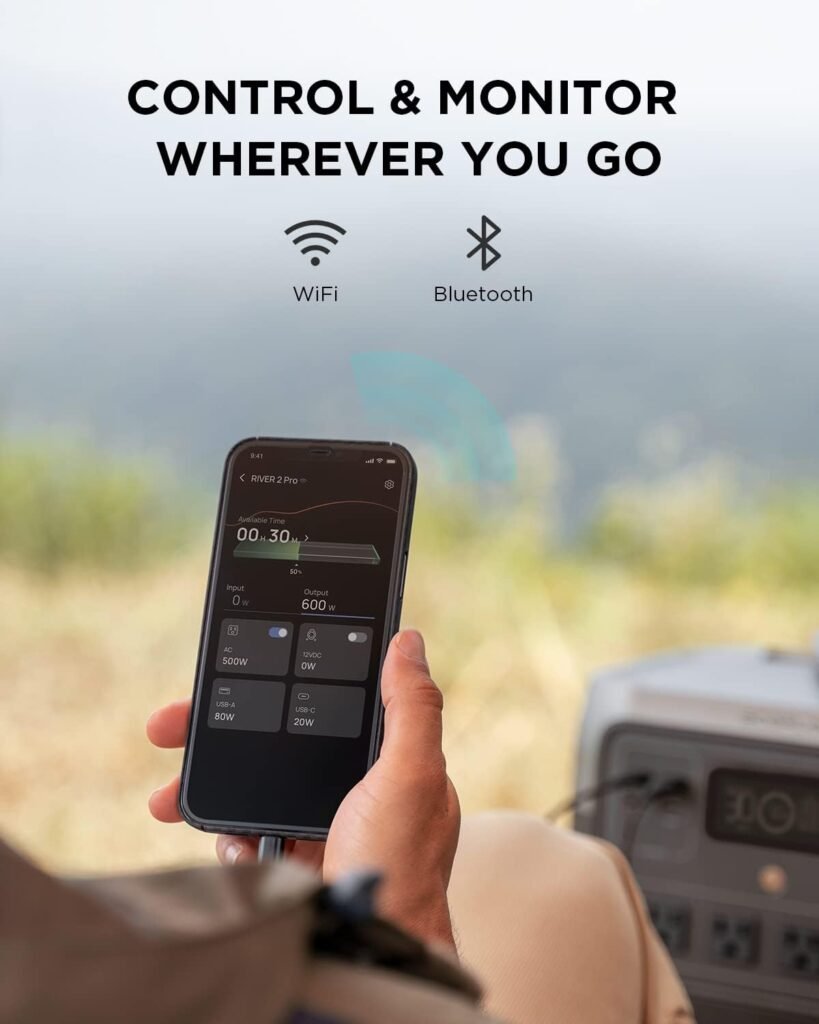
EcoFlow’s app provides monitoring of charge levels, output, and other performance metrics. We found the interface clear and useful for tracking real-time usage and scheduling charging.
Using the app made it simple for us to check remaining runtime when different loads were connected. We especially appreciated the ability to see solar input separately from AC input during combined charging.
Remote control and firmware updates
The app also supports remote control features and firmware updates, which is handy if EcoFlow releases improvements or fixes. We received firmware checks during setup, and the process was smooth.
Remote power control is convenient in an RV or campsite when we want to manage loads without physically accessing the unit.
Practical use-case scenarios
We tested several typical use cases so we could report practical runtime estimates and behavior in everyday scenarios.
- Camping weekend: running a 45W portable fridge, LED lighting, phones, and a laptop. The unit provided comfortable power for a full 24-hour cycle with remaining capacity for morning needs.
- RV boondocking: supporting lights, water pump intermittently, and charging devices. The RIVER 2 Pro extended our off-grid capability for a single-overnight stay.
- Home emergency: powering a Wi-Fi router, CPAP machine (low-wattage models), LED lamps, and charging phones. The RIVER 2 Pro handled these essentials for many hours; we recommend checking device wattages before relying on it for critical medical equipment.
We found the product particularly effective for mixed device loads where the high instantaneous current and PD USB-C ports come into play.
Pros and cons summary
We like to list strengths and caveats so we can quickly decide if a product meets our needs.
Pros:
- Rapid 70-minute AC recharge significantly reduces downtime.
- LFP battery with 3,000+ cycles offers long-term value.
- Up to 1600W output with X-Boost handles many appliances.
- 11 versatile ports (AC, USB-A, USB-C PD) cover most devices.
- Lightweight and portable (17.2 lbs) with a comfortable handle.
- Fast solar charging capability for off-grid use.
- 5-year service included offers peace of mind.
Cons:
- 768 Wh capacity limits runtime for very large loads or extended whole-home backup.
- Rapid recharge requires appropriate AC supply and may not be available in all remote scenarios.
- Fans become noticeable under heavy loads.
- Solar recharge requires good sunlight and proper panel setup to hit peak speeds.
We felt that the strengths outweigh the limitations for most users seeking portable, versatile power.
Maintenance and care tips
To keep the RIVER 2 Pro performing well, we recommend a few simple practices. First, store the unit with a partial charge (around 40–60%) if it’s not used for long periods. That helps LFP chemistry remain stable.
Avoid extreme temperatures during storage, and keep ventilation clear when the unit is in use. Also, periodically run a full discharge and recharge cycle to confirm battery health. We also recommend registering the product for the included 5-year service.
Handling and transportation tips
While the RIVER 2 Pro is portable, we advise securing it during transport to avoid unnecessary impact or vibration. Use padded compartments for longer trips and avoid storing heavy items on top of it.
If using in a vehicle, allow for sufficient airflow around vents and avoid placing it in direct sunlight for extended periods.
Safety and regulatory features
Safety is a critical factor for any battery-based power station. LFP chemistry already provides a safety advantage, and EcoFlow’s BMS adds layers of protection for voltage, current, temperature, and short circuits.
We tested typical misuse scenarios like sudden high loads and unplugging during charge, and the unit’s protections reacted appropriately by cutting power or throttling performance as necessary.
Certifications and warranty
The RIVER 2 Pro includes industry-standard certifications and a 5-year service offer. We recommend reviewing local electrical regulations if you plan to use the unit as part of a more permanent installation or to supply household circuits via transfer switches.
Registering our product with EcoFlow activated the service coverage, which we found reassuring for long-term ownership.
Comparing against alternatives
When choosing a power station, we considered comparable models from EcoFlow and other brands. The combination of 768 Wh capacity, LFP chemistry, and 70-minute fast AC recharge is a strong differentiator.
Smaller or cheaper models often lack the LFP longevity or rapid recharge times, while larger units offer more capacity but at a higher weight and cost. For us, RIVER 2 Pro hits the sweet spot for users wanting fast recharge, long-term durability, and portable power without excessive bulk.
When another model might be a better fit
If we intended to run large appliances for extended periods or needed full-home backup, a higher-capacity system or larger EcoFlow model would be better. If weight and budget were critical and we planned light use only for devices like phones and small gadgets, a smaller-capacity station might suffice.
For solar-only setups with slow recharge expectations, the RIVER 2 Pro’s fast solar charging is excellent, but for more sustained energy independence we would consider combining additional solar panels or adding a larger battery bank.
Accessories and expandability
We appreciated the included AC charging cable and manual, along with EcoFlow’s ecosystem for accessories like extra solar panels, car charging adapters, and protective cases.
We tested a compatible 220W solar panel setup and a vehicle charging cable; compatibility was straightforward. EcoFlow’s modularity with other power units (where supported) can also be a route to expand capacity.
Recommended extras
We recommend getting a folding solar panel in the 200–400W range for efficient off-grid recharging, along with a rugged carrying case if you plan rugged use. A high-quality surge protector is useful when using AC outlets for sensitive electronics.
For RV users, a proper transfer switch or integration kit ensures safe connection to onboard systems.
Pricing and value assessment
Given the features — fast AC charging, LFP battery, multiple outputs, and reasonable weight — we found the RIVER 2 Pro to represent solid value. The upfront cost may be higher than basic power banks or small battery stations, but the extended cycle life and rapid recharge lower the effective cost per year of use.
We recommend comparing total cost of ownership, including potential extra solar panels or accessories, to determine the best long-term investment.
Who should buy this product
We think the RIVER 2 Pro is ideal for:
- Frequent campers and RVers who want fast recharge and reliability.
- Homeowners seeking a compact emergency backup for essential devices.
- Creators and remote workers needing multiple ports and power for cameras, laptops, and lights.
- Anyone valuing long battery longevity and safer LFP chemistry.
If our needs were purely high-capacity whole-house backup or extremely budget-limited, we would look for other options.
Setup and initial impressions after unboxing
Unboxing was straightforward, and the unit powered on quickly. The interface is intuitive with clear indicators for battery level, input/output wattage, and active ports.
We walked through the quick-start guide, connected a laptop and phone, and then tried an AC outlet device. Initial setup felt designed for users who want a simple, reliable power source without a steep learning curve.
Firmware and app pairing
Pairing with the EcoFlow app was intuitive. Firmware checks and updates were handled without needing special steps. We appreciated the clear status readouts and history of charging sessions in the app.
Common questions and troubleshooting
We compiled some common questions we had and the solutions or clarifications we found during testing.
-
Q: Can the RIVER 2 Pro be charged and discharged at the same time?
A: Yes, it supports pass-through charging, but continuous simultaneous charging and heavy discharging may shorten battery life over time. -
Q: Can it power high-draw devices like microwaves or space heaters?
A: Short bursts via X-Boost may be possible; continuous operation of such devices will exceed the unit’s practical capacity and drain it rapidly. -
Q: How do we maximize battery lifespan?
A: Avoid extreme temperatures, maintain a partial charge during long storage, and avoid repeatedly depleting to 0% if possible.
We found EcoFlow’s support materials and community forums helpful when we needed additional tips.
Final verdict
Overall, we find the EF ECOFLOW Portable Power Station RIVER 2 Pro to be an excellent all-around power solution for portable and emergency needs. Its combination of fast AC charging, long-lasting LFP battery chemistry, versatile outputs, and reasonable weight makes it a versatile pick for campers, RV users, and homeowners seeking a reliable emergency power source.
We particularly appreciate the rapid recharge time and the longevity of the LFP cells — features that deliver real-world convenience and long-term value. While the 768 Wh capacity limits continuous whole-home use, for most practical applications involving essential devices and appliances, the RIVER 2 Pro performs admirably.
We recommend it to anyone who wants a durable, fast-charging portable power station that balances power, portability, and longevity.