When the lights go out, the right power station can turn chaos into calm. We’ve narrowed the field to five standout options that balance capacity, safety, and fast recharge for real-world emergencies. From ultra-portable 88Wh units to expandable 3,600+Wh systems with rapid AC/DC input and quick UPS switchover, each pick serves a distinct need. We’ll weigh cycles, warranties, and outlet versatility—so we can choose what actually works when the grid doesn’t.
Key Takeaways
- Prioritize LiFePO4 models with high continuous wattage and solid surge capacity to run essentials safely during startups.
- Choose capacity by need: 88Wh for phones/lights; 2–3.5kWh for fridges, CPAPs, routers; expand to 20–40kWh for multi-day outages.
- Look for fast recharge options: sub-2-hour AC, solar readiness, and hybrid AC+DC inputs for rapid turnaround during grid windows.
- Ensure ample, diverse ports (multiple AC, 100W USB-C PD, 12V) and consider 120/240V support or UPS-like 20 ms switchover.
- Verify safety and reliability: UL certifications, robust BMS, long cycle life (2,500–6,000 cycles), and warranties of 2–10 years.
HOWEASY Portable Power Station (88Wh Solar Generator)


Looking for an ultra-light, under-100Wh backup you can fly with? We like the HOWEASY Portable Power Station (H120), an 88Wh lithium-ion unit that weighs just 2.3 lb and measures 6.6 x 3 x 4 inches. It packs 8 outputs: two 110V AC (120W rated, 150W peak), USB-C 18W, two QC 3.0 USB, one 5V/2.4A USB, and two 12V/10A DC. A clear LED display, separate AC/DC buttons, and a hidden handle boost usability.
It recharges via wall, car (12/24V), or compatible 15–24V solar. Expect 1500+ cycles, a bright LED (steady/flash/SOS), and a 24-month warranty. Note: some 20V laptops aren’t compatible.
Best For: Travelers and campers who need an ultra-light, TSA-friendly (<100Wh) backup to power small electronics and lights with flexible recharging options.
Pros:
- Compact and light (2.3 lb; 6.6 x 3 x 4 in) with hidden handle; 8 outputs including two 110V AC, USB-C 18W, QC 3.0, and 12V DC.
- Flexible charging: wall, car (12/24V), and 15–24V solar; clear LED display and separate AC/DC controls; built-in bright LED (steady/flash/SOS).
- Long cycle life (>1500) and 24-month warranty; TSA-friendly 88Wh capacity for air travel.
Cons:
- Limited to 120W rated (150W peak), so not suitable for high-draw appliances or many 20V laptops.
- Solar panel not included; real-world solar charging speed varies with conditions.
- Some users report varying charge speeds and potential compatibility issues with certain laptop power requirements.
Enphase IQ PowerPack 1500 Portable Power Station
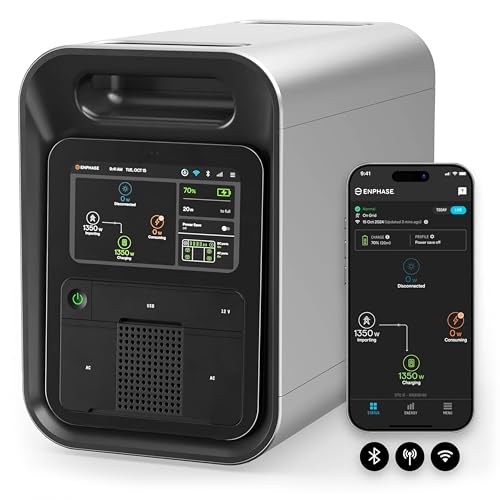
Engineered for fast, no-drama backup, the Enphase IQ PowerPack 1500 suits readers who want grid-grade reliability with app control. We get 1500 W continuous output from a 1500 Wh LiFePO4 pack, four AC outlets (3000 W surge), USB-A/C, and a 12 V port—enough to run a fridge, laptops, tools, and phones at once. It flips from grid to backup in under 10 ms, recharges from AC in under 75 minutes, or ~4 hours via two Enphase portable solar panels. The 7-inch touchscreen and Enphase App (4G/Wi‑Fi/Bluetooth) make management simple. It’s rugged, UL certified, quiet, and backed by a 5‑year/2,500‑cycle warranty.
Best For: Users who want fast, reliable whole-appliance backup in a portable form—campers, RVers, and homeowners seeking grid-grade power with app control and rapid recharging.
Pros:
- 1500 W continuous/3000 W surge with four AC outlets plus USB-A/C and 12 V—runs a fridge, laptops, tools simultaneously
- Ultra-fast recharge: <75 minutes via AC; ~4 hours with two Enphase portable solar panels; app control via 4G/Wi‑Fi/Bluetooth and 7" touchscreen
- Rugged, UL certified LiFePO4 with 5-year/2,500-cycle warranty; <10 ms switchover for seamless backup
Cons:
- Hefty at ~45.9 lb, less convenient for frequent carry
- 1500 Wh capacity may be limiting for multi-day, high-draw usage without solar
- Vehicle 12 V recharge is slow (~14 hours) compared to AC or solar options
Jackery HomePower 3600 Plus Portable Power Station
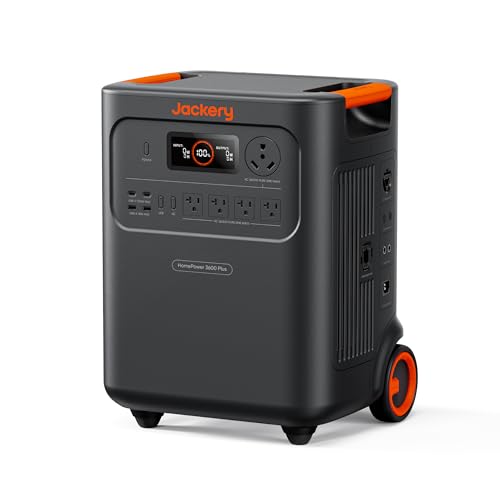
Need whole-home backup without a hard install? We like the Jackery HomePower 3600 Plus for serious, plug-and-play resilience. Its 3600W AC output (7200W parallel) and dual 120/240V support cover pumps, heaters, and even dryers. The 3584Wh base expands to 21kWh per unit—or 43kWh with multiple units—enough to support a three-person household for weeks.
Safety and longevity stand out: high-temp ceramic membrane cells tested to 302°F, 6,000 cycles, 10-year life, and operation down to -4°F. Recharge fast: 0–100% in 2 hours via AC+DC, 2.5h AC or generator, 4h solar. Despite 77 pounds, it’s luggage-style with wheels and handle.
Best For: Homeowners and renters who want serious, plug-and-play whole‑home backup power (including 120/240V appliances) without a hardwired install, plus fast recharging and long battery life.
Pros:
- 3600W AC output (7200W parallel) with dual 120/240V supports pumps, heaters, and even dryers
- Expandable from 3584Wh up to 21kWh per unit (43kWh multi‑unit) for multi‑week resilience
- Fast recharge options (2h AC+DC; 2.5h AC or generator; ~4h solar) and long-life LFP cells rated 6,000 cycles/10 years with high-temp safety
Cons:
- Heavy at ~77 lbs; rolling design helps but lifting may be difficult
- Full-home 240V coverage requires parallel setup and potentially extra accessories (MTS, cables)
- High capacity expansions add cost and space requirements compared to smaller power stations
Jackery Explorer 2000 v2 Portable Power Station (2042Wh LiFePO4)

For households that want rapid, dependable backup without fumes, the Jackery Explorer 2000 v2 stands out with a 2042Wh LiFePO4 battery and a true 2200W output across three AC ports. We appreciate its 0–80% AC recharge in 66 minutes (102 to full) and 20ms UPS switchover that keeps fridges, TVs, sump pumps, and lights running. The app enables Emergency Super Charging, output control, and battery monitoring. At ~40 lbs, it’s portable yet sturdy with CTB construction, quiet fans (<30dB), and pass-through charging. USB-C PD 100W covers laptops. Expect 10-year battery life, indoor-safe use, and sale pricing often under $1,100.
Best For: Households and small businesses needing fast, quiet, indoor-safe backup power with UPS protection for essentials like fridges, sump pumps, and electronics.
Pros:
- 2042Wh LiFePO4 with true 2200W output (3 AC ports) and 100W USB-C PD for laptops
- Rapid AC charging (0–80% in 66 minutes; full in ~102) plus 20ms UPS switchover and pass-through charging
- Quiet (<30dB), durable CTB construction, app control with Emergency Super Charging, and 10-year battery life
Cons:
- ~40 lbs is portable but heavy for frequent carrying or stairs
- Solar recharge needs substantial panel input (around 400W for ~6 hours) not included
- Regular price can be high; best value typically found during sales and coupons
MARBERO Portable Power Station 88Wh (Solar Panel Optional)

Looking for an ultra-light, grab-and-go backup you can stash anywhere? The MARBERO M82 packs 88Wh into a 2.29 lb shell with an ergonomic handle and eight outputs (AC, DC, USB, USB-C PD), plus a car charger outlet. It fast-charges from the wall to 80% in about two hours and supports simultaneous device charging. Pair it with MARBERO’s 30W or 60W solar panels for off-grid top-ups.
We like it for phones, tablets, small laptops, and low-draw gear; it can run a car fridge briefly and small tools within its 80W (120W peak) limit. The tri-level flashlight (with SOS) lasts up to 68 hours. BMS protections add safety.
Best For: Ultralight, budget-friendly backup power for camping, emergencies, and day trips to keep phones, tablets, small laptops, and low-draw gadgets running.
Pros:
- Compact 2.29 lb design with ergonomic handle and eight outputs (AC, DC, USB, USB-C PD, car outlet) for versatile, simultaneous charging
- Fast wall recharge to 80% in ~2 hours; solar-ready with 30W/60W panels for off-grid top-ups
- Built-in tri-level flashlight with SOS (up to ~68 hours) and BMS protections for safety
Cons:
- Limited capacity (88Wh) and power (80W continuous, 120W peak) restricts use to small devices and brief runs of appliances
- Reports of fan/noise under DC load and slower full charge beyond 80%
- Long-term reliability can vary; not ideal for high-draw tools or extended off-grid needs
Factors to Consider When Choosing Portable Power Stations for Emergency
Before we pick a unit, let’s match power output and surge with your critical devices and confirm the battery capacity and cycle life fit your outage needs. We’ll compare charging methods—AC, car, solar—and weigh portability against total watt-hours. Finally, we’ll check safety features and certifications to ensure reliable, protected operation when it matters.
Power Output and Surge
How much power do you really need when the lights go out? Let’s separate two specs that matter: continuous output and surge. Continuous wattage is what a power station can sustain—think 1500 W vs 120 W. It determines how many and which devices we can run at the same time. Surge capacity is the short burst a unit can deliver to start loads, like refrigerators or sump pumps with motors and compressors.
We should total our expected running loads and choose a station whose continuous rating comfortably exceeds that number. Then confirm the surge rating can handle the highest startup spike of any single device. Many models list both rated and peak wattage; if surge is too low, momentary demands can trip protection or shut the unit down.
Battery Capacity and Life
When we talk battery capacity, watt-hours (Wh) do the heavy lifting—they tell us how long a station can keep essentials running, and higher Wh means longer runtime for the same load. But real-world usable capacity is usually lower than the spec. Inverter efficiency, peak draws, and device duty cycles eat into reserves, so we plan a practical derating buffer rather than running to zero.
Battery life hinges on chemistry and cycle ratings. LiFePO4 packs typically deliver 2000–5000+ cycles with better thermal stability than standard Li-ion; some managed systems stretch to 6000 cycles. That longevity matters when outages are frequent.
We also check temperature tolerance and thermal management. Wider operating ranges and smart cooling protect capacity over time, preserving both runtime today and health years from now.
Charging Methods Available
Capacity only matters if we can refill it quickly and from whatever power we can find, so we look hard at charging options. The best emergency power stations accept AC wall charging, solar input, and 12V car ports. We prefer models that combine AC+DC fast charging to hit sub‑2‑hour refills when the grid’s up, then pivot to solar or vehicle when it’s not.
Solar matters, but specs vary. Some units take 15–24V panels and can fully recharge in a few hours under good sun; others trickle and lean on AC. Check the max solar wattage and supported voltages.
Pass‑through charging is a plus, letting us run gear while the battery tops up. Finally, battery chemistry counts: LiFePO4 usually handles frequent, efficient recharges and diverse inputs better than standard Li‑ion.
Portability and Weight
Still debating watt-hours? Let’s weigh portability, too. Lighter units are easier to stage and move during an outage—think compact 88Wh models around 2.3 pounds versus mid‑range 2042Wh units nearing 40 pounds. Weight and form factor decide how quickly we can shift a station between rooms, vehicles, or an outdoor shelter when plans change.
Handle design matters. A solid, centered grip—or dual handles—keeps heavier packs controllable. Compact dimensions, like 6.6 x 3 x 4 inches, slide into go-bags and tight shelves, giving us more packing options. For heavier capacities (around 1500Wh and up), wheeled, luggage‑style frames or integrated pull handles reduce strain over short distances.
Bottom line: higher capacity boosts runtime but adds bulk. Match size, handles, and wheels to how we’ll actually carry it.
Safety and Certifications
How do we recall a power station won’t fail us under stress? We start with proof. We look for UL certifications—ideally UL1778—or clearly UL‑listed components to verify tested electrical safety. Then we confirm core protections: short‑circuit, overcharge and over‑discharge, over‑temperature, and auto shut‑off. These aren’t extras; they’re the fail‑safes that prevent fires, damaged batteries, and ruined gear.
Battery chemistry matters, too. LiFePO4 packs typically deliver safer thermal behavior and long lifecycles—often 2,500–6,000 cycles, roughly up to 10 years—so we’re not gambling during repeated emergencies. We also check physical safeguards: port flaps against dust and moisture, rugged housings, and stated operating temperature ranges for indoor/outdoor use. Finally, we want a clear warranty and responsive support for recalls, firmware fixes, and component replacements.
Runtime and Device Compatibility
When minutes matter, we match a station’s watt-hours to our devices’ actual draw so we can predict runtime, not guess it. Higher Wh paired with lower continuous wattage extends runtime; we divide capacity (Wh) by device load (W) to estimate hours, then factor in inverter losses.
We also check surge needs. Many appliances pull up to twice their running watts at startup, so we confirm the unit’s peak rating can handle fridges or sump pumps and its continuous rating (often 1000W+) can sustain them.
Compatibility is about ports and voltage. We verify AC output matches our region (110–120V or 230V) and confirm simultaneous port support. For modern laptops and tablets, we look for USB‑C PD at 60–100W; phones and accessories can use USB‑A or 12V DC.
Conclusion
When the lights go out, we don’t want to be left in the dark—we want power we can trust. These top portable power stations span pocket-size backups to whole-home lifelines, charging fast, running safely, and standing the test of time. Think of them as anchors in a storm: steady, scalable, and ready. Choose the capacity, outlets, and UPS speed that fit your needs, and we’ll ride out outages, road trips, and surprises with confidence—and power to spare.