Disclosure: As an Amazon Associate, I earn from qualifying purchases.
Would this portable power station really cover our needs for home backup, camping, and mobile work without compromise?
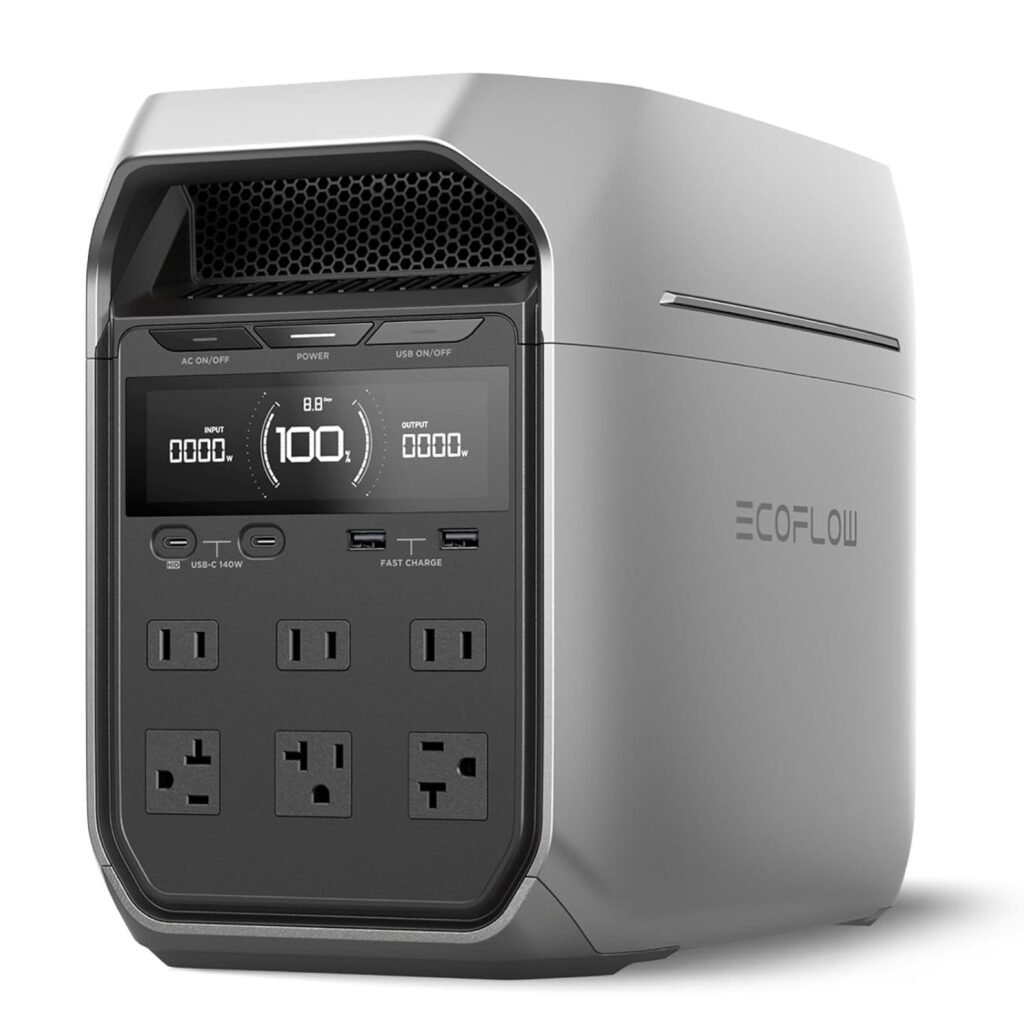

First impressions of the EF ECOFLOW Portable Power Station DELTA 3 Plus, 1024Wh LiFePO4 (LFP) Battery, 1800W AC/140W USB-C Output, Solar Generator (Solar Panel Optional) for Home Backup, Camping&RV
We like how the DELTA 3 Plus balances raw capability with thoughtful features. From the moment we see the spec sheet — 1,024Wh of LiFePO4 capacity, an 1800W continuous AC output, and multiple fast-charge options — it feels designed to be a real workhorse for both everyday and emergency situations.
Design and build quality
The unit’s chassis feels solid and functional without being overly bulky, and the IP65-rated battery pack gives us confidence that it can handle light outdoor use. Controls and port layouts are intuitive, which makes it easy for anyone to plug in critical devices quickly during a power interruption.
Portability and weight
While this is not a pocket-sized unit, it’s designed to be portable enough for RV trips and campsite setups, and the handle aids handling. We appreciate that EcoFlow focuses on making high-capacity units more transportable, even if we do need a vehicle for longer-distance moves.
Product specifications at a glance
We find a concise specification table useful to reference when planning loads or comparing models. Below we summarize the key specs that matter most when deciding whether this is the right power station for our use.
| Feature | Spec / Note |
|---|---|
| Battery Capacity | 1,024 Wh (LiFePO4 LFP) |
| Chemistry | LiFePO4 (LFP) |
| AC Output | 1,800 W continuous |
| USB-C Output | 140 W |
| Simultaneous Outputs | Up to 13 appliances |
| Fast Charging Options | AC (1500W input), Solar, Alternator (800W), Smart generator, Hybrid |
| AC Input Charge Time | 80% in 40 min (1500W AC input) |
| Solar Input | Charges to 80% in 1 hr, 100% in 70 min (conditions dependent) |
| Alternator Input | 80% in 1 hr, 100% in 1.3 hr (800W) |
| Smart Generator | 80% in 40 min, full in 56 min (EcoFlow smart generator) |
| Hybrid Charging | AC + solar achieves same fast speeds |
| Cycle Life | ~4,000 cycles to 80% |
| Expected Lifespan | Up to 10 years (daily use estimate) |
| Battery Pack Rating | IP65 (splash, dust, oil protection) |
| UPS Switch-over | 10 ms |
| Expandability | Up to 5 kWh via DELTA 3/DELTA Pro 3/DELTA 2 Max add-on packs |
| Special Feature | X-Boost for higher resistive loads (product claim) |

Battery and lifespan
We consider the battery and its longevity to be the foundation of any serious portable power station. The DELTA 3 Plus uses LiFePO4 cells, which are known for stability and long life, and EcoFlow quotes about 4,000 cycles to 80% capacity — a number that reshapes the total cost of ownership compared with many consumer-grade lithium-ion models.
Battery chemistry and what it means
LiFePO4 chemistry provides better thermal stability and lower risk of thermal runaway than many lithium chemistries, which makes the DELTA 3 Plus a safer option for indoor use and for long-term storage in variable conditions. For us that means reduced anxiety when we press it into duty for home backup during storms or store it in the garage.
Cycle life and durability
With roughly 4,000 cycles to 80% capacity, we’re looking at a battery that could handle daily partial discharge cycles for several years before capacity falls noticeably — EcoFlow frames that as around a 10-year practical lifespan. That durability makes it attractive for frequent users, such as vanlifers, small-business owners, or anyone who will rely on it for regular off-grid living.
IP65 battery pack protection
The IP65 rating on the battery pack gives us splash-proof, dust-proof, and oil-proof protection, which is welcome for outdoor environments. It doesn’t mean we can submerge it, but we can be more relaxed about light rain, dusty campsites, and messy workshops.
Expandability up to 5 kWh
One standout is the ability to expand the DELTA 3 ecosystem with additional DELTA 3, DELTA Pro 3, or DELTA 2 Max battery packs up to around 5 kWh total. For longer outages or larger off-grid setups we can scale capacity without buying an entirely new inverter system.
Charging options and speed
We really appreciate that EcoFlow focused on fast, flexible charging — five fast charging options in total — because recharge time often determines whether a power station feels convenient or burdensome.
AC charging
Using AC input at up to 1,500W, EcoFlow claims the DELTA 3 Plus will reach 80% in about 40 minutes. For us that’s incredibly useful for quick top-ups between uses or after a long day powering devices at a campsite.
Solar charging
Solar input is impressive on paper: the DELTA 3 Plus can reach 80% in roughly one hour and 100% in about 70 minutes under ideal solar conditions. Real-world times depend on panel wattage, direction, weather, and solar input limits, but the ability to accept high solar input makes it an excellent choice for solar-focused setups.
Alternator and smart generator
Charging from an alternator at 800W yields about 80% in one hour and 100% in 1.3 hours — a very practical option for RVers or vehicle-based living. Using EcoFlow’s smart generator, EcoFlow claims 80% in 40 minutes and full in 56 minutes, which gives us a fast backup option when grid power is unavailable.
Hybrid charging (AC + Solar)
Combining AC and solar charging can reach the same rapid speeds as the smart generator or AC-only fast charge, which we find helpful when we want to restore capacity as fast as possible using multiple sources.
Charging times summary table:
| Charging Mode | Input Power | 0→80% | 0→100% |
|---|---|---|---|
| AC (1500W) | Up to 1500W | ~40 min | ~56–70 min (approx) |
| Solar (ideal) | Varies (high input) | ~60 min | ~70 min |
| Alternator (800W) | 800W | ~60 min | ~1.3 hr |
| EcoFlow Smart Generator | High-power input | ~40 min | ~56 min |
| Hybrid (AC + Solar) | Combined | ~40 min | ~56–70 min |
Note: These times reflect manufacturer claims under ideal conditions. Real-world times vary with input source, environmental conditions, cable quality, and firmware.
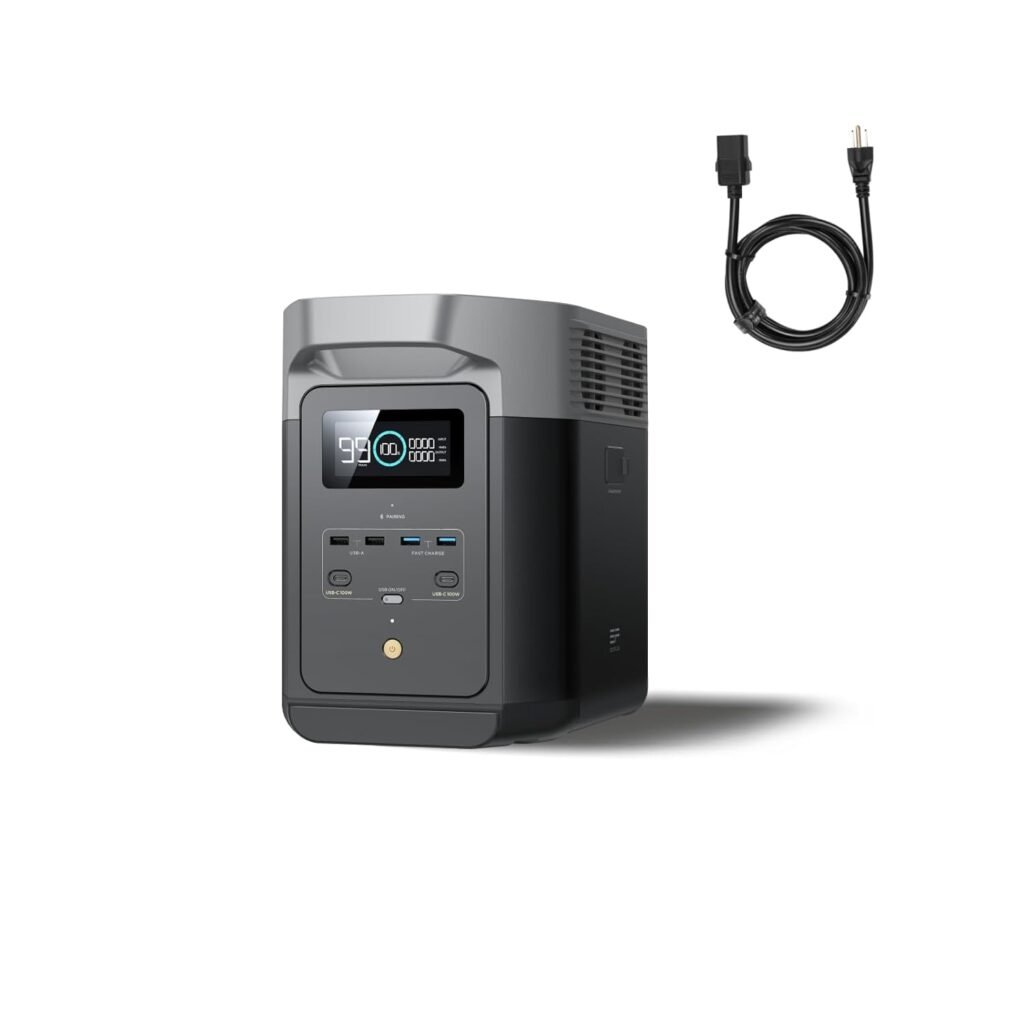
Output and performance
When we size a power station, continuous wattage, surge capacity, and port diversity matter. The DELTA 3 Plus’s 1,800W continuous AC output is strong for a unit of this capacity, and EcoFlow advertises X-Boost functionality to support higher-demand resistive appliances.
AC outlets and ports
The unit includes multiple AC outlets, several USB-A ports, USB-C 140W output for fast charging of laptops and phones, DC outputs, and car ports. The variety means we can plug in everything from a CPAP machine and laptop to smaller kitchen appliances simultaneously.
X-Boost explained
X-Boost is EcoFlow’s technology that allows the inverter to manage short higher-load resistive appliances beyond the nominal rating in certain conditions. Product details suggest X-Boost supports resistive appliances with power demands over 2,200W continuously — in practice, we treat X-Boost as a way to handle temporarily higher draws but still pay attention to rated limits and appliance startup surges.
UPS and critical power (10 ms switch-over)
The DELTA 3 Plus has a 10 ms UPS switch-over, which is fast enough to prevent most computers, NAS devices, and other sensitive electronics from losing power or corrupting data. For us, that makes it a viable temporary backup for home offices and small servers during short outages.
Simultaneous powering and appliance handling
EcoFlow states the unit can power up to 13 appliances at once thanks to its variety of ports. That’s useful in emergency scenarios where we need to run lights, a refrigerator, a router, and charge devices at the same time. We still recommend checking combined wattage against the 1,800W continuous rating to avoid overloading the inverter.
Expected run-time examples
To help plan usage, we put together a sample run-time table using typical appliance wattages. Actual runtime will depend on real device power draw, inverter efficiency, and battery degradation over time.
| Appliance | Typical Power Draw (W) | Estimated Run Time from 1,024 Wh |
|---|---|---|
| Smartphone charging (10W) | 10 W | ~90+ charges (dozens of hours total) |
| Laptop (65W) | 65 W | ~12–14 hours |
| Router (10–20W) | 15 W | ~60+ hours |
| LED lights (10W each) | 30 W (3 lights) | ~28 hours |
| Chest freezer (avg) | 80–150 W (avg) | ~7–12 hours (intermittent compressor) |
| Mini fridge | 50–100 W (avg) | ~10–20 hours |
| CPAP machine | 30–60 W | ~12–24 hours |
| 32-inch LED TV | 50–100 W | ~10–20 hours |
| Microwave (800–1,200 W) | 1,000 W | ~0.9–1 hr (short cycles) |
| Electric kettle (1,500–2,200 W) | 1,500–2,200 W | Not recommended for long use; short boil possible with X-Boost (check surge handling) |
We caution that resistive heating devices (kettles, hair dryers, large heaters) draw a lot of continuous watts and will deplete the battery quickly, even if X-Boost allows short-term operation. For sustained heating loads, a generator or larger system is more practical.
Use cases and scenarios
We find that the DELTA 3 Plus fits several common roles depending on how we configure and expand it.
Home backup and outage preparedness
As a short-term home backup, the 1,024Wh capacity combined with a fast recharge option allows us to run essential devices — router, lights, fridge for a limited time, and laptops — and quickly top up the battery when the grid returns. Pairing it with a solar array and hybrid charging extends its usefulness through multi-day outages.
Camping, RV, and van life
For weekend trips or van life, this unit is compact enough to carry in a vehicle while offering sufficient power for cooking appliances, lighting, devices, and a small fridge. The IP65 battery protection and rapid alternator charging are convenient for vehicle-based living.
Professional mobile work and events
Photographers, filmmakers, and mobile event setups benefit from the high-power USB-C output (140W) and multiple AC outlets to power laptops, monitors, and lighting. The UPS feature can protect sensitive equipment during swaps between grid and battery power.
Emergency responders and field work
First responders and field technicians can use the fast recharge and durable battery chemistry to maintain equipment across long shifts, with the added benefit of IP65 battery pack resilience in outdoor conditions.
Smart features and the EcoFlow app
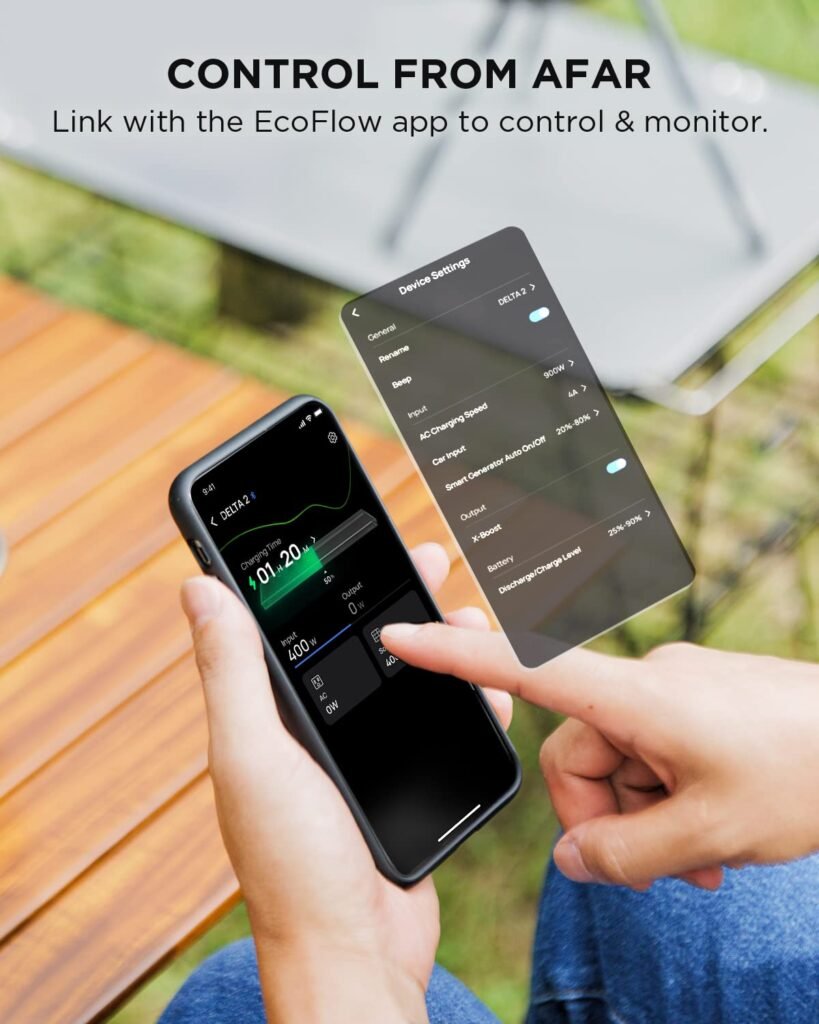
We like having a connected experience for remote monitoring and scheduling — it makes power management more predictable and helps us optimize charge/discharge around rates or weather.
Alerts and dashboard
The app provides 12-hour storm and outage alerts, low battery and storage reminders, and a usage dashboard that visualizes charge and discharge history. These features make it easier for us to remain proactive about energy management during critical periods.
Time-of-Use (TOU) mode and cost optimization
TOU mode lets us set charging and discharging based on electricity tariff periods, which can lead to cost savings by charging during low-rate times and discharging or running loads during peak-rate windows. We find this valuable for homeowners looking to shave utility peaks.
Customization and remote control
Through the app we can adjust charge speed, set power schedules, and enable power-saving modes. These settings help tailor performance to our specific needs, whether we want maximum recharge speed or to preserve battery health.
Safety, maintenance, and best practices
We treat safety and proper upkeep as essential to getting reliable service.
Built-in protections
Between LiFePO4 chemistry, the UPS design, and IP65-rated battery pack, the unit offers a strong baseline of safety for indoor and outdoor use. Overcurrent protection, short-circuit protection, and temperature controls further reduce risks during operation.
Storage and regular maintenance
We recommend storing the battery in a cool, dry place and topping it up periodically during long-term storage to prevent deep discharge. Performing firmware updates when available via the app keeps the unit’s performance and safety features current.
Handling and thermal considerations
Avoid placing the unit in very hot or confined spaces while heavy loads are in use; in high ambient temperatures the system may reduce output temporarily to protect itself. When running heavy loads, give the unit ventilation space and avoid stacking items on top.
Warranty and support
EcoFlow typically provides manufacturer support for their products, and the app and online resources offer guidance and troubleshooting. We suggest checking the specific warranty duration and terms at purchase and registering the product for easier service if necessary.
Setup and operation — step by step
We appreciate straightforward setup. These steps summarize how we typically put a DELTA 3 Plus into service.
- Unbox and inspect the unit for transit damage; keep the manual handy.
- Charge the unit to full using a preferred method (AC for fastest, solar for off-grid).
- Connect devices to the appropriate ports (AC outlets for high-watt devices, USB-C for laptops, etc.).
- If using as UPS, follow the app or manual instructions to enable UPS mode and test with a non-critical device first.
- Configure app settings: register the device, enable alerts, and set Time-of-Use schedules if desired.
- For solar use, ensure panels are connected through recommended cables and that input voltage/current match the unit’s specifications.
- If expanding battery capacity, follow the manufacturer’s instructions for safe stacking and communication between units.
- Periodically update firmware and review usage dashboards to optimize settings.
Pros and cons — straightforward assessment
We find that weighing strengths and weaknesses helps decide whether the DELTA 3 Plus is right for us.
Pros:
- Fast charging across multiple methods — especially beneficial when quick turnarounds are needed.
- LiFePO4 chemistry with high cycle life (~4,000 cycles to 80%) for long-term value.
- UPS capability with 10 ms switch-over protects sensitive electronics.
- Expandable ecosystem up to approximately 5 kWh for scalable energy needs.
- Robust port selection, including 140W USB-C for modern devices.
- IP65 battery pack offers extra durability outdoors.
Cons:
- 1,024Wh capacity, while adequate for many scenarios, can be limiting for extended off-grid living without expansion.
- For heavy heating or long-duration high-wattage loads, a generator or larger stationary battery may be more economical.
- Real-world solar recharge times depend heavily on panel wattage and conditions, so ideal numbers may not always be achievable.
- Weight and size mean it’s portable but not ultralight for backpacking.
Tips for getting the most from the DELTA 3 Plus
We’ve gathered practical tips based on typical usage scenarios that help maximize performance and longevity.
- Combine solar and AC when possible for the fastest recharge during an outage.
- Use Time-of-Use mode if you have variable electricity pricing to minimize operating costs.
- Avoid running long resistive heating loads; reserve those for larger systems or generators.
- Regularly update firmware via the EcoFlow app for feature improvements and bug fixes.
- If planning to expand battery capacity, map out usage patterns and decide on whether to add DELTA 3 or DELTA Pro 3 packs for the best balance of cost and runtime.
- For UPS use, test switch-over behavior on non-critical equipment to confirm settings before relying on it for important devices.
Frequently Asked Questions (FAQs)
We answer common questions we hear from other users and potential buyers.
Q: Can the DELTA 3 Plus run a home refrigerator during a power outage?
A: Yes, it can run most household refrigerators for several hours depending on the fridge’s efficiency and the compressor duty cycle. For extended outages, pairing with solar or expanding the battery capacity will extend run times.
Q: Is the 10 ms UPS switch-over truly safe for computers and NAS devices?
A: In most cases, yes. A 10 ms switch-over is fast enough to prevent many devices from losing power. We still recommend testing with critical equipment and enabling any onboard battery-save features in devices where possible.
Q: How well does the unit handle cold weather?
A: LiFePO4 batteries generally handle temperature swings better than many chemistries, but cold reduces battery performance. Store and operate within suggested temperature ranges and keep it sheltered from extreme cold for best results.
Q: Can we use any solar panel with this unit?
A: You can use compatible solar panels, but we recommend following EcoFlow’s guidance for maximum input voltage and power, and using the proper MC4 or EcoFlow-specified connectors for safety and performance.
Q: How long will the battery last before needing replacement?
A: With the quoted cycle life of around 4,000 cycles to 80% capacity, many users can expect several years of daily use before significant capacity loss — EcoFlow frames this as a roughly 10-year practical lifespan for everyday use.
Alternatives we considered
When comparing the DELTA 3 Plus to other options, a few scenarios stand out.
- For very long-term off-grid living, larger stationary systems or multiple stacked battery packs (up to the 5 kWh expansion) are worth considering.
- If ultra-light portability is a priority for backpacking, smaller capacity, lower-weight units will suit better.
- For pure generator-level run-time and heating loads, a portable gas generator remains an economical choice for high-wattage, continuous loads.
Final verdict
We find the EF ECOFLOW Portable Power Station DELTA 3 Plus to be a well-balanced, feature-rich portable power station that suits a broad range of users. Its fast-charging capabilities, LiFePO4 durability, UPS functionality, and expandable ecosystem make it a compelling option for homeowners wanting a reliable backup solution, RVers and campers who need a robust mobile power source, and professionals who require dependable portable energy with smart management features.
For us, the DELTA 3 Plus strikes a strong compromise between capacity, power output, and charge speed. If we need more runtime, the expandability option allows a clear upgrade path. If portability with fast charging, smart controls, and long battery life are priorities, this unit stands out as a practical, friendly-to-use choice.
If we had to summarize in one line: it’s a powerful, smart, and durable portable power station that’s ready to be part of our emergency kit, weekend rig, or mobile workspace, provided we match its capabilities to our intended loads and charging resources.