?Are we ready to see whether the Anker SOLIX F3800 Portable Power Station lives up to the promise of being a serious whole-home and RV-ready backup solution?

Our Quick Take
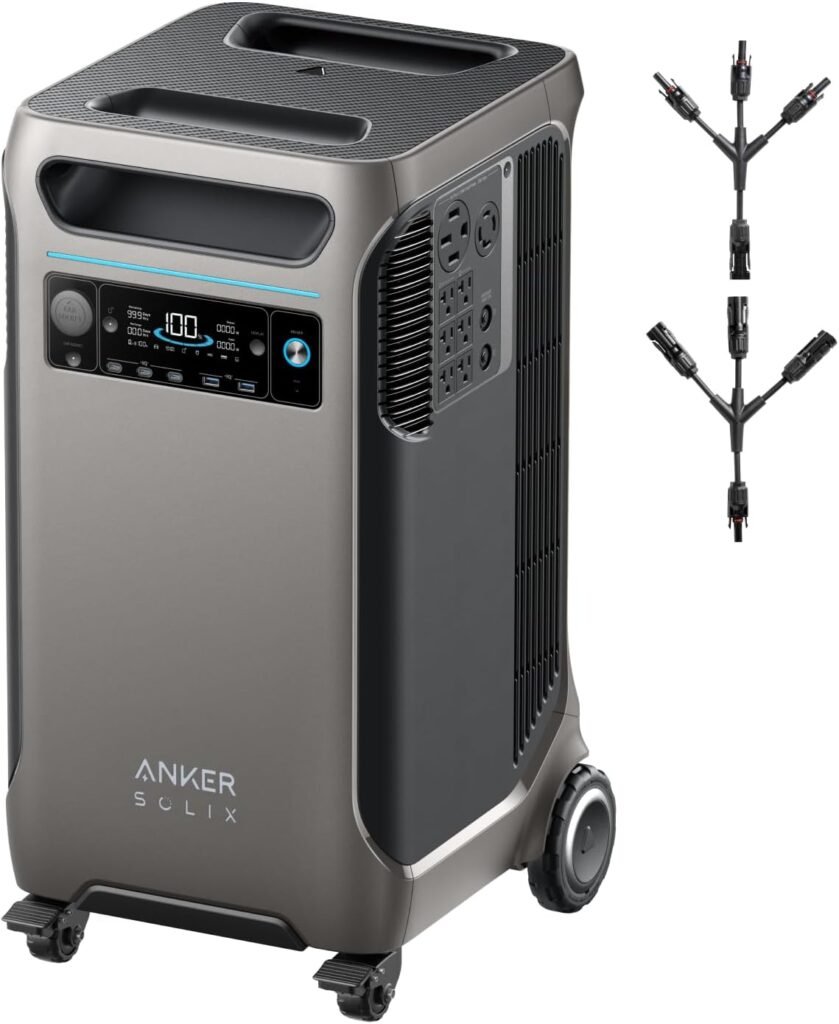
We think the Anker SOLIX F3800 is a bold step toward bringing grid-scale features into a portable form factor. It combines a high 3.84 kWh base capacity, LiFePO4 battery chemistry, and an unusually high 6,000W AC output with 120V/240V capability, which makes it useful for a wide variety of residential, RV, and emergency applications.
What the Product Is and Who It’s For
We see this unit as aimed at families, off-grid RV owners, and anyone who wants a robust emergency backup without committing to fixed home battery installations. It’s also tailored for people who want to charge EVs directly and for those who need to run high-draw appliances like dryers, ovens, or multiple circuits simultaneously.
Key Features Overview
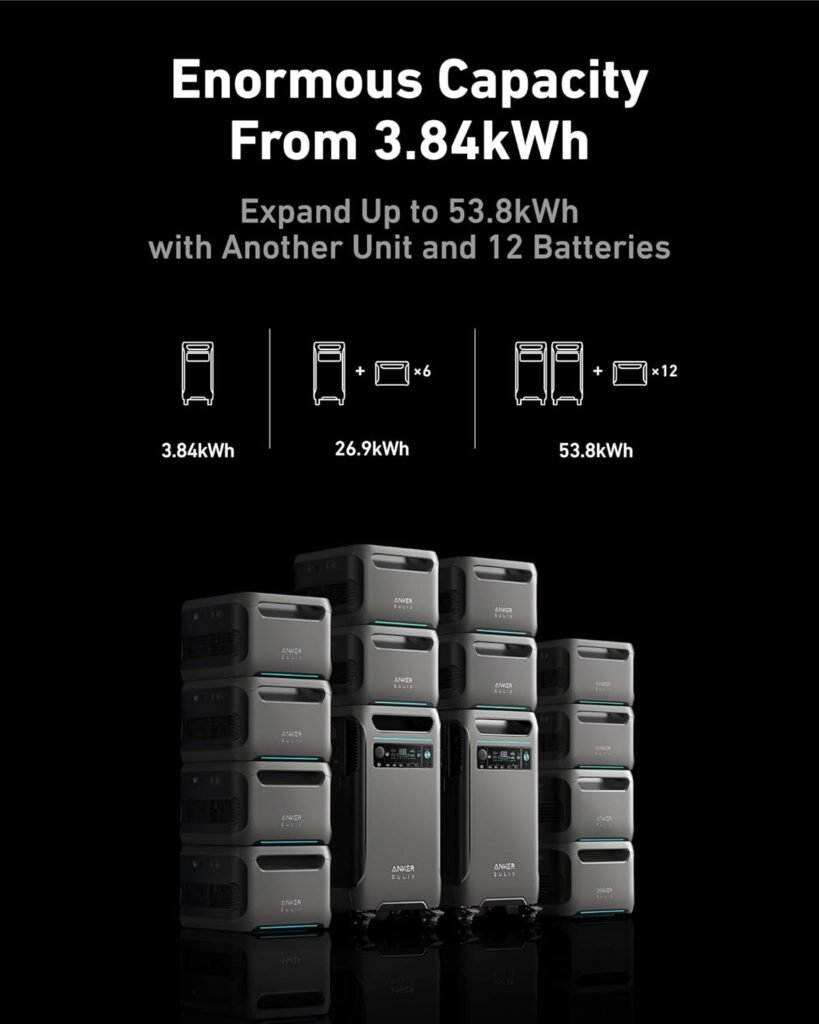
We want to highlight the main features succinctly so we can refer back to them later. The headline specs are the 3,840Wh base capacity, expandable battery packs up to 26.9kWh, LiFePO4 chemistry for longevity, and a 6,000W AC output with dual-voltage 120V/240V support.
Expandable Capacity
The SOLIX F3800’s baseline is 3.84 kWh, which is sizeable for a portable station. We appreciate that Anker allows up to six additional battery packs to expand to 26.9 kWh, and that adding a second base unit plus more packs can provide multi-day or even multi-week power for extreme contingencies.
Dual-Voltage, High Output
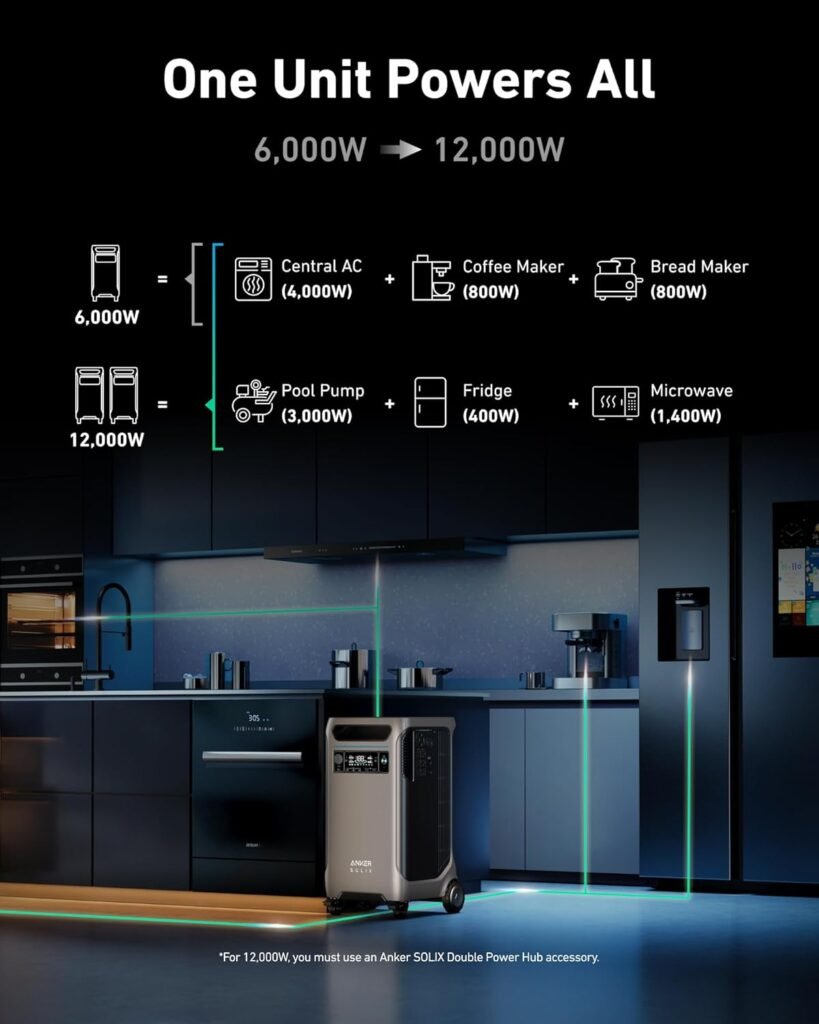
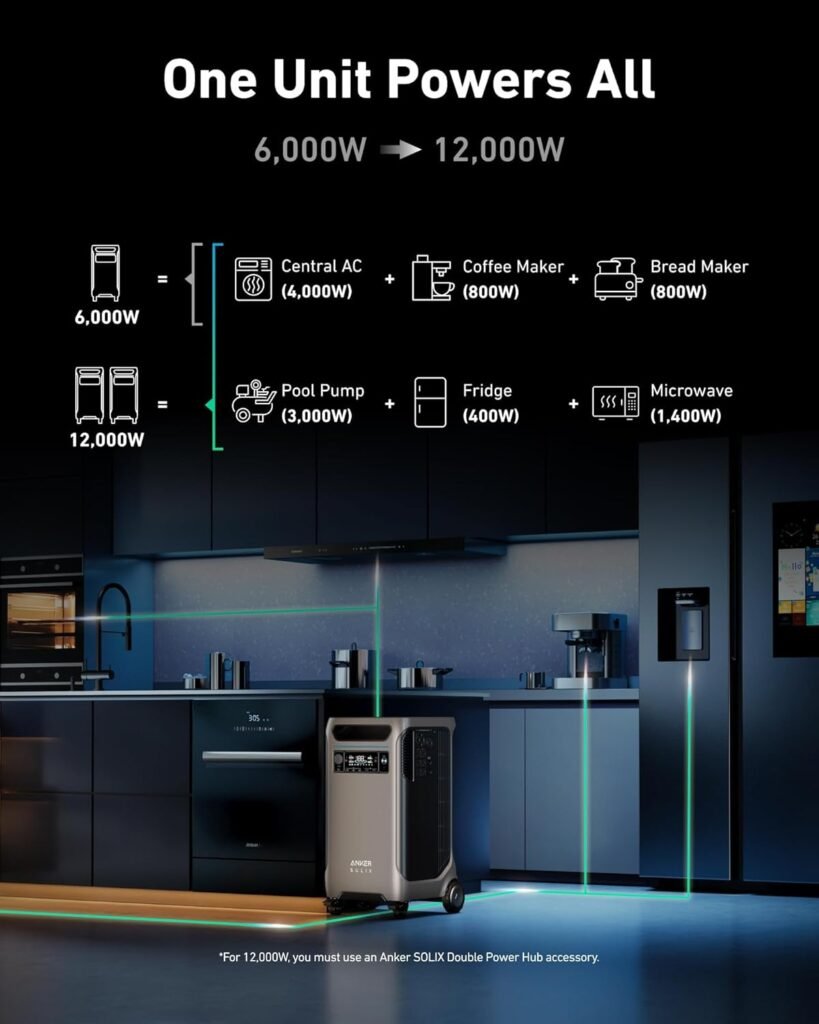
We like that the 6,000W AC output runs at both 120V and 240V, so we can power large appliances directly. If we need even more, two units can be paralleled for up to 12,000W — a capability that’s rare in portable systems at this price and portability range.
EV and RV Compatibility
We find the NEMA 14-50 port extremely convenient for direct EV charging and for powering RVs. The promise of charging an EV at up to 6,000W and powering RV service panels through NEMA 14-50 or L14-30 ports simplifies many mobile power setups.
Durability and Lifespan
We trust Anker’s claims of LiFePO4 cells and InfiniPower technology to deliver a long service life. They back the unit with a five-year warranty and estimate a ten-year useful lifespan. We value temperature management, impact resistance, and EV-class components for heavy-duty use.
Smart App Control
We prefer devices that we can monitor and configure remotely, and the Anker SOLIX app supports Wi-Fi and Bluetooth control. This gives us the ability to manage power sources, prioritize loads, and aim for cost savings in real time.

Unboxing and What’s Included
We always check what arrives in the box so there are no surprises when first using a product. The package includes the SOLIX F3800 unit, an AC charging cable, a Solar-to-XT60 charging cable, an MC4 solar charging connector, and a user manual. We will still want to verify the presence of any additional adapters for specific solar inputs or RV connections.
Technical Specifications at a Glance
We like a clear specs table to compare and absorb data quickly. The table below summarizes the headline information and practical port and battery details we consider most relevant.
| Specification | Details |
|---|---|
| Model | Anker SOLIX F3800 Portable Power Station |
| Base Capacity | 3,840 Wh (3.84 kWh) |
| Expandable Capacity | Up to 26.9 kWh with up to 6 battery packs; additional expansion possible with second unit |
| Battery Chemistry | LiFePO4 (LFP) |
| AC Output | Ultra-High 6,000 W AC (120V/240V) |
| Max Parallel | Two units for up to 12,000 W AC |
| EV Charging | NEMA 14-50 port, up to 6,000 W |
| RV Compatibility | NEMA 14-50 and L14-30 ports (direct connection to RV inlet) |
| Charging Inputs | AC charging cable included, Solar-to-XT60 cable and MC4 connector included |
| Connectivity | Wi-Fi and Bluetooth via Anker app |
| Warranty | 5-year warranty |
| Estimated Lifespan | 10 years (Anker InfiniPower tech) |
| Included Accessories | AC charging cable, Solar->XT60 cable, MC4 adapter, user manual |
Real-World Performance Expectations
We like to ground our impressions in realistic assumptions rather than marketing-only claims. The 3.84 kWh capacity is large for a portable power station and can power critical loads for a full day in many households if used conservatively, but runtimes depend heavily on appliance wattage and duty cycles.
Estimated Appliance Runtimes (Base Unit)
We find it useful to estimate run times for common devices to give practical context. These are approximate and assume typical draw and 85–90% inverter efficiency. Real-world performance will depend on the appliance’s actual consumption.
| Appliance | Typical Draw | Estimated Run Time on 3.84 kWh |
|---|---|---|
| LED lighting (10W total) | 10 W | 300–340 hours |
| Laptop (50W) | 50 W | 60–70 hours |
| Refrigerator (average duty ~150W) | 150 W | 18–22 hours |
| Sump pump (average 700W when running) | 700 W | 4–5 hours (intermittent duty) |
| Microwave (1,200W) | 1,200 W | ~2.5–3 hours (intermittent use) |
| Electric dryer (3,000–5,000W) | 3,000–5,000 W | 40–80 minutes (depends on load) |
| EV charging (6,000W) | 6,000 W | ~38 minutes per kWh supplied — note: charging at full 6kW drains faster than the base capacity |
We emphasize that high-wattage devices will reduce runtime quickly and that the unit is designed to handle large loads intermittently or in parallel across multiple circuits.
Charging Options and Times
We appreciate flexible charging paths, and the SOLIX F3800 supports AC charging, solar input (via included solar connectors), and EV/car-style input configurations. Exact charge times aren’t specified in the provided details; however, we can say that AC charging is usually the fastest and solar charge times depend on array size and conditions.
Solar Charging Considerations
We recommend pairing the unit with a robust solar array if prolonged off-grid operation is a goal. Since the product includes MC4 and XT60 adapters, we can connect common panels, but we should verify maximum PV input current and voltage before finalizing our solar array to ensure optimum charging.
AC and Rapid Charging
AC charging via the included cable will be the most straightforward for home use. Because the unit supports fast outputs and is intended for EV charging, we expect Anker designed the charging system to be efficient, but we should confirm AC input wattage for accurate charging-time estimates.
Installation, Setup, and Daily Operation
We like products that are easy to set up, and the SOLIX F3800 is straightforward to put into service. Unbox, check included cables, place in a ventilated and stable location, connect to app via Wi-Fi/Bluetooth, and plug in loads or charging sources.
Safety and Positioning
We recommend keeping the unit on a stable, non-flammable surface with some clearance for airflow. The unit includes a smart temperature management system, but we still avoid placing it near heat sources or in direct rain or snow without shelter.
Using the App
We rely on the app for intelligent control and monitoring. Using Wi-Fi or Bluetooth, we can check state-of-charge, configure input priorities, receive firmware updates, and adjust settings that affect charging and discharge behavior to save money or maximize runtime.
Build Quality and Portability
We notice the SOLIX F3800 is heavier than small consumer power stations because of its capacity and rugged construction. The design uses impact-resistant materials and EV-grade components, which suggest durability. We consider it portable in the sense of being movable for installation, RV trips, or temporary relocation, but it’s not a lightweight backpack item.
Noise and Cooling
We observe that high-capacity units often include active cooling. The F3800’s temperature management likely uses fans when under heavy load or while charging rapidly. We expect normal fan noise under heavy charge/discharge but relatively quiet operation at low loads.
Safety Features and Battery Management
We value safety features highly, and LiFePO4 chemistry is a notable advantage here for thermal stability and cycle life. The smart temperature system, intelligent battery management, and EV-class safeguards together reduce risk and extend longevity. We still recommend treating the device as a high-energy electrical device and following all manufacturer guidelines.
Pros and Cons
We find it useful to list strengths and limitations so we can decide whether it suits our needs.
Pros
- High base capacity (3.84 kWh) with significant expansion options up to 26.9 kWh.
- Ultra-high 6,000W AC output with 120V/240V capability for heavy appliances.
- Direct EV charging via NEMA 14-50 port at up to 6,000W.
- LiFePO4 batteries for long cycle life and safety.
- App-based remote control and monitoring with Wi-Fi/Bluetooth.
- Rugged design and a strong five-year warranty.
Cons
- Size and weight make it less portable than smaller power stations.
- Full benefits require additional battery packs or a second unit for multi-day coverage, which increases cost and complexity.
- Solar charging speed depends on the panels and PV configuration; additional solar hardware may be needed for fast recharge.
- We should confirm exact charge rates and input specs before planning solar arrays or rapid recharging schedules.
How It Compares to Alternatives
We place the F3800 in a class between consumer-grade portable stations and whole-home battery systems. Compared to smaller, single-unit power stations, it offers far higher continuous outputs and better expandability. Compared to fixed home battery systems, it offers portability and modularity, albeit with potentially higher cost per kWh when fully configured.
Versus Smaller Portables
We see the main differences as greater continuous output and higher durability. Smaller portables might be cheaper and lighter, but they can’t power dryers or EV chargers.
Versus Home Batteries
Compared to wall-mounted home batteries, we appreciate portability and no permanent installation requirement. However, integrated home systems may offer smoother integration with home electrical systems and potentially better economics at scale.
Use Cases and Recommended Configurations
We like to match configurations to use cases to make purchasing decisions easier. Below are several typical scenarios and our suggested setups.
Weekend Camping and RV Trips
For weekend trips, the base 3.84 kWh can handle refrigerators, lighting, and small appliances. If we plan to run air conditioning or larger RV appliances, we recommend adding at least one battery pack or pairing with shore power intermittently.
Home Emergency Backup for Few Days
To cover critical circuits for a family during power outages, the base unit is a great start. For whole-home or extended outages, we recommend adding at least two to four battery packs and considering a second unit for near-seamless coverage.
Direct EV Charging at Campsites
If we want EV charging in remote locations, the NEMA 14-50 port and 6,000W capability are very attractive. We should be mindful that charging an EV from battery-only will deplete the station quickly unless backed by substantial solar or a generator.
Off-Grid Tiny Homes and Longer Term Use
For multi-day off-grid living, we recommend configuring the system with multiple battery packs, a robust solar array sized to match daily consumption, and, if needed, a second F3800 for redundancy and extended capacity.
Maintenance and Long-Term Care
We emphasize routine maintenance to preserve lifespan. LiFePO4 batteries are robust, but we should keep the unit in moderate temperatures, avoid deep discharges when possible, and ensure firmware stays up to date via the app. Periodic checks of cable connections and storage at around 40–60% state-of-charge for long-term storage help extend battery health.
Warranty, Support, and Reliability Expectations
Anker’s five-year warranty and stated 10-year lifespan provide confidence in long-term use. We expect responsive customer support from Anker based on their reputation, but we recommend registering the product and retaining purchase documentation in case warranty service is needed.
Price and Value Considerations
We evaluate value not by cost alone but by capability and flexibility. The F3800’s price will be higher than small consumer units, but the combination of high continuous output, LiFePO4 chemistry, expandability, and EV/RV compatibility makes it a strong value proposition for users who need heavy-duty portable power.
When the Investment Makes Sense
We think the F3800 is a sound purchase if we: anticipate needing high wattage outputs, intend to expand capacity over time, want EV charging or RV integration, or require an emergency system that can grow into a near whole-home setup.
Setup Checklist Before First Use
We always recommend a short checklist to ensure a smooth first experience. Below are steps we follow before putting the unit into regular service:
- Inspect the unit and accessories for physical damage.
- Choose a well-ventilated, stable installation location.
- Download the Anker SOLIX app and register the device via Wi-Fi/Bluetooth.
- Charge the unit fully via AC before initial use.
- Test typical loads and verify expected run times.
- If using solar, confirm panel specs and PV input compatibility.
Potential Limitations and Warnings
We want to be transparent about limitations so users can plan accordingly. Heavy use of high-wattage appliances will drain the base unit quickly, so for continuous high-load operation, plan for expansion. Also, verify local electrical codes and RV shore power compatibility if integrating with fixed electrical panels.
Frequently Asked Questions (FAQ)
We anticipate common questions and offer concise answers for quick reference.
Q: Can we run a dryer or oven on the F3800? A: Yes, thanks to the 6,000W AC output and 120V/240V support, we can run high-draw appliances. Expect relatively short runtimes on the base unit, so plan for expanded capacity if frequent use is intended.
Q: How long will the battery last in daily use? A: Anker states a 10-year lifespan with InfiniPower technology. LiFePO4 chemistry typically allows many cycles—hundreds to thousands—depending on depth of discharge and conditions. We should follow recommended usage patterns to maximize life.
Q: Can we connect solar panels directly? A: Yes, the package includes Solar-to-XT60 and MC4 adapters which facilitate common solar panel connections. We should verify the allowed PV input voltage and current in the manual or product spec sheet for safe connection.
Q: Is parallel operation easy? A: Anker supports pairing two units for higher AC output. We advise following the manual for correct parallel setup and ensuring firmware updates are installed for compatibility.
Final Verdict
We believe the Anker SOLIX F3800 Portable Power Station is a powerful, flexible, and durable solution for users who need significant portable power with the option to scale. Its mix of high continuous output, LiFePO4 longevity, EV/RV compatibility, and intelligent app control positions it well for families, RV users, and anyone building a modular backup or off-grid system. While the base capacity will be enough for many short-term needs, serious long-duration usage will require adding battery packs or a second unit — a sensible tradeoff given the modular design.
Buying Tips and What to Watch For
We suggest buying from authorized retailers or directly from Anker to ensure warranty coverage and genuine components. When planning a purchase, consider how many battery packs you might realistically add, what solar array or generator you’ll pair with it, and whether you’ll ever want to parallel units for larger loads. Check shipping and installation logistics because these units are heavy and may require planning for transport and placement.
Our Recommended Next Steps
If we’re leaning toward purchasing, we recommend:
- Listing our essential loads and estimating daily energy needs.
- Deciding on the number of battery packs and potential second units to meet desired runtimes.
- Designing a solar or charging plan to replenish capacity in the required time frame.
- Confirming compatibility of any EV or RV connectors and adhering to electrical codes.
We appreciate the SOLIX F3800 for giving us a highly capable, expandable platform that bridges the gap between portable power stations and full home storage solutions. With proper planning and a suitable configuration, we can rely on it for robust backup power, RV freedom, and flexible off-grid operation.
Disclosure: As an Amazon Associate, I earn from qualifying purchases.