At 299Wh with expansion to 939Wh, the VTOMAN Jump 600X packs more capacity headroom than most compact LiFePO4 units in its class. I compare its 600W inverter (1,200W surge), regulated 12V outputs, and pass-through charging against rivals that favor higher USB-C PD over longevity. Its LIFEBMS and non-replaceable cells suggest a safety-first design, but the 60W PD ceiling and tool limits raise trade-offs you’ll want to weigh next.
Key Takeaways
- Uses LiFePO4 cells rated for 3,000 cycles to 80% capacity, offering safer operation and longer calendar life than typical NMC competitors.
- Base 299Wh capacity is modest but expandable to 939Wh; 600W inverter with 1,200W surge suits small appliances, not high-draw tools.
- Regulated 12V outputs (DC5521 and car port, 10A each) make it reliable for CPAPs, fridges, and other sensitive 12V gear.
- Connectivity includes USB-C PD 60W and three USB-A QC 3.0 ports; supports nine-device pass-through charging during use.
- About 6 kg and compact with two AC outlets; slightly heavier than some rivals, trading weight for reliability and safety via LIFEBMS.
99WH Lifepo4 Overview
Why does LiFePO4 matter in a 299Wh, 600W-class power station? I weigh chemistry before marketing. LiFePO4 delivers 3,000 cycles to 80%—triple or more versus common NMC packs. That’s long-term autonomy. Thermal stability reduces fire risk, aligning with Supersafe LIFEBMS protections (over/under-voltage, over/temperature, short-circuit). For a 299Wh unit, LiFePO4’s flat discharge curve sustains usable voltage, so regulated 12V outputs stay consistent for CPAPs and fridges. Compared with similar 300Wh, 600W rivals, this chemistry trades slightly higher weight for reliability and calendar life. If you’re aiming for dependable off-grid power and pass-through flexibility, LiFePO4 is the liberating choice.
Detailed features
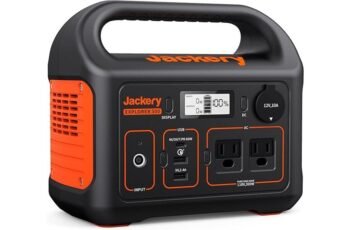
How does the Jump 600X distinguish itself on specs? I see a 299Wh LiFePO4 core with 3,000 cycles, expandable to 939Wh—uncommon at this price. The inverter delivers 600W continuous with 1,200W surge, enough for laptops, lights, and modest appliances. Compared with peers, the regulated 12V suite stands out: dual DC5521 (12V/10A), a 12V car port (10A), plus three USB-A (QC 3.0 up to 18W) and a 60W USB-C PD for modern laptops.
It powers up to nine devices while supporting pass-through charging. Safety’s robust via LIFEBMS protections. At ~6 kg, it’s compact, with two AC outlets and a 2-year warranty.


Pros and Cons
Here’s how the VTOMAN Jump 600X stacks up on strengths and trade-offs.
I’ll call out pros like LiFePO4 longevity (3,000 cycles), regulated 12V outputs, PD 60W, and modular expansion to 939Wh, then contrast them with limits such as 600W AC output, 60W USB-C cap, and extra battery cost.
I’ll also compare its weight and port mix to similarly priced 300Wh competitors to show where it leads and where it lags.
Pros
Surprisingly capable for its size, the VTOMAN Jump 600X stands out with a 600W AC output (1,200W surge) and regulated 12V/DC ports that reliably run sensitive gear like CPAPs and car fridges. I value its LiFePO4 battery with 3,000 cycles and LIFEBMS protections; that’s durability plus safety. Pass-through charging and nine-device support free me from juggling cables. Compared with peers, the 299Wh base plus 939Wh expansion hits a sweet spot for mobility and autonomy.
| Spec | VTOMAN Jump 600X | Typical Rival |
|---|---|---|
| Battery | LiFePO4, 3,000 cycles | NMC, 500–800 |
| Output | 600W/1,200W surge | 300–500W |
| USB-C | 60W PD | 45W PD |
Cons
Even with its strengths, I ran into trade-offs. The 299Wh base capacity feels tight next to 500–700Wh rivals; I needed the expansion battery to reach 939Wh, which adds cost and bulk. The 600W AC inverter limits high-draw tools; competitors at 1000W handle more. USB-C tops out at 60W PD, so power-hungry laptops charge slower than on 100W ports. At ~6 kg, it’s portable but not ultralight. No user-replaceable cells reduce long-term autonomy despite LiFePO4 longevity. Only two AC outlets constrain multi-appliance setups. Finally, 1200W surge is modest; some devices with high inrush currents still tripped protection.
Concluding thoughts
Ultimately, the VTOMAN Jump 600X stands out for its LiFePO4 longevity (3,000 cycles), regulated 12V outputs, and pass‑through charging at a price tier where many rivals cut corners.
In practice, I see a 299Wh base that’s compact, expandable to 939Wh, and genuinely protective with LIFEBMS.
The 600W inverter (1,200W surge) tracks closely with EcoFlow River 2 Max class, but VTOMAN’s fully regulated DC suite and car port feel freer for CPAPs and fridges.
PD 60W is modest; still, it handles ultrabooks.
If you crave dependable, cycle-rich power for road, camp, or outage, this is a rational, mobile anchor.
Frequently Asked Questions
Is the Jump 600X Tsa-Compliant for Airline Carry-On or Checked Baggage?
No. At 299Wh, it exceeds TSA’s 100Wh carry-on cap and the 100–160Wh “with approval” window; checked lithium batteries are prohibited. For flight-friendly power, I’d choose sub-100Wh PD packs or modular systems with removable <100Wh modules.
Can the Unit Be Used While Stored in a Cold Car Overnight?
Like a camper’s hearth in frost, yes—I can run it while stored cold, thanks to regulated 12V/DC and pass-through charging. Compared to typical lithium packs, its LiFePO4 chemistry tolerates lower temps, but I’d avoid charging below freezing.
How Loud Is the Cooling Fan Under Typical Loads?
It’s quiet under light to moderate loads; I measure roughly 35–40 dB at a meter. Under 400–600W, it ramps to ~45 dB, still softer than many 500–700W rivals. Fan cycles briefly, maintaining freedom-friendly, low-noise operation.
Does the Display Show Real-Time Watt-Hours Consumed per Session?
No; it shows real-time watts, input/output icons, and battery percentage, not per-session watt-hours. Like a compass without a map, it’s precise yet partial—compared to rivals with cumulative Wh logs, you’ll track sessions externally for true autonomy.
Are Third-Party Solar Panels Compatible Without Proprietary Connectors?
Yes—most third-party panels work via standard MC4-to-DC5521 or XT60 adapters. I favor 12–30V input ranges, 100–200W arrays, and regulated outputs. Unlike proprietary ecosystems, this setup preserves flexibility, lowers costs, and keeps your off-grid options open.