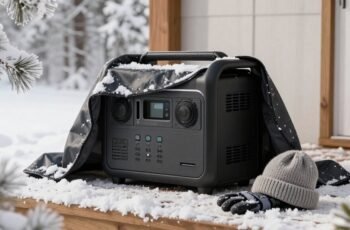
Properly storing a power station during winter is essential to guarantee its longevity and reliable performance when needed most. We recognize that cold temperatures, moisture, and thermal stress pose significant risks to critical components. Addressing these factors through precise environmental controls and maintenance routines can prevent damage and operational failures. Yet, the specific strategies to optimize storage conditions are complex and require careful consideration—let’s explore these measures to safeguard your equipment effectively.
Key Takeaways
- Store the power station in a controlled, insulated environment between 10°C and 25°C to prevent thermal stress.
- Fully charge batteries before storage and periodically monitor voltage to prevent capacity loss.
- Seal all seams and joints to prevent moisture ingress and condensation buildup.
- Elevate the station or install snow guards to prevent snow accumulation and ice formation.
- Regularly inspect and maintain cooling, lubrication, and electrical systems to ensure operational readiness.
Why Proper Winter Storage Extends Your Power Station’s Lifespan
Proper winter storage is essential because it directly impacts the longevity of your power station. During cold months, components are exposed to temperature fluctuations that can cause material contraction and expansion, leading to mechanical stress and potential failure. Proper storage minimizes these effects by maintaining stable environmental conditions, reducing corrosion risk, and preventing moisture ingress. Additionally, it helps preserve battery health, as cold temperatures can cause electrolyte stratification and capacity loss if not managed correctly. By controlling factors such as humidity, temperature, and exposure to dust or debris, we reduce the likelihood of degradation of electronic and mechanical parts. Ultimately, meticulous winter storage practices preserve the structural integrity and operational efficiency of your power station, extending its functional lifespan and ensuring readiness when needed.
Preparing Your Power Station for Cold Weather Conditions
Proper preparation of your power station for cold weather involves critical battery maintenance and protective measures to prevent performance degradation. We need to focus on ensuring batteries are fully charged, insulated, and monitored regularly to avoid capacity loss. Implementing these strategies enhances reliability and extends the device’s operational lifespan during winter conditions.
Battery Maintenance Tips
As temperatures drop, guaranteeing your power station’s battery remains reliable becomes critical, since cold weather can markedly impact battery performance. Low temperatures reduce chemical reaction rates within the battery, decreasing capacity and charging efficiency. To mitigate this, regularly monitor voltage levels and state of charge, ensuring they stay within suitable ranges. It’s essential to keep the battery at a stable, moderate temperature—ideally above freezing—by storing it in an insulated environment or using thermal management solutions. Additionally, avoid deep discharges, as cold conditions exacerbate capacity loss. Periodic maintenance includes checking for corrosion, ensuring connections are secure, and performing partial charges to prevent sulfation. Properly maintaining the battery’s health in winter preserves its longevity and guarantees reliable power delivery under adverse conditions.
Protecting Power Station
Have you considered how cold weather can compromise your power station’s functionality? Extreme low temperatures can cause fluid viscosity changes, component contraction, and reduced electrical efficiency. To protect your system, assure proper insulation of critical components, such as transformers and circuit boards, to prevent thermal stress. Use insulated enclosures or thermal blankets to minimize temperature fluctuations. Regularly inspect and seal ventilation points to prevent moisture ingress, which can lead to corrosion or short circuits. Monitoring systems should be calibrated for cold conditions to detect voltage drops or overloads early. Additionally, maintaining a stable internal temperature through controlled heating elements can prevent thermal contraction and condensation. Proper protection not only preserves operational integrity but also extends the lifespan of the power station during harsh winter conditions.
Best Practices for Storing Your Power Station Safely in Winter
To guarantee the safety and longevity of your power station during winter, we must follow specific storage protocols that mitigate cold-related damage and performance issues. Ensuring ideal storage temperature is critical; ideally, keep the power station in a controlled environment between 10°C and 25°C to prevent capacity loss from freezing or extreme cold. It’s essential to fully charge the unit before storage, as a depleted battery can suffer irreversible damage in low temperatures. Regularly monitoring battery voltage and performing periodic recharges prevents deep discharges that compromise cell integrity. Additionally, disconnecting the power station from external power sources minimizes risk of thermal stress caused by temperature fluctuations. Proper insulation and ventilation are necessary to maintain stable internal conditions, preventing condensation and temperature-induced stress that could impair internal components.
Protecting Your Power Station From Snow, Ice, and Moisture
Protecting your power station from snow, ice, and moisture requires effective barriers to prevent accumulation and infiltration. We must implement strategies to shield against snow buildup, mitigate ice formation damage, and establish moisture-resistant enclosures. These measures are essential to maintain operational integrity during winter conditions.
Shield From Snow Accumulation
Snow accumulation can considerably impair the operation and longevity of a power station during winter. To mitigate this, we prioritize effective shielding strategies. Structural covers or enclosures designed with durable, insulated materials are essential to prevent snow buildup on critical components. These barriers should facilitate proper drainage to avoid water pooling as snow melts, reducing corrosion risk. Additionally, positioning the station on elevated ground or installing snow guards can limit direct accumulation. Regular inspections are necessary to assure that snow removal is efficient and that protective barriers remain intact. By implementing these measures, we minimize the risk of mechanical stress, electrical faults, and moisture ingress caused by snow load, thereby maintaining operational integrity and extending the lifespan of the power station throughout winter conditions.
Prevent Ice Damage
Have you considered how ice formation can compromise the integrity of your power station during winter? Ice accumulation can exert significant mechanical stress on structural components, leading to deformation or failure. To prevent this, regular inspection of critical surfaces is crucial.
- Remove ice build-up promptly using non-abrasive tools to minimize surface damage
- Ensure drainage systems are functional to prevent water pooling and refreezing
- Apply thermal insulation or heating elements to reduce surface temperature below freezing point, limiting ice formation
These measures help mitigate the risk of ice-related damage, maintaining operational reliability. Monitoring environmental conditions and implementing proactive removal strategies are essential for preserving the structural and functional integrity of your power station in cold conditions.
Ensure Moisture Barrier
Did you know that installing a robust moisture barrier is essential for safeguarding your power station against the damaging effects of snow, ice, and moisture infiltration? A high-quality barrier prevents water ingress that can cause corrosion, electrical shorts, and component failure. Materials like vapor barriers or sealed enclosures are effective, provided they are properly installed to eliminate gaps and vulnerabilities. It’s critical to guarantee that all seams, joints, and penetrations are sealed tightly. Regular inspection and maintenance of the barrier are necessary to identify and repair any breaches before moisture compromises internal components. By establishing a reliable moisture barrier, we minimize the risk of moisture-related damage, extending the operational lifespan and enhancing the safety of your power station during winter conditions.
Troubleshooting Common Winter Storage Issues
When winter conditions threaten the integrity of a power station, identifying and addressing common storage issues becomes critical to guaranteeing operational readiness. Cold temperatures can cause fluid viscosity changes, leading to pump failures or reduced lubrication effectiveness. Additionally, condensation buildup within equipment enclosures can accelerate corrosion and compromise electrical connections. Mechanical components may also become brittle, increasing the risk of fractures or failures under stress. To mitigate these issues, we focus on:
- Monitoring and maintaining proper fluid levels and viscosities to prevent freezing and confirm smooth operation
- Assuring airtight seals and proper insulation to minimize condensation and thermal stress
- Conducting regular inspections of mechanical and electrical components for early corrosion signs or damage
Addressing these concerns proactively helps sustain power station functionality through winter’s challenges.
Tips for Maintaining Power Station Performance During Winter Use
Maintaining peak performance of a power station during winter requires proactive strategies to counteract the effects of low temperatures and harsh conditions. First, guarantee proper insulation of critical components to minimize thermal fluctuations that can impair functionality. Regularly monitor battery health, as cold temperatures reduce capacity and increase internal resistance; consider pre-warming batteries before use. Maintain a stable environment by controlling ventilation to prevent condensation while avoiding excessive moisture exposure. Implementing a scheduled maintenance routine that includes checking cooling systems and ensuring lubrication remains effective is essential. Additionally, optimize load management to prevent overstraining the system during cold start-ups. These steps collectively preserve operational efficiency, prevent mechanical failures, and extend the lifespan of the power station during winter use.
Frequently Asked Questions
How Often Should I Check My Power Station During Winter Storage?
We recommend inspecting our power station monthly during winter storage, checking for battery health, corrosion, and charge levels. Regular monitoring guarantees ideal performance and prevents potential damage from prolonged inactivity or environmental factors.
Can I Store My Power Station Outside in Freezing Temperatures?
Storing our power station outside in freezing temperatures is like placing a delicate instrument in a harsh environment; it risks damage. We recommend indoor storage or protective measures, ensuring peak performance and longevity through controlled temperature and humidity levels.
What Accessories Are Recommended for Winter Storage?
We recommend insulating your power station with thermal covers, using moisture absorbers to prevent condensation, and maintaining a controlled environment with minimal temperature fluctuations. Regularly inspecting and charging the unit also guarantees peak performance during winter storage.
How Long Can a Power Station Sit Unused in Winter Without Damage?
A power station can sit unused in winter for several months without damage if stored properly; like a dormant seed, it needs insulation, dry conditions, and occasional maintenance checks to guarantee peak performance when reactivated.
Are There Specific Brands Better Suited for Winter Storage?
Certain brands like Caterpillar and Cummins are better suited for winter storage due to their robust design and proven cold-weather performance. We recommend selecting models with advanced insulation, corrosion resistance, and reliable starting systems for ideal winter storage.
Conclusion
By following these winter storage strategies, we guarantee our power stations remain resilient against the harsh cold, much like a fortress standing strong through winter’s chill. Proper environmental controls and regular maintenance act as our safeguards, preserving component integrity and operational reliability. When we treat our equipment with precision and care, we not only extend its lifespan but also ensure it’s ready to power us back into action when spring arrives, resilient and prepared for whatever lies ahead.