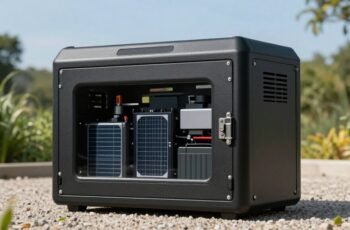
If you’re trying to charge a power station while you drive, you’ll want to weigh your options carefully and plan ahead. You can use the car’s 12V outlet with a compatible DC adapter, but keep in mind it’s slower and depends on engine RPM. For quicker charging, a DC-DC converter tied to the alternator offers higher current, though it adds setup steps. There are safety considerations and gear to choose, and practical tweaks that could change your results—plus a few surprises that might shape your approach.
Understanding Your Options for Car-Based Charging
There are several viable ways to charge a power station in a car, each with its own trade-offs. If you have a built-in AC inverter, you can plug the station’s AC adapter into the car outlet, but expect slower charging since many inverters cap at a few hundred watts. Be aware that modified sine wave output may not suit all stations; larger, aftermarket pure sine wave inverters improve compatibility and speed. Alternatively, use a DC-DC converter to connect the vehicle’s battery or alternator directly to the station’s DC or solar input, bypassing the cigarette lighter limits for higher, steadier power. Roof-mounted solar panels can charge while you drive, yet performance hinges on sun and panel count. USB-C PD offers convenience for small stations but limited wattage. Safety and specs matter. A solid rule to consider is that knowing the input wattage and voltage of your power station helps you estimate charging time more accurately. Understanding your power station’s input specifications is essential for safe, efficient charging while on the road.
Charging Via the 12V Outlet: Pros, Cons, and Setup
Charging via the 12V cigarette lighter outlet gives you on‑the‑go charging when AC outlets aren’t available, but it’s slower and more limited than other methods. You use a compatible DC car adapter that matches your power station’s input specs, often supplied by manufacturers. The outlet delivers DC at about 12V, usually located on the dashboard but sometimes in rear seats or cargo areas. Keep the engine running to maintain charging power and avoid draining the car battery. Expect slow charging, with typical outputs around 10 amps and rarely more than 120 watts. This setup is simple: no extra gear beyond the adapter. Monitor charging indicators, verify secure connections, and inspect cables for wear to prevent faults during transit. Merwin Day of Fishing for Kids with Disabilities is a notable upcoming event that highlights community involvement in outdoor activities. The community emphasizes youth engagement and supports newcomers seeking hands-on experience with portable power solutions.
Using a DC-DC Converter and Alternator for Faster Charging
Using a DC-DC converter taps the alternator directly for charging, bypassing the vehicle’s 12V accessory port to deliver faster, steadier power to your power station. You’ll get higher and more stable current than the typical 8-12 amps from a car outlet, enabling quicker gains and safer charging for large batteries. By feeding direct DC output, you avoid modified sine wave inverters that can upset sensitive gear, preserving charging efficiency. Wiring runs from the battery or alternator to the DC-DC unit, then to the power station’s solar input port for rapid transfer. Expect around 30V at 10A or more, delivering roughly 300W+. Proper regulation protects the alternator, wiring uses heavy gauge (6 AWG), and fuse protection is essential.
Leveraging the Power Station’s Solar Input While on the Move
Solar input while on the move can supplement alternator charging, but its reliability hinges on conditions and the power station’s design. You’ll gain extra energy when sun is strong and panels are well oriented, yet airflow, shading, and weather limit performance. Many stations cap solar input when a 12V source is detected to avoid backfeed or controller conflicts, so don’t assume full solar power is always available. A 1kWh battery can theoretically reach up to 1,000W total if both solar and alternator contribute, but real gains depend on MPPT efficiency and panel setup. Look for MPPT-equipped units that optimize charging and protect battery health as you drive.
- Understand the input limits and presence of dedicated solar ports on your unit
- Guarantee separate paths for solar and alternator inputs to avoid conflicts
- Check solar panel orientation, angle, and shading for peak output
- Expect supplemental charging rather than full recharges on the move
- Use portable or roof-mounted panels to maximize daylight exposure
Safety Tips and Best Practices to Protect Your Vehicle and Gear
To protect your vehicle and gear, start with certified equipment and solid electrical safety practices. Use gear certified by UL or ETL to guarantee safe, reliable charging, and install chargers with CCID or GFCI to cut shock risk. Follow NEC and NFPA standards for grounding and overcurrent protection, and prefer hardwiring Level 2 chargers directly to the panel to minimize outlet failure. Perform regular inspections for cable wear, connector damage, and port cleanliness before charging. When installing, use dedicated GFCI breakers for 240V outlets and avoid modifications that void warranties; stick to manufacturer-recommended adapters and cords. Manage cords to prevent trips, and don’t connect power stations to power strips. Protect equipment with barriers to prevent vehicle damage, and charge only in safe, well-lit locations. Avoid extreme temperatures and indoor fossil-fuel generators.
Frequently Asked Questions
Can I Charge a Power Station While the Engine Is Off?
Yes, you can, but only safely with the engine running. Charging from the 12V outlet while off drains your battery quickly, so use an alternator charger while driving or rely on external power when stopped.
Which Power Stations Support Car-Based Fast Charging Natively?
Answer: No power stations truly “natively” support car-based fast charging from EV DC ports; most only accept 12V car input or adapters. You’ll find Bluetti, EcoFlow, Jackery, Goal Zero, and Suaoki offer car inputs, not true fast car charging. Ironically efficient.
Do High-Amp Car Systems Require Dedicated Fusing for This?
Yes, high-amp car systems require dedicated fusing. You should use a properly sized breaker rated for the charger, with ~20–25% overhead, installed on a dedicated circuit by a professional to meet code and safety standards.
How Does Ambient Temperature Affect In-Car Charging Efficiency?
Ambient temperatures matter: charging can be up to 3 times slower at 32°F than at 77°F. You’ll lose efficiency as batteries heat or cool, so pre-condition, avoid peak heat, and use controlled environments for faster charging.
Is It Safe to Mix Solar Input With 12V Car Charging одновременно?
Yes, but you should verify your model supports true pass-through and multiple inputs. You’ll want proper ventilation, avoid continuous mixing, and follow the manual; otherwise, you risk overheating, overvoltage, or reduced battery life.
Conclusion
As you drive, the road becomes your quiet ally, humming like a well-tuned engine. You’re not just charging a power station; you’re weaving power into the journey, a modern Hermes with cables, a nod to Prometheus in your hands. Keep the alternator’s fire steady, mind the sun’s patience, and treat each connection as a pact with safety. When done, you’ll arrive with充满 energy and a quiet confidence that you’ve mastered the current’s dance.