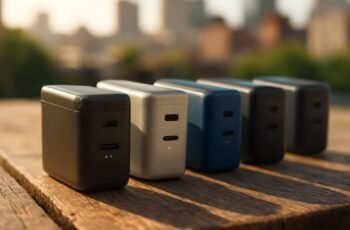
We’re here to explore 7 emergency power stations that never fail when you need them most. Each option blends reliability, versatility, and real-time monitoring, so you stay ahead of outages. From multiple ports to fast recharging and durable builds, these units cover essential appliances, communications, and lighting. But which one fits your setup, budget, and energy goals? Let’s weigh the details and find your dependable power partner.
Key Takeaways
- Prioritize models with high surge capacity and continuous wattage suitable for essential loads during outages (e.g., 1,600W+ AC recharge, 2,000W continuous output).
- Look for LiFePO4 chemistry for longer cycle life, safer charging, and extended durability under frequent use.
- Ensure multiple, versatile outputs (AC, USB-C PD, USB-A, 12V) and real-time monitoring for reliable device compatibility.
- Favor units with fast recharging (AC under 1 hour) and flexible charging options (solar, car, wall) for resilience.
- Check safety features (thermal management, BMS protections, UPS mode) and warranty support for long-term reliability.
BailiBatt 300W Portable Power Station with USB-C PD


If you need a compact, reliable power station that can handle multiple devices at once, the BailiBatt 300W Portable Power Station is a strong pick. We value its 266Wh capacity and 7 outputs, including 110V AC, two USB-C PD, two USB-A QC3.0, plus 12V car port and DC output. It delivers 300W continuous, 600W surge with pure sine wave, and weighs just 6.5 lb. We trust the multi-layer BMS for safety, plus protections against over-charge, over-discharge, short-circuits, and overheating. Real-time LCD shows input/output and remaining battery. It suits laptops, phones, drones, CPAP, camping lights, and more. 24/7 support, 24-month warranty.
Best For: This compact, reliable power station is ideal for campers, tailgaters, vanlifers, and emergency-prepared households needing a portable 266Wh capacity with multiple outputs (including USB-C PD) to run laptops, phones, drones, CPAP, lights, and more.
Pros:
- 266Wh capacity with 300W continuous / 600W surge pure sine-wave output supports a range of devices simultaneously.
- Seven outputs (AC, two USB-C PD, two USB-A QC3.0, 12V car port, DC output) plus a real-time LCD display for monitoring.
- Lightweight (6.5 lb) and portable with a protective BMS and multiple safety protections.
Cons:
- 266Wh may not be enough for high-wattage appliances for long runtimes (e.g., refrigerators) beyond brief intervals.
- Only one AC outlet may limit simultaneous high-wattage AC devices.
- Full recharge time and availability of fast-charging options depend on input source; not specified.
FosPower NOAA Emergency Radio + Power Bank

The FosPower NOAA Emergency Radio + Power Bank stands out for anyone prioritizing reliable weather updates in a compact, multi-source charger. We’re looking at a 7400mWh (2000mAh) power bank that can juice small phones or tablets and keep you connected. It charges via hand crank, solar, or USB, plus AAA batteries when regeneration isn’t possible. It features 4 LED reading lights, a 1W flashlight, and an SOS alarm for emergencies. NOAA AM/FM weather broadcasts keep you informed, indoors or out. It carries a Limited Lifetime Warranty, and FosPower’s site provides more details if needed.
Best For: Anyone seeking a compact, multi-source emergency radio and power bank that provides NOAA weather updates and basic charging in outdoor or emergency situations.
Pros:
- Multi-source charging (hand crank, solar, USB, and AAA battery backup) for reliable power in diverse scenarios
- NOAA AM/FM weather broadcasts with SOS alarm and built-in flashlight/reading lights for preparedness
- Portable 7400mWh (2000mAh) capacity suitable for small phones or tablets and quick access in emergencies
Cons:
- 2000mAh capacity may be limited for extended use with larger devices
- Solar and hand-crank charging can be slow and depend on conditions
- Limited warranty term details require checking FosPower website for specifics
Solar Powered Generator with Panels and 110V Outlet

This solar-powered generator kit is ideal for portable power on the go, combining a 146Wh bank with a 40W solar panel for steady, off-grid charging. We pair a compact 3.3 lb unit with two 110V AC outlets (100W continuous, 200W peak), plus USB-A/C outputs for versatile devices. The included 40W monocrystalline panels deliver about 20.5% efficiency, and the 146Wh capacity supports home, camping, and emergencies. A Battery Management System guards safety, while back cooling vents protect internals. It ships with all cables and a 12-month warranty, ensuring reliable, ready-to-use power wherever you need it.
Best For: Portable power on the go for campers, hikers, and emergency prep with a lightweight, compact 146Wh pack and 40W solar panel.
Pros:
- Lightweight and compact (3.3 lb) with built-in 110V AC outlets for versatile device use.
- Includes a 40W solar panel and multiple charging options (USB-A/C, 12V DC) for off-grid charging.
- Safety-focused with Battery Management System and cooling vents to protect internal components.
Cons:
- Solar panel is relatively small (40W) for faster recharging in low sunlight; longer recharge times under heavy load.
- 146Wh capacity may be limiting for high-wattage appliances or extended outages.
- Some listings note solar panel not included, causing potential confusion about what’s actually shipped.
EBL 288.6Wh Portable Power Station with Solar Generator

Whether you need reliable off-grid power or a compact home backup, this EBL unit stands out with its 288.6Wh capacity and 330W AC output for steady, clean power. We designed it for versatility: 288.6Wh capacity, 330W continuous AC, 600W peak, and pure sine wave, with overload protection at 350±40W. It weighs 7.94 lbs and fits compact spaces, featuring anti-collision strips, a folding handle, and a smart cooling fan. Ports include 2 DC 5521, 12V car, USB-A QC3.0, USB-C PD 60W, 330W outlet, and a 5W wireless pad. Recharge via AC, car, or 60–120W solar input for varied runtimes.
Best For: Off-grid living and emergency backups needing a compact, versatile 288.6Wh power station with multiple ports and fast PD charging.
Pros:
- Pure sine-wave 330W AC output with 600W peak, suitable for small appliances and sensitive electronics
- Wide array of ports (2x DC 12V, 12V car, USB-A QC3.0, USB-C PD 60W, 330W AC, 5W wireless) for flexible device charging
- Lightweight, compact design (7.94 lb) with anti-collision strips, folding handle, and smart cooling
Cons:
- Overload protection threshold relatively close to rated output (350±40W), which may limit usage for higher-watt devices
- Charging time can be lengthy on AC (6–7 hours) or car (7–9 hours) without solar, depending on input
- Solar charging requires 60–120W panels and specific DC input (DC12–26V), which may limit compatibility with some panels or setups
DARAN Portable Power Station 600W 288Wh LiFePO4 Battery

If you need reliable on-the-go power, the DARAN Portable Power Station stands out with its 600W continuous output and 288Wh LiFePO4 battery, built for 3,500+ cycles and heavy-use scenarios. We appreciate its 6-port design: 2 AC outlets (600W, 1200W surge), USB-C PD60W, 2x USB-A (18W), and DC input/output. It powers car refrigerators, CPAP machines, laptops, phones, lights, and drones, even when AC is off. Ultra-fast recharge hits 80% in 2 hours, with solar+AC options. Safer with a 12-protection BMS, real-time display, and 10% auto-off on AC port. Includes charger, manual; warranty support available.
Best For: Individuals seeking portable, high-wreliable power for camping, RVs, home backups, or emergency use with multiple ports and fast recharging.
Pros:
- 600W continuous output with 1200W surge supports laptops, CPAPs, mini-fridges, and more
- LiFePO4 battery rated for 3500+ cycles and a lightweight 8.3 lb design
- Ultra-fast recharge (∼80% in 2 hours) with optional solar+AC charging and diverse ports (AC, USB-C PD, USB-A)
Cons:
- Peak AC surge is 1200W; high-watt appliances may exceed the continuous limit
- Solar panel not included; car charging option sold separately
- 10% auto-off on AC port reduces idle AC usage but may affect certain devices needing constant power
Anker SOLIX C1000 Gen 2 Portable Power Station

The Anker SOLIX C1000 Gen 2 stands out for its ultra-fast 1,600W HyperFlash charging, delivering a full AC recharge in just 49 minutes. We’ve built this compact powerhouse to handle 2,000W continuous output and 3,000W peak with a 1,024Wh LiFePO4 battery, plus 10 ms UPS for essentials. It’s 14% smaller and 11% lighter than similar models, with 10 ports and robust durability—5-year warranty, long life. For charging, AC hits 49 minutes, solar reaches 1.8 hours at 600W, and TOU in-app helps avoid peak surcharges. Real-world use fits camping, outages, and home backups, without noise or fuel.
Best For: campers, home backup users, and outdoor enthusiasts who need fast AC recharges, a high-capacity LiFePO4 battery, and reliable power for multiple devices.
Pros:
- Ultra-fast 1,600W HyperFlash AC recharge to full in 49 minutes
- 2,000W continuous output with 1,024Wh LiFePO4 battery and 10 ms UPS for essentials
- Compact, portable design that is 14% smaller and 11% lighter with a 5-year warranty
Cons:
- Some accessories (e.g., solar cables or specific adapters) may be missing from listings
- App power consumption history and certain DC/AC input limitations may limit advanced monitoring
- Solar configuration notes and shading considerations can complicate high-voltage or parallel setups
EnginStar Portable Power Station 300W, 296Wh, 80000mAh

EnginStar’s 300W portable power station is a strong pick for CPAP users and outdoor crews who need reliable, quiet power on the go. We value its 296Wh capacity and 80000mAh backing, plus two 110V pure sine wave outlets delivering up to 300W. With 8 ports, including DC outputs and USB-C, it handles multiple devices at once. Our experience includes safe charging, temperature control, and protection against short circuits and overloads, plus 1000+ cycles. It recharges via wall, solar (panel not included), or 12V car, in about seven hours. Compact at 9×5.5×7.5 inches and 6.5 pounds. Ready for camping, emergencies, and CPAP needs.
Best For: CPAP users and outdoor adventurers needing quiet, reliable 300W power with multiple outputs and portable charging options.
Pros:
- 296Wh capacity with 1000+ charge cycles for long-term use
- Two 110V pure sine wave AC outlets and multiple USB/DC ports support several devices at once
- Safe-charging features with temperature control and short-circuit/overload protection
Cons:
- Maximum charging speed of 65W may make full recharges slower with weaker power sources
- Solar panel not included (panel-compatible but requires separate purchase)
- Heavier for some backpacks at 6.5 pounds and dimensions may limit ultra-compact use
Factors to Consider When Choosing Emergency Power Stations
We’ll start with what matters most: battery capacity and surge, so you’ve got enough power for your loads when you need it. Then we consider output port variety, recharging options, and how easy it is to move, weigh, and store. Finally, we’ll check safety, BMS, and overall reliability to keep you confident on every use.
Battery Capacity And Surge
Battery capacity and surge ratings define how long a station can run your gear and whether it can start it up. We measure capacity in watt-hours (Wh); higher Wh means longer runtimes for the same device load, so we can plan for overnight or extended use. Surge rating shows the maximum instantaneous power the station can deliver, which is critical for starting high-inrush devices like refrigerators or power tools. A larger capacity often means heavier weight, affecting portability for travel or backpacking. If a unit’s surge exceeds your device’s startup requirement, the device may fail to start or shut down repeatedly. For safe operation, ensure the surge rating meets peak device demands and aligns with the peak power of all devices you plan to run simultaneously.
Output Ports Variety
When choosing an emergency power station, the mix and arrangement of ports matter as much as capacity or surge. We look for a balance of AC outlets, USB-C PD, USB-A, and DC ports so laptops, phones, cameras, CPAP machines, and small appliances can run together. Pure sine wave AC output is key for sensitive gear, with around 300W continuous and higher surge capacity. USB-C PD ports enable fast charging for laptops and phones, typically 18W–60W per port depending on the model. Multiple port types—2× USB-C PD, 2× USB-A QC, a 12V car port, and 110V AC—boost versatility. A real-time power display and port-level protection help us manage loads and safeguard devices during outages.
Recharging Options
Recharging options matter because how quickly and where you can juice up power stations directly affects their usefulness in an outage. We prioritise models with multiple recharge routes: AC wall, car outlets, USB-C/USB-A, solar, or even hand-crank, so you’re never stranded. Ultra-fast AC charging can drop recharge to under an hour in some cases, while others favor slower AC fills, taking 6–9 hours. Solar input varies widely; many units take 60–120W panels, with real-world times stretching from hours to a day depending on sun and panel size. LiFePO4 chemistries offer longer cycles and safer recharges, though speed hinges on the BMS. Hybrid recharge—AC plus solar or car—can slash downtime by leveraging simultaneous sources.
Weight And Portability
Weighing options matters because portability often determines whether an emergency power station stays usable in a backpack or mounted in a car. We weigh weight ranges, from about 6.5 to 14 pounds, because portability changes how you carry or store a unit. Compact dimensions, roughly 8–9 by 5–7 by 6–8 inches, help it fit in backpacks or car trunks without bulk. LiFePO4 batteries add heft but offer high cycle life, influencing long-term portable use and weight per charge. Carry handles and ergonomic designs—folding handles, integrated grips—improve one-handed transport and reduce fatigue. A lower watt-hour rating often means a lighter unit, though it can limit runtime for higher-wattage appliances during emergencies. Prioritize a balance between lightness and usable capacity for your needs.
Safety And BMS
A solid Battery Management System (BMS) is essential for safe, reliable power, especially when you’re counting on an emergency station. A multi-layer BMS monitors voltage, current, and temperature to guard against overcharging, over-discharging, short-circuit, and overheating. It also handles cell balancing and safe cutoffs, preventing damage when devices demand high surge or uneven loads. Protections maintained by the BMS help keep temperatures safe and curb thermal runaway during charging and discharging. Some stations include automatic shutdown or protection modes if abnormal conditions are detected, preserving battery life and user safety. An effective BMS design sustains compatibility with sensitive electronics by delivering stable voltage and clean power output, reducing surprises when you need power most.
Durability And Build
How tough is your emergency power station when you need it most? We look for a rugged casing with impact resistance and protective features like anti-collision design and sturdy handles so it survives outdoor use and rough handling. Built-in cooling matters too—smart fans or vents keep temps in check during high-load or long runtimes. We favor models with robust battery management systems and comprehensive safety protections to guard against overcharge, overdischarge, short circuits, and overheating. Weight, dimensions, and a portable form factor help with packing for trips and emergencies. Finally, durability indicators—operating and storage temperature ranges, plus weather-sealed components—signal resilience across varied environments. In short, build quality and resilience drive reliability you can trust.
Runtime And Efficiency
When evaluating runtime and efficiency, prioritize higher watt-hour (Wh) ratings and continuous wattage to match your expected loads, since a 1024Wh unit will run essentials longer than a 146–296Wh model. We look at surge capacity because some devices spike power; CPAPs and fridges may need 600W–3000W peaks even if the continuous rating isn’t as high. Recharging speed matters too: faster AC recharges (roughly 49–60 minutes) and stronger solar input (around 600W) shorten downtime between outages. To compare runtimes, use runtime = Wh × efficiency / device wattage, accounting for real-world losses in the inverter. Manage multiple devices by selecting units with 6–10 ports and a clear display to balance loads and optimize overall runtime.
Frequently Asked Questions
How Long Can Each Unit Run Essential Devices?
We can run essential devices for hours to days, depending on the unit and load, but we’ll plan to shut off nonessential power first and optimize battery, inverter, and fuel reserves to extend runtime when you need it most.
Are Lithium Iron Phosphate (Lifepo4) Safer Than Li-Ion?
LiFePO4 is generally safer than Li-ion due to thermal stability and less combustion risk; we’ll still handle it with care, avoid overcharging, and follow manufacturer guidelines for safer, reliable emergency power.
Can These Stations Run High-Power Appliances Simultaneously?
Yes, they can run high-power appliances simultaneously, but total load matters. Fun fact: most top stations support AC loads up to 1,500–3,000W continuously. We’d guide you to match inverter output and battery capacity to your needs.
Do They Come With Solar Panel Compatibility or Adapters?
Yes, many do support solar panels or adapters, though compatibility varies by model and inverter type. We’ll check ports, included cables, and charging specs to ensure a proper match for your setup.
What Maintenance Is Required to Extend Battery Life?
We’ve found that proper maintenance can extend battery life by up to 20%. To keep it going, we regularly calibrate, avoid full discharges, store in cool conditions, and replace aging cells or faulty connections promptly.
Conclusion
We see these emergency power stations as sturdy anchors in a stormy sea, guiding us safely back to shore. Think of them as trusty lanterns and quiet engines that never abandon us—always balanced, charging, and ready. When the grid falters, they stand as loyal companions, keeping essential devices alive and spirits steady. Choose the one that fits our voyage best, and we’ll weather outages together with confidence and calm.