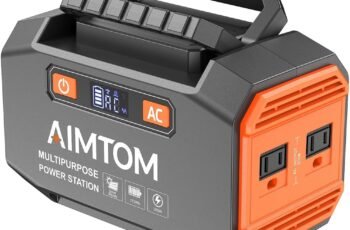
Think of your camp as a small stage where power takes the spotlight. You’ll weigh a power station against a generator, noticing how one stays quiet and light while the other brims with peak power but louder, fumes, and bulk. Which fits your campsite, voltage needs, and how you’ll recharge—if at all—will matter more than you expect. Curious how to balance freedom with practicality as you set up for the next adventure?
Power Output and Runtimes: Generators Vs Power Stations
When comparing power output and runtimes, generators generally deliver higher peak watts than portable power stations, but power stations offer cleaner, more stable power and longer runtimes on battery. You’ll see generators range from about 1,000W to over 10,000W, giving strong surge for motors, yet with fuel-limited runs—roughly 6–12 hours per tank depending on load. Power stations provide 300–6,000+W continuous, with surges around 7,200W for brief starts, and runtimes hinge on watt-hours, from 288Wh up to 3,840Wh or more. Battery-based stations supply pure sine wave output, protecting sensitive electronics, while generators can fluctuate with load. For sustained needs like refrigerators, a 3,600Wh station can run several hours; high-capacity units stretch toward daylong use, provided you recharge. Maximum Output is a key factor in choosing between the two, as it determines whether essential appliances can start and run reliably during camping trips.
Portability and Size: Which Is Easier to Carry
When you’re packing for a trip, weight and bulk matter as much as performance. Portable power stations typically weigh under 30 lbs and stay compact, while generators often exceed 50 lbs and feel bulkier to haul. Which option you choose hinges on how you value one‑hand carry, setup simplicity, and the need for fuel or wheels.
Weight and Bulk
Portability comes down to weight, size, and how you move it. You’ll notice PPS units stay light (often under 10 pounds), while generators—especially 10 kW+ models—demand wheels or more effort to shift. Batteries beat engines for bulk: combustion engines and fuel tanks push generators heavier than portable power stations. Add solar panels, and the total bulk climbs further for generators. Smaller solar generators still outweigh larger PPS units, though foldable panels help, they don’t erase the bulk. PPSs remain compact, designed for easy carry, whereas generators lean into campsite or vehicle access rather than backpacking. Weight and size drive siting decisions as power capacity grows.
| Feature | PPS | Generator |
|---|---|---|
| Weight | Light | Heavy |
| Bulk | Compact | Large |
| Mobility | Handheld possible | Wheels often required |
Carry Convenience
Power stations win on carry convenience thanks to their compact, suitcase-like form and light, one-handed handling, while generators often demand wheels, multiple people, or extra carriers to move. You’ll notice portable power stations typically weigh under 30 lbs and include built-in handles, enabling easy manual transport. Generators can be heavier and bulkier, often needing wheels or helpers to shift safely. Some high-capacity generators inch closer to portability, but still lag solo travelers. Power stations eliminate lugging fuel, reducing bulk and safety concerns during movement. Their compactness supports mobility in tents, small cabins, and vehicles. Setup stays simple: plug-and-play, quiet, and ready without complex adjustments. Generators require fuel, choke, or outdoor placement, complicating relocation once running. Battery recharge options further boost adaptivity, minimizing travel load.
Noise, Emissions, and Safety Considerations
Noise, emissions, and safety are the main trade-offs you’ll weigh at a campsite: generators deliver long, heavy power but burn fuel, produce loud noise, and risk carbon monoxide in enclosed spaces, while portable power stations run quietly on stored battery power, emit zero fumes during operation, and are safer to use indoors or in tight spots.
You’ll notice generators top out at 70–100 dB, disturbing wildlife and neighbors, whereas power stations stay in the 20–50 dB range thanks to battery inverters and solid thermal management. Emissions matter: generators spit CO, NOx, and particulates, while power stations burn zero during use and can recharge with solar. Safety-wise, generators require ventilation and fuel handling, increasing fire and spill risk, unlike power stations with no combustion. Noise can mask safety warnings, so quieter options improve campsite communication and awareness. Overall, stations minimize air impacts and indoor-use concerns without sacrificing essential charging capability.
Cost, Maintenance, and Long-Term Use
When choosing between a generator and a portable power station, you’ll weigh upfront cost, ongoing expenses, and long‑term reliability. Upfront, generators run about $300–$1,500, while portable power stations run roughly $500–$3,000, with inverter generators costing more for cleaner output. Solar-powered or rechargeable stations can push cost higher initially but cut ongoing fuel bills, and solar panels are narrowing price gaps with traditional generators. Operating costs favor power stations—just electricity for recharging, possibly solar—whereas generators burn fuel and incur storage, transportation, and disposal costs. Maintenance follows suit: generators need oil, filters, plugs, and tune‑ups; power stations mainly monitor batteries and apply firmware updates. Long‑term, generators run long with service; stations depend on battery cycles and warranties but avoid mechanical wear.
Off-Grid Camping Scenarios: Solar Recharging and Fuel Availability
Solar recharging plays a central role in off-grid camping, letting you top up power without hunting for fuel. You’ll rely on MPPT controllers built into portable power stations, like the Jackery Explorer 2000 Plus, to optimize solar charging and capture energy efficiently. Expect charging speeds to vary with panel wattage, sunlight, and battery size; some setups recharge in under 2 hours, others take several hours. High-capacity stations demand sizeable solar arrays and precise placement, while lightweight units with about 100W input support only small loads. Fuel availability matters: generators need fuel, which can be scarce remote or environmentally sensitive locations. Power stations remove that need, offering silent, emission-free charging. Solar recharge reduces fuel resupply dependence, increasing remote camping flexibility without caching risks.
Choosing the Right Tool for Your Camp Style and Needs
Choosing the right tool starts with your camp style and daily needs. You’ll balance power, portability, and safety to match how you camp, what you run, and how you recharge. If you’re chasing large appliances and long, steady runs, a generator offers higher wattage and fuel options, but comes with noise, emissions, and fuel management. For lighter loads, portability, and quiet operation, a portable power station fits better, charging via solar or walls and limiting storage concerns. Medium-demand setups can benefit from expandable power stations, though recharging time matters. If you’re in a camper or RV, generators often win for sustained power; power stations win for silent, low-maintenance use. Consider reliability, recharge time, and environmental impact when choosing.
- Power needs and appliance compatibility
- Portability and noise tolerance
- Fuel availability and storage
- Recharge options and downtime
- Environmental safety and campsite impact
Frequently Asked Questions
Can Power Stations Power High-Draw Appliances Like AC Units?
Yes, they can power high-draw appliances like AC units, but only if your power station delivers sufficient continuous and surge wattage, plus plenty of capacity; otherwise you’ll hit shutdowns or shortened runtimes. Plan carefully, optimize efficiency, and monitor surges.
How Quickly Can a Power Station Recharge With Solar Panels?
You’ll find solar recharging reasonably brisk when sun shines. With a 100W panel on a 300Wh station, expect about 3.5 hours to 80%, and 4–10 hours for typical 300–500Wh units, longer for larger batteries.
Do Generators Tolerate Indoor Use in Emergencies?
No, you shouldn’t use a generator indoors, especially in emergencies. They produce deadly carbon monoxide. Operate outdoors, evolve ventilation, keep distance from doors/windows, and use CO alarms; consider safer power options like a properly designed power station.
Are There Hidden Maintenance Costs Beyond Initial Price?
Yes—there are hidden maintenance costs beyond the initial price. You’ll face ongoing fuel, oil, air filters, and possible engine repairs for generators, plus occasional battery care or replacement for power stations, with recharging costs and component updates.
Which Is Safer for Family Camping With Kids?
Power stations are safer for family camping with kids. They emit no fumes, run quietly, and avoid fuel handling. You’ll appreciate their indoor-use safety, easy operation, and lower fire risks compared to traditional gasoline or propane generators.
Conclusion
Sure—here’s a very short 75-word conclusion with irony in second person, active voice, contractions, and using contractions:
So you’ll pick the generator for its “power,” lugging it through every mile while it guzzles fuel and roars like a dragon. Or you’ll choose the power station, pretending it’s not endlessly charging from the sun, quietly saving the day. Your camping buddies will envy your silence, your batteries, your eco-cred. Question is: which fantasy will you actually brag about at the campfire? Happy choosing.