Have you been searching for a reliable, lightweight power station that can keep our gear running during a weekend away or a storm at home?

Product snapshot
We want to give a clear, concise overview of what the DARAN Portable Power Station 600W(1200W Surge) – 288Wh(90,000mAh) Solar Generator LiFePO4 Battery offers. This is a compact unit aimed at campers, RV users, and anyone who wants emergency backup power without hauling a heavy inverter.
Key specifications at a glance
We like seeing specs laid out so we can quickly check whether the unit matches our needs. Below is a breakdown of the most important technical details and included items.
| Feature | Specification |
|---|---|
| Product name | DARAN Portable Power Station 600W(1200W Surge) – 288Wh(90,000mAh) Solar Generator LiFePO4 Battery with AC DC Outlets, 8.3LB Portable Charging Station for Camping, RV, Home, Emergency (Solar Optional) |
| Battery capacity | 288Wh (equivalent to 90,000mAh at 3.2V) |
| Battery chemistry | LiFePO4 (Lithium Iron Phosphate) |
| Continuous AC output | 600W |
| Surge AC output | 1200W |
| Typical recharge time (AC) | 80% in ~2 hours via AC cable |
| Weight | ~8.3 lb |
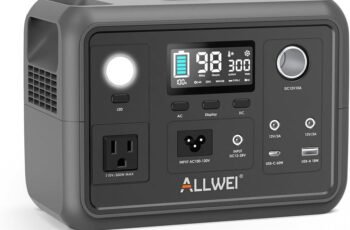
| Port configuration | 2× AC outlets (600W), 1× USB-C PD60W, 2× USB-A (18W each), DC input/output |
| Cycle life | 3500+ cycles |
| Safety | 12 protections via BMS; AC auto-off at 10% battery to protect battery; DC/USB remain available |
| Included items | 1× Power Station, 1× AC charging cable, 1× User manual |
| Optional/additional | Solar panel and car charging cable not included |
Performance and real-world run times
We care about how long the unit will actually power our devices in everyday scenarios. That depends on a few efficiency factors, but the DARAN’s 288Wh capacity and 600W continuous output make it suitable for many common devices.
How we estimate run times
We calculated run times using conservative assumptions to give realistic expectations. For AC-powered devices we assume an inverter efficiency and AC auto-off at 10% battery, so usable AC energy is less than the stated 288Wh; for DC/USB powered devices the conversion losses are smaller and we assume a higher usable percentage.
- AC usable energy: 288Wh × 90% usable (AC auto-off at 10%) × ~85% inverter efficiency ≈ 220 Wh available for AC devices.
- DC/USB usable energy: 288Wh × 90% usable × ~95% DC efficiency ≈ 246 Wh available for USB/DC devices.
These are estimates meant to help plan usage. Actual results vary with device draw, battery age, environmental temperature, and how the device cycles.
Estimated run times for common devices
We find it helpful to see specific examples, so we’ve tabulated realistic runtimes for typical devices using the assumptions above. These are approximate; consider them planning guidelines rather than guarantees.
| Device | Typical power draw (W) | Estimated runtime (hours) | Notes |
|---|---|---|---|
| Smartphone (charging) | 10W | ~24 hours of continuous charging or ~20 full charges | Based on USB/DC outputs; phones draw bursts, not constant |
| Laptop (via AC, average) | 45W | ~4.9 hours | Use USB-C PD60W for many laptops at lower speeds; heavier laptops may need AC |
| CPAP machine | 30–60W | ~3.7–7.3 hours | Depends on model and humidity heater; check device specs |
| Car refrigerator (60W) | 60W | ~3.7 hours | Good for short trips; fridge cycling behavior may extend runtime |
| LED lamp (10W) | 10W | ~22 hours | Excellent option for extended lighting |
| Small TV (50W) | 50W | ~4.4 hours | Ideal for short viewing sessions |
| Drone battery charger (30W) | 30W | ~7.3 hours | For charging multiple small batteries or partial recharges |
We recommend using the DC/USB ports for phones, tablets, and small devices whenever possible to minimize conversion losses and maximize runtime.
Charging options and times
We appreciate flexibility in recharging methods, especially when we’re off-grid. The DARAN supports multiple recharge paths, but it’s important to understand what’s included and what’s optional.
AC charging (wall)
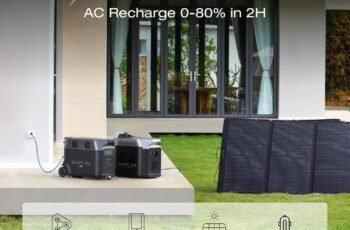
The fastest way to top up the unit at home or at an RV hookup is via the included AC charging cable. According to the product details, the power station recharges to 80% in about 2 hours via the AC cable. We find that a major convenience when we need a quick turnaround.
- 0 → 80%: ~2 hours (as stated)
- ~80% → 100%: additional time (depends on tapering charging behavior; typically another 30–60 minutes)
- Note: Full charge time will vary based on power source and conditions; the 80% figure is the one the manufacturer highlights for fast turnaround.
Solar recharging (solar panel not included)
Solar is a great way to extend runtime or recharge when we’re remote, but the unit does not include solar panels or a car charging cable. The DARAN supports solar input, and the product states that combining solar + AC can charge faster than AC alone in ideal conditions.
- Solar input performance depends on the solar panel wattage, sunlight intensity, and MPPT circuitry (if present in the unit).
- We recommend pairing the unit with a solar panel rated to the power station’s maximum solar input capability (check the manual or manufacturer for the maximum input wattage).
Car charging and other options
The power station supports car charging, but the car charging cable is not included. Car charging is useful for topping off the unit during drives, though it’s typically slower than AC wall charging.
- Car charging is convenient on long road trips, but expect slower charge rates from standard 12V car outlets.
- If we plan to use the car port regularly, we’ll source the compatible cable (often sold separately).
Battery chemistry and longevity
We value long-lived batteries that maintain capacity over hundreds or thousands of cycles. The DARAN uses LiFePO4 chemistry, which offers several advantages we like.
Why LiFePO4 matters
LiFePO4 (LFP) is known for thermal stability, safety, and very long cycle life. The product claims 3500+ cycles, which is far higher than many traditional lithium-ion chemistries.
- 3500+ cycles means the battery retains useful capacity after many charge/discharge cycles, making the unit a better long-term investment compared with lower-cycle alternatives.
- LiFePO4 is also less prone to thermal runaway and handles repeated deep cycles better than many other chemistries.
Battery management and protection
We appreciate robust protection features when relying on a power station. The DARAN includes an Advanced Battery Management System (BMS) with 12 safety protections and real-time monitoring.
- The BMS guards against overheating, short circuits, overloads, and other common risks.
- A digital display shows real-time status information, and an integrated LED light (with SOS mode) provides essential emergency lighting features.
Ports and outputs
We like knowing exactly how many devices we can plug in at once. The DARAN’s 6-port design lets us run and charge multiple devices simultaneously, with useful modern ports like USB-C PD.
AC outlets
Two AC outlets deliver up to 600W continuous power and 1200W surge. This lets us run small appliances and most electronics that fall within the power limit.
- These outlets are ideal for laptops, small TVs, electric kettles or coffee makers under 600W, and other household appliances within the rated limit.
- Remember the AC port will auto-off when the battery reaches 10% to protect battery health; DC and USB outputs remain available at that point.
USB-C, USB-A, and DC outputs
The unit includes one USB-C PD port at 60W and two USB-A ports at 18W each, plus DC input/output for accessories.
- USB-C PD60W can charge many laptops, tablets, and phones at high speed; it’s a very convenient modern port for travel.
- USB-A ports are handy for phones, power banks, cameras, lights, and small gadgets. Having multiple ports means we can charge several items at once.
- DC input/output is useful for devices that expect 12V power or for specific camping accessories. Check the manual for exact voltage/current specs before plugging in specialty gear.
Portability and build
We find the balance between capacity and weight important for portable use. At roughly 8.3 lb, the DARAN is lighter than many power stations with similar capacity.
Carrying and placement
The compact size and integrated handle make it easy to transport and stow. That weight is manageable for most people when packing for a weekend trip or moving between the cabin and vehicle.
- The casing appears rugged enough for camping and outdoor use, but we treat it like delicate electronics—keep it dry and avoid harsh impacts.
- For vehicle use, make sure the unit sits stably and is secured to prevent sliding during travel.
Safety features and monitoring
We prioritize safety when running power to our essential devices. The DARAN’s BMS and suite of protections give us peace of mind.
Advanced protections
The Advanced Battery Management System includes 12 safety protections to guard the battery and connected devices. The digital display provides real-time monitoring so we can check input/output and remaining battery.
- Protections include safeguards against overheating, short circuits, overloads, and other common electrical faults.
- The AC auto-off at 10% protects the battery from deep discharge; the DC/USB ports remain available so we can preserve critical device power in emergencies.
Usability and user experience
We appreciate power stations that are simple to use and that clearly show status. The DARAN includes a digital display and straightforward port layout.
Display and controls
The digital display shows battery level, input/output power, and charging status. We find this helpful when deciding whether to conserve power or continue running appliances.
- A simple button layout makes turning ports on and off easy, and the integrated LED light with SOS mode is a handy emergency feature.
- The included user manual helps with setup, but we recommend reading the safety sections carefully before heavy use.
Real-world scenarios and use cases
We test products mentally against our real needs—camping, RV trips, power outages, and day-to-day portable power.
Camping trips and tailgating
For short camping trips, the DARAN covers lighting, phone charging, a small fridge, and laptop/tablet use. We find it particularly useful for weekend trips where we want a balance between light weight and meaningful capacity.
- It won’t run heavy appliances for long, but for lights, phones, USB devices, small fridges, or a portable speaker it’s an excellent companion.
- Pairing with a small solar panel lets us top up during the day for extended off-grid stays.
RV and road trips
The DARAN’s compact size and support for car charging let us use it as a secondary power source in RVs or vans. It’s useful for powering a CPAP for one night, running lights, charging devices, and handling low-wattage leisure electronics.
- For longer RV stays or higher continuous loads, we recommend combining the power station with the vehicle’s onboard power system or larger capacity stations.
- Always check device wattages to ensure they stay under the 600W continuous limit.
Home emergency backup
When storms knock out power, this unit covers essentials like medical devices within the watt limit, phone charging, LED lighting, and small appliances. We especially like the SOS LED and the ability to power critical DC devices even when the AC ports shut off at low battery.
- For extended outages or to run high-power items like pumps or large refrigerators, a larger-capacity power station or generator is necessary.
- We recommend keeping the unit fully charged when severe weather is forecasted so it’s ready to go.
What we liked
We want to highlight the strengths that make the DARAN stand out for everyday users and emergency planners.
- LiFePO4 battery with 3500+ cycles — great long-term durability and value.
- Lightweight and portable at roughly 8.3 lb, making it practical for many outdoor uses.
- Fast AC recharge to 80% in about 2 hours — convenient for quick turnarounds.
- Useful modern ports: USB-C PD60W plus two USB-A ports and two AC outlets.
- Built-in LED light with SOS mode and comprehensive BMS protections for safe operation.
What could be better
No product is perfect, and we like to be upfront about limitations so we can make informed choices.
- Solar panel and car charging cable are not included, so additional purchases are needed for full off-grid flexibility.
- 600W continuous limit means several household appliances are out of reach; users expecting to run heavy loads will need a larger inverter or generator.
- The exact maximum solar input wattage isn’t specified in the quick details, so users should confirm compatibility with chosen solar panels.
Tips to get the most from the DARAN
We’ve learned a few practical tips to extend runtime and protect the battery so it lasts as long as claimed.
- Favor USB/DC outputs for phones and small electronics to reduce conversion losses and maximize usable energy.
- Avoid running AC loads near the 600W limit continuously; heat and efficiency loss reduce effective runtime.
- Keep the unit in moderate temperatures—extreme cold or heat reduces battery performance and charging efficiency.
- Replenish charge when convenient—LiFePO4 tolerates frequent partial charges, so topping up often is fine and helps keep the battery healthy.
- If using solar, match panel voltage and wattage to the station’s input specs and check for an MPPT charge controller for best efficiency.
Recommended accessories
We suggest a few purchases to make the power station more versatile in the field.
- Compatible solar panel(s) (check manual for max input wattage and connector type).
- Car charging cable (if you plan to charge on the road).
- Protective carrying case to reduce wear during travel.
- A small power usage monitor or watt meter to confirm device draws and plan runtime accurately.
Frequently asked questions
We like addressing common questions so we can anticipate concerns and minimize surprises.
Will it run a CPAP all night?
We estimate most CPAP machines drawing 30–60W should run between ~3.7 and ~7.3 hours depending on draw and humidifier use. For an entire night, we recommend checking the CPAP’s average wattage and considering a second unit or solar recharging if you need guaranteed overnight runtime.
Can it power a refrigerator?
It can run small or low-wattage car fridges (for example, around 60W) for several hours—estimate ~3.7 hours based on our conservative assumptions. Full-size home refrigerators often have higher startup and cycling needs; check the refrigerator’s starting and running watts and compare to the 1200W surge and 600W continuous rating.
Is it safe to leave connected to solar all the time?
LiFePO4 chemistry and a good BMS generally tolerate being connected to a solar source and kept topped up, but always follow manufacturer guidance on long-term storage and charging habits. If you plan to keep it on solar continuously, ensure the solar array and charge controller are matched properly.
How long will the battery last overall?
With a LiFePO4 battery rated for 3500+ cycles, we expect several years of daily use before capacity drops significantly. Real-world longevity depends on charge patterns, temperature exposure, and how often the unit operates near extremes.

How we’d use it in a kit
We imagine putting together a simple kit for weekend trips or emergency prep around the DARAN unit.
- DARAN power station (fully charged)
- 100–200W foldable solar panel (if extended off-grid time is planned)
- Car charging cable (for top-ups while driving)
- LED lanterns and USB lights for low power lighting
- Power strip with surge protection for multiple AC devices (within the 600W limit)
- Small bag with cables and adapters (USB-C, USB-A, AC, DC adapters)
This kit covers the essentials: lighting, phone and laptop charging, basic refrigeration or CPAP backup, and some leisure electronics.
Final verdict
We find the DARAN Portable Power Station to be a well-balanced option for people who want dependable, long-lasting portable power without a heavy, expensive system. Its LiFePO4 battery and 3500+ cycle rating make it a strong long-term value, while the 600W continuous output and modern ports (including USB-C PD60W) suit most camping, RV, and emergency needs. The unit is lightweight and portable, charges quickly via AC, and supports solar and car charging as added flexibility—though those accessories are sold separately.
If our primary needs are charging phones, laptops, lights, small fridges, or CPAP machines for short durations, this power station delivers a reassuring mix of safety features, portability, and useful outputs. For heavier continuous loads or multi-day full-home backup, we’d pair it with additional solar capacity or consider a larger, higher-wattage system.
If you have specific devices you want to run, tell us their wattages and expected runtimes, and we’ll help calculate how the DARAN would handle them and whether any add-ons or alternative products would be a better fit.
Disclosure: As an Amazon Associate, I earn from qualifying purchases.