Disclosure: As an Amazon Associate, I earn from qualifying purchases.
Have we ever wished we could keep everything running—at home, on the road, or during a storm—without the noise and hassle of a gas generator?

Why We Think the EF ECOFLOW DELTA 3 Ultra Matters for Everyday Life
When we look at portable power stations, most of us want the same things: reliability, safety, enough power for real appliances, and something we don’t have to babysit. The EF ECOFLOW DELTA 3 Ultra Portable Power Station with 2×220W Solar Panels is clearly designed for that kind of user—someone who wants backup power they can trust, without the fumes, maintenance, and constant noise of a traditional generator.
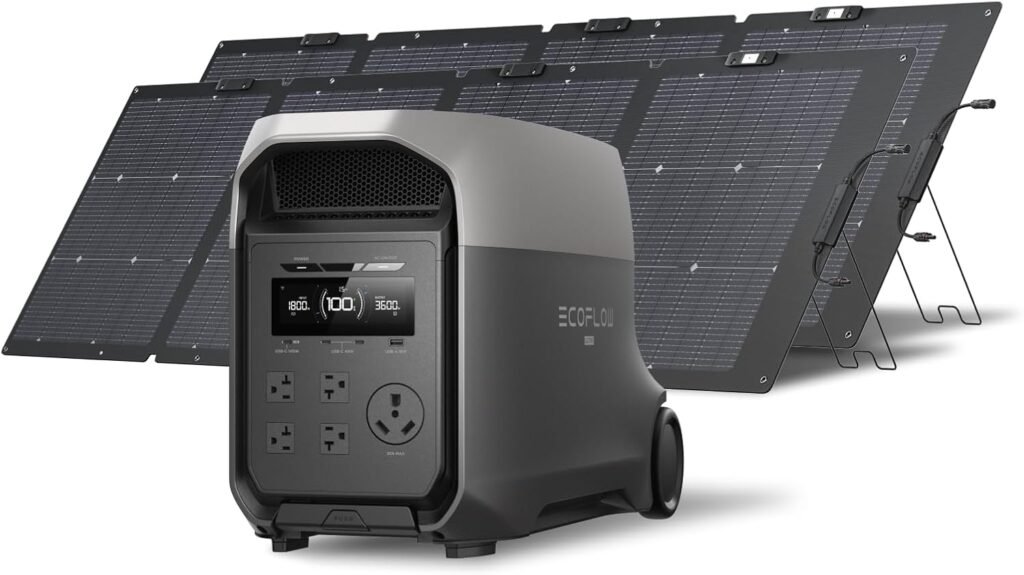
This unit feels less like a gadget and more like a compact home power solution. With a 3072Wh LiFePO4 battery and 3600W output (7200W surge), we are firmly in serious backup territory, not just “phone charging at the campsite.”
Key Specifications at a Glance
Before we jump into use cases, it helps to see what we’re working with. These are the headline specs that shape what this system can really do for us.
| Feature | Specification / Description |
|---|---|
| Product Name | EF ECOFLOW DELTA 3 Ultra Portable Power Station with 2×220W Solar Panels |
| Battery Capacity | 3072Wh (LiFePO4 / LFP) |
| Continuous AC Output | 3600W |
| Surge Output | 7200W |
| Battery Chemistry | LiFePO4 (LFP) |
| Estimated Lifespan | Up to 10 years of daily use (thousands of cycles, depending on depth of discharge) |
| UPS Transfer Time | <10 ms (for uninterrupted backup)< />d> |
| Noise Level | About 25 dB under load |
| Solar Input | 2 × 220W solar panels included (440W total rated) |
| Charging Methods | Wall outlet, solar panels, car input, EcoFlow Smart Generator |
| Notable Technologies | X-Quiet 3.0 cooling, X-Stream fast charging, 24/7 battery protection system |
| Intended Uses | Home backup, RV, camping, emergencies, outdoor work, off-grid applications |
| Packaging Note | Power station and 220W solar panels are shipped in separate packages |
We can immediately see this isn’t a small power bank—it’s a high-capacity, high-output power station for multi-day use and whole-appliance power.
Power Output: What 3600W Really Means for Us
A lot of products throw watt numbers around, but what does 3600W continuous (7200W surge) actually allow us to run? It’s more than enough for many full-size home appliances, making this unit capable of powering our essentials at home or in an RV.
Running Real Household Appliances
With 3600W continuous, we can power:
- A full-size refrigerator (100–300W running, higher surge)
- A microwave (usually 1000–1500W)
- A coffee maker or kettle (800–1500W)
- A TV and Wi-Fi router
- LED lights in multiple rooms
- Laptop and phone chargers
- Medical devices like CPAP machines (depending on power requirements)
Typical combined loads during a power outage might be in the range of 500–2000W, so the DELTA 3 Ultra usually has enough headroom to handle startup surges without tripping.
Why Surge Power Matters
The 7200W surge rating matters for devices with motors or compressors—refrigerators, some power tools, small pumps, and certain AC units. These devices draw more power for a fraction of a second when they start. With this kind of surge headroom, we’re much less likely to see annoying shutdowns just because a fridge compressor kicked in.
The combination of high continuous power and generous surge capacity means we can treat this more like a compact home circuit rather than a glorified battery pack.

Battery Capacity: What 3072Wh Gives Us in Real Terms
Numbers like 3072Wh can feel abstract. It helps to translate that into how many hours or days we might realistically get from the system in common scenarios.
Example Usage Scenarios
Here are some rough estimates (real-world runtimes will vary based on efficiency, inverter losses, and how heavily we draw power):
-
Full-size refrigerator (150W average):
3072Wh ÷ 150W ≈ 20 hours of continuous run time. Because fridges cycle on and off, in actual use we might see closer to 1–2 days of coverage. -
Wi-Fi router + laptop + LED lighting (~80W total):
3072Wh ÷ 80W ≈ 38 hours. This could be more than a day and a half of remote work during an outage. -
CPAP (40W average) overnight:
3072Wh ÷ 40W ≈ 76 hours. That’s multiple nights of operation, especially if we limit other loads. -
Microwave at 1200W for 15 minutes/day:
1200W × 0.25h = 300Wh per day. That’s only about 10% of the battery per short daily use.
We can see that 3kWh gives us genuine multi-day resilience for light use, and solid day-long backup for heavier, appliance-level loads.
UPS Function: Seamless Backup in Under 10ms
One standout feature is the <10ms ups (uninterruptible power supply) switching time< />trong>. For many of us, power outages are as disruptive to our electronics as they are to our comfort.
What a <10ms ups switch means for us< />3>
Most personal computers, routers, and sensitive electronics can handle brief power interruptions—but not long ones. Once we get beyond around 10–20ms, we risk reboots, file corruption, and dropped connections.
By switching to battery power in under 10 milliseconds, the DELTA 3 Ultra acts more like a true UPS. This is especially important for:
- Desktop PCs and workstations (protecting ongoing work)
- Home office setups with monitors and network devices
- Modems and Wi-Fi routers (maintaining internet during grid blips)
- Certain medical devices that must stay powered
We just plug critical loads into the power station and keep the unit connected to grid power. When the grid fails, the system steps in almost instantly, without needing us to run over and flip switches.
Noise Level: Why 25dB Makes a Big Difference
Traditional gas generators can easily reach 60–70dB or more, which is conversation-level noise or higher. The DELTA 3 Ultra, according to the manufacturer, operates at around 25dB under load thanks to X-Quiet 3.0 and advanced cooling.
When Quiet Operation Matters
Being around 25dB puts this unit closer to a whisper or rustling leaves. That’s a big deal in scenarios such as:
- Overnight use in bedrooms or small apartments
- RV and van life, where the power station might be only a few feet away from where we sleep
- Campgrounds with quiet hours and noise restrictions
- Shared living spaces, where others might be sensitive to noise
We’re able to keep critical devices running through the night—like CPAP machines, fans, or small heaters—without that constant background rumble that comes with gas generators.
Charging Options: Four Ways to Keep the Power Flowing
A portable power station is only as useful as its ability to recharge efficiently. The DELTA 3 Ultra gives us four main charging methods, adding flexibility for different lifestyles and emergency situations.
1. Wall Outlet (AC) Charging
Using EcoFlow’s X-Stream technology, AC charging from a wall outlet is designed to be fast and convenient. While specific recharge times depend on the grid voltage and exact settings, we can expect significantly faster charging than many older or cheaper power stations.
This matters because when a storm is approaching or we know an outage is likely, we can “top up” the unit quickly from the grid and be ready.
2. Solar Charging with 2×220W Solar Panels
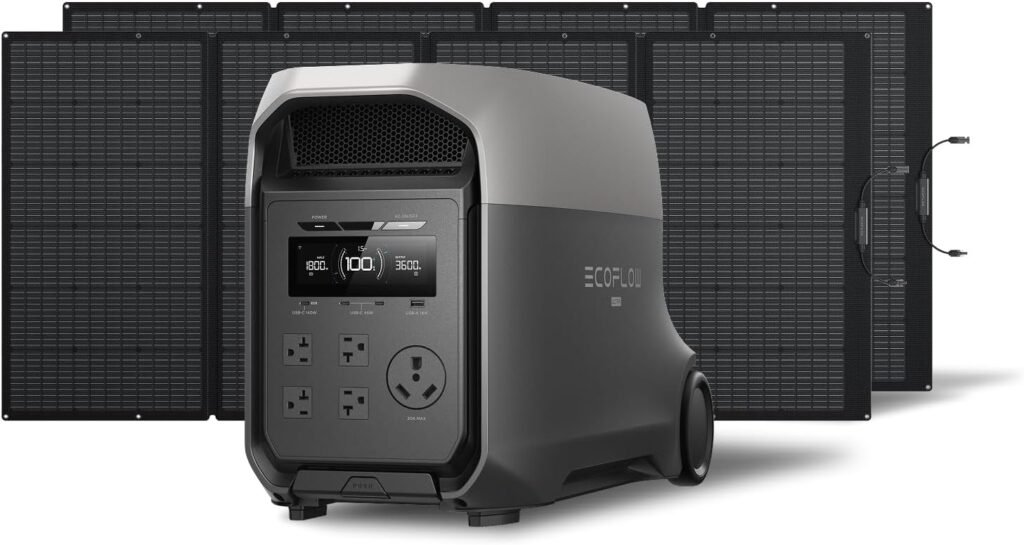
The product includes two 220W solar panels (440W total rated). This turns the DELTA 3 Ultra into a proper solar generator and not just a battery.
In ideal conditions (strong sun, correct angle, minimal shading), we can estimate:
- 440W input into a 3072Wh battery:
- 3072Wh ÷ 440W ≈ 7 hours of full sun for a 0–100% charge (real-world often takes longer).
Factor in less-than-perfect sun and conversion inefficiencies, and we might see full-day or multi-day solar charging depending on location and weather. Still, even a few hours of sun can noticeably top up the capacity.
Solar recharging turns the system into a regenerative off-grid solution, especially useful for:
- Extended blackouts
- Off-grid cabins
- Long RV trips without hookups
- Remote job sites
3. Car Charging
Car charging is generally slower, but very helpful when we’re on the move. We can plug the DELTA 3 Ultra into a vehicle’s 12V outlet to trickle-charge while we drive.
This option is ideal for:
- Road trips where we want to arrive at camp with more charge than when we left
- Situations where grid power isn’t available but we still have a running vehicle
- Keeping batteries topped up between Solar charging sessions
4. EcoFlow Smart Generator Integration
For extended outages or off-grid living, pairing this power station with an EcoFlow Smart Generator can give us a hybrid system: clean battery power most of the time, plus a fuel-based backup that runs only when needed to recharge the station.
We get:
- Reduced generator runtime and fuel use
- Cleaner, quieter daily operation
- Automatic or managed recharging when battery levels fall
This gives us a tiered backup approach that can last weeks if properly managed.
Battery Technology: Why LiFePO4 is a Big Plus
Battery chemistry is a major factor in safety, lifespan, and performance. The DELTA 3 Ultra uses LiFePO4 (LFP) cells, which are widely regarded as one of the safest lithium chemistries available.
Benefits of LiFePO4 for Us
Here’s how LiFePO4 improves real-world use:
-
Long Lifespan:
LiFePO4 cells can often handle thousands of charge cycles with relatively slow capacity loss. The manufacturer states up to 10 years of daily use, which suggests a very robust cycle life. -
Thermal Stability and Safety:
LiFePO4 is more stable at high temperatures and less prone to thermal runaway than many other lithium chemistries. That adds peace of mind, especially when we’re running heavy loads or using the unit in hot climates. -
Stable Capacity Over Time:
LFP tends to maintain usable capacity for more cycles, making the purchase feel more like a long-term investment.
EV-Grade CTC Structure and 24/7 Protection
The DELTA 3 Ultra also highlights an EV-grade CTC (Cell-to-Chassis or similar) structure and a 24/7 battery protection system. While these sound technical, their impact is straightforward:
- Better mechanical protection and thermal management for the cells
- Continuous monitoring for over-voltage, under-voltage, over-current, and temperature extremes
- Improved durability for transport, vibration, and daily shifting in an RV or vehicle
For us, it means we can use and move the unit with more confidence and less worry.
Home Use: Backup Power for Outages and Daily Convenience
Many of us are thinking less about camping and more about keeping the house running when the grid fails. This system is clearly targeted at that use case.
Supporting Essential Circuits
We can’t run an entire house indefinitely with 3kWh of battery, but we can:
- Keep refrigeration running to protect food
- Maintain internet and communication devices
- Run LED lights in critical areas
- Power medical devices that must not lose power
- Use small kitchen appliances in shifts for cooking
With thoughtful load management—turning off high-draw devices when we don’t need them—we can stretch that capacity over the full length of an outage, especially when combined with solar charging.
Everyday Convenience Even Without Outages
Beyond emergencies, a power station like this is genuinely helpful for:
- Outdoor power in the yard or garden for tools without running long extension cords
- Powering devices in a garage or workshop that doesn’t have enough outlets
- Stable power where we have flaky grid voltage or frequent micro-outages
We can treat it like a silent, portable outlet strip we can move wherever we need reliable power.
RV and Camping Use: Bringing Home-Level Power on the Road
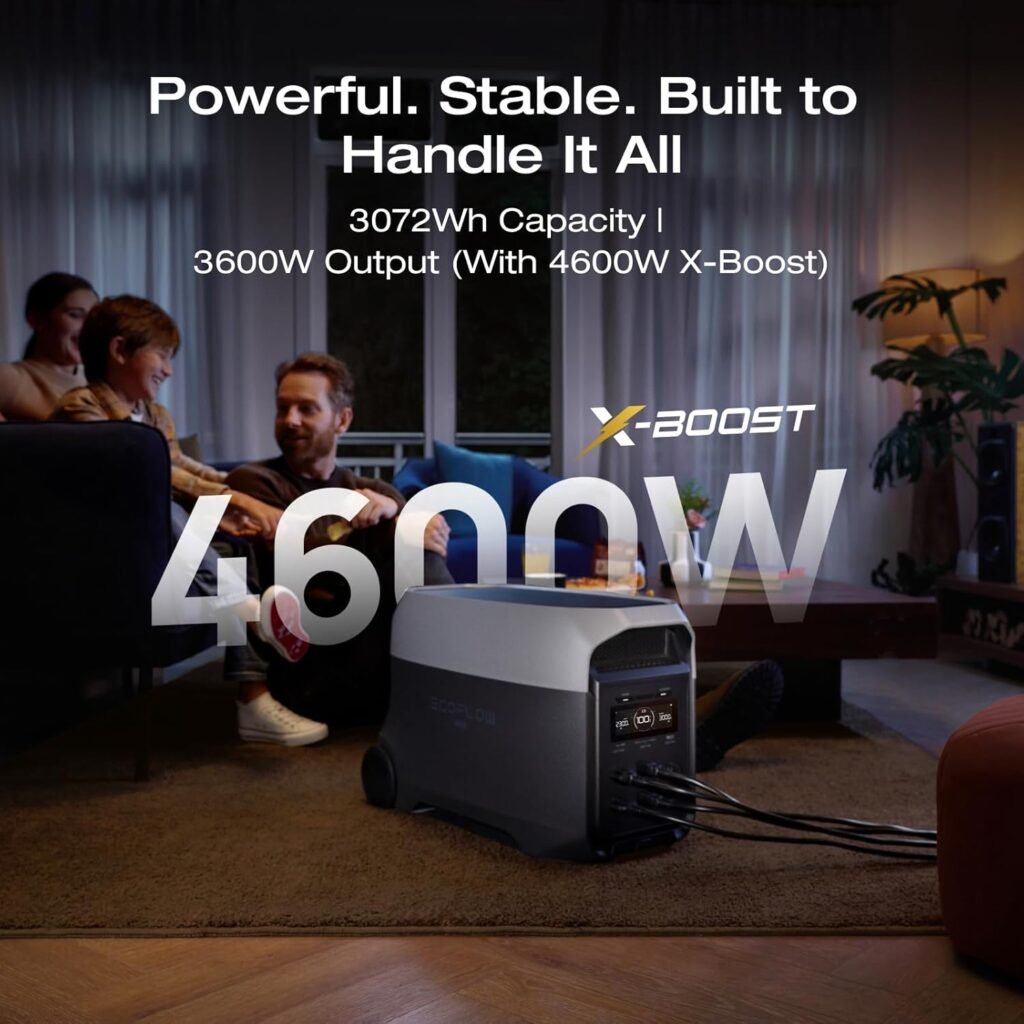
For RVers and campers, the DELTA 3 Ultra plus 2×220W panels is a strong combination. It shifts us from a basic camping setup to something closer to having a mobile micro-grid.
RV Life with 3600W and 3kWh
Practical benefits for RV or van life:
- Running a fridge or 12V compressor fridge easily
- Powering induction cooktops, coffee makers, and microwaves
- Charging e-bikes, drones, and cameras
- Running laptops, monitors, and network gear for remote work
- Combined with solar, reducing or eliminating the need to hook up to shore power every night
We can also keep sensitive electronics on the UPS-backed outputs for more protection from campground power fluctuations.
Camping and Off-Grid Adventures
When we leave the RV behind and go more minimalist, the power station still earns its space:
- Running lighting, fans, and small coolers
- Charging phones, tablets, and cameras for the whole group
- Powering portable projectors or speakers for group activities
- Supporting small medical devices out in remote areas
Even if we don’t use the full 3kWh every day, having that overhead means we’re not constantly worrying about whether we can charge one more device.
Emergency Preparedness: Building a Resilient Backup Strategy
For many of us, this product’s biggest appeal is as part of an emergency plan. When we think about storms, grid instability, or wildfires, having silent, emissions-free backup power indoors is a serious advantage.
Advantages Over Gas Generators
Compared to traditional generators:
- No need to store gasoline or stabilize fuel
- No exhaust fumes, so we can run it inside safely (following common-sense ventilation guidance for heat)
- Much quieter, making it usable at night without disturbing family or neighbors
- Virtually no maintenance—no oil changes, spark plugs, or carburetors
We can keep the unit charged, store it in a closet or utility room, and bring it out exactly when needed without wondering if it will start.
Layering Solar and Smart Generator Options
For long emergencies:
- Solar panels provide a renewable, fuel-free source of power, at least during daylight
- The EcoFlow Smart Generator can act as a fallback to recharge the DELTA 3 Ultra when solar alone isn’t enough
This layered approach gives us flexibility: we lean on renewable power first and only use fuel when necessary, extending our backup capabilities far beyond a single battery charge.
Ease of Use and Setup: How Quickly Can We Get Going?
Usability is crucial for something that might be relied on in stressful moments. The DELTA 3 Ultra is designed for plug-and-play operation.
Simple Setup Process
Typical setup is:
- Unpack the power station and solar panels (note they arrive in separate packages).
- Plug the unit into a wall outlet to fully charge.
- Connect solar panels if we plan to use solar input.
- Plug in our appliances as needed, either into AC outlets, DC outputs, or USB ports (depending on the model’s port selection).
There’s no complex wiring, fuel mixing, or special tools required. We can go from box to usable backup power in a single afternoon.
Monitoring and Management
Although the prompt doesn’t detail the app, EcoFlow units typically support app-based monitoring. That usually offers:
- Real-time power input/output readings
- Battery state of charge and estimated run time
- Control over charging modes and sometimes charging speeds
- Firmware updates and alerts
This kind of monitoring makes it easier to manage loads during an outage and decide when we can afford to run high-draw appliances like microwaves or electric kettles.
Build Quality and Portability
A 3kWh LiFePO4 battery and 3600W inverter are not featherweight components. We should expect some heft, but the design is focused on making the unit reasonably portable.
Physical Use in Daily Life
While the exact weight and dimensions are not listed in the provided details, compared with similar units we can reasonably assume:
- It is not ultra-light, but still manageable for most adults to lift and move
- Side handles or similar grips to help with carrying
- Rugged casing suitable for indoor and moderate outdoor use (avoiding direct heavy rain or immersion, of course)
We might not want to carry it on a long hike, but moving it:
- From our living room to our RV
- From a closet to a home office
- From inside the house to the patio
is very feasible, especially if we plan ahead where we want it to live most of the time.
Solar Panels: What 2×220W Panels Add to the Package
The included 2×220W solar panels are a big part of what makes this a complete system instead of just a power station.
Real-World Solar Performance
Solar output depends heavily on:
- Time of year and latitude
- Cloud cover
- Panel orientation and tilt
- Shading from trees, buildings, or even dust and dirt
In many locations, we might see half to three-quarters of the rated wattage on average across the day. That means something like:
- 200–350W effective real-time input under typical good conditions.
Even at lower-than-rated output, the panels still:
- Extend our runtime significantly
- Allow us to recover a meaningful portion of the battery each day
- Reduce dependence on grid power for recharges
For emergency or off-grid applications, simply being able to generate hundreds of watt-hours every day without fuel can be the difference between rationing power constantly and using it comfortably.
Who This System Is Best For
Not every power user needs this much capacity and output, but several groups will appreciate exactly what the DELTA 3 Ultra offers.
Ideal Users and Scenarios
We see strong value for:
-
Homeowners in outage-prone areas
Those dealing with storms, wildfires, or aging grid infrastructure who want quiet, indoor-safe backup. -
RV and van life travelers
People who want enough power to run residential-level appliances on the road, with solar backing. -
Remote workers and digital nomads
Anyone needing reliable power for computers, networking gear, and sensitive electronics—no matter where they are. -
Preppers and emergency planners
Users building a layered, renewable-centric backup system with battery + solar, and possibly a Smart Generator as a final backup. -
Small business owners
Photographers, food truck operators, mobile service providers, and others who need silent, clean power in locations without good grid access.
If our needs are limited to charging phones and running a few small devices occasionally, this may be more capacity (and cost) than we truly need. But if we care about keeping real appliances and critical systems powered reliably, the feature set fits very well.
Advantages and Potential Trade-Offs
To make an informed decision, it helps to look at both the strengths and the possible downsides in practical terms.
Main Advantages
-
High Output (3600W / 7200W surge):
Lets us run almost any standard household appliance one at a time, or several smaller ones together. -
Large 3072Wh LiFePO4 Battery:
Provides substantial backup time, especially with efficient load management. -
LiFePO4 Chemistry:
Great cycle life, safety, and reliability over many years. -
Fast UPS Switching (<10ms):< />trong>
Protects PCs, routers, and other sensitive electronics from interruption. -
Very Quiet Operation (~25dB):
Comfortable for bedrooms, RVs, and nighttime use. -
Four Charging Methods:
Grid, solar, car, and Smart Generator support give us flexibility in every scenario. -
Plus 2×220W Solar Panels Included:
Helps us start with a complete off-grid kit right away.
Potential Trade-Offs
-
Weight and Size:
We should expect it to be heavier than smaller units; less convenient if we want something extremely portable and lightweight. -
Cost:
High-capacity LiFePO4 power stations with solar panels are a serious investment, more expensive than smaller backup options. -
Charging Speed from Car:
Like all large stations, car charging is relatively slow. It’s better viewed as a supplemental method than a primary one.
If we’re okay with those trade-offs, the strengths are impressive and align well with real-world needs.
Practical Tips for Getting the Most from the DELTA 3 Ultra
To maximize the value and lifespan of the system, a few habits and strategies can really help.
Managing Our Loads Smartly
- Prioritize essential devices: fridge, communications, medical equipment, basic lighting.
- Avoid running multiple high-draw appliances (e.g., microwave, kettle, space heater) at the same time.
- Use LED lighting and efficient electronics wherever possible.
- During outages, set a rough “power budget” for each day so we don’t accidentally drain the battery early.
Using Solar Effectively
- Place panels at an angle facing the sun, adjusting through the day if practical.
- Avoid shading even small portions of a panel, which can drastically reduce output.
- Keep panel surfaces relatively clean from dust, leaves, and debris.
Battery Care
- If storing for long periods, keep the battery at a moderate state of charge (often around 30–60% is recommended by many manufacturers; we can check specific guidance from EcoFlow).
- Avoid exposing the unit to extreme temperatures for extended periods.
- Use the system regularly; periodic cycling helps keep cells healthy.
By treating the station as a living part of our home power ecosystem instead of a “break glass in emergency” tool, we maintain readiness and extend its lifespan.
Our Overall Opinion on the EF ECOFLOW DELTA 3 Ultra System
We see the EF ECOFLOW DELTA 3 Ultra Portable Power Station with 2×220W Solar Panels as a very capable, thoughtfully designed power solution for serious everyday and emergency use. It straddles the line between a consumer gadget and a semi-professional home backup system.
The combination of:
- 3kWh LiFePO4 capacity
- 3600W continuous / 7200W surge output
- Fast, near-seamless UPS functionality
- Exceptionally quiet operation
- Flexible multi-source charging
- Included solar panels
makes this package compelling for those of us who want real resilience rather than just a bit of extra battery for phones and small devices.
When We Would Choose This System
We would strongly consider this model if:
- We live in an area with frequent outages and want quiet, indoor-safe backup without relying on fuel.
- We use or plan to use an RV, camper, or off-grid setup where we want to run full-size or near-full-size appliances.
- We care about long-term reliability and safety, making LiFePO4 chemistry a must.
- We want solar power integrated from day one, not as an afterthought.
Final Thoughts
In our view, the EF ECOFLOW DELTA 3 Ultra with 2×220W solar panels offers a robust, future-focused way to keep our lives powered when the grid or our location can’t keep up. It’s an investment, but one that trades recurring fuel costs and noise for quiet, flexible, and long-lived energy independence.
If we’re ready to step beyond small backup batteries and move toward a serious portable power system that can meaningfully support our home, RV, or emergency plans, this product is very much worth considering.