Disclosure: As an Amazon Associate, I earn from qualifying purchases.
?Looking for a reliable, fast way to charge a portable power station from your vehicle while keeping your vehicle battery protected?
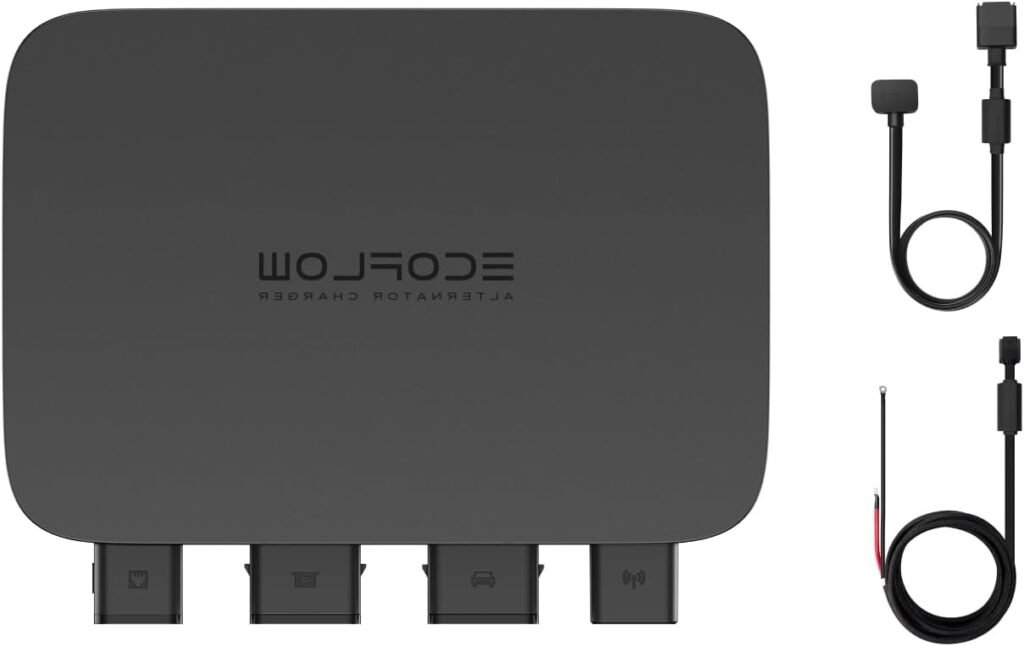

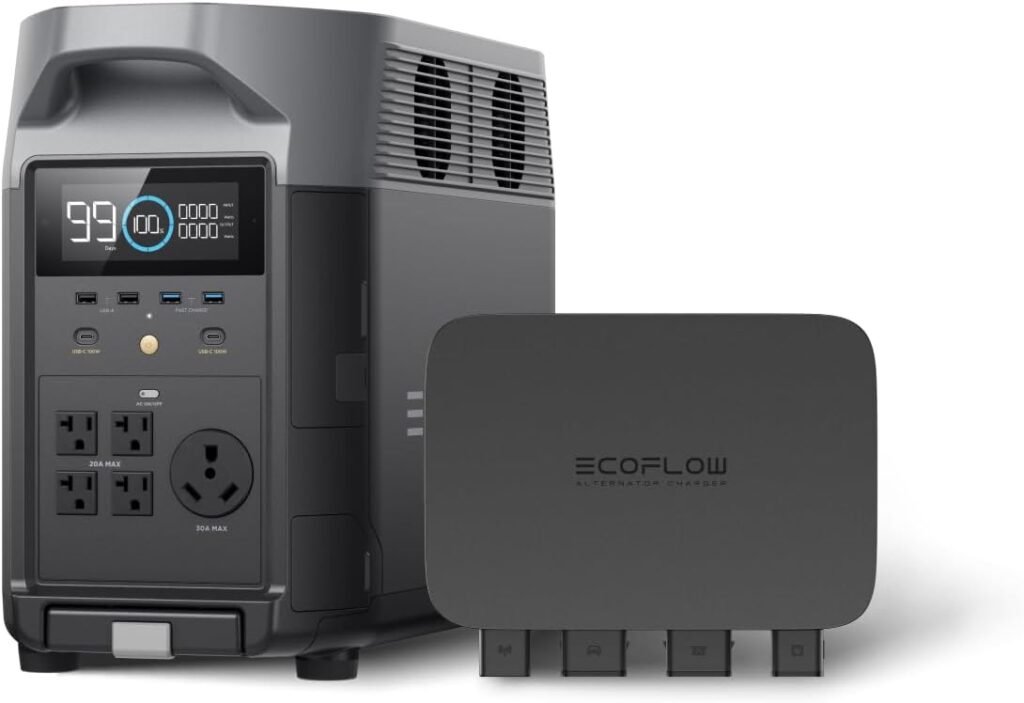
Overview of EF ECOFLOW 800W Alternator Charger, 3-in-1 Fast DC-DC Charger for Portable Power Stations, Car Battery Charger & Jump Starter 8× Faster Than Cigarette Chargers, Charges 1kWh in 1.3 hr
We found this unit to be a purpose-built solution for people who want to get significant energy back into their portable power stations while driving. It’s designed to harness surplus alternator energy and convert it efficiently into DC charging for EcoFlow power stations while offering battery maintenance and jump-start capabilities.
What this product promises
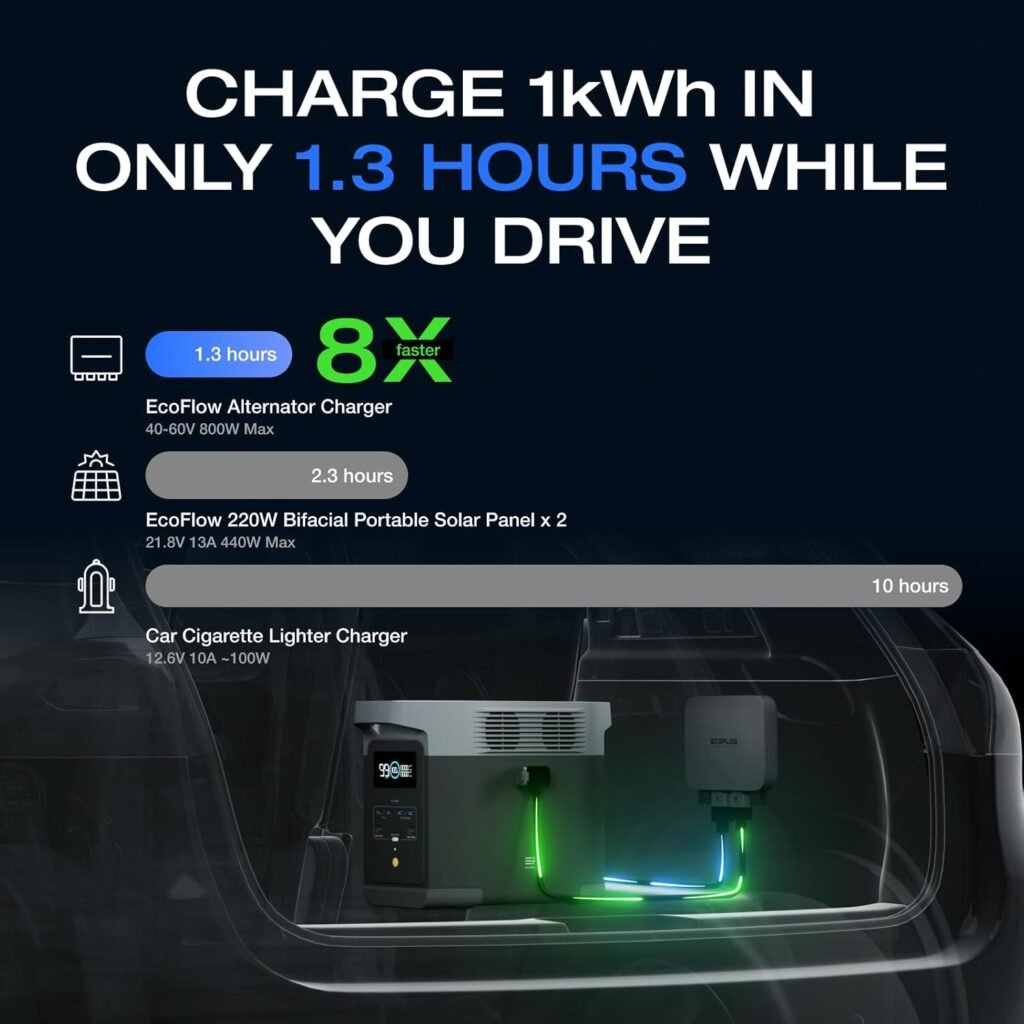
The EF ECOFLOW 800W Alternator Charger promises very fast charging — enough to replenish about 1 kWh in roughly 75 minutes of driving. It’s a three-in-one device: a DC-DC charger for portable power stations, a vehicle battery maintainer (12V), and a jump starter. These combined functions aim to simplify life for vanlifers, overlanders, RV users, and anyone using a portable power station on the road.
Who we think this is for
This product suits people who spend lots of time on the road with an EcoFlow power station and need rapid top-ups from the alternator. It also fits those who want a compact, integrated system that helps keep their vehicle battery healthy and offers emergency jump-start capability without carrying separate heavy gear.
Key specifications and a quick comparison table
We like to see specs clearly laid out, so we created a table to summarize the most important numbers and to compare the alternator charger to a typical cigarette lighter (12V accessory) charger. This helps set expectations about charging speed and electrical demands.
| Item | EF ECOFLOW 800W Alternator Charger | Typical Cigarette Lighter Charger |
|---|---|---|
| Peak DC-DC output | 800 W | ~100–150 W (typical) |
| Approx. time to add 1 kWh | ~75 minutes (manufacturer) | Many hours (depends on power) |
| Primary functions | Charge portable power station / Maintain vehicle battery / Jump starter | Mostly slow trickle charge to 12V devices |
| Safety protections | Reverse polarity, overcurrent, short circuit, voltage protection, GaN cooling | Basic fuse protection |
| App monitoring | Full remote monitoring via EcoFlow App | Generally none |
| Vehicle wiring demand* | ~50–70 A range (depending on running voltage) | ~8–12 A |
| Notes | Check alternator output in vehicle manual; DELTA Pro needs adapter | Limited by accessory socket rating |
*Estimated 12–14V side current based on 800W power draw; always confirm with a professional and consult the product manual.
Why these numbers matter
We wanted readers to see how much more energy the alternator charger can deliver compared to a cigarette lighter port. That difference is the whole point of this product: faster replenishment and real capability to run heavier loads after a reasonable drive time.

Performance and charging speed
We were particularly interested in real-world performance because claimed peak outputs aren’t always sustained in practice. The EF ECOFLOW 800W Alternator Charger leverages GaN technology and efficient DC-DC conversion to reduce heat and maintain higher power throughput for longer periods.
Real-world charging expectations
In practice, charging times depend on alternator output, engine RPM, and the starting state of charge in the power station. The manufacturer’s claim of adding 1 kWh in about 75 minutes assumes a robust alternator and normal driving conditions. If your alternator is smaller or you spend a lot of time idling, the speed will be lower.
Example calculation and how we think about current
We like to translate power into current so people can understand wiring and alternator requirements. Using an approximate alternator voltage of 14V, an 800W output equates to roughly 57 A of current drawn from the vehicle side (800W ÷ 14V ≈ 57A). If alternator voltage is lower or losses occur, that number can change. This is why checking the vehicle manual for alternator capacity and using appropriately sized cables and fuses is essential.
Installation and compatibility
Installation is where most users will pause, because running high current safely needs thought. We recommend we do a careful check before committing to install.
Installation overview
The unit is marketed as easy to install, but we advise planning the installation to minimize cable length, protect wiring with the correct fuse, and ensure good ground connections. If you’re not comfortable with automotive electrical systems, a professional installer or a qualified electrician is the safest route.
Wiring and electrical considerations
We always stress, safety first. For an approximate 50–70 A current draw, cable gauge and fusing matter. Short runs (a few feet) typically use 2 AWG to 4 AWG cable ranges in many installs, with an appropriately rated inline fuse close to the battery. Long runs require heavier gauge to avoid voltage drop. Always follow the charger’s user manual and local electrical codes, and confirm alternator output capacity before use.
Vehicle compatibility and alternator limits
We double-checked manufacturer notes that alternator capacity varies between vehicles. Some small cars have alternators suited to typical accessory loads but not sustained high-current drains. Larger vehicles, diesel vans, and purpose-built overland vehicles often have alternators that can handle these loads. Consult your vehicle manual or alternator specs. If there’s any doubt, contact the vehicle manufacturer or consult a professional installer.
App and monitoring features
We appreciated that the EcoFlow ecosystem includes an app, because monitoring charging status while driving can reduce anxiety and help manage loads.
What the EcoFlow App provides
Through the app, we can monitor real-time energy usage, charging power, and battery status. It lets us review power consumption, temperature, and charging progress remotely, which is convenient when we leave the vehicle while charging or want to check things during a drive.
How that helps on the road
Having app access means we can adjust expectations while driving, check if charging is actually happening at the expected rate, and spot anomalies like sudden drops in charging power. That visibility is especially helpful during longer trips when we rely on the power station for critical loads.
Safety features and reliability
We take safety seriously because high-current systems present real hazards if misused. The EF ECOFLOW 800W Alternator Charger includes protections designed to avoid common failure modes.
Built-in protections
The unit incorporates reverse polarity protection, overcurrent protection, short-circuit protection, and voltage abnormality detection. These systems help prevent damage to the vehicle and to the portable power station. GaN technology is used to manage heat efficiently, which reduces overheating even under high-power charging.
Warranty and service
EcoFlow offers a 2-year service and vehicle protection program with this device. We’d recommend registering the product and keeping installation receipts in case any warranty questions arise. As with any integrated electrical device, follow the supplied instructions for both safety and warranty purposes.
Use cases and scenarios
We like to picture real situations to see whether a product fits our lifestyle. This charger is versatile across many use cases.
Vanlife and overlanding
For vanlifers and overlanders, this charger is a major convenience. We can charge a portable power station substantially during a day’s drive, reducing the need to run a generator when we arrive at camp. It also maintains the house battery and provides a jump-start option for emergencies.
RV and motorhome support
In an RV, the alternator charger can supplement the 12V house battery and extend the runtime of fans, fridges, or medical devices between shore power hookups. The app’s monitoring helps us keep an eye on whether a long drive is replenishing what we used at the campsite.
Weekend camping and day trips
Even for shorter trips, the faster charge rate allows us to top up essential gear like phones, cameras, and lighting quickly, so we’re not reliant on the accessory port’s much slower trickle charging.
Pros and cons
We want to be balanced, so we list strengths and weaknesses we observed or expect.
Pros
- Fast charging: Manufacturer claims allow replenishing ~1 kWh in ~75 minutes, which is far faster than accessory port charging.
- 3-in-1 functionality: Charger, battery maintainer, jump starter all in one compact unit.
- App monitoring: Real-time telemetry makes it easier to trust the system on longer trips.
- Safety tech: GaN efficiency and multiple protections reduce overheating and common electrical faults.
- Compact and portable: Easier to integrate into van builds or take along for trips.
Cons
- Alternator dependency: Performance depends heavily on the vehicle’s alternator capacity; not all cars can support max output.
- Installation complexity: High current wiring requires correct cable sizes, quality connections, and proper fusing; professional installation may be necessary.
- Additional adapters: DELTA Pro users need a Smart Generator Adapter to connect the alternator charger, which is an extra purchase.
- Potential noise or heat concerns in poorly ventilated installs: Despite GaN cooling, installation must allow airflow.
Comparison to cigarette lighter chargers and other options
We regularly get asked how this compares to more basic charging methods. Below we summarize the practical differences.
Cigarette lighter port charging
Cigarette lighter ports are convenient but limited by the socket’s current rating (often 10–15A). That yields low charging power and long replenishment times. The EF ECOFLOW 800W Alternator Charger is purpose-designed to bypass that limitation by hardwiring to the alternator and delivering significantly higher power.
Portable solar and generators
Solar panels and generators are still great for off-grid charging. We like to treat the alternator charger as complementary — it recharges quickly while driving, solar is great while parked, and a generator is useful for continuous high-load periods. Combining methods gives flexibility.
How we recommend installing and testing
We prefer practical instructions but emphasize safety. Below are steps we would take or recommend.
Pre-install checklist
- Check your vehicle alternator maximum output in the manual.
- Confirm compatibility numbers and any vehicle-specific restrictions.
- Gather appropriate cable, fuses, and connectors per the charger manual.
- Decide on mounting location with ventilation and access to the battery.
- If using DELTA Pro, secure the Smart Generator Adapter if needed.
Installation steps (high-level)
- Disconnect the vehicle battery during wiring work for safety.
- Mount the charger in a ventilated, dry location near the vehicle battery if possible.
- Run appropriately gauged cables from the battery to the charger; minimize cable length.
- Install an inline fuse or circuit breaker near the battery, sized per the charger manual (common practice: fuse rating slightly above expected continuous draw but below cable ampacity).
- Ensure solid ground connections and clean battery terminals.
- Reconnect battery and run an initial test with the EcoFlow App monitoring.
- Verify charging behavior during a short drive and re-check all connections afterward.
Testing and validation
After installing, we would make a series of test drives: a short run to confirm the unit powers on, followed by a longer drive to watch the charging power and temperature. The app lets us observe real-time numbers and we’d check for stable charging, absence of error codes, and no unusual heat or odors.
Troubleshooting and maintenance
We expect occasional questions, so here are practical steps we’d take if things aren’t working as expected.
Common issues and fixes
- No charging indicated: Verify vehicle is running, check fuses, and ensure cable connections are tight and correctly polarized.
- Low charging power: Confirm alternator capacity, measure voltage at the battery while running, and check for voltage drops across cable runs. Longer runs might need larger gauge cable.
- Charger error codes or app warnings: Consult the manual for code definitions and perform the recommended resets or updates. If problems persist, contact EcoFlow support under the 2-year service plan.
Routine maintenance
We’d periodically inspect cable terminations for corrosion, ensure mounting hardware remains secure, and keep ventilation clear of dust or debris. Also, keep the charger firmware and app updated when updates are available.
Frequently asked questions (FAQ)
We compiled questions we often get and answered them based on the product details and reasonable electrical practice.
Will this work with any vehicle?
It can work with many vehicles, but you must confirm the alternator can safely supply the charger’s demand. Compact cars with small alternators might not reach the 800W draw. We strongly recommend checking the vehicle or alternator manual and consulting a pro if unsure.
Do we need a special adapter for DELTA Pro units?
Yes. To connect the Alternator Charger with DELTA Pro and DELTA Pro 3, a DELTA Pro to Smart Generator Adapter is required. Check EcoFlow’s accessory list before installation.
How hot will this get in normal use?
Because it uses GaN technology, the charger runs more efficiently and produces less heat than many older designs. However, some heat is expected at high power; we recommend placing it where it can get airflow and not in a tightly enclosed space.
Can it jump-start any car?
It offers a jump-start function, but each vehicle and situation is unique. We recommend consulting the manual for jump-start limits and ensuring the charger’s jump-start capacity meets your needs. When in doubt, use a dedicated jump starter rated for your vehicle.
What if we leave it connected all the time?
The charger includes protections for situations like reverse polarity or voltage abnormalities. Still, for longevity and safety, follow the installation and usage recommendations from EcoFlow, and don’t rely on indefinite continuous operation unless specified in the manual.
Practical tips and best practices from our experience
We like to add the small details that make installations and daily use smoother.
Minimize cable length
Shorter runs reduce voltage drop and heat; mount the charger near the battery if possible. We prefer neat routing and secure clamps to avoid chafing.
Protect the circuit close to the battery
Place the fuse or breaker near the battery terminal to protect the cable in case of a short. That’s good electrical practice and can prevent catastrophic failures.
Monitor during first outings
For the first several drives after installation, monitor the EcoFlow App frequently to ensure expected charging behavior. That helps catch installation issues early.
Plan for alternator heat and load
If you routinely run high alternator loads, monitor the vehicle’s electrical system. Maintaining healthy alternator and battery conditions will ensure long-term success.
Our verdict
We like the EF ECOFLOW 800W Alternator Charger for its clear focus: rapid DC-DC charging for portable power stations with added vehicle battery maintenance and emergency jump-start capability. The combination of speed, app monitoring, and protections makes it a strong choice for mobile power users who drive regularly and need to replenish their power stations efficiently.
We recommend it to vanlifers, overlanders, RV owners, and anyone who wants faster-than-accessory port charging while on the move — provided their vehicle alternator can support the load and installation is done safely. For those relying solely on cigarette lighter ports or slow solar top-ups during travel, this charger represents a meaningful upgrade in convenience and performance.
If you want, we can help walk through an installation checklist specific to your vehicle, check alternator capacity with you, or compare this unit to other DC-DC chargers on the market so we can find the best match for your setup.