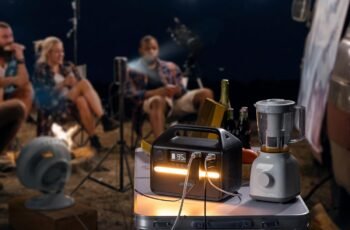
Have we ever wished our home, RV, or campsite could keep running smoothly even when the grid goes down or we are miles away from the nearest outlet?

What Is the OUPES 2000W Mega 1 Solar Generator Kit?
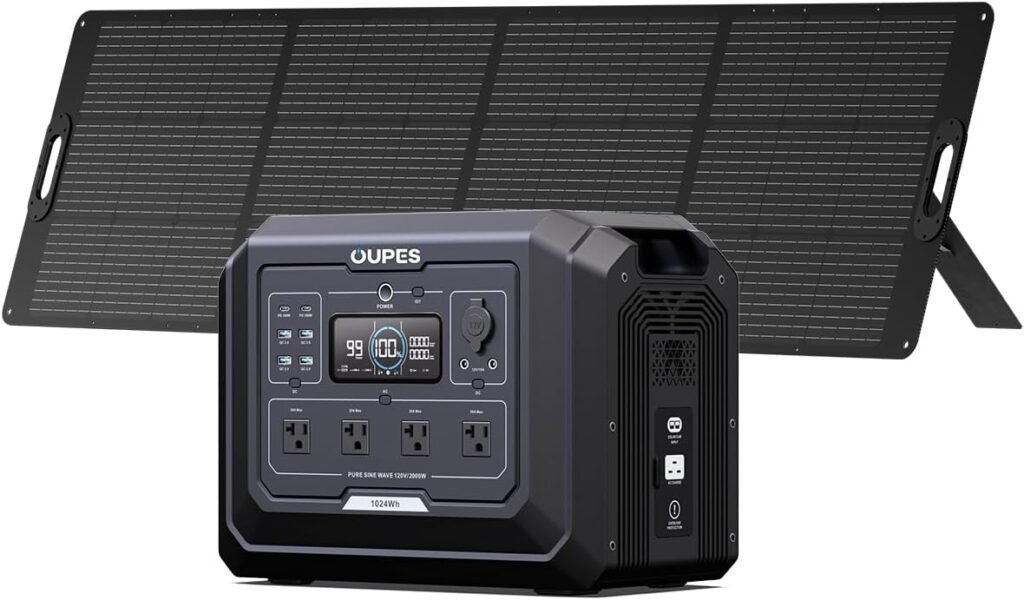
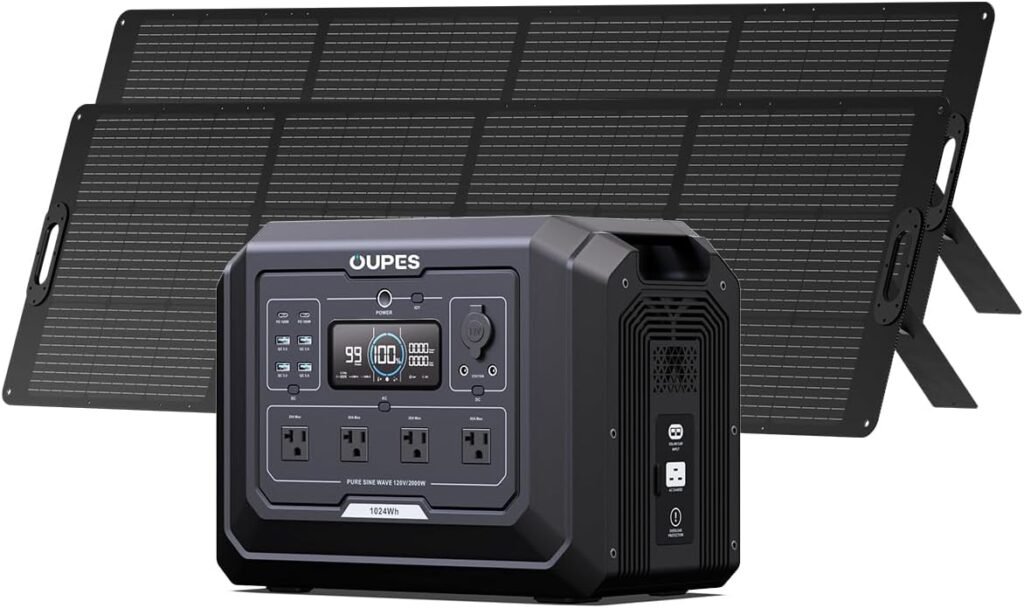
When we look at the OUPES 2000W Mega 1 Solar Generator Kit, we are really talking about a complete portable power solution. It is not just a battery; it is a bundled system that includes a high-capacity power station plus a 240W solar panel, ready to use right out of the box.
This kit combines solar charging, a large 1024Wh LiFePO4 battery, a powerful 2000W inverter, and smart app monitoring. That makes it suitable for everything from short road trips to serious backup power during outages.
Key Specs and Features at a Glance
Sometimes it is easier to understand a product when we see the numbers side by side. Below is a breakdown of the main specifications we would care about when deciding if this unit fits our needs.
| Feature | Details |
|---|---|
| Product Name | OUPES 2000W Mega 1 Solar Generator Kit with 240W Panel |
| Battery Capacity | 1024Wh (Watt-hours) |
| Battery Type | LiFePO4 (Lithium Iron Phosphate) |
| Inverter Output | 2000W AC (continuous) |
| Peak / Surge Output | Approx. higher than 2000W (for startup surges, typical for appliances) |
| Included Solar Panel | 240W monocrystalline panel |
| Solar Charge Time | ~5–8 hours in good sunlight |
| Dual Charging | Solar + AC up to 2200W input |
| Expandable Capacity | Up to 5120Wh with optional B2 battery |
| UPS Function | 20ms automatic switchover during grid loss |
| Connectivity | WiFi / Bluetooth app monitoring |
| Weight | About 27.8 lbs (power station) |
| Battery Lifespan | 3500+ cycles |
| Warranty | 3-year warranty |
| Use Cases | Road trips, RVs, camping, off-grid, home backup |
These numbers already tell us this is not a small “phone charger” power bank. It is a serious piece of equipment meant to keep essential loads running at home or on the road.
Design and Build Quality
When we first pick up or look at the Mega 1, we notice it is meant to be portable but still robust. The 27.8-pound weight reflects a sizable LiFePO4 battery wrapped in a durable, shock-resistant casing.
OUPES designed this unit with outdoor use in mind. The solar panel is built to be waterproof, and the power station is shockproof, which gives us more confidence if we are setting it up on a campsite, in an RV compartment, or in the back of our vehicle.
Portability and Form Factor
Even though 27.8 pounds is not feather-light, it is a reasonable tradeoff considering the capacity we get. It is the kind of unit we can carry with one hand for short distances or shift around a campsite without a struggle.
We see this fitting nicely in an RV storage bay, on a van floor between seats, or in a home closet where we can pull it out when the power goes out. The compact footprint makes it easier to store than a traditional gas generator while keeping noise and fumes out of the equation.
Durability for Real-World Use
It is one thing to promise outdoor performance and another to handle real-world bumps, dust, and changing weather. The shockproof design of the station means daily handling, slight knocks, and movement in a moving vehicle are less of a concern.
The waterproof rating on the 240W panel gives us peace of mind if we are camping and a sudden rain shower rolls in. We still want to be smart about extreme weather, but we do not have to panic over a few drops of rain.
Battery Technology: LiFePO4 for Longevity and Safety
The OUPES Mega 1 uses LiFePO4 (Lithium Iron Phosphate) batteries, which matter a lot for long-term value and safety. This chemistry is known for its stability, long cycle life, and improved safety profile compared with many standard lithium-ion packs.
A rated lifespan of 3500+ cycles means that if we cycled the battery once per day, we would be looking at many years of service before noticing a significant drop in capacity. That makes it not just a short-term gadget, but more of a long-term piece of core gear.
What 1024Wh Actually Means in Practice
Battery capacity numbers can be confusing, so it helps to relate them to common devices. A 1024Wh battery means, in theory, we could power:
- A 50W mini fridge for around 18–20 hours
- A 10W CPAP (without heated humidifier) for multiple nights
- A 60W laptop for over a dozen full charges
- Phones, tablets, cameras, and small electronics repeatedly over a few days
Real-world results will vary based on efficiency and inverter losses, but 1024Wh is enough to keep essentials running through a night of outage or a full day of off-grid work.
Cycle Life and Long-Term Reliability
The 3500+ cycle rating is particularly important. Many cheaper lithium units may only offer 500–800 cycles before noticeably degrading. With LiFePO4 and this kind of rating, we get a system that can handle repeated deep discharges without losing capacity quickly.
That makes the Mega 1 more suited for regular use, not just for rare emergencies. If we are planning to live partially off-grid, take frequent RV trips, or use it for daily work (like powering tools on site), this kind of longevity really matters.
Power Output: 2000W AC for Serious Loads
The 2000W AC output is where this kit starts to separate itself from small portable stations. With 2000W of continuous power, we can run many medium to large devices that would instantly overload smaller units.
That means we can think in terms of appliances instead of just small gadgets. It shifts our planning from survival-level gear to more comfortable, practical living during outages or off-grid days.
What Can 2000W Run?
The simple way to look at it is to add up the wattage of everything we intend to run at once. Here are some rough examples of common use cases:
- Mini or medium fridge: 60–150W running, higher at startup
- CPAP machine: 30–70W depending on settings and humidifier
- Laptop: 50–100W during heavy use
- TV: 60–150W
- LED lights: 5–20W per bulb
- Small microwave: 700–1100W while running
- Coffee maker: 800–1200W during brew
We likely can run a fridge, a CPAP, several lights, charge laptops and phones, and even use a microwave in short bursts, as long as we are mindful of not overloading the 2000W limit. The inverter is designed to handle startup surges (for things like compressor fridges) above that continuous rating for brief moments.
Balancing Power and Runtime
The challenge with any power station is not just “can it run it?” but “for how long?” With 1024Wh, running a 1000W microwave continuously would drain the battery in a little over an hour in theory. But we would only use that appliance in short bursts.
For longer runtime examples:
- A 100W device could run for around 8–9 hours
- A 300W device might run for about 3 hours
- A 50W load could stretch out to well over a day under light use
The point is, the 2000W inverter gives us flexibility to run heavy loads when needed, but we want to mix high-power bursts with lower continuous loads to maximize runtime.
Solar Capability: 240W Panel and Off-Grid Flexibility
The included 240W monocrystalline solar panel is one of the biggest strengths of this kit. Many stations are sold alone, and we have to figure out solar later, but this package is “solar ready” right away.
Monocrystalline panels generally offer higher efficiency than polycrystalline and are widely considered a solid standard for portable and residential solar setups.
Realistic Solar Charging Times
OUPES estimates a 5–8 hour charge time under good sunlight. That assumes near-optimal orientation and conditions, which we rarely have all day. In reality, we might see full recharge times extend if we have clouds, shade, or suboptimal angles.
Still, 240W is a meaningful amount of solar. Under strong sun we might realistically get 150–220W sustained input. That could mean:
- Full charge from empty in roughly a full day of good sun
- Partial top-ups during the day to offset our power usage
In practical use, we may not always go to 0% and back to 100%. Instead, we top up during the day while we are running some loads, so we end the day with enough capacity for the night.
Using Solar on the Road and Off-Grid
For RVs, vans, and off-grid cabins, the panel opens up a lot of flexibility. We can set it up on the ground, on the roof, or lean it against a surface to catch the best sun. Because it is waterproof, we are less worried about leaving it outside for extended stretches.
If we are camping, we could set it up each morning, let the sun handle the recharging, and keep our phones, cameras, lights, and cooler running through the entire trip without relying on a noisy gas generator.
Dual Charging: Solar + AC for Faster Recharges
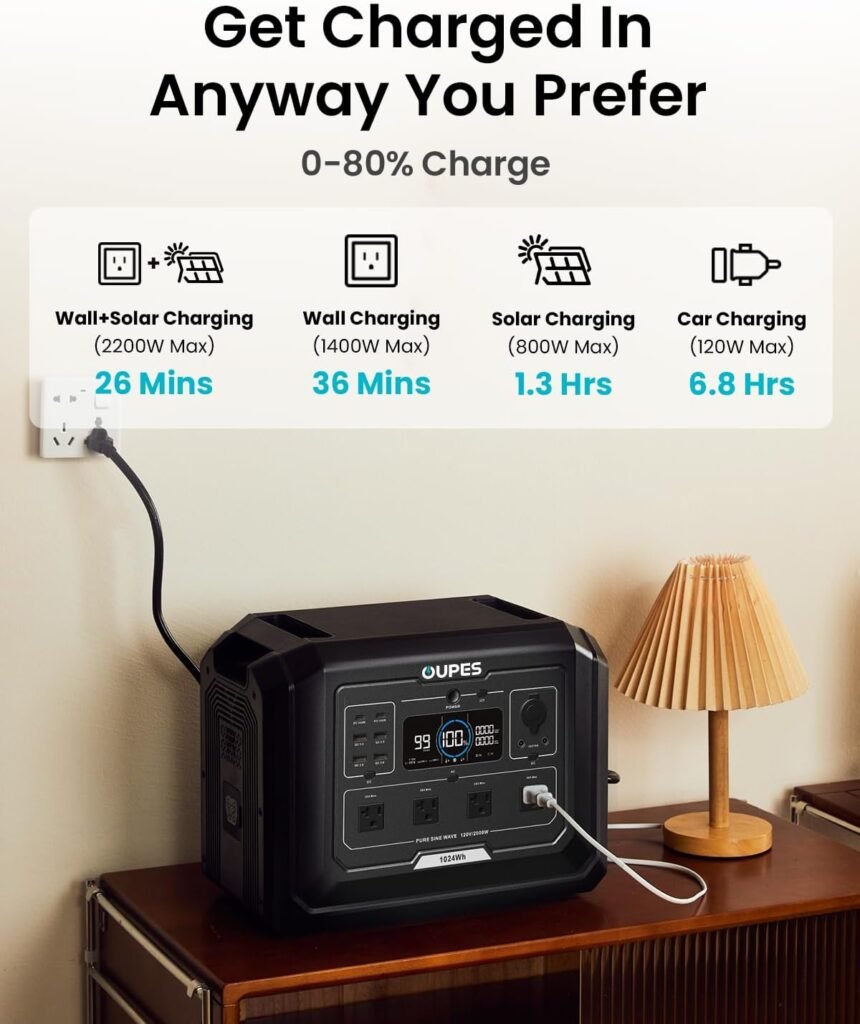
One helpful feature is the dual charging capability. The Mega 1 can accept power from solar and AC at the same time, up to a combined 2200W of input. This is particularly useful when we want to get back to full charge quickly.
We might use this in a few scenarios: during short windows of grid access, between storms, or when preparing for an incoming outage.
Why Dual Charging Matters in Real Life
If a storm is coming and we want to maximize our backup power, being able to plug into a wall outlet and also use the solar panel to charge at once means we reach full capacity faster than with either method alone.
This feature also gives us flexibility when living on the move. While parked at an RV site with shore power, we can charge via AC and still leave the panel outside to soak up sun. That reduces our dependence on a single charging method and improves total daily energy harvested.
Expandability: Growing from 1024Wh to 5120Wh
The base 1024Wh capacity will be enough for many of us, especially for short outages and weekend trips. But for longer off-grid stays or more demanding households, the ability to expand capacity can be a game changer.
The Mega 1 works with an additional B2 battery pack that we can add later, expanding total capacity up to 5120Wh. That makes this more of a modular power ecosystem instead of just a standalone unit.
Why Capacity Expansion Is Useful
Expanding capacity is useful if:
- We start small to keep costs manageable
- We eventually move to more remote living or full-time RV life
- We acquire more power-hungry devices later
By starting with the Mega 1 kit, we get a functioning system immediately. We then have the option to add the B2 battery when our budget or needs grow. That means our initial investment is protected because we are not stuck with a system that cannot grow.
UPS Function: 20ms Switchover for Home Backup
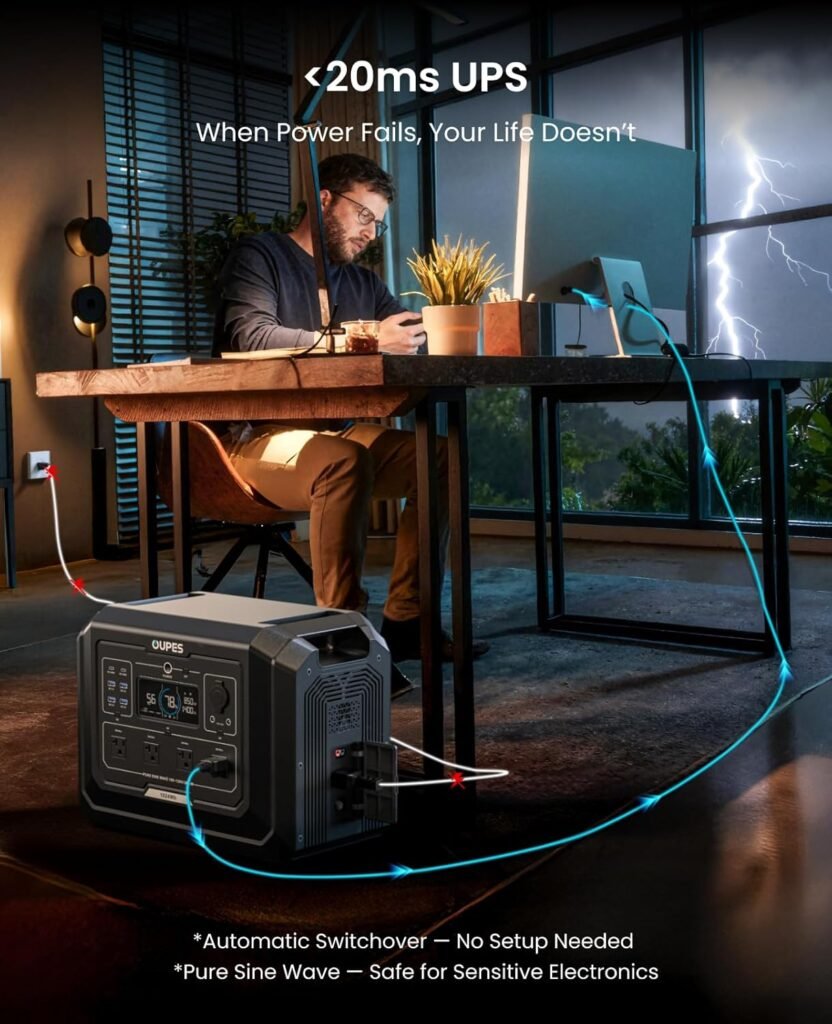
One of the standout capabilities of the OUPES Mega 1 is its UPS (Uninterruptible Power Supply) functionality. With a switchover time of around 20 milliseconds, it can keep certain sensitive devices running when the grid drops.
For many electronics, that 20ms gap is short enough for them to stay powered without shutting off, which is especially reassuring for devices like desktop computers, routers, CPAP machines, or network equipment.
Using the Mega 1 as a Home Backup UPS
To use it as a UPS, we would typically plug the Mega 1 into the wall and then plug our critical devices into the power station’s AC outlets. Under normal operation, the devices receive grid power via the station. If a power cut happens, the Mega 1 automatically switches to battery power.
This can be crucial during brief outages or grid flickers that would normally restart computers or disconnect us from the internet. For work-from-home situations or nighttime CPAP usage, that seamless transition can make a big difference.
Smart Monitoring: WiFi and Bluetooth App
The built-in connectivity is another modern touch we might appreciate. The OUPES app allows us to connect via WiFi or Bluetooth to track performance and status from our phone.
That means we do not always have to walk over to the station to check how much battery is left or how much solar we are getting.
What the App Helps Us Do
Through the app, we can typically:
- View current battery percentage and estimated time remaining
- See incoming power from solar and AC
- Monitor output load (how much power our devices are drawing)
- Adjust certain settings, depending on the model’s firmware
This kind of insight is useful when we are trying to manage limited energy carefully. If we see our solar input is lower than expected, we might adjust panel orientation or lighten our load temporarily.
Outdoor Optimization: For Camping, RVs, and Off-Grid Life
OUPES clearly positioned the Mega 1 for outdoor and mobile use as well as home backup. The waterproof panel and shockproof power station hint at camping, van life, and RV travel as core scenarios.
Even so, it works just as well in an apartment or house for emergencies, giving us more flexibility than a traditional stationary backup setup.
Road Trips and RV Use
On road trips and RV adventures, the Mega 1 can take over many roles:
- Running a 12V fridge or small AC fridge
- Charging laptops, cameras, drones, and phones
- Powering fans, lights, and small kitchen appliances
- Serving as backup for RV batteries or inverters
Because it is relatively compact and self-contained, it helps us reduce our reliance on campground hookups or noisy gasoline generators. With solar coming in during the day, we can keep our system running indefinitely if our usage and sunlight match up well.
Camping and Overlanding
For tent camping and overlanding, we get the benefit of reliable power for lights, devices, and medical equipment without the hassle of fuel or noise. The waterproof solar panel fits well into an outdoor setup where weather is unpredictable.
If we set this up as our basecamp power hub, everyone can plug in their devices, and we can even run a small electric cooler, electric stove in short bursts, or a portable projector for evening entertainment, as long as we manage consumption carefully.
Everyday Home Use and Power Outages
Although this kit is marketed strongly toward road trips and off-grid life, it also works as a very practical home backup solution. The combination of UPS functionality, high output wattage, and solar recharge makes it more versatile than a basic UPS box.
During a power outage, we can run essential loads: a fridge, some lights, our WiFi router, and charge devices. If the outage extends beyond a day, we can use solar to stretch our runtime further.
What We Might Power During an Outage
For a typical household, here is a realistic emergency load plan:
- Fridge: to protect food
- WiFi router and modem: to stay connected
- A few LED lights: to keep rooms lit
- Phones and laptops: for communication and work
- CPAP or medical devices if needed
By prioritizing these lower-wattage essentials over power-hungry devices like space heaters or full-size microwaves, we can significantly extend usable runtime from the 1024Wh battery, especially when paired with the 240W panel during the day.
Ease of Use and Setup
One of the appeals of this kind of all-in-one kit is that setup is straightforward. We are not dealing with fuel, carburetors, or complex wiring. We simply unpack, connect, charge, and start plugging in devices.
The interface is generally designed with a clear display and labeled ports, so even those of us who are not technical can operate it comfortably.
Getting Started
A typical first-time setup would look like this:
- Fully charge the station using AC power, solar, or both.
- Connect the 240W panel using the included cables, if charging by sun.
- Turn on the AC/DC outputs as needed.
- Plug in our devices and monitor the display or app.
The biggest learning curve is understanding how much power each of our devices uses and how that translates into runtime. Once we get a feel for that, managing the system becomes very intuitive.
Pros: What We Really Appreciate
Putting all the features together, we can summarize the main strengths of the OUPES 2000W Mega 1 kit in a way that aligns with how we would actually use it.
Strong Power and Good Capacity in One Package
The 2000W AC output combined with a 1024Wh LiFePO4 battery means we can run a wide variety of electronics and appliances with good runtime. This balance works well for mixed-use scenarios, from camping to home backup.
Solar-Ready with a Robust 240W Panel
Including a 240W monocrystalline panel in the kit adds serious value. We do not have to hunt around for compatibility or guess at panel sizing. We simply connect and start generating power.
Dual Charging with Fast Combined Input
The ability to charge via solar and AC at the same time (up to 2200W) allows fast turnarounds from low to full. That matters when we face limited windows of grid power or when we are preparing for storms.
UPS Function for Seamless Backup
The 20ms UPS switchover helps protect our important devices from unexpected shutdowns. For those of us who work from home or rely on medical equipment at night, this is a crucial peace-of-mind feature.
Long-Life LiFePO4 Battery
With 3500+ cycles, we are buying something that will likely remain useful for many years. This chemistry aligns better with frequent use and off-grid living than shorter-lived alternatives.
Expandable System
Being able to expand up to 5120Wh with a B2 battery means we are not locked into our initial capacity. Our system can grow with us as our budget and energy needs increase.
Cons and Limitations to Keep in Mind
No product is perfect, and it is useful to understand where the OUPES Mega 1 might not be ideal for everyone. Recognizing these points helps us decide if it truly matches our use case.
Base Capacity Might Be Limited for Heavy Off-Grid Use
While 1024Wh is quite capable for short-term use and moderate loads, those of us planning extended off-grid living with high consumption (electric cooking, large fridges, multiple high-draw devices) could find the base capacity limiting without the B2 expansion battery.
Weight and Size vs. Ultralight Needs
At around 27.8 pounds, this is portable, but not ultralight. For backpacking or minimalist travel where every pound matters, this would be too heavy. It is better suited to car camping, RVs, and home use where we have space and vehicle support.
Solar Dependence on Weather
As with any solar setup, performance hinges on sunlight. In cloudy or shaded environments, we will not reach the ideal 5–8 hour recharge times. This is not a fault of the product, but a realistic constraint to keep in mind.
Ideal Use Cases: Who Is This Kit Best For?
When we look at the feature set and tradeoffs, certain user profiles stand out as an especially strong match for the OUPES 2000W Mega 1 Solar Generator Kit.
Road Trippers and RV Travelers
If we drive long distances, stay at campsites, or live part-time in an RV or van, this kit gives us reliable, quiet, and flexible power. We can charge it from shore power, the sun, or both, and run our fridge, lights, and gadgets comfortably.
It becomes a central power hub we can move in and out of the vehicle easily, while the panel can be staged outside during stops.
Homeowners Wanting Quiet Backup Power
For those of us who do not want to deal with gasoline, noise, fumes, or complicated transfer switches, the Mega 1 serves as a user-friendly backup for short to medium outages. We can keep essentials running, recharge with solar, and monitor everything from our phone.
It also functions as a day-to-day UPS for routers, small servers, or home office equipment.
Campers and Off-Grid Weekend Adventurers
For weekend getaways and short off-grid stays, this kit offers far more comfort than living purely by flashlight and ice chest. We can bring small luxuries—electric coolers, lights, fans, projectors—while still respecting the limits of our stored energy.
Users Planning to Gradually Expand an Off-Grid System
If we envision a future where we want more off-grid capability but are not ready to commit to a large, permanent system yet, starting with the Mega 1 plus its solar panel makes sense. We can run it as a portable unit now and add B2 capacity later as our situation evolves.
Tips for Getting the Most from the Mega 1
To truly get our money’s worth and enjoy smooth operation, a few best practices go a long way. These are the habits that help us stretch both runtime and long-term battery health.
Manage Loads Intentionally
We get more effective runtime by:
- Prioritizing essential devices (fridge, CPAP, router, lights)
- Running high-power devices (microwaves, coffee makers) only in short bursts
- Avoiding plugging in large space heaters or electric water heaters, which can drain the battery quickly
By thinking in terms of wattage and duration, we turn the Mega 1 into a dependable partner instead of a black box we hope will not run out.
Optimize Solar Panel Placement
We improve our daily energy harvest by:
- Facing the panel toward the sun and adjusting angle as the sun moves
- Minimizing shading from trees, buildings, or even small branches
- Keeping the panel surface clean from dust and debris
A few small adjustments over the day can easily mean the difference between a full and a partial recharge.
Use the App for Planning
The app is more than a novelty. By checking incoming solar power, outgoing load, and remaining capacity, we can:
- Decide when to run certain heavy appliances
- Estimate if we will make it through the night without dropping too low
- See patterns in how our usage lines up with solar conditions
Over time, this data helps us refine our habits and maximize the value of our setup.
Safety and Peace of Mind
Safety is an important part of any power solution, especially one that sits inside our home or vehicle. The LiFePO4 chemistry in the Mega 1 is inherently more stable than many older types of lithium batteries, which adds to our peace of mind.
Additionally, by using a solar generator instead of a gas unit, we avoid carbon monoxide risk, fuel storage hazards, and generator noise. That makes it easier to keep the unit indoors or in a small RV without complicated ventilation setups.
UPS Protection for Sensitive Devices
Devices like computers, network switches, and medical equipment benefit particularly from the 20ms UPS feature. Instead of worrying about a sudden blackout corrupting data or waking us when a CPAP shuts off, we can let the system handle the transition.
For many of us, that combination of battery safety and UPS protection might be the main reason we choose a system like this.
Long-Term Value and Warranty
Value is not just about the purchase price but how long the product actually stays useful. The 3500+ cycle rating and 3-year warranty indicate that OUPES expects this station to last through frequent use.
If we divide the cost over several years of both everyday and emergency use, it becomes easier to view this as core infrastructure instead of just another gadget.
Resale and Future-Proofing
Because it is expandable up to 5120Wh and relies on modern LiFePO4 technology, the Mega 1 should hold relevance for a long time. Even if we eventually upgrade to a larger system, a unit like this often retains decent resale value or can be repurposed for a cabin, workshop, or loaner unit for friends and family.
Final Thoughts: Is the OUPES Mega 1 Kit Worth It for Us?
After looking through the features and practical use cases, we can summarize our view this way: the OUPES 2000W Mega 1 Solar Generator Kit is a well-balanced solution for those of us who want serious portable power with room to grow.
We get a 1024Wh LiFePO4 power station, a valuable 240W monocrystalline solar panel, a capable 2000W inverter, dual charging, UPS functionality, and app-based monitoring. It is not the lightest or the largest-capacity unit on the market, but it hits a sweet spot between performance, reliability, and versatility.
For road trips, RV living, camping, or as a home backup that can sit quietly until needed, this kit gives us a dependable, clean, and smart power option. If we see ourselves relying more and more on portable power in the years ahead, the ability to expand up to 5120Wh with an additional battery makes the Mega 1 an even more compelling long-term choice for our needs.
Disclosure: As an Amazon Associate, I earn from qualifying purchases.