Off the grid isn’t exactly a luxury; it’s a practical choice you can make with a portable solar power station. You’ll power essentials without noise or fumes, yet you’ll need to weigh capacity, durability, and sunlight when planning each trip. Curious how small tweaks in setup can stretch a day or a weekend, and what tradeoffs you’ll face in different terrains? A few clear steps ahead can guide you toward a reliable, lightweight setup.
Understanding Portable Power Stations: What They Are and How They Work
A portable power station is a rechargeable battery system that stores energy and provides off-grid power when you don’t have access to mains. You’ll see it act as a backup energy system or a high-capacity power bank with multiple output ports for different devices. It can power small household appliances, outdoor gear, and emergency needs, and it’s designed to be lightweight and compact for transport during camping or remote trips. Unlike typical power banks, it offers larger capacity, higher output, and AC power conversion. Lithium-ion batteries are common for high energy density and light weight, while LiFePO4 options offer longer cycle life and safety at some added weight. A BMS protects against overcharge, short circuits, and overheating, extending safe, dependable use. Capacity is measured in watt-hours (Wh). A portable power station is a rechargeable energy storage system designed to provide electricity when the grid is unavailable, with multiple output options and built-in safety features.
Essential Components for Off-Grid Power
Essential components for off-grid power start with understanding your solar panels and how you store power. You’ll pair efficient solar panels with a battery bank, then use a charge controller and an inverter to turn and manage that energy for everyday camping needs. We’ll also cover safety devices and supplementary power options to keep your system reliable during cloudy days or extended trips.
To ensure you can safely connect and regulate energy, include a proper grid-tied inverter or a suitable off-grid inverter depending on your setup grid-tied vs off-grid compatibility.
Solar Panels 101
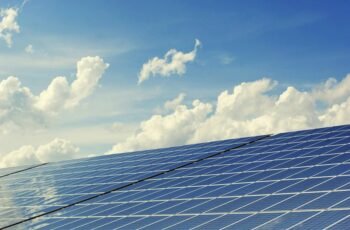
Solar panels are the heart of any off-grid power setup, converting sunlight directly into DC electricity that batteries store and later feed to your loads. Most common panels in off-grid systems are monocrystalline due to higher efficiency and durability. Standard sizes include 60-cell (about 300–375 watts) and 72-cell or 144-cell panels (about 375 watts or more). Panel size typically ranges around 68” x 40” for 60-cell and about 80” x 40” for larger cell counts. Photovoltaic cells convert sunlight directly into DC electricity via the photovoltaic effect. Panel wattage and number define the overall array size, critical for meeting power demands off-grid. The rest depends on compatible charge controllers, inverters, and mounting to optimize performance.
Battery and Storage Basics
Battery storage is the heart of any off-grid camping setup, and choosing the right chemistry, voltage, and capacity makes or breaks reliability. You’ll favor LiFePO4 or lithium-ion for efficiency, long life, and light weight, while lead-acid remains usable but demanding. NiCd is uncommon due to environmental concerns. Chemistry affects charging rates, depth of discharge, and system reliability.
Battery Voltage and Configuration matters: 12V eases vehicle integration, 24V suits larger rigs, and 48V boosts efficiency and lifecycle. Your voltage choice guides inverter, wiring, and design.
Table: Essential Specs
| Item | What to check |
|---|---|
| Chemistry | LiFePO4 preferred; consider Li-ion |
| Voltage | 12V, 24V, or 48V |
| Capacity | Ah needed for daily loads |
| Lifecycle | Target 2000–5000 cycles for Li-based |
Sizing Your System: Capacity, Inverters, and Battery Storage
To size your off-grid system, start by calculating your daily energy use in watt-hours and then determine the peak loads you’ll run at once, including any surge requirements for motors or compressors. Add up appliance wattages during peak periods to size the inverter, ensuring it covers continuous load plus start-up surges. Stagger loads when possible to reduce inverter capacity and cost. For battery storage, target 2–3 days of autonomy; use the formula (Daily energy use × Days of autonomy) ÷ DoD, with DoD reflecting usable capacity (50% for lead-acid). Lithium offers deeper DoD and better efficiency but costs more. Consider ambient temperature, especially the lowest expected, and plan oversizing only where extended cloudy spells occur. Choose an inverter with a pure sine wave and appropriate surge capability for motors.
Panels, Chargers, and Mounting: Getting the Most Sun
Choose the right panel type for your rig and mounting setup, then position and manage them to maximize sunlight exposure. You’ll optimize sun capture by matching panel type to space, weight, and durability needs. Monocrystalline give high efficiency on limited roof space; polycrystalline are budget-friendly with decent output; flexible or thin-film suit curved or portable surfaces, though they trade some efficiency. Fixed roof panels stay durable but limit repositioning, while folding or portable panels let you chase the sun and reduce shade risks. Use an adjustable tilt to follow the sun’s elevation, and orient toward true south (northern hemisphere) or true north (southern hemisphere). Ascertain panels aren’t shaded or debris-covered, and orient for early daily charge.
- Panel type selection
- Adjustable tilts and orientation
- Track sun and avoid shade
- Portable versus fixed balance
- Cable management and weatherproofing
Durability and Outdoor Readiness: Weather, Ruggedness, and Safety
Outdoor durability matters more when you’re camping. You’ll want weather-resilient power stations that shrug off rain, humidity, dust, and temperature swings. Look for an IP65 rating or higher to minimize water and dust ingress, and expect rugged casings built from tough plastics or aluminum. Weatherproof connectors and protective port covers keep moisture out during setup and pack-out. Proper ventilation is important too, preventing overheating in hot sun and boosting safety and longevity.
Durable builds use impact-resistant ABS or aluminum, with reinforced corners and shock-absorbing features to survive bumps. Rubberized edges help with grip and ground contact, while UV-resistant, abrasion-proof cables ensure lasting connections. Safety is crucial: BMS protection, surge breakers, low-noise, and UL/CE compliance give you confidence in rugged, outdoor use. Regular cleaning and dry storage extend life and reliability.
Top Brands and Models for Camping Adventures
You’ll want a quick read on the top camping brands and standout models to guide your gear pick. From EcoFlow and Jackery to Anker, Bluetti, and OUPES, these options cover a range of capacities, weights, and price points for different trips. Let’s highlight which models fit lightweight backpacking, weekend car camps, or extended off-grid stays.
Leading Camping Brands
Camping success starts with the brands you trust, and today’s leading names deliver tents that pair livability with rugged performance. You’ll find top options from REI Co-op, Kelty, The North Face, Mountain Hardwear, and NEMO Equipment, each offering models tuned for family and group camping. The North Face Wawona 6 sets the standard with large vestibules and ample floor space, while REI Co-op Wonderland 6 optimizes headroom and interior volume. Kelty Wireless 6 delivers a roomy footprint plus dual vestibules, and Eureka Copper Canyon LX 4 provides budget-friendly comfort with tall peak height. Mountain Hardwear’s Mineral King 3 focuses on versatile, hybrid design, and NEMO Aurora Highrise 4P emphasizes livability for small groups. Choose reliability, durability, and easy setup for stress-free adventures.
- The North Face Wawona 6: large vestibule, 86.11 sq ft, freestanding
- REI Co-op Wonderland 6: 83.3 sq ft, two doors, dome design
- Kelty Wireless 6: dual vestibules, standing room, gear storage
- Eureka Copper Canyon LX 4: 64 sq ft, tall 84″ peak
- Coleman Sundome 6P: simple setup, budget-friendly, 63 sq ft
Model Spotlight Highlights
From trusted brands to proven models, you’ll find a range of power stations that keep camping adventures going off-grid. EcoFlow lines deliver high wattage (up to 2400W) with fast recharge under 2 hours, plus lightweight designs for easy transport. Delta 2 pairs with a 220W panel, and RIVER 2 Max fits 160W for camping and backpacking. Jackery offers Explorer 1000 V2 with 1070Wh LiFePO4, 1500W output, and quick solar recharge, plus scalable Explorer 240 and 2000 V2 for varying trips. Aferiy showcases P210 at 2048Wh and 2400W with six outlets, and P310 at 3840Wh with 3600W for tools, both charging fast and managed by apps. Goal Zero Yeti 1500X balances reliability with solar input. Expect LiFePO4 longevity, UPS backups, multiple outputs, and portable, rugged builds.
Practical Setup and Daily Usage Tips
When setting up a solar power system for camping, start by choosing a sunny, shadow-free spot for your panels and orient them south-facing (in the northern hemisphere) with an angle that matches your latitude.
- Position panels to maximize sun exposure, adjusting as needed to track the sun’s movement
- Keep panels free from shade by campers, trees, and gear throughout the day
- Clean surfaces regularly to maintain efficiency in dry or windy environments
- Charge batteries fully before use to secure maximum stored power for night and low-sun periods
- Periodically inspect connections and charge controllers to prevent inefficiencies or damage
Planning for Different Trip Scenarios: Short Trips to Extended Explorations
Planning for different trip scenarios means sizing your solar setup to match how long you’ll be out and how your energy needs vary. You’ll assess devices, wattage, and use hours to size stations. Short trips (1–3 days) lean smaller (roughly 500–1200 Wh); extended explorations demand larger banks for cloudy days and night use. Consider peak demands from fridges, pumps, and comms to avoid undersized inverters, and add a 20–30% buffer for surprises.
| Scenario | KeySizing Focus |
|---|---|
| Short trips | Lightweight panels, 500–1200 Wh, quick charging |
| Rapid energy use | MPPT, portable gens as backup |
| Extended trips | 200 W+ panels, bigger battery banks |
| Variable sun | Higher storage, diverse outputs |
Adjust tilt, atmosphere, and seasonal daylight to optimize performance.
Frequently Asked Questions
How Long Can a 500WH Reserve Power a Typical Device Mix?
You can run a typical mix for about 4–12 hours, depending on load. If you average 50–100W, expect roughly 5–10 hours; lighter loads stretch toward 12, heavier toward around 4 hours. Plan reserves for surges and recharges.
What Is the Real-World Panel-To-Battery Charging Efficiency?
Like a compass, your real-world panel-to-battery charging efficiency runs about 70-85%. You’ll face panel, wiring, and controller losses plus battery chemistry effects, so expect roughly three-quarters of solar energy stored under typical off-grid camping conditions.
How Do You Estimate Surge Power for Startup-Heavy Devices?
You estimate surge by summing running watts, then add the highest startup surge (often 3–7x). Check each device’s LRA or surge wattage, then add 10–25% headroom and consider staggering startups for balance.
What Maintenance Keeps Portable Power Stations Reliable Off-Grid?
Maintenance keeps portable power stations reliable off-grid: clean panels, inspect for damage, keep batteries within ideal charge, store cool and dry, protect cables, monitor firmware, and perform regular cycles to prevent deterioration and guarantee real-time health awareness.
Which Safety Features Matter Most in Rugged Camping Use?
Rugged camping safety cares most about rugged casing, built-in protection, and clear indicators. You want overcharge, over-discharge, and short-circuit protection, surge control, temperature management, multiple outputs, and simple status LEDs to stay informed and avoid hazards.
Conclusion
The sun is your trusted compass, guiding you toward quiet efficiency and steady energy. As you wander, think of Prometheus handing fire with care: you gain power, then steward it—protecting battery health, minimizing waste, and respecting nature’s pace. Your off-grid campsite becomes a balanced stage where solar panels, sturdy stores, and smart charging harmonize. With thoughtful setup and mindful usage, you’ll keep the lights on and the adventures bright, long after the stars appear.