Have we ever wished we could run our home essentials, RV, or campsite off a quiet, clean power source without worrying about gas, fumes, or constant refueling?

What Is the OUPES Mega 3 3600W Portable Power Station?
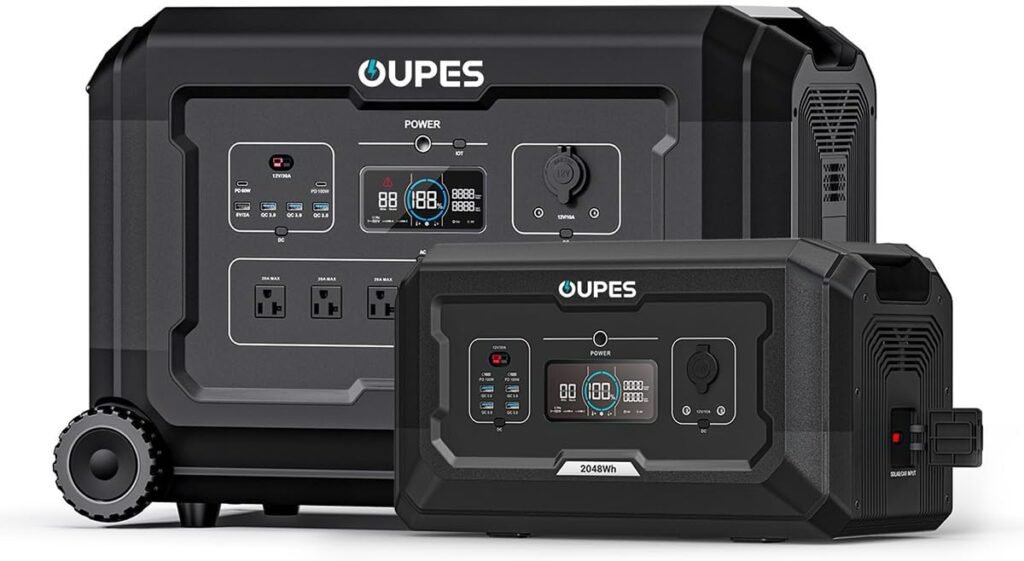
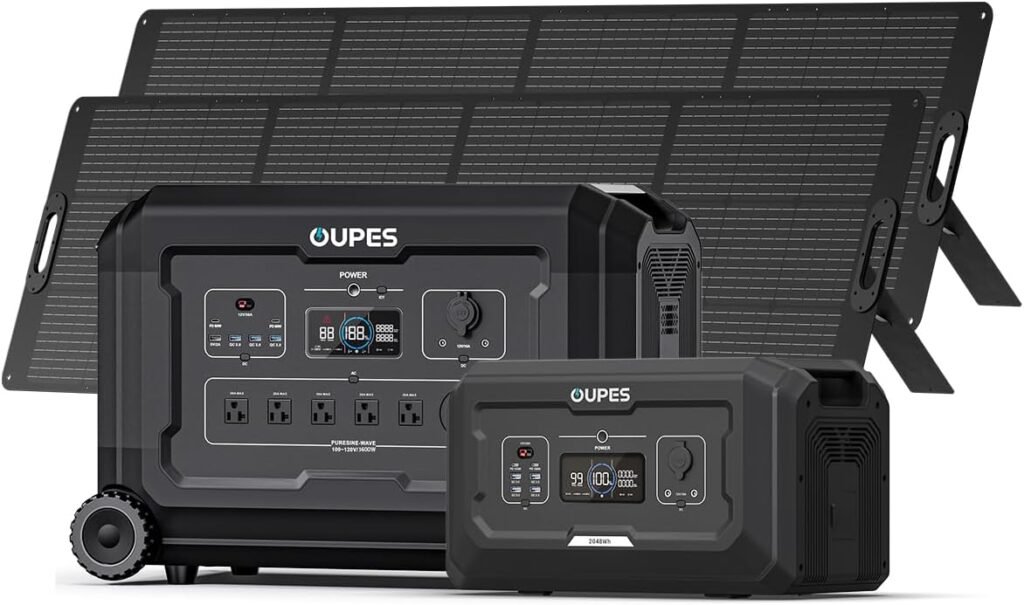
The OUPES Mega 3 3600W Portable Power Station with 2048Wh Extra B2 Battery, 5120Wh Lifepo4 Power Station is a high-capacity, solar-compatible, home and RV backup system. It combines serious power output with expandability, smart app control, and fast charging to keep our lives running smoothly during outages, trips, and everyday use.
We can think of it as a compact, all‑electric alternative to a traditional gas generator—only quieter, safer indoors, and far more versatile.
Key Specifications at a Glance
Sometimes we just want to see the main stats clearly laid out. Here is a quick overview of what this unit offers and what that means for us in practical terms.
| Feature | Specification / Detail | What It Means for Us |
|---|---|---|
| Continuous AC Output | 3600W | Can run high‑demand appliances and multiple devices at once |
| Battery Chemistry | LiFePO₄ (Lithium Iron Phosphate) | Longer lifespan, better safety, and more stable performance |
| Total Capacity (Base + B2 Battery) | 5120Wh (main unit + 2048Wh extra B2 battery) | Enough for extended backup or multi‑day off‑grid use |
| Expandability | Extra B2 battery included; supports more capacity (per series specs) | We can grow our system over time as our needs increase |
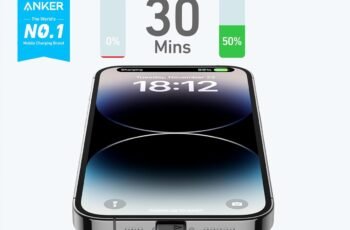
| Fast AC Charging | Up to 1800W from wall outlet | Around 1.8 hours to fully recharge from AC power |
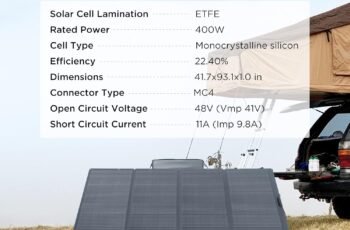
| Fast Solar Charging | Up to 2100W solar input, ~2.5 hours (ideal conditions) | Rapid off‑grid recharging with efficient solar panels |
| Solar Conversion Efficiency | Up to 23% | Better use of available sunlight, even on less‑than‑perfect days |
| Connectivity | Wi‑Fi / Bluetooth + OUPES app | Remote monitoring and control from our phones |
| Primary Use Cases | Home backup, RV, camping, outdoor events, mobile workstations | Versatile use across daily life and emergencies |
| Noise Level | No engine—nearly silent, just fan noise when under load | Comfortable indoor and nighttime use |
Design, Build Quality, and Portability
The overall design is geared toward portability without sacrificing power. We get a robust, compact footprint that feels more like an advanced appliance than a piece of industrial gear.
We can carry it in and out of the house, load it into an RV, or set it up in a garage or basement as a semi‑permanent backup system. The added B2 battery pairs neatly with the main unit, giving us a tidy, modular power bank rather than a mess of cables and boxes.
Construction and Materials
The casing is solid and purpose‑built, made to handle being moved around and used in different environments. It has a rugged, modern look that suggests real-world use, not just “pretty for the showroom.”
We notice that the ports, vents, and edges are well laid out to prevent accidental damage. It feels like a serious piece of equipment that can withstand travel, camping, and frequent handling.
Portability for Home, RV, and Camping
While 3600W of output and 5120Wh of capacity naturally means some weight, the form factor is carefully optimized with handles and a stable base. It is not a tiny power bank we throw in a backpack, but it is realistically portable for adults to move where needed.
For RV use, we can keep it just inside or close to our rig, connected to shore power input or key appliances. For camping, we place it near our cooking setup or tent and run our lights, fridge, and gadgets quietly through the evening and night.
Battery Technology: Why LiFePO₄ Matters
The Mega 3 uses LiFePO₄ (Lithium Iron Phosphate) cells, which are becoming the gold standard in serious home and portable power systems.
We gain several important advantages with this chemistry, especially if we plan to use the unit regularly or keep it on standby for years.
Longevity and Cycle Life
LiFePO₄ batteries are known for their long cycle life—typically several thousand charge/discharge cycles before capacity noticeably drops. While specifics can vary, this means:
- We can use the station frequently without “burning out” the battery.
- We get a long service life for our investment, suitable for everyday and emergency use.
- Capacity loss over time is slower compared to older lithium technologies.
For home backup, this reliability is especially important. We never know when the next outage will come, and we want our system to be ready every time.
Safety and Stability
LiFePO₄ chemistry is more thermally stable than many lithium variations. In practice, that translates to:
- Lower risk of overheating issues when used within recommended limits.
- Safer indoor operation compared to fuel-based generators.
- Peace of mind when using it near family, pets, and inside RVs.
Combined with an internal Battery Management System (BMS), we get protection against overcharging, over‑discharging, and short circuits.
Power Output: What Can 3600W Actually Run?
The 3600W continuous output is one of the most compelling aspects of this system. It moves us beyond “just phone charging and a small fridge” into the realm of full‑sized appliances and multiple devices at once.
We can use it for daily appliances, tools, and electronics that typically require house wiring or larger generators.
Running Household Appliances
With 3600W on tap, we can power many standard household appliances. Depending on what we plug in, we might run several at once:
- Refrigerator or freezer to keep food fresh during outages.
- Microwave, coffee machine, or electric kettle when we need hot meals and drinks.
- Television, Wi‑Fi router, and laptops for staying informed and productive.
- Hairdryer or small space heater, as long as we manage total wattage.
In many outage scenarios, we can maintain a sense of normal life by choosing a smart combination of loads instead of sitting in the dark.
Support for RVs and Larger Loads
For RV owners, 3600W output with a robust inverter is a big advantage. We can:
- Plug into the RV’s shore power port to energize its internal circuits.
- Run RV air conditioning (depending on the AC unit’s wattage and surge requirements).
- Power RV fridges, water pumps, lights, and electronics simultaneously.
Because we can directly power the RV electrical system, we effectively turn this power station into a quiet, electric shore power source when boondocking or camping off the grid.
Capacity and Real‑World Runtime
With 5120Wh of total capacity (including the extra 2048Wh B2 battery), we are no longer just topping off devices—we can sustain real loads for meaningful periods of time.
To grasp what this means, it helps to think in practical run‑time estimates under typical conditions.
Sample Runtime Estimates
Actual runtimes will vary with exact wattage and usage, but we can use approximate numbers to guide expectations.
| Device / Load | Approximate Power Draw | Estimated Runtime on 5120Wh* |
|---|---|---|
| Full‑size energy‑efficient fridge | 100W average | ~40–45 hours |
| CPAP machine (with humidifier off) | 40W | ~100–110 hours |
| LED lighting for a small home area | 40–60W | ~70–110 hours |
| 55″ LED TV + streaming device | 120W | ~35–40 hours |
| Laptop (in use) | 60W | ~70–80 hours |
| Portable AC unit | 800–1000W | ~4.5–6 hours |
| RV air conditioner (typical mid-size) | 1000–1500W | ~3.5–5 hours |
| Multi-device home essentials combo** | 300–500W | ~8–14 hours |
* Real runtimes depend on efficiency, inverter losses, and duty cycles.
** Example combo: fridge cycling, internet router, some lights, and device charging.
In many outage cases, if we are careful with what we run, this station can bridge us through a night or even a full day without grid power.
Charging Options and Speeds
One of the standout strengths of the OUPES Mega 3 is how quickly it can be recharged from various sources. Fast turnaround becomes crucial when we face repeated outages or need to top off between cloudy days while using solar.
Fast AC Charging from Wall Outlets
Using a standard wall outlet, the unit can charge at up to 1800W, which is quite fast for its size and capacity.
- Time to full charge: Around 1.8 hours from empty to full, under ideal conditions.
- This speed helps us prepare quickly if a storm is forecast or if we have a short window of grid power available.
Instead of needing an entire day to refill, we can be back near 100% in under two hours, which dramatically boosts our resilience.
High‑Efficiency Solar Charging
With solar charging up to 2100W and up to 23% solar conversion efficiency, this station is ready for serious off‑grid setups.
- Full charge time: Approximately 2.5 hours under strong, full sun with appropriately sized solar panels.
- High conversion efficiency means we make better use of available sunlight, especially valuable in shoulder seasons or partially cloudy conditions.
We can pair it with multiple solar panels and build a compact solar generator system that keeps our home essentials or RV running day after day.
Vehicle and Other Charging Methods
The package includes car to Anderson and MC4 to Anderson cables, enabling:
- Car charging when we are on the road or in a pinch.
- Flexible solar panel setups using industry‑standard MC4 connectors.
Vehicle charging is slower but useful as a backup or for topping off during long drives.
Smart App Control and Monitoring
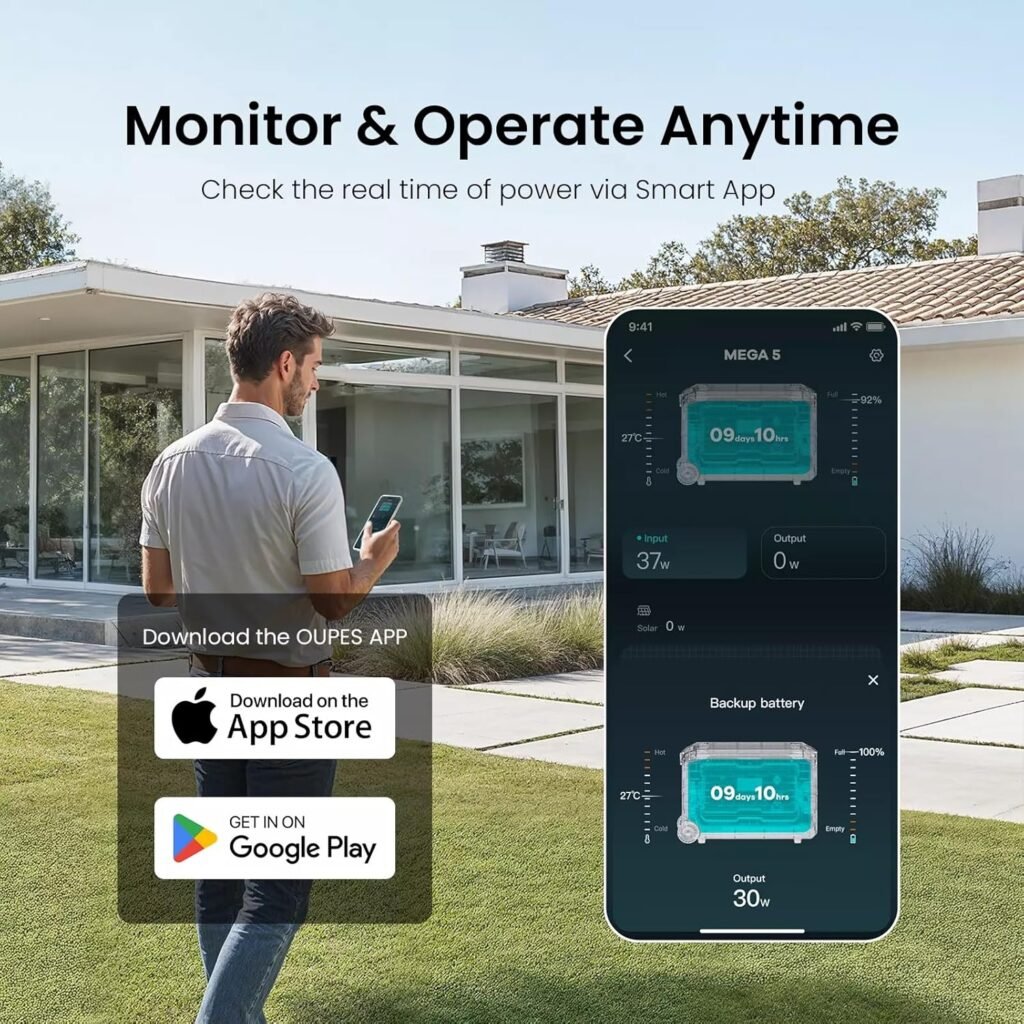
Being able to see what is happening in real time makes these stations much easier to manage. The Mega 3 offers a companion app for Wi‑Fi and Bluetooth control.
We can use our phone to keep an eye on things wherever we are in the house or around the campsite.
Real‑Time Data and Status
Through the OUPES app, we can monitor:
- Remaining battery percentage
- Estimated runtime based on current load
- Input wattage (from AC, solar, or car)
- Output wattage to see how much power our devices are drawing
This feedback allows us to adjust usage patterns, prioritize critical appliances, and predict how long we can keep running before we need to recharge.
Customizable Settings
In addition to monitoring, we can tweak various settings depending on how we want to use the unit:
- Enable or disable specific outputs.
- Adjust eco or standby modes, if available.
- Set up preferences for notifications and operating behaviors.
Rather than being just a static battery, the station becomes a smart power hub we can tune to our needs.
Practical Use Cases
To appreciate the value of a system like this, it helps to picture actual scenarios. The Mega 3 is not just for “doomsday prepping”; it can fit naturally into everyday life as well as emergencies.
Home Backup During Blackouts
When the grid goes down, we want more than flashlights and phone battery banks. This unit can support:
- Kitchen essentials: fridge, microwave, coffee maker, electric kettle (not all at once, but in rotation).
- Communication and entertainment: TV, router, phones, laptops.
- Medical or comfort devices: CPAP machines, small fans, and certain low-power heaters.
If we prioritize carefully—keeping continuous loads like fridges, routers, and a few lights on, and intermittently running higher loads like microwaves—we can get through long outages with comfort and safety.
Off‑Grid RV Power and Road Trips
For RV owners, this product effectively becomes a multi‑purpose power system:
- Acts as a shore power substitute when off‑grid.
- Keeps AC, lights, water pumps, and outlets operational.
- Allows more flexibility in campsite choice, since we are less reliant on hookups.
We can also charge it from solar panels mounted on the RV roof or set up on the ground, creating a sustainable loop of power generation and usage.
Camping, Tailgating, and Outdoor Events
For camping or outdoor gatherings, the Mega 3 lets us move far beyond a single small power bank. We can:
- Run camp fridges, induction cooktops, or electric grills.
- Power projectors, portable speakers, and lighting for events.
- Charge all our phones, tablets, and cameras without noise or fumes.
We get the benefit of grid‑like power in the middle of nature, without spoiling the quiet with an engine.
Mobile Workstations and Tools
For those of us who work remotely or use tools on job sites:
- We can run laptops, monitors, printers, and networking gear anywhere.
- Certain power tools, such as drills or saws (within wattage limits), can be supported.
- Photographers, videographers, and content creators can power lights, cameras, and charging bays on location.
This flexibility opens up new possibilities for how and where we work or create.

Package Contents and Connections
The OUPES Mega 3 bundle is generous in terms of included accessories, saving us from hunting down the right cables later.
What We Get in the Box
According to the product details, the package includes:
- 1 × OUPES Mega 3 3600W power station
- 1 × B2 Battery (2048Wh) for expanded capacity
- 1 × AC charging cable for wall outlets
- 1 × Anderson to Anderson cable
- 1 × 7909 to Anderson charging cable
- 1 × Car to Anderson charging cable
- 1 × MC4 to Anderson charging cable for solar panels
- 1 × User manual
With this set, we can start using AC, solar, and car charging methods right away, without needing extra adapters.
Ports and Connectivity Overview
While the exact port layout can vary slightly between models, we can expect a mix of:
- Multiple AC outlets for standard household plugs.
- DC outputs for devices like portable fridges or certain lighting systems.
- Car socket (12V) for automotive accessories.
- USB‑A and USB‑C ports for phones, tablets, small electronics.
- Anderson and MC4 inputs for solar and car charging.
This flexibility allows us to connect most common devices directly, without additional converters.
Strengths and Advantages
To make sense of what we get with this power station, it helps to highlight the major strengths that set it apart in its category.
High Power + High Capacity Combination
Many portable power stations force us to choose between lots of wattage or lots of stored energy. The Mega 3 gives us both:
- 3600W output for high‑demand appliances.
- 5120Wh capacity for long runtimes and multi‑day reliability.
This makes it suitable not just for “weekend camping,” but serious, extended use and robust home backup.
Quiet, Clean Alternative to Gas Generators
The product description emphasizes saying goodbye to “noisy, fume‑filled gas generators,” and this is a real benefit:
- No exhaust fumes means safer indoor use (within manufacturer guidelines) and in RVs.
- No pull‑starting engines, oil changes, or fuel stabilizer.
- Much quieter operation—only fan noise, which is far less intrusive.
For neighborhoods with noise restrictions or dense campgrounds, this is a game‑changer.
Fast Recharging and Solar Readiness
With 0.8–1.8 hours AC recharge and 2.5 hours solar recharge (in ideal setups), the unit recovers quickly. This is especially important when:
- We experience multiple outages close together and must be ready again quickly.
- We depend on solar and need the battery to refill fully during the available sunlight window.
High solar efficiency also means fewer panels can do more work, making the whole setup more compact and manageable.
App Integration and Ease of Use
The OUPES app, combined with an intuitive interface on the station itself, lowers the learning curve. We are less likely to run into surprises with power usage because:
- We can see exactly how quickly we are drawing down the battery.
- We can react in real time when we see a large load or unexpected draw.
- We can control some functions remotely, which is especially handy at night or when the station is tucked away.
Considerations and Limitations
No product is perfect for every situation, and it helps to be realistic about where this unit fits best.
Weight and Mobility
As a high‑capacity, high‑wattage system, the Mega 3 is naturally heavier than small “travel” power banks.
- It is portable for adults but not something we casually toss in a small backpack.
- Ideal for home, RV, vehicle‑based, and base‑camp setups rather than long-distance on‑foot travel.
We should plan its placement and movement with this in mind, perhaps dedicating spaces in our home and RV where it can live most of the time.
Upfront Investment
Compared to small, entry-level power stations, a 5120Wh LiFePO₄ system with a 3600W inverter and fast charging will cost more. However:
- We are paying for higher power, longer lifespan, and greater versatility.
- Over many years of use—especially for frequent RVers or those in outage-prone areas—the value often justifies the cost.
We should view it as a long-term piece of infrastructure, much like an appliance or solar component, rather than a disposable gadget.
Who Is This Power Station Best For?
Not everyone needs this level of capability, but for certain households and lifestyles, the OUPES Mega 3 fits exceptionally well.
Households Facing Frequent Blackouts
If our area has unstable grid power due to storms, aging infrastructure, fires, or other issues, having a 5120Wh backup system with 3600W output is a strong safety and comfort measure.
We can:
- Keep food cold, lights on, and communication tools powered.
- Run essential medical or comfort devices.
- Avoid the noise, fumes, and hassle of gasoline generators.
This is particularly attractive in apartments or dense neighborhoods where running a gas generator is not feasible.
RV Owners and Long‑Term Travelers
For full‑time RVers or frequent campers, this station becomes almost an essential tool:
- It turns boondocking into a much more comfortable experience.
- It reduces reliance on campground hookups and crowded parks.
- It integrates well with solar installations on an RV roof.
We gain true flexibility in travel plans without sacrificing comfort or power for our appliances and electronics.
Outdoor Enthusiasts and Event Organizers
If we regularly organize outdoor gatherings, projects, or events, this system can serve as a portable grid:
- Powering audio equipment, lighting, and cooking gear.
- Providing charging stations for multiple people at once.
- Maintaining a professional and safe environment without tripping over extension cords from distant outlets.
It also shines for remote worksites, off‑grid cabins, and creative projects that require reliable, substantial power.
Everyday Tips for Getting the Most from the Mega 3
To actually reap the benefits, a few simple habits can help us use the station more effectively and extend its lifespan.
Prioritize Loads During Outages
When running on battery, think in terms of critical, important, and nice‑to‑have:
- Critical: fridge/freezer, medical devices, communication gear.
- Important: some lighting, internet, phones, laptops.
- Nice‑to‑have: entertainment systems, high‑draw kitchen gadgets, extra comfort devices.
By giving priority to critical loads and cycling the rest, we can stretch our runtime significantly.
Use Solar Whenever Possible
If we own or plan to add solar panels:
- Set them up any time the station is in use off‑grid.
- Aim panels carefully and adjust tilt through the day if we can.
- Keep panel surfaces clean to maximize efficiency.
Solar keeps the battery topped up and reduces reliance on the grid or car charging.
Store and Maintain Wisely
For long-term performance:
- Avoid storing the unit completely empty for long periods.
- Keep it in a cool, dry place, away from extreme heat or cold.
- Give it a periodic charge and test run, even if we have not used it for months, so we know it is ready.
Following manufacturer maintenance guidelines will help us keep the system healthy for many years.
Comparison Perspective: Where It Fits in the Market
Without naming specific competitors, it is fair to say the OUPES Mega 3 sits in the upper mid to high end of portable power stations:
- Its 3600W inverter and 5120Wh capacity (with included extra battery) place it above many compact units aimed at short trips or light usage.
- The LiFePO₄ chemistry, fast AC and solar charging, and smart app control align it with premium, modern offerings.
We are not looking at an entry-level device but a serious backup and off‑grid solution that can step into roles previously filled only by full‑sized gas generators or static home battery systems.
Pros and Cons Summary
To recap our impressions more clearly, it helps to list the strengths and trade‑offs in one place.
Pros
- Powerful 3600W output capable of running large appliances and multiple devices.
- High total capacity (5120Wh) with included B2 extra battery.
- LiFePO₄ battery chemistry for long life, safety, and stable performance.
- Extremely fast AC charging (around 1.8 hours to full in ideal conditions).
- Strong solar charging capability up to 2100W with up to 23% conversion efficiency.
- Smart app control over Wi‑Fi and Bluetooth for status monitoring and settings.
- Versatile use cases: home backup, RV shore power alternative, camping, work sites, and events.
- Quiet, emission‑free operation compared to traditional gas generators.
- Rich accessory bundle with multiple charging cables included.
Cons
- Heavier and bulkier than small portable units (expected for its power class).
- Higher upfront cost than low‑capacity models, though justified by features and longevity.
- Requires some planning to use most efficiently during extended off‑grid periods.
Final Thoughts: Is the OUPES Mega 3 Right for Us?
If we are looking for a serious, future‑ready solution for home backup, RV living, or deep off‑grid adventures, the OUPES Mega 3 3600W Portable Power Station with 2048Wh Extra B2 Battery, 5120Wh LiFePO₄ Power Station stands out as a compelling choice.
We get:
- A powerful 3600W inverter to handle real household and RV loads.
- A robust 5120Wh capacity for long runtimes and extended blackouts.
- Modern LiFePO₄ battery technology for safety and longevity.
- Rapid recharging from wall outlets and solar, keeping us prepared even with short windows of power or sunlight.
- Smart app integration that gives us full visibility and control.
For households in outage‑prone regions, RV owners aiming for quiet off‑grid independence, and anyone who wants a clean alternative to gas generators, this unit offers a thoughtful blend of strength, usability, and efficiency. If our goal is to keep life running smoothly—whether at home, on the road, or in the wild—this power station has the capabilities to support us confidently in the years ahead.
Disclosure: As an Amazon Associate, I earn from qualifying purchases.