Have we ever wished our home backup power felt as easy and flexible as using a big, smart battery instead of a noisy generator?

What Is the OUPES Guardian 6000 Dual Battery System?
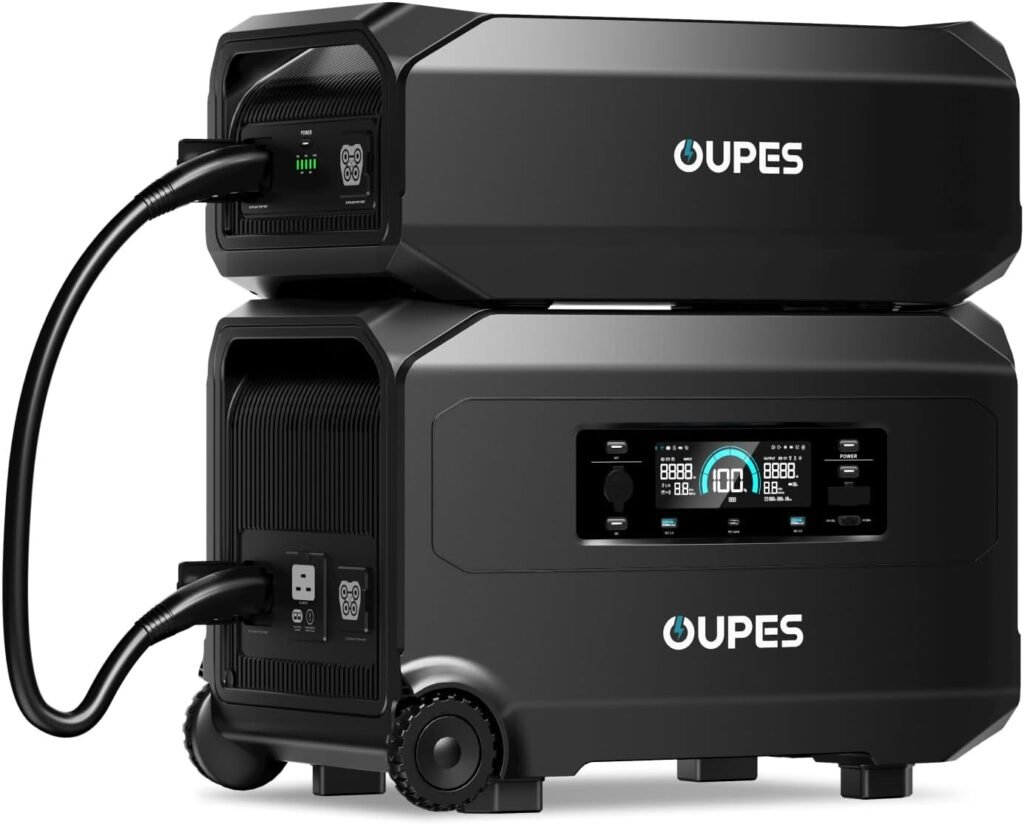
When we look at the OUPES Guardian 6000 Dual Battery System: 9216Wh Power Station with 6000W Output, 120V/240V Dual Voltage, Expandable Home Backup with Transfer Switch Ready & App Control, we are essentially talking about a powerful, all‑in‑one home backup solution. It combines a main power station and an extra battery to create a huge 9216Wh energy bank.
Instead of gas, fumes, and constant maintenance, we get a quiet, electric backup system that can run much of our home during an outage. It’s designed so that we can plug it into a transfer switch or inlet box and have reliable power with minimal fuss.
Key Specifications at a Glance
Before we go through how it performs in real life, it helps to see the main specs in one place. This system is all about capacity, output flexibility, and fast charging.
| Feature | Specification / Description |
|---|---|
| Total Capacity | 9216Wh (Guardian 6000: 4608Wh + G5 Extra Battery: 4608Wh) |
| Continuous Output Power | 6000W |
| Peak / Surge Power | Typically higher than 6000W (for starting appliances; exact surge may vary by firmware) |
| AC Output Voltage | 120V & 240V Dual Voltage |
| 240V Outlets | NEMA 14-50R and L14-30E for 240V appliances and transfer switches |
| AC Recharging Input | Up to 3600W using standard 240V power |
| Recharge Speed | Up to 80% in about 1 hour (with strong AC input and/or AC + solar combination) |
| Battery Type | LiFePO₄ (lithium iron phosphate) technology (long cycle life, stable chemistry) |
| UPS Function | <20ms transfer time (uninterruptible power supply capability)< />d> |
| Expansion | Plug-and-play extra battery integration (auto-recognition, no manual setup) |
| Ports (Overview) | 5 AC outlets, USB-C PD (up to 140W), USB-A, 12V car port, XT90 connector |
| Home Integration | Transfer switch ready; connects to inlet box without complex rewiring |
| Warranty | 5 years on power station and extra battery |
| App Control | Yes, via dedicated mobile app (remote monitoring and control) |
These specs position the Guardian 6000 Dual Battery System as a serious home backup contender, not just a camping power station. We are dealing with enough energy and output to run critical loads for extended periods.
Design and Build Quality
Overall Look and Footprint
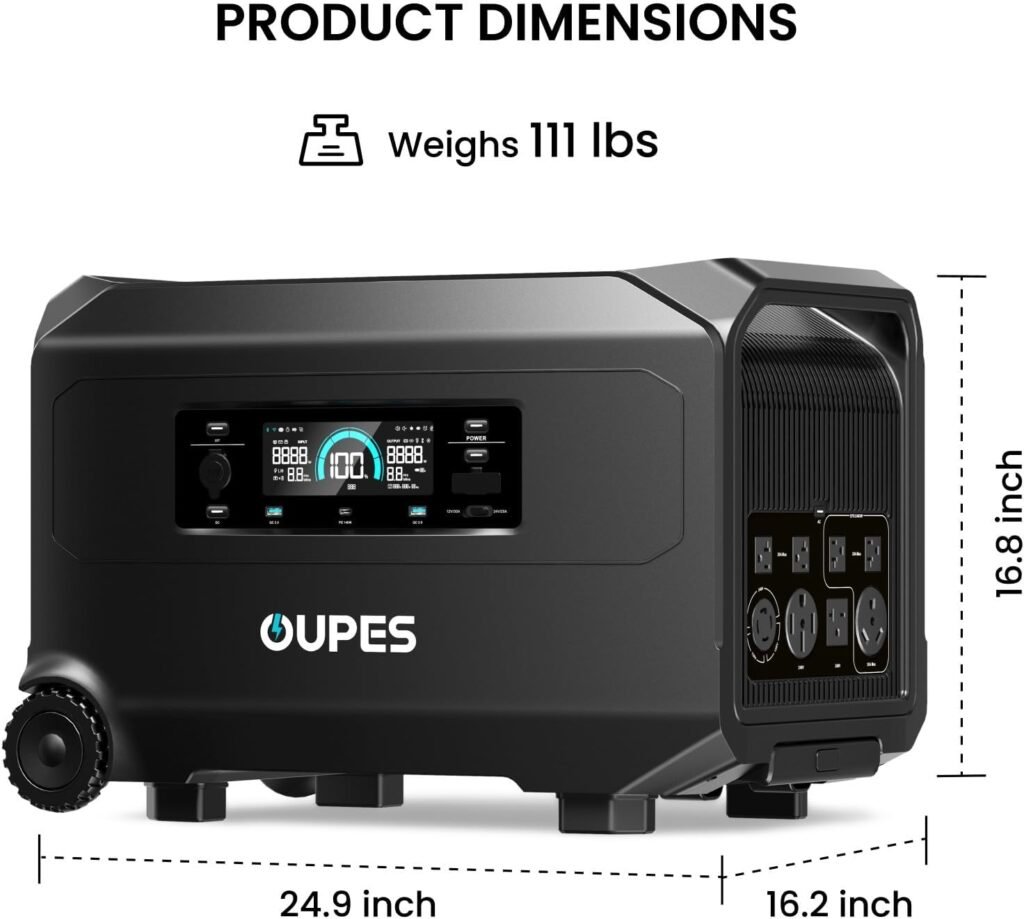
When we first picture this system, we shouldn’t think of a tiny, portable power bank. The Guardian 6000 and its G5 Extra Battery are substantial units designed primarily for home use and semi‑stationary setups.
The design focuses on sturdy construction, intuitive controls, and clear displays. Everything feels built to stay in one place for a long time and handle repeated use, rather than to be carried every day. We can move it if we have to, but we probably will treat it as a semi-permanent backup system in a garage, basement, or utility area.
Materials and Durability
The casing uses robust, high‑quality plastics and metal reinforcement where needed. It is built to handle everyday bumps, occasional moves, and the kind of wear we get from plugging and unplugging devices regularly.
While it’s not an outdoor generator meant to sit in the rain, the Guardian 6000 system is solid enough to give us confidence during heavy use. Vents, fans, and internal cooling are integrated to protect the components under high load or fast charging.
Capacity and What 9216Wh Really Means
Understanding 9216Wh in Real Usage
A capacity of 9216Wh sounds impressive, but we usually want to know what that translates to in real life. Watt-hours (Wh) represent how much energy is stored. To estimate runtime, we divide Wh by the wattage of the device or devices we are running.
A simple formula we can use is:
Runtime (hours) ≈ Total Wh ÷ Load (W)
So if we run a 500W fridge alone, our runtime estimate is:
9216Wh ÷ 500W ≈ 18.4 hours
In real conditions, we should account for inverter and system losses, so we can expect something somewhat lower, but still very substantial.
Example Runtime Scenarios
To make it more concrete, let’s look at some approximate examples. These are rough estimates, not lab measurements, but they help us get a feel for what 9216Wh can do.
| Device / Setup | Approximate Power Use | Estimated Runtime on 9216Wh* |
|---|---|---|
| Full-size refrigerator (cycling) | ~150–200W average | 35–50 hours |
| CPAP machine (no humidifier) | ~40W | 180–200+ hours |
| LED lighting for several rooms | ~80–120W | 60–100 hours |
| Wi‑Fi router + laptop + small electronics | ~60–100W | 90–150 hours |
| 1.5-ton high‑efficiency mini‑split (variable) | ~1000–1500W average | 6–9 hours |
| Sump pump (intermittent usage) | ~500W when running | Many cycles over several days |
| Mixed critical loads (fridge, router, lights, CPAP) | ~400–600W average | 12–20 hours |
*These numbers are estimates and depend heavily on usage patterns and efficiency.
So with the Guardian 6000 Dual Battery System, we can reasonably keep a combination of critical appliances running for many hours—or even days—if we are conservative with power and recharge smartly (especially with solar or regular AC input when available).
6000W Output and 240V Capability
Why 6000W Continuous Matters
A 6000W continuous output rating puts this system in a different league than smaller power stations. Many portable units top out at 2000–3000W, which can be limiting when we try to run multiple appliances at once.
With 6000W, we can:
- Run a full-size refrigerator, chest freezer, and lights together
- Power a high‑efficiency mini‑split or smaller central air system (especially if soft-start capable)
- Handle microwaves, coffee makers, and cooking appliances in moderation
- Support multiple power tools or work equipment in a workshop setting
We still need to manage our load and not turn everything on at once, but we have far more flexibility and headroom than with most consumer power stations.
Real 120V/240V Dual Voltage
One of the standout features is true 240V capability. This matters a lot if we want serious home backup. Many battery systems only provide 120V and require complicated setups to get 240V, but here we have:
- NEMA 14-50R – A heavy‑duty 240V outlet commonly used for RVs, EV chargers, and high‑power appliances.
- L14-30E – A 30A locking 120V/240V outlet often used for generator connections to transfer switches.
This means we can power or partially power:
- Well pumps that run on 240V
- Certain HVAC systems or mini‑splits
- Electric water heaters (within power limits and duty cycle)
- Home circuits via a transfer switch
Having proper 240V opens the door to using this battery system as a “generator replacement” for many households.
Dual-Battery System and Intelligent Power Management
How the Extra Battery Works
The package includes the Guardian 6000 main unit plus one G5 Extra Battery, each at 4608Wh. Together, they create the 9216Wh capacity. The expansion is plug‑and‑play: we simply connect the extra battery using the supplied cable, and the main unit automatically recognizes and manages it.
We don’t need to configure software or tweak advanced settings. The system handles the synchronization and charge/discharge behavior behind the scenes. That simplicity goes a long way when we are setting things up in a stressful moment—like during a storm or an outage.
Intelligent Balancing and Longevity
Under the hood, the system uses intelligent power management to balance load and charging across both batteries. That means:
- Charge is distributed evenly to reduce stress on any single battery.
- Discharge is coordinated so both units age at a similar rate.
- Overall lifespan improves because cells aren’t being overworked individually.
Since LiFePO₄ batteries already offer a long cycle life compared with traditional lithium-ion chemistries, this smart balancing further extends the useful lifespan. Taken together with a 5‑year warranty, it feels like a system meant to be used for many years of seasonal outages and backup events.
UPS Function: Keeping Power Seamless
<20ms transfer time explained< />3>
The Guardian 6000 includes UPS (Uninterruptible Power Supply) functionality, with a transfer time of under 20 milliseconds. That’s fast enough to keep many sensitive devices from shutting down during a sudden grid interruption.
In practice, this means:
- Desktop computers and network gear often stay online when the grid flickers.
- Routers, modems, and home office equipment maintain connectivity.
- Medical devices that are sensitive to power loss may remain uninterrupted (though we should always double‑check individual device requirements).
While ultra‑critical servers sometimes demand even faster transfer times, for typical home electronics and office gear, sub‑20ms is usually sufficient to behave like a smooth UPS.
Everyday Benefits of UPS Mode
Beyond blackouts, UPS functionality helps during mini interrupts and brownouts. We don’t have to restart routers or reset clocks every time the power blips. If we work from home, we can ride through short disturbances without losing our progress or call connections.
We can also set up the system to protect specific circuits or equipment through a transfer switch, effectively turning parts of our home into a protected zone against grid instability.
Recharging the Guardian 6000 System
Rapid 1‑Hour Recharging (Up to 80%)
One of the biggest concerns with large battery systems is recharge time. With a capacity this large, we don’t want to wait 10–15 hours between uses. OUPES addresses this with rapid recharging:
- Using a standard 240V supply at up to 3600W input, we can recharge the system to 80% in about an hour.
- When we combine AC input with solar input (in optimal conditions), we can push the recharge speed even further (within system limits).
That speed means we can be more aggressive with our usage between outages or during partial grid availability. If the power grid comes back temporarily, we can top up quickly before the next unstable period hits.
Flexible Charging Options
While the main highlight is 240V AC charging, we also have flexible options:
- Grid AC charging: The fastest way, ideal when we have access to 240V.
- Solar charging: Useful in off‑grid cabins, RV setups, or extended outages. We can connect compatible solar panels via the appropriate ports (details vary by panel configuration).
- Combined solar + AC: Maximizes input and shrinks recharge times further.
This flexibility lets us design a charging strategy that fits our location, weather, and electrical infrastructure. For some of us, pairing this system with a roof or ground‑mounted solar array could make outages far less stressful.
Home Integration and Transfer Switch Readiness
Plug-and-Play with Transfer Switch or Inlet Box
One of the strongest advantages is how smoothly this system integrates with home electrical infrastructure. The Guardian 6000 Dual Battery System is “transfer switch ready,” meaning we can connect it to:
- An existing transfer switch
- A generator inlet box (e.g., L14-30 inlet)
This setup lets us feed selected home circuits directly from the battery system, just like we would from a traditional generator—only quieter and cleaner.
We still need a proper transfer switch or interlock installed according to local electrical codes, usually by a licensed electrician. But once that’s done, we simply plug the Guardian 6000 into the inlet and select the critical circuits we want to power.
Avoiding Costly Rewiring
Because the system is designed around standard generator style connections, we avoid:
- Complex, custom battery wiring to the main panel
- Proprietary installation hardware that costs thousands
- Extensive remodeling of our electrical system
Many homes that already have a generator setup can switch to or supplement with this battery system using existing gear. That’s particularly attractive if we are moving away from gas generators but don’t want to redo our entire electrical infrastructure.
Output Ports and Real-World Versatility
AC Outlets and 240V Outputs
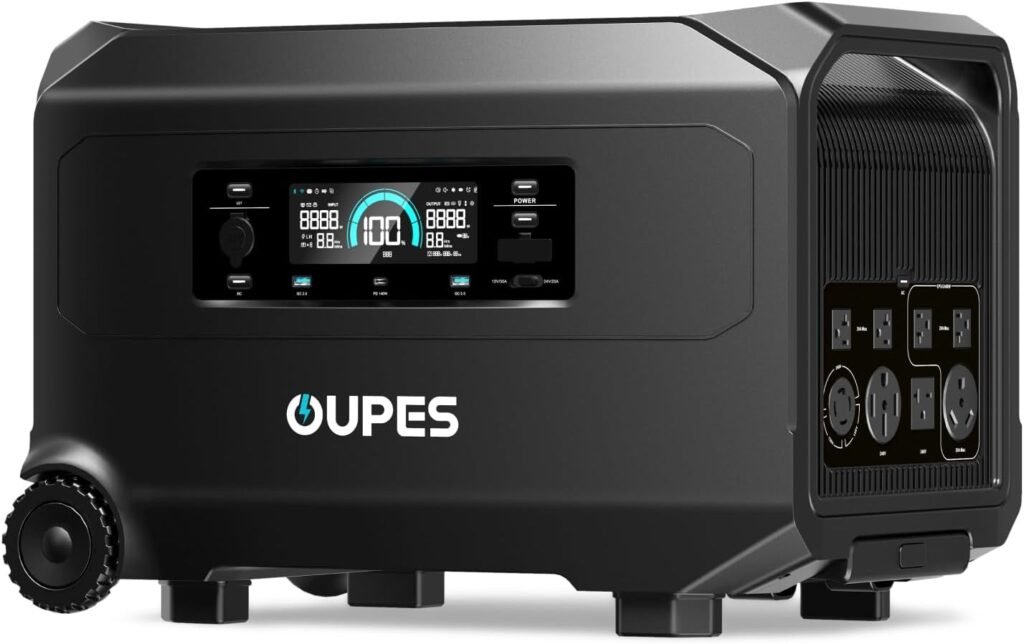
Beyond home circuits, we also get multiple direct-use outlets on the main unit. The system includes:
- 5 standard AC outlets for 120V devices
- 240V outlets (NEMA 14‑50R and L14-30E) for high‑power appliances and transfer switch connections
This combination makes it flexible enough for:
- Running appliances directly in a garage during a blackout
- Powering tools at a job site
- Feeding an RV or camper that expects 30A or 50A service (within the power limits)
We get the best of both worlds: general-purpose outlets plus heavy-duty, high‑voltage connections.
USB, 12V, and XT90 Connectors
For smaller devices, the Guardian 6000 includes:
- USB-C PD up to 140W – Ideal for modern laptops, tablets, and fast-charging phones.
- USB-A ports – Good for legacy devices and standard gadgets.
- 12V car port – Useful for small DC appliances, coolers, or automotive accessories.
- XT90 connector – A professional-grade DC connection often used for high-current DC loads such as e‑bikes, inverters, or specialized gear.
These ports mean we can skip clunky adapters and power strips in many cases. Instead, we plug devices directly into the unit and let it handle the voltage and power delivery negotiation. For home backups, off-grid workstations, and mobile workshops, that kind of integration makes our setup cleaner and more efficient.
App Control and Smart Monitoring
Remote Control from Our Phone
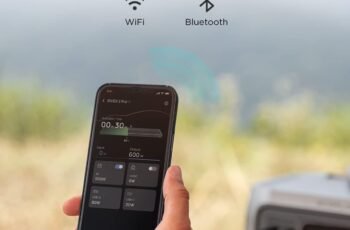
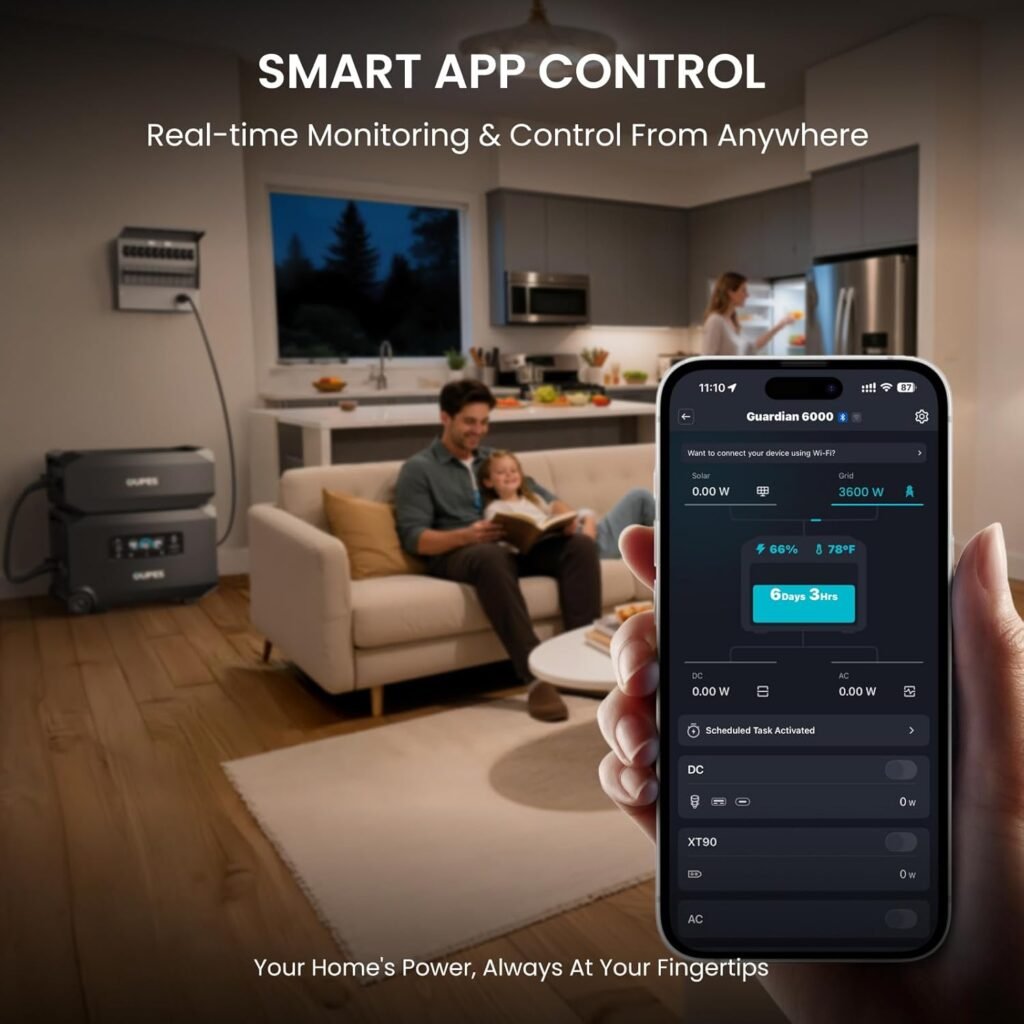
The Guardian 6000 system supports app control, allowing us to:
- Check current power usage in real time
- See battery state of charge and estimated runtime
- Start or stop certain outputs remotely
- Adjust charging behavior in some modes (depending on firmware and app features)
This is particularly handy if we position the unit in a basement or garage. Instead of walking over every time we want to check status, we monitor it from the living room or bedroom.
Firmware Updates and Long-Term Support
OUPES includes firmware update capability, which is a forward-looking feature. Over time, they can:
- Fix bugs or rare edge-case issues
- Improve efficiency or add minor new features
- Update compatibility with new app versions
Combined with US-based customer support and a 5‑year warranty on both the power station and the extra battery, we get a sense that the product is meant to stay in our home for the long haul and receive ongoing attention from the manufacturer.
Noise, Heat, and Everyday Use
Quiet Operation Compared with Generators
One of the huge quality-of-life benefits of a battery system is noise reduction. Instead of the constant roar of a gas generator, we get a relatively quiet hum from cooling fans, especially under high load or during fast charging.
In normal operation:
- The system is much quieter than any combustion engine.
- We can comfortably run it indoors (with proper ventilation and adherence to safety guidelines) because there are no fumes.
- Nighttime operation is far less disruptive to sleep and conversation.
For neighborhoods with strict noise ordinances or close neighbors, this is a big advantage.
Heat Management and Placement
Like all high‑power electronics, the Guardian 6000 produces heat when charging or discharging heavily. Internal fans and thermal management systems help keep temperatures in check.
We should:
- Place it in a dry, ventilated space (garage, utility room, or a corner of a living area).
- Avoid trapping it in a sealed closet or tiny enclosure without airflow.
- Keep it away from direct heat sources or intense sun exposure.
As long as we give it some breathing room, thermal performance should remain stable even during extended backup events.
Use Cases for the Guardian 6000 Dual Battery System
Home Backup for Outages
The primary use case is clear: keeping our essential appliances powered when the grid goes down. With 9216Wh of capacity and 6000W of output, we can:
- Run a fridge and freezer to preserve food
- Keep Wi‑Fi, phones, and laptops online
- Power a few rooms of lights and fans
- Support medical equipment that must stay on
- Optionally run HVAC or well pumps within power constraints
When combined with a transfer switch setup, we can make outages feel more like minor inconveniences than emergencies.
Off-Grid Cabins and Seasonal Homes
For cabins or vacation homes that lack reliable grid power, this system can act as the central energy hub. Paired with a solar array:
- We store daytime solar energy and use it at night.
- We avoid fuel deliveries and generator maintenance.
- We get quiet, always-available electricity without complex system design.
Its dual-battery configuration provides enough storage to handle weekends or multi-day stays with light to moderate power usage.
RVs, Vans, and Mobile Worksites
While the system is larger and heavier than many portable power stations, it’s still compact enough to be part of:
- RV and camper setups (especially when we want 240V capabilities or heavy USB-C power).
- Mobile workstations for contractors or trades needing quiet, reliable AC power.
- Outdoor events where we want to run sound systems, lighting, or catering gear without generator noise.
We just need to plan our mounting and space accordingly, as it’s more of a stationary unit than a “carry-it-with-one-hand” solution.
Pros and Cons of the OUPES Guardian 6000 Dual Battery System
Advantages We Notice
Let’s summarize what stands out positively about this system:
- Massive Capacity (9216Wh) – Enough energy for serious home backup, not just small gadgets.
- High Continuous Output (6000W) – Supports multiple appliances and even some HVAC or well systems.
- True 240V Dual Voltage – NEMA 14‑50R and L14‑30E outlets mean direct integration with many home and RV setups.
- Fast Recharging – Up to 80% capacity in about an hour with 240V input, even faster with combined AC + solar.
- UPS Capability (<20ms)< />trong> – Protects electronics and reduces downtime during grid flickers.
- Plug-and-Play Extra Battery – Simple connection, automatic recognition, no manual configuration.
- Versatile Outlets – Multiple AC, high-power USB-C PD 140W, USB-A, 12V, and XT90 options.
- Transfer Switch Ready – Connects to existing home backup infrastructure without major rewiring.
- App Control and Firmware Updates – Smart monitoring and the ability to improve over time.
- 5-Year Warranty and US-Based Support – Reinforces the idea of a long-term investment.
Potential Drawbacks and Considerations
No system is perfect for everyone. Here are some points we should weigh:
- Size and Weight – With this capacity and output, we should expect significant weight; it’s more of a home unit than a grab‑and‑go device.
- Upfront Cost – High capacity and features come at a price, especially with LiFePO₄ batteries and dual‑voltage support.
- Requires Proper Home Integration – To use it like a generator via a transfer switch, we may need an electrician if we don’t already have the infrastructure.
- 240V Appliance Limitations – While it can power many 240V loads, we still must respect the 6000W limit and avoid trying to run every heavy appliance simultaneously.
- Solar Input Details – To get maximum benefit from solar charging, we need appropriately sized and matched solar panels and may need some planning.
For most households looking for cleaner, quieter backup power without giving up generator-style functionality, these tradeoffs will often be acceptable or even expected.
How It Compares to Traditional Generators
Noise, Fuel, and Maintenance
When we compare the Guardian 6000 Dual Battery System to a similarly powered gas generator, here’s how things stack up:
- Noise – The battery system is dramatically quieter. No engine noise, only fan noise.
- Fuel – No gasoline or propane to store, refill, or stabilize.
- Maintenance – No oil changes, spark plugs, or carburetor clogs to worry about.
- Emissions – Zero exhaust fume concerns indoors, which is a major safety advantage.
The main limitation is runtime: a generator can run indefinitely as long as we keep feeding it fuel, whereas a battery system is limited by stored energy and recharge input. However, with fast charging and optional solar, the Guardian 6000 largely bridges this gap for many outage scenarios.
Convenience and Safety
From a convenience standpoint:
- We can leave the system connected and ready to go year‑round.
- Switchover during UPS events is automatic and nearly seamless.
- We don’t need to venture outside in a storm to start or refuel a noisy unit.
From a safety angle, we avoid carbon monoxide risks that come with using gas generators incorrectly. That alone is a compelling reason for many of us to shift to battery-based backup.
Who Is the OUPES Guardian 6000 Best For?
Ideal Users
This system shines for users who:
- Live in areas prone to power outages or severe weather.
- Want to maintain refrigeration, internet, lighting, and some climate control without stress.
- Already have or plan to install a home transfer switch or generator inlet.
- Prefer cleaner, quieter backup power instead of gas generators.
- Are comfortable making an upfront investment for long-term resilience.
It’s also a strong fit for off-grid cabins, partial off-grid homes, and anyone building a resilient energy setup that pairs with solar and smart home technology.
Situations Where It May Be Overkill
On the other hand, the Guardian 6000 Dual Battery System might be too much if:
- We only want emergency power for phones and a couple of lights.
- We live in a place where outages are extremely rare and short.
- Portability is our top priority and we prefer a smaller, lighter power station for camping.
In those cases, a smaller-capacity unit could be more budget-friendly and easier to move around.
Tips for Getting the Most from the Guardian 6000
Plan Our Critical Loads
To make the best use of those 9216Wh, we can:
- List our must‑have appliances (fridge, router, lights, medical gear).
- Estimate their average power draw.
- Prioritize them during outages and avoid turning on all high‑draw devices at once.
By being strategic, we stretch our runtime significantly.
Pair It with Solar (If Possible)
If we have the space and budget, connecting a solar array:
- Extends runtime during long outages.
- Reduces reliance on the grid for recharging.
- Enables semi‑off-grid or fully off-grid operation for some homes.
Even a moderate solar setup can make a big difference in multi‑day outage scenarios.
Keep Firmware and the App Updated
Since the system supports firmware updates, we should:
- Check periodically for app updates.
- Install new firmware when recommended, following OUPES instructions.
This ensures we benefit from any efficiency improvements, new features, or bug fixes that arrive over time.
Final Thoughts: Is the Guardian 6000 Dual Battery System Worth It?
When we weigh the features of the OUPES Guardian 6000 Dual Battery System: 9216Wh Power Station with 6000W Output, 120V/240V Dual Voltage, Expandable Home Backup with Transfer Switch Ready & App Control, we see a product designed to function as a true home backup solution, not just a big gadget charger.
We get a rare combination in one package:
- Huge 9216Wh capacity
- Serious 6000W continuous output
- True 120V/240V dual voltage with generator‑style outlets
- Fast recharging, UPS functionality, and smart app control
- Plug‑and‑play battery expansion and intelligent power management
- Strong warranty and support backing it as a long-term investment
For households that care about resilience, noise reduction, and a cleaner alternative to gas generators, this system is a compelling choice. It won’t be the cheapest option on the market, and it’s not a small portable device we carry everywhere, but as the heart of a reliable home backup strategy, it delivers a very balanced mix of power, capacity, and ease of use.
If we are ready to treat backup power as an integral part of our home, rather than an afterthought, the Guardian 6000 Dual Battery System gives us a powerful, future‑ready foundation.
Disclosure: As an Amazon Associate, I earn from qualifying purchases.