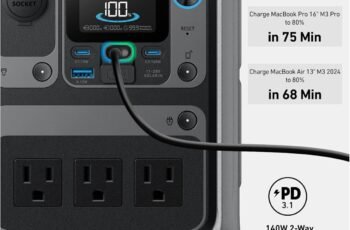
You rely on clean power, yet the wastes you generate from Li-ion power station batteries pose growing risks. If you start by separating them from general waste and sorting by chemistry, you’ll reduce hazards and boost recovery. You’ll need careful handling, safe discharge, and a plan for damaged units. Stay with me as we map practical steps that balance safety, cost, and sustainability, so you can push toward better recycling outcomes.
Collection and Sorting of Li-Ion Power Station Batteries
Collection and sorting of Li-Ion power station batteries must be done separately from general waste to prevent fire hazards from residual charge. You’ll find municipalities set specific collection routes and points to guarantee safe handling, so follow posted instructions and local guidelines. You collect batteries from electric vehicles, consumer electronics, and manufacturing scrap, isolating damaged or swollen units to prevent short circuits and thermal runaway. You may process items manually or with automation, but labeling and identification must be clear to enable correct downstream sorting. Sorting by chemistry matters most, as recycling methods differ for NMC versus LFP. Automated systems use sensors for voltage, weight, and chemical signatures, while condition determines reuse, repurposing, or recycling paths. Fire suppression and protective equipment protect workers throughout the process. Main factual point [1-4 word phrase
Preparation and Initial Processing Steps
You start with a safe, controlled deep-discharge plan to minimize fire and toxic risks before any handling. Recycling Value Next, you dismantle and separate components, using low-temperature steps to liberate materials while keeping hazards in check. Finally, you remove electrolytes and stabilize the pack to prepare for physical sorting and downstream processing.
Deep-Discharge Safety
When preparing for deep-discharge processing, start by identifying and isolating potentially damaged batteries, even if damage isn’t obvious, to prevent hazardous handling later. You’ll monitor voltage thresholds, aiming to keep cells above minimums to prevent irreversible reactions, while recognizing that voltages below 2.0V raise safety risks like swelling, overheating, and fire hazards. Avoid full-battery immersion; use targeted terminal immersion in salt solutions to accelerate safe discharge, typically within minutes, acknowledging higher salt concentrations shorten time and limit damage. Before discharge, isolate compromised packs and wear PPE. Conduct procedures in ventilated, controlled spaces using non-reactive containers, and confirm post-discharge terminal voltages near 0 V before handling. Remember, post-discharge thermal and ultrasonic treatments aid purification without harsh chemicals, supporting safer subsequent processing.
Dismantling Steps
Dismantling steps begin with careful preparation and controlled initial processing to minimize hazards before any disassembly. You’ll start by gathering certified containers to prevent short circuits and using designated collection points like recycling centers, retailers, and manufacturer take-back programs. Sort by chemistry, state of charge, and condition, label appropriately, and segregate to avoid unsafe mixes. Pre-discharge batteries partially to reduce fire or explosion risks during handling and dismantling.
- Prepare with inert environments and controlled discharge methods, such as resistors or saltwater baths, to eliminate electrical hazards.
- Use cryogenic or inert atmospheres to suppress reactions during dismantling.
- Employ automated discharge stations for high-volume facilities to boost operator safety.
- Verify voltage near zero before manual or robotic dismantling begins.
Advanced Material Recovery Techniques
You’ll explore how hydrometallurgy offers selective leaching and purification steps that target lithium, cobalt, and nickel with fewer waste streams. Direct cathode recycling complements this by reclaiming electrode materials in ways that preserve chemical structure and enable high-purity re-use. Together, these advanced techniques set the stage for cleaner, more efficient lithium-ion battery material recovery.
Hydrometallurgy Advantage
Hydrometallurgy uses aqueous chemistry to dissolve metals from lithium-ion batteries, typically with sulfuric acid and hydrogen peroxide as a reducing agent, enabling efficient recovery at lower energy costs than pyrometallurgy. You’ll pretreat by shredding cells and separating black mass, then leach metals into solution. You recover cobalt, nickel, manganese, and lithium via precipitation, solvent extraction, or ion-adsorbent beds, converting oxides to soluble sulfates for purification. The method supports mixed chemistries and yields high recovery rates, often up to 95%, with less hazardous gas emissions and reduced energy use. You can produce pure metals suitable for reuse in cathode production, supporting a true circular economy and municipal or industrial recycling streams.
- Pre-treatment and leaching convert cathode oxides to soluble sulfates
- Chemical leaching enables mixed chemistry processing
- Multiple recovery pathways tailor performance per feedstock
- Pure metals support direct reuse in manufacturing
Direct Cathode Recycling
Direct cathode recycling preserves the cathode’s crystal structure, avoiding the dissolution steps common in traditional recycling and enabling a more efficient path back to usable battery materials. You’ll treat end-of-life cathodes with thermal relithiation to restore lost lithium and coating, recovering capacity and performance. Approximately 20% of usable lithium is lost in spent cathodes due to SEI, parasitic reactions, and particle isolation, so lithium restoration reduces impedance and performance loss. This approach can restore materials like delithiated NMC333 via optimized two-stage annealing and coating methods, surpassing single-stage approaches. Direct recycling is emerging and requires further research to handle protocol variations by feedstock and to scale commercially. Thermal relithiation, coating, and multi-stage annealing help preserve crystal lattices and electrochemical properties for closed-loop reuse.
Chemical Processes and Final Refinement
Chemical processes and final refinement convert black mass into usable battery metals through two main routes: pyrometallurgical and hydrometallurgical methods. You’ll melt and separate metals by density in pyrometallurgy, though lithium tends to stay in slag and needs further refinement. This route consumes lots of energy and emits greenhouse gases, but it’s efficient for cobalt and nickel. In hydrometallurgy, you leach metals with acids and reducing agents, enabling selective recovery of Li, Co, Ni, Mn, and others as pure compounds or metals with lower energy use. After smelting or leaching, you apply purification steps to achieve battery-grade purity. Final refinement guarantees recycled metals meet new-battery specs, balancing yield, cost, and environmental impact for industrial plants.
- Pyrometallurgical vs. hydrometallurgical routes and their trade-offs
- Purification techniques: solvent extraction, ion exchange, and electrochemical deposition
- Direct recycling considerations and how they impact final refinement
- Industrial optimization goals: purity, throughput, and emissions control
Environmental and Economic Considerations
Environmental and economic considerations shape how we handle lithium-ion batteries from disposal to recycling. You face environmental risks when disposal isn’t proper: landfills release hazardous metals and toxins, with 98.3% ending up there in some regions, and fires can burn for days, emitting harmful pollutants. Recycling is pain points: globally only about 5% of these batteries are recycled, while lead-acid in the US approaches 99%; hazardous waste classifications (D001, D003) demand careful handling at specialized centers to maximize metal recovery. Economically, recycling conserves lithium, cobalt, nickel, and copper, reducing mining’s costs and impacts, yet disassembly and processing can be pricey, slowing viability. Advanced, scalable recycling boosts recovery rates, lowers costs, and strengthens material security, supporting cleaner energy shifts and resilient supply chains.
Challenges, Innovations, and Future Outlook
Despite the variety of battery chemistries and designs, challenges in recycling power station Li-ion batteries persist: safe handling of residual charge and flammable electrolytes, high energy use and emissions from traditional methods, and material losses that erode recovery rates for lithium, cobalt, and nickel. You’ll see innovations target cleaner, safer returns and higher purity. Hydrometallurgy with AI sorting, reductive calcination, electro-extraction, and advanced graphite recovery reduce environmental impact while boosting metal yields. Closed-loop systems weave mechanical, chemical, and digital traceability to sustain battery-grade feedstock. Regulatory shifts—EPR, hazardous-waste standards, and circular economy policies—drive modernization. Collaboration between industry and academia accelerates scalable solutions suited to cross-border flows and rapid deployment.
- Emissions-reducing, low-energy recycling pathways
- AI-driven material sorting and process optimization
- Safer handling protocols for residual charge
- End-to-end traceability and data sharing
Frequently Asked Questions
How Are Damaged Batteries Safely Identified During Collection?
You identify damaged batteries during collection by isolating visibly compromised units, using fireproof containers, and following a trained checklist. You quarantine overheating packs, segregate suspect cells, notify recycling professionals, and avoid placing damaged batteries in regular waste streams.
What Safety Gear Is Required for Handlers and Technicians?
You’ll wear chemical-resistant gloves, safety goggles or a full-face shield, flame-resistant clothing, and respiratory protection as needed. In poorly ventilated areas, for example, N95s or better reduce exposure by up to 95%. Also, insulate tools and avoid jewelry.
Can DIY Users Recover Lithium at Home From Black Mass?
No, you shouldn’t attempt it at home. DIY recovery risks toxic exposure, fires, and chemical spills; specialized equipment and ventilation are essential. Seek licensed, controlled facilities with proper permits and safety protocols for lithium recovery.
Which Regions Have the Strictest Lithium Recycling Regulations?
EU, China, and parts of North America have the strictest lithium recycling regulations; you’ll find tight targets and producer responsibilities, like a high-stakes race, demanding rigorous standards across the EU, China’s MIIT rules, and advanced U.S./Canadian programs.
What Is the Typical Turnaround Time for Recycling a Battery Batch?
Typically, you’ll see a batch recover within 2–5 days for chemical stages, plus minutes to hours for shredding, with total turnaround varying by batch size, technology, transport, and plant efficiency. Larger facilities shorten durations through automation.
Conclusion
Recycling Li‑ion power station batteries is a smart, shared responsibility you can own. Sort and separate, protect damaged packs, and prep them carefully before processing. Use advanced recovery techniques to reclaim metals, then refine with safe, compliant chemistry steps. Weigh environmental and economic impacts, stay compliant, and collaborate with neighbors and regulators. Together, we light the way to a cleaner future—like a well-tueled engine, progress hums from every careful, purposeful turn.