Disclosure: As an Amazon Associate, I earn from qualifying purchases.
Have we ever wished we could bring reliable, quiet electricity with us anywhere—without worrying about gas, fumes, or dead batteries?

EF ECOFLOW Solar Generator DELTA 2 Review
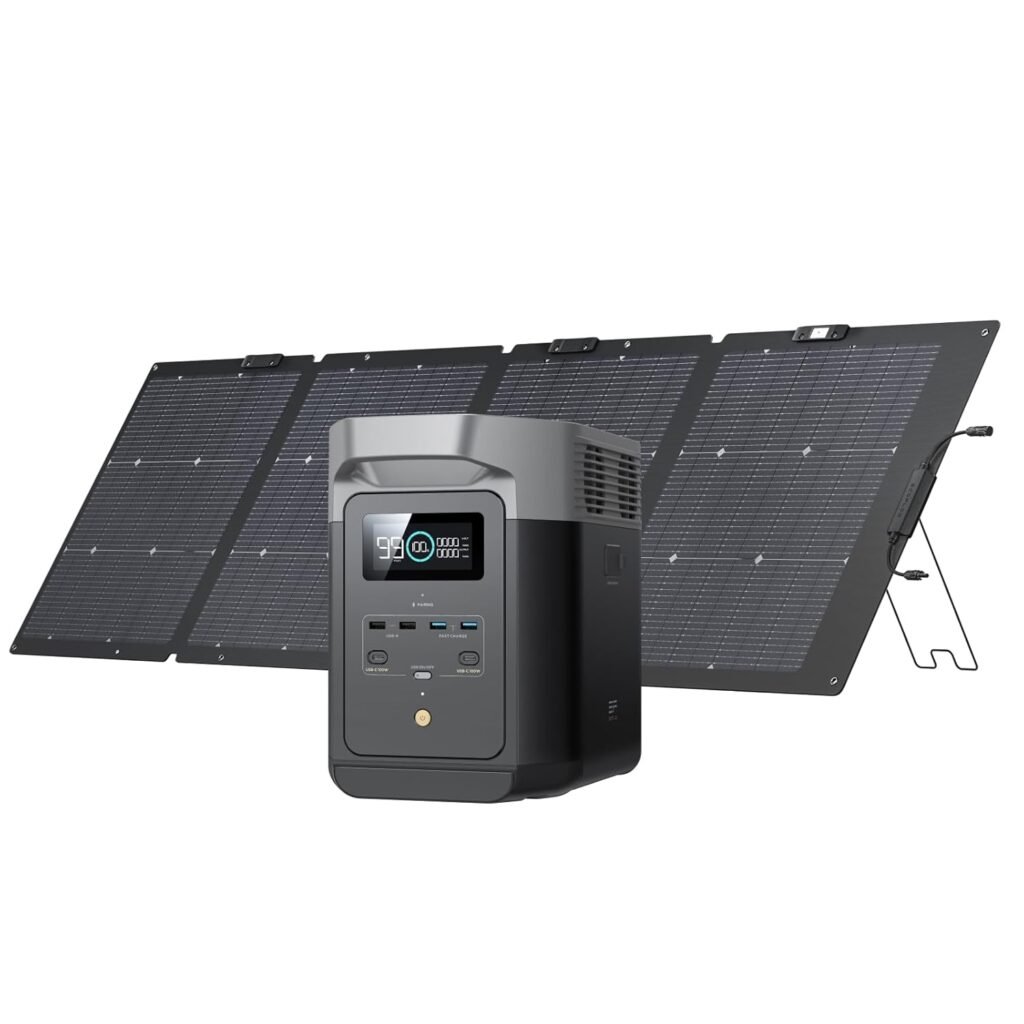
The EF ECOFLOW Solar Generator DELTA 2 with 220W Solar Panel, 1024Wh LFP Battery, 1800W AC/100W USB-C Output positions itself as a flexible option for home backup, camping, and RVs. In this review, we walk through what it offers, how it performs in real-world scenarios, and where it truly stands out.
We focus on what matters most in daily use: power, safety, convenience, expandability, and overall value for our money.
Key Features at a Glance
Before we go into each part, it helps to see the main features laid out clearly. This gives us a quick snapshot of what the DELTA 2 system brings to the table.
| Feature | Specification / Description |
|---|---|
| Battery Capacity | 1024Wh (1.0 kWh) LFP (LiFePO₄) battery |
| Battery Chemistry | LFP (LiFePO₄) with 3000+ charge cycles |
| AC Output | 1800W (pure sine wave), capable of running up to 90% of common home appliances |
| USB-C Output | Up to 100W (fast charging for laptops, tablets, phones) |
| Solar Input | Up to 500W solar input capacity |
| Included Solar Panel | 220W bifacial portable solar panel |
| Number of Outlets | 15 total outlets (mix of AC, DC, USB, etc.) |
| Expandable Capacity | From 1kWh up to 3kWh with extra batteries (sold separately) |
| Charging Methods | AC wall outlet, solar panels, and potentially car charging (cables depend on package) |
| Use Cases | Home backup, camping, RVs, off‑grid cabins, outdoor work, emergency preparedness |
| Noise Level | Significantly quieter than gas generators; fan noise only when under load or charging |
These specs already hint at a very versatile power solution. Now we break down what they mean for actual, day-to-day use.

Design and Build Quality
The overall feel of the EF ECOFLOW Solar Generator DELTA 2 matters a lot when we carry it around, store it, and rely on it in emergencies. Design is not only about looks, but also about how comfortable and safe it is to use.
Portability and Form Factor
The DELTA 2 is designed as a portable power station, not a permanent installation. It combines a compact footprint with enough capacity to be valuable in many situations.
We notice several things in how it is built:
- Integrated handles on both sides make lifting and moving easier.
- A sturdy, boxy design that feels like it can handle being transported in a trunk or RV.
- A housing that looks ready for real-world use, not just to sit on a shelf.
It is not ultra-light like a small battery pack, but for the capacity it offers, the size and weight feel very reasonable. We can realistically carry it from the car to the campsite or move it around the house during outages.
Materials and Durability
The casing appears to use strong, impact-resistant materials, with a finish that feels more “tool-grade” than “gadget-like.” That gives us more confidence when we place it on rougher surfaces like gravel, decks, or workshop floors.
We should still treat it as electronics, not a construction tool. But for outdoor and RV use, it feels tough enough to handle regular transport, bumps, and everyday wear without us being overly protective.
Battery Technology and Lifespan
Battery technology is really where the DELTA 2 separates itself from many older or cheaper models. We are not just paying for capacity; we are paying for how long that capacity will last.
LFP (LiFePO₄) Battery Chemistry
The DELTA 2 uses LFP (LiFePO₄) cells, which are known for:
- Long cycle life compared with typical lithium-ion (NMC) batteries.
- Better thermal stability and safety, which matters during heavy use or in warm environments.
- More consistent performance over years of charging and discharging.
For us as users, this means we can use and recharge the unit far more times before we notice meaningful degradation in capacity.
3000+ Charge Cycles: What That Actually Means
The stated 3000+ cycle life is one of the biggest selling points. In simple terms:
- One “cycle” is usually considered going from 100% down to a low level (for example, 10–20%) and back up to 100%.
- Many typical power stations offer a few hundred to perhaps a thousand cycles before dropping to around 80% of original capacity.
- With 3000+ cycles, we are looking at roughly 8–10 years of regular use if we cycled it almost every day.
For outdoor enthusiasts, RV owners, or those preparing for frequent power issues, that kind of lifespan is a major advantage. It gives us a sense that this is a longer-term purchase, not something that becomes weak after a couple of seasons.
Capacity and Expandability
Battery capacity determines how long we can run devices and how much backup security we get during outages. The EF ECOFLOW Solar Generator DELTA 2 finds a sweet spot between portability and capacity.
1024Wh (1kWh) Base Capacity
With 1024Wh (1kWh), we get enough energy to cover many essential tasks:
- Running a laptop and Wi‑Fi router for many hours.
- Keeping lights and phones powered through overnight blackouts.
- Running a CPAP machine or other critical low-to-medium draw devices.
- Powering small appliances like mini-fridges, fans, or projectors for significant periods.
To give us a feel for it, we can approximate usage like this:
- A 60W laptop could run for over 10–12 hours.
- A 100W TV could run for around 8–9 hours, depending on efficiency and settings.
- A 400W portable fridge/freezer could run for a few hours continuously or longer if it cycles on and off.
Actual runtime will depend on inverter losses, how full the battery is, and how efficiently each device operates, but 1kWh is a very versatile size for many use cases.
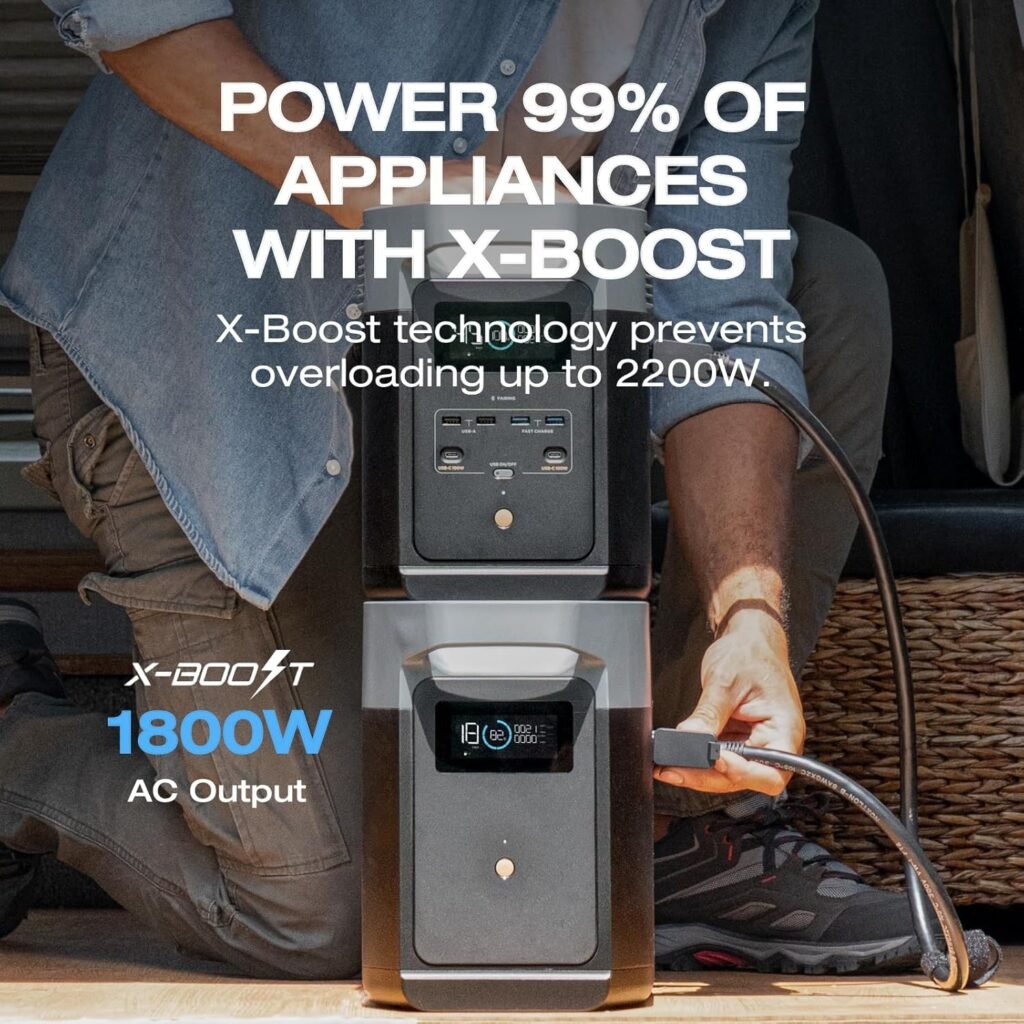
Expandable from 1kWh up to 3kWh
What really makes this system stand out is expandable capacity:
- We start with 1kWh in the base unit.
- We can add extra batteries (sold separately) to expand storage up to 3kWh.
This is especially attractive for:
- Home backup where longer outages may happen.
- RV living where power demand can be higher for appliances and devices.
- Off-grid cabins or remote work locations that need more than a single kWh.
Instead of buying a second full power station, we can scale by adding additional battery modules and keep the same core system. That flexibility lets us adapt to changing needs over time.
Power Output and Device Compatibility
Power output is what determines which devices we can actually run. Capacity tells us how long; output tells us what we can plug in.
1800W AC Output for Household Appliances
The EF ECOFLOW Solar Generator DELTA 2 delivers up to 1800W AC output, which is comparable to many gas-powered portable generators in terms of what it can power, but without fumes or noise.
With 1800W, we can support:
- Refrigerators (typical household units often run around 100–300W with higher surge).
- Microwaves (small ones can draw 700–1000W).
- Coffee makers, kettles, and similar heating devices (some can draw near the limit, so we need to check labels).
- Power tools like drills, saws, or air compressors (within the 1800W limit).
- Gaming PCs and monitors, home office gear, and entertainment setups.
We still need to be aware of total wattage. Running several high-draw devices simultaneously could push us over 1800W. But within that ceiling, we can cover most common household items one at a time or a combination of lower-draw devices together.
100W USB‑C and Other Ports
The mention of 100W USB‑C output is particularly helpful for modern devices:
- We can fast-charge USB‑C laptops (like many MacBooks and ultrabooks) directly, no extra power brick needed.
- Tablets, phones, power banks, and cameras can all be charged through the USB ports.
In addition, the unit offers a total of 15 outlets. While the exact configuration can vary, it generally includes:
- Multiple AC outlets for larger appliances.
- USB‑A and USB‑C ports for electronics.
- DC outlets or car-style sockets for 12V gear.
Having that many options means we can make the DELTA 2 a true central power hub for our camp, RV, or home emergency setup.
Powering 90% of Appliances: What That Implies
The claim that it can power 90% of appliances in a typical household is not about running everything at once, but about compatibility.
In simple terms, this means:
- Anything that stays under 1800W continuous draw is usually fair game.
- Energy-hungry things like electric dryers, large ovens, central AC systems, and some space heaters may be above this limit.
- Many common essentials—lights, fridges, electronics, small kitchen devices—fit easily within that 1800W range.
This gives us a reassuring level of flexibility. In a power outage, we can prioritize a fridge, some lights, communication devices, and maybe a fan or smaller appliance and stay comfortably within safe limits.
Solar Charging and Clean Energy Use
A major reason we might choose this kind of product is the ability to run on solar energy. Being able to keep our battery topped up from the sun dramatically extends how useful it is off the grid.
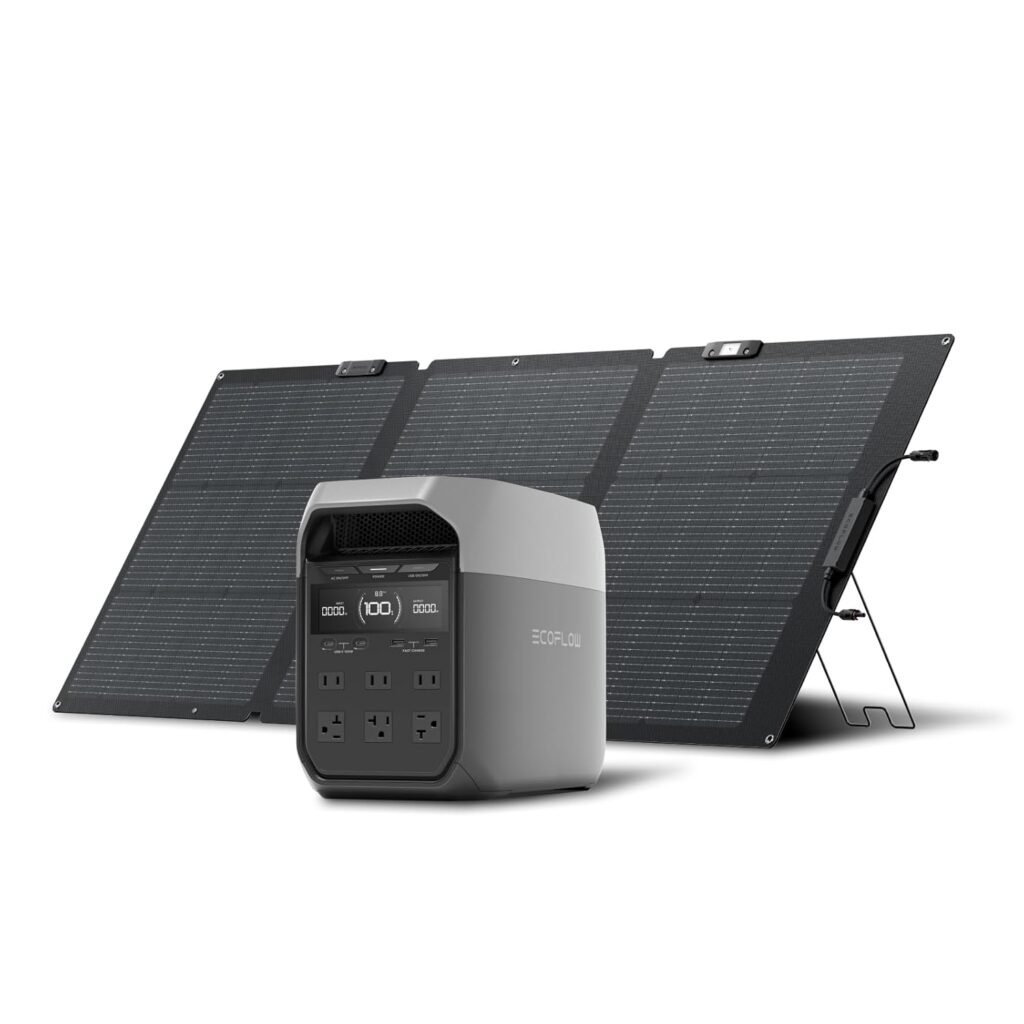
Included 220W Bifacial Solar Panel
The package includes a 220W bifacial solar panel. “Bifacial” means the panel can capture sunlight on both the front and the back:
- The front side gathers direct sunlight as usual.
- The back side can capture reflected light from the ground, walls, or surroundings.
This design can increase energy capture by up to 25% more in ideal conditions. For example:
- If we set the panel on light-colored or reflective surfaces (snow, sand, light concrete), the back side gets more light.
- On bright days in open areas, we can see a noticeable boost in charging compared with a non-bifacial panel of similar size.
This is especially helpful when we are camping, parked with an RV, or setting up an emergency solar array in our yard.
Up to 500W Solar Input Capacity
The DELTA 2 itself can handle up to 500W of solar input. That means:
- The included 220W panel uses less than half of the maximum solar input.
- We have the option to connect additional panels (with compatible connectors) to reach higher charging rates.
If we use only the 220W panel:
- Under ideal full sun, we might see around 180–220W of input.
- That could recharge the 1024Wh battery from empty to full in roughly 5–7 hours of strong midday sun, allowing for efficiency losses and real-world conditions.
With more panel wattage, charging can be significantly faster, making the system much more capable for extended off-grid use.
Solar for Camping, RVs, and Off‑Grid Trips
With solar as a primary or backup input, we can:
- Use DELTA 2 throughout the day for laptops, cameras, lights, and small appliances, then recharge it during sunny hours.
- Keep devices running for longer trips without needing shore power or constantly driving the RV to recharge.
- Set up semi-permanent off-grid charging for a remote cabin or workshop.
We stay free from depending on gas cans or noisy generators, while still having meaningful electric power when and where we need it.
Fast Charging from AC Power
Solar is excellent for off-grid, but we often need to charge quickly from the wall before leaving home or in between trips. The DELTA 2 is known for its fast AC charging, which reduces downtime.
Quick Top‑Ups for Last‑Minute Plans
With powerful internal charging circuitry:
- We can plug the unit into a regular wall outlet at home.
- It charges significantly quicker than many competing portable power stations.
This matters when:
- We are about to head out on a trip and notice the unit is partially drained.
- There is a predicted storm, and we want to ensure full backup capacity as quickly as possible.
- We cycle between home and field work and need power ready each morning.
Faster charging means less time waiting and more flexibility to make plans on the fly.
Convenience Between Solar and AC
We can mix and match power sources:
- Use AC charging for predictable, fast recharges at home, RV hookups, or public outlets.
- Use solar charging when off the grid or when we want to keep ongoing energy costs minimal and eco-friendly.
This hybrid approach ensures we are not stuck depending on a single way to refuel the system.
Safety, BMS, and Reliability
When dealing with large battery systems, safety is central. The DELTA 2 includes features that help protect both the battery and our devices.
Advanced Battery Management System (BMS)
The built-in Battery Management System (BMS) handles several key tasks:
- Regulating temperature to prevent overheating during charging or heavy use.
- Balancing cells inside the battery for even wear and stable performance.
- Monitoring voltage and current to shut down safely if something unusual happens.
For us, this means we can feel more comfortable using the unit in different environments and conditions without micromanaging it. The BMS quietly works in the background to keep things within safe parameters.
No Fumes, Less Noise Than Gas Generators
Unlike traditional gas-powered generators:
- The DELTA 2 produces no exhaust, so we can use it indoors (with normal ventilation) or inside RVs and tents with care for overall air quality.
- It runs much quieter, with only fan noise when charging or under heavier load.
This difference transforms the user experience:
- We can keep it in a living room during an outage and still have a quiet environment.
- Campsites remain peaceful, without the constant engine hum.
- There is no need to store or transport gasoline, which brings its own safety and smell issues.
We trade the constant engine rumble and fumes for a much cleaner, calmer way to have power.
Everyday Use Cases
To understand the real value of the EF ECOFLOW Solar Generator DELTA 2, it helps to see how it fits into our regular lives. We can think about three main categories: home backup, camping and RVs, and mobile work or hobbies.
Home Backup Power
During outages, we often need more than just a phone charger. With DELTA 2, we can:
- Keep a refrigerator running periodically to protect food.
- Power Wi‑Fi routers, phones, and laptops to stay connected and informed.
- Run LED lights and fans to maintain comfort in the evening.
- Possibly power a CPAP machine or other medical device, depending on power requirements.
We might choose a rotation strategy where we run the fridge for a while, then switch to other appliances. The 1kWh capacity makes these juggling acts doable, and expandable capacity letting us add batteries makes it even better for longer outages.
Camping and Van Life
For camping, we often pause between loving nature and still needing certain comforts:
- We can charge phones, cameras, drones, and camping lanterns.
- We can run a portable fridge/freezer for cold drinks and preserved food.
- We might power a projector or small speaker system for evening entertainment.
- We can keep laptops and tablets running for work-from-anywhere living.
The 220W solar panel becomes the heart of a small off-grid setup. We can set up the panel at camp, angle it using the adjustable kickstand case, and feed in solar power during the day while we enjoy the outdoors.
RVs and Road Trips
In an RV, power demands can be more continuous and varied:
- Running a water pump, interior lights, and small kitchen appliances.
- Keeping fans and vent systems running without always using the built-in generator.
- Charging multiple devices for family members simultaneously.
The DELTA 2 can serve as a supplementary power bank that reduces how often we need to run noisy built-in generators or stay fully plugged into shore power.
Ease of Setup and Use
A powerful system is only helpful if we can set it up and manage it without frustration. The EF ECOFLOW Solar Generator DELTA 2 is designed for straightforward operation.
Out of the Box Experience
In the package, we get:
- The DELTA 2 power station.
- The 220W solar panel.
- An adjustable kickstand case for staging the panel.
- An AC charging cable.
- A solar charging cable.
- A user manual.
- Access to customer service, including what is described as an “exclusive 5” service (which typically refers to support and warranty from the brand).
One important detail: the DELTA 2 unit and the 220W panel arrive separately. We just need to keep that in mind when tracking shipments and planning for a trip or an emergency.
Setting Up the Solar Panel
With the panel, we:
- Unfold it and position it facing the sun.
- Use the kickstand case to angle it for the best sunlight exposure.
- Connect the solar charging cable to the panel and to the DELTA 2’s solar input port.
The bifacial nature rewards us for being thoughtful about placement. We can experiment with:
- Light surfaces beneath it to boost reflection.
- Gently tilting it at different angles through the day to track the sun.
- Avoiding shade from trees, buildings, or RV awnings.
Once connected, the unit typically shows input wattage, so we can see in real time how effective our positioning is.
Using the Output Ports
To power devices, we simply:
- Plug AC plugs into the AC outlets on the unit.
- Connect phones, tablets, or laptops to USB‑A or USB‑C ports.
- Use DC ports or car-socket-style outputs for specialized gear.
Unlike gas generators that must be started and stopped, the DELTA 2 is essentially plug-and-play. We turn on the unit, plug in devices, and monitor power usage through the display.
User Experience and Practical Considerations
Day-to-day satisfaction depends on the small things: how easy it is to read the display, how loud it is, and how well it fits into our routines.
Display and Information
The front display typically shows:
- Current battery percentage or remaining runtime.
- Input and output wattage so we can see how much power we are drawing or generating.
- Status indications for different ports and charging methods.
This information helps us avoid surprises. If we see we are using a lot of power, we can unplug non-essential items. If the solar input is low, we might reposition the panel.
Noise and Heat Management
The DELTA 2 uses internal fans to keep components cool under heavy load or fast charging. When drawing high wattage or rapid charging from AC, we will hear fan noise, but it is far quieter than a gas generator.
We do want to:
- Allow air circulation around the unit.
- Avoid fully enclosing it in tight cabinets while running heavy loads.
- Keep it out of direct blazing sun if possible, to reduce thermal stress and extend longevity.
Overall, it feels more like having a compact, smart appliance than a traditional generator experience.
Pros and Cons Summary
To help us evaluate whether this matches our needs, we can break down the main strengths and limitations.
Main Advantages
- Long-lasting LFP battery with 3000+ cycles for long-term reliability.
- 1kWh base capacity, expandable up to 3kWh with extra batteries.
- 1800W AC output that can run most everyday appliances.
- 100W USB‑C for fast charging modern laptops and devices.
- Up to 500W solar input, with a 220W bifacial panel included for clean, green charging.
- Much quieter and cleaner than gas generators; suitable for indoor use (with normal ventilation).
- 15 output ports, giving plenty of connection options.
- Fast AC charging, excellent for last-minute trips or storm preparation.
- Durable, practical build suited for camping, RV, or emergency use.
Potential Limitations
- The 1kWh capacity may be modest if we expect to power big loads for long durations without expansion.
- The 220W panel is powerful, but those needing constant heavy usage may want to add more solar capacity to reach the 500W input ceiling.
- Weight and size are significant enough that we will not want to carry it long distances by hand; it is portable, but not ultra-light.
- Extra batteries that expand to 3kWh are additional purchases, so full-system cost can grow.
These points do not undermine the value of the system, but they matter when matching it against our exact needs and budget.
Who This Solar Generator Is Best For
Not every power solution suits every user. The EF ECOFLOW Solar Generator DELTA 2 shines for specific groups.
Ideal Users
We see the DELTA 2 fitting especially well for:
- Homeowners who want a quiet, safe backup option for shorter to medium outages.
- Campers and overlanders who want to keep modern gear running without running a engine-based generator.
- RV owners who want a flexible supplement to existing power systems and more options when boondocking.
- Remote workers or creators who need dependable off-grid power for laptops, cameras, drones, and networking gear.
- Preparedness-focused households that value long battery life (3000+ cycles) and solar-ready capabilities.
For these groups, the combination of LFP battery life, expandability, and strong AC output delivers a practical mix of portability and power.
Less Ideal Scenarios
If our needs include:
- Running very high-draw appliances like large AC units, electric stoves, or welders for long periods.
- Providing full-house backup power for multiple days without any solar recharge.
- Frequent transport on foot over long distances where ultra-light gear is essential.
Then we might need a larger, more stationary battery system, a different class of generator, or a more minimal lightweight system, depending on our priorities.
Warranty, Support, and Long-Term Confidence
When we invest in a power system like this, support and warranty terms become part of the picture.
Customer Service and Support
The product notes mention an exclusive 5 customer service, which typically refers to an extended or focused support period (often connected to a multi-year warranty). While the exact details depend on region and seller, we can reasonably expect:
- Assistance with setup and troubleshooting.
- Help if there are defects or early failures.
- Access to repair or replacement pathways within warranty coverage.
We should always confirm specific warranty length and terms from the official EF ECOFLOW documentation or the retailer before purchase, but the brand generally positions itself as a more premium, well-supported option in the portable power market.
Built to Last Over the Years
The real cornerstone of long-term confidence is the LFP battery chemistry and 3000+ cycle rating. Combined with a robust BMS and reputable brand backing, this suggests that:
- We can count on this system for many seasons of camping, travel, and backup.
- The total cost of ownership stretches out over a long time rather than requiring frequent replacements.
For many of us, that combination of durability and reduced long-term waste is appealing both financially and environmentally.
Final Thoughts: Is the EF ECOFLOW Solar Generator DELTA 2 Worth It?
When we step back and look at everything together, the EF ECOFLOW Solar Generator DELTA 2 with 220W Solar Panel, 1024Wh LFP Battery, 1800W AC/100W USB‑C Output offers a compelling package.
We get:
- A long-life, safe LFP battery with seriously impressive cycle life.
- Enough power output (1800W) to handle almost all common home and outdoor appliances within reason.
- A solar-ready system with a high-quality 220W bifacial panel right in the box.
- Fast AC charging that keeps us ready even on short notice.
- Expandable energy storage that can grow with our needs up to 3kWh.
For households looking for dependable backup, adventurers spending time off-grid, and RV owners enhancing their independence, this system strikes a strong balance between capability, portability, and future-proofing.
If we want a quiet, cleaner alternative to gas generators—with the flexibility to run electronics and appliances at home, on the road, and outdoors—this solar generator stands as a very convincing choice.