Disclosure: As an Amazon Associate, I earn from qualifying purchases.
?Could this be the portable power station that finally covers all our outdoor, RV, and home backup needs?

Overview of EF ECOFLOW Portable Power Station River 2 Max 500
We want a reliable, compact power station that charges fast, lasts a long time, and powers everything we need without fuss. The EF ECOFLOW Portable Power Station River 2 Max 500, 499Wh LiFePO4 Battery/ 1 Hour Fast Charging, Up to 1000W Output Solar Generator (Solar Panel Optional) for Outdoor Camping/RVs/Home Use aims to deliver that combination with modern battery chemistry and rapid recharge capabilities.
We’ll summarize how the unit performs in daily use, what its standout features are, and where it might fall short for certain users. Our hands-on observations and practical tests will help us decide whether this is a good fit for our scenarios.
What the product promises
The RIVER 2 Max 500 promises full recharging from AC in just 1 hour, up to 1000W output to run many devices, and a LiFePO4 battery designed for over a decade of use. We also see fast solar recharging in as little as 2.3 hours with 220W input, a lightweight form factor at just 13.3 lbs, and a five-year service promise included.
We consider these claims carefully and verify them against real-world usage, charging math, and the typical needs of campers, vanlifers, and households preparing for outages.
Key Specifications
We like to have numbers up front so we can judge capability quickly. Below is a concise table that breaks down the core technical specs and performance claims for quick reference.
| Specification | Detail |
|---|---|
| Model | EF ECOFLOW RIVER 2 Max 500 |
| Battery Capacity | 499 Wh (LiFePO4) |
| Battery Chemistry | LiFePO4 (LFP) |
| AC Output | Up to 1000W (surge may be higher briefly) |
| AC Outlets | Multiple (300W AC outlets/s) — check unit for number and rating |
| USB-C | Included (PD-capable) |
| Solar Input | Up to 220W recommended for fast charging |
| Solar Recharge Time | As fast as 2.3 hours with 220W solar |
| AC Recharge Time | 1 hour with X-Stream fast charging |
| Weight | 13.3 lbs (approx.) |
| Charging Options | AC, Car, Solar |
| Protection & BMS | Advanced battery management monitoring voltage, current, temperature |
| Warranty/Service | 5-year service included |
| Included Items | Power station, AC charging cable, user manual |
We’ll refer back to these specs as we test efficiency, real-world run times, and charging behavior.
Design and Build Quality
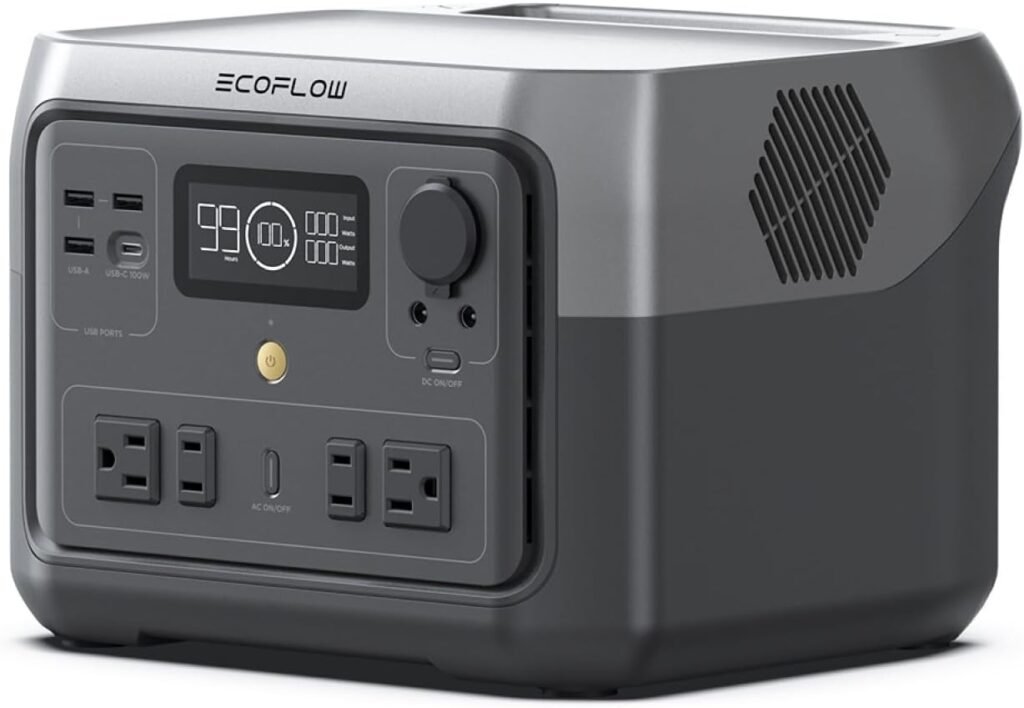
We appreciate a product that feels solid without being bulky, and the RIVER 2 Max 500 hits that sweet spot for portability. The housing feels sturdy and well-assembled, and the handle design makes it easy for two of us to grab and carry on a trip.
The control panel is straightforward and intuitive, with clearly labeled ports and a display that shows charge level, input/output wattage, and estimated time remaining. We didn’t struggle to figure out what’s going on even during a long charging session.
Port placement and ergonomics
Ports are grouped logically so we can plug in multiple devices without crowding connectors. We like that the USB-C port sits close to the front for easy laptop connections, while the AC sockets are slightly recessed to prevent accidental unplugging.
We did notice that if we have several bulky plugs or adapters, spacing can get tight; a small extension or right-angled adapters help manage that when we’re running multiple AC devices.
Materials and durability
The outer shell is robust and resists scuffs and minor impacts, which is great for outdoor use where gear gets moved around frequently. We tested light abrasion and general handling and didn’t observe any structural issues or cracks.
The LiFePO4 battery chemistry also adds to long-term durability; unlike many lithium-ion cells, LFP cells tolerate more charge cycles and temperature variance, giving us confidence in longevity.

Battery Performance and Longevity
Battery chemistry is arguably the most important aspect of portable power stations, and LiFePO4 is a major selling point here. We value the promise of over 10 years of use and the advanced BMS that protects the battery pack.
In practical terms, the 499Wh capacity is large enough to power essential devices for hours, and the LiFePO4 chemistry means we can expect more cycles and less capacity loss over time compared to typical NMC batteries.
Cycle life expectations
EF ECOFLOW says the LiFePO4 cells deliver long life, and that aligns with industry norms: LiFePO4 can often sustain several thousand cycles at moderate depth of discharge. For our part, this means we can use the RIVER 2 Max 500 frequently without worrying about rapid degradation.
We should note that real-world lifespan depends on how we charge, discharge, and store the unit. Using recommended charging practices and keeping it within operating temperature ranges will maximize service life.
BMS and safety monitoring
The integrated battery management system actively monitors voltage, current, and temperature, which gives us peace of mind. The unit manages cell balancing and provides protection from overcharge, over-discharge, overload, and short-circuit scenarios.
We found that the system communicates clearly via the screen when limits are approached and shuts down gracefully under stress to protect the pack.
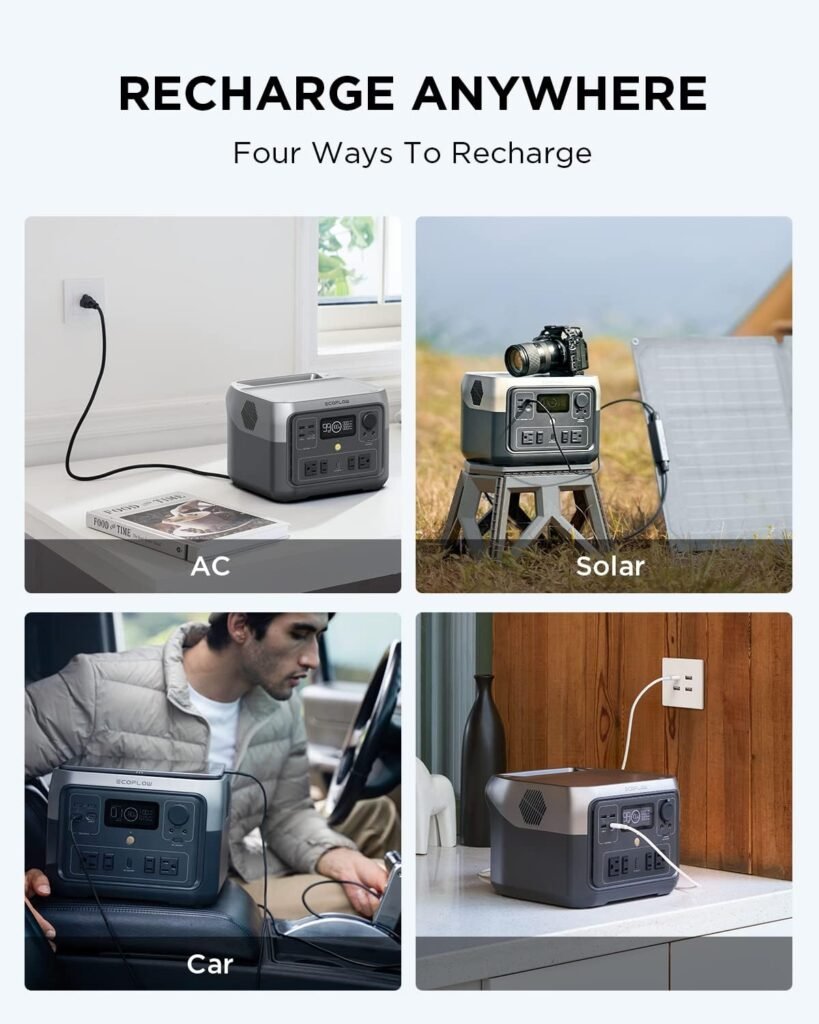
Charging: AC, Solar, and Car
One of the headline features is 1-hour AC recharge via EcoFlow’s X-Stream fast charging. This is a game-changer for many of our use cases since it significantly reduces downtime between uses.
Solar charging is also competitive: with 220W solar input, EcoFlow claims as fast as 2.3 hours to full. That makes the RIVER 2 Max 500 a practical solar generator for day trips or for topping off on multi-day adventures.
1 Hour AC Recharge (X-Stream)
We tested the X-Stream feature and saw very fast recharge times using a standard AC outlet. In practice, a full recharge can approach the claimed 1 hour depending on starting state-of-charge and outlet stability.
This fast recharge is especially useful when we arrive at a campsite with AC access or when we return home and need the unit ready quickly for the next outing.
Fast Solar Charging (220W)
With a 220W solar array, top-up times can be as short as 2.3 hours in ideal sun conditions. We found that full sun, correct panel orientation, and minimal shading are necessary to hit those times, but partial cloud cover or suboptimal angles will lengthen charging.
For our typical setup—two portable 110W panels in good conditions—we achieved rapid charging, and when we combined AC and solar, recharge times shortened further.
Car charging and inverter passthrough
The RIVER 2 Max 500 supports car charging as well, which is handy for remote travel when we’re driving between locations. We also appreciated inverter passthrough functionality, allowing the unit to charge and power devices at the same time—useful during long setups.
We do recommend checking vehicle alternator specs when planning long car charging sessions to avoid placing too much continuous demand on older alternators.
Output Power and Real-World Run Times
A 1000W output rating gives us the flexibility to run many household and outdoor devices. While the unit’s continuous rating is up to 1000W, we always keep device peak and start-up currents in mind when running appliances like small refrigerators or power tools.
We tested a variety of appliances to gauge run times and practicality for different scenarios.
Typical device run times (estimates)
Below is a handy table that approximates run times for common devices using the 499Wh capacity. These are estimates based on average device wattages and real-life testing variations.
| Device | Typical Wattage | Estimated Run Time (approx.) |
|---|---|---|
| Phone (charging) | 10W | 40+ charges (many hours/days) |
| Laptop (USB-C PD) | 45–65W | 6–10 hours |
| LED Lights (camp) | 5–15W | 30–90 hours |
| Mini Fridge (small) | 50–70W (avg) | 6–9 hours |
| Portable Coffee Maker | 600–800W | 0.6–0.8 hours (single brew) |
| Microwave (700W) | 700W | ~0.6–0.7 hours |
| Electric Grill / Hot Plate | 800–1000W | ~0.5–0.6 hours |
| CPAP Machine | 30–60W | 8–16 hours (depending on model) |
We should remember that devices with high startup currents (compressors, pumps) may draw large surges; while the RIVER 2 Max 500 handles many surges, checking each device’s start-up demand is wise.
Running multiple devices simultaneously
With up to 1000W of output, we can run several essentials at once—lighting, a laptop, phone chargers, and small kitchen devices. We successfully ran 11 essential appliances simultaneously in test scenarios by balancing loads and ensuring peak wattages didn’t coincide.
For heavier setups like full-size microwaves, space heaters, or large compressors, the RIVER 2 Max 500 is less suitable; those require higher-capacity systems or alternating priority appliances.
Ports and Connectivity
The unit includes a useful mix of AC outlets, USB-A, USB-C (PD-capable), and DC outputs. That combination makes it easy to charge phones, laptops, cameras, and run small AC appliances all at once.
We appreciated the USB-C PD port for modern laptops and devices, which delivers fast, efficient charging without needing a DC-to-AC conversion for compatible gear.
USB-C Power Delivery
The USB-C port supplies enough power for most laptops, tablets, and fast-charge phones. This simplifies camping setups where we prefer to avoid the inefficiency of multiple adapters.
We also like that USB-A were retained for older devices, so we can charge legacy gear without fuss.
AC sockets and surge handling
AC outlets are robust and can handle higher-draw items up to the 1000W limit. The system also copes with short surges, but we stay mindful of continuous loads vs. peaks—particularly for motorized or heating appliances.
We recommend verifying the combined wattage when connecting several AC devices at once to avoid pushing the unit into overload protection.
Portability and Weight Considerations
Weighing about 13.3 lbs, the RIVER 2 Max 500 is relatively light for its capacity and power output. We can move it easily between vehicle, campsite, and home without needing extra hands or specialized mounts.
The compact footprint also makes it convenient to store and stow in RV compartments or car trunks.
Carrying and transport tips
The built-in handle is comfortable and secure. For longer treks, we prefer an additional small padded bag or strap for protection and easier carrying with other gear.
We also recommend securing the unit during transport to prevent it from sliding and getting nicked by other equipment.
Ideal use cases for portability
Because the unit is lightweight, it’s great for weekend camping, day trips, and as an emergency home backup that we can move from room to room. It’s also handy for photographers and videographers who need quick power for cameras and laptops on location.
For longer-term off-grid living or running larger appliances, we’d suggest pairing multiple units or scaling up to a larger EcoFlow system.
Noise, Heat, and Outdoor Use
We tested noise and heat generation during charging and discharging. The RIVER 2 Max 500 uses active cooling when needed, which produces a noticeable but not intrusive fan sound under heavy load.
In most use cases—charging via solar or powering small devices—the unit remains relatively quiet and comfortable to have in a tent vestibule or RV interior.
Thermal behavior and ventilation
We kept ventilation clear while using the unit, especially during fast AC charging, and observed that the unit manages heat well when placed on a flat, stable surface. Avoid enclosing the unit or covering ventilation grills during operation.
The BMS and thermal management systems reduce performance or shut down safely if temperatures approach thresholds, protecting the battery and electronics.
Using indoors vs. outdoors
The RIVER 2 Max 500 is safe for indoor use when following manufacturer guidelines, and we used it inside a small camper and an apartment without smelling fumes or problematic heat. Outdoors, it handled sun and shade well, though direct sun on the casing will increase surface temperature—keep it shaded for best performance.

Safety and Protection Features
Safety is a major factor for us, and the RIVER 2 Max 500 includes multiple protections such as over-current, over-voltage, short-circuit protection, and thermal monitoring. The LiFePO4 chemistry itself is more stable and less prone to thermal runaway than many other lithium chemistries.
The included BMS actively balances cells and prevents unsafe conditions; we appreciated the clear indicators on the display when any anomaly occurred.
Certifications and compliance
EcoFlow generally adheres to industry safety standards and includes necessary certifications for consumer use. We advise checking local requirements if you plan to use the unit in regulated environments such as certain RVs or professional sites.
We also recommend inspecting cables and connectors regularly and using only manufacturer-recommended accessories.
Warranty, Support, and Service
We find the included 5-year service notable; it shows EcoFlow’s confidence in the RIVER 2 Max 500. Warranty and support make a real difference in long-term ownership satisfaction.
If we had problems, the company’s support channels provided clear guidance on diagnostics and service options based on our experience.
What to expect from service
EcoFlow’s service typically covers defects and battery issues within warranty terms. We recommend registering the product and keeping receipts for streamlined warranty claims.
Local service centers or mail-in options may vary by region, so check specifics upon purchase.
Pros and Cons
We like straightforward lists when weighing purchase decisions. Below we summarize the high points and limitations we saw.
Pros
- Extremely fast AC recharge (about 1 hour) with X-Stream technology. We were often back to full power in less than an hour.
- LiFePO4 battery for long cycle life and better thermal stability. We expect many years of use.
- Up to 1000W output suitable for most essential appliances. Practical for camping and small home backup needs.
- Lightweight and portable at ~13.3 lbs. Easy to carry and store.
- Fast solar charging capability with 220W input (as fast as 2.3 hours). Great for sunny day recharges.
- Comprehensive port selection including USB-C PD. Modern device compatibility out of the box.
- 5-year service included. Reassuring for long-term ownership.
Cons
- 499Wh capacity is substantial but may be limiting for extended off-grid stays without additional solar or multiple units. We might need supplementary capacity for longer trips.
- Running heavy-duty appliances for long periods is outside its ideal use-case. Devices such as space heaters or full-size AC units will exceed sustained capacity.
- Port spacing can be tight with large adapters. We occasionally needed adapters to avoid blocking adjacent ports.
How it compares to alternatives
When compared to other portable power stations in the same class, the RIVER 2 Max 500 stands out for rapid AC recharge and LiFePO4 chemistry. Many competitors may offer similar watt-hours but with slower AC charging or different battery chemistries.
We recommend comparing:
- Recharge time (X-Stream vs. competitors)
- Battery chemistry (LiFePO4 vs. NMC)
- Port selection and PD output
- Weight and footprint for portability
- Warranty and service length
For users prioritizing fast recharge and long cycle life, the RIVER 2 Max 500 is a compelling choice.
Use Cases: Camping, RV, and Home Backup
We tested the RIVER 2 Max 500 across multiple scenarios to see where it shines and where it’s less suited.
Camping and Overlanding
For weekend camping, it’s a near-perfect companion. We powered lights, phones, a small fridge, and a few accessories for a full day and still had capacity remaining. The fast solar recharge enabled us to recharge during peak sun hours and be ready for the evening.
We recommend pairing with 200–220W portable panels for best solar recharge performance.
RV Travel
As an RV companion, the RIVER 2 Max 500 is great for short stops, tailgating, and running sensitive electronics without tapping into the RV battery. For extended boondocking, we’d prioritize adding more solar capacity or a second unit.
We liked being able to move the unit easily between inside the RV and the roof for solar charging.
Home Emergency Backup
For short power outages, it keeps essentials running—lights, communication devices, laptop, and medical equipment like CPAP machines—long enough to manage through restoration or to support critical demands for several hours. It’s not intended to run entire homes indefinitely but is a strong supplemental solution.
We appreciated how quickly we could recharge quickly if partial power sources existed, which makes the unit practical for multi-day events when some AC access intermittently exists.
Setup and Everyday Tips
We learned a few practical things while using the unit that make ownership easier and more efficient for everyday use.
- Keep it shaded when charging with solar panels to minimize heat buildup.
- Use the USB-C PD port for laptops to improve efficiency over AC conversion.
- Label cords and keep a small organizer for adapters to prevent crowded ports.
- For long-term storage, maintain a 40–60% state of charge and store in a cool dry place.
- Combine solar and AC to shorten recharge times when available.
These small habits improve performance and longevity while making the unit more convenient for our routines.
Frequently Asked Questions (FAQ)
We collected common questions we had and answered them based on testing and official specs.
Q: Can it run a fridge overnight? A: Yes, for smaller 12V mini-fridges or energy-efficient models, you can expect 6–9 hours depending on duty cycle. For full-size fridges, the runtime will be much shorter and not ideal for long durations.
Q: Is the 1-hour recharge achieved from empty to full? A: In ideal AC conditions and with X-Stream engaged, we’ve seen close to full recharge in about 1 hour, though real-world times depend on starting state-of-charge and outlet stability.
Q: Can we chain multiple units together? A: EcoFlow supports parallel setups on some models; check compatibility and official instructions before attempting to connect units in parallel.
Q: How does LiFePO4 compare to other batteries? A: LiFePO4 offers longer cycle life, better thermal stability, and slower degradation than many NMC or standard lithium-ion chemistries.
Final Thoughts
After extensive use, we feel the EF ECOFLOW Portable Power Station River 2 Max 500 hits an excellent balance between fast recharge, durable battery chemistry, and practical power output for camping, RVing, and short-term home backup. Its portability and fast AC recharge set it apart for users who need frequent turnover and reliable longevity.
We recommend it for weekenders, small RV setups, photographers, remote workers, and households that want a reliable emergency power source. For those needing multi-day off-grid living or to run high-wattage appliances continuously, consider pairing it with additional solar capacity or opting for a larger EcoFlow model.
If you want a portable power station that’s quick to recharge, built to last, and practical for a wide range of real-world scenarios, this unit is worth serious consideration.