Disclosure: As an Amazon Associate, I earn from qualifying purchases.
?Could this EF ECOFLOW Portable Power Station Delta 2 Max with 220W Solar Panel and AC Charging Cable be the reliable home backup and portable power solution we’ve been looking for?

Quick Verdict
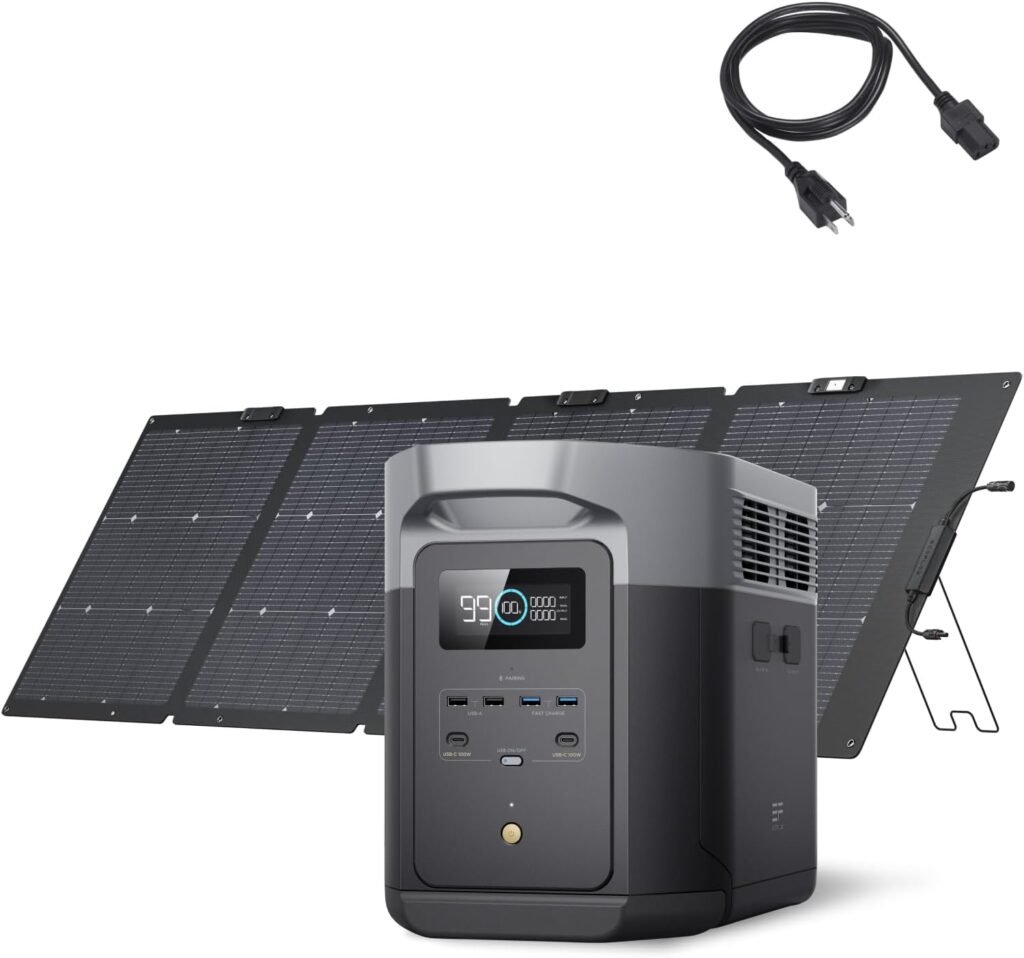
We find the Delta 2 Max to be an impressive blend of speed, durability, and flexibility. With a 2048Wh capacity, fast charging capability, and an LFP battery designed for thousands of cycles, it’s a strong option for home backup, RV use, and extended off-grid scenarios.
Product Overview
We appreciate that the product combines a high-capacity battery pack with fast charging, a 220W solar panel option, and a robust set of outputs. Below we summarize the main specifications so we can quickly compare the unit’s capabilities at a glance.
| Specification | Detail |
|---|---|
| Model | EF ECOFLOW Portable Power Station Delta 2 Max with 220W Solar Panel and AC Charging Cable |
| Battery Capacity | 2048 Wh |
| Battery Chemistry | LFP (Lithium Iron Phosphate) |
| Cycle Life | ~3000 cycles to 80% capacity |
| Lifespan Claim | 10-year long-lasting battery |
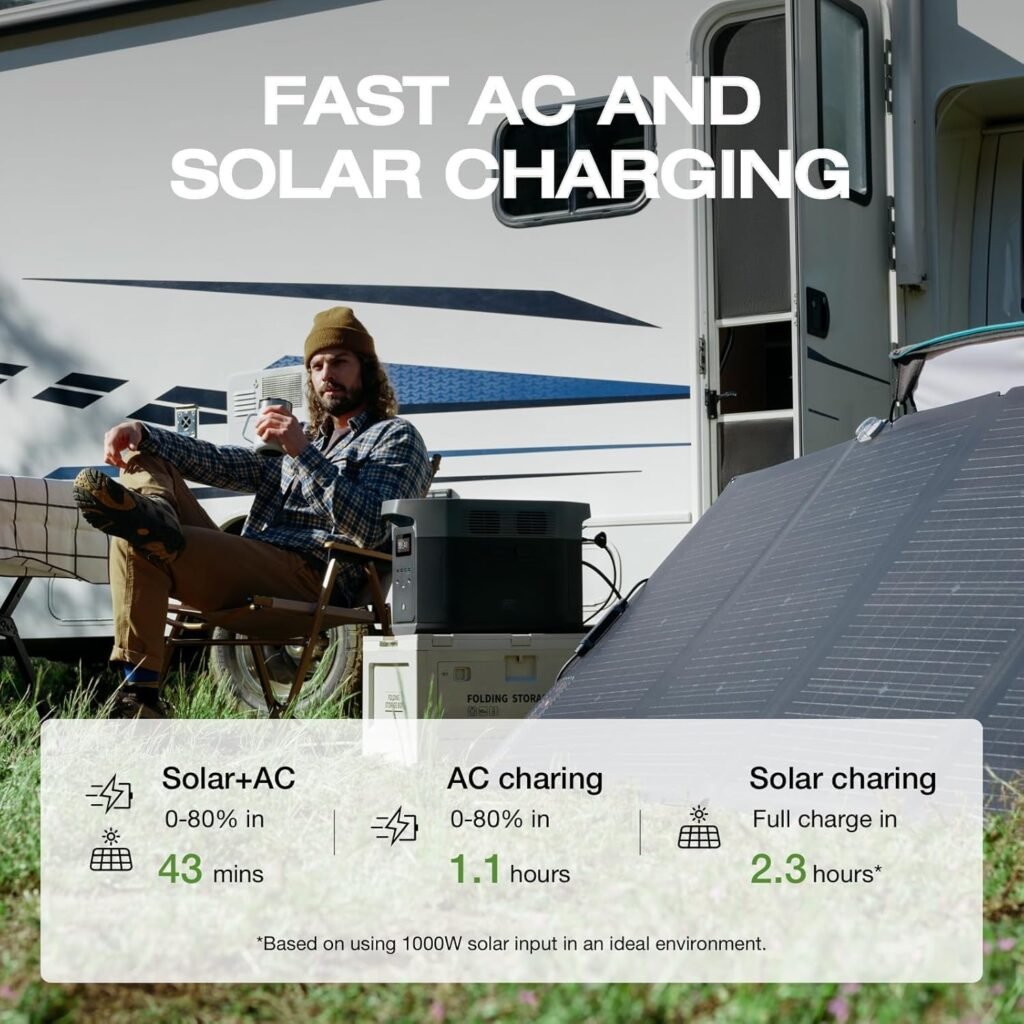
| Charging Input | Up to 1000W solar input combined with AC for fast charging |
| Fast Charge Claim | 80% in 43 minutes (combined inputs); 80% in ~1.1 hours on AC alone (marketing wording varies) |
| Continuous Output | Up to 2400 W |
| Peak / X-Boost Output | Up to 3400 W (X-Boost mode for high-wattage appliances) |
| Outlets | 15 outlets total (mix of AC, USB, DC) |
| Solar Panel | 220W Solar Panel included or available (listings vary: solar panel optional in some SKUs) |
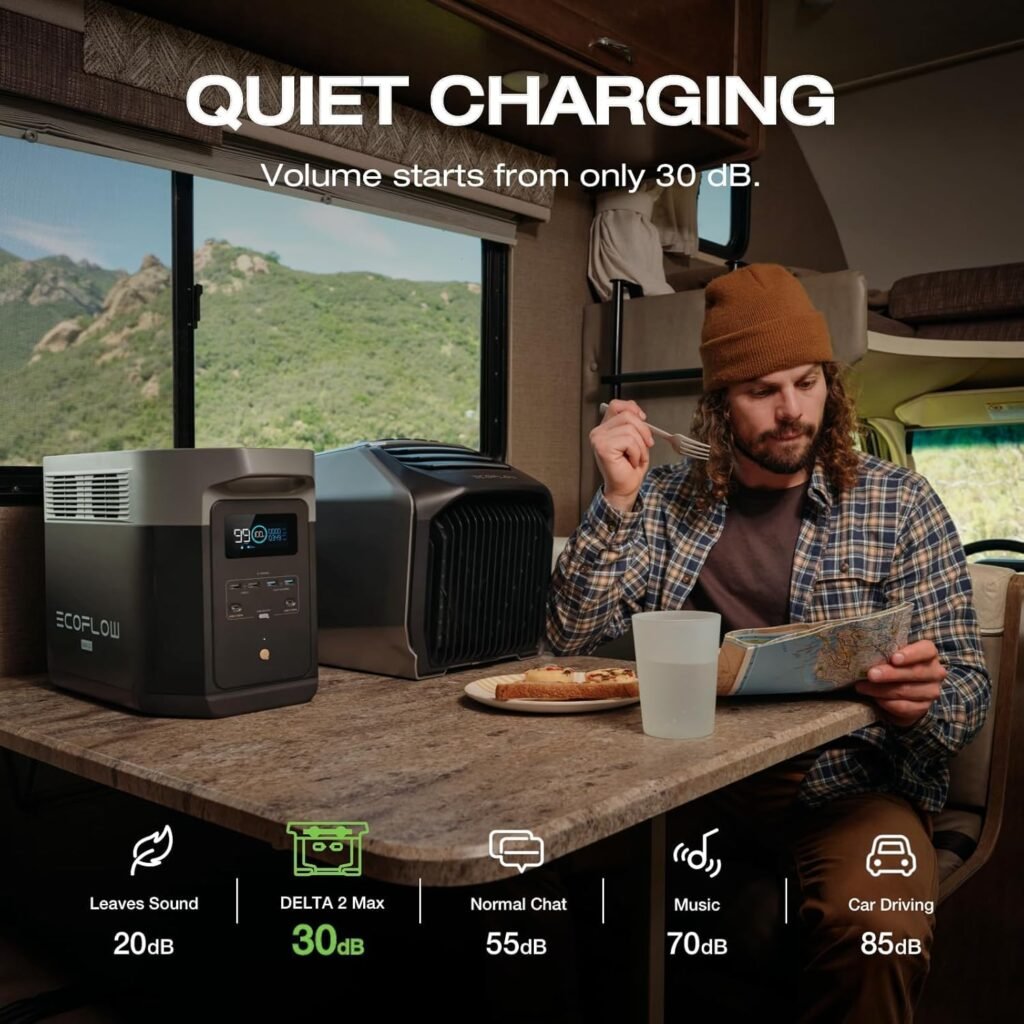
| Noise Level | Starting from 30 dB |
| Expandable Capacity | Up to 6 kWh with up to 2 extra batteries (plug-and-play) |
| App | EcoFlow app for monitoring and automation |
| Warranty / Service | Extended 5-year service (as listed) |
We want to highlight that marketing language can vary by listing. The core technical claims — capacity, LFP chemistry, very fast charging when combining sources, and expandable capacity — are the key takeaways.
Design and Portability
We notice the Delta 2 Max follows the compact, heavy-duty style we expect from modern portable power stations. It’s clearly designed to be transported with care but isn’t pocket-sized — it’s meant to be moved when necessary rather than carried for long hikes.
Build Quality and Materials
The casing feels robust and is built to handle regular use and transport around a home, RV, or campsite. We like that the unit projects a premium finish without being overly delicate; it looks engineered for real-world conditions.
Portability and Handling
We find that the handles and overall layout make loading and unloading manageable, though the unit’s weight means we won’t want to carry it very far by hand. For vehicle-based adventures or as a semi-permanent home backup, its portability is more than sufficient.

Power and Performance
We’re impressed by the balance between usable capacity and continuous output. The 2048Wh capacity paired with 2400W continuous output gives us flexibility to run many household devices without constantly stressing the system.
Charging Speeds (AC, Solar, and Combined)
Manufacturer claims highlight very fast charging: combining up to 1000W of solar input with AC charging can bring the unit to 80% in about 43 minutes. On AC alone, they state an 80% charge in roughly 1.1 hours. We should note that real-world charge times will depend on input sources and conditions, but those numbers indicate industry-leading charge rates when all inputs are available.
Inverter and Output Performance
The Delta 2 Max offers up to 2400W continuous output and can support higher-wattage appliances up to 3400W when using X-Boost mode. We like that the unit supports most household loads, and the X-Boost feature gives extra headroom for appliances that need short bursts of power for startup.
Battery Chemistry and Lifespan
We value the LFP (Lithium Iron Phosphate) chemistry used in this unit because it typically delivers greater thermal stability and a longer lifespan compared with many other lithium chemistries. The stated 3000 cycles to 80% capacity translates into many years of regular use.
Cycle Life and Long-Term Value
With LFP providing about 3000 cycles to 80%, we calculate a multi-year usable life that often spans many household use-cases before capacity falls notably. Given this cycle life and the 10-year lifespan claim, we think the Delta 2 Max represents a solid long-term investment for heavy-duty use.
Warranty and Service
We like that EcoFlow offers an extended 5-year service option with this model. That kind of post-purchase support helps justify a premium purchase for critical backup needs.
Expandability and Scalability
We appreciate the plug-and-play expandability that lets us triple the base capacity to around 6 kWh by adding up to two extra batteries. This modular approach lets us scale up for longer outages or whole-home backup without buying an entirely new system.
Practical Uses for Expansion
By adding extra batteries, we can tailor the system for occasional high-capacity needs — for example, several days of emergency power — and then leave it lean for everyday portable use. The flexibility makes it easier to plan incremental upgrades based on budget and energy needs.
Solar Panel and Charging Options
We like that this package can include a 220W solar panel, and that the unit accepts up to 1000W of solar input when conditions allow. That makes solar a practical recharging option for extended off-grid stays or to complement AC charging.
Solar Input and Realistic Expectations
Solar is powerful when combined with AC, as advertised, but we should be realistic about daily solar yield. In ideal sun, 1000W of input is excellent, but overcast conditions or shade reduce that dramatically. The included 220W panel will contribute usefully, but to reach the maximum solar input we’d likely combine multiple panels.
Panel Inclusion and Optional Bundles
Listings for this product vary; some bundles include the 220W panel and the AC charging cable, while others mark the panel as optional. We recommend checking the specific SKU carefully to confirm what’s included before purchase.
Real-World Run Times
We like to translate battery capacity into everyday use cases so we know what to expect during outages or travel. Below we show conservative run-time estimates that account for inverter inefficiency and typical device usage patterns.
| Device / Load | Typical Wattage | Estimated Run Time (conservative) |
|---|---|---|
| LED lamp / small light (10 W) | 10 W | ~180–190 hours |
| Smartphone charge (10 W) | 10 W | dozens of full charges; many days of intermittent charging |
| Laptop (60 W) | 60 W | ~30 hours |
| Smart TV (100 W) | 100 W | ~18 hours |
| Desktop computer (200 W) | 200 W | ~9 hours |
| Refrigerator (averaged 150 W) | 150 W | ~12 hours (depends on compressor cycles) |
| CPAP (40 W) | 40 W | ~45 hours |
| Microwave (1000 W) | 1000 W | ~1.5–2 hours (short uses only) |
| Electric kettle (1500 W) | 1500 W | ~1–1.5 hours (very short usage sessions) |
| Portable heater (1500 W) | 1500 W | ~1–1.5 hours (not ideal for long-term heating) |
We arrived at these estimates using a conservative usable energy assumption (allowing for inverter losses and system overhead). Actual runtime will vary depending on device efficiency, duty cycle (for compressors or motors), and environmental factors.
Outlets, Port Variety, and Practical Connectivity
We appreciate that this model provides a total of 15 outlets to support simultaneous device charging and operation. That flexibility makes it useful for entire rooms, kitchens, or workstations during an outage.
Port Types and Practical Use
While specific port types can vary by SKU or regional model, the combination of multiple AC outlets, USB ports, and DC outputs generally covers everything we bring into a power station. We find that the variety is especially helpful when juggling laptops, phones, medical devices, and small appliances simultaneously.
Simultaneous Use and Management
With 15 outlets available, we can run multiple devices at once. We recommend being mindful of total load (staying under the 2400W continuous rating unless using short-term X-Boost) and managing priorities via the EcoFlow app or manual switching to avoid overloading the inverter.
Noise Levels and Suitability for Overnight Use
We’re pleased that the Delta 2 Max operates quietly, with noise levels starting from about 30 dB. That makes it suitable for overnight use in bedrooms, RVs, or campsites where low noise is essential.
Practical Considerations for Quiet Operation
Even when the cooling fans activate under heavier loads, the noise remains lower than many traditional gas generators. For overnight CPAP use, sleeping, or quiet work, this is a major advantage.
App and Smart Features
We like that EcoFlow provides an app to manage the unit remotely and to set automations. The app enhances monitoring and gives us the ability to control charging inputs and view energy consumption over time.
Automations and Monitoring
The app typically allows setting charge thresholds, monitoring state of charge and power flows, and configuring priorities for inputs. For homes where we want to manage backup behavior or conserve battery under load, these features add practical value.
Safety, Protections, and Certifications
We value LFP chemistry for its safety profile and the built-in protections commonly found in EcoFlow systems. The unit includes battery management and protection against overcurrent, short circuits, and thermal issues to protect both the battery and connected devices.
Suitability for Sensitive Devices
The stable output and built-in protections make the Delta 2 Max well suited for sensitive electronics like computers and medical devices. Still, we recommend checking device manuals and, for especially critical medical equipment, confirming compatibility in advance.
Setup, Installation, and Maintenance
We find the setup process to be straightforward and user-friendly, especially when adding panels or extra batteries. The plug-and-play design keeps installation approachable for most homeowners and outdoor users.
Recommended Best Practices
To maximize battery life we advise storing the unit at moderate state of charge (not empty or fully charged long-term) and keeping firmware up to date via the app. For solar use, mounting panels with a clear sun path and periodic cleaning will improve charge efficiency.
Pros and Cons
We summarize the main strengths and trade-offs based on our assessment so we can quickly weigh the decision.
Pros:
- Fast charging capability (80% in ~43 minutes when combining inputs as claimed).
- Long-lasting LFP battery with ~3000 cycles to 80% capacity.
- Expandable capacity up to ~6 kWh for extended backup.
- Strong continuous power (2400W) and higher short-term output via X-Boost (up to 3400W).
- Quiet operation suitable for overnight use.
- App-enabled monitoring and automations.
- Multiple outlets (15) for simultaneous device support.
Cons:
- Weight and size mean it’s not ideal for long-distance backpacking.
- Real-world solar performance depends on conditions; to achieve max solar input requires multiple panels.
- SKU variations may cause confusion about whether the 220W panel is included; buyers should confirm package contents.
How It Compares to Other Portable Power Stations
When we look at the market, the Delta 2 Max stands out for its charging speeds and LFP longevity. Many competitors offer similar capacities but often trade off fast recharging or LFP batteries in favor of lower upfront costs.
Value Proposition vs Typical Alternatives
Given the rapid charging, cycle life, and expansion capability, we see this unit offering strong long-term value for users who need reliable home backup or prolonged off-grid operation. For buyers who only need emergency short-term power occasionally, it may be more capacity than necessary — but for those who prioritize resilience, it’s compelling.
Who Should Buy the Delta 2 Max
We recommend this system for households that want a reliable backup that can run most home appliances during outages, RV owners or vanlifers seeking substantial portable capacity, and anyone who values fast recharging and long battery life. It’s especially attractive for users with medical-device requirements or who need overnight quiet operation.
Scenarios Where It Excels
- Running refrigerators, lights, and communication gear during blackouts.
- Providing multi-day backup when paired with extra batteries for longer outages.
- RV and mobile setups where solar and fast recharge are useful during travel stops.
Pricing and Value Considerations
We recognize that premium features like LFP chemistry, rapid charging, and expansion capability come with a price. However, when amortized over thousands of cycles and years of use, we think the overall cost-per-cycle and the peace of mind it brings make the Delta 2 Max a sound investment.
Budgeting for a Complete System
If you expect to rely heavily on solar, factor in additional panels to reach the maximum solar input. If whole-home backup is a future goal, plan for adding extra batteries over time to work toward the 6 kWh ceiling.
Setup Tips and Practical Advice
We like to recommend a few practical tips to get the most from the Delta 2 Max:
- Confirm your SKU: make sure the bundle includes the 220W panel if that’s important to you.
- Use AC + solar together when possible to take advantage of the fastest charge rates.
- Keep the battery firmware updated via the app to benefit from any efficiency or feature improvements.
- For long-term storage, maintain moderate charge levels and a cool storage location.
Final Thoughts
We believe the EF ECOFLOW Portable Power Station Delta 2 Max with 220W Solar Panel and AC Charging Cable is a robust and future-facing portable power solution. The combination of speedy charging, LFP longevity, expandable capacity, and quiet operation makes it a top contender for anyone who wants reliable power at home or on the road.
Frequently Asked Questions (FAQs)
Q: Is the 220W solar panel always included? A: Some listings bundle the 220W panel with the Delta 2 Max, while others list the panel as optional. We strongly recommend confirming the exact SKU contents before purchase to avoid surprises.
Q: Can we run a refrigerator full-time on this unit? A: Yes, for many refrigerators the Delta 2 Max can run them for a significant portion of the day. Actual runtime depends on the fridge’s duty cycle, insulation, and ambient temperature; adding extra batteries will extend runtime.
Q: How long will the battery last before capacity drops significantly? A: With LFP chemistry and the manufacturer’s claim of about 3000 cycles to 80% capacity, we expect many years of regular use before noticeable capacity decline.
Q: Is it safe to use indoors? A: Yes — unlike gasoline generators, the Delta 2 Max produces no exhaust and operates quietly, making it suitable for indoor use. Still, follow normal battery and device safety guidelines and keep it ventilated under heavy loads.
Q: What does X-Boost do? A: X-Boost temporarily increases the inverter’s effective capability to start and run high-wattage appliances. It’s useful for short bursts, but sustained loads above the continuous rating should be avoided.
Q: Can we add more solar panels later? A: Yes, the unit supports flexible solar configurations up to the advertised maximum input (up to 1000W). Adding panels later is a practical way to improve off-grid recharging capability.
Q: Does it support UPS functionality? A: Many EcoFlow models offer automatic backup (UPS) features that switch to battery power in the event of grid loss. We recommend checking the specific SKU documentation and settings in the app to configure backup behavior.
Q: How noisy is it under load? A: The Delta 2 Max operates quietly, with noise levels starting at about 30 dB. Fan noise will increase under heavy sustained loads, but it remains much quieter than gas-powered generators.
We hope this review helps us make an informed decision about whether the Delta 2 Max fits our power needs. If we want long-lasting cycles, fast charging, and expandable energy capacity — with the convenience of solar and quiet operation — this unit is worth serious consideration.