Disclosure: As an Amazon Associate, I earn from qualifying purchases.
Have we ever wished we could keep our devices powered anywhere without carrying heavy gear or dealing with complicated setups?

Why We Were Curious About the EF ECOFLOW 45W Portable Solar Panel
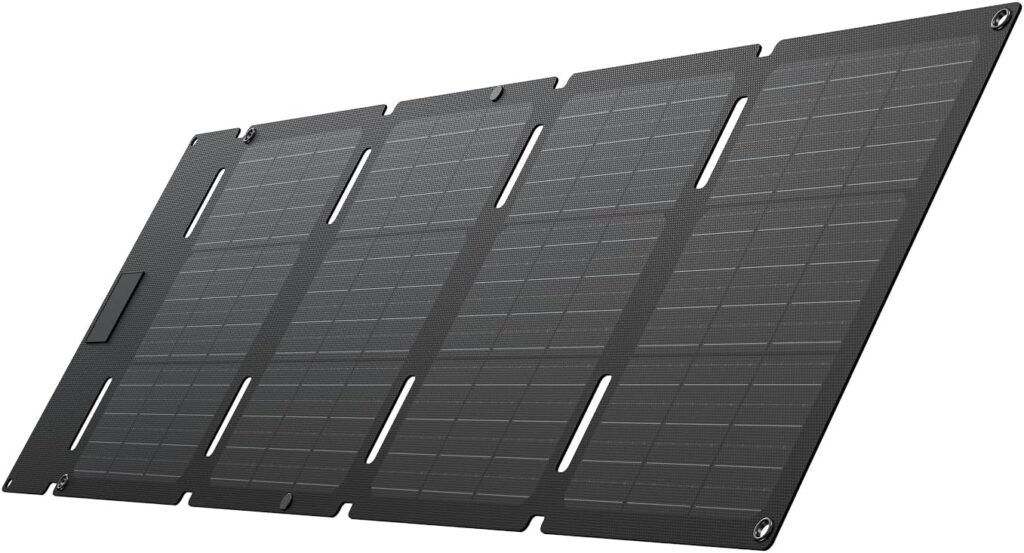
We were looking for a highly portable, efficient solar panel that could actually keep up with our on-the-go lifestyle. So many small panels feel either underpowered or awkward to use. This EF ECOFLOW 45W Portable Solar Panel immediately caught our attention because it promises 25% conversion efficiency, IP68 waterproofing, and a genuinely lightweight, foldable design.
From car camping to day hikes, road trips, and backup power at home, we wanted something simple: unfold, plug in, and charge. In this review, we share how this panel stacks up in real-world use, what we appreciate, and where we think it has limitations.
Key Features at a Glance
Before we get into the details, it helps to see what this panel offers in a quick overview. We found that breaking down the specs makes it easier to decide if it fits our needs.
| Feature | Details |
|---|---|
| Product Name | EF ECOFLOW 45W Portable Solar Panel |
| Rated Power | 45W (under optimal sunlight conditions) |
| Solar Cell Type | N-Type solar cells |
| Conversion Efficiency | Up to 25% |
| Output Interface | Type-C (USB-C) + DC5521 to XT60i cable |
| Compatibility | Designed for ECOFLOW RIVER series and many similar power stations |
| Waterproof Rating | IP68 (dust-tight and submersible up to a certain depth) |
| Panel Material | ETFE protective film on solar cells |
| Folded Size | Approx. 8.8 x 12.2 x 1.6 inches |
| Weight | Approx. 3.1 lb (1.4 kg) |
| Mounting Options | Flat, tilted with stands, or hanging via 4 pre-cut grommets and included snap hooks |
| Series Connection | Not supported (cannot be connected in series) |
| Included in the Box | 1× 45W panel, 1× DC5521 to XT60i cable, 4× snap hooks, 1× user manual |
We see right away that this panel is clearly designed for portability and simplicity rather than large-scale power setups. That framed our expectations for what it should realistically handle.
Design and Build Quality
We immediately noticed that this panel is designed to be a “grab and go” solution, not a bulky piece of camping hardware. Its compact folding design and clean finish give it a modern, travel-ready look.
Foldable, Four-Panel Structure
The four-panel folding layout allows the panel to shrink down to just 8.8 x 12.2 x 1.6 inches. That’s genuinely small enough to tuck into many backpacks, under a car seat, or in a van storage pocket.
We appreciate how the folding sections feel nicely aligned; there’s a reassuring sense that it’s made for frequent folding and unfolding. For people constantly packing and unpacking, that matters more than we might think.
Lightweight But Not Flimsy
At about 3.1 lb, we find it surprisingly light for a solar panel that can put out a solid 45W under ideal conditions. It’s not “ultra-featherweight” like a phone, but compared to older portable panels, it’s easier on our shoulders and backpacks.
The balance between weight and sturdiness feels well thought-out. We can carry it on a hike, attach it to a backpack, or move it around camp without feeling like we’re hauling hardware.
Materials and Durability
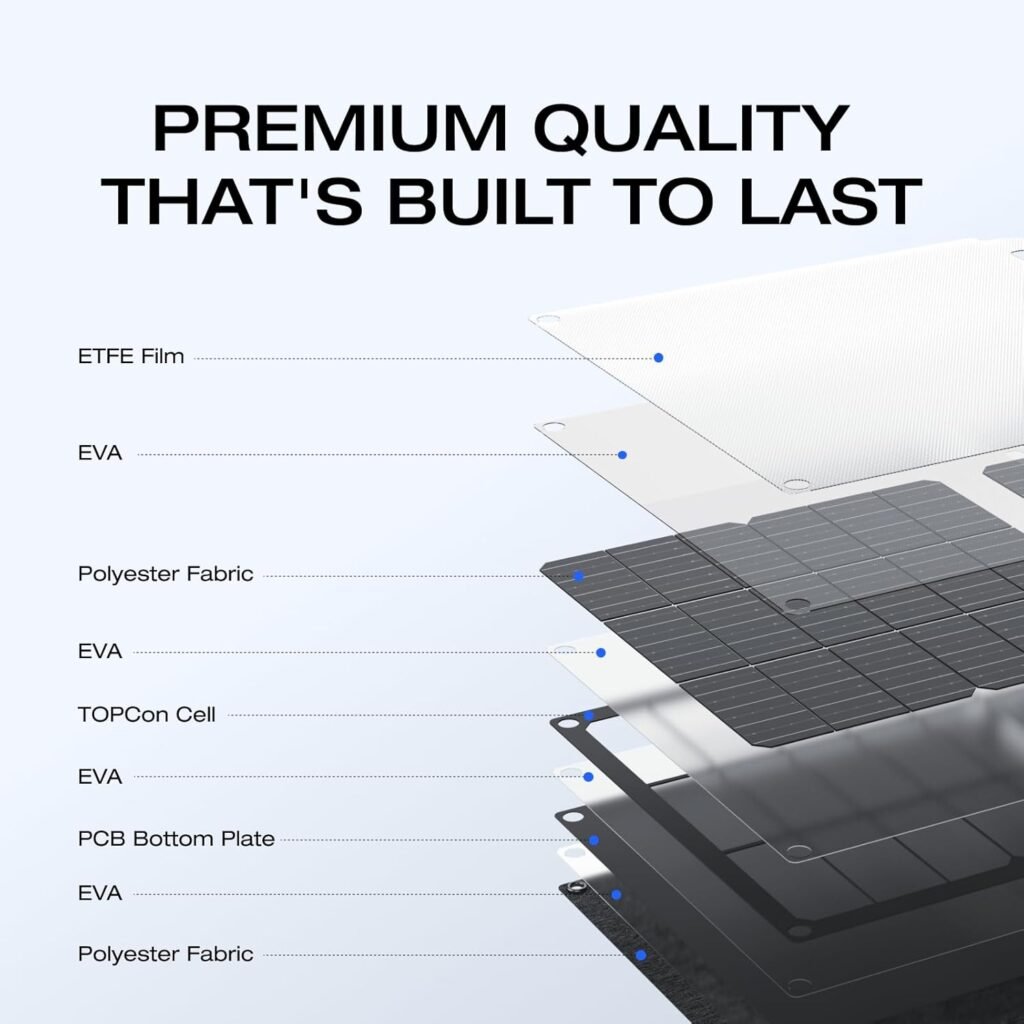
The protective ETFE film on the solar cells helps resist scratches, dust, and UV damage. ETFE is often used in higher-end outdoor solar equipment, and we appreciate that here.
We get the sense this panel is meant for frequent outdoor use rather than “emergency only” situations. The edges, stitching, and general finish convey that it’s built to survive repeated trips rather than just one season.

Advanced N-Type Solar Cell Technology
One of the standout claims of this panel is the use of N-Type solar cells, something the brand highlights as a first in the portable panel space. We were particularly curious about this because it directly affects how much energy we can get from a relatively small surface.
What N-Type Cells Mean for Us
N-Type solar cell technology generally offers higher efficiency and less performance degradation over time compared to older P-Type technology. In practice, this means more power output from the same surface area.
With a claimed conversion efficiency of up to 25%, this panel is operating in a range we usually associate with premium or larger fixed panels. For a compact, foldable design, that’s impressive.
We noticed that under strong, direct sun, it seems to deliver respectable charging speeds to portable power stations and compatible devices. Of course, no panel reaches its full rated wattage all the time, but higher efficiency gives us a better chance of getting close.
Real-World Implications of 25% Efficiency
For us, 25% efficiency translates into two major benefits:
- We can carry a smaller panel instead of a larger, heavier one for the same approximate power.
- We get better results in marginal conditions than we do from cheap, low-efficiency panels.
In situations like partly cloudy weather or winter sun at a low angle, we feel more confident that we’re still capturing a decent share of available light.
Portability and Everyday Usability
We care as much about how easy a panel is to use as we do about its raw power. A compact, user-friendly panel encourages us to actually bring it along rather than leaving it at home.
Size and Weight on the Move
The folded size and 3.1 lb weight make the EF ECOFLOW 45W panel a solid match for:
- Road trips and van life
- Short to moderate hikes
- Weekend camping and festivals
- Emergency go-bags or home backup kits
We find that it strikes a sweet spot: light enough for regular carrying, yet powerful enough to be genuinely useful. If we were planning multi-day backpacking trips where every gram counts, we’d still think carefully, but for most outdoor use, it’s quite reasonable.
How It Fits Into Our Gear
We can slip it into a backpack next to a laptop, or tuck it into a storage bin with our camping gear. Its rectangular folded shape packs more neatly than some floppy, oversized flexible panels.
This matters because if a piece of gear doesn’t fit well into our packing system, we tend not to bring it. With this panel, we feel more confident throwing it into the mix each time we head out.
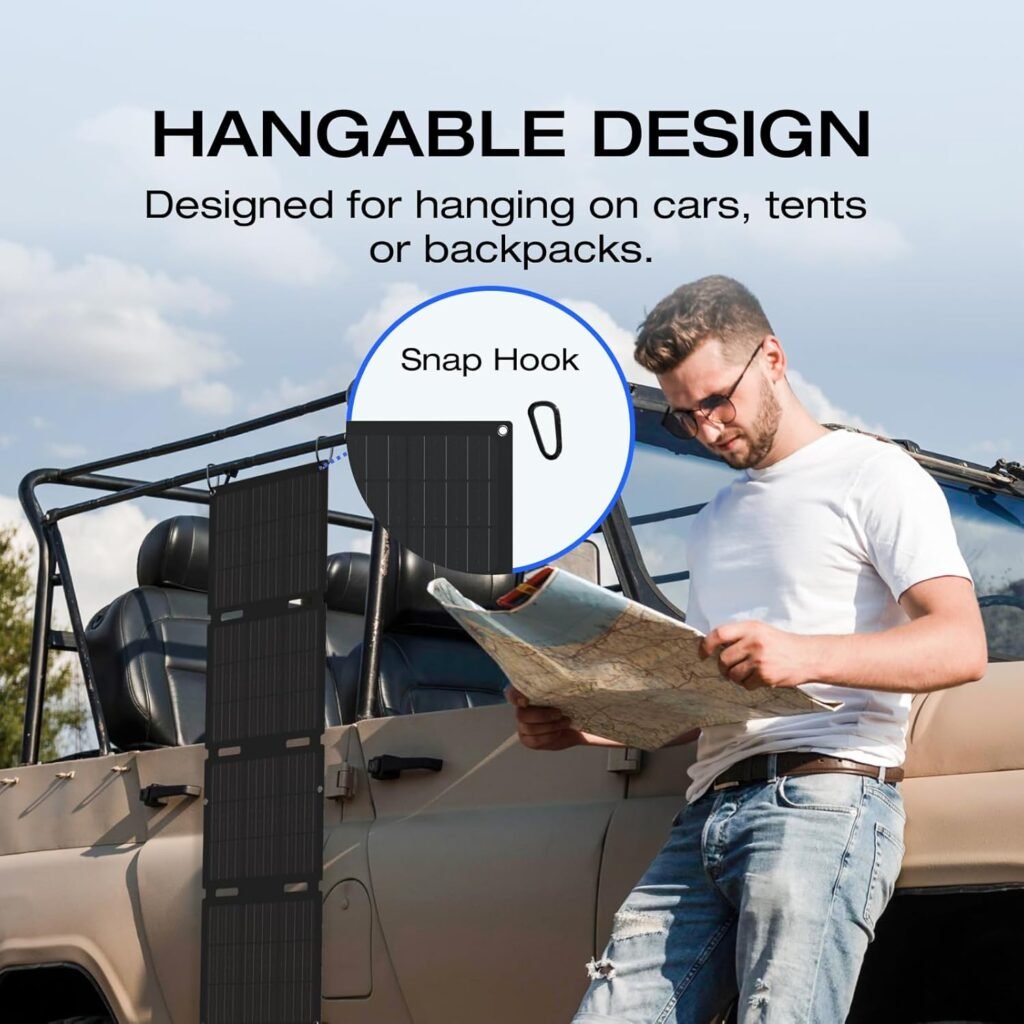
Hanging Design and Mounting Options
One of the small but very practical design touches is the included hanging system. Charging while we’re on the move can be a huge bonus.
Pre-Cut Grommets and Snap Hooks
The four pre-cut grommets in the corners, along with the included snap hooks, let us:
- Hang the panel on a backpack
- Attach it to the side or roof rack of a vehicle
- Hang it on a tent, tarp, or fence
- Suspend it from a balcony or porch rail at home
We like that this gives us options beyond just laying it flat on the ground. Being able to orient the panel towards the sun, or keep it off damp surfaces, extends its usefulness.
Charging While Traveling
The hanging design particularly shines when:
- We’re hiking to a campsite and want to trickle charge a small power station or power bank.
- We’re driving and can hang it inside a rear window or from a roof rack, depending on our setup.
- We’re in a tight camping spot where flat ground is limited or shady, but vertical surfaces catch more light.
We do need to be realistic: output can vary a lot if the panel keeps changing angle while we walk. Still, getting some charge while on the move is better than waiting until we stop.
Weather Resistance and IP68 Waterproof Rating
Outdoor gear has to handle unpredictable conditions. We can’t always pack up instantly when the clouds burst, so we were glad to see a high waterproof rating advertised here.
What IP68 Means for Us
An IP68 rating generally means:
- Total protection against dust ingress.
- Can withstand immersion in water to a certain depth for a specified duration (exact details can vary by product).
For our practical use, this suggests the panel can handle:
- Heavy rain and splashes
- Dusty trails and campsites
- Occasional accidental drops into shallow water (within rated parameters)
We still wouldn’t intentionally leave it submerged for long, but it’s reassuring to know a sudden downpour or splash won’t ruin it.
Paired With ETFE Protection
The ETFE film over the solar cells helps resist:
- UV degradation
- Mild abrasions and scuffs
- Dirt buildup (to some extent)
We still need to wipe off dust or mud periodically to maintain performance, but we’re less worried about minor wear and tear affecting functionality. This panel feels like it’s built to be used, not babied.
Compatibility With Power Stations and Devices
We were particularly interested in how this panel integrates with existing power setups. Charging flexibility is a big deal for us.
Ideal Companion for ECOFLOW RIVER Series
The panel is positioned as an “ideal companion” for RIVER series power stations. That makes sense given the included DC5521 to XT60i cable, which is designed to plug directly into ECOFLOW input ports.
With a compatible RIVER unit, we get:
- A clean, straightforward connection
- Automatic recognition of solar input by the power station
- Simple plug-and-play operation once we unfold the panel
If we already own a RIVER power station, this panel fits very naturally into our setup.
Compatibility With Other Power Stations
Because it uses a DC5521 output and a Type-C (USB-C) interface, we may be able to:
- Connect to other brands of power stations that accept similar input, using appropriate adapters.
- Charge smaller devices directly via Type-C, depending on their power requirements.
We do recommend checking input specs of our power station and possibly sourcing compatible cables or adapters if we’re using non-ECOFLOW hardware. The panel is not locked to only one brand, but it is clearly optimized for the ECOFLOW ecosystem.
Performance and Real-World Charging Experience
Even the best specs don’t matter if the panel can’t deliver when we need it. We looked at how 45W power and 25% efficiency translate into practical charging scenarios.
Understanding 45W in Practice
No solar panel outputs its full rated wattage all the time. Factors like:
- Time of day
- Angle of the sun
- Cloud cover
- Temperature
- Cleanliness of the panel surface
all affect output. Under good midday sun, we can reasonably expect the EF ECOFLOW 45W Portable Solar Panel to approach its rated power, especially if angled well.
This power level is best suited for:
- Charging small to medium portable power stations slowly but steadily.
- Topping off phones, tablets, cameras, and small laptops (via the power station or directly through compatible ports).
- Maintaining charge on devices over the course of the day while we’re outdoors.
What We Can Charge Comfortably
Here’s how we generally think about its capabilities:
- Phones, GPS units, headlamps, small cameras: Easily covered.
- Tablets and small laptops (via power station): Very doable with some patience.
- Larger power stations (300–500Wh and above): It will charge them, but more slowly; we need to think in terms of “daylong topping up” rather than rapid refills.
- High-demand appliances (fridges, heaters, power tools): The panel alone isn’t sized for heavy loads; those rely more on the power station’s battery capacity, with the panel extending runtime.
We like to think of this panel as a “sustainability helper” for our portable power systems rather than a full replacement for grid charging.
Ease of Setup and Daily Use
We value gear that doesn’t demand a long learning curve. Solar energy can be intimidating at first, but panels like this one help lower the barrier.
Basic Setup Steps
Using the EF ECOFLOW 45W panel is straightforward:
- Unfold the panel fully and orient it toward the sun.
- Connect the DC5521 to XT60i cable to our compatible ECOFLOW power station (or use Type-C as needed).
- Adjust the angle periodically to follow the sun for best performance.
- Monitor the power station’s display (if it has one) to see input wattage.
We appreciate that there aren’t complicated menus or configuration steps here. It simply becomes another plug-in source of power, very much like plugging into the wall, but slower and sun-dependent.
Using the Hanging Setup
When hanging:
- We secure the snap hooks to a backpack or vehicle.
- We make sure the panel faces outward toward the sun.
- We avoid bending or twisting the panel excessively while walking or driving.
Output may fluctuate more, but even intermittent charging can meaningfully extend battery life over a day’s journey.
Limitations: No Series Connection and Modest Wattage
Every product has trade-offs, and understanding them helps us avoid disappointment. This panel is no exception.
Unable to Connect in Series
The product clearly states it cannot be connected in series. That means:
- We can’t chain two or more of these panels in series to increase voltage.
- Our total system remains limited to what this one panel can provide.
For some ECOFLOW setups that accept only certain voltage ranges, this design simplifies compatibility, but for advanced users wanting multi-panel arrays, this is a limiting factor.
We may still be able to connect panels in parallel depending on our system, but we must carefully follow the manufacturer’s guidelines. If we need large solar input (say 200–400W or more), we probably want to look at bigger panels or arrays designed for that role.
45W: Great for Light Use, Not a Powerhouse
The wattage is perfect for light to moderate users, but we should be realistic about expectations. If we’re running:
- 12V fridges
- Continuous laptop workstations
- Multiple devices and lights all day and night
this 45W panel alone may not keep up, especially in less-than-ideal sun. We’d either pair it with larger panels, a bigger battery, or accept a more conservative power usage pattern.
For day hikers, casual campers, or travelers who mainly need to keep personal electronics charged, it’s a solid fit. For full-time off-grid living, we’d treat it as a supplemental panel rather than our main solar input.
Who This Solar Panel Is Best For
We find it helpful to picture the types of users who will get the most from this panel. That way, we can quickly see if we’re in that group.
Outdoor Enthusiasts and Casual Campers
If we:
- Go on weekend camping trips
- Spend time at music festivals or outdoor events
- Enjoy occasional boondocking or car camping
this panel gives us a convenient way to keep phones, lights, and cameras powered without needing to run our car engine frequently.
Its portability and hanging options make it more user-friendly than rigid, heavy panels that rarely leave the campsite.
Road Trippers and Van Life Light Users
For those of us who:
- Travel by car, SUV, or small van
- Use a compact ECOFLOW RIVER series power station
- Want to stretch our time between plugging into shore power
the EF ECOFLOW 45W panel adds slow, steady solar input. It’s especially appealing if our energy usage is modest and we’re not running high-consumption appliances all day.
Preparedness and Emergency Users
For home emergency kits or preparedness plans, this panel:
- Provides a lightweight, storable source of renewable energy.
- Can charge essential devices and small power stations during outages.
- Takes up much less storage space than larger panels.
We like that we can stash it in a closet or emergency bin and pull it out when needed without feeling overwhelmed by its size.
Pros and Cons
We find a simple overview helpful when weighing a purchase decision. Here’s how we see the main strengths and weaknesses of the EF ECOFLOW 45W Portable Solar Panel.
What We Appreciate
-
High Conversion Efficiency (up to 25%)
We get more energy from a small footprint, especially in good sun. -
N-Type Solar Cell Technology
A more modern, efficient cell type that can age better and deliver more stable performance. -
Compact and Lightweight Design
At around 3.1 lb and a small folded footprint, it’s genuinely portable. -
IP68 Waterproof Rating
We can worry less about rain, splashes, and dusty environments. -
ETFE Protective Film
Adds durability and helps protect cells over time. -
Hanging Design with Hooks and Grommets
Lets us charge while walking, driving, or in tight spaces where flat ground is limited. -
Good Compatibility With ECOFLOW RIVER Series
Simple plug-and-play connection using the included cable. -
USB-C (Type-C) Output
More flexible charging options for modern devices and power stations.
Where We See Drawbacks
-
Limited to 45W Output
Not suitable as the sole power source for larger, power-hungry setups. -
Cannot Be Connected in Series
Limits system expansion for those wanting higher-voltage arrays. -
Optimal Performance Requires Sun and Good Positioning
Like all solar panels, output drops significantly in shade or poor orientation. -
Cables and Adapters May Be Needed for Non-ECOFLOW Systems
Full ease-of-use really shines in the ECOFLOW ecosystem; other setups might require extra accessories.
Practical Tips for Getting the Most Out of This Panel
We find that a few simple habits can noticeably improve performance. If we plan to rely on this panel, these points help.
Position It Well
- Aim the panel as directly at the sun as possible.
- Adjust the angle every hour or two when feasible.
- Avoid shading from trees, vehicles, or gear; even partial shade can cut output drastically.
We often prop it up using stands, natural features, or vehicle surfaces to keep it at a good angle.
Keep It Clean
- Wipe off dust, pollen, or dried water spots with a soft, damp cloth.
- Avoid abrasive cleaners that might damage the ETFE surface.
- Check for leaves or debris after wind or storms.
A clean panel can significantly outperform a dirty one, especially with higher-efficiency cells that respond well to unobstructed light.
Manage Expectations and Usage
- Plan to charge power stations and power banks during peak sun hours.
- Use stored power in the evening and early morning.
- Prioritize essential devices (phones, communication tools, lights) if sunlight is limited.
By aligning our usage pattern with when solar input is strongest, we get more reliability out of a modest 45W panel.
Unboxing: What We Actually Get
Knowing exactly what’s in the box helps us plan for additional cables or accessories.
Included Items
Based on the product details, we receive:
- 1 × 45W Portable Solar Panel
- 1 × DC5521 to XT60i Charging Cable
- 4 × Snap Hooks for hanging
- 1 × User Manual
We like that the key pieces for basic usage are included. The snap hooks are a particularly thoughtful addition for outdoor users.
What We Might Still Want to Add
Depending on our setup, we may consider:
- A longer extension cable for more flexible placement around a campsite or vehicle.
- Adapters or alternative cables for non-ECOFLOW power stations.
- A protective case or sleeve if we plan to pack it with heavy or sharp objects.
These extras are optional, but they can make a difference in day-to-day convenience and gear organization.
How This Panel Fits Into a Broader Power Strategy
We see this EF ECOFLOW 45W Portable Solar Panel as a strategic component in a broader power system rather than a one-stop solution for all energy needs.
Partnering With a RIVER Power Station
When combined with an ECOFLOW RIVER series unit, we effectively get:
- A compact solar generator system.
- Solar input via the panel.
- Battery storage and AC/DC outputs via the power station.
- The ability to charge from wall or car outlets when sun is not available.
This pairing is ideal for users who move between grid access and off-grid environments regularly.
Acting as a Backup or Supplemental Source
If we already own larger panels or another solar setup, the 45W EF ECOFLOW panel can still serve as:
- A backup panel in case of failure or damage to primary units.
- A lightweight option for day trips when we don’t want to bring a full kit.
- A dedicated panel for smaller devices, freeing up bigger panels for heavier loads.
We like having multiple layers of redundancy when we rely on electricity for navigation, communication, or work.
Environmental and Lifestyle Benefits
Beyond raw numbers, we appreciate the qualitative benefits of carrying a small, capable solar panel.
Less Reliance on Grid or Car Charging
By harnessing sunlight:
- We reduce how often we need to plug into shore power.
- We can save fuel by running the vehicle engine less for charging.
- We enjoy more autonomy, especially in remote locations.
Over time, this panel helps us build more confidence in our ability to stay powered without being tethered to outlets.
A Gentler Footprint
While one 45W panel is not a complete environmental solution, it:
- Encourages us to use renewable energy wherever possible.
- Reduces battery waste by recharging rechargeable devices more sustainably.
- Helps shift our mindset toward energy awareness and efficient consumption.
We value gear that nudges us toward more responsible practices while still being convenient and enjoyable to use.
Final Thoughts: Is the EF ECOFLOW 45W Portable Solar Panel Worth It?
We see the EF ECOFLOW 45W Portable Solar Panel with Type-C and N-Type solar cells as a well-rounded option for anyone who prioritizes portability, simplicity, and high efficiency in a compact form.
It shines for:
- Travelers with ECOFLOW RIVER series power stations.
- Campers, hikers, and road trippers needing lightweight solar support.
- Emergency preparedness kits that require a compact, durable energy source.
It is less suited for:
- Large off-grid systems requiring hundreds of watts of solar input.
- Users who want to chain multiple panels in series for higher voltage.
- Power-hungry setups running big appliances around the clock.
If our goal is to keep essential devices and small power stations charged during ordinary outdoor adventures and occasional outages, this panel fits that role with a friendly, user-focused design. We carry it more often precisely because it is easy to store, light to transport, and quick to set up.
In our view, the EF ECOFLOW 45W Portable Solar Panel is a smart companion for modern, mobile lifestyles where we want reliable power without hauling around a bulky solar rig.