Disclosure: As an Amazon Associate, I earn from qualifying purchases.
Have we ever wished we could bring a reliable, quiet power source with us anywhere—without relying on noisy generators or fragile, cheap solar panels?

What Is the EF ECOFLOW 2PCS 160 Watt Portable Solar Panel?
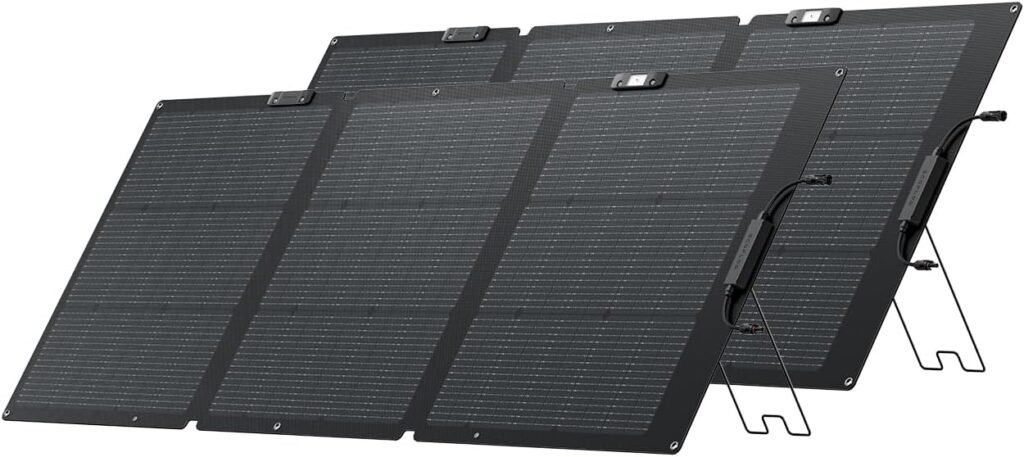
When we look at the EF ECOFLOW 2PCS 160 Watt Portable Solar Panel for Power Stations, we’re really talking about a portable solar setup built for serious outdoor and backup power use. This package includes two 160W foldable solar panels, each engineered for high efficiency, durability, and ease of use.
Rather than a flimsy panel we toss in the trunk and hope for the best, this kit is designed to be part of a reliable off-grid system. It pairs especially well with EcoFlow power stations but can fit into many off-grid setups with compatible inputs.
Key Specifications at a Glance
Before we go deeper into our experience-style review, it helps to see the main specs in one place. This gives us a quick sense of what the panels offer and how they might fit our needs.
| Feature | Details |
|---|---|
| Product Name | EF ECOFLOW 2PCS 160 Watt Portable Solar Panel |
| Total Rated Power | 320W (2 × 160W panels) |
| Solar Cell Type | N-TYPE (high-efficiency technology) |
| Conversion Efficiency | Up to 25% |
| Panel Type | Foldable, portable |
| Weight per Panel | Approx. 12.3 lb (5.6 kg) |
| Weather Protection | IP68 water and dust resistance |
| Coating | ETFE (enhanced durability and longevity) |
| Mounting | Integrated adjustable kickstand (30–60°) |
| Setup Time | About 40 seconds |
| Compatibility | Designed for EcoFlow power stations; can work with other compatible DC inputs |
| Included Accessories | Solar to XT60i charging cable, protective bag, quick start guide, safety instructions, warranty card |
This overview sets the stage for how these panels perform in real-world scenarios, whether we’re camping, road tripping, or building a backup system at home.

Design and Build Quality
We always pay attention to build quality with portable solar panels, because they take a lot of abuse: folding, unfolding, traveling in vehicles, and exposure to the elements. EcoFlow clearly designed these panels with rugged use in mind.
Foldable, Portable Form Factor
Each 160W panel folds up into a compact shape that fits into its supplied protective bag. At about 12.3 lb, the weight is very manageable for most of us, especially considering the power output we get.
We find that this balance of size and power makes the panels practical for car camping, RV trips, van life, and home backup. They’re not ultralight backpacking panels, but they’re absolutely reasonable for any trip where we have a vehicle.
ETFE Coating and Rugged Construction
The ETFE coating is one of the unsung heroes here. ETFE (ethylene tetrafluoroethylene) is commonly used on higher-end solar panels because it offers:
- Better resistance to UV degradation
- A longer expected lifespan compared to cheaper plastic coatings
- Improved light transmission, which helps with efficiency
We appreciate this because it means the panels are not just about raw wattage; they’re also built to last. We’re not dealing with a flimsy plastic front that yellows or cracks after a season or two.
The overall feel is solid and premium. Hinges, edges, and the integrated stand all give us the impression of a well-thought-out product made for repeated use.
Efficiency and Performance
When we invest in portable solar, efficiency directly affects how much power we can realistically generate each day. EcoFlow leans heavily into efficiency claims here, and there’s substance behind that.
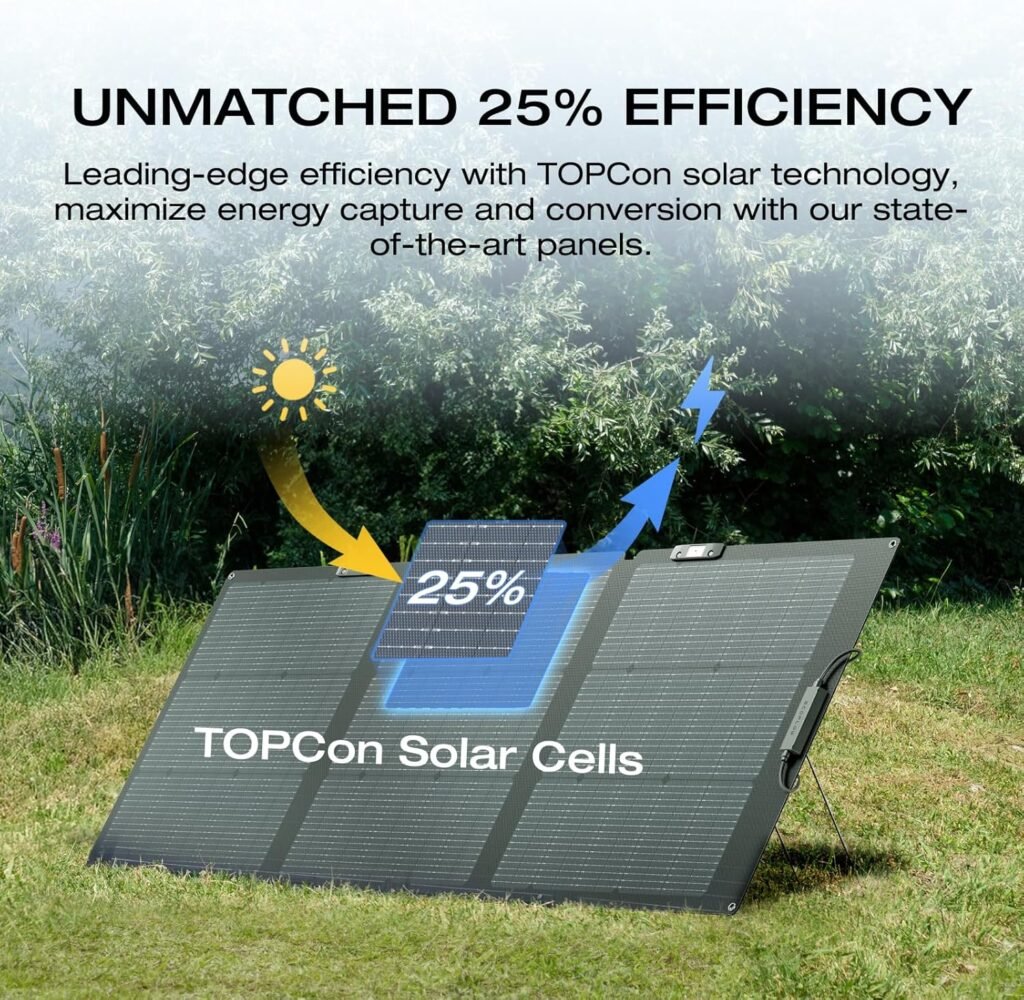
25% High Conversion Efficiency
These panels use N-TYPE solar technology, which is more advanced than traditional P-type cells found in many consumer panels. EcoFlow claims up to 25% conversion efficiency, which is near the upper end for consumer-level portable panels.
In practice, high efficiency means:
- We can get more power from a smaller surface area
- The panels perform better in less-than-ideal conditions (like partial cloud cover or lower sun angles)
- We need less physical space to generate the same energy compared to older, less efficient panels
We like this because it makes the panels a better fit for small campsites, RV setups, and mobile use where space for solar is often limited.
Real-World Use and Expected Output
Actual power output always depends on conditions: latitude, time of day, season, weather, and panel angle. Under ideal noon sun, we can reasonably expect output approaching the rated power, especially if we:
- Angle the panels correctly
- Keep the surface clean and free from dust or shade
- Use the built-in solar angle guide
In real-world terms, with two 160W panels (320W total), we can often expect between 60–80% of rated power under decent sun—so roughly 190–250W in many situations. In strong sun with proper positioning, it can get closer to the rated 320W.
For a typical camping day with 4–6 hours of reasonably strong sun, we can harvest a meaningful amount of energy, enough to keep a compatible power station topped up, run small appliances, and charge devices.
Setup and Ease of Use
We don’t want to wrestle with complicated gear when we arrive at a campsite or need power quickly at home. EcoFlow seems to understand this, because the setup process is very straightforward.
Fast 40-Second Setup
EcoFlow states we can set up the panel in around 40 seconds, and that’s realistic once we get the hang of it. The basic routine goes like this:
- Take the panel out of the protective bag.
- Unfold it fully.
- Extend and adjust the built-in kickstand.
- Use the solar angle guide to refine the position.
- Connect the solar cable to our power station or compatible device.
We like how little fuss is involved. For those of us using solar daily or moving between locations, saving a few minutes each time adds up.
Adjustable Kickstand (30–60°) and Solar Angle Guide
The adjustable bracket allows angle adjustments between 30° and 60°. That’s a useful range for most latitudes and times of year. Tilting toward the sun significantly improves power output compared to laying a panel flat.
The built-in solar angle guide is another thoughtful touch. It helps us visually line up the panel for the best sunlight capture without needing guesswork or extra tools. For users new to solar, this makes it easier to get good performance right away.
We appreciate this kind of design because it turns what could be a technical chore into a simple, repeatable habit.
Durability and Weather Resistance
Portable panels are often exposed to the elements, and we don’t always have the luxury of perfect weather. That’s where the EcoFlow panel’s durability becomes a big selling point.
IP68 Water and Dust Resistance
The IP68 rating is serious protection for outdoor gear. It means the panel is:
- Fully dust-tight (no dust ingress that could affect performance)
- Capable of withstanding immersion in water to a defined depth and time
Practically, this tells us we don’t need to panic if it starts raining or if dust and sand blow around the campsite. While we wouldn’t purposefully leave it submerged, we can be confident that:
- Sudden rainstorms won’t ruin our investment
- Dusty environments—like deserts or dirt roads—are manageable
We still want to protect the cable connections and our power station from water, but the panel itself is clearly made for unpredictable environments.
Long-Term Reliability in Harsh Conditions
Between the ETFE coating, robust construction, and IP68 rating, we see these panels as a long-term part of our gear rather than a disposable item.
If we often camp at the coast, in humid forests, or in dry, dusty areas, this level of robustness makes a real difference. It’s reassuring when we rely on solar for backup power during storms or outages: our panels can handle harsh weather when we need them most.
Portability and Storage
For any portable panel, the story doesn’t end with performance. We also care about how easy it is to move and store.
Lightweight and Compact Folding Design
At 12.3 lb per panel, these panels strike a nice balance between sturdiness and portability. Included protective bags make them easier to carry and shielded from scratches during transport.
When folded, each panel becomes a manageable flat package that:
- Fits easily in an RV storage compartment
- Slides behind a seat or into a trunk
- Stacks with other camping gear without taking over the whole space
This compactness is particularly helpful for those of us juggling coolers, tents, bikes, and other essentials.
Ideal Use Cases on the Go
We see these panels fitting into several real-world scenarios:
- Car campers storing gear in trunks or roof boxes
- RV owners wanting to augment rooftop solar or set up a ground array
- Van lifers running fridges, fans, and devices from a power station
- Home users keeping the panels stored until a power outage, then setting them up quickly
Because the panels fold and pack neatly, we can keep them with our emergency kit or camping gear and deploy them only when needed.
Compatibility with Power Stations and Systems
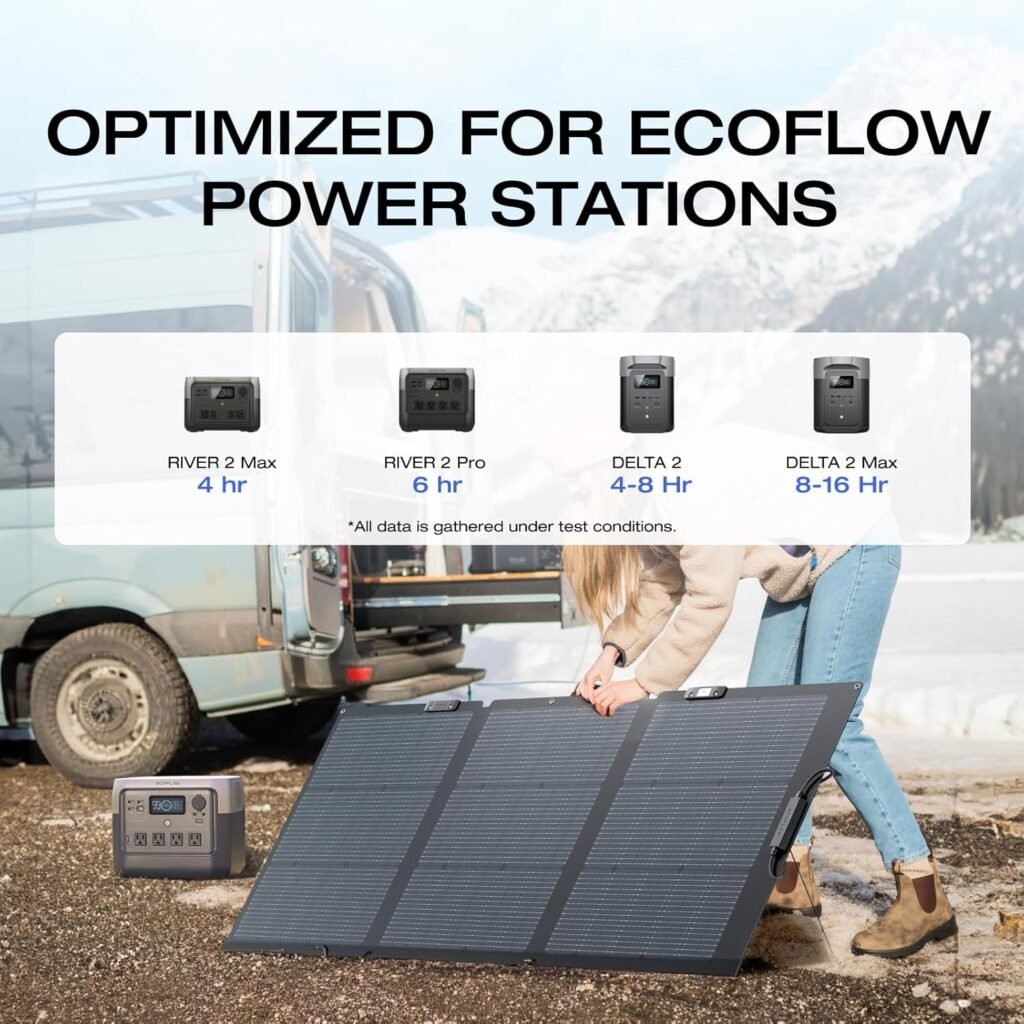
This solar kit feels most at home when paired with EcoFlow power stations, but we’re not locked into that ecosystem as long as we understand the connections and requirements.
Designed for EcoFlow Power Stations
The panels come with a Solar to XT60i charging cable, which directly connects to many EcoFlow portable power stations. This ensures:
- Plug-and-play operation
- Optimized charging profiles
- Good safety and compatibility
If we already own an EcoFlow power station (like a DELTA or RIVER series), integrating these panels becomes very straightforward.
Using with Other Brands and Systems
While the kit is tuned for EcoFlow, we can often use it with other systems if:
- Our power station or solar charge controller supports similar voltage and current ranges
- We have (or buy) the correct adapter cables
We should always confirm the input specs of our power station before connecting. Using a suitable charge controller is crucial if we connect these panels to a battery bank directly.
We appreciate that the panel is not locked to a single ecosystem in principle, even though EcoFlow clearly optimizes it for their own stations.
Everyday Use: Camping, RVs, and Road Trips
This product really shines when we bring it into our regular outdoor life. Let’s look at how it performs for common use cases where many of us want reliable portable power.
Camping and Overlanding
On camping trips, especially longer ones, power needs add up:
- Charging phones, tablets, and cameras
- Running lights, fans, or a small fridge
- Powering a laptop for remote work or media
With two 160W panels and a compatible power station, we can keep a small fridge running, charge devices, and still have reserve power for evenings. Instead of rationing battery use, we can rely on a steady daily recharge cycle from the sun.
We enjoy the quiet operation: no generator noise, no fumes, and we can camp in remote sites without power hookups while still being comfortable.
RV and Van Life
For those of us living or traveling in an RV or van, portable panels add flexibility even if we already have rooftop solar:
- We can park in the shade and place the panels out in the sun using long cables.
- We can adjust panel angles more easily than rooftop panels, especially in winter.
- We gain extra capacity without modifying our roof or electrical system.
Two 160W panels (320W total) can significantly boost how much energy we harvest each day, which is especially helpful when we’re running a DC fridge, fans, water pump, and charging multiple laptops or gadgets.
Road Trips and Remote Stays
On a long road trip, especially across remote areas, having solar backup can be a game changer. We can:
- Keep a power station charged between stops
- Run a cooler or fridge without relying solely on the vehicle battery
- Set up a temporary solar camp while we hike, surf, or explore an area
Because the panels fold quickly and pack easily, we’re more likely to use them frequently rather than leaving them in storage.
Home Backup and Emergency Use
Even if we’re not frequent campers, these panels can give us important peace of mind at home during outages.
Off-Grid and Grid-Down Scenarios
In a power outage, pairing the EcoFlow 160W panels with a power station lets us:
- Run essential devices like phones, routers, lights, and small medical equipment
- Keep a laptop charged for work or communication
- Power small appliances for short periods, depending on our power station capacity
The solar panels allow us to extend the usefulness of our power station beyond its initial stored capacity. Instead of a one-time battery, we effectively have a small, renewable power source we can replenish daily.
Seasonal and Weather-Based Resilience
Weather events like storms, heat waves, or snow can interrupt power, sometimes more than once a year. Having durable, IP68-rated panels that can tolerate rough conditions means:
- We can still use them when the weather is less than ideal
- We have a long-term tool rather than a single-season gadget
We appreciate that these panels are rugged enough to be stored for months and then used when needed, year after year.
Pros and Cons
Every product has its strengths and trade-offs. Laying them out clearly helps us decide whether these panels align with our priorities.
What We Really Like
-
High efficiency (up to 25%)
We get more power from less panel area, which matters when space is limited. -
N-TYPE solar technology
This advanced cell type offers better performance and longevity than many cheaper panels. -
ETFE-coated surface
This improves durability, UV resistance, and light transmission. -
IP68 water and dust resistance
We can leave the panels out in unpredictable weather without constant worry. -
Adjustable kickstand (30–60°)
Making quick angle adjustments helps us squeeze more power out of the same sun. -
Fast, simple setup
Around 40 seconds from bag to charging means we’re more likely to use them regularly. -
Lightweight for the power level
At about 12.3 lb per panel, they remain manageable for most users. -
Good synergy with EcoFlow power stations
Plug-and-play operation is ideal for those already in the EcoFlow ecosystem.
Possible Drawbacks to Consider
-
Not ultralight for backpacking
These are better suited for vehicle-based travel, RVs, and home use, not long-distance trekking on foot. -
Premium pricing compared to budget panels
The quality and efficiency come at a higher cost than many low-end panels. -
Best integration within EcoFlow ecosystem
While they can work with other systems, maximum convenience is with EcoFlow power stations. -
Requires decent sunlight for full performance
This is true for all solar, but it’s good to manage expectations if we live in very cloudy regions.
We see these as focused, mid-to-high-end portable panels that favor durability, performance, and ease of use over being ultra-cheap or ultra-light.
Who Is This Solar Panel Best For?
Not every product is ideal for every user. We find it helpful to think about who will get the most benefit from the EF ECOFLOW 2PCS 160 Watt Portable Solar Panel.
Ideal Users and Scenarios
We think this product is an excellent match if we:
- Already own, or plan to own, an EcoFlow power station
- Car camp or RV camp frequently, and want a serious, reliable solar setup
- Live in a van or RV full-time, especially if we work on the road and need steady power
- Want an emergency backup solution at home that’s clean, quiet, and reusable
- Prefer to invest in higher-quality, longer-lasting gear rather than constantly replacing cheaper panels
If we fit any of these use cases, the efficiency, durability, and user-friendliness are likely to feel worth the price.
Who Might Want Something Else
We might be better served by a different solution if we:
- Need an ultralight backpacking panel to carry on multi-day hikes (these panels are too heavy and large for that).
- Are on a very tight budget and don’t need the advanced features or durability.
- Already have a large, permanently mounted rooftop array and don’t value the portability aspect.
In those situations, smaller, cheaper, or more specialized panels could be a better fit.
Practical Tips for Getting the Most Out of These Panels
Once we have the panels, a few simple habits can help us maximize performance and lifespan.
Optimizing Panel Placement
To get the best output, we can:
- Face the panels toward the sun with the solar angle guide as our helper.
- Adjust the tilt angle a couple of times during the day if possible—morning, midday, and afternoon.
- Avoid shade from trees, vehicles, or structures. Even partial shading can significantly drop output.
If we can move the panels a few times, we’ll often see a noticeable improvement in total daily energy.
Care, Cleaning, and Storage
To keep our panels performing well for years, we should:
- Wipe dust and dirt off the ETFE surface with a soft cloth and water when needed.
- Avoid harsh chemicals or abrasive cleaners.
- Let them dry before storing them in the protective bag.
- Store them in a cool, dry place, away from sharp objects or heavy items that could crush them.
These simple steps help maintain both the power output and the physical condition of the panels.
Comparing to Typical Portable Solar Options
To understand the value better, it helps to compare this kit to the general market of portable solar products.
Versus Budget Foldable Panels
Most budget foldable panels:
- Use lower-efficiency cells
- Often lack ETFE coating and high ingress protection
- May not offer adjustable stands or angle guides
- Can have less robust construction and shorter lifespans
The EcoFlow 160W panels stand out with:
- Higher efficiency (up to 25%)
- Better materials and weather resistance (IP68, ETFE)
- More thoughtful design touches for ease of use
We pay more, but we also get better performance and durability that matter in real-world use.
Versus Rigid Rooftop Panels
Rigid panels mounted on rooftops or racks typically:
- Are less portable and often permanently fixed
- Can offer lower cost per watt for stationary installations
- Are great for always-on setups but poor for flexible deployment
The EcoFlow panels, by contrast:
- Are made to be moved, folded, and stored
- Give us flexibility to change their location and angle at will
- Can serve in multiple roles: camping, RV, home backup, and travel
We see these as complementary to rooftop systems rather than direct competitors.
What We Get in the Box
Understanding exactly what’s included helps us plan our setup and know whether we need any extra accessories.
Included Components
With the EF ECOFLOW 2PCS 160 Watt Portable Solar Panel, we receive:
- Two 160W EcoFlow portable solar panels
- Solar to XT60i charging cable (for connecting to compatible power stations)
- Protective carrying and storage bags
- Quick Start Guide
- Safety Instructions
- Warranty Card
For most EcoFlow users, this is truly plug-and-play right out of the box. If we’re integrating with other systems, we may need additional cables or adapters.
What We Might Add Separately
Depending on our setup, we might consider:
- A longer solar extension cable if we want to place panels far from our RV or camp for better sun.
- Additional adapters or connectors if we’re pairing with a third-party power station or charge controller.
- A power station itself if we don’t already own one; the panels are only one part of an off-grid system.
Planning these pieces in advance helps us avoid surprises on our first trip or during an outage.
Our Overall Impressions
After looking at the features, build, performance, and use cases, we see the EF ECOFLOW 2PCS 160 Watt Portable Solar Panel kit as a strong option for anyone serious about portable solar.
Strengths That Stand Out
What impresses us most is the combination of:
- High conversion efficiency with modern N-TYPE cells
- Rugged, ETFE-coated construction and IP68 protection
- User-friendly setup and adjustment, thanks to the kickstand and angle guide
- Solid portability for vehicle-based travel and home storage
We feel these panels fit particularly well for those of us who want a reliable, high-quality solar solution that can handle frequent use and tough environments.
The Big Picture for Our Power Needs
In the broader context of off-grid and backup power, these panels:
- Give us a renewable, quiet power source wherever we go
- Help reduce reliance on gas generators and noisy equipment
- Fit into a modular system that can grow as our needs expand (larger power station, more panels, etc.)
If we value robust build quality, efficient performance, and the simplicity of folding panels that just work, this kit earns its place as a central piece of our portable power setup.
We see the EF ECOFLOW 2PCS 160 Watt Portable Solar Panel as a strong long-term investment for outdoor enthusiasts, travelers, and households that want reliable, flexible solar power at their fingertips.