When we’re off-grid for days, a dependable power station isn’t a luxury—it’s our lifeline. For 2025, we’ve focused on rugged LiFePO4 units with strong inverters, fast AC and solar charging, and UPS-ready smarts that won’t quit when the terrain gets rough. We’ll cover compact 256–1024Wh options that run fridges, lights, and laptops without fuss. Let’s weigh the standouts, the trade-offs, and the models worth your cargo space next.
Key Takeaways
- Prioritize LiFePO4 batteries for longevity (3,000–5,000+ cycles), thermal stability, and reliable performance in rugged overlanding conditions.
- Match capacity to daily loads: ~256–500Wh for essentials, ~1,000Wh+ for fridges, tools, and multi-day trips without frequent recharging.
- Look for fast, flexible charging: 1-hour AC top-ups, robust MPPT solar (110–800W), and car input for on-the-move refueling.
- Ensure adequate inverter power: 300–600W for basics; 1,000–2,000W continuous (with high surge) for heavier appliances and parallel use.
- Evaluate portability and usability: weight under 15 lb for light setups; app monitoring, UPS capability, multiple ports, and solid warranties.
DARAN Portable Power Station 600W (288Wh LiFePO4)


If you want a compact, budget-friendly LiFePO4 unit that still handles real overlanding loads, the DARAN 600W (288Wh) hits a sweet spot. We get 600W continuous (1200W surge), a durable 288Wh LiFePO4 pack with 3500+ cycles, and a 6-port layout: 2 AC, 1 USB-C PD60W, 2 USB-A, and DC in/out. It powers a car fridge, CPAP, laptops, lights, drones—just keep loads under 600W. Recharging’s quick: 80% in 2 hours via AC, with optional solar or car input. The BMS packs 12 protections, and the display plus LED/SOS help in emergencies. Note the 10% AC auto-off; DC/USB stay active.
Best For: Budget-conscious campers, overlanders, and emergency preppers who want a compact, long-life LiFePO4 power station to run essentials under 600W.
Pros:
- 600W continuous (1200W surge) with 288Wh LiFePO4 battery rated for 3500+ cycles
- Fast recharge to 80% in 2 hours via AC; supports solar and car charging (optional)
- Versatile 6-port setup including 2 AC, USB-C PD60W, 2 USB-A, and DC in/out with robust BMS and LED/SOS
Cons:
- 288Wh capacity limits run time for higher-draw devices and overnight use
- AC auto-off at 10% remaining may interrupt AC-only devices near depletion
- Solar panel and car charging cable not included
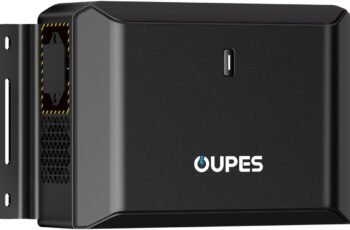
OUPES Mega 1 Portable Power Station (1024Wh, LiFePO4)

Built for overlanders who want fast, flexible power without the bulk, the OUPES Mega 1 packs a 1024Wh LiFePO4 battery and a stout 2000W inverter (4500W surge) into a 27.8-pound chassis. We like that it expands to 5kWh with the B2 battery and supports 2200W hybrid charging (AC+solar) with 800W MPPT. Fast charge hits 0–80% in about 50 minutes at 1400W, or slow charge at 700W for longevity. Ports cover 4×120V AC, dual 100W USB-C, four USB-A, DC5521, and a car socket. At ~58 dB, it’s campsite-friendly, doubles as a 20ms UPS, and includes app control plus a 5-year warranty.
Best For: Overlanders, campers, and homeowners who need a compact yet powerful 1024Wh LiFePO4 station with fast charging, UPS backup, and the option to expand capacity up to 5kWh.
Pros:
- 2000W continuous/4500W surge inverter runs most small appliances and power tools; 20ms UPS for outage protection
- Fast, flexible charging: up to 2200W hybrid (AC+solar) with 800W MPPT; 0–80% in ~50 minutes at 1400W
- Durable LiFePO4 battery, app control (WiFi/Bluetooth), 27.8 lb portable design, and 5-year warranty
Cons:
- Base 1024Wh capacity may be limited for multi-day off-grid use without the extra B2 battery
- ~58 dB fan noise can be noticeable in very quiet environments
- Solar panels and expansion battery are optional add-ons, increasing total system cost
Jackery Portable Power Station Explorer 300

Jackery’s Explorer 300 hits a sweet spot for minimalist overlanders who want real AC power without the bulk, delivering 293Wh with two pure sine wave outlets and up to 300W output (500W surge) in a 7.1-pound package. We get quiet, maintenance-free power with clean waves that protect laptops, cameras, and routers. Ports cover 60W USB-C PD in/out, Quick Charge 3.0, USB-A, and a 12V car socket. It fast-charges to 80% in about two hours using wall plus 60W PD, supports pass-through, and pairs with a SolarSaga 100 via MPPT. It’ll run fans, modems, lights, or a TV—just not high-draw appliances.
Best For: Minimalist campers, overlanders, and emergency preppers who need quiet, clean AC and USB power for small electronics without the bulk or fumes of a gas generator.
Pros:
- Compact 7.1 lb design with 293Wh capacity and two pure sine wave AC outlets (300W output, 500W surge) protects sensitive devices.
- Fast recharge to 80% in ~2 hours via wall + 60W USB-C PD; supports pass-through and multiple devices at once.
- Solar-ready with MPPT for efficient charging using the optional SolarSaga 100 panel; quiet, no maintenance.
Cons:
- Not suitable for high-draw appliances like induction cooktops, blenders, or large power tools.
- Solar panel not included; adds cost for full off-grid setup.
- Limited AC output (300W) and modest capacity mean shorter runtimes for larger loads.
EF ECOFLOW RIVER 2 Portable Power Station

Need a grab-and-go power box that recharges from empty to full in about an hour? The EF ECOFLOW RIVER 2 nails it with X-Stream AC fast charging and optional solar input up to 110W (about 2.3 hours, panel not included). Its 256Wh LiFePO4 battery delivers 3000+ cycles to 80%, safeguarded by an advanced BMS. We get 600W output across six ports—AC, USB-C, and more—handy for phones, cameras, lights, and small tools.
At 7.7 lbs with a built-in handle, it’s easy to stash. App control via Bluetooth is slick. Know the limits: short run times for microwaves or coffee makers. Five-year warranty included.
Best For: Campers, RVers, and home users who need a lightweight, grab-and-go power station that fast-charges in about an hour for phones, lights, cameras, and small tools.
Pros:
- 60-minute AC recharge with X-Stream fast charging; optional solar input up to 110W (about 2.3 hours)
- Long-life 256Wh LiFePO4 battery with 3000+ cycles and advanced BMS protection
- Portable 7.7 lb design with six ports (AC, USB-C, etc.) and Bluetooth app monitoring; 5-year warranty
Cons:
- Limited capacity/run time for high-watt appliances like microwaves or coffee makers
- Solar panel and solar charging cable not included
- Max solar input capped at 110W, limiting solar recharge speed
EF ECOFLOW River 2 Max Portable Power Station (499Wh, 1000W Output)

Looking for a compact yet capable power hub for fast turnarounds on the trail? We like the EF ECOFLOW River 2 Max for its 499Wh LiFePO4 battery, 1-hour AC recharge, and up to 1000W output. At 13.3 lbs and 10.6 x 10.2 x 7.7 inches, it’s easy to stash. It powers up to 11 devices via 300W AC outlets, USB-C, and more, with pure sine wave output and pass-through charging.
The long-life LiFePO4 chemistry (10+ years) and advanced BMS inspire confidence. Add a 220W panel for solar refills in about 2.3 hours. Quiet, emission-free, and UPS-capable—great for camping, rigs, home backup, and night-sky shoots.
Best For: Campers, RVers, and home users who need a lightweight, fast-recharging portable power station with reliable UPS capability and solar-ready flexibility.
Pros:
- 1-hour AC recharge and fast solar input (about 2.3 hours with 220W) minimize downtime
- 499Wh LiFePO4 battery with advanced BMS and pure sine wave output for long life and device safety
- Powers up to 11 devices with 1000W peak output, including USB-C and 300W AC outlets; lightweight 13.3 lbs
Cons:
- 499Wh capacity may be limited for high-draw appliances over extended periods
- 300W per AC outlet limits certain power-hungry devices despite 1000W total output
- Solar panel not included; full solar performance requires compatible 220W panel
Jackery Explorer 240 v2 Portable Power Station (256Wh LiFePO4)

For weekend overlanders who prize portability without giving up staying power, the Explorer 240 v2 hits a sweet spot: a 256Wh LiFePO4 battery rated for 3,000 cycles and a decade of life in a 7.7 lb, glovebox-friendly frame. We get 300W AC output (600W peak), dual 100W USB-C PD, and multiple ports to run lights, fans, cameras, or a CPAP. It fast-charges via the app in about an hour, 0–100% from wall in two, or roughly three with a 100W panel. Safety is robust—UL certified, shock-resistant, 20 ms UPS. Extras include a built-in light with SOS, app control, and a five-year warranty.
Best For: weekend campers, overlanders, and outage-preppers who want a lightweight, long-life LiFePO4 power station with enough output to run essentials and fast-charge devices.
Pros:
- 256Wh LiFePO4 with 3,000 cycles and 10-year lifespan; 5-year warranty
- 300W AC (600W peak) plus dual 100W USB-C PD; charges 0–100% in ~2 hrs (AC) or ~3 hrs with 100W solar
- UL-certified, shock-resistant, 20 ms UPS, built-in light/SOS, and app control via WiFi/Bluetooth
Cons:
- 300W AC limit can’t power higher-wattage appliances (e.g., kettles, hair dryers)
- Solar panels and some adapters (e.g., DC8020 to USB-C) not included
- Modest 256Wh capacity may be insufficient for multi-day or heavy loads without recharging
GRECELL Portable Power Station 300W (230Wh LiFePO4)

Compact yet capable, the GRECELL 300W (230Wh LiFePO4) stands out for overlanders who want a lightweight, fast-charging power hub for essentials. We like its 300W output (600W surge), enough for laptops, cameras, lights, fans, CPAP, and a mini-fridge. Ports cover two AC outlets, a PD 60W USB-C, USB-A, Fast Charge 3.0, a DC car port, plus DC in/out.
Charging’s flexible: wall (2.5–4.5 hrs), solar (12–24V), car, or dual-input USB-C 100W + DC 100W for a 1.5-hour sprint. The LiFePO4 battery, upgraded BMS, silent dual fans, and LED flashlight boost confidence. Not for kettles; great value with 2-year warranty.
Best For: Overlanders, campers, and home backup users who need a compact, fast-charging 300W power station for laptops, cameras, lights, fans, CPAP, and small appliances.
Pros:
- Fast recharging options, including dual 100W USB-C + 100W DC input for ~1.5-hour top-up
- LiFePO4 battery with upgraded BMS, dual silent cooling fans, and 2-year warranty
- Versatile ports: 2 AC outlets, PD 60W USB-C, USB-A/Quick Charge 3.0, DC car port, and DC in/out
Cons:
- 300W continuous output limits use with high-draw appliances (e.g., kettles, coffee makers)
- Real-world 230Wh capacity means limited runtime for larger devices like mini-fridges
- Some users report charging gauge quirks and varying charger compatibility/preferences
EHOM Portable Power Station 350W (EP350)

Need a fast top-up between trailheads and a lightweight backup for essentials? The EHOM EP350 delivers 299Wh and 350W (700W peak) in a 14-pound, moss green package with 120V pure sine wave AC, dual USB-A, dual USB-C (65W/100W), and a 12V car port. NitroGo fast charging hits 80% in 55 minutes, 100% in 1.25 hours. Recharge via AC, solar up to 200W with MPPT, gas generator, or 12V/24V car. We’ve run CPAPs, lights, and laptops, charging six devices at once. The LCD is clear, LED has strong/warm/SOS, and the BMS safeguards longevity—up to 3500 cycles. Five-year warranty included.
Best For: Weekend campers, vanlifers, and emergency preppers who need a lightweight 299Wh power station with fast top-ups and versatile ports for essentials like CPAPs, laptops, and lights.
Pros:
- NitroGo fast charging: 80% in 55 minutes, 100% in ~1.25 hours; multiple recharge options including 200W solar (MPPT), AC, car, or generator
- Versatile outputs: 120V pure sine AC (350W/700W peak), dual USB-A (18W), dual USB-C (65W/100W), 12V car port; can power up to six devices simultaneously
- Durable and portable: 14 lb, clear LCD, bright LED (strong/warm/SOS), BMS protection, up to 3500 cycles, 5-year warranty
Cons:
- Limited AC power (350W rated) restricts high-draw appliances; peak 700W is brief
- Only one AC outlet; USB-A total limited to 36W
- Solar panel not included; real-world reports note fan noise under load and app features may vary by model/region
Portable Power Station 600W, 520Wh with Fast and Wireless Charging

Seeking a grab-and-go power box that won’t weigh down the rig? This 600W, 520Wh station hits a smart sweet spot for overlanding. At just 13 lbs, it’s easy to stash, haul, and deploy. We get steady 600W output with 1000W peak for short surges, powering lights, cameras, laptops, and small appliances without drama.
Charging’s flexible: four ways to refuel, including AC fast charging when we’re in town. Topping phones is effortless with built-in wireless charging. A robust BMS safeguards against overcharging and overheating, keeping performance stable on rough routes. It’s a versatile, compact solution that covers daily camp power with confidence.
Best For: Overlanders, campers, and mobile creators who need a lightweight, grab-and-go power source for everyday camp needs, small appliances, and device charging.
Pros:
- 13 lbs and compact design make it highly portable for quick deploy and stow
- 600W continuous (1000W peak) output covers lights, laptops, cameras, and small appliances
- Flexible recharging with 4 methods, including AC fast charging and built-in wireless phone charging
Cons:
- 520Wh capacity may be limiting for high-draw devices or multi-day use without recharging
- 600W continuous output won’t support larger appliances like microwaves or power tools
- Wireless charging is convenient but typically slower than wired fast charging
Portable 300W Solar Generator Power Station with 40W Foldable Panel

Traveling light yet wanting real AC power? This 300W solar generator pairs a 250Wh lithium-ion pack with a 40W foldable panel for compact, off-grid reliability. We get two pure sine 110V/250W AC outlets, a 9–12.6V/10A DC port, three 5V/3A USBs, and a quick-charge USB. Stay under 250W loads—skip hair dryers and coffee makers.
The 23% efficient panel works in >40,000 lux, with USB-A/C outputs and an 18V/40W DC interface. A BMS guards against shorts, over/overcurrent, overload, and heat; an auto fan cools quietly. It’s 5.1 lb, backpackable, with LED flashlight, SOS, car/AC charging, and 24/7 support—great for camping and outages.
Best For: Campers, backpackers, and emergency preppers who need lightweight, portable AC/DC/USB power for phones, laptops, cameras, and small devices off-grid.
Pros:
- Versatile outputs: 2x 110V pure sine AC (250W max), DC port, multiple USB-A plus Quick Charge and USB-C on panel
- Portable and efficient: 250Wh battery at 5.1 lb with a 40W, 23% efficient foldable solar panel
- Safety and usability: BMS protections, auto cooling fan, LED flashlight with SOS, car and wall charging included
Cons:
- Limited power: not suitable for appliances over 250W (e.g., hair dryers, coffee makers)
- Slow solar recharge with 40W panel; full charge can take most of a sunny day
- Solar junction box not waterproof; care needed in wet conditions
Factors to Consider When Choosing Portable Power Stations for Overlanding
Before we pick a unit, let’s match power capacity to our real-world loads and confirm the inverter output can start and run our gear. We’ll weigh battery chemistry and lifespan against charging input options like solar, AC, and vehicle to keep us topped up on the trail. Finally, we’ll balance portability and weight so the station fits our rig and doesn’t slow us down.
Power Capacity Needs
How much power do we really need on the trail? We start by totaling our daily watt‑hour (Wh) use, then match it to a station’s capacity—think 288Wh, 499Wh, or 1024Wh—to estimate runtime between charges. Add each device’s Wh: laptop, CPAP, fan, lights, fridge. If we burn 600Wh/day, a 1024Wh unit gives headroom for inefficiencies and cloudy days.
We also consider multi-device use. Add the running wattage of essentials and ensure the station’s rated continuous output and port mix can serve them simultaneously. For growing setups, we favor expandable models that scale to several kWh rather than fixed-capacity units. Finally, we build in reserve capacity for emergencies—choosing a larger battery than our baseline to handle unexpected draws and longer gaps between recharges.
Inverter Output Rating
With capacity sorted, we need the right inverter output to actually power our gear. The inverter’s continuous rating tells us how much wattage we can draw nonstop; the surge (peak) rating covers short spikes. A 600W continuous inverter with 1200W surge can run up to 600W steadily and absorb brief start-ups.
We match the inverter to our load. Fridges and power tools often have high inrush currents, so the surge rating must exceed their starting wattage or we’ll trip the unit. A higher continuous rating also lets us run multiple devices—AC plus several USB outputs—without overloads.
To estimate runtime, compare similar-capacity models with different inverter ratings. For example, a 256Wh unit can run a 60–100W device for several hours; a 600W inverter supports larger, hungrier gear.
Battery Chemistry Lifespan
Why does battery chemistry matter so much for overlanding? Because it dictates how long our power station delivers dependable capacity far from hookups. LiFePO4 (LFP) stands out for longevity: many LFP units advertise 3,000–5,000+ cycles to 80% capacity, and some sustain roughly 80% after 3,000–5,000 cycles. That’s years of daily moderate use before noticeable drop-off, far beyond many other chemistries.
Cycle life isn’t fixed, though. Depth of discharge is a major lever; shallower discharges dramatically extend lifespan. We look for systems that let us manage state of charge smartly to avoid running to empty. Thermal management and a robust BMS are just as critical. Effective heat dissipation and protections against overcharge and high temperature preserve LFP health—and our long-term reliability.
Charging Input Options
Solid chemistry keeps capacity reliable over time, but we still need smart ways to refill it off-grid. We should look for stations with multiple inputs: AC wall, 12/24V car, and solar. That flexibility lets us top up at camp, while driving, or under sun.
Recharge speed matters. Some units hit 80% in about 50–60 minutes on AC, while others need 2–3 hours for a full charge. Dedicated fast-charge systems (like X-Stream) and good MPPT controllers cut time, often reaching 80% in 1–2 hours.
Check solar headroom. Many cap around 110–220W, but higher-end models accept much more and even combine AC+solar—up to claimed 2200W—to slash downtime. We also prioritize pass-through charging to keep fridges, radios, and comms running. Finally, verify panel compatibility, connectors, and supported wattage.
Portability and Weight
How much weight are we willing to haul when the trail gets rough? For overlanding, portability isn’t a luxury—it’s usability. Most hand-carry units land between 7–14 pounds, with compact dimensions around 8–15 inches, so they slide into bins, seat pockets, or a rear drawer without fuss. Lighter stations are easier to mount, pass through a window, or deploy in tight spaces.
Trade-offs matter. Lower weight often means smaller capacity—think 256–499Wh—which reduces runtime but boosts packing efficiency and keeps our rig nimble. We should balance daily power needs against how often we move camp.
Handle design is a big differentiator. A solid, centered grip and balanced form factor reduce fatigue and speed setup. Rugged casings and integrated carry features help these lighter units survive real trail abuse.
Safety and Protections
Even before we chase watt-hours, we should vet a power station’s safety stack. We want a robust battery management system that guards against overheating, short circuits, overloading, and overcharging—protecting both the unit and our gear. LiFePO4 chemistry is our preferred baseline for safety and longevity, often lasting 3,000–5,000+ cycles and resisting thermal runaway.
Real-time monitoring with alerts and automatic shutoff helps us avoid unsafe voltages, currents, or temperatures on the trail. For laptops, fridges, drones, and radios, pure sine wave output keeps power clean and glitch-free. We also look for layered protections: over-current, over-voltage, over-temperature, and short-circuit defenses.
If we’ll run continuous loads while recharging, UPS or safe pass-through support matters, ensuring seamless power without stressing batteries or electronics.
Conclusion
As we wrap up, the right portable power station can be the heartbeat of our overlanding rig—steady as a metronome when the road gets wild. From compact 256–520Wh units to 1024Wh workhorses, we’ve got options with LiFePO4 longevity, fast AC and solar charging, and UPS peace of mind. Let’s match inverter wattage to our gear, keep weight in check, and prioritize durability and ports. Choose wisely, and our adventures stay lit, chilled, and charged—miles from anywhere.