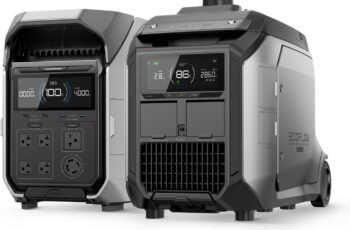
Power outages are unpredictable, so we’ve rounded up the 10 best portable power stations for 2025 that actually make home backup simple. We focus on LiFePO4 models with solid capacities, fast recharge, safe operation, and real-world plug-and-play use. From Jackery and EcoFlow to Bluetti and Enphase, we compare outputs, cycles, and charging modes to help you pick with confidence. Curious which units power fridges, routers, and CPAPs without fuss? Let’s weigh the standouts.
Key Takeaways
- Prioritize LiFePO4 units for longer lifespan (3000+ cycles), safety, and stable performance in home backup scenarios.
- Look for fast AC recharge (0–80% in 50–66 minutes) to minimize downtime between outages.
- Match continuous output (1,500–2,400W) and surge (2,700–3,600W) to appliance needs, especially fridges, pumps, and tools.
- Consider expandability to 3–8kWh and solar input (500–1,200W) for extended outages and off-grid resilience.
- Weigh portability versus capacity: 25–45 lb is manageable; 60+ lb suits semi‑stationary home/RV setups.
EF ECOFLOW DELTA 3 Plus Solar Generator with 220W Bifacial Panel
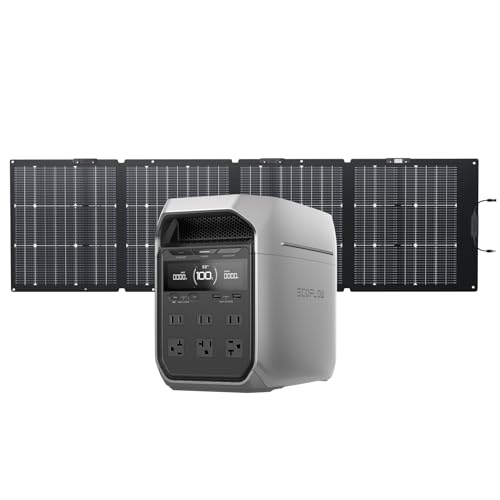

If you prioritize blazing-fast recharging and robust solar capability, the EF EcoFlow DELTA 3 Plus with the 220W bifacial panel stands out. We like its 1000W solar input, two independent 500W MPPTs, and LFP battery rated for 4000 cycles to 80% over a 10-year lifespan. Expect 80% in 40 minutes via 1500W AC, or in about an hour from solar or an 800W alternator. The 220W bifacial panel captures up to 28% more energy, with a 30–60° adjustable bracket and 25% efficiency cells. It powers 13 devices, supports X-Boost over 2200W, runs quietly, and feels durable—though it’s heavy and pricey.
Best For: Power users who want ultra-fast recharging and strong off-grid solar performance for home backup, RVs, and camping, with long-life LFP reliability.
Pros:
- 1000W solar input with dual 500W MPPTs enables rapid, flexible charging; 1500W AC hits ~80% in 40 minutes.
- Durable LFP battery rated for 4000 cycles to 80% (10-year lifespan) with IP65-resistant pack.
- 220W bifacial panel captures up to 28% more energy; supports 13 devices with X-Boost over 2200W.
Cons:
- Heavy and less convenient for frequent hand-carrying.
- Premium price compared to smaller-capacity options.
- Real-world efficiency losses (~20%) mean planning extra capacity for longer outages.
Portable Solar Generator with 300W Power Station and 60W Foldable Solar Panel

Best for light, everyday backup, this 300W portable solar generator pairs a 280Wh lithium pack with a 60W foldable monocrystalline panel to keep phones, tablets, cameras, and small laptops running at home or on the go. We get pure sine wave 110V power from two 300W AC outlets, plus DC, three USB-A, and a quick-charge port. MPPT optimizes solar input; recharge via wall (about 7–8 hours), car, or DC5521 solar. At 5.08 lb, it’s easy to carry. Built-in BMS protects against shorts, overloads, and heat. Avoid loads over 300W. Keep the non-waterproof junction box dry and store at 60–80% charge.
Best For: campers, RVers, and home users needing lightweight, everyday backup to power phones, tablets, cameras, and small laptops off-grid or during outages.
Pros:
- Portable 300W power station with 280Wh capacity and pure sine wave AC; multiple outputs (2 AC, DC, 3 USB-A, quick-charge).
- Flexible recharging: MPPT-optimized 60W foldable solar panel, wall (≈7–8 hrs), or car charging.
- Built-in BMS protections and automatic cooling fan; lightweight 5.08 lb for easy carry.
Cons:
- Not suitable for devices over 300W (e.g., coffee makers, hair dryers, pumps).
- Solar junction box is not waterproof; must be kept dry and weather-protected.
- Solar charging speed and performance vary with sunlight; some users report panel issues requiring support.
Jackery Explorer 2000 v2 Portable Power Station (2042Wh LiFePO4, 2200W, Optional Solar)

Need fast, quiet backup you can roll room to room? Jackery’s Explorer 2000 v2 delivers 2042Wh of LiFePO4 power, 2200W across three AC ports, and 100W USB‑C PD—at about 40 lbs. We charge from 0–80% in 66 minutes (full in 102) using Emergency Super Charging via the app, or go silent at <30dB for a full charge in 5 hours. Solar hits full in about 6 hours with 400W panels.
We like its 20ms UL1778‑certified UPS for outages, CTB construction, and smart, quiet cooling. It runs fridges, sump pumps, TVs, coffee makers, and lights with pass‑through charging. Expect frequent sales around $900–$1,100.
Best For: Homeowners, campers, and small businesses needing a fast‑charging, quiet, portable UPS-capable power station that can reliably run essentials like fridges, sump pumps, and electronics during outages or off-grid.
Pros:
- Rapid AC charging: 0–80% in 66 minutes (full in ~102) with app-enabled Emergency Super Charging; quiet 30dB mode charges in ~5 hours
- Strong output and ports: 2200W across 3 AC outlets plus 100W USB‑C PD; supports pass‑through charging and seamless 20ms UL1778‑certified UPS
- Durable LiFePO4 and CTB build: long lifespan (up to ~10 years), stable design, smart temperature‑controlled cooling, low noise
Cons:
- Heavy at ~40 lbs, which can limit portability despite the compact footprint
- Solar full-charge still takes hours (about 6 hours with 400W panels) and requires separate panels
- Price can be high at MSRP; best value typically found during sales ($900–$1,100)
Enphase IQ PowerPack 1500 Portable Power Station
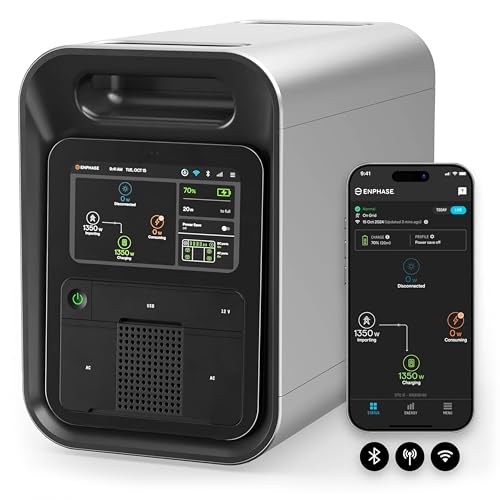
Serious about grid-interactive backup with pro-grade monitoring? The Enphase IQ PowerPack 1500 delivers 1500 W continuous from a 1500 Wh LiFePO4 pack, driven by three IQ8 microinverters for fast <10 ms switchover. We get 11 ports: four 120 V AC (3000 W surge), four USB-A, two 60 W USB-C, and a 12 V car port. It recharges from AC in under 75 minutes, solar in about 4 hours with two IQ panels, or a vehicle in ~14 hours.
A 7-inch color touchscreen plus 4G, Wi‑Fi, and Bluetooth tie into the Enphase App. It’s UL certified, rugged, indoor/outdoor, -4°F–122°F, 45.9 lb. Warranty: 5 years/2,500 cycles. Quiet, reliable, and easy.
Best For: Power users who want a rugged, grid‑interactive portable backup with fast switchover, pro‑grade monitoring, and versatile indoor/outdoor use for outages, camping, RVs, and job sites.
Pros:
- 1500 W continuous output with 3000 W surge and 11 ports, including four 120 V AC and dual 60 W USB‑C, to power multiple devices simultaneously.
- Ultra‑fast recharge: under 75 minutes from AC; ~4 hours from solar with two IQ panels; plus 7″ touchscreen and 4G/Wi‑Fi/Bluetooth app control.
- Durable LiFePO4 battery with 5‑year/2,500‑cycle warranty, UL certification, -4°F to 122°F operation, and <10 ms grid‑to‑backup switchover.
Cons:
- Heavier than many portables at ~45.9 lb, which may limit carry distance without a cart.
- 1500 Wh capacity may be insufficient for prolonged whole‑home backup or high‑draw appliances beyond short surges.
- Vehicle 12 V charging is slow (~14 hours) and may be impractical for frequent mobile top‑offs.
EF ECOFLOW DELTA 2 Portable Power Station (1024Wh LiFePO4)

Crave fast, dependable backup you can recharge over lunch? The EcoFlow DELTA 2 delivers: a 1024Wh LiFePO4 battery with 3000+ cycles, 1800W AC output (2700W surge), and 15 outlets at 120V. It sprints from 0–80% in 50 minutes (full in 80) via wall power, or sips 500W from solar for quiet, fume-free charging. At 27 pounds, it’s portable yet substantial.
We like its expandable capacity to 3kWh, robust BMS safety, and plug-and-play home backup. It powers 90% of appliances—mini-fridges, fans, tools, lights—great for outages, RVs, and off-grid builds. In-box: DELTA 2, AC cable, manual, and 5-year customer service.
Best For: Anyone needing fast-recharging, reliable portable power for home backup, camping/RV trips, and off-grid setups, with room to expand capacity up to 3kWh.
Pros:
- Blazing AC recharge: 0–80% in ~50 minutes (full in ~80); 500W solar input for quiet, fume-free charging
- Strong 1800W AC output (2700W surge) with 15 outlets; powers ~90% of household appliances
- Long-life 1024Wh LiFePO4 battery (3000+ cycles) with robust BMS and expandable capacity to 3kWh
Cons:
- At ~27 lb, it’s portable but not ultra-light for frequent carry
- Full solar input requires sizable panels and ideal sun to match fast AC recharge speeds
- Price can be high, and some users note fan noise/behavior and desire longer accessory cables
EF ECOFLOW DELTA 3 1500 Portable Power Station

Looking for a fast-charging, high-capacity backup that can actually run household essentials? The EF ECOFLOW DELTA 3 1500 packs a 1536Wh LiFePO4 battery, six 1800W AC outlets, and X-Boost to 2200W, powering 99% of appliances and up to 15 devices. It sprints from 0–100% in 1.5 hours via 1500W AC, about 3.5 hours on solar, or 2.1 hours with the 800W alternator charger. We like the <15ms transfer time, quiet 35–45dB operation, and rugged IP54 build with BMS. It’s expandable to 5.5kWh. At 36 pounds, it’s hefty, and some users report UPS quirks and occasional resets, but warranty support is available.
Best For: Homeowners, RV/camping users, and job-site pros who need a fast-charging, quiet, and expandable portable power station that can run most household essentials and multiple devices simultaneously.
Pros:
- 1536Wh LiFePO4 battery with six 1800W AC outlets and X-Boost to 2200W powers 99% of appliances and up to 15 devices
- Rapid charging: 0–100% in 1.5 hours via 1500W AC; strong solar performance (~3.5 hours) and 800W alternator charge in ~2.1 hours
- Durable and quiet: IP54 housing, BMS protection, <15ms transfer time, 35–45dB operation, and long life (≈70% capacity after 3,000 cycles)
Cons:
- Heavy at 36 pounds, which limits portability for some users
- Reported UPS/AC pass-through quirks and occasional resets in real-world use
- Higher cost when expanded to max capacity (up to 5.5 kWh) and variable support experiences reported
BLUETTI AC200L Portable Power Station (2048Wh LiFePO4, Expandable)

With a 2,048Wh LiFePO4 battery, 2,400W output, and true expandability up to 8,192Wh, the BLUETTI AC200L suits homeowners and RVers who want fast, flexible backup without a gas generator. We like its 13 outlets, including a 30A RV port, 100W USB-C, and 48V/8A DC. It recharges fast: up to 2,400W AC (0–80% in ~45 minutes) and 1,200W solar for a full in roughly 1.7–2.2 hours. At ~61.4 pounds, it’s substantial but manageable. The app (Wi‑Fi/Bluetooth) is excellent. Watch the proprietary connectors and 10A 12V limit; the 48V port may need the D40. Five-year warranty seals it.
Best For: Homeowners and RVers who want a fast-charging, expandable, gas-free backup power station with robust ports and app control.
Pros:
- 2,048Wh LiFePO4 battery with true expandability up to 8,192Wh; 2,400W output (3,600W surge) and 13 outlets including 30A RV and 100W USB‑C
- Rapid recharge: up to 2,400W AC (0–80% in ~45 min) and up to 1,200W solar (full in ~1.7–2.2 hours)
- Strong app (Wi‑Fi/Bluetooth, offline BT), 5‑year warranty, and versatile DC options including 48V/8A
Cons:
- Proprietary connectors and some setups (48V) may require the D40 regulator
- 12V car port limited to 10A; may not suit higher‑draw 12V appliances
- Expansion batteries add weight and footprint; base unit is ~61.4 lb
Jackery Explorer 1000 v2 Portable Power Station

Prefer a fast-charging, home-ready unit that still travels light? Jackery’s Explorer 1000 v2 hits a sweet spot: 1,070Wh LiFePO4, 1,500W AC output (3,000W surge), and just 23.8 lbs with a foldable handle. We like the three pure-sine AC outlets, dual USB‑C with 100W PD, USB‑A, and a 12V car port for flexible pairing.
Charging is the hook: default full in 1.7 hours, or a 1-hour emergency boost via the Jackery App, safeguarded by ChargeShield 2.0. Expect 4,000 cycles to 70%+ and a 10-year lifespan. It’ll power fridges, AC units, and cookers, plus optional Jackery solar (panels not included). Caveats: app account required; price and screen size draw mixed notes.
Best For: Travelers, campers, and home users who want a lightweight yet home-capable power station with ultra-fast charging and strong AC output for appliances.
Pros:
- 1,500W AC (3,000W surge) with three pure sine wave outlets plus dual 100W USB‑C for versatile, high-power devices
- Rapid charging: default ~1.7 hours or 1-hour emergency boost via app, protected by ChargeShield 2.0
- Long-life LFP battery: 4,000 cycles to 70%+ and 10-year lifespan in a 23.8 lb portable design
Cons:
- Solar panel not included and solar charging is limited to Jackery-brand panels
- App requires account management; some users report mixed experiences
- Smaller display and price may not appeal to budget-focused buyers
Jackery Portable Power Station Explorer 300 (293Wh)

Need a grab-and-go backup that’s truly portable? The Jackery Explorer 300 delivers 293Wh in a 7.1-pound frame with clean, quiet power. We get two Pure Sine Wave AC outlets (300W max, 500W surge), a 60W USB-C PD port, Quick Charge 3.0, USB-A, and a 12V car port—powering up to six devices at once.
Recharge fast: hit 80% in about two hours using wall plus 60W USB-C. It supports pass-through charging and pairs with a 100W SolarSaga panel via MPPT for efficient solar. It’s ideal for routers, fans, TVs, cameras, laptops, and phones—but not high-draw appliances. Accessories included; solar panel sold separately.
Best For: campers, road trippers, and emergency preppers who need a lightweight, quiet 293Wh power station to run small electronics and charge multiple devices on the go.
Pros:
- Fast recharge to ~80% in about 2 hours using wall plus 60W USB-C PD; supports pass-through charging.
- Versatile ports (2 AC pure sine 300W/500W surge, 60W USB-C PD, QC 3.0, USB-A, 12V car) powering up to six devices.
- Compact 7.1 lb design, quiet operation, no fumes, and MPPT-enabled solar compatibility with 100W SolarSaga.
Cons:
- Not suitable for high-draw appliances (e.g., induction cooktops, blenders).
- 293Wh capacity limits runtime for larger devices or extended off-grid use without solar.
- Solar panel sold separately; total recharge speed depends on available sunlight and setup.
EF ECOFLOW DELTA 2 Portable Power Station (1024Wh LiFePO4)
EcoFlow’s DELTA 2 stands out for homeowners who want fast recharge and dependable LiFePO4 longevity without going gas. We get 1024Wh capacity, 1800W AC output (2700W surge), and 15 outlets in a 27-pound, 15.7 x 8.3 x 11.3-inch package. It charges absurdly fast—0–80% in 50 minutes, 0–100% in 80—and accepts up to 500W solar. The LiFePO4 battery offers 3000+ cycles with a smart BMS for safety.
For outages, camping, or RVs, it powers 90% of appliances, and expands to 3kWh for longer runs. Users praise speed, versatility, and app-friendly control; a few note fan noise, cable length, and price.
Best For: Homeowners, campers, and RV users who want ultra-fast recharge, long-lasting LiFePO4 reliability, and expandable off-grid power without a gas generator.
Pros:
- Blazing charge speed: 0–80% in 50 minutes (0–100% in 80) via AC; supports up to 500W solar
- Strong output and versatility: 1800W AC (2700W surge) with 15 outlets, powers ~90% of household devices
- Long lifespan and safety: LiFePO4 with 3000+ cycles and smart BMS; capacity expandable to 3kWh
Cons:
- Price can be high compared to smaller-capacity units
- Fan noise may be noticeable during heavy charge/discharge
- 27 lb weight is portable but hefty; some users want longer accessory cables
Factors to Consider When Choosing Portable Power Stations for House
Before we pick a unit, let’s match capacity and runtime to our essentials and confirm the output wattage covers peak appliance loads. We’ll choose a battery chemistry (LiFePO4 vs. NMC) that balances longevity, weight, and cost, then compare recharge speed options for faster turnarounds. If we want greener or off‑grid readiness, we’ll check solar input support and compatible panel wattage.
Capacity and Runtime
How long do we actually need backup power to last? Capacity answers that. It’s the total energy stored, measured in watt-hours (Wh) or kilowatt-hours (kWh), and it directly sets how long a station can run a given load before recharging. Runtime equals capacity divided by the watts we draw—higher loads shorten it proportionally. For example, a 1000Wh unit powering a 100W load runs about 10 hours, less after inverter and battery inefficiencies.
Chemistry matters for longevity. LiFePO4 (LFP) typically delivers more cycles and maintains stable capacity, so runtime stays dependable over years. If we expect longer outages, expandability helps—adding batteries or modular packs boosts usable capacity. Finally, real-world runtime isn’t fixed; solar panels or periodic AC top-ups can offset consumption and stretch operation.
Output Wattage Needs
So what output wattage do we really need at home? We start by adding the running watts of everything we’ll power at the same time, then add headroom for startup surges. For common home loads, a 1000–2200W continuous rating covers basics like a fridge, router, lights, and a laptop. Many appliances spike above their running watts, so we look for surge capacity around 2000–3000W for compressors, pumps, and power tools.
If we need longer runtimes on limited capacity, we keep only essentials on the circuit. Higher continuous output lets us run more devices at once, but it drains batteries faster. When using X-Boost or high-demand modes, we confirm the unit can sustain elevated output without overheating. Finally, we plan for growth with expandable output or batteries.
Battery Chemistry Type
Output capacity only matters if the battery chemistry can handle the load and last. That’s why we prioritize LiFePO4 (LFP) packs for home backup. LFP delivers markedly longer cycle life—commonly 2,000–3,000+ cycles with about 80% capacity remaining after 3,000 cycles, and some reach 4,000 cycles to 80%. Used daily, that’s roughly a decade of reliable service.
LFP also holds capacity well under repeated shallow cycles, so we keep more usable energy over time versus standard Li-ion chemistries. Safety is another win: LFP’s chemistry is inherently more stable and supports higher discharge temperatures, especially helpful outdoors or in garages.
Just as important, a robust battery management system (BMS) safeguards LFP packs—monitoring voltage, current, and temperature to protect cells and manage charge profiles effectively.
Recharge Speed Options
When we’re sizing a backup system, recharge speed can be the difference between a brief outage and a long blackout. We look at how fast a unit goes from empty to usable: percent per hour or minutes to full. On AC, many top models accept 1000–1500 W and hit 0–80% in 40–50 minutes, with 0–100% often in 1–2 hours under ideal conditions.
We also consider hybrid charging. Units that combine AC with another input can shorten total time, sometimes matching or beating pure AC refills when conditions favor it. Real‑world speed varies with battery chemistry (LiFePO4 tends to charge efficiently), firmware that throttles to protect cells, ambient temperature, and the quality of the incoming power. Fast modes help, but we verify sustained rates, not just peak claims.
Solar Input Support
How much sun can a power station actually swallow at once? Solar input support tells us, and it’s measured in watts. A unit that accepts two independent 500W inputs can take up to 1,000W, letting us refill faster when the sky cooperates. Some models boost caps when we add more panels or parallel inputs, so we can exploit clear days for rapid top‑ups.
Efficiency matters, too. Higher‑efficiency mono or bifacial panels deliver more watt‑hours per hour under the same sun, stretching rooftop or yard space. We also look for MPPT charging, which constantly tracks the panels’ optimal voltage and current to maximize harvest.
Real‑world results vary with weather, panel wattage, and angle, but higher input ratings typically cut 0–100% recharge times substantially.
Port Selection Variety
Looking beyond wattage, we need a power station with the right mix of ports so our essentials can run at once. We look for multiple output types—AC, USB-A, USB-C, and a 12V car port—so we can power appliances, recharge phones, and run routers simultaneously. At home, two or more high-wattage AC outlets with 1500–1800W continuous output let us handle fridges, microwaves, or space heaters without tripping.
We also want at least six total ports to avoid juggling cables. Fast, flexible inputs matter too: AC charging that hits 0–80% in 40–50 minutes cuts downtime, while solar and alternator inputs keep options open during outages. Bonus points for expandable batteries to grow capacity over time, and LiFePO4 chemistry for safety and 3000+ cycle longevity.
Portability and Weight
Portability can make or break a home power station’s usefulness. We should size weight and form factor to how we’ll actually move it. Compact units around 7 pounds are easy to grab and go, while larger modular systems can top 60+ pounds and may require two hands or a cart.
Handles matter. Built-in, recessed grips and balanced weight distribution reduce hand strain and wobble on stairs. Dimensions count, too: boxes roughly 8–12 inches wide or tall fit shelves, car trunks, and closets without hassle.
Expect a trade-off: heavier models usually deliver more capacity and extra outputs. If we plan mixed indoor/outdoor use, pairing the station with foldable solar panels cuts transport volume. Choose the lightest setup that still meets our runtime and device needs.
Safety and Durability
Even before we compare watt-hours and ports, we should prioritize safety and durability—the traits that keep a power station dependable under stress. We prefer Lithium Iron Phosphate (LiFePO4) batteries for their safer chemistry and longevity—often 3,000–4,000+ cycles and roughly a decade of daily use.
Next, we check for a robust Battery Management System that guards against short-circuits, over-current, over-voltage, and overheating, adjusting automatically to protect cells. Housing matters, too: IP54 or IP65 ratings—or ruggedized shells—help resist dust, splashes, and rough handling.
We also verify operational temperature range and cooling. Temperature-controlled fans that ramp quietly keep batteries within safe limits. Finally, we look for third-party safety certifications, documented UPS/transfer performance, and at least a 5‑year warranty to ensure reliable protection during outages.
Conclusion
When the lights go out, we don’t have to be left in the dark. With LiFePO4 reliability, fast charging, and expandable capacity, these portable power stations give us practical, plug-and-play backup for home essentials. Whether we choose a compact unit or a 2,000Wh workhorse, we’re investing in peace of mind and flexibility. As the adage goes, “forewarned is forearmed.” Let’s pick the model that matches our loads, budget, and recharge options—and stay powered through whatever comes.