Whether we’re packing for a weekend escape or prepping for winter breakdowns, the right portable power station keeps our car, phones, and gear running without fuss. In 2025, we’re prioritizing LiFePO4 longevity, true jump-start capability, fast AC/solar/car charging, and compact builds that fit the trunk or glovebox. We also want solid surge output, safe BMS, pass-through charging, and dependable warranties. Here’s how the top picks stack up—and which one suits your next mile.
Key Takeaways
- Prioritize LiFePO4 units (3,000–4,000+ cycles) with robust BMS for safer car use, longer lifespan, and reliable pass-through charging on the road.
- For jump-start needs, choose models with 12V boost capability like DEWALT DXAEPS14-Type2 (2000 peak amps) and integrated compressor/LED for emergencies.
- Match capacity to use: 200–300Wh for glovebox essentials, 600–1000Wh for fridges/CPAPs, 1500–2000Wh for multi-appliance road trips.
- Seek fast recharge: 0–80% in ~50–66 minutes via AC or 500–1000W solar inputs; app-enabled emergency charging and quiet 30 dB modes help.
- Verify ports: pure sine AC, 100W+ USB-C PD, regulated 12V car socket; check solar panel compatibility (brand-locked vs open MPPT).
Jackery Explorer 1000 v2 Portable Power Station


If you need a compact powerhouse that fast-charges and runs real appliances on the road, Jackery’s Explorer 1000 v2 hits the sweet spot. We get 1,500W AC output (3,000W surge) from a 1,070Wh LiFePO4 pack that’s built to last 10+ years, retaining 70% after 4,000 cycles. At 23.8 lbs with a foldable handle, it’s road-trip ready.
Ports are generous: three pure sine AC, two USB-C (100W PD), one USB-A, and a 12V car port. The app enables 1-hour emergency charging, quiet 30 dB overnight mode, and efficiency tweaks via ChargeShield 2.0. Note: solar panel not included; Jackery panels only. Includes AC cable and manual.
Best For: Campers, RVers, and emergency-prep users who want a portable, fast-charging power station that can reliably run real appliances and last for years.
Pros:
- 1,500W AC output (3,000W surge) with three pure sine wave outlets to power demanding appliances
- Durable 1,070Wh LiFePO4 battery rated for 4,000 cycles (70% capacity) and 10+ year lifespan
- Fast, flexible charging and control via app: 1-hour emergency charge, quiet 30 dB mode, and ChargeShield 2.0 efficiency/safety
Cons:
- Solar panel not included and solar charging is compatible only with Jackery panels
- Heavier than smaller units at 23.8 lbs despite good portability
- App requires account management and some users note price and display-size frustrations
EF ECOFLOW DELTA 3 Plus Solar Generator with 220W Bifacial Panel
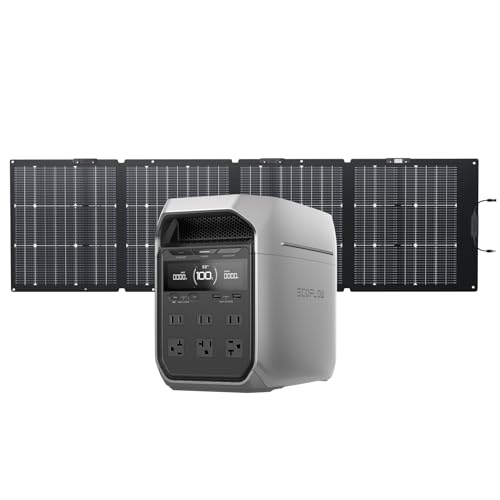
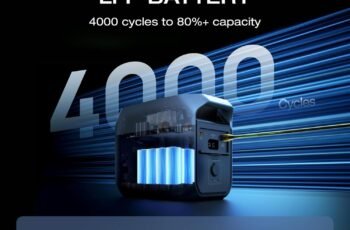
Looking for a fast-charging, solar-first powerhouse that can handle real appliances on the road? We like the EF ECOFLOW DELTA 3 Plus with the 220W bifacial panel. Its LFP battery promises 4,000 cycles to 80% and a 10-year lifespan, wrapped in an IP65, road-ready build. Two independent 500W solar inputs deliver up to 1,000W, hitting 80% in about an hour; AC or hybrid charging can reach 80% in 40 minutes. It powers 13 devices at once and X-Boost handles resistive loads over 2,200W. The bifacial panel adds up to 28% more energy. Downsides: it’s heavy and pricey, with ~20% conversion losses.
Best For: Off-grid enthusiasts, RV/camper travelers, and home backup users who want ultra-fast solar charging, long-life LFP safety, and the ability to run real appliances.
Pros:
- 1000W solar input with two independent 500W ports enables 80% in ~1 hour; AC or hybrid charging hits 80% in ~40 minutes
- Long-life LFP battery (4000 cycles to 80%, 10-year lifespan) with IP65 splash/dust/oil-resistant build
- Powers 13 devices; X-Boost handles resistive loads over 2200W; 220W bifacial panel captures up to 28% more energy
Cons:
- Heavy and relatively expensive compared to smaller power stations
- Real-world power conversion losses (~20%) reduce usable capacity
- Best solar performance requires optimal sun angle and multiple panels; partial sunlight reduces efficiency
VTOMAN Jump 600X Portable Power Station (299Wh, 600W)

Compact yet expandable, the VTOMAN Jump 600X stands out for drivers who want a lightweight 299Wh power station that can scale to 939Wh with an add-on battery. We like its 600W AC output (1,200W surge) and regulated 12V ports that keep CPAPs, car fridges, and inflators stable. It powers up to nine devices at once with 2 AC, 3 USB-A (QC 3.0 up to 18W), 60W USB-C PD, two DC5521, and a 12V car port. The LiFePO4 battery delivers 3,000 cycles and VTOMAN’s LIFEBMS adds comprehensive protections. Pass-through charging, 13.2 lb portability, and a 2-year warranty seal the deal.
Best For: Drivers, campers, and RVers who want a lightweight 299Wh power station with regulated 12V outputs and the option to expand capacity to 939Wh.
Pros:
- 600W AC output (1,200W surge) with regulated 12V/DC ports ideal for CPAPs, car fridges, and inflators
- Long-life LiFePO4 battery rated for 3,000 cycles with LIFEBMS safety protections and pass-through charging
- Versatile I/O: 2 AC, 3 USB-A (QC 3.0), 60W USB-C PD, 2 DC5521, and 12V car port; powers up to 9 devices
Cons:
- Base 299Wh capacity may be limiting without the extra battery (sold separately)
- USB-C capped at 60W PD, not ideal for high-wattage laptops
- Batteries are not user-replaceable and only a 2-year warranty
Anker SOLIX C300 Portable Power Station (288Wh, 300W)

Road-trippers who want fast refuels and quiet nights will like the Anker SOLIX C300’s 288Wh LiFePO4 battery, 300W output (600W surge), and whisper-quiet 25dB operation. We can top it to 80% in about 50 minutes from a wall or use 100W solar on bright days; car and USB-C PD 3.1 charging work too. With 8 ports—3 AC, a 12V car socket, three USB-C (two at 140W, one 15W), and a USB-A—it handles laptops, cameras, and CPAPs, not high-wattage cooktops. It’s 9 pounds, compact, durable, and pass-through capable, with 3,000+ cycles, smart temp control, and a 5-year warranty.
Best For: Road trippers, car campers, and home backup users who need a compact, quiet, fast‑charging power station for laptops, cameras, CPAPs, and other small-to-medium devices (not high‑wattage appliances).
Pros:
- Fast recharge to ~80% in ~50 minutes via wall; versatile inputs (USB‑C PD 3.1, solar, car) with pass‑through charging
- Compact 9 lb design with quiet 25 dB operation and durable LiFePO4 battery rated 3,000+ cycles and 5‑year warranty
- Generous port selection: 3 AC (300W), 140W USB‑C two-way charging, 12V car socket, plus USB‑A for legacy gear
Cons:
- 300W continuous output limits use with high‑wattage kitchen appliances and power tools
- Solar performance depends on conditions; only compatible with select Anker 60W/100W panels (not PS30/PS200/PS400)
- Carry strap not included by default; not ideal for backpacking due to weight and size
Jackery Explorer 2000 v2 Portable Power Station (2042Wh LiFePO4, 2200W)

Power-hungry drivers who still want portability will appreciate Jackery’s Explorer 2000 v2: a 2.0kWh LiFePO4 unit that delivers 2200W from three AC ports yet weighs just 39.5 lb—far lighter than most rivals. We like its compact CTB build, quiet cooling, and 120V output that runs fridges, TVs, coffee makers, and more. Charging’s fast: 0–80% in 66 minutes, or full in 102 minutes via Emergency Super Charging in the app. It supports 400W solar (about six hours), silent 30 dB charging, and pass-through power. The LCD and app help monitor usage. Real-world tests hit ~21 hours on a fridge; pricing fluctuates with coupons.
Best For: Power users who need a lighter, fast-charging 2kWh portable power station for home backup, camping, or small business use with quiet operation and app control.
Pros:
- 2042Wh LiFePO4 with 2200W output in a compact 39.5 lb design (lighter and smaller than most rivals)
- Very fast charging: 0–80% in 66 minutes; full in ~102 minutes via Emergency Super Charging; supports pass-through
- Quiet operation (<30 dB in Silent mode), clear LCD/app monitoring, and useful USB-C PD 100W port
Cons:
- 120V-only AC output limits use with 240V appliances
- Solar input capped around 400W, so full solar recharge can still take several hours
- App connectivity can be quirky per user reports and long-term reliability data is limited
EF ECOFLOW DELTA 2 Portable Power Station

If you need a fast-recharging, home-backup-capable unit for road trips and outages, EcoFlow’s DELTA 2 stands out with 1024Wh of LiFePO4 storage and a true 1800W AC output. We like its 0–80% in 50 minutes wall charging and 500W solar input for clean top-ups. At 27 pounds, it’s portable yet substantial, with 15 outlets including 100W USB-C. The 1800W continuous (2700W surge) covers fridges, power tools, and RV essentials, and capacity expands to 3kWh with add-on batteries. A robust BMS, 3000+ cycle LFP chemistry, and app-friendly controls inspire confidence. Downsides? Price and short accessory cables, plus occasional fan noise.
Best For: Road trippers, campers, and homeowners who want a fast-recharging, expandable LiFePO4 power station that can back up key appliances and run most devices off-grid.
Pros:
- 0–80% wall recharge in 50 minutes; 500W solar input for clean, quick top-ups
- 1800W continuous (2700W surge) AC with 15 outlets, including 100W USB-C; powers ~90% of appliances
- Durable LiFePO4 battery with 3000+ cycles and robust BMS; expandable from 1kWh to 3kWh
Cons:
- Higher upfront price compared to smaller-capacity units
- Accessory cables (e.g., XT60) can be on the short side; may need extensions
- Occasional fan noise during heavy charge/discharge; 27 lb weight is portable but substantial
Portable Power Station 300W Solar Generator (192Wh LiFePO4)

Compact yet car-ready, the DARAN NEOZL 300W (600W peak) power station stands out for drivers who want a light, reliable LiFePO4 unit they can toss in the trunk without sacrificing key outputs. At 5.5 lb with a 192Wh pack, it’s sized right for glovebox essentials and overnight CPAP use. Expect roughly 5.44 hours on a 30W CPAP or about 1.08 hours on a steady 150W load (assuming ~85% efficiency). We get 2 AC outlets, USB-C 45W, two USB-A 18W, plus DC5521. It charges via wall, car, or optional solar. Safety-wise, BMS protections and an LED SOS help. Note the 1-year warranty and reported quality variance.
Best For: Drivers, campers, and CPAP users who need a lightweight, glovebox-friendly LiFePO4 power station for small devices and short overnight power.
Pros:
- Compact 5.5 lb design with carry handle and storage bag; easy car/travel backup
- LiFePO4 battery with BMS protections; multiple outputs (2 AC, USB-C 45W, 2× USB-A 18W, DC5521)
- Flexible charging via wall, car, or optional solar; LED flashlight with SOS
Cons:
- Limited capacity (192Wh) and 300W continuous output; not for high-power appliances like coffee makers
- USB-C maxes at 45W, which may be underpowered for some laptops
- Only 1-year warranty and some reports of unit-to-unit quality variance
DEWALT 2000A Jump Starter Power Station with Air Compressor and Inverter

Need a jump-ready station that also inflates tires and runs small gear? We like DEWALT’s DXAEPS14-Type2 for its 2000 peak amps, enough to boost most 12V cars and V8 trucks. The 120 PSI digital compressor with auto-stop and SureFit nozzle handles tires fast. A 500W AC inverter plus 15W USB-A and 25W USB-C keep laptops and phones powered. Reverse polarity protection, LED work light, and a trunk-friendly 17.3-pound build round it out.
In use, it’s sturdy and reliable, though compressor performance can vary per reviews. For camping, tailgating, or roadside fixes, it’s a versatile pick with solid ratings and a 30-day return.
Best For: Drivers, campers, and tailgaters who want an all-in-one jump starter with tire inflation and portable power for small electronics.
Pros:
- 2000 peak amps can boost most 12V vehicles up to V8; reverse polarity protection for safer starts
- Integrated 120 PSI digital air compressor with auto-stop and SureFit nozzle for quick, accurate inflation
- Versatile power: 500W AC inverter plus 15W USB-A and 25W USB-C, plus LED work light in a portable 17.3 lb unit
Cons:
- Some users report inconsistent air compressor performance
- Heavier than basic jump starters at 17.3 pounds
- Occasional accessory/cable availability and past quality-control concerns noted in reviews
BougeRV 277Wh Portable Power Station with Dynamic Display Panel
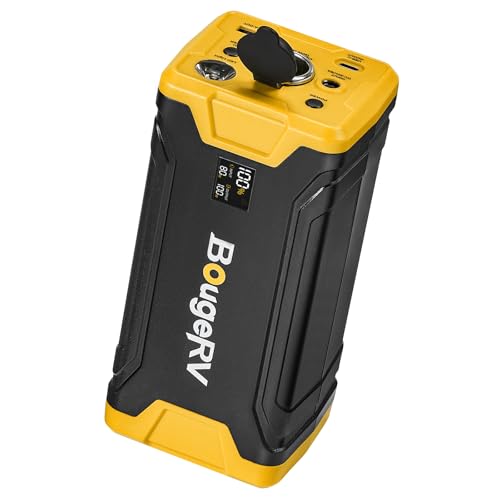
Road-trippers who rely on a 12V car fridge will appreciate BougeRV’s 277Wh power station and its dynamic display that shows exact remaining power (0–100%). We like that the cigarette lighter output runs most 12V fridges, and with BougeRV’s CRPRO models you can expect over nine hours in ECO Mode. At just 3.09 pounds, it’s glovebox-friendly yet supports pass-through use, so you can power and recharge simultaneously.
Charging is flexible: up to 100W solar for a full refill in about three hours, plus AC, DC, and USB-C. Note some users report slower USB-C-only recharges and occasional heat concerns. Two-year tech support included.
Best For: Road-trippers and vanlifers who need a lightweight, glovebox-friendly power source to run 12V car fridges and small devices with clear, precise battery readouts.
Pros:
- Dynamic display shows exact remaining power (0–100%) and charging status.
- Powers most 12V car fridges via cigarette lighter; 9+ hours in ECO Mode with BougeRV CRPRO.
- Flexible, fast recharging options including up to 100W solar (~3 hours), plus AC, DC, and USB-C; supports pass-through use.
Cons:
- USB-C–only recharging can be slow without a proper wall charger.
- Some users report heat/overheating concerns during charging.
- Limited capacity (277Wh) may be insufficient for larger appliances or multi-day off-grid use without recharging.
EHOM Portable Power Station 350W (EP350)

Looking to top off devices fast between stops? EHOM’s EP350 hits 80% in 55 minutes via NitroGo fast charging (300W), then tops off in about 1.25 hours. We get a 299Wh lithium pack, 350W continuous (700W peak), pure sine 120V AC, and an MPPT solar input up to 200W. Ports cover 1 AC, 2 USB-A (18W each), 2 USB-C (65W/100W), and a 12V car port.
At 14 pounds, it’s road-trip ready, with a clear LCD and a bright LED (strong/warm/SOS). BMS safeguards, 3,500 life cycles, and a 5-year warranty boost confidence. Users praise fast charging, app controls, stable output, and solar-friendly performance.
Best For: Road-trippers, campers, and emergency preppers who need fast top-offs and versatile ports for small-to-mid devices.
Pros:
- NitroGo fast charging hits 80% in 55 minutes; full in ~1.25 hours
- Versatile outputs: 120V pure sine AC, dual USB-C (65W/100W), dual USB-A, 12V car port; MPPT solar up to 200W
- Long life and support: up to 3,500 cycles, 5-year warranty, clear LCD and bright LED with SOS
Cons:
- 350W continuous output limits high-draw appliances; 700W peak only brief
- Single AC outlet may require a power strip for multiple AC devices
- Solar panel not included; max solar input capped at 200W
Factors to Consider When Choosing Portable Power Stations for Cars
Before we pick a unit, let’s match power output and battery capacity to what we actually run—CPAPs, coolers, laptops, or a jump-start. We’ll compare charging options (AC, car socket, solar), then balance portability and weight against how often we’ll move it. Finally, we’ll check safety features like BMS protection, temperature control, and certified surge safeguards.
Power Output Needs
How much power do we truly need on the road? We start by listing the devices we’ll run and their continuous (running) wattage. That number—not just a device’s peak surge—determines the AC output we require. For most car setups, a power station with 600–1800W continuous AC covers coolers, small cookers, fans, and chargers without tripping.
We also match ports to our gear. A 12V car socket is essential for automotive accessories. Laptops and some drones prefer USB-C PD; CPAP machines may need clean sine-wave inverters and specific voltage tolerances. Next, we check surge capacity: short peaks from tools or induction heaters can double the draw, so ample peak wattage prevents shutdowns.
Finally, we favor chemistries with robust cycle life for frequent alternator or solar top-ups.
Battery Capacity
Battery capacity, measured in watt-hours (Wh), tells us how long a power station can run our gear before we need to recharge. Higher Wh generally means longer runtime for the same load, so we should size capacity around what we actually use in the car. Let’s total typical draws—laptops, a CPAP, or a 12V mini-fridge—and pick a capacity that covers a day or night without leaving us stranded.
For frequent road trips, LiFePO4 (LFP) packs shine. They offer greater cycle life and thermal stability, especially at higher capacities, so we can recharge hundreds to thousands of times with less degradation. If our needs vary, expandability helps: modular batteries let us start smaller and add capacity later, extending runtime without buying a new power station.
Charging Options
Which recharge paths fit our routine matters as much as capacity. Most power stations give us AC wall, USB‑C PD, car 12V DC, and solar inputs, but input wattage ranges wildly—from ~100W trickles to 1500W gulpers. Faster inputs mean shorter downtime: many units promise 80–100% in 40–70 minutes with 800–1500W AC, or comparable times on strong sun with 100–1000W solar.
Solar is flexible but variable. Some stations only take a single 100–220W panel; others accept dual, independent arrays for higher combined input. Expect slower real‑world solar times in partial sun or clouds.
We also check pass‑through charging. It’s handy for running gear while recharging, yet some models throttle output during simultaneous charge to protect the battery, reducing available power to devices.
Portability and Weight
Ever tried lifting a “portable” power station that feels anything but? Weight matters when we’re shuttling gear between the garage and the car. Units span roughly 6 lb (think BougeRV 277Wh) up to nearly 40 lb (like the Jackery Explorer 2000 v2), and that swing changes how easily we one-hand a lift into a trunk or slide it behind a seat.
Compact dimensions—under about 12 inches on any side—help with fitting into tight spaces and stacking around luggage. We also look for foldable handles and integrated grips; they improve leverage and reduce wrist strain during frequent transfers.
Portability is a balance. Higher-capacity models bring more runtime but add bulk. If we’re moving it often, lighter and smaller usually wins; if we’re powering more, expect extra pounds.
Safety Features
How do we know a power station won’t fry our gear or overheat in the trunk? We look for a full suite of protections: over-charge, over-discharge, over-voltage, over-current, short-circuit, and high-temperature. These keep the battery and our devices within safe limits. We also want robust pass-through charging safety—solid BMS isolation that prevents back-feeding when the unit charges and powers devices at the same time.
Thermal management matters, too. Temperature-controlled fans that ramp under heavy loads or fast charging help avoid heat-related shutdowns and extend component life. UL-like safety certifications signal that the BMS and enclosure meet standardized reliability for indoor and outdoor use.
For car-specific tasks, we prioritize reverse polarity protection for jump-start leads and regulated 12V/DC outputs to safeguard sensitive gear like CPAP machines.
Outlet Compatibility
Safety only matters if the outlets meet our gear’s needs. We should match AC outlets to our plugs and power draw—how many 110V sockets we need and their combined continuous wattage. If we plan to run multiple devices, look for higher running ratings (e.g., 1800W) to avoid overloads.
For car-focused gear, verify DC car ports and cigarette lighter sockets support the required voltage and current, like 12V/10A for coolers or inflators. Prioritize regulated 12V outputs so voltage doesn’t sag under load; confirm all DC ports are regulated, not just one.
USB matters, too. Choose units with USB-C PD—60W or higher—plus USB-A, so we can fast-charge laptops and tablets simultaneously. Finally, confirm pass-through charging to power devices while the station recharges.
Conclusion
We’ve covered the best car-ready power stations for 2025, but the right pick depends on your trips, devices, and recharge options. Think surge needs, LiFePO4 longevity, and app control. For example, after a late-fall campsite, we jump-started a cold-soaked SUV with the VTOMAN Jump 600X, brewed coffee via AC, then topped up by solar en route. With pass-through charging and robust BMS, it turned a potential delay into a smooth morning—proof the right unit pays for itself.