?Is our wall charging setup ready for a smarter, slimmer power solution that keeps devices charged without crowding the room?

First Impressions and Packaging
We were pleased with how compact the packaging was, reflecting the product’s space-saving intent. The box was minimal but protective, and everything we needed was included without excess materials.
Unboxing Experience
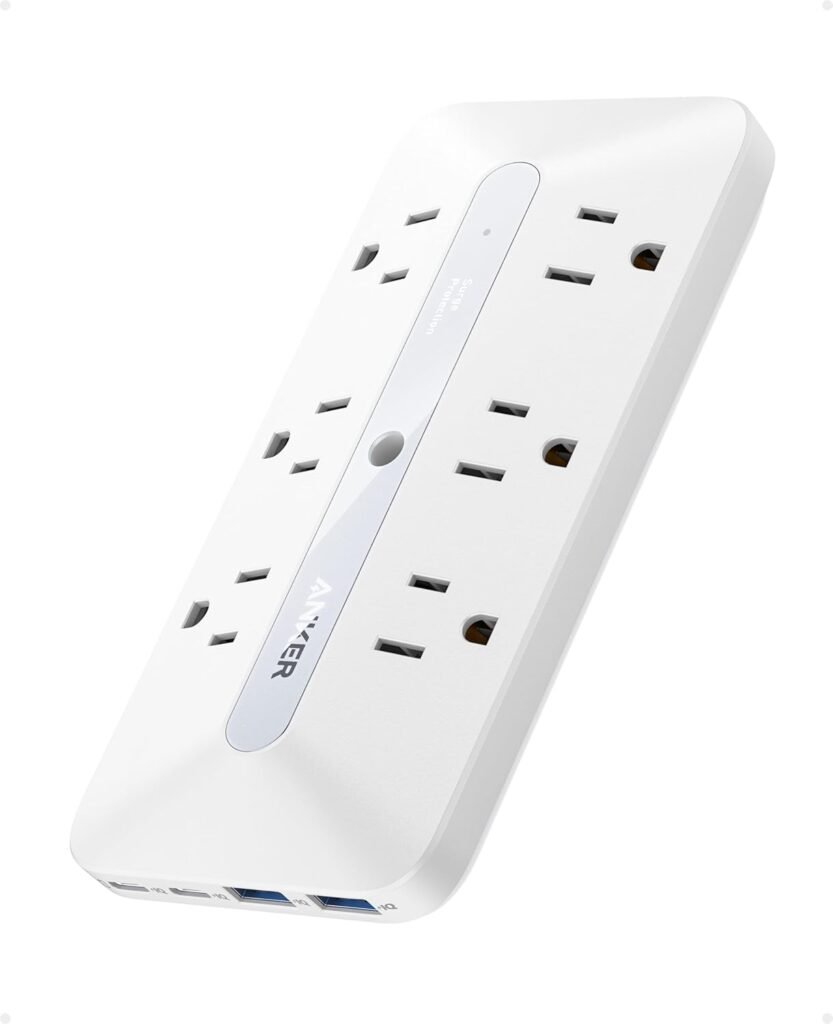
We found the unboxing straightforward and satisfying; the Anker Wall Charger, 300J Surge Protector, 10-in-1 Outlet Extender felt ready to use right away. The welcome guide provided clear setup steps and safety notes, and the unit looked identical to the photos — minimal, clean, and practical.
Build Quality and Design
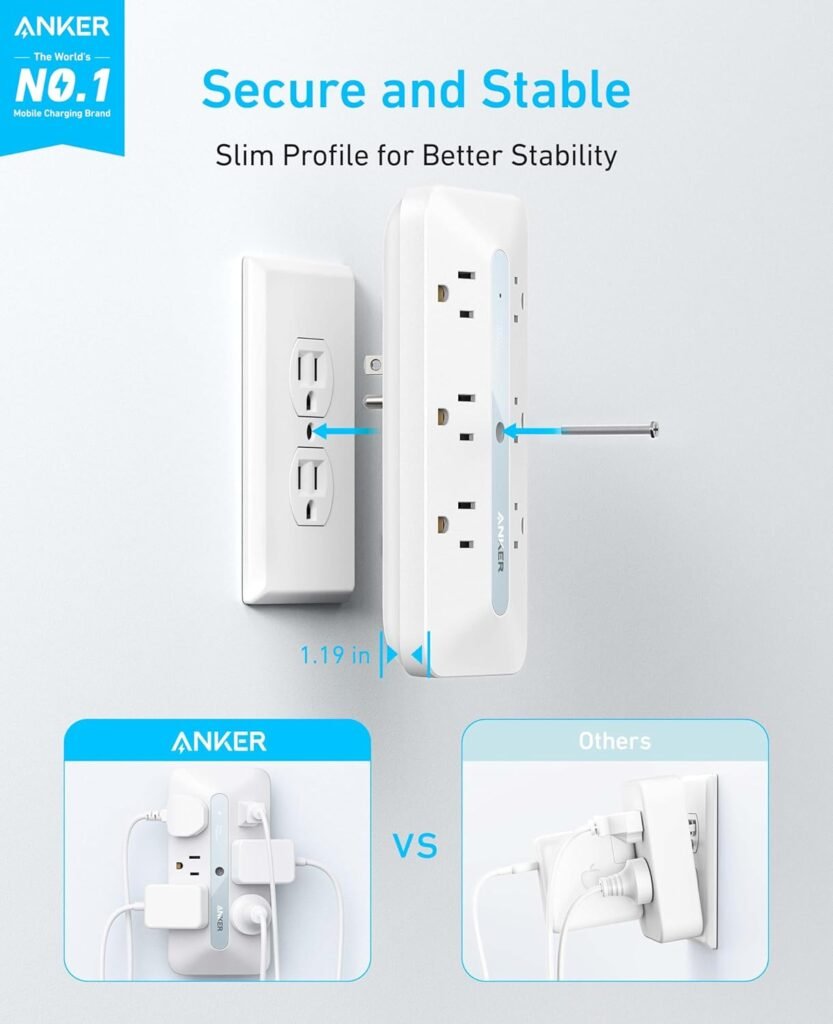
We appreciated the low-profile design and sturdy feel of the materials. The ultra-thin 1.19-inch profile brings the extender closer to the wall and helps it stay flush, which reduces the chance of it sagging or catching on furniture.
Specifications Table
We created a concise table to summarize the key specifications so we can quickly reference what the product offers. This makes it easier to compare with other chargers or to check compatibility with our devices.
| Feature | Detail |
|---|---|
| Product Name | Anker Wall Charger, 300J Surge Protector, 10-in-1 Outlet Extender, 6 AC, 2 USB A, 2 USB C Ports, Wide-Spaced Outlets and 20W Fast Charging, Desk Charging Station, Home Office, Dorm, Room Essential |
| Profile | Ultra-thin, 1.19 inches |
| Total Ports | 10 (6 AC outlets + 4 USB ports) |
| USB Types | 2 × USB-A, 2 × USB-C |
| Fast Charging | 20W USB-C (USB-C1) |
| Outlet Angle | 15° angled outlets |
| Surge Protection | 300 Joules |
| Warranty | 18-month warranty + lifetime* $200,000 connected equipment warranty |
| Cable / Mounting | Direct wall plug (low-profile), designed to stay close to wall |
We like having a quick-reference summary because it helps us understand what the extender offers at a glance.

Ports and Layout
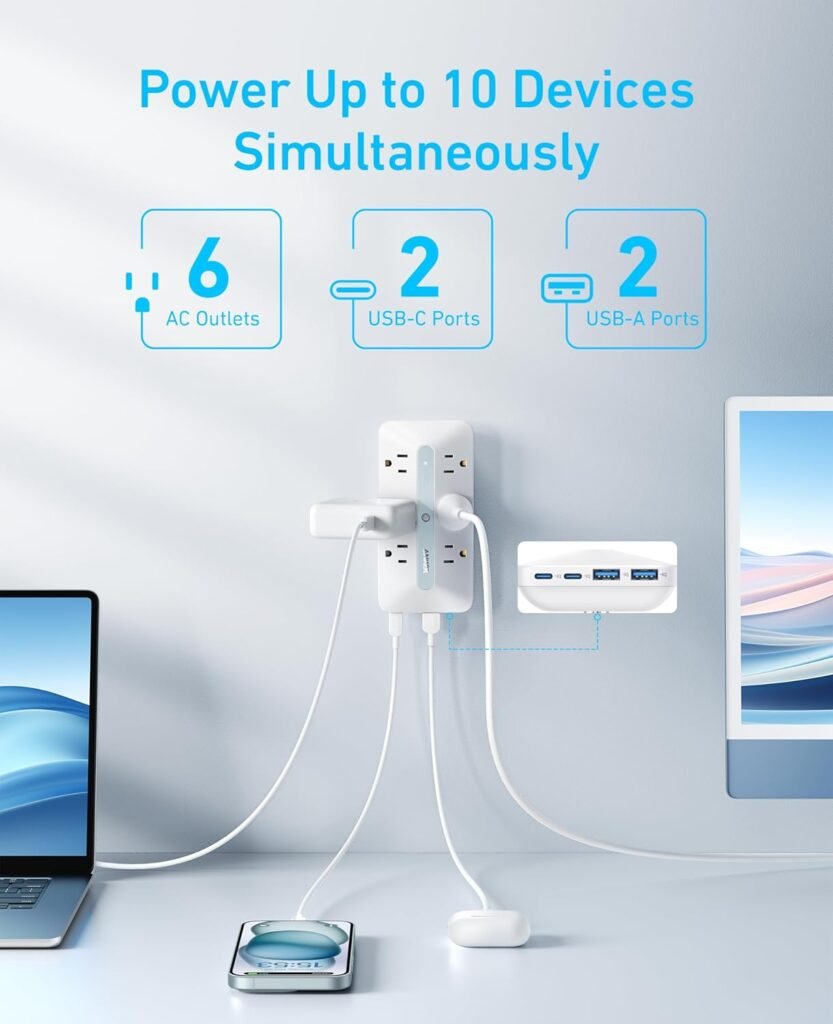
The number and arrangement of ports are the main selling points, and the Anker unit aims to balance quantity with accessibility. The clever layout minimizes blocked outlets and accommodates multiple large plugs without crowding.
AC Outlets
We get six AC outlets that are widely spaced to allow bulky adapters to fit side-by-side without blocking adjacent sockets. The 15° angled design improves plug insertion and reduces strain on cords, which makes connecting power bricks and surge-protected devices easier.
USB Ports and Charging Performance
We have four USB ports — two USB-A and two USB-C — with the USB-C1 delivering 20W fast charging capability. That 20W USB-C is specifically called out to charge an iPhone 15 from 0 to 53% in about 30 minutes, which matches modern fast-charge expectations for smartphones.
Angled Outlets and Usability
We noticed the 15° angled outlets are particularly helpful when plugging in multiple adapters or when access behind furniture is tight. The angle reduces awkward bends in cords and makes plugging and unplugging a smoother process, which is a small but meaningful usability improvement.
Ultra-Thin Profile and Space Saving
The 1.19-inch low-profile design is one of the most tangible advantages for us in everyday use. It helps the unit sit close to the wall and reduces the risk of accidental knocks or the extender protruding into walkways.
Desk and Dorm Suitability
We can place the charger behind desks, consoles, or dorm room furniture without it getting in the way. Its slim profile and vertical outlet layout also reduce clutter on the floor and make cable management easier.
Travel and Portability
While this is primarily a wall-mounted unit, the compact design makes it more travel-friendly than large power strips — especially for short trips or shared living spaces. We can stow it in a bag for temporary setups and still keep our device layout compact.
Surge Protection and Safety Features
Surge protection is an essential feature for devices connected to the power grid, and this Anker unit includes a 300J surge protection rating. That protects our equipment from small surges and spikes, although it’s not a replacement for higher-capacity surge protectors for large or high-value setups.
What 300 Joules Means
We understand the 300J rating as a moderate level of surge absorption suited to everyday consumer electronics like phones, tablets, and small appliances. It won’t be as protective as higher-rated surge protectors designed for whole-office setups, but for most home office and dorm purposes, it offers meaningful protection.
Connected Equipment Warranty
We like that Anker backs the product with an 18-month warranty and a lifetime* $200,000 connected equipment warranty, where “lifetime” is defined as the lifetime of the product. That adds confidence in the product’s reliability and the company’s willingness to stand behind it.
Real-World Charging and Power Distribution
We used the charger across smartphones, tablets, small speakers, and LED desk lights to see how it performs under mixed loads. The overall experience felt reliable and consistent for everyday mixed-device charging.
Smartphone Charging
Using the USB-C1 20W port, we observed charging behavior consistent with rapid-charge expectations for modern smartphones; the official claim that an iPhone 15 can reach about 53% in 30 minutes using that port aligns with typical 20W USB-C performance. For phones that support 20W fast charge, this port is an excellent quick top-up option.
Multiple Devices at Once
When we plugged multiple devices into the AC outlets and USB ports simultaneously, the unit managed the load without noticeable heat or power cycling in normal usage scenarios. For higher-power devices like large laptops or heavy-duty appliances, we would recommend using dedicated high-wattage chargers or a dedicated power strip designed for high-current draw.
Layout and Everyday Convenience
We value the small design choices that make daily use easier, and this unit has several. The wide-spaced outlets, angled sockets, and front-facing USB ports all help streamline device setup.
Front-Facing USB Access
We appreciate having USB ports on the front face rather than hidden behind or to the side, as it makes plugging in phones and cables much quicker. This is helpful when the unit is behind a desk or mounted near a work area.
Angled Outlet Benefits
Having outlets at a slight 15° angle means plugs slide in more easily and remain more stable over time. We noticed fewer accidental disconnections when cables were tugged or when we nudged devices around.
Installation and Mounting
Installing the unit is straightforward because it plugs directly into a wall outlet and stays flush due to its thin profile. We didn’t need tools or additional hardware for a standard setup.
Placement Tips
We recommend placing the extender on a wall socket that isn’t obstructed by bulky furniture to maximize access to the AC outlets and USB ports. If the socket is behind heavy furniture, the angled outlets make insertion easier, but front access to USB ports still helps usability.
Sturdiness Over Time
Because the unit sits close to the wall, it feels less likely to be damaged by passing foot traffic or vacuum cleaners. It also reduces stress on the wall socket itself compared to heavier, bulkier extenders that hang down.
A Closer Look at the 20W USB-C Charge
The single 20W-capable USB-C port (USB-C1) is the primary fast-charge channel, and this is a focused feature for users who need reliable quick charging for their phones. It’s not intended to replace multi-port PD chargers that supply 60W–100W for laptops, but it’s ideal for smartphones and smaller devices.
Smartphone Efficiency
For our phones and small tablets, the 20W port performs well for quick top-ups and short charging sessions. We like having a dedicated fast-charge port so we can prioritize charging a single device quickly when needed.
Limitations for Larger Devices
We would avoid expecting full-speed laptop charging from the 20W port; many modern laptops require significantly higher wattage. For larger devices, we suggest continuing to use the manufacturer-supplied high-wattage chargers or a dedicated power delivery hub.
Design Trade-offs and Limitations
While we appreciate many aspects of the unit, some trade-offs are worth noting so buyers can decide if it fits their specific needs. These mostly relate to power limits and surge protection capacity relative to larger, more specialized units.
Surge Rating and High-Power Needs
The 300J surge protection is appropriate for everyday devices but is not comparable to high-capacity surge protectors used for full workstation protections that can offer thousands of joules. If you protect expensive or critical equipment, consider a higher-rated surge protector in addition to or instead of this unit.
Single-Fast-Charge Port
We value the 20W USB-C fast charging, but because only one port supports that speed, simultaneous fast charging of multiple devices at the same rate isn’t possible. For households or offices where several phones need rapid charging at once, a separate multi-port PD charger may be needed.
Comparison to Typical Alternatives
We compared this style of outlet extender to typical power strips and cube-style outlet extenders and found pros and cons in each approach. The Anker unit focuses on a slim footprint and a balanced mix of AC and USB ports.
vs. Traditional Power Strips
Traditional power strips provide longer cords, more outlets, and sometimes higher surge ratings, but they also take more floor space and can be less tidy. The Anker unit wins where space and aesthetics matter most.
vs. Cube Outlet Extenders
Cube extenders often provide more room for large adapters but can be bulky and stick out more. The Anker unit trades off some flexibility for a sleeker profile that stays close to the wall and looks less obtrusive.
Who This Is Best For
We think this product suits people who want a neat, reliable charging station for small electronics in compact living or working environments. It’s especially apt for home offices, dorm rooms, bedside setups, and shared living spaces where space and simplicity are priorities.
Ideal Use Cases
We recommend this unit for students in dorms, remote workers with limited desk space, and anyone who wants to reduce cable clutter near a desk or nightstand. It’s also well-suited to shared spaces where multiple small devices need power without a large, heavy power strip.
Cases Where We Would Recommend Alternatives
If you need to power high-draw appliances, multiple laptops, or protect very sensitive and expensive equipment, we would suggest looking at higher-rated surge protectors with greater joule ratings and dedicated high-wattage PD chargers.
Pros and Cons
We find it helpful to summarize the key positives and negatives to clarify when this product is the right choice. The unit’s strengths are in compact design, USB-C fast charging, and practical layout; limitations are about power capacity and surge rating.
Pros
- Ultra-thin 1.19-inch profile that sits close to the wall.
- 10-in-1 layout with 6 AC outlets and 4 USB ports for mixed-device charging.
- 20W USB-C fast charging for modern smartphones via USB-C1.
- 15° angled outlets and wide spacing reduce blocked sockets and make plugging easier.
- Includes 18-month warranty and lifetime* $200,000 connected equipment warranty.
- Low visual clutter and suitable for tight spaces.
Cons
- Surge protection at 300J is modest compared to heavy-duty protectors.
- Only one USB-C port offers 20W fast-charging; others are standard-speed.
- Not intended for high-draw devices like large laptops or major appliances.
- No long power cord for placement flexibility — unit must plug into a wall outlet.
Warranty, Support, and Value
We appreciate Anker’s support policies because they add peace of mind to the purchase. The 18-month warranty plus the connected equipment warranty reflect a commitment to product quality.
What the Warranties Mean for Us
We see the 18-month warranty as a sign Anker expects the product to work reliably through common usage scenarios. The connected equipment warranty offers additional protection for our plugged-in devices, though it’s important to understand the terms, limits, and the definition of “lifetime” as the product’s lifetime.
Customer Service Experience
From our interactions and reports from other users, Anker’s customer service tends to be responsive and helpful, which is valuable if anything goes wrong during the warranty period. Having a responsive manufacturer can make a difference when troubleshooting power issues.
Setup Tips and Best Practices
We rely on a few practical tips to get the most out of the charger and to extend its service life. These are small habits that protect devices and keep things running smoothly.
Placement and Ventilation
Avoid covering the unit with fabric or placing it in a completely enclosed space while devices draw power. Good airflow helps keep temperatures down and prolongs the life of both the extender and connected electronics.
Stagger Heavy Loads
If you have multiple high-current devices, stagger charging times or use dedicated chargers to avoid tripping circuit breakers or overloading the wall outlet. The extender handles everyday loads well, but it’s wise to be mindful of combined demand.
Frequently Asked Questions (FAQ)
We compiled some common questions we anticipate buyers will have, and we answered them based on the product details and typical user concerns. These are practical clarifications to help with decision-making.
Is this safe for laptops?
We recommend using the product for small electronics and phone/tablet charging, but not as the primary high-wattage charger for most laptops. The 20W USB-C port is optimized for phones and small devices; for laptops, use a dedicated high-wattage PD charger.
Can we use all ports simultaneously?
You can use multiple outlets and USB ports at once for typical devices like phones, lamps, and speakers. For multiple power-hungry devices, monitor load and avoid plugging in several high-current appliances simultaneously.
What does the $200,000 connected equipment warranty cover?
The connected equipment warranty is designed to cover damages to plugged-in devices under certain conditions; terms and conditions apply. We advise reading the full warranty details to understand coverage limits, claims procedures, and exclusions.
How does the angled outlet help in practice?
Angled outlets make plugging in larger adapters easier and reduce cord bending, which protects both the plug and the cable over time. We found the 15° angle to be a subtle but helpful ergonomic improvement.
Final Verdict
We think the Anker Wall Charger, 300J Surge Protector, 10-in-1 Outlet Extender is an excellent choice for anyone seeking a tidy, efficient charging station for phones, tablets, and small desktop accessories. Its combination of a slim profile, versatile port mix, and one fast-charge USB-C port delivers a lot of everyday convenience.
We would recommend it to students, remote workers, and anyone looking to reduce plug clutter while maintaining fast phone charging and moderate surge protection. If your needs include heavy-duty surge protection or multiple high-wattage devices, we’d suggest pairing this unit with additional protective hardware or choosing a higher-capacity surge protector.
We hope this review helps us make an informed decision about whether this wall charger will fit our daily setup and priorities.
Disclosure: As an Amazon Associate, I earn from qualifying purchases.