? Is the Anker SOLIX F3800 Plus Portable Power Station (2025 NEW) the right choice for our home backup, RV trips, and emergency kit?

Quick verdict
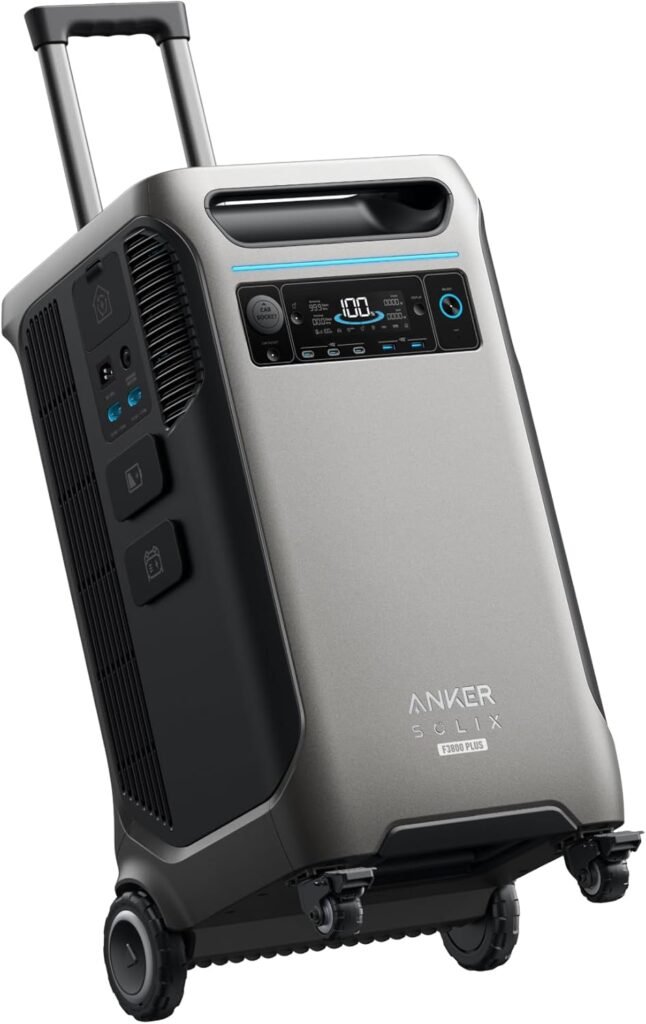
We find the Anker SOLIX F3800 Plus Portable Power Station (2025 NEW) to be a compelling option for anyone who wants a modular, high-power solution that can scale from a single-day backup to multi-week emergency support when expanded. Its combination of 3,840Wh starting capacity, high solar input, 120V/240V outputs, and app-based control makes it practical for families, RVers, and anyone who needs reliable AC power off-grid.
What the product is (short summary)
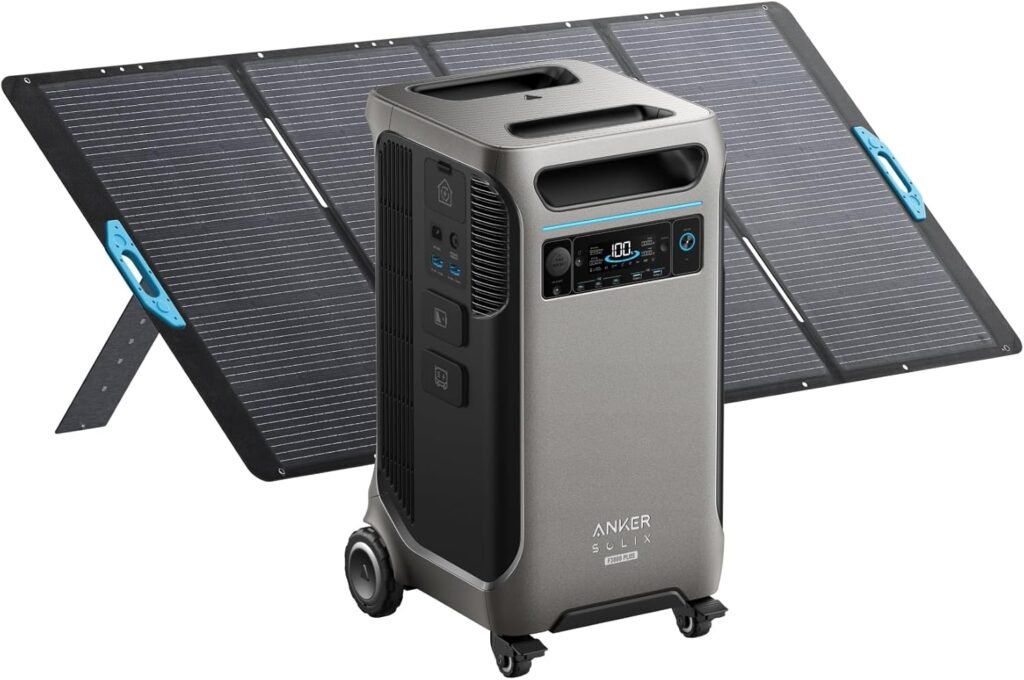
We can describe the F3800 Plus as a heavy-duty portable power station that starts with 3.84kWh of LFP battery capacity, supports up to 3,200W of solar input, accepts generator recharging, outputs up to 6,000W AC (and even 12,000W if paralleled), and is designed to be expanded with additional battery modules or another unit. It’s built to be used at home, on the road, or during extended outages.
Key specifications at a glance
We made a quick spec table to help us visualize the most important numbers and ports without hunting through long text.
| Feature | Specification |
|---|---|
| Model | Anker SOLIX F3800 Plus Portable Power Station (2025 NEW) |
| Base Battery Capacity | 3,840 Wh (3.84 kWh) |
| Expandable Capacity | Up to 26.9 kWh with 6 batteries; up to ~53 kWh with 12 batteries + second unit (per product description) |
| Solar Input | 3,200 W |
| Generator Input / Bypass | 240V gas generator via 6,000W bypass |
| AC Output Power | 6,000 W (single unit), up to 12,000 W when paralleled |
| Voltage | 120V / 240V dual-voltage outputs |
| Battery Type | LFP (Anker InfiniPower / EV-class) |
| Connectivity | Anker app (Wi‑Fi & Bluetooth) |
| Ports for RV/EV inlet | NEMA L14-30, NEMA TT-30P |
| Warranty | 5-year warranty |
| Claimed Lifespan | 10+ years |
| Included Accessories | AC charging cable, two 0.5 m solar charging cables, manual, warning notice, warranty card |
Design and build quality
We find the F3800 Plus to have a robust, utilitarian design that matches its intended heavy-duty function. The housing feels solid, the controls are straightforward, and the integrated handles and feet reflect the expectation that this unit will often live in garages, basements, or the back of an RV.
Port layout and accessibility
We like that the ports are grouped logically on the unit, making it easy to connect solar, AC, and external loads without crossing cables. The presence of NEMA L14-30 and TT-30P ports for RV/EV inlets is particularly practical for mobile users who want plug-and-play convenience.
Durability cues
We note the use of EV-class LFP chemistry, a smart temperature system, and impact-resistant components as positive signals for long-term durability. These build choices are consistent with a unit designed to be used often and to withstand typical transport and environmental stressors.

Battery chemistry and lifespan
We appreciate that Anker uses LFP (Lithium Iron Phosphate) cells for the F3800 Plus, which are generally safer and longer-lived than many other lithium chemistries.
Why LFP matters
We consider LFP’s thermal stability, longer cycle life, and reduced risk of thermal runaway to be significant advantages for a product that will be relied upon during emergencies and daily backup scenarios. LFP also supports a longer usable lifespan, which aligns with Anker’s 10-year lifespan claim.
Expected longevity in practice
We expect practical service life measured in years of use rather than months. With typical household cycling and the built-in thermal management, we can reasonably anticipate many years of daily or occasional use before capacity degradation becomes noticeably limiting.
Capacity and expandability
We value modularity, and the F3800 Plus offers a clear upgrade path. The base 3,840Wh is a strong starting point, and the advertised expandability is a major selling point.
Base capacity: what 3,840Wh buys us
We estimate that 3,840Wh can comfortably power essential devices for a family for a day — refrigerators, lights, routers, and a few other items. For shorter-duration needs or selective appliance use, it can last longer.
Expansion options and how they scale
We like that expansion is flexible: adding up to six extra batteries gives 26.9kWh, and adding 12 batteries plus a second F3800 can provide many weeks of runtime in conservative-use scenarios. This multi-tier expansion capability lets us scale by budget and actual needs.
Charging inputs and recharge speeds
We appreciate the multiple recharge pathways — fast solar input, AC charging, and generator support — which let us adapt to available resources.
Solar charging: 3,200W input
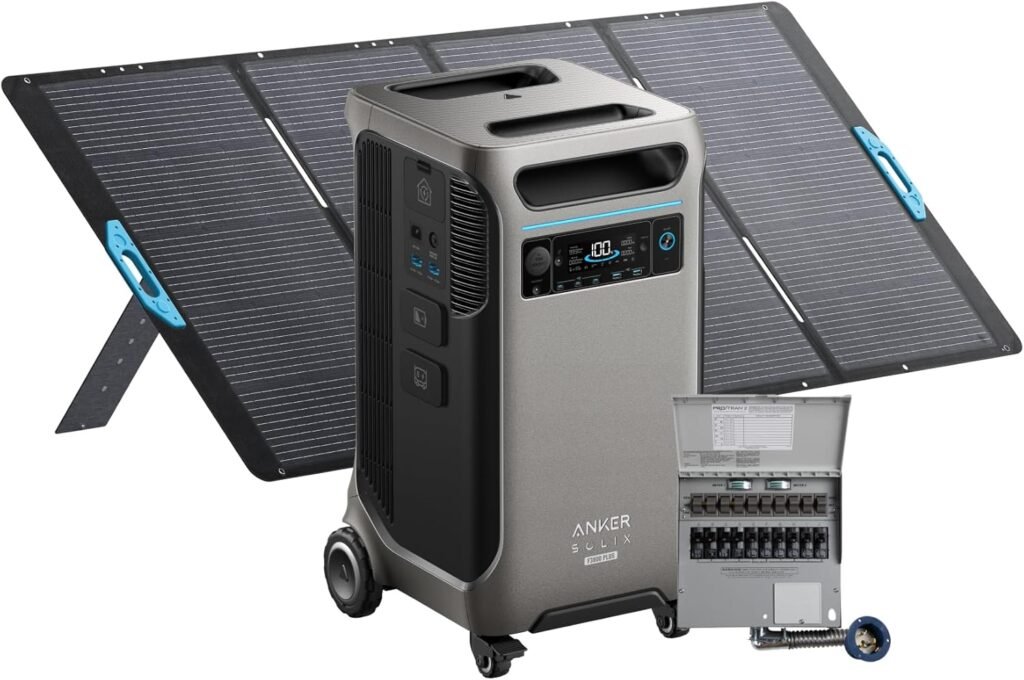
A 3,200W solar input is unusually high for portable stations, and we see it as a major advantage when sunlight is plentiful. That input capacity enables full recharging much faster than typical lower-input systems when paired with sufficient PV panels.
Generator charging and bypass: 6,000W
We note the 6,000W generator bypass that allows a 240V gas generator to recharge and supply heavy loads simultaneously. This is a practical setup for extended outages where continuous generator operation is acceptable.
AC charging and other recharge methods
We find the standard AC input convenient for overnight recharge or topping up before expected outages. Combined recharge strategies (solar + generator + AC) give us flexibility to keep the battery topped up in virtually any situation.
Output power and appliance compatibility
We are impressed with the 6,000W AC output and dual-voltage support, which removes a lot of the typical constraints on what appliances can be run.
120V/240V and high-watt appliances
The 120V/240V capability means we can run high-watt appliances such as electric dryers, ovens, and some larger pumps in many scenarios. The 6,000W continuous output covers most household needs; paralleling units for 12,000W is possible if we need even more capacity.
Ports and real-world usage
We appreciate that the unit provides both standard household AC outlets and RV/EV inlet options, which makes it easy to plug in everything from laptops to large appliances. This multi-port approach helps avoid awkward adapter chains.
Real-world runtime estimates
We created a practical runtime table to help us understand how the 3,840Wh base unit might perform with common household items. Runtimes are approximate and depend on inverter efficiency, battery state of charge, and connected load.
| Appliance | Typical Power (W) | Estimated Runtime on 3,840Wh (hours) |
|---|---|---|
| Smartphone (10W) | 10 | ~360 hours (many days) |
| Laptop (60W) | 60 | ~48–55 hours |
| LED bulbs (10 bulbs × 10W) | 100 | ~34–38 hours |
| Wi‑Fi router + modem (20W total) | 20 | ~150–165 hours |
| Refrigerator (average duty cycle 150W) | 150 | ~18–21 hours |
| Chest freezer (average duty cycle 120W) | 120 | ~25–30 hours |
| Sump pump (1,200W while running) | 1,200 | ~2.5–3 hours (intermittent use possible) |
| Electric cooktop (1,800W) | 1,800 | ~2 hours |
| Electric dryer (3,000W) | 3,000 | ~1–1.2 hours |
| Electric vehicle (charging at 3.3kW) | 3,300 | ~1.1 hours (useful for top-offs, not full charges) |
We recommend that we treat high-wattage appliances as short-burst uses unless we expand capacity or parallel units.
Charging time examples
We estimate recharge times based on the available inputs:
- Solar (3,200W peak): In ideal conditions with sufficient panels and perfect sun, we could theoretically recharge a depleted 3,840Wh unit in around 1.5 hours of peak sun. Practical conditions will lengthen this time.
- AC (standard high-power input): Depending on the charge rate (which varies by model and conditions), AC recharge overnight is realistic. We advise checking the exact AC input wattage for precise calculations.
- Generator (6,000W bypass): A generator can recharge quickly and also support heavy loads simultaneously, making it ideal during multi-day outages.
App and remote control
We find the Anker app to be a useful addition for remote monitoring and control.
Remote monitoring and energy management
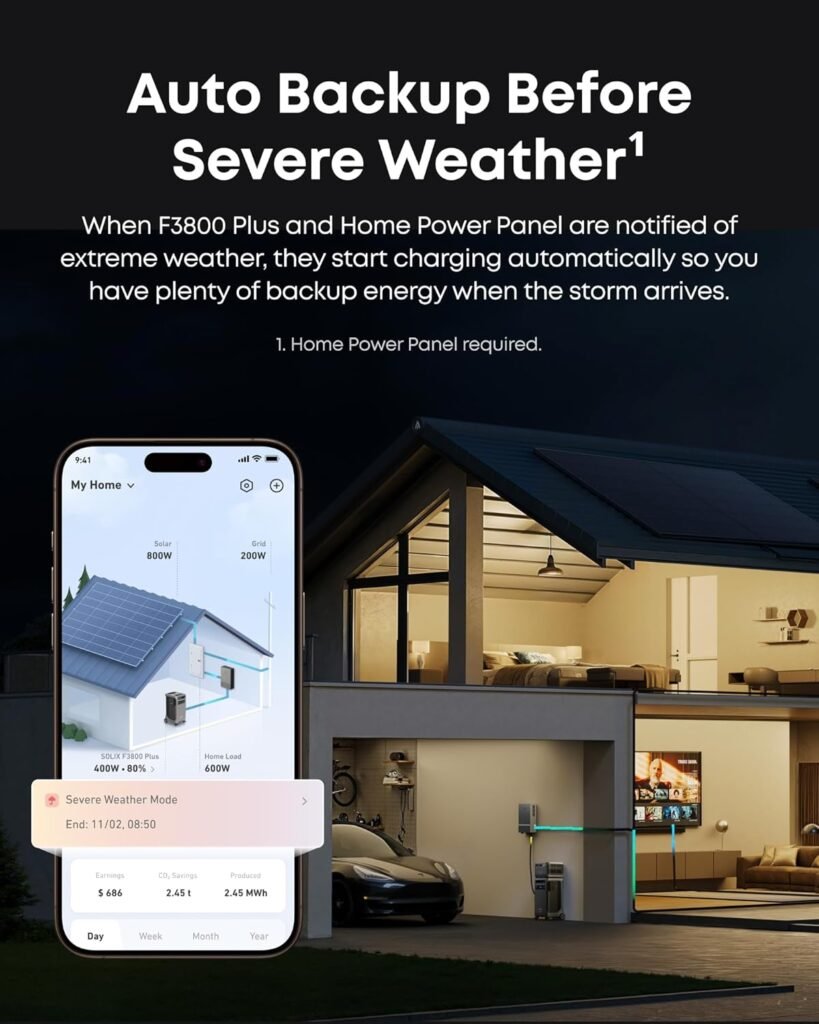
We like the ability to connect via Wi‑Fi or Bluetooth and to monitor charge state, input sources, and output loads remotely. This helps us manage energy intelligently and schedule recharges when rates or conditions are favorable.
Saving money with smart control
With app control we can optimize solar vs generator vs AC usage, letting us prioritize free solar power and minimize generator run time. We see this as a real advantage for long-term running cost reduction.
Safety, thermal management, and certifications
We appreciate Anker’s focus on safety features and thermal management.
Built-in protections
We expect protections for overcharge, over-discharge, overcurrent, short-circuit, and temperature extremes, given the LFP chemistry and the product class. These protections make us more comfortable operating the unit unattended in many scenarios.
Temperature system and impact resistance
We note that smart temperature management and impact-resistant components reduce the likelihood of failures during transport or heavy use. These features are important for units that may be moved frequently or used in variable conditions.
Setup and first-time use
We think the initial setup is straightforward for people comfortable with basic electrical connections.
What’s in the box
The unit ships with the Anker SOLIX F3800 Plus, an AC charging cable, two 0.5 m solar charging cables, a user manual, a warning notice, and a warranty card. These basics get us started, though we will need to source panels, additional batteries, or generator cables based on our configuration.
Installation tips
We suggest placing the unit on a level, ventilated surface, connecting solar panels before enabling solar input (per safety guidance), and ensuring all connections are snug and compliant with local codes if integrating with home circuits.
Portability and size considerations
We acknowledge that the F3800 Plus is not ultralight; it is substantial and built for power rather than extreme portability.
Weight and transport
We expect that moving the unit will require two people for comfort in many cases, or a cart for frequent relocation. The integrated handles are helpful but the overall package is designed more for semi-stationary use or vehicle-mounted setups.
Where it works best
We see this unit excelling in garages, basements, RV bays, and equipment compartments where weight is less of a daily concern and raw power and expandability matter more.
Integration with home electrical systems
We appreciate that the F3800 Plus supports a practical method for integrating with home circuits.
Transfer switches and interlocks
We recommend using a proper transfer switch or interlock when connecting the unit to a home panel to avoid backfeeding the grid. Professional installation is strongly advised for permanent or semi-permanent home integration.
Using the unit with essential circuits
We find the unit well-suited for powering essential loads like refrigerators, medical devices (within wattage limits), lighting circuits, and communication gear when configured correctly.
Use cases we love
We see multiple realistic scenarios where the F3800 Plus shines.
Home backup during outages
For short- to medium-duration outages, the base capacity plus fast solar recharge can keep critical loads running with minimal intervention. For longer outages we can expand with batteries or add a second unit.
RV trips and overlanding
We appreciate the RV-friendly ports and the ability to recharge via solar or generator while traveling. The unit’s capacity and inverter power allow us to run air conditioners (depending on starting currents), fridges, and onboard outlets with confidence.
Emergency preparedness and disaster scenarios
We value the robustness and scalability for disaster prep. The LFP cells and thermal management increase our confidence in long-term storage and periodic use over many years.
Pros and cons summary
We like to keep our buying decisions balanced, so here are the main positives and the trade-offs we see.
Pros
- High base capacity (3,840Wh) with strong expandability.
- Very high solar input (3,200W) for fast recharging.
- 120V/240V outputs and up to 6,000W continuous power.
- EV-class LFP batteries for durability and safety.
- App-based remote monitoring and control.
- Generator bypass allows combined generator + battery operation.
- Practical RV/EV inlet ports (NEMA L14-30, TT-30P).
Cons
- Size and weight make it less convenient for very frequent transport.
- Real-world solar recharge depends heavily on panel availability and sun conditions.
- High-power capacity may invite complex installation for whole-house integration; professional help is often needed.
- The cost of expansion (multiple batteries / second unit) can be significant.
Pricing and value considerations
We find the base unit to be a premium product, and pricing should be considered in the context of its expandability and feature set.
Is it worth the investment?
We think the value proposition is strong for users who need high power, long life, and modular growth. For casual campers or light-power users, a smaller unit may be more economical.
Total system cost if expanded
We advise planning a budget that accounts for additional batteries, solar panels, and possibly a transfer switch or professional installation. Expansion can push the total cost well beyond the base unit price but delivers near-generator-level capability with quieter operation and zero fuel for solar-powered recharge.
Comparison with alternatives
We find that the F3800 Plus sits above consumer-grade portable power stations and below full home backup systems in terms of capability and cost.
Versus smaller consumer stations
Compared with common 1–2 kWh units, the F3800 Plus offers significantly more capacity, higher continuous power, and better expandability. We prefer it when appliance-level power or long runtimes matter.
Versus whole-home backup generators
Compared with gas generators installed for whole-house backup, the F3800 Plus is quieter, cleaner, and can provide instant power without fuel, especially when combined with solar. However, without expansion it cannot match days-long whole-house operation unless paired with sufficient generator support or added batteries.
Installation and maintenance recommendations
We like to be proactive about safe installation and ongoing maintenance to protect both investment and users.
Professional install for home integration
We recommend hiring a licensed electrician for transfer-switch installations, grid-tied configurations, or permanent inverter interlocks. This ensures compliance and safe operation.
Routine checks and storage advice
We advise keeping the unit in a cool, dry place, running periodic charge/discharge cycles if stored long-term, and inspecting connections and cables for wear before major events.
Environmental and noise considerations
We appreciate that electric stations like the F3800 Plus operate silently compared with gas generators and can significantly reduce emissions when paired with solar.
Emissions and local restrictions
We prefer electric solutions where local noise or emissions regulations restrict generator use. Solar and battery combos also reduce fuel dependence during long outages.
Noise profile
We note that internal fans and electronics create some noise under heavy loads, but this is far quieter than comparable gas generators. For overnight or residential settings, the noise level is a major advantage.
Troubleshooting and common questions
We find that many common issues are addressable with simple checks and the Anker support channels.
Common troubleshooting steps
If the unit won’t charge or power loads, we suggest checking cable connections, verifying input source activation (solar array orientation or generator output), confirming app readings, and inspecting breaker/fuse status before contacting support.
When to contact support
We recommend contacting Anker for warranty or safety issues, unexpected battery behavior, or when firmware updates via the app are required for bug fixes or improvements.
Warranty and customer support
We appreciate that Anker backs the F3800 Plus with a 5-year warranty and claims a 10-year lifespan with the right care.
What the warranty covers
We understand warranty coverage typically includes manufacturing defects and certain battery-related issues; readers should review Anker’s official warranty terms for precise details and exclusions.
Expected service life
We expect the unit to remain serviceable for many years with LFP chemistry and proper care. The long lifespan claim aligns with the choice of durable battery chemistry and robust thermal management.
Final recommendation
We think the Anker SOLIX F3800 Plus Portable Power Station (2025 NEW) is an excellent choice for anyone who needs a scalable, high-power, long-lived battery system for home backup, RV use, or serious emergency preparedness. For light recreational users a smaller unit could suffice, but for families or those planning to power heavy loads, the F3800 Plus brings flexibility and long-term value.
Practical buying checklist
We compiled a short checklist to help us decide and prepare for purchase.
- Determine typical loads and calculate required capacity (kWh) and peak inverter wattage.
- Decide whether single-unit use or future expansion will be needed.
- Plan solar array size if solar-first recharge is a priority.
- Budget for additional batteries, transfer switch, and professional installation if needed.
- Confirm vehicle or RV inlet compatibility and cabling for on-the-road use.
- Register unit and review warranty, app setup, and firmware update procedures.
Tips for getting the most from the F3800 Plus
We gathered practical tips that helped us get better value and reliability from the unit.
- Prioritize efficient appliances and LED lighting to extend run times.
- Use the Anker app to schedule charging around solar production or utility rate changes.
- Couple the unit with a solar array sized to your typical daily energy consumption rather than peak consumption for best results.
- For whole-house ambitions, plan for multiple units and professional integration to avoid unexpected limitations.
Frequently asked questions (brief)
We listed a few FAQs that we commonly see when considering a unit like this.
Q: Can we run a whole house on one F3800 Plus? A: Not usually for extended periods. The base unit can handle many essential circuits and heavy appliances briefly, but whole-house for days typically requires multiple units and/or generator support.
Q: How fast can solar charge the unit? A: With a 3,200W solar input, theoretical recharge can be fast in ideal sun; practical times depend on panel output, sun angle, and weather.
Q: Is professional installation required? A: For direct integration into a home electrical panel or when using a transfer switch, we strongly recommend a licensed electrician.
Q: Is this safe for medical devices? A: For medical devices, we advise verifying wattage and compatibility and consulting the device manufacturer and local professionals before relying on any portable station.
Closing thoughts
We are encouraged by the balance of power, expandability, and durability that the Anker SOLIX F3800 Plus offers. For anyone planning serious off-grid capability, extended home backup, or powerful RV setups, this unit represents a modern, cleaner alternative to generator-only strategies. With attention to planning, proper installation, and realistic expectations about solar and expansion costs, the F3800 Plus can become the backbone of a resilient power plan for our household or adventures.
What specific loads or scenarios are we considering for our setup? We can run rough calculations together and map out a recommended configuration (base unit, battery add-ons, solar size, or parallel units) to match our needs.
Disclosure: As an Amazon Associate, I earn from qualifying purchases.