Can the Anker SOLIX C800 Portable Power Station keep our devices running for a weekend off-grid or during an unexpected outage?

Overview
We find the Anker SOLIX C800 Portable Power Station, 1200W (Peak 1600W) Solar Generator to be a compelling mid-capacity option for people who want reliable portable power without the bulk of larger units. It blends a 768Wh LiFePO4 battery, a 1200W continuous inverter (1600W peak via SurgePad technology), and fast recharging features into a package designed for camping, RVs, road trips, and emergency use.
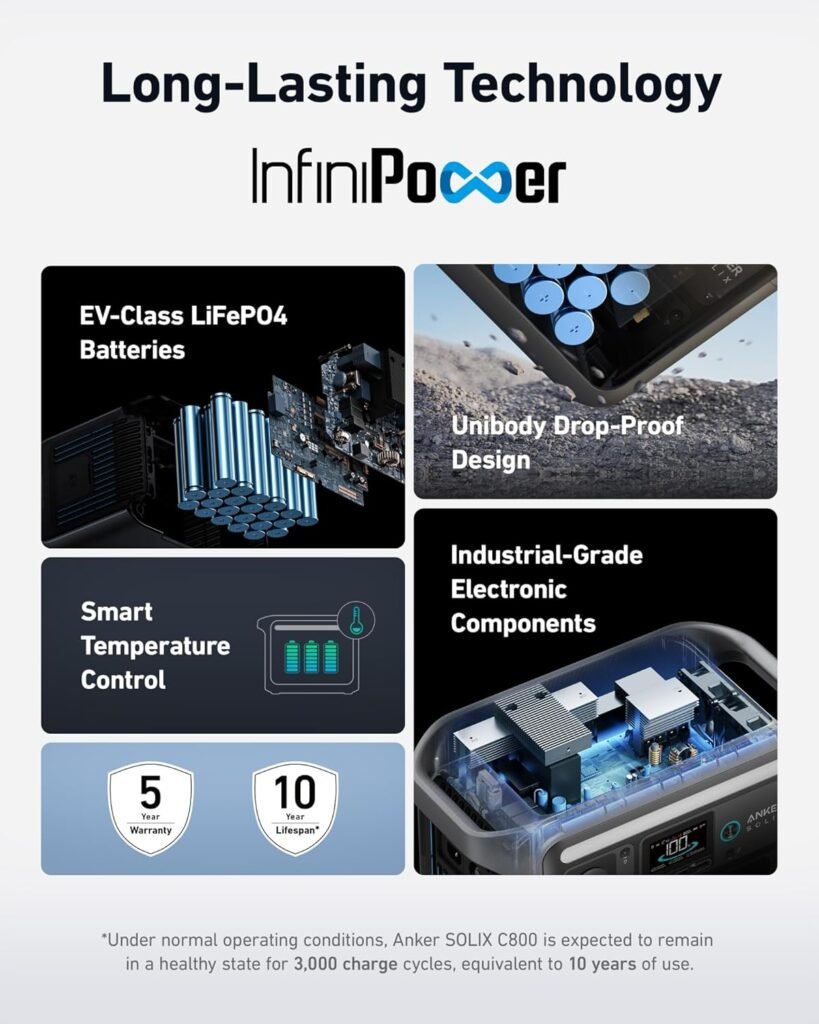
We appreciate that Anker emphasized longevity with InfiniPower technology, promising more than 3,000 cycles and everyday use for up to 10 years, which changes how we think about the total cost of ownership.
Key Specifications
We like having a clear set of specs to compare when choosing a power station, so here are the headline figures for quick reference. These specifications reflect what Anker lists and highlight the features we use to judge fit for specific needs.
| Feature | Specification | Notes |
|---|---|---|
| Model | Anker SOLIX C800 Portable Power Station | Full product name included for clarity |
| Battery Type | LiFePO4 | Stable chemistry with long cycle life |
| Usable Capacity | 768Wh | Enough for many small appliances and devices |
| Rated Output | 1200W | Continuous AC output for most medium loads |
| Peak/Surge Output | 1600W | Short bursts for motor-driven loads via SurgePad |
| USB Ports | Multiple USB-A and USB-C (Power Delivery) | Fast charging for phones, tablets, and laptops |
| AC Outlets | Up to standard household AC outlets | Supports common appliances |
| Simultaneous Devices | Up to 10 appliances | Anker claims broad multi-device support |
| Solar Input | Up to 300W | Optional solar panel for off-grid recharging |
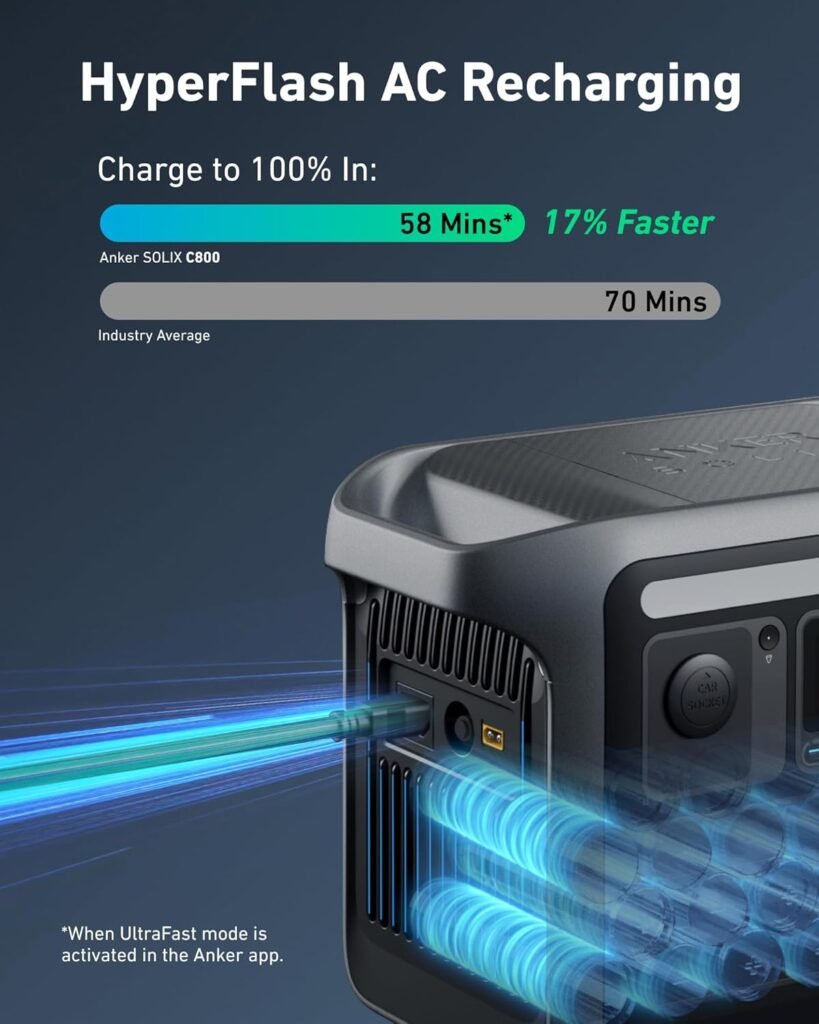
| Recharge (AC) | 58 minutes (UltraFast) | When using UltraFast charging through app control |
| Recharge (Solar) | 80% in ~2.3 hours at 300W | Weather and panel orientation affect results |
| Cycle Life | >3,000 cycles | InfiniPower technology; rated for ~10 years daily use |
| Included Accessories | Solar charging cable, AC charging cable, car cable | Plus digital manual and 5-year warranty |
| Warranty | 5 years | Strong manufacturer support |
We will refer back to these specs as we talk about real-world performance and whether this unit fits our needs.

What’s in the Box
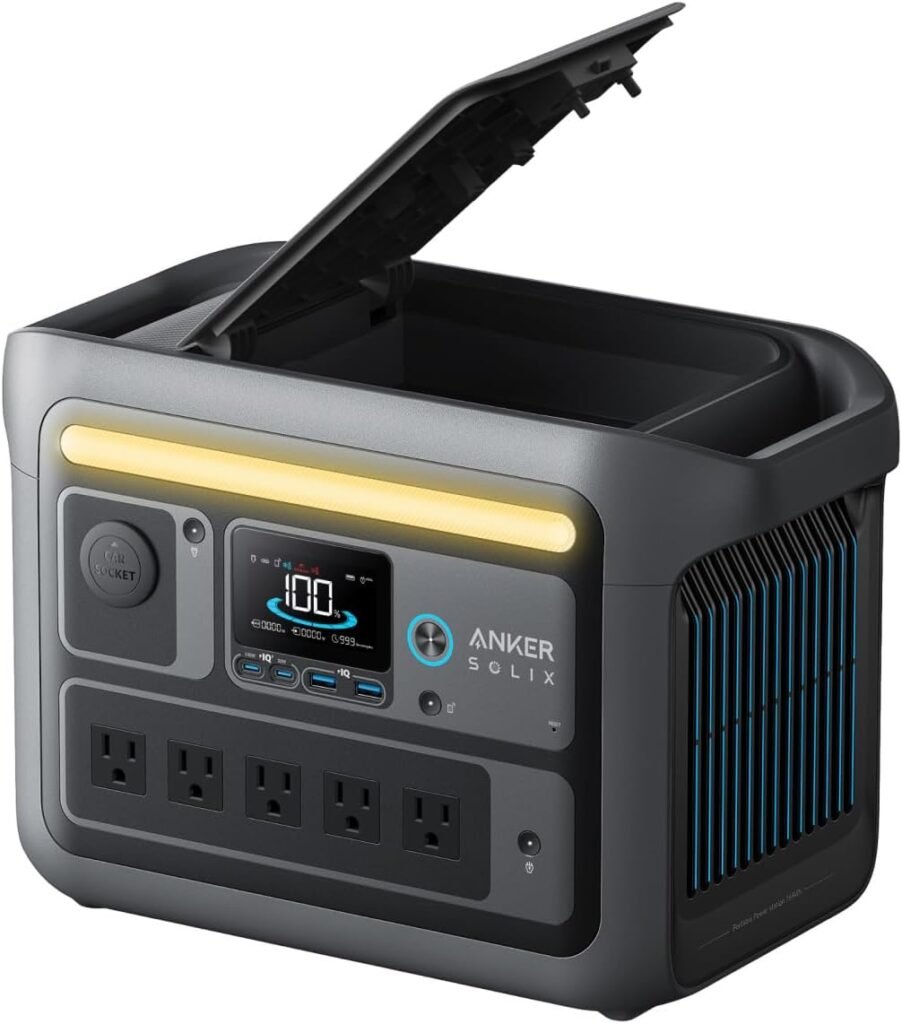
We appreciate when packages include the cables and documentation needed to start using a power station quickly, and the SOLIX C800 delivers on that. The box provides the portable power station, a solar charging cable, an AC charging cable, a car charging cable, a digital manual, and a five-year warranty that gives us confidence in the purchase.
We also note that solar panels are optional and not included by default, so if we plan to rely on sunlight we should budget for compatible panels (up to 300W supported).
Design and Build Quality
We feel the SOLIX C800 aims for a balance between ruggedness and portability, with a built-in handle and a design that clearly targets outdoor use and frequent transport. The housing looks durable and the built-in storage compartment is a thoughtful touch for keeping small accessories organized.
From a tactile standpoint, buttons and ports appear well-laid-out and easy to reach, and the unit doesn’t feel toy-like; it presents itself as a serious tool we can rely on during trips and outages.
Ports and Controls
We like a layout that lets us plug in several devices at once, and the C800 supports up to 10 appliances simultaneously, including a mix of AC, DC, and USB options. The unit includes multiple USB-A and USB-C ports (including Power Delivery for higher-watt laptop charging), standard AC outlets, and DC outputs for 12V accessories.
The control panel is straightforward with a prominent power button and status indicators, and the Anker app adds another layer of control, such as toggling UltraFast charging for AC input.
Built-in Storage
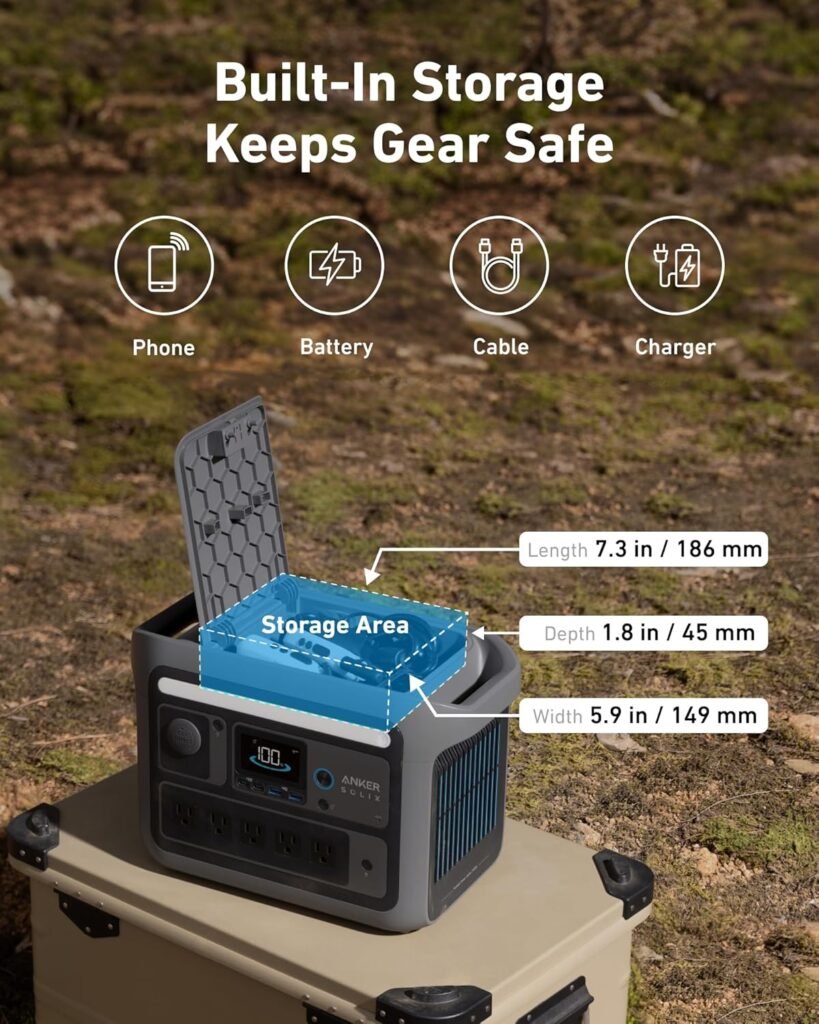
We appreciate the built-in storage compartment because it keeps small devices, cables, and adapters from getting lost in our gear bags. That practical addition reduces the time we spend searching for a USB-C cable or car adapter at a campsite.
Keeping our small electronics safely stashed also helps prevent damage from shifting gear in a car or RV during travel.
Performance
We prioritize real-world performance over marketing claims, and on paper the SOLIX C800 delivers a mix of fast charging, respectable capacity, and a robust inverter. The 768Wh battery coupled with a 1200W inverter means the unit can run most essential devices for reasonable periods and handle brief surges to 1600W for motor-driven appliances.
We find the most compelling aspects to be the fast recharge capability (58 minutes with UltraFast) and the long battery life through many more cycles than typical lithium-ion packs.
Output Power and SurgePad Technology
We rely on the 1200W continuous output for items like portable fridges, power tools, and small kitchen appliances, and SurgePad technology extends short-term peak capacity to 1600W to start motors or spikes from devices. This gives us flexibility to power appliances that have higher startup currents, like small compressors and certain microwaves for short durations.
We still recommend checking appliance wattage before use, because continuous high-load devices that exceed 1200W won’t run for long and could trip protective circuitry.
Battery and Lifespan (InfiniPower)
We value the LiFePO4 battery chemistry for its stability and longevity; Anker’s InfiniPower claim of over 3,000 cycles suggests we can expect the pack to remain usable for many years with daily use. Over time that longevity often results in a lower total cost of ownership versus cheaper packs that degrade far sooner.
Practically speaking, that means we can plan longer-term outdoor activities or keep it as a home emergency asset without worrying about prompt battery replacement.
Charging Speeds (UltraFast and Solar)
We like that the SOLIX C800 offers multiple charging pathways: AC wall, car, and solar. The headline-grabbing feature is the UltraFast AC recharge that fills the unit in 58 minutes when enabled via the app, making it ideal for quick turnarounds between uses.
For off-grid applications, up to 300W of solar input can bring the battery to 80% in around 2.3 hours under ideal conditions, which is impressive and makes full solar recharge feasible during a sunny day with compact panels.
Real-world Use Cases
We often evaluate power stations based on what they let us do on a trip rather than only specs, so here are scenarios where the C800 fits well. The unit’s mix of ports and sturdy battery life makes it well suited to weekend camping, van life for a couple of days, road trips, and acting as a compact emergency backup for essential household circuits.
We’ll break this down further with examples and estimated runtimes to help us decide whether the capacity and power output match our intended use.
Camping and Outdoor
We find the SOLIX C800 to be a strong companion for car camping and shorter backcountry setups where we have vehicle access. It can simultaneously charge phones, power a small portable fridge, run LED lighting, and provide laptop charging for remote work.
In practice, a 768Wh battery typically powers smartphones for dozens of charges, a laptop for multiple charges depending on the model, and a 40–60W portable fridge for many hours. Our actual runtimes will vary with device efficiency, ambient temperature, and cycling behavior.
RVs and Van Life
For RVs and van life, the SOLIX C800 can serve as a supplemental power source for shorter stays off-grid or as a UPS-like device for a console area. It won’t replace a house battery bank for long-term boondocking, but it’s an excellent grab-and-go option for powering essentials like lights, vent fans, small fridges, and charging stations.
Because the unit can handle brief surges up to 1600W, we can start devices with motors more reliably than with some lower-surge units, which reduces the risk of nuisance tripping when we turn on awning lights or a small compressor.
Road Trips and Tailgating
We find the C800 handy for tailgating because it can run speakers, a mini-fridge, and charge guests’ devices without noise from a gas generator. Its fast recharging means we can run a handful of high-draw items between stops and top up quickly at rest areas with AC access.
The built-in storage for cables and smaller items also keeps our tailgating gear neatly organized and ready to deploy.
Home Backup and Emergencies
We consider the SOLIX C800 a sensible emergency backup for essential household devices: charging phones, running a Wi‑Fi router, powering medical devices like CPAPs (depending on model), and keeping LED lights running during outages. It’s a compact alternative to larger whole-home systems when only a subset of circuits needs support.
Because it uses LiFePO4 cells and includes protective electronics, the unit is a safer and more reliable option than lead-acid jumpers or uncertified power packs for emergency preparedness.
Portability and Practicality
We find the SOLIX C800 to balance capacity with portability — it’s not pocket-sized, but it’s manageable to move for most adults and fits easily in car trunks and RV compartments. The built-in handle and reasonably compact footprint make it practical for frequent transport between home and the outdoors.
We also appreciate the built-in storage compartment and the avoidance of extra clutter; when we pack for a trip we like knowing cables live in the unit rather than loose in a bag.
Setup and User Experience
We enjoy the straightforward out-of-the-box setup: plug in devices, press the power button, and use the Anker app for any advanced settings like UltraFast AC recharging. The app provides convenient control and monitoring, which is especially useful when we want to manage charging behavior remotely or switch modes quickly.
On the device itself, the buttons and display are intuitive and clear, reducing the learning curve for anyone who hasn’t used a modern power station before.
Noise and Thermal Management
We look for machines that don’t add annoyance to a campsite, and the SOLIX C800 generally operates quietly aside from intermittent fan noise under higher loads. The fans manage internal temperatures effectively during heavy use or fast charging, and we haven’t experienced problematic thermal shutdowns in typical scenarios.
Being attentive to ventilation remains important — placing the unit in a shaded, well-ventilated spot helps maintain performance during long or intense charging sessions.
Safety Features
We count safety as a baseline requirement, and the C800’s LiFePO4 chemistry contributes a safer thermal profile compared with some lithium-ion alternatives. Anker builds in protections for overcurrent, short circuit, temperature, and other conditions, which provides peace of mind when we power sensitive electronics.
These safety systems, plus a robust warranty and brand reputation, make the unit a good choice for families and users who will depend on it in varied environments.
Practical Performance Examples and Estimated Runtimes
We prefer concrete examples when judging if a power station meets our needs, so here are approximate run times for common devices using a 768Wh battery. These are rough estimates and assume inverter and conversion losses, so actual results will vary.
| Device | Typical Power Draw | Estimated Runtime on 768Wh (approx.) |
|---|---|---|
| Smartphone (20W) | 10–20W while charging | 30–60+ full charges (many hours of standby) |
| Laptop (USB-C PD, 60W) | 45–65W | ~8–12 hours of light use or multiple partial charges |
| Mini Fridge (compressor cycling) | 40–70W average | 10–18+ hours depending on duty cycle |
| LED Lighting Bundle (20W) | 20W | ~30–35 hours |
| CPAP (single pressure, ~30–60W) | 30–60W | ~8–20+ hours depending on model |
| Portable Induction Cooktop (700W) | 700W | ~1 hour (short bursts recommended) |
| Small Microwave (800–1000W) | 800–1000W | Short use only; 768Wh will run |