?Looking for a reliable, portable power solution that keeps our devices charged during outdoor trips, travel, and unexpected outages?
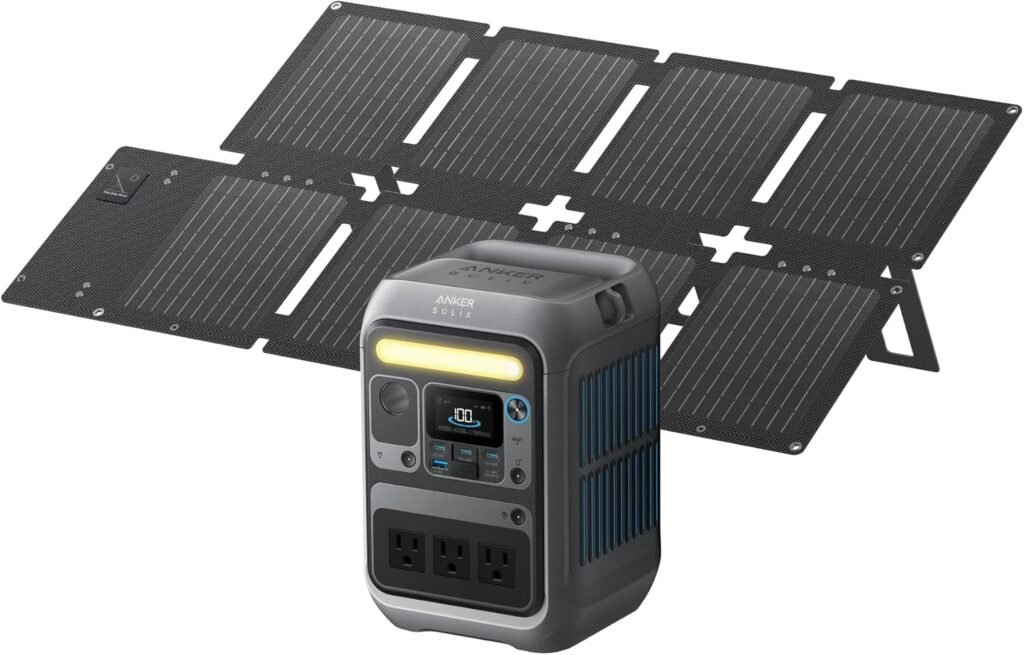

Product Overview: Anker Solar Generator SOLIX C300 with 60W Solar Panel, 288Wh Portable Power Station, 300W (600W Surge), LiFePO4 Battery, 140W Two-Way Fast Charging, for Outdoor Camping, Traveling, and Emergencies
We’ll describe what this unit is and why it might matter to us. The Anker SOLIX C300 pairs a compact 288Wh power station with a 60W solar panel, offering a mix of portability and usable power that fits many on-the-go scenarios. We’ll cover how it performs day-to-day, how it charges, and whether it’s a good match for our typical needs.
What this product aims to do
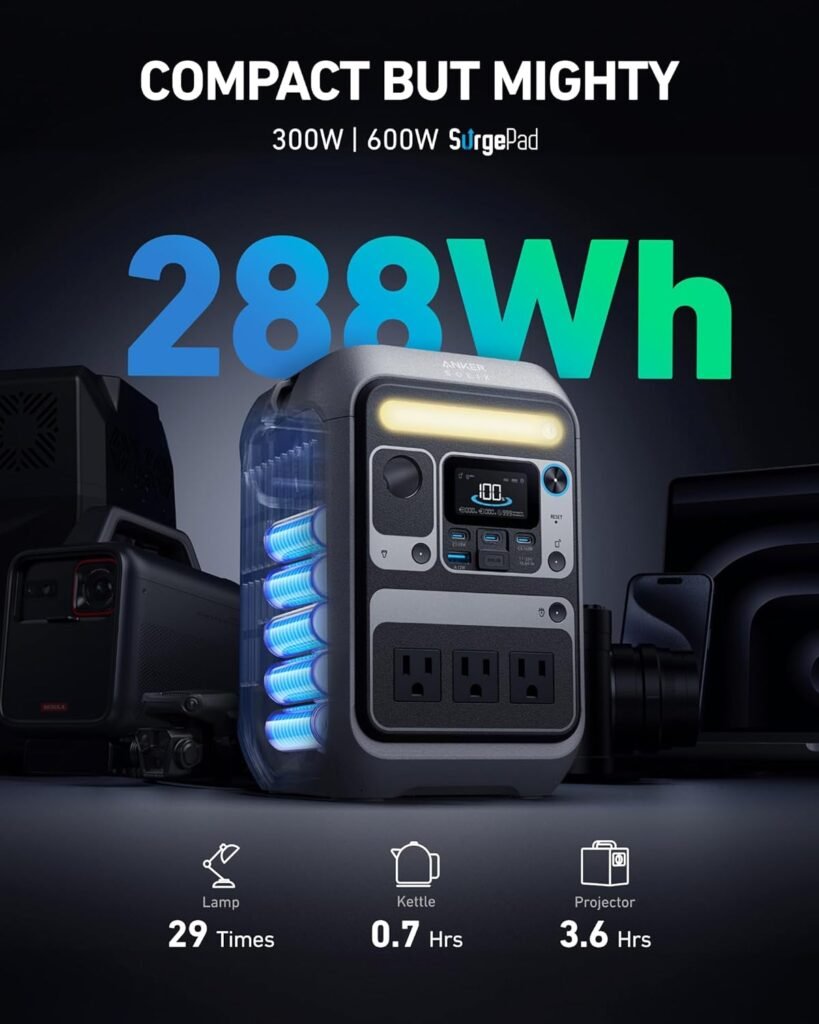
We’ll summarize the intended uses and the key selling points. The SOLIX C300 is designed for short camping trips, travel, portable workstation needs, and emergency backup for essential devices. It pushes a 300W continuous AC output with a 600W surge, uses a LiFePO4 battery for longevity, and supports fast two-way USB-C charging at up to 140W.
Who we think it is for
We’ll outline the typical user profiles that benefit most. This unit is best for couples or small families who need reliable power for phones, laptops, small appliances, and lights during outings or power interruptions. It’s not aimed at powering large appliances like full-size refrigerators for extended periods, but it holds its own for most portable and emergency needs.
Key Specifications
We’ll present the main technical details so we can quickly compare the most important numbers. Below is a compact breakdown of what the SOLIX C300 offers and how it stacks up practically.
| Feature | Specification |
|---|---|
| Battery Capacity | 288Wh (LiFePO4) |
| Continuous AC Output | 300W |
| Peak (Surge) Output | 600W |
| USB-C Two-Way Fast Charging | Up to 140W (PD 3.1) |
| Additional Charging Ports | 3× AC (300W total), 1× car socket (120W), 1× USB-C (15W), 1× USB-A (12W) |
| Solar Panel Included | 60W panel |
| Recharge Time (Wall) | 0–80% in ~50 minutes |
| Cycle Life | ~3,000 cycles to 80% (LiFePO4) |
| Noise Level | ~25 dB at 3.3 ft |
| Weight & Size | Compact; ~15% smaller than comparable designs (exact dims vary) |
| Warranty | 5-year power station warranty |
| Compatibility Notes | Not compatible with Anker SOLIX PS30 (or other 5V~3A USB-C panels), PS200, PS400 |
We’ll use these specs to reference battery life, charging times, and real-world expectations later in the review.

Design and Portability
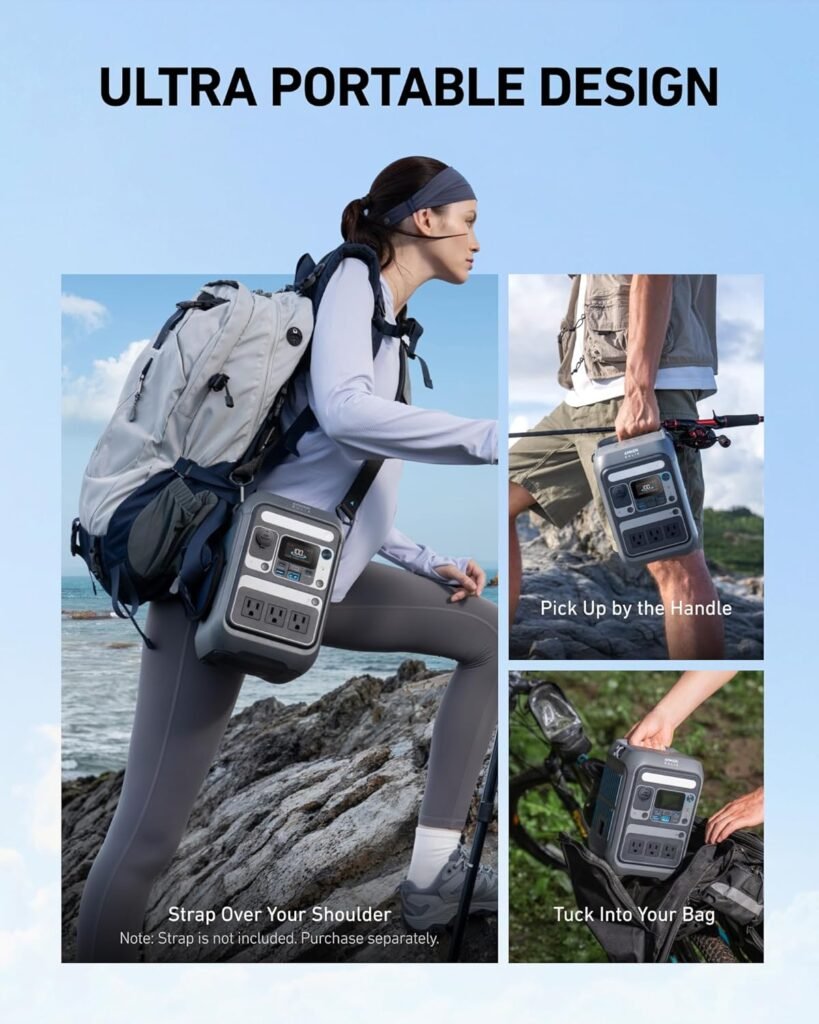
We’ll talk about how the product looks, feels, and how easy it is to transport. The SOLIX C300 prioritizes a travel-friendly form factor, being roughly 15% smaller than similar models. That size reduction makes it easier to carry on day trips or tuck into a car trunk without occupying too much space.
Build quality and materials
We’ll comment on the robustness and finish. The unit feels solid and well-made, with good impact resistance and attention to finishing details. The case is compact yet rugged enough for typical outdoor handling, and we appreciate the reinforced casing and protective features around the ports.
Weight and carrying options
We’ll review how easy it is to move around. The SOLIX C300 is designed to be carried either by hand or with an attachable strap (sold separately). It’s light enough for one person to manage but substantial enough to feel stable when placed on a campsite table or in our car.
Ports and Connectivity
We’ll outline the available outputs and why they matter. The SOLIX C300 offers a versatile set of ports that cover most modern device needs, from multiple AC outlets to high-power USB-C ports.
AC and DC outputs
We’ll explain what we can power through the main outlets. There are three AC outlets offering a combined 300W continuous output and a 600W surge, which is enough for small appliances like electric kettles (limited duration), laptops, small CPAP machines (depending on model), and lights. The DC car socket provides up to 120W for devices that use a cigarette-lighter adapter.
USB and USB-C ports
We’ll detail the fast-charging options. Two USB-C ports are the main highlight, with up to 140W two-way fast charging that lets us charge the power station quickly or power a laptop and phone simultaneously. Additionally, there’s a USB-C (15W) and a USB-A (12W) for lower-power devices.
Charging Performance
We’ll discuss how the C300 recharges and how long it takes to get usable capacity. One of the standout claims is fast recharge: recharging to 80% in about 50 minutes via a wall outlet. That’s convenient for day-to-day turnover and short layovers between activities.
Wall charging speed
We’ll break down what to expect from AC charging. Using the included AC cable and the 140W PD-capable USB-C input, the SOLIX C300 can reach 80% in around 50 minutes, which is rapid for a 288Wh battery. That speed reduces downtime for our adventures and provides near-instant readiness when returning to base.
Solar and car charging
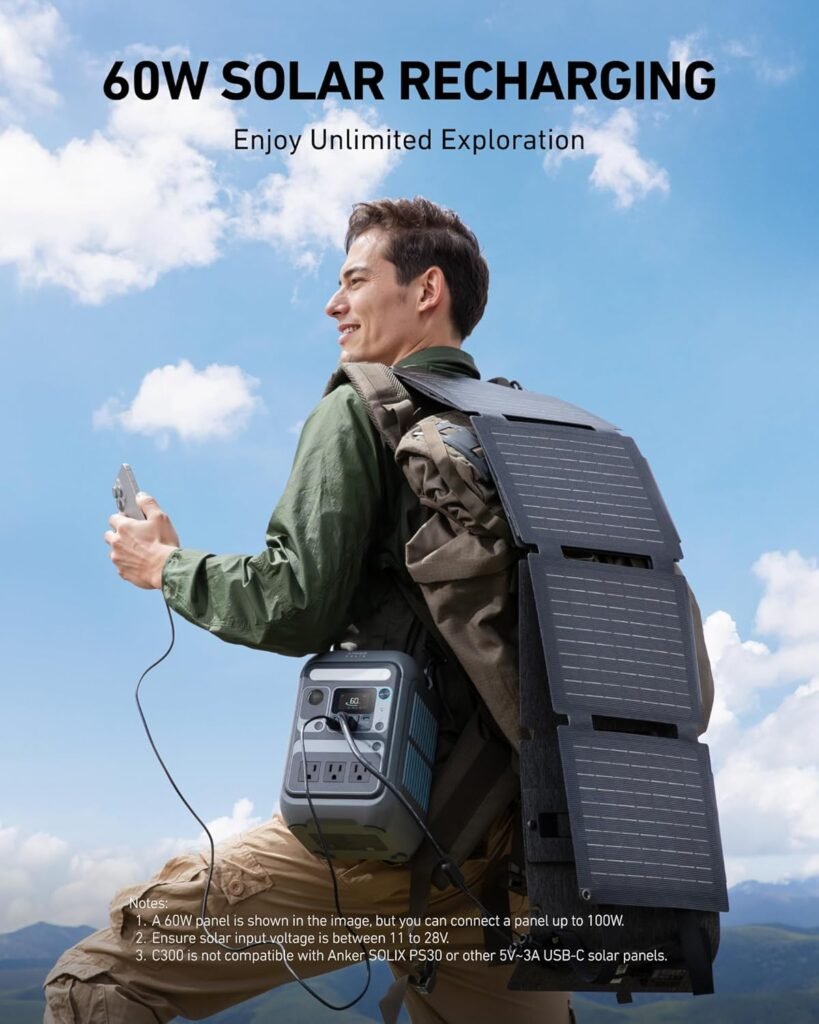
We’ll cover alternative recharging when AC power isn’t available. The included 60W solar panel allows sustainable recharging while outdoors. Solar will recharge more slowly than wall charging and is weather-dependent, but pairing multiple compatible solar panels (within the product’s compatibility notes) can speed it up. Car charging offers another useful option for road trips, letting us top up the battery during drives.
Solar Panel Performance
We’ll describe the 60W solar panel that ships with the unit and how it performs in real conditions. The panel is sized for portability and practical recharging on sunny days, making it suitable for topping off power while we’re outside.
Realistic solar output
We’ll set expectations for solar yields. In ideal conditions (direct sun, correct angle), the 60W panel should approach its rated output, but real-world yields depend on location, cloud cover, and panel orientation. On a bright, sunny day, we can expect meaningful top-ups; on cloudy days, performance drops significantly.
Setup and deployment
We’ll explain how easy it is to set up the panel. The included panel and cables make setup straightforward: place the panel in direct sunlight, connect via the XT60 to DC7909 cable, and monitor charging. It’s compact enough to move as the sun shifts, and the included extension cable gives flexibility for positioning.
Battery Chemistry and Longevity
We’ll look at the LiFePO4 battery technology used and what that means for lifespan and safety. LiFePO4 batteries are known for longer cycle life and stability compared to conventional lithium-ion chemistries, and the SOLIX C300 uses this to provide a long-lasting power solution.
Cycle life and durability
We’ll quantify expected longevity. Anker states approximately 3,000 cycles to 80% capacity, which means we can use the unit daily for many years before seeing significant degradation. This longevity is a major advantage for users who plan to rely on their power station for years of outdoor use or frequent backup cycles.
Safety and temperature control
We’ll touch on built-in protections. The SOLIX C300 includes smart temperature control and impact resistance to help protect the battery and electronics. These safeguards reduce the risk of damage during routine operation and add peace of mind in extended outdoor conditions.
Performance in Common Use Cases
We’ll test typical scenarios and how the SOLIX C300 handles them. These practical examples help us decide whether the unit fits our needs.
Charging phones and tablets
We’ll detail expected run-times and how many charges we can expect. With a 288Wh battery, the SOLIX C300 can recharge several smartphones or tablets multiple times. For example, charging a phone with a 15Wh battery could be repeated roughly a dozen times, depending on conversion efficiency and cable losses.
Powering laptops and cameras
We’ll discuss typical laptop usage. A 45–90W laptop can be powered comfortably, and the 140W USB-C output means we can even charge higher-wattage laptops at close to full speed. For creative work in the field, we can keep cameras, drones, and laptops running for extended sessions.
Running small appliances
We’ll clarify limitations for appliances. Small appliances that draw under 300W continuously—such as small fans, some CPAP models (check your device specs), and portable cookers—are workable for short periods. However, high-draw appliances like full-size microwaves, large refrigerators, or heavy-duty tools exceed the 300W continuous rating and aren’t suitable for sustained use.
Noise, Cooling, and Environmental Behavior
We’ll talk about operational noise and how the unit manages heat. The SOLIX C300 claims a quiet 25 dB output at 3.3 feet, which is very low and beneficial for camping and sleeping nearby.
Fan noise and background hum
We’ll confirm what to expect from noise levels. In typical use, the power station is effectively silent for human comfort. Even when fans kick in under heavy load or during charging, the noise is minimal and won’t disturb a campsite or shared living area.
Operating temperature range
We’ll advise on safe thermal usage. The unit includes temperature control to prevent overheating, but we still recommend avoiding prolonged exposure to extreme heat or cold. Operating in moderate climates extends battery life and maintains performance.
Safety Features and Warranty
We’ll review built-in protections and the manufacturer warranty. Anker includes several safety features and a generous 5-year warranty, which is notable in this product category.
Integrated safety systems
We’ll list protections that matter to us. The SOLIX C300 includes overcharge, over-discharge, short-circuit, and thermal protections. These features protect our devices and the power station under various operating conditions.
Warranty and support
We’ll explain what the warranty covers and why it matters. A 5-year power station warranty is an assurance that Anker expects the unit to last. Combined with the LiFePO4 battery’s 3,000-cycle life claim, the warranty enhances our confidence in long-term ownership and support.
What’s in the Box
We’ll itemize the included components to avoid surprises after purchase. The package includes everything needed to start using the unit, though the C300 and the solar panel are shipped separately and may arrive at different times.
Items included
We’ll specify the exact contents. The box contains: Anker SOLIX C300 Portable Power Station, 60W Solar Panel, XT-60 to DC7909 Charging Cable, Solar to XT60 Charging Cable, Extension Cable, AC Charging Cable, Safety Manual, and Warranty Info. Because the C300 and the 60W panel can ship separately, we should scan the QR code on the package if one item arrives before the other.
Setup basics
We’ll guide first-time setup steps. Unpack everything carefully, connect the panel appropriately with the XT60 cable, and perform an initial full charge via AC if possible to ensure the battery is balanced and ready for use.
Pros and Cons
We’ll present a balanced assessment of strengths and trade-offs. This helps us decide if the product fits our needs and where we might need to compromise.
Pros
We’ll highlight the strongest points. Advantages include compact size, fast 140W two-way USB-C charging, LiFePO4 battery longevity with ~3,000 cycles, 300W continuous AC output, quiet operation at ~25 dB, a 60W solar panel for off-grid charging, and a 5-year warranty.
Cons
We’ll outline notable limitations. Drawbacks include limited 288Wh capacity for longer trips without recharging, solar performance that’s weather-dependent, incompatibility with certain Anker panels (PS30, PS200, PS400), and the need to buy a strap separately if we want a shoulder-carry option.
Comparison and Alternatives
We’ll compare this model to common alternatives in the market so we can weigh options. The SOLIX C300 sits in a mid-range portable power station category where trade-offs between capacity, portability, and charging speed define value.
How it compares to higher-capacity stations
We’ll explain trade-offs versus larger models. Larger stations offer more capacity (500–1,000Wh or more) and sometimes higher AC outputs, but they’re heavier and less portable. The SOLIX C300 balances size and usable power, making it preferable for short trips and everyday portability rather than long-term off-grid living.
How it compares to smaller, cheaper options
We’ll note differences with compact power banks. Smaller units may be cheaper and lighter but lack AC outlets and the LiFePO4 longevity. The SOLIX C300 provides more versatility and longer battery life, making it a better long-term investment for frequent travelers and campers.
Practical Charging Scenarios and Estimates
We’ll provide realistic run-time and recharge examples to help plan trips. These scenarios assume typical conversion efficiencies and real-world losses.
Typical device run-time estimates
We’ll offer approximate usages. Examples:
- Smartphone (15Wh): ~12–15 full charges
- Laptop (60Wh average): ~4 full charges or ~4–5 hours of continuous use
- LED camping lights (10W): up to ~28 hours
- Mini fridge (average 40–60W, cyclical): several hours depending on duty cycle Keep in mind that actual results vary with device efficiency, ambient temperature, and usage patterns.
Recharging timelines
We’ll restate the main recharge options. AC charging to 80% in ~50 minutes is the fastest option. Solar with the included 60W panel will vary widely: full recharge could take several hours of peak sun or longer depending on conditions. Car charging provides a useful mid-speed option, ideal for road trips.
Tips and Best Practices
We’ll share practical advice to get the most out of the SOLIX C300. These tips come from common usage patterns and best practices for battery longevity.
Maximizing battery life
We’ll recommend habits that extend the unit’s life. Avoid deep discharges when possible, store the unit at partial charge if not used for long periods, and keep it out of extreme temperatures. Regularly using and recharging the LiFePO4 battery helps preserve capacity over many cycles.
Optimizing solar performance
We’ll advise on getting the best solar yields. Position the 60W panel perpendicular to the sun for maximum output, clean the panel surface before use, and use the extension cable to place the panel in an unobstructed spot. When possible, use additional compatible panels (checking compatibility limitations) to increase solar input.
Real-World Use Cases: Camping, Traveling, and Emergencies
We’ll apply the SOLIX C300 to scenarios that matter most to buyers. These use cases are representative of how we’d rely on the unit in the field.
Weekend camping trips
We’ll describe typical camping setups. For a weekend outing, the unit powers phones, cameras, lights, a small speaker, and occasionally charges a laptop. Combined with moderate solar input, we can stay independent of campsite outlets for most short trips.
Road trips and van life
We’ll look at on-the-road advantages. While not a full home inverter, the SOLIX C300 is excellent for charging devices during drives and powering small devices at rest stops. It’s also handy for van life when used as part of a larger power strategy.
Emergency backup at home
We’ll explain how it helps during outages. In a power outage, the SOLIX C300 can run essential electronics and charge phones and laptops. For longer outages, multiple recharges via a generator or solar charging will be necessary, but the unit gives immediate relief for short-term needs and communication.
Frequently Asked Questions (FAQ)
We’ll answer common questions we’ve seen or anticipate from potential buyers. These succinct answers reduce uncertainty and help make our decision easier.
Is the included solar panel sufficient?
We’ll summarize typical expectations. The included 60W solar panel is suitable for topping up the battery and supporting moderate usage. For faster solar recharge or extended off-grid use, consider adding more compatible solar input if available.
Can it power medical devices?
We’ll give cautious guidance. Some smaller CPAP models and medical devices under 300W may work, but always check the device’s specs for continuous and surge power requirements. Consult medical providers and manufacturer guidelines for critical devices.
Why does the listing note incompatible Anker panels?
We’ll clarify compatibility issues. Certain Anker panels and older PS-series units use different voltage/current profiles and connectors (such as 5V~3A USB-C) that are not compatible with the SOLIX C300’s input design. Stick to the included panel or confirmed compatible models.
Final Thoughts and Recommendation
We’ll wrap up our assessment and make a clear recommendation. The Anker Solar Generator SOLIX C300 with 60W Solar Panel is a solid, well-rounded portable power station for those who prioritize portability, reliability, and battery longevity. Its fast charging, LiFePO4 battery, quiet operation, and thoughtful port selection make it a strong choice for weekend campers, travelers, and users seeking a dependable emergency backup.
Who should buy this
We’ll identify ideal buyers one more time. Purchase this if we want a compact power station that charges quickly, lasts for thousands of cycles, and comfortably powers phones, laptops, small appliances, and lights during short trips or outages. It’s especially suited for frequent users who value durability and quiet operation.
Who should consider alternatives
We’ll note circumstances where another product might fit better. If we need longer continuous power for big appliances or multi-day off-grid living without frequent recharging, larger-capacity stations would be a better match. If budget is the primary concern and we need only phone-charging capability, a smaller, cheaper power bank may suffice.
Closing Notes
We’ll add a few practical reminders before purchasing. Check the compatibility notes for additional solar panels, consider the weight and dimensions for your travel style, and remember that the C300 and the solar panel may ship separately—scan the package QR code if items arrive separately to track the remaining delivery.
If we have further specifics to test—such as comparisons with exact competitor models or detailed runtime measurements with particular devices—we can run those scenarios next to help finalize our decision.
Disclosure: As an Amazon Associate, I earn from qualifying purchases.