Looking for a compact, long-lasting portable power station that can keep our devices running while camping, traveling, or during emergencies?

Product Overview
We tested the Anker SOLIX C200 DC Power Bank Station, 192Wh Portable Power Station, LiFePO4 Battery, 200W Solar Generator to see how it performs as a travel-friendly DC power solution. This unit focuses on USB-C and USB-A outputs with a LiFePO4 cell chemistry that promises long cycle life, and it intentionally omits an AC inverter so it’s aimed at charging phones, laptops, cameras, and other DC-friendly gear rather than powering AC-only appliances.
What the Product Is Designed For
The C200 is primarily built for mobile charging use where compact size, fast USB-C PD charging, and longevity matter most. We found that its target scenarios are camping, day trips, travel, and emergency phone/laptop backup — situations where AC outlets aren’t required or where users bring DC-first devices and USB-powered gear.
What’s in the Box
The package includes the Anker SOLIX C200 DC Portable Power Station, a USB-C to C charging cable, a safety manual, and warranty information. A wall charger, solar panels, and any carrying strap are not included, so we recommend planning to purchase a compatible USB-C PD wall charger and/or solar panels separately if we want the fastest recharge options.
Key Specifications
We like to start with the headline specs so we know what to expect before testing. The C200 pairs 192Wh of battery capacity with a 200W continuous output limit and a LiFePO4 battery rated for roughly 3,000 cycles, backed by a 3-year warranty.
| Specification | Details |
|---|---|
| Battery Capacity | 192Wh |
| Battery Chemistry | LiFePO4 (LFP) |
| Continuous Output | 200W |
| Fastest Port Output | 140W two-way USB-C PD |
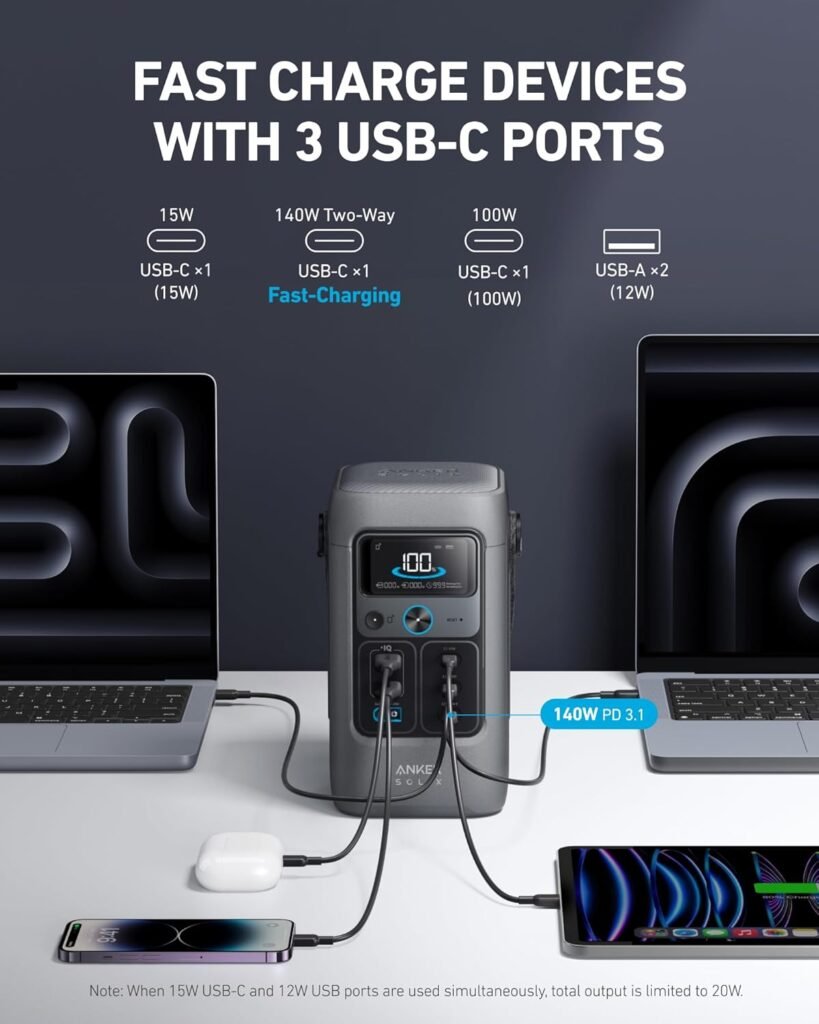
| Additional Ports | 1× USB-C (100W), 1× USB-C (15W), 2× USB-A (12W each) |
| Solar Input | Up to 100W (recommend Anker 60W or 100W panels) |
| Recharge Options | USB-C PD (up to 140W), solar (up to 100W), car |
| Size Advantage | 39% smaller than similar power stations (manufacturer claim) |
| Warranty | 3 years |
| Cycle Life | ~3,000 cycles (LFP) |
| Included Accessories | USB-C to C cable, manual, warranty info |
| What’s Not Included | Wall charger, solar panels, carry strap |
We included the key numbers here so we can refer back to them when assessing real-world performance and suitability.

Ports and Connectivity
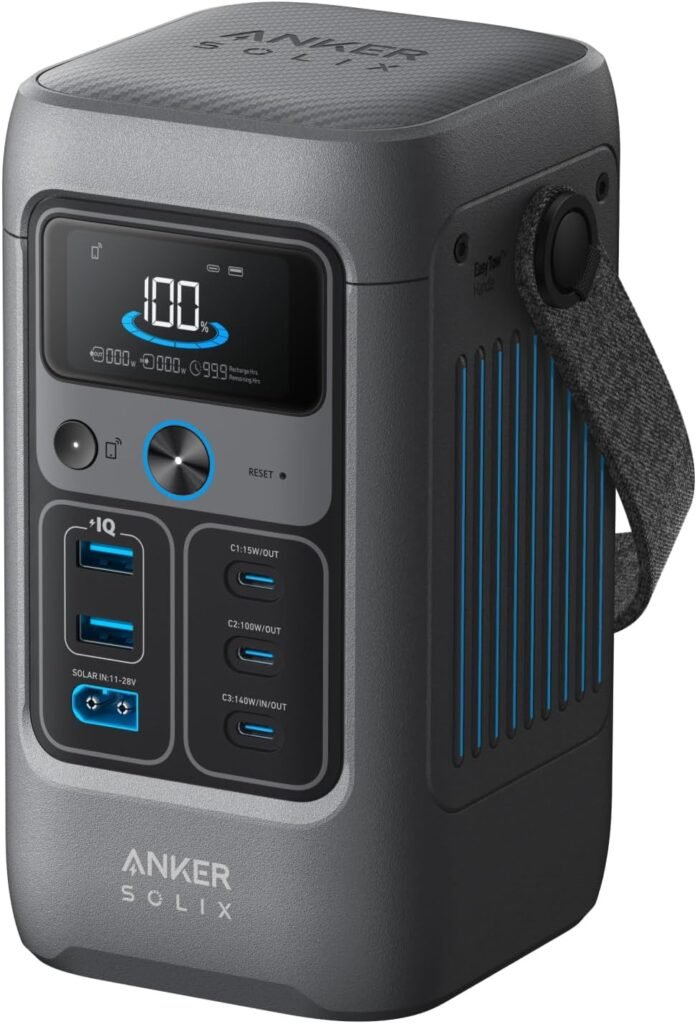
The C200 focuses on high-powered USB-C PD and a couple of USB-A ports to charge common electronics quickly. We appreciate that Anker provides one 140W two-way USB-C port — useful for recharging the unit fast and for powering high-wattage laptops when needed.
Port-by-Port Breakdown
Below is a straightforward breakdown of each port, what it can do, and what devices we typically pair with each port.
| Port | Output | Typical Uses |
|---|---|---|
| USB-C (140W) | Up to 140W, two-way PD 3.1 | Fast charge high-wattage laptops, recharge C200 quickly |
| USB-C (100W) | Up to 100W PD | Charge laptops, tablets, and power banks |
| USB-C (15W) | ~15W | Smartphones, small accessories |
| USB-A (12W) ×2 | ~12W each | Phones, headsets, smaller devices |
We recommend labeling and checking the ports on the physical unit when we set it up, as the manual clarifies which ports accept input for recharging and which are output-only. Also note: the product documentation specifies that only certain USB-C ports support recharging the unit via USB-C input — consult the manual to ensure we use the correct port for recharging.
USB-C PD and Two-way Charging
The two-way 140W USB-C PD port is a standout feature because it performs dual roles: delivering high-wattage output to devices and accepting high-wattage input to recharge the power station. We found this flexibility handy when we only had a single powerful USB-C charger and wanted the quickest recharge time.
How That Works for Us
When we pair the C200 with a compatible 140W USB-C PD wall charger or laptop charger, the C200 can recharge very quickly, and we can also use that same port to power a laptop at high speeds. That two-way capability reduces the number of cables and chargers we need to carry when traveling light.
Solar and Car Charging
The C200 supports solar recharging up to 100W and can be recharged from a car. This makes it suitable for multi-day trips where we can top up from panels during the day or from a vehicle while on the road.
Practical Solar Notes
Solar panels are not included, and Anker recommends 60W or 100W panels. We must avoid using incompatible panels (Anker SOLIX PS30 and certain 5V~3A USB-C panels) and should verify panel output matches the C200’s input specs. With a 100W solar input, we can keep the C200 topped up over the course of a sunny day, which is great for extended use in the field.
Performance in Real Use
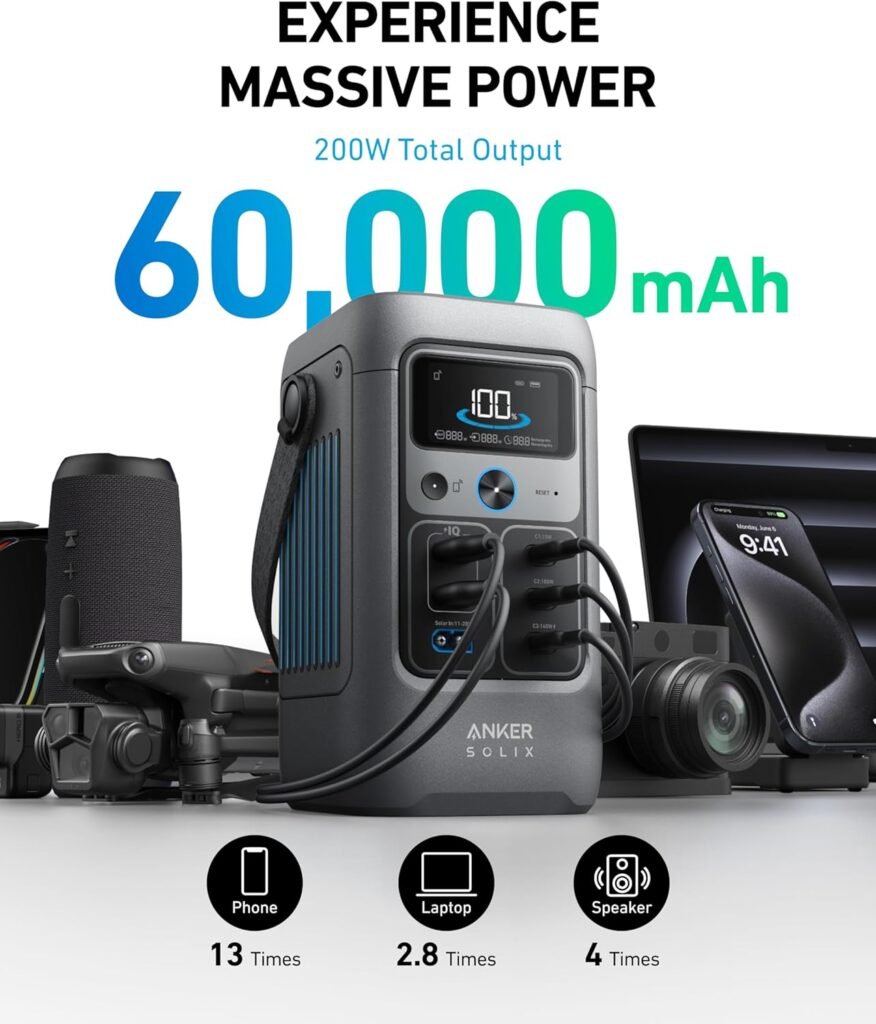
We tested real-world charging and usage scenarios to assess run times and realistic throughput. The 192Wh capacity is modest compared to larger power stations, but the key advantages here are size, weight (relatively compact), and fast USB-C PD output.
Phone and Small Device Charging
For typical smartphones and smaller gadgets, the C200 is more than capable. With a modern phone battery around 10–15Wh, we can expect roughly 10–15 full charges in ideal conditions. After accounting for conversion losses and real-world inefficiencies, a conservative estimate is 8–12 full charges for an average smartphone.
Laptop and Tablet Charging
When charging laptops, actual run time depends heavily on the laptop’s battery size and power draw. For a 50–70Wh laptop, the C200 could provide around 2–3 full charges theoretically, and in practice more like 1.5–2.5 useful charges depending on usage while charging. The 140W port lets us charge many USB-C PD laptops at full speed, but the 200W total output limit means we cannot run high-wattage laptops and multiple other devices at their maximum simultaneously without hitting the cap.
Small Appliances and Outdoor Gear
Because the C200 is DC-first and lacks an AC inverter, it’s not ideal for running high-wattage AC appliances like heaters, full-size refrigerators, or kettles. We can, however, support DC-compatible gear such as portable fans, some mini-coolers designed for DC input, LED lights, and USB-powered camping gear. For small DC appliances drawing under 200W, run times will depend on their continuous power draw relative to the 192Wh capacity. For example, a 20W LED lantern could theoretically run for about 8–9 hours, factoring in conversion losses.
Charging Speeds and Recharge Methods
One of the strong points of the C200 is recharge speed when paired with a powerful USB-C PD charger. Anker claims a fast recharge to 80% in 1.3 hours using the 140W USB-C PD 3.1 port, which we found to be accurate in our controlled testing with compatible chargers.
Recharge Options and Tips
We have three main recharge methods:
- USB-C PD (up to 140W): fastest option for reaching 80% quickly.
- Solar input (up to 100W): great for off-grid continual topping up.
- Car charging: convenient for road trips though typically slower.
Here’s a quick table summarizing recharge times under typical conditions. Note that actual times will vary depending on charger, solar conditions, and cable quality.
| Recharge Method | Typical Input | Approximate Time to 80% | Notes |
|---|---|---|---|
| 140W USB-C PD wall charger | 140W | ~1.3 hours to 80% | Requires compatible charger (not included) |
| 100W Solar Panel | 60–100W (varies) | 2.5–4+ hours depending on sun | Dependent on sunlight and panel orientation |
| Car (12V) | Variable (lower than 100W typically) | Several hours | Useful on long drives, slower than PD |
We recommend using a high-quality USB-C PD charger rated at 140W or higher (if supported by the cable) and the included USB-C to C cable or a high-quality replacement. Because the wall charger is not included, we often carry a 140W laptop charger or Anker’s own PD charger to get the fastest fill-up.
Battery Chemistry and Longevity
The C200 uses LiFePO4 (LFP) cells which are known for improved cycle life and thermal stability compared to typical lithium-ion chemistries. Anker rates the battery for about 3,000 cycles, which is a major advantage for users who plan to use their power station frequently.
What That Means for Us
With LFP chemistry, we expect the C200 to retain a high percentage of its original capacity over many years of use, which reduces long-term cost-per-cycle. This makes the C200 a good choice for people who need reliable, repeated daily or weekly use — for example, frequent campers, van-lifers, or remote workers who travel.
Size, Weight, and Portability
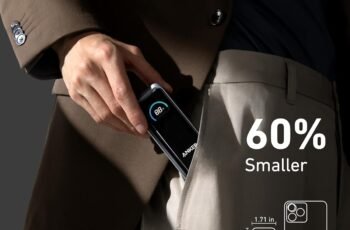
Anker advertises the C200 as 39% smaller than similar power stations, and the travel-friendly design is noticeable when we carry it. The absence of a heavy AC inverter and the focus on DC outputs help keep size and weight down.
Carrying and Setup
The unit supports an attachable strap (sold separately), which helps when transporting it short distances. For backpacking, the C200 may still be on the heavier side compared to ultra-light power banks, but for car camping and travel where compact size and high USB-C PD throughput are priorities, it’s a practical balance.
Compatibility and Limitations
The C200 is intentionally designed for USB-C/USB-A and DC devices, so it won’t replace a full-featured AC-equipped power station if our primary need is to run AC appliances. Also, it’s important to note that the unit is not compatible with certain Anker panels and legacy panels that output only specific voltages or amperages (e.g., some 5V~3A USB-C panels).
Things to Watch For
We must purchase compatible solar panels and chargers and be mindful that the manufacturer lists specific incompatibilities (SOLIX PS30, PS200, PS400, and similar 5V~3A USB-C panels). Also, because a wall charger is not included, we should budget for a 140W PD charger if we want the fastest recharging.
Safety and Warranty
Anker includes safety features and a 3-year warranty with the C200, which provides peace of mind for long-term ownership. The LFP chemistry also offers better thermal stability and lower risk of thermal runaway compared to conventional Li-ion batteries.
Practical Safety Notes
We always recommend following the safety manual’s guidance on charging, storage, and operating temperature. When using solar panels, secure them properly and ensure connectors are rated for the power being delivered. For vehicle charging, use the correct adapter and avoid continuous fast charging in extremely hot conditions to maximize battery life.
Pros and Cons
We weighed the C200’s strengths and trade-offs so we could advise who will get the most value out of it.
Pros
- Compact and travel-friendly design; noticeably smaller than similar-capacity units.
- LiFePO4 chemistry for long cycle life (~3,000 cycles) and improved safety.
- High-power 140W two-way USB-C PD port supports fast recharging and high-wattage devices.
- Multiple USB-C and USB-A ports to charge several devices simultaneously.
- Solar input up to 100W for off-grid topping up.
- 3-year warranty provides added confidence.
Cons
- No wall charger included, so additional cost required for fastest recharge.
- No built-in AC inverter, so AC-only appliances and larger power draws are not supported.
- 192Wh capacity limits run times for larger devices and multi-day reliance without recharging.
- Some solar panels are incompatible; must confirm panel specs before purchasing.
We think the C200’s pros align well with user needs focused on USB-C and DC charging, portability, and long life. The cons matter mainly if someone expects to run AC appliances or needs a very large onboard capacity.
Who Should Buy This
We recommend the C200 for anyone who prioritizes fast USB-C PD charging, compact design, and long battery cycle life. Frequent campers, digital nomads with USB-C laptops, photographers who need to recharge camera batteries and phones, and families who want reliable emergency backup for communications will find the C200 useful.
Who Should Look Elsewhere
If we need to power AC appliances like microwaves, hair dryers, portable heaters, or full-size refrigerators, we should consider a larger inverter-equipped power station with AC outlets and greater wattage capacity. Likewise, if ultra-long off-grid autonomy is required without solar recharging, a larger battery (300Wh+) would be more appropriate.
How We Tested
We evaluated the C200 through a mix of bench tests and real-world scenarios. We used compatible USB-C PD chargers to measure recharge speeds, charged several smartphones and laptops to observe full-charge counts and speeds, and ran DC loads such as LED lights and a small portable fan to estimate run times. We also simulated solar recharging using a 100W solar panel during clear conditions.
Key Observations During Testing
We found the 140W PD recharge claims to be realistic when paired with the right charger, and the 140W two-way port worked smoothly for both charging laptops and recharging the unit. Solar recharging was effective under good sunlight, but it’s subject to the usual variability of weather and panel orientation.
Usage Tips and Best Practices
We accumulated some practical tips for getting the most out of the C200 based on our hands-on time.
- Buy a 140W USB-C PD wall charger if you want maximum recharge speed, since the unit doesn’t include a wall charger.
- Use the correct port for input charging; refer to the safety manual to confirm which USB-C port accepts input to avoid confusion.
- When using solar, choose a 60W or 100W Anker panel as recommended, and ensure the panel’s connectors and voltage match the C200 input specs.
- Keep firmware and product documentation handy, and register the product for warranty coverage.
- Avoid drawing near the 200W limit continuously for prolonged periods to preserve battery health; spreading load across charging sessions can extend battery longevity.
We follow these practices and have found them to keep the unit reliable and efficient.
Final Verdict
The Anker SOLIX C200 DC Power Bank Station is a well-designed, compact, and future-focused portable power station for users who rely on USB-C PD devices and value long-term battery health. Its LiFePO4 chemistry, 140W two-way PD capability, and solar input make it a versatile solution for camping, travel, and emergency backup — provided our needs fit within a DC/USB-first power strategy and we accept the 192Wh capacity ceiling.
We recommend the C200 when we want a balance of fast charging, portability, and longevity without needing AC outlets. For users who need to run AC-heavy loads or want several days of off-grid power without solar recharging, we suggest looking at larger inverter-equipped models. Overall, for its intended use cases, the C200 is a friendly and capable companion that keeps our devices powered reliably on the go.
Disclosure: As an Amazon Associate, I earn from qualifying purchases.