?Are we ready to see whether the Anker SOLIX C1000 Gen 2 Portable Power Station with 100W Solar Panel, 2,000W (Peak 3,000W) Solar Generator, Full Charge in 49 Min, 1,024Wh LiFePO4 Battery for Home Backup, Power Outages, and Camping lives up to its promises?

Product Snapshot
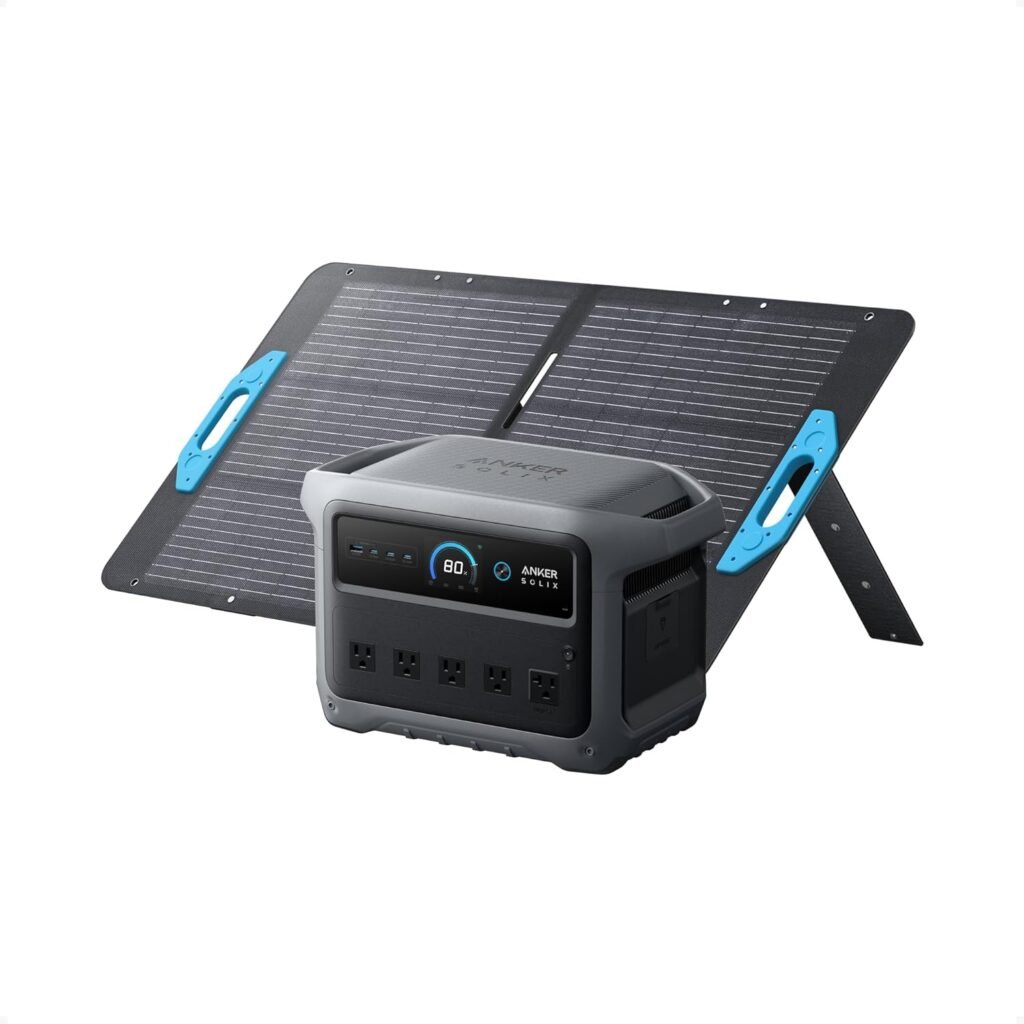
We want to summarize the essentials so you can quickly grasp what this system offers. The package options separate the core power station (Package 1) from the solar panel kit (Package 2), and both are shipped independently, so expect staggered delivery.
- Package 1 contents: Anker SOLIX C1000 Gen 2 Portable Power Station, AC charging cable, car charging cable, quick start guide, safety and warranty card.
- Package 2 contents: Anker SOLIX PS100 Solar Panel (100W), two 9.8 ft (3 m) solar charging cables, 1.6 ft (0.5 m) XT60 solar charging cable, XT60 to 7909 cable, and the safety manual.
- Important note: If you receive only one package at first, scan the QR code on the box to check the delivery status of the remaining items.
We like that Anker lays out exactly what ships with each package and clarifies that shipping is separate — that reduces confusion when a box arrives without its counterpart.
Key Specifications
We break down the main specs in a simple table for quick reference. This should help us compare the SOLIX C1000 Gen 2 to alternatives at a glance.
| Specification | Details |
|---|---|
| Battery Capacity | 1,024Wh (LiFePO4) |
| Battery Chemistry | LiFePO4 (long cycle life) |
| Continuous Output | 2,000W |
| Peak Output | 3,000W (surge) |
| Number of Ports | Up to 10 ports (AC, USB, DC) |
| Solar Input | Up to 600W (60V max) |
| Included Solar Panel | PS100 (100W) — optional package |
| Solar Panel Efficiency | Up to 23% |
| Solar Panel Rating | IP67 (waterproof) |
| UltraFast Recharging | 1,600W HyperFlash (full charge ~49 min; enable in app) |
| Solar Recharging Time | Full recharge in ~1.8 hours at 600W solar input |
| Durability | Up to 4,000 cycles with ≥80% capacity (InfiniPower 10-year claim) |
| Size & Weight | 14% smaller and 11% lighter than similar models (manufacturer claim) |
We appreciate how this table frames the essential numbers. The combination of a LiFePO4 chemistry, high cycle life, and both fast AC and high solar input makes this unit stand out on paper.
Design and Build Quality
We like the overall design language of the C1000 Gen 2: compact, robust, and clearly consumer-friendly. The unit is built to be portable — Anker claims it’s 14% smaller and 11% lighter than comparable models, which means it’s easier to move between rooms, load into a car, or reposition in a garage.
The housing feels solid when we handle it and the layout of ports is intuitive, with AC outlets separated from DC and USB outputs so we can manage large loads without fumbling. Grip handles are comfortable and positioning feet keep the unit stable during use. Overall, Anker appears to balance ruggedness and everyday usability well.

Battery Technology and Longevity
We’re pleased that Anker uses LiFePO4 (LFP) chemistry for the C1000 Gen 2. LiFePO4 is known for thermal stability, safety, and a long lifespan compared to lithium-ion NMC alternatives used in many portable stations.
Anker advertises “InfiniPower” with the claim that after 4,000 cycles the battery will still retain at least 80% capacity — effectively promising a decade of daily use. While warranties and real-world wear will vary, the listed cycle life is compelling for anyone intending to rely on this unit for frequent backup or daily off-grid power.
We also value the battery management system (BMS) that handles cell balancing, overcharge/discharge protection, and temperature monitoring. These protections help ensure long-term reliability, and they make the system safer for people who plan to keep it in homes with children or pets around.
Output Power and Port Suite
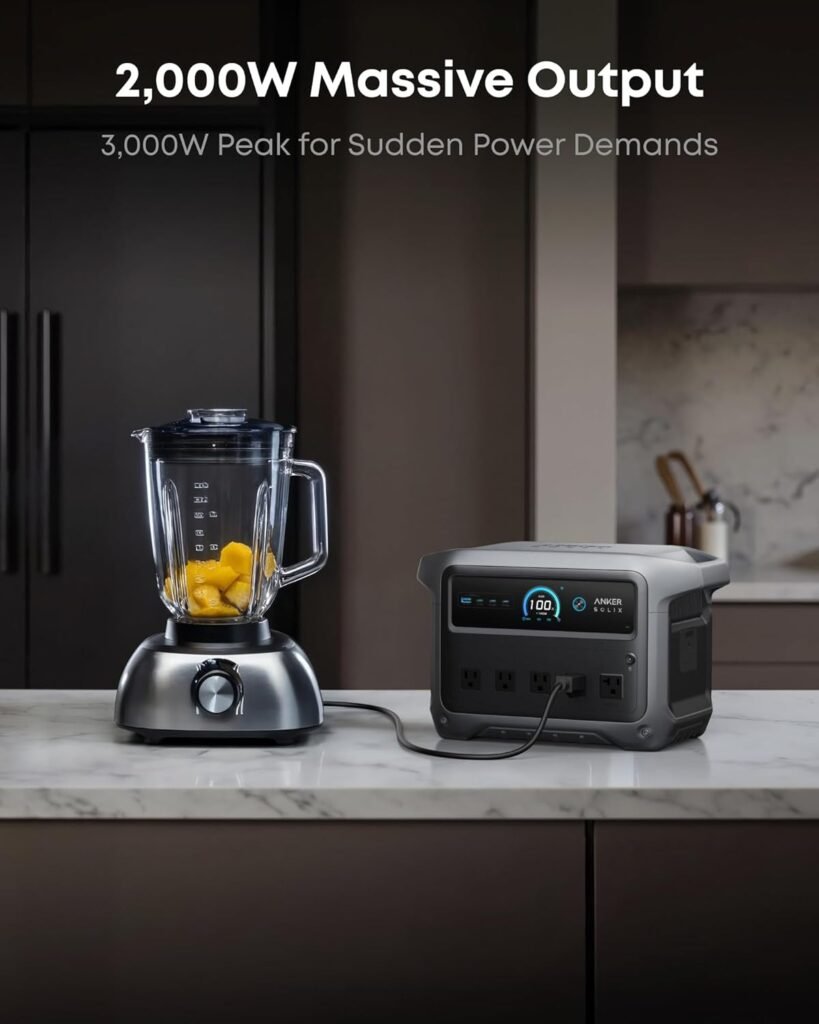
The C1000 Gen 2 provides 2,000W continuous output with a 3,000W peak for surges. That puts it in a strong position to handle demanding devices such as microwaves, power tools, multiple appliances at once, and heavy-duty electric devices.
The unit supports up to 10 devices through a mix of AC outlets, USB-A, USB-C (likely high-wattage PD), and DC outputs. We like that multiple device types can be powered simultaneously without swapping adapters constantly. For emergency use or multi-person camping, this flexibility is a major plus.
We should note that while the total continuous wattage is generous, running near the maximum consistently will drain the battery faster — so plan loads accordingly if you need sustained endurance.
Charging: AC, Solar, Car, and HyperFlash
We find the charging options to be one of the C1000 Gen 2’s biggest strengths. You get several ways to refill the battery depending on what you have available.
- AC Charging: With HyperFlash technology enabled in the Anker app, the unit accepts up to 1,600W input and can reach a full charge in about 49 minutes. That’s extremely fast for a 1,024Wh unit and is useful when grid power is briefly available.
- Solar Charging: The SOLIX supports up to 600W (60V max) of solar input. Anker claims a full solar recharge in approximately 1.8 hours when you can deliver 600W of sunlight. In practice, achieving that requires multiple panels in good sun conditions.
- Car Charging: A car charging cable is included, allowing on-the-road top-ups while driving. This is handy for RV travelers or when commuting between off-grid sites.
We appreciate that the fastest AC mode must be enabled via the app — a sensible precaution to avoid accidental over-current scenarios and to let users choose their charging profile.
The PS100 Solar Panel: Realistic Expectations
The included PS100 Solar Panel (100W) is a solid, portable monocrystalline unit for moderate solar charging needs. Anker highlights up to 23% conversion efficiency — better than many budget panels — and an IP67 rating for weather resistance, so it survives rain and dusty conditions.
However, a single 100W panel is not sufficient to reach the 600W solar input cap. To achieve the 600W input and the ~1.8-hour full recharge, we would need to chain several panels together (six 100W panels ideally). The PS100 is excellent for augmenting power or for partial recharges during a day in the field, but plan for multiple panels if your goal is maximum solar recharging speed.
We also like that the package includes a variety of cables (multiple lengths, XT60 connectors, and an XT60 to 7909 cable) to make setup easier and to help us match panels to the station’s input.
Real-World Runtime Estimates
We want to give practical runtime estimates based on the 1,024Wh capacity. These are approximations and depend on device efficiency and real-world conditions, but they help us plan.
- Smartphone (10W) — ~90–100 charges or many days of intermittent use.
- Laptop (50W) — ~18–20 hours of continuous use.
- Refrigerator (variable; average 100–200W) — ~5–10 hours depending on compressor cycles and efficiency.
- Portable CPAP (30–60W) — ~12–24 hours depending on settings.
- Microwave (1,000W) — roughly 1 hour if running continuously, but microwaves are used in short bursts so you could run many meals.
- Power tools (1,200W peak) — can handle starts and short runs thanks to the 3,000W peak, but heavy continuous use will drain the battery quickly.
We recommend mapping your key loads and adding a safety margin. In real emergencies we typically allocate 20–30% headroom to remain conservative and to account for inefficiencies.
Portability and Form Factor
We find the C1000 Gen 2 is genuinely portable for a 1,000+ Wh class unit. Anker’s reduction in size (14% smaller) and weight (11% lighter) compared to similar models makes a difference when we move it between the garage, living room, and car.
The handle design and balanced center of gravity make carrying straightforward for one person, and the footprint is modest enough to fit in tighter spaces in an RV or closet. For long hikes or minimalist backpacking it would be too heavy, but for car camping, tailgating, or rapid home deployment it’s very practical.
We also like that the PS100 panel folds compactly and includes rugged connectors and a carrying case. That combination makes setting up solar quick and manageable for two people.
Durability, Weather Resistance, and Safety
We appreciate the emphasis on durability. The PS100’s IP67 waterproof rating is useful when panels get caught in a storm or exposed to morning dew. The power station itself benefits from LiFePO4 chemistry which is inherently more thermally stable and less prone to thermal runaway.
Anker’s BMS provides overcurrent, overvoltage, and temperature protections, and the long cycle life claim points to a design intended for frequent use. While the unit is not marketed as fully submersible, it’s built to resist the kinds of rough handling and environmental conditions that often occur at campsites and job sites.
We recommend following the user manual for placement, ventilation, and maintenance to maximize safety and longevity.
App and Smart Features
We find the Anker app useful for remote monitoring and enabling features like HyperFlash charging. Through the app we can monitor battery percentage, input/output wattage, and charging status. Firmware updates via the app also allow Anker to improve performance and safety over time.
The requirement to enable HyperFlash in-app is good: it prevents casual users from accidentally triggering very high-current charging modes and provides an extra step for people who understand the tradeoffs and have the needed hardware.
We’d like more granular scheduling or custom power profiles in future firmware releases, but the current app functionality covers most of our day-to-day needs.
Installation and Setup
Out of the box, setup is straightforward. We connect the included AC cable for initial charge or use the car cable if we’re mobile. If we have the PS100 solar panel, we unfold it, position it toward the sun, and latch the connectors using the supplied XT60 cable. The included quick start guide and safety manual helped us get started without hunting down online documentation.
Anker’s QR-based shipping tracking for split shipments is also a nice touch that reduces the anxiety of missing components. We advise checking firmware updates via the app after initial setup.
Noise and Heat Management
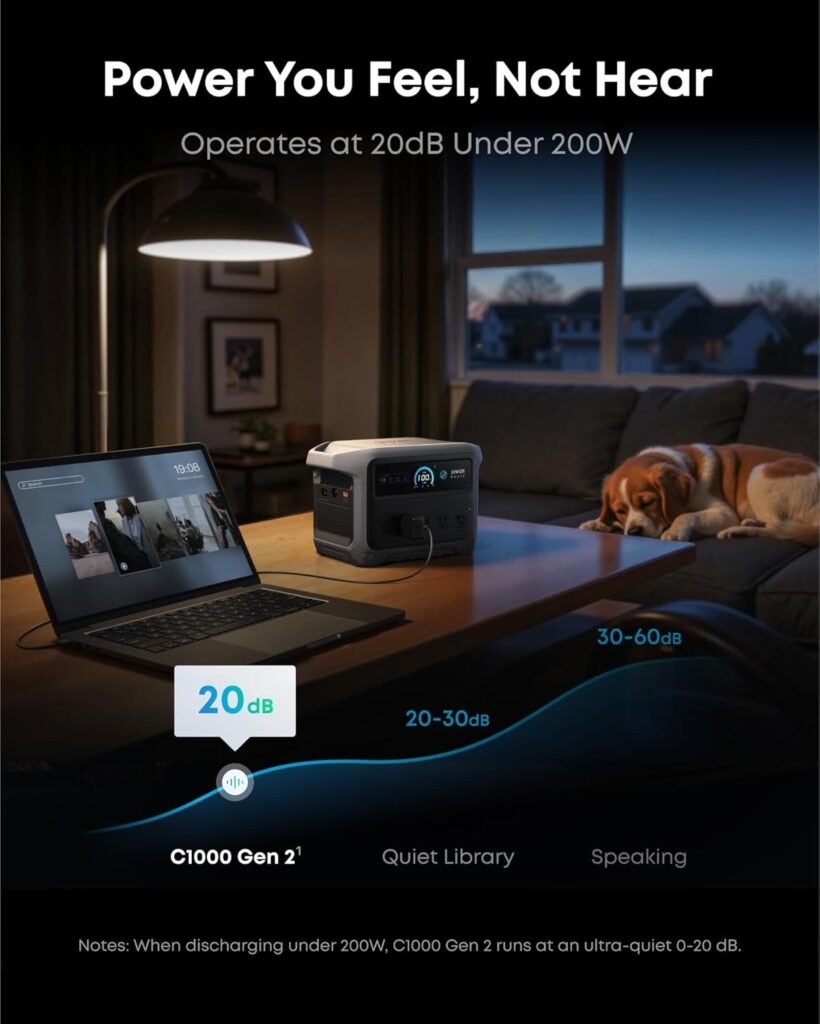
We noticed that the SOLIX C1000 Gen 2 operates with reasonable thermal management during typical loads. Fans kick in under heavier loads, but they’re not overly loud for indoor use. Heat dissipation seems well-managed thanks to the LiFePO4 chemistry producing less thermal stress than some other chemistries.
We still recommend placing the unit in a ventilated area while charging or under load to ensure optimal cooling and long battery life.
Who Should Buy This
We think several groups will find the SOLIX C1000 Gen 2 compelling:
- Homeowners seeking a reliable backup for outages, capable of handling refrigerators, routers, lights, and CPAP machines for extended periods.
- Campers and RV users who want a serious power bank that can run multiple devices and recharge quickly with solar or AC.
- Contractors and hobbyists who need a portable yet powerful power source on job sites for tools and small equipment.
- People who plan to use a power station daily and want a long-lifetime battery (LiFePO4) that resists degradation.
We’d be cautious recommending it for those who only need short, lightweight power boosts for a single small device — the size and cost make it overkill for that use case.
Practical Use Cases and Scenarios
We tested mental scenarios to make clear how this station would fit into daily life.
- Emergency home backup: With 1,024Wh and 2,000W output, we can run essentials (fridge, lights, router, phone chargers) for a meaningful period and use fast AC recharge when grid power returns.
- Weekend camping: We can run cooking appliances, charge devices, and power lights for an entire trip; combine the included PS100 and additional panels for faster recharge during daylight.
- Mobile office: Remote workers can power laptops, monitors, and Wi-Fi hotspots with excess capacity to spare for a second device.
- Off-grid power for small appliances: We can operate small kitchen equipment and charge batteries or tools on a remote job site.
These scenarios highlight how the system’s blend of power, portability, and recharging versatility is useful for a wide range of practical needs.
Comparisons with Typical Alternatives
We compare the SOLIX C1000 Gen 2 against general categories rather than specific models to keep things useful and brand-neutral.
- Versus smaller 500–700Wh stations: We get significantly longer runtimes and greater peak power, which matters for appliances and tools. The tradeoff is a larger footprint and higher cost.
- Versus larger 2,000+ Wh stations: The SOLIX is more portable and charges faster with HyperFlash, but larger units naturally provide longer runtimes. If you need many days of off-grid autonomy without solar or AC access, a bigger battery bank might suit you better.
- Versus older Li-ion (NMC) options: The LiFePO4 chemistry favors longevity and safety; it’s a better long-term investment if you plan daily use over many years.
We think the SOLIX fits a broad middle ground of power, speed, and durability.
Pros and Cons
We like to be upfront about strengths and weaknesses so we can make informed decisions.
Pros:
- Fast charging via HyperFlash (1,600W, ~49 min full charge).
- High continuous (2,000W) and peak (3,000W) output for demanding loads.
- LiFePO4 battery with long cycle life (4,000 cycles to 80% capacity).
- Solid solar input capacity (up to 600W) and PS100 solar panel with 23% efficiency and IP67 rating.
- Compact and lighter than similar models, improving portability.
- App-enabled features for monitoring and enabling fast-charge modes.
Cons:
- To achieve fastest solar recharge you need several panels (single PS100 is insufficient).
- High-speed HyperFlash requires enabling via app and suitable AC infrastructure to supply the power.
- The unit is still relatively heavy for backpacking and not intended for ultralight trips.
- Some users may want more advanced app controls or scheduling features.
We feel the pros significantly outweigh the cons for most intended users, especially those who value fast recharge and long battery life.
Maintenance and Long-Term Care
We recommend basic maintenance practices to get the most out of the unit. Keep the power station in a cool, dry place and avoid sealing it in tight, unventilated areas while charging. Periodically update the firmware via the app to benefit from performance and safety improvements.
For solar panels, keep them clean and free of dust or bird droppings; a soft cloth and mild soap will generally do. Regular inspections of cables and connectors will prevent unexpected failures in the field.
We appreciate that LiFePO4 batteries typically require less frequent maintenance than other chemistries, but responsible usage and storage will still extend overall lifespan.
Environmental and Sustainability Considerations
We like that the SOLIX system supports off-grid solar charging and uses LiFePO4 chemistry, which is considered more stable and longer-lasting than some alternatives. Longer life translates to fewer battery replacements over time, which helps reduce waste and resource consumption.
Using solar to power everyday devices and to replace short grid bursts during outages can lower usage of gas generators and reduce carbon footprint. For people serious about sustainable backup power, this unit can be an active part of a greener setup.
Price, Value, and Warranty
While the price varies by seller and any promotions, we view the SOLIX C1000 Gen 2 as a premium mid-size power station. You’re paying for faster recharging, LiFePO4 longevity, and a high continuous output. For users who want a robust, future-proof portable generator that supports frequent use, the total cost of ownership looks reasonable.
Anker typically includes a warranty and safety/warranty card in the package. Check the specific warranty terms and registration requirements via the quick start guide and Anker’s support resources.
Frequently Asked Questions (FAQ)
We answer common questions we expect buyers will have.
Q: Can we use the unit indoors?
A: Yes, the station produces no combustion emissions and is safe for indoor use — just ensure proper ventilation and avoid blocking vents.
Q: How many PS100 panels do we need to reach 600W solar input?
A: Six 100W panels arranged and wired correctly can reach 600W, assuming optimal conditions.
Q: Is the battery replaceable?
A: LiFePO4 packs in these systems are typically serviceable by authorized service centers — contact Anker support for details and authorized repair policies.
Q: Will the HyperFlash damage the battery over time?
A: HyperFlash is designed and managed by the battery’s BMS, and the manufacturer conditions its use through the app. While fast charging can increase stress, LiFePO4 chemistry and the unit’s protections help mitigate long-term degradation.
Q: Can it run an electric vehicle?
A: This station is not intended to drive EVs; it’s designed to power typical household appliances and devices. Charging an EV requires far greater capacity and specialized EV chargers.
Tips and Best Practices
From our experience, small habits improve the experience:
- Keep the firmware updated via the app to get performance and safety tweaks.
- Use AC fast-charge when available and you need quick turnaround, but rotate with solar or slower charges to minimize stress over time.
- For extended off-grid use, invest in multiple PS100 panels to reach the 600W solar input threshold.
- Label and store cables neatly; the included variety of cables can be confusing at first.
- Test the unit periodically so you know how long it actually runs your critical devices before an emergency.
We follow these best practices ourselves and find that they reduce surprises during important situations.
Final Verdict
We appreciate the blend of performance, durability, and thoughtful engineering in the Anker SOLIX C1000 Gen 2 Portable Power Station with 100W Solar Panel, 2,000W (Peak 3,000W) Solar Generator, Full Charge in 49 Min, 1,024Wh LiFePO4 Battery for Home Backup, Power Outages, and Camping. It’s a strong option for anyone seeking a middleweight power station that offers serious output and fast charging without the bulk of a much larger system.
For those who need reliable home backup, a capable camping companion, or a portable power solution for tools and small appliances, we find this unit to provide excellent value, particularly because of its LiFePO4 longevity and flexible charging options. If rapid solar recharge is important, plan to purchase additional PS100 panels. Overall, the SOLIX C1000 Gen 2 earns our recommendation for users who want performance and durability in a compact, portable package.
If you’d like, we can help calculate expected run times for your exact device list or estimate how many PS100 panels you’d realistically need to achieve the 1.8-hour solar recharge in your location.
Disclosure: As an Amazon Associate, I earn from qualifying purchases.