Could this be the whole-home backup solution that finally gives us both the capacity and the flexibility we need?

What the Anker SOLIX F3800 Promises
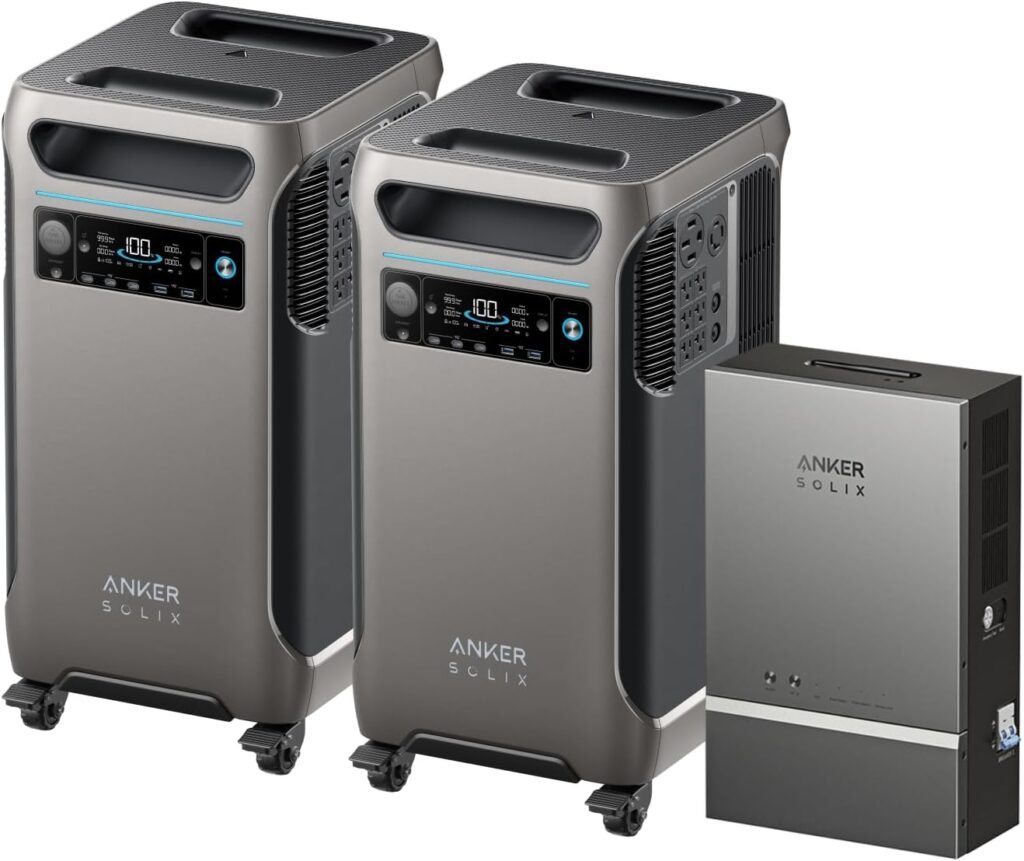
We want a power station that covers day-to-day needs and steps up for emergencies, and the Anker SOLIX F3800 aims to do both. The product name — Anker SOLIX F3800 Portable Power Station with Home Power Panel, 120V/240V Dual Voltage, 7680Wh Whole-Home Backup, 12000W AC Output, Solar Generator, RV, Emergencies, Power Outages — signals ambitious goals: long runtime, high output, and home integration.
Key specifications at a glance
We like clear numbers when assessing gear, so we’ll list the headline specs here and unpack them later. These figures frame how we think about sizing for our home, RV, or emergency kit.
| Specification | Value | Notes |
|---|---|---|
| Base battery capacity | 3.84 kWh | Base F3800 module; expandable with BP3800 packs |
| Marketed whole-home figure | 7680 Wh | Stated in product name for whole-home backup configuration |
| Maximum expandable capacity | 26.9 kWh | Add up to 6 BP3800 expansion packs to a single F3800 |
| Max AC output (single unit) | 6,000 W | 120V/240V capable |
| Max AC output (paired) | 12,000 W | Add a second F3800 to double AC output |
| AC voltage | 120V / 240V | Dual-voltage support for major appliances |
| Battery chemistry | LFP (EV-class) | Longer cycle life, safer thermal profile |
| Warranty | 5 years (BP3800 expansion battery) | Anker extends beyond industry average for expansion battery |
| Lifespan | ~10 years expected | Anker InfiniPower technology and smart thermal control |
| Included items | F3800, Home Power Panel, cables | Note: F3800 and Home Power Panel may ship separately |
Design and Build Quality
We appreciate devices that feel robust without being clunky, and the SOLIX F3800 leans toward a durable, purpose-built aesthetic. The unit’s exterior and components reflect the “EV-class” LFP battery choice, which usually requires heavier-duty housings and thermal management.
Materials and physical footprint
We expect this to be larger than portable consumer power stations due to capacity and power electronics. The design suggests semi-permanent installation for home backup, but the presence of handles and a portable form factor keeps RV and job-site use realistic.
Cooling and thermal control
We like that Anker highlights a smart temperature control system, which is critical with high-output LFP packs. This system should help performance and longevity by keeping batteries within optimal temperature ranges during heavy AC draw, solar charging, or repeated cycles.

Battery Capacity and Expansion Options
We often worry about being locked into a single capacity, so Anker’s expandability is one of the product’s most compelling features. Starting at 3.84 kWh and supporting up to 6 BP3800 expansion packs per unit gives us a lot of flexibility.
Base capacity realities
We understand the base module is useful for short-term outages or for powering a few critical circuits in a home. For many families, the 3.84 kWh base could cover essentials for part of a day; we’d plan expansion for full-day coverage.
How expansion scales runtime
We like modular systems because we can grow as needs and budgets change. Adding up to 6 battery packs brings a single F3800 to 26.9 kWh, and pairing multiple F3800 units increases both capacity and AC power. That scalability means we can configure a setup for a weekend cabin, a full house, or a multi-day emergency.
AC Output and Dual-Voltage Capability
We find dual-voltage output to be one of the most practical features for real-world home use. The F3800 supports both 120V and 240V, which removes a major limitation present in many consumer-grade power stations.
Running heavy appliances
We appreciate that the F3800’s 6,000W AC output can run large appliances such as dryers and electric ranges in many scenarios. If our loads exceed that, Anker’s recommended expansion — adding another F3800 — is intended to reach up to 12,000W total AC output for heavier, whole-home use.
Split-phase and wiring considerations
We note that integrating 120V/240V into an existing home split-phase system needs careful attention to the Home Power Panel and professional installation in many cases. We recommend working with a qualified electrician to ensure correct wiring and safe transfer between grid and battery power.
Charging Options and Speeds
We value versatile input options, and the SOLIX F3800 provides AC charging, solar input, and vehicle-like connectors. This lets us charge from shore power, solar arrays, or a generator as needed.
AC (grid) charging
We like fast AC charging when time is of the essence; specifications indicate the station supports conventional AC charging via the included cable and Home Power Panel. AC charging is ideal for restoring full capacity after heavy use or preparing for an expected outage.
Solar and MC4 support
We appreciate the inclusion of MC4 and XT60 adapters to connect solar arrays directly. Solar charging performance will depend on array size and conditions, but this system is explicitly designed with solar inputs in mind, making it a true solar generator candidate for off-grid setups or extended power independence.
Installation and the Home Power Panel
We prefer systems that integrate into the house rather than being a separate clamp-on supply, and the included Home Power Panel is an important part of that promise. It streamlines transfer between grid and battery and enables a smoother whole-home backup experience.
Home integration workflow
We like that the Home Power Panel allows us to plug the F3800 into our home circuits without complex rewiring for basic setups. For a full, safe whole-home backup, we’ll plan professional installation to ensure correct handling of main breaker and split-phase connections.
Shipment notes and logistics
We note that the F3800 unit and the Home Power Panel may ship separately; that can cause a staggered arrival. We recommend waiting for both items before attempting final installation; the Home Power Panel is critical to safe and effective integration with household wiring.
Performance in Real-World Use
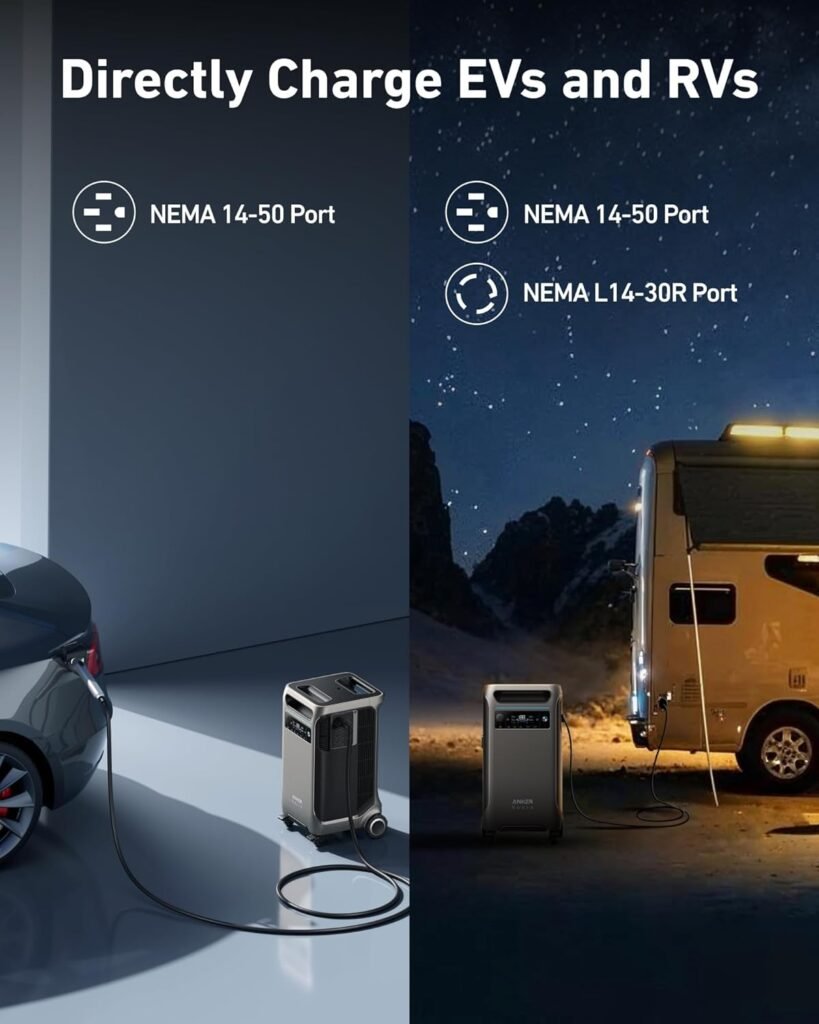
We always cross-check manufacturer claims with expected real-world results, and the combination of LFP cells, smart thermal control, and high AC output suggests strong practical performance. This unit is intended for serious loads, not just small gadgets.
Daily use and cycling
We expect the F3800 to handle day-to-day loads reliably, and the 10-year lifespan statement implies the battery should endure many cycles without significant degradation. That longevity makes it appealing as a long-term backup or daily-use system for off-grid cabins or tiny homes.
Emergency and outage scenarios
We feel confident that this system is geared toward keeping critical circuits alive during outages. Depending on expansion choices, it can support lights, refrigeration, heating/cooling systems, and cooking appliances for extended periods compared to smaller portable units.
Safety Features and Battery Chemistry
We value safety above all for any energy storage system we keep in or near our homes. Choosing LFP (lithium iron phosphate) battery chemistry is a meaningful safety decision.
LFP advantages
We like LFP because it offers improved thermal stability, lower risk of thermal runaway, and long cycle life compared to many other lithium chemistries. Those attributes are especially important for whole-home and near-residential installations.
Thermal management and electronics
We appreciate the smart temperature management and durable components mentioned by Anker, since consistent management keeps the battery performing well and reduces degradation risk. Robust internal electronics, fusing, and protections are expected in a product positioned at this power and capacity level.

Warranty, Lifespan, and Long-Term Value
We tend to examine warranty terms closely because they reflect manufacturer confidence and mitigate downside risk. Anker’s five-year warranty for the BP3800 expansion battery stands out compared to many competitors.
Anker’s long warranty commitment
We like that the expansion battery carries a 5-year full-device warranty, which surpasses the typical two-year industry average. This reduces the long-term cost of ownership and signals Anker’s commitment to durability.
Expected lifespan and replacement planning
We expect the system to last over a decade under normal use due to InfiniPower technology and the choice of LFP cells. With proper maintenance and reasonable cycling, replacement planning becomes less urgent — which matters when sizing investments for whole-home applications.
Use Cases: Home Backup, RVs, and Off-Grid Living
We think versatility is one of the F3800’s strengths, given its ability to support both portable and fixed applications. Whether we’re outfitting a full house or powering a weekend RV, the unit scales to many roles.
Whole-home emergency backup
We consider the SOLIX F3800 most compelling as part of a home backup plan when paired with expansion batteries and the Home Power Panel. The dual-voltage output and high AC capacity make it realistic to run a wider range of household appliances than most single-voltage power stations.
RV travel and off-grid life
We like that the F3800 can move from the garage to the campsite, offering high power for microwaves, AC units, and other RV appliances. Its solar charging compatibility also supports longer off-grid stays without the noise and fumes of a gas generator.
Solar Setup and Array Recommendations
We are realistic that solar performance depends on array size, panel efficiency, and weather. The SOLIX F3800’s direct MC4 and XT60 support simplifies solar hookups, but we’ll still need to design the array to match our runtime goals.
Sizing solar for recharge times
We prefer to size solar arrays so that daily charging can keep pace with typical consumption or provide a reliable recharge after extended use. For example, a moderate array of several kilowatts will cut recharge times dramatically versus a small consumer array.
Practical solar installation tips
We recommend prioritizing proper charge controller sizing, MPPT compatibility, and secure MC4 connections. Planning for orientation, shading, and seasonal sun variance will help us get consistent, predictable performance from solar charging.
Installation Tips and Professional Considerations
We always advise consulting a licensed electrician for home integration, especially with split-phase and whole-house transfer work. This prevents code violations, unsafe installations, and unexpected compatibility issues.
When to call a pro
We believe bringing in a professional is essential for grid-tied transfer switches, meter-base installations, and permanent wiring into the main panel. Even if the Home Power Panel supports simpler installations, local electrical code often requires certified work for major changes.
Pre-installation checklist
We like to confirm load calculations, determine essential circuits, verify physical placement (ventilation and clearance), and ensure internet connectivity if remote monitoring is used. Preparing these items ahead of installation saves time and reduces surprises.
Portability, Weight, and Handling
We know that higher capacity systems typically trade portability for power. The F3800 is not a handheld power bank, but Anker has designed it to be manageable for transport when needed.
Practical moving and storage
We advise planning for at least two people to move the unit safely into place due to battery weight and integrated hardware. Weatherproof storage and stable placement are important if the unit will be outside or in a garage.
Using it on the go
We feel that taking the F3800 to a job site or RV is feasible, but we should plan for secure mounting and protection from vibration and moisture during travel. It’s portable in a practical sense, not in a lightweight, single-person-carrier sense.
Comparing the F3800 to Competitors
We always compare feature sets and price points to ensure we’re getting the right value. The SOLIX F3800’s combination of LFP chemistry, large expandability, and dual-voltage output addresses gaps left by many consumer-grade stations.
Where it stands out
We like that it offers true 240V output and a high AC ceiling without relying on unstable inverter add-ons. The combination of a multi-kWh scalable battery, EV-class cells, and a multi-year warranty places it in the semi-professional category.
Areas to double-check
We recommend confirming the delivered configuration matches marketed numbers (base capacity vs. bundled capacity). Also, we should price out the total system including battery packs and optional second F3800 if we need the full 12,000W output to avoid surprises.
Setup Walkthrough (Step-by-step)
We prefer clear setup steps so that initial commissioning is smooth. The following walkthrough covers basic unpacking, charging, and integrating with a Home Power Panel.
Basic commissioning steps
We suggest unpacking the system, inspecting for shipping damage, and connecting initial AC charge to bring batteries to full before first use. If the Home Power Panel arrives later, plan to wait and coordinate with the electrician for integration.
Integrating with the home
We recommend shutting off mains at the main breaker before wiring to the Home Power Panel, then transferring essential circuits under electrician guidance. Testing each circuit and verifying correct 120V/240V behavior is a prudent final step.
Maintenance and Care
We think of energy systems as long-term investments that benefit from routine checks. The F3800’s LFP chemistry reduces maintenance needs, but we still want scheduled inspections.
Routine checks and firmware updates
We suggest periodic firmware updates, monitoring battery health, and visually inspecting cables and connectors for wear. Keeping the unit clean and in a stable temperature environment extends its effective life.
Seasonal storage and long-term standby
We advise maintaining a partial state of charge for long-term storage and recharging periodically. LFP batteries tolerate longer storage better than other chemistries, but they still benefit from occasional top-up cycles.
Pros and Cons Summary
We prefer concise summaries to help with quick decision-making. Below are the main strengths and trade-offs we see for the SOLIX F3800.
Pros
- We like the scalable capacity up to 26.9 kWh per unit and beyond with multi-unit systems.
- We appreciate 120V/240V dual-voltage output and high AC power (6,000W per unit).
- LFP battery chemistry and smart thermal control point to long lifespan and safety.
- Solar-ready design with MC4 adapters increases off-grid viability.
- Longer warranty for expansion packs reduces long-term risk.
Cons
- Base capacity (3.84 kWh) may be small for whole-home use without expansion.
- Cost for additional battery packs and potential second F3800 can be significant.
- Professional installation is likely required for full home integration.
- Physical weight and size reduce mobility compared to small portable stations.
Frequently Asked Questions
We want clarity on common user concerns, so we’ll answer questions we expect buyers to ask.
Can one F3800 run an entire house?
We explain that one F3800 can power many critical appliances and a portion of whole-home loads, but full whole-home support typically requires expansion batteries and possibly another F3800 to meet high wattage demands.
How long will the battery last before replacement?
We expect the battery to last over a decade with normal use due to LFP chemistry and Anker InfiniPower management, though real-world lifespan depends on cycle depth and environmental factors.
Is the system generator-compatible?
Yes, we find that AC charging and integration via the Home Power Panel facilitates generator use as an alternative or supplemental charging source. Proper connection and transfer controls are important for safety.
Pricing and Value Considerations
We think total system cost should factor in not just the base unit but the realistic expansion needed to meet our goals. Budgeting for additional battery packs, installation, and any solar array is essential.
Total cost of ownership
We like to calculate cost per kWh usable and weigh warranty and lifespan into the equation. Although the up-front investment may be higher than consumer-grade options, long lifespan and warranty can improve long-term value.
Financing and scaling strategies
We recommend starting with a base unit for immediate backup needs and adding battery packs over time as finances permit. That scaling strategy lets us spread out the cost while maintaining compatibility and future-proofing.
Final Assessment and Recommendation
We feel the Anker SOLIX F3800 is a strong contender for households and RV owners seeking a serious, scalable battery solution. It combines dual-voltage outputs, EV-class LFP chemistry, significant expansion capability, and practical solar compatibility.
Who should buy it
We recommend the F3800 to households planning a reliable whole-home backup, RV owners who want high output and longer off-grid stays, and anyone who values safety and battery longevity. Those with small or very occasional needs might find smaller, less expensive units more appropriate.
Closing thoughts
We see the SOLIX F3800 as a bridge between consumer portable power stations and full-scale home battery systems. Its modularity and safety features give us confidence in investing for long-term resilience and energy independence.
Disclosure: As an Amazon Associate, I earn from qualifying purchases.