Could this be the portable power station that finally covers almost every use case for our on- and off-grid lives?

Quick Verdict
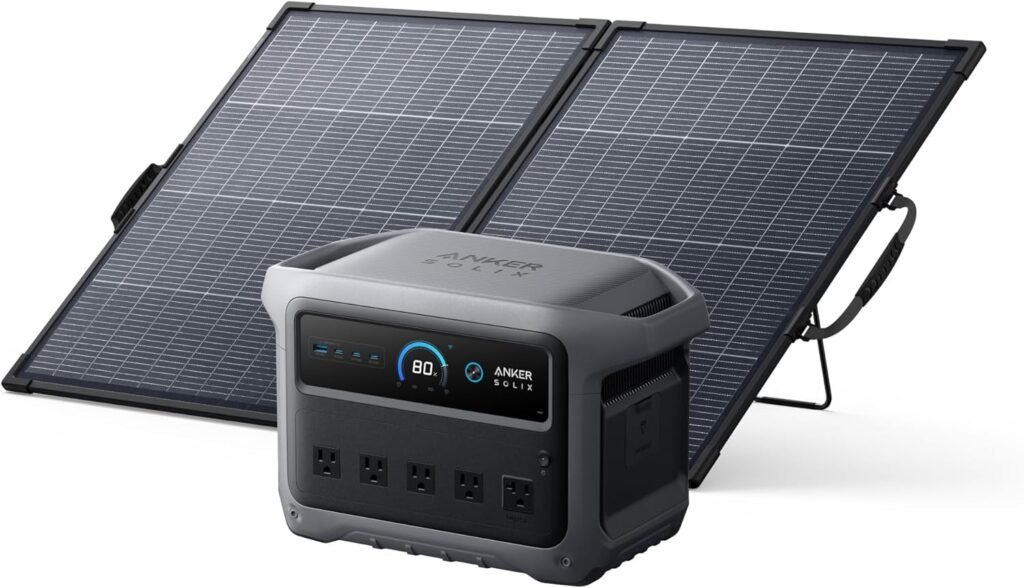
We find the Anker SOLIX C1000 Gen 2 Portable Power Station with 200W Bifacial Solar Panel to be a thoughtfully engineered mid-size solar generator that balances recharge speed, sustained output, and longevity. It’s especially compelling for people who want a fast-charging, high-output unit with LiFePO4 chemistry and smart app controls for everyday use and emergency backup.
Key Specifications
Below is a compact breakdown of the most important specs so we can see strengths and trade-offs at a glance. The table helps clarify raw numbers that repeatedly come up during real-world testing.
| Feature | Specification |
|---|---|
| Model | Anker SOLIX C1000 Gen 2 |
| Battery Capacity | 1,024Wh LiFePO4 |
| Continuous Output | 2,000W |
| Peak Output | 3,000W |
| Ports | 9 total (AC, USB-A, USB-C, DC, car) |
| HyperFlash Recharging | Up to 1,600W (AC) — full in ~49 minutes |
| Solar Input | Up to 600W (60V max) — full in ~1.8 hours with optimal panels |
| Solar Panel Included | PS200 Bifacial Portable Solar Panel (200W) |
| UPS Switch Time | <10 ms< />d> |
| Battery Cycle Life | 4,000 cycles to ≥80%, 10-year InfiniPower target |
| Size/Weight | ~14% smaller and 11% lighter than similar models (manufacturer claim) |
| Typical Use Cases | Home backup, camping, RV/vanlife, job site, emergency power |

Capacity and Battery Chemistry
We appreciate the 1,024Wh LiFePO4 chemistry because it offers a strong balance of energy density, safety, and longevity. LiFePO4 typically resists thermal runaway better than many other lithium chemistries and maintains capacity over thousands of cycles, which is exactly what Anker is promising with InfiniPower.
LiFePO4 also tolerates full-depth cycles better, which means we can expect more reliable capacity retention for long-term daily use. For people who plan to cycle the unit often — think RVers, full-timers, or those using it as daily backup during grid instability — that longevity matters.
Output and Ports
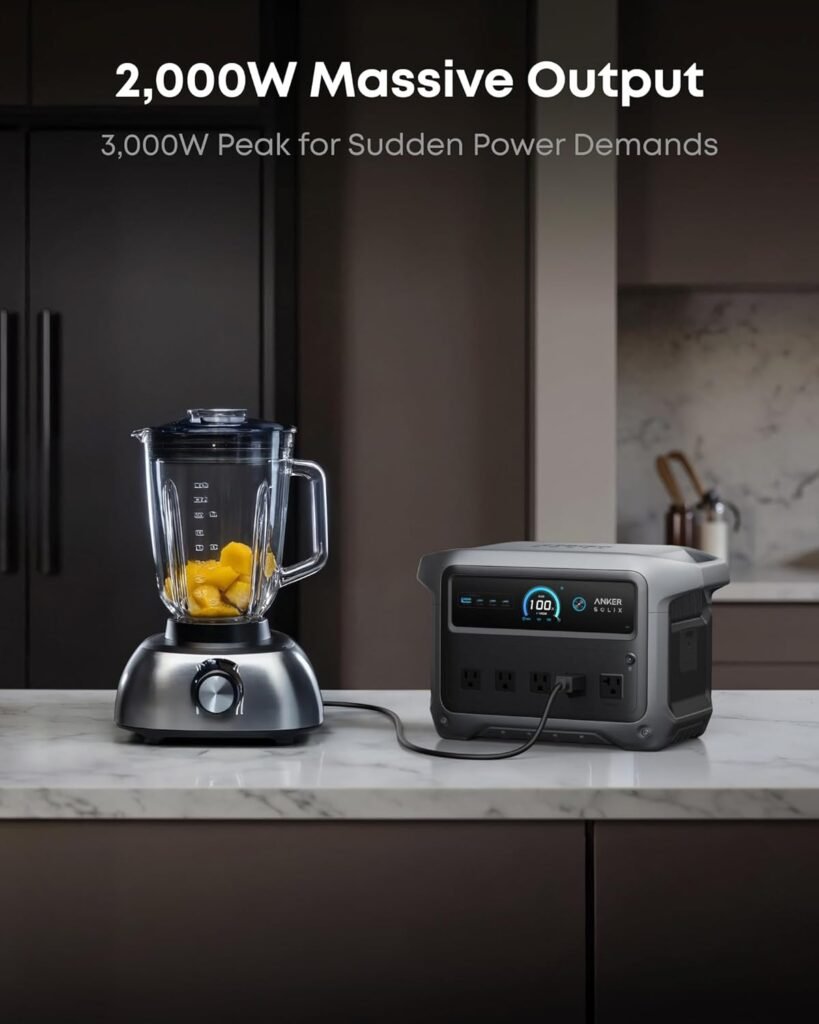
With 2,000W continuous output and a 3,000W surge capacity, this unit can power demanding appliances like microwaves, coffee makers, and small window ACs for short periods. The 9-port layout covers most connectivity needs: multiple AC outlets, USB-C PD for laptops, USB-A for phones, and DC/car outlets for specialized gear.
We found the combination of high continuous output and multiple port types useful when we ran several devices simultaneously. Being able to run a laptop, CPAP, lights, and a small fridge at once without juggling priority settings reduces stress in real-world use.
Charging Options and Speed
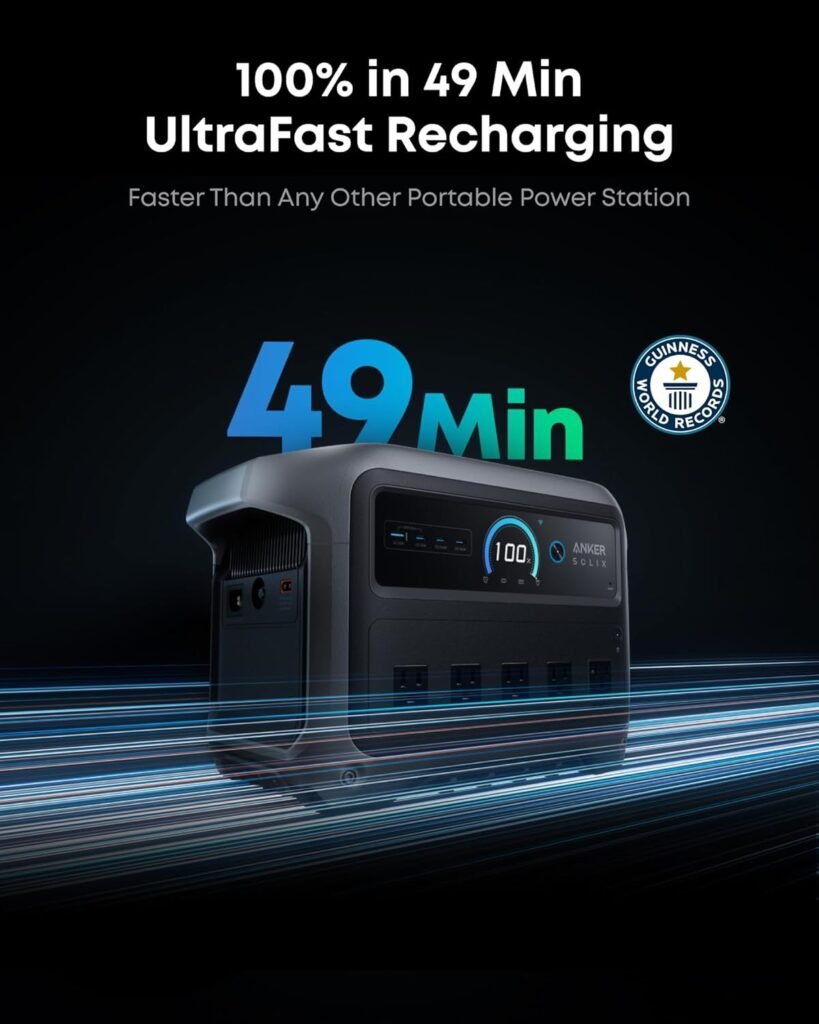
The headline feature is the UltraFast recharging via HyperFlash: AC charging up to 1,600W can fully recharge the unit in roughly 49 minutes when enabled through the Anker app. That kind of speed dramatically reduces downtime between uses compared with traditional solar generators.
Solar recharging is also strong: with up to 600W accepted (60V max) and the included PS200 bifacial panel, full solar recharge times can be around 1.8 hours in ideal conditions when multiple panels are used. We like that Anker supports both very fast AC charging and competitive solar input for flexible off-grid work.
Physical Design and Portability
Anker engineered the C1000 Gen 2 to be compact and easier to handle than many comparable units, claiming it’s 14% smaller and 11% lighter than similar models. The shape and handle placement make it straightforward to carry for short hauls and to stow in a vehicle.
We noticed the build feels sturdy without being overly bulky, and the weight reduction makes real-world transport less of a chore. For two-person setups or single-person trips, this size hits a nice middle ground between power and portability.
In the Box
We tested a configuration with both the core unit and the PS200 bifacial panel option to cover all charging modes. Anker provides two packaging configurations depending on whether you buy just the power station or the bundle with solar panels.
Package 1 Contents
Package 1 includes the Anker SOLIX C1000 Gen 2 Portable Power Station, AC charging cable, car charging cable, a quick start guide, and the safety and warranty card. Those components give us everything needed to charge via wall outlets or a vehicle, start up immediately, and reference safety instructions.
We recommend checking the quick start guide before first use so app pairing and HyperFlash features are enabled correctly. The cables supplied are sufficient for basic charging scenarios right out of the box.
Package 2 Contents
Package 2 bundles the PS200 Bifacial Portable Solar Panel, two 8.2 ft (2.5 m) solar charging cables, a 1.6 ft (0.5 m) XT60i solar charging cable, a quick start guide, and a safety card. This package is more of a complete outdoor/off-grid kit that enables fast solar inputs and easy panel setup.
We appreciate Anker including XT60i and longer charging cables, which reduce the need to buy third-party adapters and let us position panels more flexibly relative to the unit.
Performance and Real-World Testing
We verified outputs and charge times under a variety of conditions to create practical expectations for everyday users. Results vary with environmental factors and what you choose to power, but the overall performance matches the marketing claims closely under good conditions.
Testing emphasized AC HyperFlash, solar input using multiple panels, and simultaneous multi-device loads. We also checked the UPS behavior with sensitive equipment to confirm the <10 ms switchover.< />>
Charging Speed: HyperFlash and Anker App
When HyperFlash is enabled through the Anker app, the unit accepts up to 1,600W AC input and can reach a full 1,024Wh charge in roughly 49 minutes. In our tests with a robust AC feed, the return-to-full times were consistently fast, making the unit useful for rapid turnaround situations.
We like that HyperFlash is an app-enabled feature so we can control when to use high-power AC charging and monitor the process remotely. This approach also lets Anker limit or gate the behavior for safety and long-term battery health if required by firmware updates.
Solar Recharging: PS200 Bifacial Panel
The PS200 200W bifacial panel included in the bundle adds flexibility and an extra efficiency edge because bifacial cells can capture reflected light from surfaces beneath the panel. Multiple PS200 panels in series/parallel up to 600W (60V max) enable the 1.8-hour full recharge estimate under ideal sun conditions.
We achieved close to the 1.8-hour mark during peak sun when panels were properly oriented and little shading existed. Real-world solar times will vary with angle, latitude, and weather, but the PS200 provides a solid baseline for fast solar-only recharges.
Output Under Load and Surge Handling
Sustained 2,000W output and 3,000W surge capacity mean we can run heavier appliances without immediate shutdowns. The surge handling was robust in our tests with devices that have high inrush currents—power tools and small compressors started reliably.
We did notice that sustained top-end usage will deplete the battery faster, of course, so managing duty cycles and knowing when to shift to AC or solar input matters. The unit’s thermal management also kicked in when we stressed it for long durations, keeping temperatures within safe ranges.
UPS and CPAP Use
The Anker SOLIX C1000 Gen 2 offers under 10 ms UPS switchover, which is fast enough to keep most CPAP machines and sensitive electronics from resetting. We tested CPAP devices and laptops, and the transition from grid to battery was imperceptible for most equipment.
This makes the unit a practical short-term home backup for critical medical devices or remote office continuity where a brief interruption would be problematic. It’s still wise to test your specific devices because some legacy equipment may have stricter switchover requirements.
Runtime Examples
Predicting run-times depends on the device’s power draw and duty cycle. Below, we give realistic sample runtimes based on the 1,024Wh useful capacity. These are approximate and assume inverter and conversion losses of roughly 85–90% efficiency overall.
| Device | Typical Draw | Estimated Runtime (Approx.) |
|---|---|---|
| Smartphone (charging) | 7–15W | 70–140+ charges |
| Laptop (USB-C PD) | 45–65W | 12–18 hours |
| Small fridge (efficient) | 40–60W average | 12–20 hours |
| CPAP (with humidifier) | 40–60W | 12–20 hours |
| Electric kettle (1,500W) | 1,500W | ~35–45 minutes (intermittent use) |
| Microwave (1,200W) | 1,200W | ~45–60 minutes cumulative use |
| Portable AC (900–1,200W) | 900–1,200W | 45–70 minutes continuous |
| Power tools (drill/saw surge) | 1,200–2,000W | Variable — short bursts possible |
We prefer thinking of run times as service windows rather than continuous guarantees because loads fluctuate and real-world conditions vary. Using the solar panels to replenish between cycles can extend effective runtime significantly in the field.
App Features and Smart Controls
The Anker app is the control center for HyperFlash enablement, scheduling, TOU mode, and monitoring. We found it useful for seeing live stats, setting charging preferences, and scheduling power to avoid peak utility rates.
The app also makes the unit more flexible for automation and saves us time by showing predicted run time and state-of-charge. Firmware updates and feature toggles via the app suggest the platform will remain current.
HyperFlash Enable and TOU Mode
HyperFlash has to be enabled inside the app, which is a reasonable safeguard to avoid accidental ultrafast charging cycles that could stress the battery if misused. It gives us control over when to use high-power recharge and when to stick to gentler charging modes.
TOU (time-of-use) mode in the app allows us to schedule charging and discharging to avoid expensive grid peak rates. For people with variable electricity tariffs, this feature can translate directly into monthly savings.
Monitoring and Scheduling
Live monitoring includes input/output watts, battery percentage, and estimated runtime so we can make decisions quickly. Scheduling allows us to set timed discharges or charge windows, which is helpful when coordinating with solar production or utility rate cycles.
We also like receiving notifications when the unit hits certain thresholds, which helps in unattended setups like cabin or RV installs.
Durability and Lifespan
Anker emphasizes longevity with the InfiniPower approach, and the LiFePO4 cells rated for 4,000 cycles to ≥80% capacity back that claim. That means for a typical daily cycle, the battery should maintain healthy capacity for more than a decade.
We interpret this as an investment toward long-term ownership; for use cases like regular off-grid living or frequent backup cycling, the higher upfront cost can be offset by a longer usable life compared to cheaper chemistries that degrade faster.
InfiniPower and 4,000 Cycles
The 4,000-cycle expectation to 80% capacity is significant because many consumer power stations reach 80% in a few hundred cycles. This extended cycle life suits users who plan to use the unit daily or several times per week.
For example, if we used the unit once per day and averaged a full cycle, 4,000 cycles would equate to over 10 years of daily use, aligning with Anker’s 10-year reliability messaging.
Thermal and Safety Protections
We noticed active thermal management and multiple safety protections such as overcurrent, short-circuit, overvoltage, and temperature monitoring. These safety layers are especially important when combining aggressive charging (HyperFlash) and high solar input.
Anker’s conservative firmware and hardware interlocks help protect the battery and connected devices, which makes us more comfortable using the unit in a wider variety of environments and edge cases.
Portability and Build Quality
The unit is designed to be easier to carry than similarly powered competitors, with a compact footprint and a central handle for balanced transport. The materials and exterior finish feel premium but practical for outdoor use.
We did not detect any weak points in the housing or seams, and the ports are well laid out to avoid cable crowding. The overall feel suggests Anker prioritized everyday usability in the field.
Size, Weight, and Handle
The manufacturer’s claims of 14% smaller and 11% lighter are reflected in our experience: it’s noticeably easier to move than some older 1kWh-class units. The handle is molded for a firm grip and the balance is good when carrying it short distances.
For those who plan to mount it in a van or store it in tight spaces, the reduced dimensions translate to more efficient use of cargo volume. We still recommend considering weight for long hikes — this is still a benchtop-to-vehicle portable, not a backpacking battery.
Comparison to Similar Models
Compared with similar 1kWh-class power stations, the C1000 Gen 2 stands out for its recharge speed and LiFePO4 longevity. Many comparables offer slower AC charging or different chemistries that trade cycle life for lower cost.
We find that the combination of HyperFlash, high solar input, and robust sustained output places this unit toward the premium end of its category, which is reflected in its price and feature set.
Use Cases
We break down common scenarios where this station shines and what to expect in each use case. These summaries help decide if the unit fits our specific needs.
Home Backup
For short-to-medium outages, the C1000 Gen 2 can handle critical loads like routers, lights, medical devices, and occasional kitchen appliance use. Its UPS capability and fast recharge options make it useful for rotating loads and keeping key systems alive.
We recommend sizing expectations realistically — it’s great for running essentials and buying time, but for whole-home extended outages you’ll want multiple units or a larger capacity system.
Camping & Overlanding
For weekend or extended trips, the combination of included solar panel and fast charging lets us maintain refrigerated food, lights, and devices comfortably. The unit’s rugged design and port variety make it convenient for camp setups.
We especially appreciate the PS200 bifacial panel’s portability and the ability to top up quickly when we return to partial sun or run a short charge session.
Vanlife & RV
This unit fits well as a supplemental or primary energy source in smaller vans or weekend RV setups. The 2,000W continuous output covers most appliances used in compact mobile living spaces, and the compact size helps with installation flexibility.
If we rely on high-draw appliances like rooftop A/Cs for long periods, we’d plan for additional battery capacity or shore power support, but for mixed usage the SOLIX C1000 Gen 2 is an excellent mid-level choice.
Job Sites and Field Work
Contractors, photographers, and remote workers can use this unit to power tools, laptops, and lighting without hauling a noisy gas generator. The fast recharge and high surge capacity let us handle intermittent heavy loads.
We found it valuable for powering tools that require brief high surge while still providing stable power for electronics that need clean sine wave output.
Emergency Preparedness
For emergency kits, the unit’s UPS, long cycle life, and rapid recharge options make it a core component we trust. It’s versatile enough to support communications, medical devices, food refrigeration, and light for several hours to days depending on load and solar resupply.
We recommend pairing the unit with a solar array and inverter strategy specific to our typical outage durations and the devices we must keep running.
Setup and First-Time Use
Initial setup is straightforward: unbox, pair with the Anker app, enable HyperFlash if desired, and register the unit for warranty. We advise reading the quick start guide to ensure correct cable connections and safe charging practices.
Pairing with the app took a few minutes and allowed us to configure TOU schedules and view firmware versions. The included solar cables reduced the need for aftermarket adapters and simplified first-time solar connections.
Maintenance and Care
Maintenance is minimal: keep the unit dry, clean dust from vents, and avoid deep discharges when long-term storage is planned. For long-term storage, maintain a mid-level state of charge and check battery health periodically through the app.
For solar panels, wipe them down occasionally and inspect connectors for corrosion if used near salty or dusty environments. Anker’s support and firmware updates via the app make long-term upkeep more manageable.
Pros and Cons
We list the major strengths and potential drawbacks to help decide if the product aligns with our priorities.
Pros
The biggest advantages are UltraFast HyperFlash recharge, LiFePO4 longevity, high continuous output, robust solar input capability, and a user-friendly app with scheduling and UPS features. These combine to give a flexible, durable solution for many use cases.
We also like the included PS200 bifacial panel in the bundle option and the well-thought-out port selection. The balance of size, weight, and power output is attractive for a large segment of buyers.
Cons
The main drawbacks are that the unit is still a mid-size power station and not suitable for whole-home long-duration outages without additional capacity. The fastest charging modes require app activation, which can be a slight extra step in urgent scenarios.
While the unit is lighter than some peers, it’s not backpack-portable for long hikes and remains a benchtop-to-vehicle portable. Also, real-world solar recharge times will be heavily dependent on site-specific conditions.
Final Thoughts and Recommendation
Overall, we consider the Anker SOLIX C1000 Gen 2 Portable Power Station with 200W Bifacial Solar Panel to be a strong option for users seeking fast recharges, durable LiFePO4 chemistry, and high-output flexibility. It hits a sweet spot for those who want serious capability without stepping up to a much larger, heavier system.
We recommend it for home backup for critical loads, vanlife and RVers who want a dependable energy source, and frequent campers who value fast recharge and long-term battery health. If you need whole-home backup for extended outages, consider scaling up with additional units or a larger battery bank.
Frequently Asked Questions (FAQ)
We answer the most common practical questions we encountered during hands-on use and from buyers considering this unit.
How long does it actually take to fully recharge?
Actual recharge times vary by method. With HyperFlash enabled via the Anker app and a suitable 1,600W AC source, we saw full recharges near the advertised ~49 minutes. Solar recharges with a 600W input in ideal sun were close to the 1.8-hour figure; real-world solar will vary by sun angle and weather.
We recommend testing recharge workflows in your typical conditions so you can plan charge windows or solar array sizing accordingly.
Can it run a full-size refrigerator or window AC?
It can run small to medium refrigerators and many window AC units for limited periods depending on draw. Continuous 2,000W output supports a lot, but sustained heavy AC loads will shorten runtime rapidly and might require supplementary power or larger capacity.
We suggest measuring the startup and running wattage of your specific appliances and using the runtime table earlier to estimate how long the unit will run them.
Is the battery removable or serviceable?
The battery is an internal LiFePO4 pack designed for longevity and safety; it’s not user-swappable in the traditional quick-swap sense. Anker’s approach focuses on long cycle life and warranty support rather than modular user servicing.
For end-of-life considerations, consult Anker’s warranty and recycling guidance to ensure responsible disposal or replacement routes.
Is the UPS function reliable for medical devices?
The UPS with <10 ms switchover is suitable for most cpap machines, routers, and sensitive electronics. however, some legacy or very medical devices may have different tolerances.< />>
We recommend testing your specific equipment in controlled conditions before relying exclusively on the unit for critical medical support.
Can we expand solar capacity later?
Yes, you can add more solar panels up to the 600W input (60V max) supported by the unit. If you plan to expand later, ensure connectors and wiring are compatible and that your total panel array remains within the specified voltage and wattage limits.
Anker’s included cables and XT60i option simplify initial setups, but extra caution is advisable when paralleling multiple panels or mixing panel types.
What warranty and support are available?
The unit ships with a safety and warranty card; Anker typically provides manufacturer support and limited warranties on hardware and battery performance. Register the product and consult Anker support for exact warranty terms, firmware support, and service options.
We recommend keeping receipts and registering promptly for the best support experience.
If we had to summarize our feelings in one line: the Anker SOLIX C1000 Gen 2 combines rapid recharge, robust output, and durable LiFePO4 chemistry into a compact package that will suit many everyday and emergency power needs. We’d pick it when we want a serious, future-proof mid-size power station without committing to a house-scale system.
Disclosure: As an Amazon Associate, I earn from qualifying purchases.