Last summer, we powered a 55-inch TV and a streaming stick off a LiFePO4 station without waking the campsite. In 2025, we’ve tested compact 300W units and 1–2kWh workhorses that stay quiet, charge fast, and deliver true sine-wave watts. We’ll compare real runtimes, fan noise, solar input, and pass-through behavior, then flag which models handle consoles and surge spikes—so you can skip guesswork and pick the right box for your trips.
Key Takeaways
- Prefer LiFePO4 stations for long life (3000+ cycles) and stable output; they’re safer and better for frequent road‑trip use.
- Match your TV’s wattage; choose 300–600W for small sets, 1500–2200W for larger TVs and accessories, with ample surge headroom.
- Capacity dictates runtime: ~300Wh runs a 60W TV 4–5 hours; 1000–2000Wh supports movie nights, consoles, and routers all evening.
- Look for pure sine wave AC, 100W USB‑C, multiple AC outlets, and quiet cooling; pass‑through charging keeps devices powered while recharging.
- Prioritize fast recharge (e.g., EcoFlow DELTA 2’s 0–80% in 50 min) and MPPT solar input for off‑grid, road‑trip flexibility.
Jackery Explorer 300 Portable Power Station


Looking for a lightweight, TV-ready power pick for road trips and outages? We like the Jackery Explorer 300: a 293Wh lithium unit delivering clean, quiet power with two Pure Sine Wave AC outlets (300W max, 500W surge). At 7.1 pounds, it’s easy to carry and gentle on electronics.
Ports are plentiful: 2 AC, 60W USB-C PD (in/out), Quick Charge 3.0, USB-A, and a 12V car port. Recharge fast—about 80% in 2 hours via wall plus USB-C—or top up from a car or SolarSaga 100W panel with MPPT. It supports pass-through and up to six devices, powering TVs, routers, fans, and laptops. Accessories included; solar sold separately.
Best For: campers, road trippers, and outage-preppers who need a lightweight, TV-ready portable power station for small electronics and quick recharging.
Pros:
- Lightweight and compact (7.1 lb) with clean, quiet pure sine wave power; gentle on electronics
- Versatile ports: 2 AC, 60W USB-C PD (in/out), QC 3.0, USB-A, 12V car; pass-through charging; power up to six devices
- Fast recharge to ~80% in about 2 hours via wall + USB-C; MPPT for efficient solar with SolarSaga 100
Cons:
- 300W max (500W surge) limits use with high-draw appliances like induction cooktops or blenders
- 293Wh capacity may be short for multi-day, heavy usage without solar or vehicle recharging
- Solar panel not included; adds cost if you want off-grid charging
GRECELL 300W Portable Power Station (230.88Wh Solar Generator)

Need a compact, TV-friendly power pick for weekends away? We like the GRECELL 300W (T300) for its 230.88Wh capacity and 330W continuous output (600W surge), enough for most TVs, streaming sticks, lights, and a mini-fridge under 330W. You get a pure sine wave 110V AC outlet, plus six total ports: 1 AC, USB-C PD 60W, USB-C PD 18W, two USB-A QC, and a car port.
At 7.3 pounds, it’s easy to pack. Recharge via wall, car, or the built-in MPPT solar input. Expect real-world output below rated totals and avoid heaters. Fans stay quiet, BMS safeguards charging, and the 60W PD speeds laptops.
Best For: Weekend travelers and campers who need a compact, TV-friendly power station to run low-to-medium wattage devices (under 330W) like TVs, streaming sticks, lights, laptops, and a mini-fridge.
Pros:
- 330W continuous/600W surge with pure sine wave AC for safe TV and electronics use
- Versatile I/O: 6 ports including USB-C PD 60W for fast laptop charging and MPPT solar input
- Lightweight (7.3 lb) and quiet dual-fan cooling with robust BMS protections
Cons:
- Limited capacity (230.88Wh) and single AC outlet may constrain multi-device or long runtimes
- Not suitable for heaters or high-draw appliances; real-world output below rated due to inefficiencies
- Recharge speed can be modest given typical input limits; 40W solar is slow for full top-ups
GRECELL Portable Power Station 300W (230Wh LiFePO4)

Traveling light but still want to run a TV? We like GRECELL’s 300W, 230Wh LiFePO4 station for compact trips and quiet movie nights. It powers TVs, laptops, tablets, lights, fans, and cameras under 300W, with 600W surge for startups.
You get 2 AC outlets, a PD 60W USB-C (in/out), Fast Charge USB-C, USB-A, a 12V car port, plus DC in/out. Recharge four ways: wall (about 2.5–4.5 hours), solar (12–24V), 12V car, or dual 100W USB-C + DC for about 1.5 hours. The LiFePO4 battery, upgraded BMS, and dual silent fans boost safety. Bonus: 3-mode LED, pass-through, 2-year warranty.
Best For: Campers, travelers, and homeowners who need a compact, quiet, and fast-recharging 300W portable power station for small devices and movie-night TVs under 300W.
Pros:
- Fast recharging options, including dual 100W USB-C + DC for ~1.5 hours and wall in ~2.5–4.5 hours
- LiFePO4 battery with upgraded BMS, dual silent cooling fans, and pass-through charging for safer, longer life
- Versatile ports: 2 AC outlets, PD 60W USB-C (in/out), Fast Charge USB-C, USB-A, 12V car port, and DC in/out
Cons:
- 300W continuous output limits use with high-watt appliances (e.g., kettles, coffee makers)
- 230Wh capacity may be insufficient for extended off-grid use without solar or frequent recharges
- Solar input requires compatible 12–24V panel and may charge slowly depending on conditions
Jackery Solar Generator 1000 v2 with 200W Solar Panel

Quiet power with real stamina makes the Jackery Solar Generator 1000 v2 a smart pick for TV watchers who camp, road-trip, or prep for outages. We get 1,500W AC output (3,000W surge), a 1,070Wh LiFePO4 pack, and three pure sine wave AC ports—enough for TVs, routers, and even a fridge. At 23.8 lbs with a foldable handle, it’s portable. The 200W panel keeps it topped up off-grid. Charging is flexible: default 1.7 hours for battery health, or enable app “emergency” mode for a 0–100% one-hour fill. App modes include 30 dB quiet charging. Longevity impresses: 4,000 cycles to 70%, 5-year warranty.
Best For: Campers, road-trippers, RVers, and emergency preppers who need quiet, portable, high-output off-grid power with fast charging and app controls.
Pros:
- 1,500W AC output (3,000W surge) with three pure sine wave AC ports powers fridges, TVs, routers, and more.
- Fast charging options: default 1.7 hours for battery health or 0–100% in 1 hour via app “emergency” mode; includes 200W solar panel.
- Long-lasting LiFePO4 battery (4,000 cycles to 70%) with 5-year warranty; portable 23.8 lbs design with foldable handle.
Cons:
- One-hour fast charging requires enabling emergency mode in the app before each use.
- App reliance (modes and occasional login) may be inconvenient for some users.
- Screen is on the smaller side and the generator and solar panel ship separately, which can affect delivery timing.
Enphase IQ PowerPack 1500 Portable Power Station
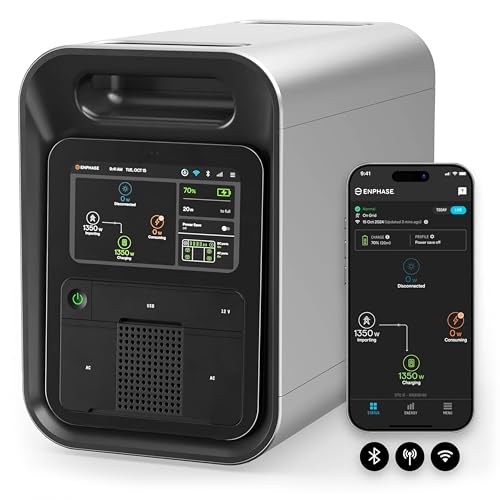
For travelers and homeowners who want grid-speed recharge and rock-solid app control, the Enphase IQ PowerPack 1500 stands out. We get 1500 W continuous from a 1500 Wh LiFePO4 pack, three IQ8 microinverters, and 11 ports: four 120 V AC (3000 W surge), four USB-A, two 60 W USB-C, and a 12 V car port. It fast-charges from AC in under 75 minutes, adds solar in about four hours with two IQ panels, and switches to backup in under 10 ms.
The 7-inch touchscreen, 4G/Wi‑Fi/Bluetooth, OTA updates, and UL certification inspire confidence. It’s rugged, quiet, 45.9 lb, and backed by a 5‑year/2,500‑cycle warranty.
Best For: Travelers, homeowners, and RVers who need fast grid recharge, reliable app control, and rugged backup power for outages and outdoor use.
Pros:
- 1500 W continuous output (3000 W surge) with 11 ports, including 4 AC outlets and dual 60 W USB‑C
- Rapid AC recharge in under 75 minutes; solar top‑up in ~4 hours with two IQ panels
- Robust connectivity (4G/Wi‑Fi/Bluetooth), 7″ touchscreen, OTA updates, UL certified, 5‑year/2,500‑cycle warranty
Cons:
- Heavier than some competitors at ~45.9 lb, reducing portability for long carries
- 1500 Wh capacity may be limiting for extended off‑grid runs without solar
- Vehicle DC recharge is slow (~14 hours) compared to AC fast charging
Dabbsson 2000L Solar Generator, 2048Wh Portable Power Station
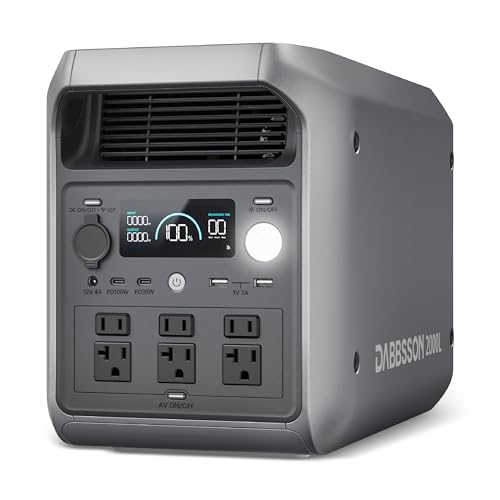
Need a compact powerhouse to run a TV plus a few extras without breaking a sweat? We like the Dabbsson 2000L: 2048Wh semi-solid LiFePO4, 2200W AC output with P-Boost to 3300W, and six AC outlets plus 100W USB‑C. It’s ultra-compact at 11.2 × 18.3 × 8.9 inches and 41 lbs, with a built-in handle, LED light, and UL94‑V0 fire-resistant build.
Expect long life (4000+ cycles, 10+ years), quiet modes, 15 ms EPS switching, and an AI-driven BMS you can monitor in the app. Recharge fast—80% in 1.5 hours via 1500W AC—or up to 800W solar. Pass-through charging, UPS-like reliability, and a 5-year warranty seal it.
Best For: Campers, homeowners, and RV users who need a compact, high-capacity power station to run TVs, appliances, and tools with fast charging and UPS-like reliability.
Pros:
- 2048Wh LiFePO4 with 2200W AC output (3300W P-Boost) powers multiple appliances; 6 AC outlets plus 100W USB‑C.
- Fast recharge: 80% in 1.5 hours via 1500W AC, up to 800W MPPT solar; supports pass-through charging.
- Long life and safety: 4000+ cycles, AI-driven BMS, 56+ protections, 15 ms EPS switching, 5-year warranty.
Cons:
- 41 lbs can be heavy for frequent carry without wheels or cart.
- 800W max solar input may limit rapid off-grid replenishment for heavy daily loads.
- EPS transfer at 15 ms may not be suitable for the most sensitive electronics requiring zero-interruption UPS.
VTOMAN Jump 600X Portable Power Station (299Wh, 600W)

Looking to run a mid-size TV without draining your budget or your ears? We like the VTOMAN Jump 600X for its 600W AC output (1,200W surge) and quiet LiFePO4 power. Its 299Wh battery handles a 60–100W TV for a movie night, and you can expand to 939Wh with VTOMAN’s extra battery for weekends. The regulated 12V ports keep CPAPs and fridges steady, while USB-A QC and a 60W USB-C PD cover streaming sticks and laptops. Pass-through charging lets us power up to 9 devices while recharging. Safety’s robust with LIFEBMS. At 13.2 lb, compact, and backed by a 2-year warranty.
Best For: Campers, RVers, and home users who want a quiet, safe, and compact LiFePO4 power station to run TVs, CPAPs, and small appliances with the option to expand capacity.
Pros:
- 600W AC output (1,200W surge) with pass-through charging powers up to 9 devices at once
- Long-life LiFePO4 battery (≈3,000 cycles to 80%) with robust LIFEBMS safety protections
- Regulated 12V outputs plus USB-C PD 60W and USB-A QC for stable CPAP/fridge and fast device charging
Cons:
- Base 299Wh capacity may be limiting without the extra battery (sold separately)
- 60W USB-C PD may be underpowered for some high-performance laptops
- Batteries are not user-replaceable; unit weighs ~13.2 lb which may be heavy for ultralight travel
VTOMAN Jump 600X Portable Power Station (299Wh, 600W)
Compact yet capable, the VTOMAN Jump 600X stands out for road‑trippers who want to run a TV quietly without hauling a heavy rig. With 299Wh and 600W AC output (1,200W surge), it handles most 24–43-inch LED TVs and streaming gear, and pass-through charging keeps entertainment going while topping up. The LiFePO4 battery delivers 3,000 cycles to 80% and SuperSafe LIFEBMS protects against common faults. We like the regulated 12V outputs for CPAPs and car fridges, plus USB-A QC and a 60W USB-C for laptops. At 13.2 lb, it’s portable; expand to 939Wh with the add-on battery for longer trips. Two-year warranty included.
Best For: Road-trippers, campers, and RV users who need a compact, quiet power station to run TVs, CPAPs, car fridges, and laptops with the option to expand capacity for longer trips.
Pros:
- Long-lasting LiFePO4 battery with 3,000 cycles to 80% and comprehensive LIFEBMS safety protections
- Versatile outputs including 600W AC (1,200W surge), regulated 12V DC, USB-A QC, and 60W USB-C PD with pass-through charging
- Lightweight and portable at 13.2 lb, expandable from 299Wh to 939Wh with add-on battery
Cons:
- 299Wh base capacity may be limited for multi-day off-grid use without the extra battery
- 60W USB-C PD may be underpowered for some high-performance laptops
- Batteries are not user-replaceable, limiting serviceability
EF ECOFLOW DELTA 2 Portable Power Station (1024Wh LiFePO4)

With 1,800W AC output and a 1,024Wh LiFePO4 battery, the EcoFlow DELTA 2 stands out for travelers and renters who want to run a full-size TV (and more) quietly without gas or fumes. We like its 15 outlets, 120V pure sine AC, and quick 0–80% recharge in 50 minutes (full in 80). It weighs 27 pounds—portable yet substantial—and the LFP pack delivers 3,000+ cycles with a smart BMS for safety. Expect easy wall, solar (up to 500W), or car charging, plus USB-C 100W for modern gear. Need longer runtime? Expand to 2–3kWh. In the box: unit, AC cable, manual, 5-year support.
Best For: Travelers, renters, and off‑grid campers who want fast-recharging, quiet, gas-free power to run most household devices and electronics with room to expand capacity.
Pros:
- 1800W AC output (2700W surge) with 15 outlets, including 120V pure sine and 100W USB‑C, powers up to 90% of appliances.
- Extremely fast charging: 0–80% in 50 minutes (0–100% in ~80); supports up to 500W solar and car charging.
- Long-life 1024Wh LiFePO4 battery (3000+ cycles) with smart BMS; expandable to 2–3kWh.
Cons:
- At ~27 lb, it’s portable but hefty for frequent carry.
- 1024Wh capacity may be limited for multi-day outages without extra batteries or solar.
- Some users note fan noise during heavy charge/discharge and may need accessory cable extensions for solar setups.
ALLWEI Portable Power Station 300W (280Wh Solar Generator)

For travelers who want a lightweight TV power pick under 7 pounds, the ALLWEI 300W (280Wh) stands out with dual 110V pure sine wave AC outlets and a 60W USB-C PD port to cover a small TV plus streaming gear. We get 300W running, 600W surge, and enough capacity to run a 50W TV for roughly 4.7 hours (280Wh x ~85% ÷ 50W). It’s compact (9 x 4.7 x 7.8 in), quiet, and supports nine devices via 2 AC, USB-C, 2 USB-A, 3 DC, and a car port. Recharging is flexible: wall (5.5–6.5h), car (4.5–5.5h), or 100W solar (3–4h) with MPPT and BMS protections.
Best For: Travelers, campers, and emergency prep users who need a lightweight under-7-lb power station to run small TVs, CPAPs, laptops, and multiple gadgets with flexible recharging.
Pros:
- Dual 110V pure sine wave AC outlets plus 60W USB-C PD; supports up to 9 devices simultaneously
- Solid runtime for small loads (e.g., ~4.7 hours for a 50W TV) with 280Wh capacity and 300W/600W surge
- Versatile recharging: wall (5.5–6.5h), car (4.5–5.5h), or 100W solar (3–4h) with MPPT and BMS protections
Cons:
- 300W continuous AC limit means no high-watt appliances (e.g., hair dryers, kettles)
- Fan noise can ramp up under heavier loads or charging
- Solar panel not included; real-world runtime varies with efficiency and device wattage
Factors to Consider When Choosing Portable Power Stations for TV
Before we pick a unit, let’s match your TV’s wattage to a power station with enough battery capacity for the run time you want. We’ll check output ports (AC, USB-C, 12V) and ensure a pure sine wave inverter for clean, stable power. We’ll also weigh recharge speed options—AC fast charging, solar input, and car charging—so you’re back up quickly between uses.
TV Power Requirements
How much power does your TV really need, and what does that mean for a portable power station? Most modern TVs draw 50–200W; larger or high-end OLEDs can hit 150–250W at peak brightness. We should match the TV’s running wattage with a station’s continuous output and keep headroom for startup surges—often 2–3x the running wattage for a split second.
We also want pure sine wave AC to protect picture quality and prevent glitches. If we’ll add a soundbar, streaming stick, or game console, we need to total their wattages and size up both continuous and surge ratings accordingly.
Lastly, power draw informs runtime estimates. A 100W TV on a 300Wh unit runs roughly 2–3 hours, minus inverter and system losses.
Battery Capacity Needs
So what size battery do we really need to keep a TV running without stress? Let’s match capacity to real use. For most living room sets, a 300–700Wh power station covers several hours, depending on the TV’s wattage. A 40–100W TV typically drains a 300–500Wh pack in about 3–12 hours. If we’re powering a 200–300W screen, plan on a 700–1000Wh unit for roughly 2–4 hours.
For outages or late-night marathons, we should step up to 800–1500Wh, paired with an efficient inverter to reduce conversion losses. LiFePO4 batteries are worth prioritizing—they deliver stable output and far longer cycle life, keeping performance consistent over years. Finally, pass-through charging can be a lifesaver, letting us watch while recharging from wall power or solar.
Output Port Types
While capacity sets the runtime, the output ports determine what we can actually plug in—and how reliably it’ll run. For TVs, we want enough AC outlets (typically 110/120V) with adequate continuous wattage and surge headroom—think 600W continuous with up to 3000W surge for startup spikes on larger sets or when adding a soundbar or console. Count the ports and check the combined output limits so we can run a TV, streaming stick, and router or console at once without tripping.
USB-C PD (often 60W) can power some compact TVs or at least feed streaming devices; USB-A (QC 3.0 up to 18W or 60W) covers remotes, lights, and phones. DC car (12V) and DC5521 outputs are handy for small 12V TVs in vehicles or with adapters.
Inverter Quality Matters
Why does inverter quality make or break a TV-friendly power station? Because our TVs crave clean, stable AC power. We should prioritize pure sine wave inverters; they mirror utility power and keep sensitive electronics—from OLED panels to soundbars—free from flicker, buzz, or premature wear that modified sine wave units can cause.
Next, we match power to demand. The inverter’s continuous wattage must meet or exceed the TV’s running load to prevent undervoltage or random shutdowns. We also check surge capacity: while TVs have modest inrush, paired gear (speakers, streaming boxes, or small fridges) can need 2–3x starting wattage.
Efficiency matters, too. Low idle draw and solid thermal design extend runtime and protect components. Finally, we look for true-rated specs, not inflated peak numbers, to ensure real-world compatibility.
Recharge Speed Options
Clean power is only half the story—how fast we refill the battery determines whether our TV keeps playing after the next episode. We should look for high-wattage AC inputs—500W or more—so we can hit about 80% in roughly 50 minutes or a full charge in around 80. That keeps binge nights on schedule.
USB-C PD inputs (60W+) help too, letting us run and recharge devices simultaneously via pass-through. When we’re off-grid, MPPT solar controllers matter; they squeeze near-peak output from panels, shortening sunny-day top-ups. Car/12V charging is slower than wall AC, but it’s a reliable fallback on long drives.
Some units combine inputs—AC, solar, and car—while powering our TV. That concurrent charging accelerates recovery and keeps viewing uninterrupted.
Conclusion
We’ve covered standout, TV-ready portable power stations that stay quiet, charge fast, and run reliably on the road. Here’s a fun stat: a 55-inch LED TV typically uses just 80–120 watts, so even a 300Wh unit can stream for 2–3 hours—while a 1024Wh LiFePO4 model can binge through a full game day. Let’s match your screen time to the right capacity, stack solar for longer trips, and enjoy pure sine wave power without noisy generators.