Most CPAPs draw far less power without the humidifier—often cutting overnight consumption by half or more. That detail changes which power station truly lasts through the night on a trip. We’ve compared 2025’s standout portable units for quiet operation, safe LiFePO4 chemistry, and dependable DC outputs that won’t flicker at 3 a.m. If you’ve wondered which models actually handle travel, pass-through charging, and solar top-ups without fuss, we’ve got clear picks worth your time.
Key Takeaways
- Pick pure sine wave units with at least 300W continuous (600–1200W surge) to handle CPAP startup and humidifier loads reliably.
- Prefer regulated 12V DC or USB-C PD output for efficiency and stable CPAP voltage; AC works but wastes power.
- Ensure pass-through charging or UPS (10–20 ms transfer) so therapy continues during recharging and brief outages.
- Size capacity for your runtime: ~300Wh for one humidifier-off night; 1000Wh+ or LiFePO4 expansions for multi-night, humidifier-on use.
- Favor MPPT solar input, fast AC recharge, and LiFePO4 chemistry for quiet operation, long cycle life, and flexible travel recharging.
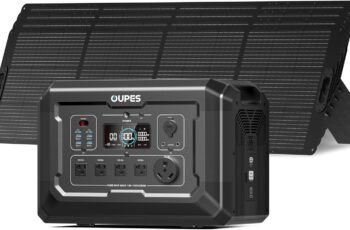
OUPES Mega 1 Portable Power Station (1024Wh LiFePO4)


If you want a CPAP-ready station that fast-charges, runs quietly, and can grow with your needs, the OUPES Mega 1 stands out. We get 1024Wh of LiFePO4 capacity, expandable to 5kWh with the B2 battery, plus a 2000W inverter (4500W peak) for confidence with CPAPs and essentials. It charges fast—0–80% in about 50 minutes at 1400W—or we can slow-charge at 700W to extend lifespan. Inputs support solar, AC, car, or hybrid up to 2200W, with 800W MPPT and 20ms UPS. Ports are plentiful. At 27.8 pounds, ~58 dB, and app-controlled, it’s quiet, compact, safe, and backed by a 5-year warranty.
Best For: Campers, RVers, and home backup users who need a quiet, fast-charging, CPAP-ready power station that can expand from 1kWh to 5kWh and deliver strong 2000W output with UPS support.
Pros:
- 1024Wh LiFePO4 battery with 2000W continuous/4500W peak output; expandable to 5kWh with B2 battery
- Fast charging: 0–80% in ~50 minutes at 1400W; supports up to 2200W hybrid AC+solar with 800W MPPT
- Quiet (~58 dB), compact (27.8 lb), and app-controlled via WiFi/Bluetooth; 5-year warranty
Cons:
- Solar panels not included; extra cost for expansion battery
- 20ms UPS transfer may not suit ultra-sensitive equipment
- Heavier than smaller-capacity units; 2000W inverter may be limiting for very high-draw tools or appliances
PROGENY 300W Portable Power Station
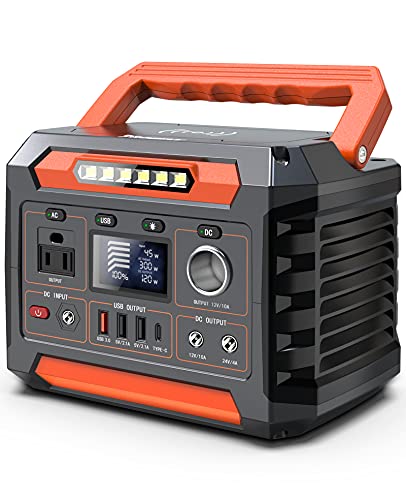
Prioritize a regulated 12V output? The PROGENY 300W Portable Power Station delivers exactly that, keeping CPAPs and other 12V devices stable through the night. Its 299Wh pack, pure sine 110V AC (300W/600W peak), and pass-through charging make it a flexible travel backup. We like the MPPT solar input for faster, smarter recharging and the quiet operation that won’t distract sleep.
At just 7 lb, it’s easy to pack. Expect roughly 2–4 CPAP nights using a DC converter, plus USB-C/QC3.0 fast charging for phones and laptops. Safety’s covered with a robust BMS. Recharges via wall (6–7 hrs), car (7–8 hrs), or 120W solar (~6–7 hrs).
Best For: Campers, CPAP users, and travelers who need a lightweight, quiet power station with regulated 12V output, pass-through charging, and MPPT solar recharging.
Pros:
- Regulated 12V output keeps CPAPs and other 12V devices stable; pure sine 110V AC (300W/600W peak) for sensitive electronics
- MPPT solar charging plus pass-through on all ports; multiple outputs including USB-C and QC 3.0 fast charging
- Lightweight 7 lb design with quiet operation and robust BMS protections
Cons:
- 299Wh capacity may be limiting for high-draw devices or multi-day off-grid use without solar
- Single AC outlet and 120W max car port may constrain simultaneous high-power usage
- Solar panel not included; full recharge times (6–8 hrs) may feel lengthy without high sun or wall power
EnginStar Portable Power Station 300W (296Wh)

For travelers who value quiet, pure sine wave power for overnight CPAP use, the EnginStar Portable Power Station 300W (296Wh) delivers dependable performance in a compact 6.5–7.9 lb package. We get two 110V AC outlets and eight total ports, including USB-C 18W and 5V/3.1A USB, plus an LCD and flashlight. Its 296Wh battery, 300W output, and ETL-certified BMS protect sensitive gear and support 1000+ cycles.
Charging’s flexible: wall, 12V car, or 12–25V solar (controller built in). Expect about seven hours to refill at 65W. It’ll run CPAPs efficiently, though the 300W ceiling and occasional fan noise under load remain limits. Warranty: 12 months.
Best For: Travelers and campers who need quiet, pure sine wave portable power for overnight CPAP use and charging laptops, phones, and cameras in a compact, lightweight unit.
Pros:
- Pure sine wave AC (2 outlets) protects sensitive devices like CPAPs and laptops
- Flexible charging: wall, 12V car, or 12–25V solar with built-in controller
- Lightweight 296Wh unit with 8 total ports, USB-C 18W, clear LCD, and safety-certified BMS
Cons:
- 300W output ceiling limits high-draw appliances and tools
- Recharges relatively slowly (≈7 hours at max 65W input)
- Cooling fan can be audible under heavier loads
Jackery Portable Power Station Explorer 300 (293Wh)

Need a lightweight CPAP companion that still handles a night’s sleep? We like the Jackery Explorer 300. Its 293Wh lithium pack, pure sine wave AC, and 300W output (500W surge) deliver clean, quiet power with no fumes or maintenance. At 7.1 pounds, it’s easy to pack. Ports cover two AC outlets, 60W USB‑C PD (in/out), Quick Charge 3.0, USB‑A, and a 12V car port—power up to six devices at once.
Recharge fast: 0–80% in about 2 hours using wall plus 60W USB‑C. SolarSaga 100 compatibility with MPPT boosts off‑grid charging. Pass‑through keeps CPAP running while recharging. Note: not for high‑draw appliances.
Best For: Campers, road‑trippers, and CPAP users who need a lightweight, quiet, and reliable portable power source for overnight and emergency use.
Pros:
- Compact 7.1 lb build with 293Wh capacity and pure sine wave AC (300W output, 500W surge) for clean, device‑safe power
- Versatile ports (2 AC, 60W USB‑C PD in/out, QC 3.0, USB‑A, 12V car) to run/charge up to six devices simultaneously
- Fast recharge to 80% in ~2 hours via wall + 60W USB‑C; MPPT supports efficient solar with SolarSaga 100; pass‑through charging
Cons:
- Not suitable for high‑draw appliances (e.g., induction cooktops, blenders, space heaters)
- 293Wh may be limited for extended off‑grid stays or powering larger devices for long durations
- Solar panel sold separately; fastest recharge requires using wall plus USB‑C concurrently
DARAN Portable Power Station 600W (288Wh LiFePO4)

Looking to keep a CPAP running through the night without hauling a brick? We like the DARAN Portable Power Station 600W for its 288Wh LiFePO4 pack, 3500+ cycles, and 8.3 lb carry. It’s CPAP-friendly within 600W (1200W surge) and offers two AC outlets, a 60W USB‑C PD, two 18W USB‑A, and a DC port. Expect about 80% recharge in 2 hours via AC, with optional solar or car input. The LED light with SOS helps during outages.
Safety is solid: BMS with 12 protections, auto AC shutoff at 10% (USB/DC stay on), and a clear status display. Box includes AC cable and manual.
Best For: Campers, RVers, and emergency-preppers who need a lightweight, long‑life power station to run CPAPs and small appliances overnight within a 600W limit.
Pros:
- Long-lasting LiFePO4 battery (288Wh, 3500+ cycles) in a portable 8.3 lb form
- Versatile ports: 2 AC outlets, 60W USB‑C PD, 2×18W USB‑A, and DC; can recharge to 80% in ~2 hours via AC
- Safety-focused with 12-protection BMS, clear status display, LED light with SOS
Cons:
- 600W continuous output limits use with higher-draw appliances; 1200W is surge only
- Solar panel and car charging cable not included
- AC ports auto‑shut off at 10% battery, which may interrupt AC-only devices near depletion
Factors to Consider When Choosing Portable Power Stations for CPAP
As we choose a power station for CPAP, we’ll match battery capacity to our nightly runtime and ensure the output wattage meets peak and continuous needs. We’ll check for native CPAP DC compatibility to avoid inverter losses, plus pass-through or UPS support for seamless overnight power. We’ll also prioritize flexible charging methods—AC, car, and solar—to keep us powered wherever we sleep.
Battery Capacity Needs
How much battery do we really need for a CPAP on the go? Let’s start with a quick math check: multiply your CPAP’s continuous draw (typically 30–60W) by hours slept. For 8 hours, that’s 240–480Wh per night. Add a safety margin for inefficiencies and elevation—about 20–30%—especially if we’ll be away from charging.
As a rule of thumb, 300–600Wh covers roughly 1–2 nights. Stepping up to 900–1200Wh extends to multiple nights, depending on your machine’s wattage and settings. If we use heated humidification or a heated hose, expect higher draw and shorter runtime—plan capacity accordingly.
For frequent trips, we favor LiFePO4 packs. They handle partial nightly discharges better and deliver far more cycles, preserving usable capacity over years of CPAP use.
Output Wattage Requirements
Why does output wattage matter? It determines whether our power station can start and run a CPAP reliably. Most CPAPs draw 30–120W continuously, so we should choose at least 150W continuous output to handle startup surges and keep voltage stable. We also want generous surge capacity—ideally 2–3x the continuous load—so brief peaks don’t trip the inverter.
Humidifiers can raise total draw significantly. If we keep them on, we must confirm the station’s continuous rating covers the combined CPAP plus humidifier load. Planning to charge a phone or run a small fan? Add those watts to the total and make sure we remain under the station’s continuous limit.
Finally, a pure sine wave inverter is preferable for stable, appliance-friendly power and fewer shutdowns.
CPAP DC Compatibility
Needless to say, CPAP DC compatibility can make or break reliable overnight use. We should prioritize power stations that provide a stable 12V or regulated DC output, because voltage dips can trip or shut down many CPAPs. Models that advertise regulated 12V ports—or dedicated DC and USB-C outputs—deliver consistent voltage that keeps therapy uninterrupted.
When we must use AC, a true sine wave inverter with enough continuous power (typically 300W–600W) supports the CPAP plus a heated humidifier or small accessories. Regulated DC is still preferable for efficiency and lower conversion losses.
We also value robust BMS protections to guard against over/under-voltage and short circuits. For off-grid nights, MPPT solar charging maximizes recharge efficiency so we can sustain CPAP operation while topping up the battery.
Pass-through and UPS
Curiously, pass-through charging and true UPS behavior can make the difference between a restful night and a 3 a.m. wake-up. With pass-through, we can run the CPAP while the power station recharges, so sleep isn’t interrupted if grid power returns, solar is topping off, or there’s an outage mid-night.
A UPS-grade transfer—typically 10–20 ms—keeps airflow steady through blinks and brownouts, preventing a shutdown or reboot. We also look for a higher surge rating than continuous output; a unit rated, say, 1200W surge can handle brief startup spikes without tripping. Real-time power indicators help us confirm stable draw, while automatic ramping smooths transitions so sensitive CPAP sensors aren’t rattled by dips or spikes. Finally, we verify the CPAP’s startup wattage fits within both continuous and surge limits.
Charging Methods Flexibility
How do we keep a CPAP running when outlets aren’t guaranteed? We choose a power station with flexible charging. Multiple inputs—AC at home, solar in the field, and 12V car—keep us topped up through outages and travel. Fast recharging (think 0–80% in about 50 minutes) cuts downtime between sleep sessions and powers phones or humidifiers without long waits.
We also verify the inverter’s sustained output exceeds our CPAP’s continuous draw, plus a cushion for extras, and includes enough surge capacity for startup spikes. For solar, MPPT controllers recharge more efficiently than PWM, especially under clouds; confirm the panel wattage limit so daytime sun restores what we used overnight. Finally, pass-through charging lets us run the CPAP while the station refuels, boosting reliability during extended needs.
Conclusion
As we zip the last zipper on our travel bag, these five power stations feel like loyal co-pilots—quiet engines humming beneath a starry sky. With LiFePO4 stamina, clean sine-wave power, and steady DC outputs, they cradle our CPAP through the night like a lighthouse guiding breath to shore. Add pass-through charging, MPPT solar, and sturdy BMS, and we’re road-ready. Choose the right capacity, pack light, and sleep easy—adventure by day, steady, whisper-quiet rest by night.