Most campers don’t realize the lightest LiFePO4 stations now weigh under 8 pounds yet still support pass-through charging and USB-C PD. We’ve tested kits from ultralight weekend packs to campsite workhorses and found big differences in recharge speed, inverter noise, and solar compatibility. We’ll show which models stay quiet at night, power small appliances safely, and top up fast on AC—plus a few picks that can back up your home in a pinch.
Key Takeaways
- LiFePO4 batteries dominate for safety and lifespan, offering 3,000–4,000+ cycles and 10-year longevity ideal for frequent camping use.
- Mid-range 1,000Wh units (e.g., Jackery Explorer 1000 v2) balance 1,500W output, fast 1.7-hour charging, and versatile ports for most camp gear.
- High-capacity options (EcoFlow Delta 2) deliver 1,800W AC, expand to 3kWh, and recharge 0–80% in 50 minutes for power-heavy camps.
- Lightweight picks (Jackery 240 v2, ~7.7 lb) provide 300W AC, 100W USB-C PD, and rapid wall/solar charging for minimalist setups.
- Quiet operation with pass-through charging and regulated 12V ports (e.g., VTOMAN Jump 600X) supports sensitive electronics and all-day device use.
Bailibatt Portable Power Station 300W (257Wh)


If you want an ultralight power station that still handles real campsite needs, Bailibatt’s 300W (257Wh) HP200D stands out for its 4.6 lb carry weight, dual 120V pure sine AC outlets, and enough capacity to run laptops, cameras, and small appliances under 300W. We like that it supports up to eight devices at once, with USB-A, USB-C, and 12V/120W DC outputs. The Grade-A lithium battery offers 1500+ cycles, managed by a solid BMS with overload and short-circuit protection. The clear LCD helps us track status. Long-press to toggle AC. It’s quiet, compact, and reliable—great value, though solar and car cables aren’t included.
Best For: Campers, travelers, and emergency preppers who want an ultralight, 300W-capable power station to run laptops, phones, cameras, and other small devices with pure sine AC and multiple DC/USB ports.
Pros:
- Lightweight and compact (about 4.6 lb) with dual 120V pure sine wave AC outlets and multiple USB/12V ports; can power up to 8 devices simultaneously.
- 257Wh Grade-A lithium battery with 1500+ cycles, robust BMS, overload and short-circuit protection, and clear LCD status display.
- Quiet operation and good value for portable backup, camping, RV, and travel use under 300W loads.
Cons:
- Limited to 300W output and 257Wh capacity; not suitable for high-draw appliances.
- Car charging cable and solar charging accessories are not included.
- Conflicting listed weight (3.6–4.6 lb) may cause expectations mismatch.
Jackery Explorer 1000 v2 Portable Power Station

Looking for fast, quiet power in a truly portable package? The Jackery Explorer 1000 v2 delivers 1,500W AC (3,000W surge) from a 1,070Wh LiFePO4 battery, yet weighs just 23.8 lbs with a foldable handle. We get three pure sine AC outlets, two USB‑C (100W PD), one USB‑A, and a 12V car port—enough for AC units, fridges, and electric pots.
Charging is flexible: default 1.7 hours to full for longevity, or 1‑hour emergency charging via the app. ChargeShield 2.0 enhances safety, and a 30 dB quiet mode suits nights. Expect 4,000 cycles to 70% capacity and a 10‑year lifespan. Note: solar panel sold separately and Jackery‑only compatible.
Best For: Campers, RVers, and emergency-prep users who need fast-charging, quiet, portable power with enough AC output to run appliances like fridges or small AC units.
Pros:
- 1,500W AC (3,000W surge) with three pure sine wave outlets and 100W USB‑C PD for versatile device and appliance support
- Fast charging options: 1.7-hour standard full charge or 1-hour emergency boost via the Jackery app; quiet 30 dB mode
- Long-life LiFePO4 battery rated for 4,000 cycles to 70% and a 10-year lifespan at just 23.8 lbs
Cons:
- Solar panel not included and solar charging is compatible only with Jackery panels
- App requires account management and adds complexity for unlocking some features (e.g., emergency charging)
- Smaller display and premium price may not suit budget-focused buyers seeking simpler interfaces
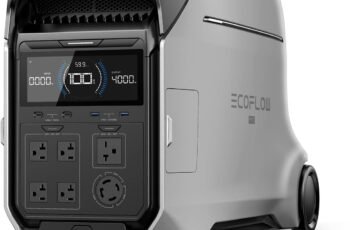
EF ECOFLOW DELTA 2 Portable Power Station

Fast recharge matters most when we’re hopping between trailheads and campsites, and the EcoFlow DELTA 2 nails it with a blazing 0–80% in 50 minutes and 0–100% in 80. Its 1024Wh LiFePO4 battery (3000+ cycles) and 1800W AC output power 90% of appliances—fans, lights, mini-fridges, even small tools. At 27 pounds, it’s portable yet substantial, with 15 outlets including 100W USB-C.
We love the 500W solar input for quiet, fume-free charging and the expandable capacity to 3kWh for longer trips or outages. The BMS and solid build inspire confidence. In the box: power station, AC cable, manual, and 5-year customer service.
Best For: Campers, RVers, and homeowners who need fast-recharging, portable backup power with expandable capacity and solar compatibility for off-grid or outage use.
Pros:
- Ultra-fast AC charging (0–80% in 50 minutes; 0–100% in 80)
- Robust 1024Wh LiFePO4 battery with 3000+ cycles and 1800W AC output to power 90% of appliances
- 500W solar input and expandable capacity up to 3kWh for extended trips/outages
Cons:
- 27-pound weight may be heavy for frequent carry or lightweight travel
- Higher upfront cost compared to smaller power stations
- Some users note fan noise/behavior and may need longer accessory cables for certain setups
Jackery HomePower 3600 Plus Portable Power Station with Solar Panels

Power-hungry campers who still want plug-and-play simplicity will appreciate the Jackery HomePower 3600 Plus, a 3,600W portable station that can surge to 7,200W in parallel and expand from 3,584Wh up to a home-backup-sized 21kWh per unit. We like that it includes two 200W solar panels and AC charging, plus hybrid AC+DC recharging from 0–100% in about two hours. The high-temp ceramic membrane cells resist thermal runaway, promise 6,000 cycles, and work down to -4 °F. Despite 77.2 lbs, wheels and a telescopic handle keep it mobile. It powers pumps, heaters, even dryers, and pairs easily with an MTS for home backup.
Best For: Power-hungry homeowners and campers who want plug-and-play whole-home-capable backup with fast hybrid charging and expandable capacity.
Pros:
- 3600W output (7200W in parallel) with dual 120/240V support; powers heavy appliances like pumps, heaters, and dryers
- Fast recharging: hybrid AC+DC 0–100% in ~2 hours; includes 2x200W solar panels and AC cable
- Durable, safe ceramic membrane cells rated for 6,000 cycles and -4 °F operation; portable design with wheels and telescopic handle
Cons:
- Heavy at 77.2 lbs despite wheels; still cumbersome for frequent lifting
- App range/connection issues reported by some users
- Full home-backup capacity requires expansion batteries or multiple units, increasing cost and complexity
VTOMAN Jump 600X Portable Power Station (299Wh, 600W)

Compact yet expandable, the VTOMAN Jump 600X hits a sweet spot for campers who want a lightweight LiFePO4 power station with serious safety and room to grow. We get 299Wh on board and can scale to 939Wh with VTOMAN’s extra battery. Its 600W AC output (1,200W surge) handles essentials, while regulated 12V ports keep CPAPs and fridges happy. Charge and power up to nine devices at once, thanks to pass-through charging, three USB-A, and a 60W USB-C PD for laptops. At about 13.2 lb, it’s easy to pack. Supersafe LIFEBMS adds robust protections. Included cables and a 2-year warranty seal it.
Best For: Campers, RVers, and emergency-prep users who want a lightweight LiFePO4 power station with strong safety features, regulated 12V outputs, and optional expansion for longer trips.
Pros:
- LiFePO4 battery with up to 3,000 cycles and LIFEBMS protections for long-term safety and durability
- 600W AC (1,200W surge) plus regulated 12V ports and 60W USB-C PD; can power up to 9 devices with pass-through charging
- Expandable from 299Wh to 939Wh with an extra battery for multi-day outings
Cons:
- 60W USB-C PD may be underpowered for high-performance laptops
- 299Wh base capacity limits runtime for larger appliances without the extra battery
- Batteries are not user-replaceable; extra battery sold separately
EF ECOFLOW DELTA 2 Portable Power Station
With a 1,024Wh LiFePO4 battery and 1,800W AC output, the EcoFlow DELTA 2 suits campers who want rapid recharging and dependable power without a gas generator. We love its 0–80% charge in 50 minutes (0–100% in 80) via AC, plus up to 500W solar input for quiet, fume-free top-ups. At 27 pounds, it’s portable yet substantial, delivering power to 15 outlets, including 100W USB-C. The LFP pack is rated for 3,000+ cycles with a smart BMS. It powers 90% of appliances—fans, lights, mini-fridges, tools—and scales to 3kWh with extra batteries. In the box: unit, AC cable, manual, five-year customer service.
Best For: Campers, RVers, and homeowners who want fast-recharging, expandable, gas-free backup power that can run most household devices and charge via solar.
Pros:
- Extremely fast AC recharge (0–80% in 50 minutes; 0–100% in 80) with 500W solar input for quiet, fume-free charging
- Strong 1800W AC output (2700W surge) across 15 outlets, including 100W USB-C; powers up to 90% of appliances
- Long-life LiFePO4 battery (3000+ cycles) with smart BMS; expandable from 1kWh to 3kWh
Cons:
- At 27 pounds, it’s portable but still hefty for frequent hand-carry
- Solar and expansion batteries add cost; some users note price sensitivity
- Fans may run during heavy charge/discharge, and cable lengths (e.g., XT60) can require extensions
Jackery Portable Power Station Explorer 300 (293Wh)

Looking for a lightweight, quiet camp companion that still handles real gear? We like the Jackery Explorer 300 for its 293Wh battery, clean 300W pure sine output (500W surge), and just 7.1-pound carry. It runs up to six devices via two AC outlets, 60W USB‑C PD in/out, USB‑A, QC 3.0, and a 12V car port—great for laptops, drones, cameras, routers, fans, lights, and a small TV. Recharge fast: to 80% in about two hours using wall plus 60W USB‑C, or top up via car or SolarSaga 100 with MPPT. It’s quiet, fume-free, pass-through capable, and reliably protects electronics. Accessories included; solar panel sold separately. Not for high-draw appliances.
Best For: Campers, road-trippers, and emergency preppers who want a lightweight, quiet, and reliable 293Wh power station for laptops, cameras, fans, routers, and small TVs without dealing with fumes or maintenance.
Pros:
- Compact 7.1 lb design with clean 300W pure sine output (500W surge) and up to six devices at once
- Fast recharge to 80% in ~2 hours via wall + 60W USB-C PD; supports car and SolarSaga 100 with MPPT
- Quiet, fume-free operation with pass-through charging and good device protection
Cons:
- Not suitable for high-draw appliances (e.g., induction cooktops, blenders)
- Solar panel sold separately; adds cost for off-grid charging
- Limited capacity (293Wh) and 300W max output may constrain longer or heavier loads
Jackery Explorer 240 v2 Portable Power Station (256Wh LiFePO4)

Jackery’s Explorer 240 v2 stands out for campers who want long-lasting LiFePO4 reliability in a truly portable package. We love its 256Wh LiFePO4 battery rated for 3,000 cycles and 10 years, 300W AC output (600W peak), and 100W USB‑C PD for fast device charging. At 7.7 lbs and 9.1 x 6 x 6.6 inches, it’s easy to pack. It recharges fast: about 2 hours via wall, 3 hours with 100W solar, and as quick as 1 hour with app-enabled fast charging. Safety is solid: UL certification, shock/fire protection, and a 20 ms UPS. Extras include app control, battery-saver modes, camping light, and SOS. Five-year warranty.
Best For: Campers, travelers, and outage-preppers who want a lightweight, long-life LiFePO4 power station with fast charging, app control, and enough output for small appliances and multiple devices.
Pros:
- Long-life LiFePO4 battery (256Wh, ~3,000 cycles/10 years) with 5-year warranty
- Fast recharge options: ~2 hrs wall, ~3 hrs 100W solar, as quick as ~1 hr via app-enabled fast charging
- 300W AC (600W peak) plus 100W USB-C PD; app control, UPS ~20 ms, built-in light/SOS
Cons:
- 300W AC limit won’t run higher-wattage appliances (e.g., kettles, hair dryers)
- Some solar panels require a DC8020-to-USB-C adapter (not included)
- Limited capacity (256Wh) for extended off-grid use without frequent recharging
MARBERO Portable Power Station 88Wh (Solar-Ready)

Ultra-light at just 2.29 lb and small enough to slip in a daypack, the MARBERO M82 (88Wh, 80W/120W peak) suits campers who want a true grab-and-go power puck for phones, tablets, and small gadgets. We like its eight outputs—AC, DC, USB, and USB-C PD—plus a car socket, so we can top off a phone, run a camera, or even sip power for a small car fridge. It charges 0–80% in about two hours from the wall and supports 30W/60W solar. The built-in flashlight (3 levels + SOS) lasts up to 68 hours. BMS protections, cooling vents, and an ergonomic handle inspire confidence.
Best For: Ultralight campers, day trippers, and emergency prep users who need a compact, solar-ready power station to charge phones, tablets, cameras, and small gadgets on the go.
Pros:
- Lightweight and compact (2.29 lb; 6.5 x 4.6 x 3.1 in) with ergonomic handle for true grab-and-go.
- Versatile I/O: 8 outputs including AC, DC, USB, USB-C PD, and a car socket; can charge multiple devices simultaneously.
- Fast wall charging to 80% in ~2 hours; solar-ready with 30W/60W panels; built-in flashlight with up to 68-hour runtime and SOS.
Cons:
- Limited power (80W continuous, 120W peak) and 88Wh capacity restrict use to small devices and brief appliance runs.
- Some users report noise when DC current is in use and occasional long-term reliability concerns.
- Full charge may be slower than expected and not ideal for high-draw devices or extended off-grid use without solar.
Portable Solar Generator Power Station with 40W Solar Panel (200W Peak, 100W Rated, 146Wh)
Need a grab-and-go solar setup for basics at camp? This 146Wh portable power station with a 40W Apowking panel hits a sweet spot for weight and utility. At just 3.3 lb, it slips into a backpack yet delivers 100W continuous (200W peak) through two 110V AC outlets. We like the seven total outputs—USB-A, QC3.0, USB-C, and a 12V DC—plus a dual LED flashlight with SOS.
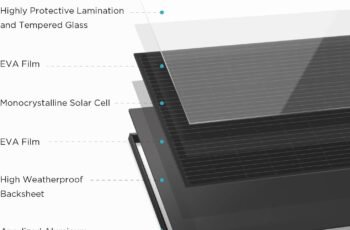
The 40W monocrystalline panel (20.5% efficiency) sips power even in dim light and includes 10 DC connectors for broad compatibility. It’s quiet, easy to use, and great for phones, tablets, laptops, cameras, and drones—just avoid appliances over 100W.
Best For: Campers, emergency preppers, and travelers who need a lightweight, backpack-friendly power source for charging phones, tablets, laptops, cameras, and drones under 100W.
Pros:
- Ultralight 3.3 lb design with 146Wh capacity and 7 outputs (2x AC, USB-A, QC3.0, USB-C, 12V DC) for versatile charging
- Included 40W monocrystalline panel (20.5% efficiency) with 10 DC connectors and good low-light performance
- Quiet operation, built-in dual LED flashlight (flashlight/strobe/SOS), and BMS safety with cooling vents
Cons:
- Limited to 100W continuous (200W peak) so it can’t run many appliances or high-draw devices
- 40W panel provides relatively slow recharging, especially in poor sun
- Some users report real-time battery display fluctuations and potential compatibility limits with certain 110V devices
Factors to Consider When Choosing Portable Power Stations for Camping
Before we pick a model, we should match power output to our gear and check battery capacity for the hours we actually need. We’ll weigh the pros and cons of battery chemistry (LiFePO4 vs. Li-ion), then factor in weight and size for packability. Finally, let’s confirm the port mix—AC, USB-A/C, and DC—fits our charging lineup.
Power Output Needs
How much power do our camping essentials actually draw, and for how long? Let’s list every device we’ll plug in and note its running wattage. Our power station’s continuous output must meet or exceed the total running load. For example, a 600W continuous unit can’t reliably run a 700W kettle, even briefly. We also need headroom for surge demands: appliances with compressors or motors (air pumps, mini fridges) may spike to 1,000–1,800W, so check the station’s peak rating.
Next, match ports to our kit. If we’ll power a CPAP and laptop while fast‑charging phones, we need adequate AC sockets, high‑wattage USB‑C PD, and DC car ports—without exceeding total wattage. Finally, if we’ll recharge from solar or car while using gear, confirm pass‑through charging support.
Battery Capacity
With our wattage needs in hand, the next step is right-sizing battery capacity—the watt-hours (Wh) that determine runtime. Capacity tells us how long a station can power a given load: higher Wh equals longer runtimes for the same devices. For camping, portable models span roughly 88Wh to 1,000+Wh, with common midrange options around 257Wh and 299–1,070Wh.
We should match capacity to our total expected load and desired backup duration. If we want to run multiple devices (AC, USB, DC) for hours, a larger pack reduces recharge stops and supports simultaneous use. For light kits—phones, headlamps, a camera—sub‑300Wh can suffice. For coolers, laptops, lights, and intermittent cooking, 500–1,000Wh offers practical headroom. Right-sizing prevents overspending and prevents inconvenient shortfalls on multi-day trips.
Battery Chemistry
Why does battery chemistry matter so much on a camping trip? It shapes safety, longevity, and how confidently we power gear off-grid. Most portable stations use either Li-ion (NMC/INR) or LiFePO4. LiFePO4 stands out for stability: it’s far less prone to thermal runaway, which gives us peace of mind around tents, kids, and hot days.
Cycle life is another divider. LiFePO4 typically delivers 2,000–3,000+ cycles to 80% capacity, while many NMC packs offer roughly 500–1,500. If we camp often, LiFePO4 usually pays off with longer service life.
NMC’s advantage is energy density, letting brands pack more watt-hours into a smaller form. Regardless of chemistry, a robust battery management system is nonnegotiable—monitoring voltage, current, and temperature to protect cells during charging and discharging.
Weight and Size
When we’re packing for camp, weight and size decide what actually comes along and how easily we move it. Smaller stations like the Explorer 300 sit around 7.1 lbs, while bigger workhorses such as the Delta 2 reach roughly 27 lbs—enough spread to change how we pack, hike, and set up. Dimensions typically fall between 9 and 16 inches in length, so footprint matters if we’re squeezing gear into a trunk or a small tent vestibule.
Weight correlates with capability. Lighter units trade capacity and continuous output—think 300W—for portability, suiting lights, phones, and a camera. Higher-capacity packs add heft but unlock longer runtimes and higher loads—up to 1800W—powering coolers or induction cooktops. Handles and, on larger models, wheels make frequent moves and campsite repositioning far easier.
Port Types Available
How many and what kind of ports we get determines what we can actually power at camp. We should check for 110V pure sine wave AC outlets—ideally 2 to 4—so laptops, cameras, and small appliances run cleanly. DC ports (12V/120W) are great for coolers and inflators, while a mix of USB-A and multiple USB-C PD lets us fast‑charge phones, tablets, headlamps, and drones without extra bricks.
We also need to match port count to our group size. More USB-C PD and a car port mean more devices powered at once. Pay attention to output ratings: continuous watts (e.g., 300W, 600W, 1800W) dictate what we can run, while higher surge wattage handles device startups. Finally, consider models that offer expansion-friendly layouts for broader port coverage.
Recharging Options
Out on the road or deep in the woods, recharging flexibility makes or breaks a power station’s usefulness. We look for units that accept AC wall charging, 12V car input, and solar. AC is fastest—many hit 0–80% or even 0–100% in about 50–80 minutes—so it’s ideal before we leave or at camps with hookups. Solar is slower and weather-dependent; real speed hinges on panel wattage and an efficient MPPT controller, plus the station’s solar input ceiling (e.g., 500W max on some models).
Pass-through charging helps us keep gear powered while the station refuels, though it can lengthen charge times. If we add expansion batteries for longer stays, we plan for extra charging time and ensure compatibility with the brand’s dedicated packs.
Cycle Life & Warranty
Even before we compare ports and outputs, we weigh cycle life and warranty because they determine long‑term value on the road. Cycle life tells us how many full charge–discharge rounds a pack can handle before noticeable capacity loss. LiFePO4 units often deliver 3,000+ cycles, while other Li‑ion packs typically land around 500–2,000. For frequent camping, we aim for 3,000 cycles or more.
We also look for honest capacity retention claims—many list 70–80% after several thousand cycles—so we can gauge usable energy years out. Warranty matters just as much: strong coverage runs 2–5 years and protects us if capacity fades early or components fail. Finally, we factor in real‑world stressors—temperature, depth of discharge, and charging rate—which can shorten effective cycle life.
Safety Features
Why trust a power station miles from the trailhead if it can’t protect itself and your gear? We should prioritize models with a robust battery management system (BMS) that continuously monitors voltage, current, and temperature. That’s what stops overloads, shorts, and thermal runaway before they become problems.
We also look for layered protections: overload and short-circuit protection, plus over‑charge and over‑discharge safeguards to preserve battery health. High‑temperature cutoffs are essential when camping in summer heat or charging in a tent.
For our devices, pure sine wave AC outlets matter. They keep sensitive electronics—like laptops, drones, and CPAPs—safe from irregular power.
If we need pass‑through charging, we verify the unit manages heat during simultaneous charging and use. Clear LCDs or app alerts for capacity and faults keep us informed.
Conclusion
As we zip tents and watch embers glow, the right power station keeps our campsite humming—phones topped up, lanterns warm, cameras ready for sunrise. From featherweight LiFePO4 companions to brawnier 1,000+Wh workhorses, we’ve got quiet, fast-charging options that won’t weigh us down. Choose the capacity, ports, and solar compatibility that match your trips, and we’ll trade flickering battery anxiety for steady, whisper-quiet power—so the night sky, not dead devices, is all we think about.