Nearly 30% of CPAP users travel at least twice a year, yet many still gamble on hotel outlets and noisy generators. We’ve narrowed the field to five portable power stations that balance quiet operation, reliable runtimes, and TSA-friendly designs. From ultra-compact LiFePO4 units to expandable systems for longer outages, we’ll cover what actually matters—true sine wave output, overnight capacity, and recharge speed. Let’s see which models keep therapy uninterrupted—and which to skip.
Key Takeaways
- Anker SOLIX C300: ultra-quiet 25dB, TSA-friendly 288Wh LiFePO4, 300W/600W surge, 80% in ~50 minutes, 3 AC and 140W USB-C.
- DARAN 600W (288Wh): budget LiFePO4 with 3500+ cycles, ~6–8 hours CPAP, 2 AC, 60W USB-C; note AC auto-off at 10%.
- OUPES Mega 1 (1024Wh): heavy-duty 2000W inverter, UPS, fast 0–80% in ~50 minutes, ideal for multi-night CPAP and home backup.
- EnginStar 300W (296Wh): compact 6.5 lb, true sine wave, 2 AC, DC outputs; best for short nights or minimal humidification.
- EHOM EP350 (299Wh): 350W/700W peak, NitroGo 80% in 55 minutes, dual high-watt USB-C; single AC limits simultaneous devices.
Anker Portable Power Station SOLIX C300 (288Wh, 300W)


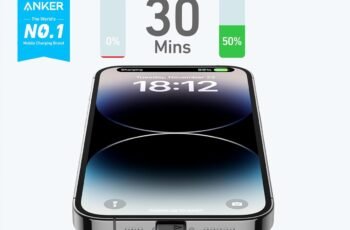
If you want a compact, ultra-quiet CPAP companion, the Anker SOLIX C300 stands out with its 25dB operation, 288Wh LiFePO4 battery, and dependable 300W output (600W surge). We like its TSA-friendly capacity for travel, plus eight ports: three AC, a 12V car socket, two USB-C (one 140W), a 15W USB-C, and a 12W USB-A. It recharges to 80% in about 50 minutes via wall power, supports 140W USB-C two-way charging, and accepts 60–100W solar. At 9.02 pounds, it’s portable yet sturdy, with 3,000+ cycles and a 5-year warranty. Expect reliable overnight CPAP runtime, quiet nights, and stress-free backups.
Best For: Travelers, campers, and CPAP users who need a compact, ultra-quiet (25dB) power station with fast recharging, versatile ports, and reliable overnight runtime.
Pros:
- 288Wh LiFePO4 battery with 3,000+ cycles, 10-year design life, and a 5-year warranty for long-term reliability
- 300W continuous (600W surge) with 8 ports, including 140W two-way USB-C fast charging and three AC outlets
- Recharges to 80% in ~50 minutes via wall power; quiet 25dB operation and only 9.02 lb for easy portability
Cons:
- Not suitable for high-wattage appliances (e.g., hair dryers, kettles, large kitchen gear)
- Solar input limited to 60–100W and not compatible with Anker PS30/PS200/PS400 panels
- Strap not included by default; app features are basic with some requested improvements
DARAN Portable Power Station 600W (288Wh LiFePO4)

Looking for an affordable LiFePO4 option that still handles a full night of CPAP? DARAN’s 600W, 288Wh unit delivers. Its LiFePO4 battery offers 3500+ cycles, a clear edge for longevity. We like the dual AC outlets (600W, 1200W surge), 60W USB‑C, two 18W USB‑A, and a DC port—enough to run a CPAP and charge phones. Expect roughly 6–8 hours on typical CPAP settings; use DC if your machine supports it to extend runtime.
It recharges to 80% in about 2 hours via AC, with solar/car options. The LED with SOS, robust BMS protections, status display, and auto-off at 10% round out a solid, budget-friendly pick.
Best For: Budget-conscious campers, RVers, and emergency-preppers who want a long-life LiFePO4 power station that can run a CPAP overnight and charge multiple devices.
Pros:
- Long-lasting LiFePO4 battery with 3500+ cycles and clear status display
- Versatile 6-port layout: 2x AC (600W, 1200W surge), 60W USB-C, 2x 18W USB-A, DC in/out
- Fast recharge to 80% in ~2 hours via AC; solar and car charging compatible
Cons:
- 288Wh capacity may provide only 6–8 hours for CPAP via AC; DC use recommended for longer runtime
- Solar panel and car charging cable not included
- Auto-off at 10% on AC may cut very low-battery runtime for certain devices
OUPES Mega 1 Portable Power Station (1024Wh LiFePO4)

Packing 1024Wh of LiFePO4 power with a true 2000W inverter, the OUPES Mega 1 suits CPAP users who want overnight confidence plus room for extras like heated humidifiers, fans, and laptops. We get four 120V AC ports (2000W continuous, 4500W peak), dual 100W USB-C, four 18W USB-A, DC5521, and a car outlet—plus a 20ms UPS to ride through outages. Fast charge hits 0–80% in ~50 minutes at 1400W, or choose 700W to prioritize longevity. It supports up to 2200W hybrid input and 800W solar MPPT. At 27.8 lb, ~58 dB, app-controlled, and expandable to 5kWh, it’s a quiet, capable CPAP workhorse with a 5-year warranty.
Best For: CPAP users, campers, and home backup seekers who want a compact, quiet 1024Wh LiFePO4 power station with true 2000W output, rapid charging, UPS continuity, and optional expansion to 5kWh.
Pros:
- True 2000W (4500W peak) inverter with 4 AC outlets plus plentiful USB-C/USB-A/DC ports for diverse devices
- Fast 0–80% charging in ~50 minutes (1400W) or longevity-friendly 700W, with up to 2200W hybrid AC+solar input and 800W MPPT
- LiFePO4 battery, 5-year warranty, app control, 27.8 lb portability, and expandable capacity to 5kWh
Cons:
- 1024Wh base capacity may be limiting for multi-day off-grid use without solar or extra battery
- Fans can reach ~58 dB, which may be noticeable in very quiet environments
- Solar panels and expansion battery are optional add-ons, increasing total cost
EnginStar Portable Power Station 300W (296Wh)

Travelers who want an affordable, CPAP-ready power bank with true 110V pure sine wave output will appreciate the EnginStar 300W (296Wh). We like its two AC outlets delivering 300W continuous power, plus eight total ports including regulated 12V/24V DC, USB-A (5V/3.1A max), and 18W USB‑C. At 9 x 5.5 x 7.5 inches and 6.5 pounds, it’s compact yet capable for a night of CPAP without a heated humidifier. Recharging’s simple via wall, 12V car, or 12–25V solar; expect about seven hours at up to 65W. Safety features include BMS-driven protections and ETL certification. Warranty is 12 months. Package includes home and car chargers.
Best For: Budget-minded travelers and CPAP users who need a compact, CPAP-ready power station with true 110V pure sine wave AC and versatile multiport outputs for camping, road trips, and emergency backup.
Pros:
- True 110V pure sine wave with two AC outlets and eight total ports, including regulated 12V/24V DC and 18W USB‑C
- Compact and portable (9 x 5.5 x 7.5 in, ~6.5 lb) with sufficient 296Wh capacity for a night of CPAP without humidifier
- Flexible recharging via wall, 12V car, or 12–25V solar; BMS protections and ETL certification for safety
Cons:
- 300W AC output limits use with higher-draw appliances and power tools
- Max input around 65W means ~7 hours to fully recharge
- USB‑C limited to 18W (no high‑power PD for fast-charging laptops)
EHOM Portable Power Station 350W (EP350)

Quiet-night CPAP users who want fast turnaround will appreciate the EHOM EP350’s NitroGo charging—80% in 55 minutes—and its pure sine wave 120V AC output. With 299Wh capacity and 350W rated (700W peak), it reliably runs most CPAPs overnight, especially with humidifier off. We like the versatile ports: 1 AC, 2 USB-A (18W each), USB-C 65W, USB-C 100W, and a 12V car port. The LCD is clear, the LED offers strong/warm/SOS, and the BMS safeguards the pack. Recharging is flexible: AC, solar up to 200W via MPPT, car, or generator. It’s 14 lb, durable, and backed by a 5‑year warranty.
Best For: Campers, CPAP users, and emergency backup seekers who want a compact 299Wh power station with fast 300W NitroGo charging and versatile AC/USB/12V outputs.
Pros:
- Rapid recharge: up to 80% in 55 minutes (100% in ~1.25 hrs) via NitroGo; solar up to 200W with MPPT
- Clean, reliable power: 120V pure sine wave AC, 350W rated/700W peak; useful port mix including 100W USB‑C
- Practical design: clear LCD, bright LED (strong/warm/SOS), 5‑year warranty, BMS protection
Cons:
- Limited capacity (299Wh) and 350W output cap mean high-draw appliances are off limits
- Only one AC outlet; USB‑A total limited to 36W
- Solar panel not included; 14 lb may be heavy for ultralight setups
Factors to Consider When Choosing Portable Power Stations for CPAP
Before we pick a unit, let’s match battery capacity to your CPAP’s power needs and confirm it uses a pure sine wave inverter. We’ll show a simple runtime estimation method so we can predict a full night’s operation with or without a heated humidifier. We’ll also cover port selection essentials—AC, DC, and USB—so you get the right outputs without carrying extra adapters.
Battery Capacity Needs
A smart starting point is battery capacity, because it directly determines how long a CPAP will run when the power’s out. For most users, we recommend at least 300Wh to cover a single night; go larger if you want multi-night resilience. If your CPAP typically draws 60–90W, a 288Wh power station yields roughly 3–4 hours, while 600–1000Wh models can bridge a full night.
We also favor LiFePO4 batteries for CPAP use. They deliver 3,000+ cycles and superior thermal stability, so the pack lasts longer and stays safer over years of nightly backups. Expect runtime to vary with your settings—humidifiers and higher pressures raise consumption. Finally, choose a unit with multiple charge/discharge ports and solid surge handling so startup doesn’t trip protection.
CPAP Power Requirements
How much power does a CPAP really need, and what does that mean for a backup? Most machines draw 30–120W, with the higher end tied to heated humidifiers and hoses. That figure sets the minimum continuous wattage your power station must deliver without tripping.
To stay safe, we target 150–300W of continuous output. That covers typical CPAP loads plus small accessories. We also look for healthy surge headroom—around 250–600W—to handle brief startup spikes or humidifier bursts.
Battery chemistry matters for reliability. LiFePO4 packs excel with long cycle life and stable performance, especially during extended outages and frequent charge-discharge cycles.
Finally, ensure clean AC delivery. Choose units that provide accurate sine wave output so CPAP motors and downstream electronics run smoothly and quietly overnight.
Pure Sine Wave
Why insist on pure sine wave output for CPAP use? Because CPAP machines—and their power supplies—expect smooth, utility-grade AC. Pure sine wave inverters deliver clean, consistent power, so we avoid electrical noise, surges, or interference that can cause beeps, motor whine, or erratic behavior. Modified sine wave (or square wave) outputs can overheat adapters, shorten component life, and trigger error codes.
We also want stable voltage and frequency. A true pure sine wave inverter maintains both, helping the CPAP run reliably during outages or overnight travel. When we compare models, we confirm the AC inverter is explicitly labeled “pure sine wave” (often “110V/120V pure sine wave”). Then we check its continuous watt rating: it should meet or exceed our CPAP’s draw plus any auxiliary devices like humidifiers or chargers.
Runtime Estimation Method
So, what’s a realistic way to predict overnight runtime for a CPAP on a power station? We start with the formula: runtime (hours) ≈ (battery Wh × inverter efficiency) / CPAP wattage. Most CPAPs draw 40–120W. Real-world inverter efficiency is usually 85–95%, so we multiply capacity by, say, 0.9. Example: a 60W CPAP on a 288Wh unit at 90% efficiency yields (288 × 0.9) / 60 ≈ 4.3 hours.
We also confirm the power station’s continuous output exceeds the CPAP’s steady draw and that it handles any brief startup surge. For multi-night trips, we add charging into the math. If solar or wall input provides 60–140W during the day, we estimate daily endurance by combining nightly consumption with daytime recharge to stay energy-neutral.
Port Selection Essentials
Before we pick capacity, we make sure the ports match CPAP needs. We start with AC quality: at least one pure sine wave outlet with a stable 60–75 Hz output so sensitive CPAP power supplies run cleanly. Next, continuous wattage matters—aim for 350–600W with 700–1200W surge to handle startup and a few small extras without tripping.
We also want flexible low‑voltage options. A USB‑C PD port delivering 60–100W can power accessories or fast‑charge devices, backed by a couple of USB‑A ports for wearables and lights. DC outputs help with 12V CPAP adapters, reducing inverter losses.
Battery chemistry supports nightly reliability. LiFePO4 with 3,000+ cycles keeps performance consistent over years of sleep therapy. These port and chemistry checks prevent compatibility surprises.
Recharging Options Speed
How quickly can we get back to a full night’s sleep after a depletion? We should look at recharge metrics like percent per hour or time to 80%. Many 2025 units hit 0–80% in about 50 minutes on AC, then slow to finish at 100% to protect battery health. That fast bulk charge matters when we’re turning around for another CPAP night.
Check combined input rates, too. Models that accept 700–1400W by pairing AC with solar can recover far faster than AC alone. For daylight topping up, solar input wattage drives results: panels in the 60–200W range are common for quicker solar refills.
Finally, prioritize pass-through charging and multi-source input. Using CPAP while the station charges cuts downtime during outages and camping transitions.
Noise and Cooling
Curious whether a power station will keep the bedroom quiet? We look for models that hover around 25 dB at 3.3 feet—roughly a whisper—so a CPAP can run without disrupting sleep. Pure sine wave inverters matter, too; they cut electrical noise and vibration, giving CPAPs smoother, steadier operation.
Cooling is just as critical. Thermo-controlled fans and smart temperature management prevent heat buildup during long nights, protecting performance. Noise often scales with load—if we plug in a CPAP plus a phone or humidifier, fans may ramp up.
Larger-capacity LiFePO4 units can still stay quiet while delivering stable 12V/24V outputs many CPAPs prefer. We check manufacturer decibel ratings, fan trigger thresholds, and real-world tests at typical CPAP wattage to confirm low-noise, consistent airflow.
Warranty and Lifespan
Ultimately, warranty and lifespan determine whether a power station stays dependable for years of CPAP nights. We should look for a 2–5 year warranty and confirm what it actually covers—battery, full unit, or both—so we know the level of support. Battery chemistry matters, too. LiFePO4 usually delivers 3,000–3,500+ cycles, offering a longer usable life than many NMC packs.
To gauge real-world longevity, we’ll check the rated depth of discharge and the manufacturer’s storage guidelines, since shallow cycling and proper storage preserve capacity. We’ll also note the design life—often around 10 years—and see if it aligns with our replacement timeline and CPAP usage frequency. Finally, firmware or app updates and accessible service support can extend functional life beyond the initial hardware, protecting our investment.
Conclusion
In the end, we’ve got choices that breathe as steadily as our CPAPs: Anker’s silent confidence, DARAN’s value, OUPES’s endurance, EnginStar’s compact calm, and EHOM’s quick-turn convenience. Match watt-hours to your night, ports to your gear, and noise to your peace. Then pack with purpose—because rest isn’t a luxury; it’s the power that powers everything else. Like a lantern in a storm, the right power station doesn’t just keep air flowing—it keeps tomorrow possible.