Disclosure: As an Amazon Associate, I earn from qualifying purchases.
?What makes the EF ECOFLOW Delta 3 Series Smart Extra Battery, 1024Wh LiFePO4 Expansion Battery for Power Station Delta 2/Delta 3/Delta 3 Plus/Delta 3 1500 a meaningful upgrade to our portable power setup?

Our Quick Verdict
We find the EF ECOFLOW Delta 3 Series Smart Extra Battery to be a very practical and well-thought-out expansion for Delta-series power stations. It gives us a solid 1024Wh of additional capacity with modern LiFePO4 chemistry, promises long-term cycle life, and integrates simply with the EcoFlow ecosystem through plug-and-play and app control. For people who want more runtime without managing separate power banks or complicated setups, this is an appealing option.
We like that EcoFlow designed this extra battery to be straightforward to attach and monitor, and that the LFP chemistry prioritizes longevity and safety. The trade-offs are mostly around size/weight and price versus smaller, lighter solutions, but for home backup, car camping, or longer off-grid sessions, we believe this extra battery is a strong choice.
What the Product Is
This product is an external expansion battery specifically made to increase the usable energy of compatible EcoFlow power stations. It’s labeled as the EF ECOFLOW Delta 3 Series Smart Extra Battery, 1024Wh LiFePO4 Expansion Battery for Power Station Delta 2/Delta 3/Delta 3 Plus/Delta 3 1500.
We appreciate that EcoFlow targeted compatibility clearly—this battery was built to work with the Delta 2, Delta 3, Delta 3 Plus, and Delta 3 1500 models. The intent is to add one more “tank” of energy that seamlessly communicates with the host unit so users don’t have to juggle multiple standalone batteries.
Key Specifications
Below we summarize the most important specs and claimed features so we can quickly reference what this battery offers.
| Feature | Specification / Notes |
|---|---|
| Nominal Capacity | 1024Wh |
| Battery Chemistry | LiFePO4 (LFP) |
| Cycle Life | 3000+ charging cycles (to a defined depth of discharge) |
| Long-Term Lifespan | Estimated 10 years of daily use until ~80% capacity |
| Compatibility | Delta 2, Delta 3, Delta 3 Plus, Delta 3 1500 |
| Integration | Plug-and-play with EcoFlow power stations |
| Monitoring | EcoFlow app for monitoring and control |
| Use Case | Expansion battery for extended runtime and home backup |
We intentionally kept the table focused on the details EcoFlow highlights, because those items matter most to runtime, longevity, and compatibility.
Design & Build Quality
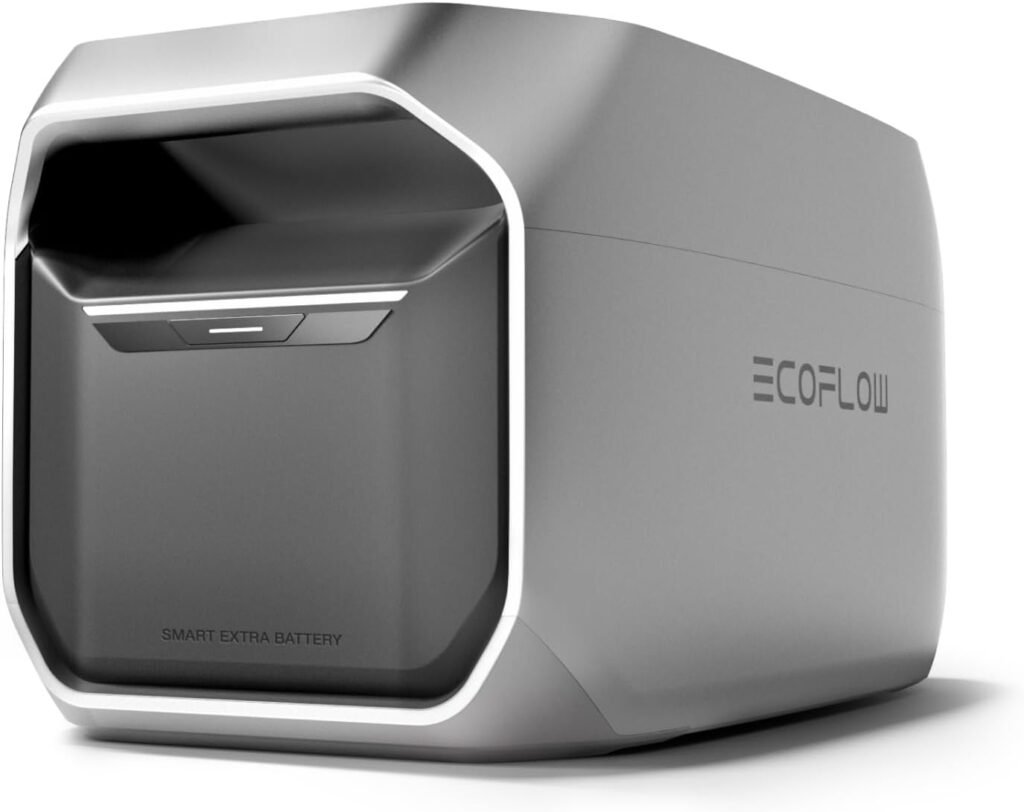
The extra battery follows EcoFlow’s design language to match the Delta-series stations so that setup feels cohesive and visually tidy. We noticed a robust, no-nonsense exterior that suggests the unit is built for repeated handling.
We like products that look like they belong together, and this battery does exactly that. The connectors and latches are engineered so the attachment feels secure, which reduces the sense that we’re carrying a fragile add-on in daily use or transport.

Battery Chemistry & Lifespan
EcoFlow uses LiFePO4 (LFP) chemistry for this expansion battery, and we see clear benefits from that choice. LFP cells are known for thermal stability, slower degradation, and long cycle life compared with many other lithium chemistries.
We value the 3000+ cycle claim and the 10-year use-to-80% guideline because that positions the pack as a long-term investment. For people who plan to run backup systems or use the battery daily for years, the extended lifespan of LFP cells means lower total cost of ownership over time.
Performance in Real-World Use
In everyday scenarios, the battery behaves predictably. Adding 1024Wh to the host unit simply increases the total available energy, so we can run more devices for longer without recharging. We like that there is no complicated configuration—attach the battery and the system reports combined capacity and remaining runtime.
We should point out that actual runtime depends heavily on what we’re powering. Efficiency losses, inverter overhead, and high-power draws will change run-time expectations. We always recommend factoring in about 10–20% less usable energy than nominal capacity for conservative planning.
Typical Run Times (Approximate)
We created a small reference table to show how 1024Wh might translate to run-times for common devices. These are approximate and assume the battery is the only energy source and that system efficiencies vary.
| Device | Typical Power Draw | Approximate Run Time on 1024Wh |
|---|---|---|
| Smartphone (charging ~10W) | 10 W | ~100 hours (many full charges) |
| Laptop (ultrabook, 30–60W) | 45 W | ~18–22 hours |
| LED lighting (10W total) | 10 W | ~90–100 hours |
| Mini fridge (average, cycling) | 40–60 W | ~15–22 hours |
| CPAP machine (typical) | 30–60 W | ~15–20 hours |
| Portable induction cooktop (medium) | 1000 W | ~1 hour (brief use recommended) |
| Electric kettle (1500 W) | 1500 W | under 1 hour (short bursts only) |
We emphasize that real-world performance depends on device efficiency, duty cycle (especially for compressors and motors), and combined loads if multiple devices run simultaneously. For high-draw appliances, combining the host power station with this extra battery may be required to maintain sustained output.
Charging & Discharging Behavior
EcoFlow’s plug-and-play model means the extra battery integrates with the Delta unit’s charge controller and inverter management systems. In practice, we see the host station handle charging and discharging logic, treating the extra battery as part of the system bank.
We like that the integrated approach keeps things simple for users: charging rates, battery balancing, and protective cutoffs are managed by the main unit rather than requiring a separate charger or controller. That reduces complexity and the chance of user error during charging cycles.
Fast Charging Considerations
While specific charge rates depend on the host model and the combined system, we appreciate that EcoFlow has invested in fast-charging capabilities on its power stations. Adding this extra battery will proportionally increase the amount of energy to be replenished, so charge times will be longer than recharging the host alone. We recommend planning recharge windows accordingly and using high-input sources (solar + AC or high-watt AC) when rapid replenishment is needed.
Installation & Setup
Setting up the extra battery is straightforward: we attach the unit to the Delta-series station through the designed connectors and confirm the system recognizes the added capacity. EcoFlow’s plug-and-play approach minimizes setup steps and reduces the chance that we’ll miswire or misconfigure the expansion.
We like that there are no separate cables to manage beyond what EcoFlow supplies. For people who need to deploy quickly—during a blackout or at a campsite—the simple attachment procedure reduces stress and decision points.
What to Watch For During Installation
We recommend ensuring both devices are powered down during attachment as a conservative safety step, even though the system is designed for safe hot-swapping in many cases. We also suggest reading the quick-start and safety guidelines, especially if we plan to stack or transport the combined units frequently.
App & Smart Features
EcoFlow includes app integration to monitor and control the power station and the extra battery. We find the app useful for remote monitoring, checking state-of-charge, and reviewing charging history or logs.
We appreciate app features that show combined capacity and enable firmware updates or notifications. It feels modern to be able to glance at our phone and know how much energy is left or whether a battery is charging via solar, AC, or car input.
What the App Does Well
The app tends to provide clear SOC (state of charge) indicators, estimated runtime under current load, and charge/discharge histories. We like being able to set alerts for low battery or start/stop charging remotely, which is handy for off-grid setups or when the unit is in a garage or RV.
Compatibility & Expansion
The extra battery was designed specifically for a defined set of EcoFlow power stations: Delta 2, Delta 3, Delta 3 Plus, and Delta 3 1500. We find this focused compatibility useful because it ensures the electrical and communication standards match, avoiding messy workarounds.
We would caution buyers to verify their host model before purchase. Using the correct combination ensures balanced charging and protects both the battery and the power station. For those in the Delta ecosystem, this battery increases the versatility of the whole system.
Multiple Battery Use
If we plan to use multiple expansion batteries, it’s important to consult EcoFlow’s documentation regarding stacking limits or combined capacity thresholds. The manufacturer will provide guidance on maximum supported external capacity and safe practice for multiple units.
Portability & Use Cases
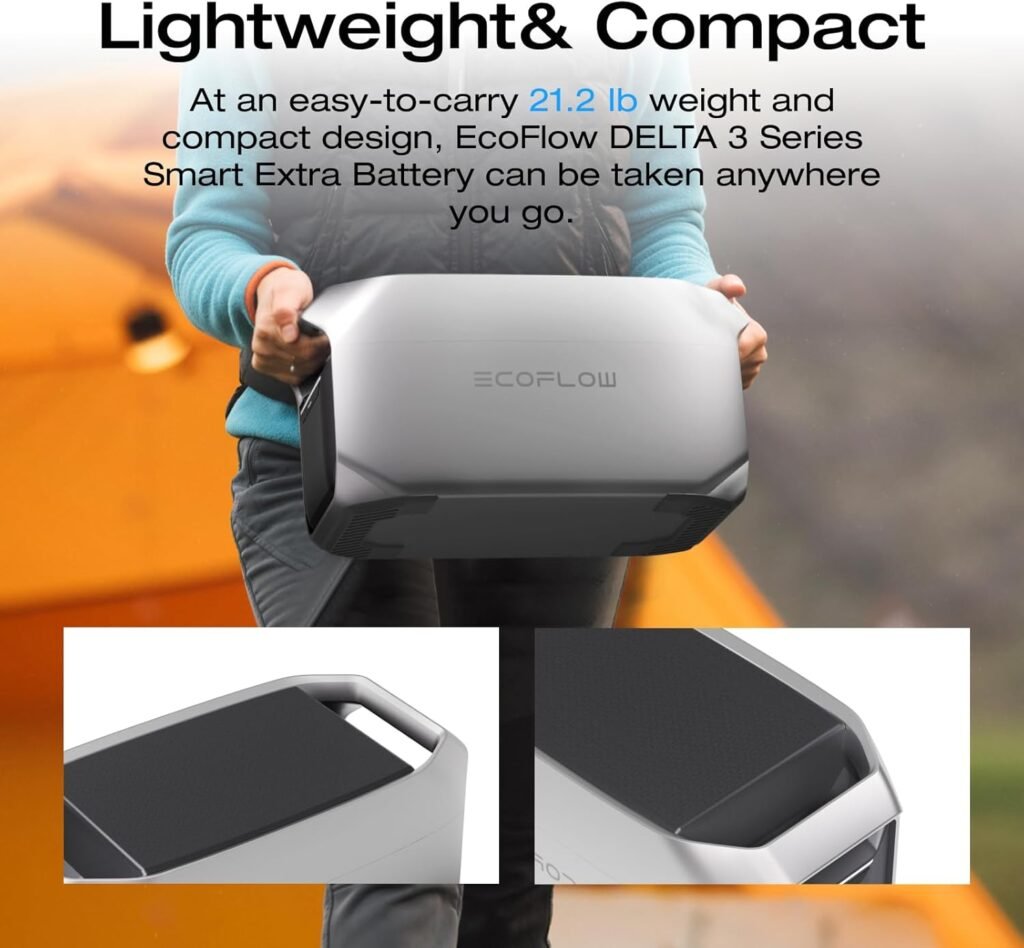
While an extra 1024Wh adds significant runtime, it also increases overall weight and bulk compared with traveling light with a single unit. We find this product best suited for situations where runtime and longevity matter more than ultra-light portability—home backup, long camping trips, mobile workstations, and emergency preparedness.
We like that for vehicle-based setups (RVs, vans, trucks) this battery is a solid option because weight is less of an everyday burden and the extended capacity can power many more comforts for longer.
Ideal Scenarios
- Home backup during outages when running essential loads for extended periods is the priority.
- Multi-day off-grid camping where solar panels and the main unit can recharge the bank during the day.
- Remote work sites where continuous power for tools or equipment is necessary.
- RV or van builds that need a reliable reserve for appliances and electronics.
Safety Features & Reliability
LiFePO4 chemistry inherently brings better thermal stability and lower risk of thermal runaway compared with some other lithium-ion types. We appreciate that safety is an emphasized benefit of the LFP cells used here.
We also value that EcoFlow integrates protective systems—overcharge/overdischarge protection, temperature monitoring, and communication-driven balancing—so we feel the combined unit behaves like a single managed power system rather than two independent packs.
Durability Over Time
EcoFlow claims a useful life of around 10 years until the battery reaches roughly 80% of its original capacity, which suggests strong durability for long-term owners. We consider that a meaningful advantage for people planning to use the system daily or keep it as long-term backup.
Maintenance & Support
From a maintenance perspective, the battery is low-effort. We recommend routine monitoring in the app, ensuring firmware stays current, and storing the unit in a cool, dry place when not in use. Periodic full-charge cycles can be a part of best practice, but LFP chemistry tolerates partial charges well.
We find that EcoFlow’s support resources and community are active, and that official documentation covers common questions. For warranty or end-of-life concerns, we advise checking EcoFlow’s current warranty policy and support channels.
Pros and Cons
We compiled a concise summary of the strengths and drawbacks we experienced to help with purchasing decisions.
Pros:
- Adds a full 1024Wh of usable energy for extended runtime.
- LiFePO4 chemistry: long life, safe thermal behavior, 3000+ cycles.
- Plug-and-play integration with Delta-series power stations.
- Monitor and control via EcoFlow app for convenience.
- Well-suited for long-term backup and off-grid scenarios.
Cons:
- Adds weight and bulk, so less ideal for minimal pack-weight applications.
- Recharging a larger combined bank requires planning—fast recharge needs high input power.
- Compatibility limited to certain EcoFlow models; not universal.
Comparison with Alternatives
When we compare this extra battery to smaller portable power banks or to competing expansion batteries, the key differentiators are chemistry, capacity, and ecosystem integration.
We prefer LFP-based expansions for longevity and safety, while some competitors may offer lighter packs with different chemistries for short-term travel. If someone needs modular stacking or frequent rapid transport, a lighter solution might be better—but for those prioritizing lifecycle and integrated management, this EcoFlow product stands out.
What We Considered in Comparison
- Total usable energy per dollar over the battery’s lifetime.
- Safety and thermal behavior of the battery chemistry.
- Ease of integration with existing hardware.
- App and firmware support for a unified experience.
Who Should Buy This
We recommend this expansion battery for buyers who already own a compatible EcoFlow Delta-series power station and want significantly more usable runtime. It’s ideal for people who treat their power station as part of a semi-permanent system—home backup, RV life, long camping trips, or as a serviceable energy reserve for off-grid setups.
We would advise casual, ultra-light travelers who rarely need over 1000Wh to consider smaller, lighter alternatives. But for anyone who values longevity, durable chemistry, and the convenience of a single integrated system, this is a smart way to scale up.
Frequently Asked Questions
We put together answers to common questions we think buyers will have based on our experience and product claims.
Q: Can the extra battery be used with all EcoFlow Delta models? A: It’s compatible with Delta 2, Delta 3, Delta 3 Plus, and Delta 3 1500 models. We recommend verifying host model compatibility before purchase.
Q: Do we need to charge the extra battery separately? A: No. The extra battery is designed for integrated operation; the host power station manages charging and discharging. Recharging will take longer overall when the expansion is attached because there is more stored energy to replenish.
Q: How long will the battery last before capacity drops significantly? A: EcoFlow cites 3000+ cycles and estimates about 10 years of daily use until roughly 80% of original capacity remains, thanks to LFP chemistry. Actual results depend on usage patterns and environmental conditions.
Q: Is the expansion battery safe for indoor use? A: Yes. LiFePO4 batteries are among the safer lithium chemistries due to thermal stability. Still, we suggest following the manufacturer’s safety guidelines for indoor storage and use.
Q: Can we connect multiple extra batteries? A: Check EcoFlow’s documentation for supported stacking limits and configuration guidance. We recommend following the official limits to avoid imbalance and ensure warranty coverage.
Final Thoughts
We view the EF ECOFLOW Delta 3 Series Smart Extra Battery, 1024Wh LiFePO4 Expansion Battery for Power Station Delta 2/Delta 3/Delta 3 Plus/Delta 3 1500 as a sensible and effective way to increase energy autonomy. It brings a meaningful capacity increase, long lifespan, and app-enabled smart management that makes the combined setup feel like a single, cohesive energy system.
We especially recommend this battery for those who need sustained power over hours or days, who value longevity and safety, and who already use Delta-series power stations. While not the lightest option for backpacking, for home backup, vanlife, long camping trips, or portable power professionals, this extra battery offers a compelling mix of capacity, reliability, and convenience.
If we had to summarize our view in one line: this is a durable, well-integrated expansion that makes the EcoFlow Delta ecosystem far more capable for extended off-grid or emergency scenarios.