You might assume all power stations need inverters, yet many don’t. Synchronous generators at fossil plants produce AC directly, while renewables and storage rely on inverters to bridge DC to AC. So the answer isn’t universal, and the why behind each type matters can change how you think about grid reliability. If you want to understand where inverters fit and where they don’t, keep going.
Inverters Across Power Station Types
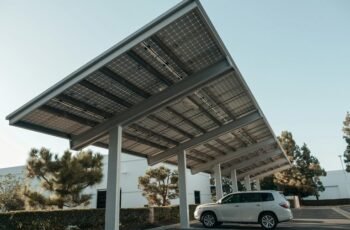
Inverters appear across power station types, but their roles vary. In fossil fuel plants, you won’t rely on large grid-connected inverters because synchronous generators produce AC directly. Inverters may serve auxiliary DC-AC tasks within the facility, or support local systems, but the grid-facing core stays mechanical. Modern combined-cycle sites sometimes add inverters when linking on-site renewables or storage, yet emphasis remains on combustion and turbines rather than power electronics. In renewable stations, you depend on inverters: solar PV converts panel DC to grid-ready AC, and wind uses power converters to stabilize variable outputs. Solar often stacks MPPT and anti-islanding in the inverter design, with micro-inverters for panel-level optimization. Storage-focused sites hinge on bidirectional inverters for charging and discharging. BLUETTI storage solutions illustrate how portable systems integrate bidirectional inverters to manage charging and discharging as a core capability.
Direct Vs Indirect Inverter Use in Stations
Direct and indirect inverter use in power stations hinges on how and when the power is stored or routed. You’ll see direct inverters where DC sources need immediate AC conversion for grid or load needs, such as photovoltaic stations converting DC directly to AC with MPPT for efficiency at the source. These inverters are often embedded to minimize DC transmission losses and enable real-time grid synchronization, aiding smoother integration. Indirect inverters come into play with storage systems, converting stored DC power to AC when demand rises and supporting load balancing. They enable hybrids that connect grid, battery, and generation, adding buffering for stability and dispatchability. The placement and modality of inverters shape efficiency, reliability, and grid interaction, influencing cable costs and land use.
When DC Is Generated Directly as AC Is Needed
When DC is produced, you still need AC where that’s required, so you weigh direct AC generation against conversion needs. Some stations generate AC directly at the source, while others rely on DC-to-AC inverters to meet grid standards. The choice hinges on the source type, technology, and overall system efficiency and cost.
Dc-To-Ac Need
If you generate DC power but your loads need AC, you must convert the energy with an inverter. Most electric systems and devices run on AC, so DC must be converted to meet standard loads. Batteries and solar panels inherently produce DC, requiring inverters to supply usable AC. Inverter function is critical for compatibility with household and industrial appliances, and without it stored DC can’t efficiently feed grids or devices. High-quality inverters optimize efficiency, minimizing energy loss between source and load. Inverter wattage rating governs continuous power handling, so proper sizing avoids overloads and guarantees stability for high-wattage items. Oversized units waste, while undersized ones fail to deliver. Inverter capacity ranges commonly span 500–3000W, scaling with battery banks to maintain delivery over time.
Direct-Dc Generation
Direct-DC generation occurs when DC power is produced specifically to meet DC loads, avoiding the extra step of converting to AC. You’ll find DC comes from solar cells, batteries, and some small generators using a split-ring commutator rather than slip rings. Traditional DC machines use brushes to keep current flowing in one direction by switching connections every half turn. In large plants, DC generation is rare because AC is easier to transform and interconnect on grids. This approach suits small-scale, specialized uses or direct DC supply needs. HVDC links transmit over long distances, but they still require conversion at each end, not continuous direct generation for main distribution. Direct-DC minimizes conversion losses when loads demand steady, polarity-stable DC.
Inverter Necessity Varies
In many cases, whether you need an inverter hinges on how the power is produced and what form you actually need. If power starts as DC but you require AC, an inverter is essential to convert the current. Direct AC output projects often skip inverter stages, since the power already matches end-use needs. Fuel-powered inverter generators convert AC to DC and back to AC for cleaner, stable electricity. Battery-based portable power stations always include an inverter to turn DC from the battery into usable AC for common devices. Some stations embed inverter modules to keep low THD, protecting sensitive electronics. Variations arise: conventional AC generators may forego inverters; inverter generators adjust speed and stabilize output.
Renewable Energy Roles: Solar and Wind Inverters
Solar and wind inverters are the key link between renewable energy sources and usable electricity. You convert DC from solar panels into AC compatible with grids and household devices, using power electronics to create a clean sine wave. MPPT algorithms optimize energy capture as irradiation and temperature vary, while monitoring and communication features manage performance and grid integration. In wind systems, inverters convert turbine-derived DC after mechanical-to-electrical conversion into usable AC, and in hybrid setups they handle multiple DC sources. They provide automatic voltage regulation and dynamic control of power flow to loads and batteries, ensuring steady output amid changing conditions. Together, solar, wind, and hybrid inverters enable seamless residential or microgrid integration, balancing input to maintain reliable electricity supply.
Storage Systems and Inverter Functions
Storage systems rely on inverters to turn battery DC into usable AC, manage power flow between the grid, loads, and storage, and guarantee smooth changes during charging and discharging. You’ll see inverters handle DC-AC conversion, direct power from storage to loads, or pull energy from the grid to charge. Different inverter types suit various scales: full-bridge for single-phase, three-phase for heavier outputs, two-level for basic needs, multilevel for large storage, and high-power units for grid interfaces. Beyond conversion, they synthesize smooth sine waves, balance loads, and manage reactive power for stability. Grid-forming capability lets storage start or support a grid. Control schemes coordinate multiple inverters to reduce harmonics, while protection mechanisms guard equipment and users.
| Inverter Role | Benefit |
|---|---|
| DC-AC/Power Flow | Enables seamless charging, discharging, and load operation. |
| Control & Protection | Maintains safety, reliability, and grid interaction. |
Grid Services Offered by Modern Inverters
You’ll see how modern inverters actively shape grid performance by regulating voltage and frequency in real time. They provide reactive power support to keep voltage stable as loads shift and DERs come online. Grid-forming capabilities allow islanding, black-starts, and resilient operation even when the traditional grid signal is uncertain.
Voltage Regulation Capabilities
Voltage regulation capabilities are a core grid service from modern inverters, enabling them to help maintain stable voltages on distribution networks without relying solely on centralized controls. You’ll see several enabled modes under IEEE 1547-2018 that regulate voltage without reactive power discussions. In Constant Power Factor Mode, your inverter keeps a fixed power factor, so reactive power tracks active power proportionally. Volt-VAR Mode adjusts reactive power along a local voltage curve with a deadband around the target. Watt-VAR Mode ties reactive changes to active output, absorbing reactive power at high activity and reducing it when activity drops. Constant Reactive Power keeps a steady injection or absorption, regardless of voltage swings. Volt-Watt Mode curtails active power to suppress overvoltage, aiding hosting capacity and stability.
Reactive Power Support
Reactive power support is a core capability you’ll get from modern inverters, enabling them to help regulate voltages locally and reduce reliance on centralized controls. You’ll learn that reactive power stabilizes voltage and synchronizes current flow without delivering real energy, addressing delays from inductive or capacitive loads. Utilities demand reactive support at multiple grid voltages, keeping standards like VDE-AR-N intact. Distributed resources, such as rooftop solar, excel at local provision because long-distance transport is inefficient. Advanced inverters can inject and absorb reactive power dynamically, aiding voltage regulation. Control can be local, based on active output, or coordinated from POI measurements using Q(U) responses to deviations. Firmware updates keep reactive schemes compliant with evolving grid codes, without hardware changes.
Grid-Forming Capabilities
Grid-forming inverters can establish and regulate voltage and frequency autonomously, forming a stable grid even when the traditional reference is absent. You’ll see them maintain an internal voltage phasor, generating stable voltage and frequency without relying on a grid signal. They form the grid by controlling these parameters, unlike grid-following inverters that need a pre-existing rhythm to sync. This capability becomes essential as inverter-based renewables rise and synchronous generators recede, providing a rapid dynamic response that mimics traditional generators. Their internal control enables multiple units to coordinate, creating a resilient virtual grid from renewables. Black-start capability lets you restart a downed grid without external support, boosting resilience. In weak grids, grid-forming inverters stabilize transients and support islanded operation and automated reconnection per standards.
Grid-Forming Vs Grid-Following Inverters
When choosing between grid-forming and grid-following inverters, you should know they serve different roles in how a power system steadies itself.
- Grid-forming inverters synthesize a voltage reference internally, then push it onto the bus, supporting autonomy in weak grids.
- They regulate voltage and frequency directly, mimicking inertia and enabling islanded operation without a stable grid.
- Grid-following inverters measure the existing grid with a PLL and inject current shaped to that reference instead of creating it.
- They require a stable grid and provide reactive support, but not primary frequency regulation.
- In faults or outages, grid-forming inverters maintain voltage and frequency, while grid-following ones lose authority.
Waveform Quality and Harmonics Management
You’ll want to understand how harmonics arise from inverter switching and why reducing them matters for equipment longevity and grid stability. Harmonics reduction techniques, like filters and PFC, directly improve waveform quality and overall efficiency. By prioritizing clean waveform quality, you set the foundation for reliable operation across connected devices and systems.
Harmonics Reduction Techniques
Harmonics can distort waveform quality and reduce power system efficiency, so effective mitigation is essential. Different techniques target various distortion sources, from active filtering to transformer design, delivering tailored solutions for fluctuating industrial loads. You’ll find active harmonic filters provide real-time compensation, adaptable to changing conditions, though with higher initial costs and maintenance needs. Passive filters are cheaper and simpler but less responsive to variability and higher-order harmonics. Multi-pulse converters and phase-shifting methods shrink distortion through carefully arranged transformers, at the expense of added complexity and capital cost. Harmonic-mitigating transformers (K-factor rated) resist overheating from nonlinear currents, offering passive protection. Line reactors, chokes, and load management smooth currents and balance phases, reducing peak distortion.
- Active harmonic filters dynamically cancel harmonics in real time
- Passive filters offer lower upfront costs with simpler control
- Multi-pulse and phase-shifting reduce distortion via transformer arrangements
- K-rated transformers withstand harmonic heating without active intervention
- Reactors, chokes, and load management smooth and balance nonlinear loads
Waveform Quality Benefits
Pure sine wave inverters deliver output that closely matches utility-grade AC, so your system experiences clean, stable voltage with minimal harmonic distortion. You’ll notice fewer voltage spikes and steadier power for sensitive electronics, prolonging device life. With efficiency typically over 90%, they waste less energy during DC to AC conversion, reducing heat and boosting reliability. Clean waveforms minimize noise, letting microprocessors, medical gear, and AV systems run smoothly without buzzing or flicker. High fidelity power supports motor-driven appliances in quieter, cooler operation. Fewer harmonics improve power factor and overall stability in complex networks, extending battery runtime for off-grid or backup setups. Yes, the higher initial cost buys superior waveform quality, reliability, and long-term efficiency benefits.
Portable and Emergency Power Applications
Portable power stations rely on built-in inverters to turn the stored DC battery power into usable AC power for common household devices, making them ready for both everyday use and emergencies. You’ll enjoy clean, stable pure sine wave output that drives sensitive gear like computers and medical devices, while minimizing energy loss through efficient switching. Inverters determine how much you can run at once, so match load to capacity for best results. These stations supply plug-and-play AC power, with options to recharge via solar or grid. They’re quiet, emissions-free, and suited for indoor use during outages. You’ll appreciate flexible ports and scalable capability when you add external batteries to extend runtime.
- Clean sine-wave output for sensitive equipment
- Quiet, emissions-free operation indoors
- Plug-and-play AC connections for immediate use
- Solar or grid recharging for sustainability
- Expandable capacity with additional batteries
Grid Integration and System Reliability With Inverters
Grid integration and reliability with inverters sit at the intersection of how you generate and use energy. Grid-tied inverters let you feed surplus solar or wind power into the main grid, sidestepping battery storage. They support net metering, so you get credits or payments for excess energy. The integration feels seamless as the inverter continuously matches voltage and frequency to grid standards, optimizing utilization. These inverters reduce your reliance on traditional electricity while lowering bills through efficient conversion and management. They enable energy sharing between local generators and the grid, boosting overall utilization. Grid-forming inverters act as voltage sources, providing inertia, fault current, and the ability to start the grid after outages. Enhanced reactive support improves stability and power quality.
Frequently Asked Questions
Do All Stations Need Inverters for Grid Stability?
Yes, not all stations need inverters, but many do to stabilize grids with high renewables; you’ll benefit from GFM controls or inertia substitutes at key points, especially where conventional inertia declines and rapid damping is required.
Are Inverters Always Required for Energy Storage Systems?
Yes, you need an inverter for energy storage systems. Without it, your DC energy stays trapped. Inverters convert, protect, and manage charging, discharging, and islanding, enabling usable AC power and safe grid interaction for your setup.
Can Traditional Plants Operate Without Any Inverters?
Yes, traditional plants can operate without inverters. You run synchronous generators directly, producing grid-frequency AC with inherent inertia and voltage control, so no inverter is needed unless you add DC sources or energy-storage subsystems.
How Do Inverters Affect Grid Outage Recovery?
In allegory, think of inverters as lanterns you carry during a blackout: they don’t hurry the healer, but they steady your home, keeping lights on while crews mend the grid and restore real power. You endure, safely.
Do Inverters Generate Harmonics in All Stations?
Yes, inverters generate harmonics in many stations, but not all. You’ll see them more with inverter-based resources, while traditional synchronous generations produce fewer inverter-like harmonics. Harmonics depend on design, controls, and filtering you implement.
Conclusion
You’ll notice the coincidence: you expect power to flow smoothly, and inverters quietly enable that flow, even when technology varies. Not every station uses them, but many depend on them for flexibility, control, and reliability. When wind, solar, or storage meet the grid, inverters bridge the gap, turning DC into usable AC. So, while some plants bypass them, others can’t imagine operation without them, delivering safer, cleaner, steadier power you rely on every day.